The Energy Density Gap: Why Battery Powered Airplanes Aren't Ready
Search for "battery powered airplanes" and you'll find ambitious prototypes and heady promises — but almost nothing carrying fare-paying passengers on meaningful routes. The reason is physics, not engineering willpower. Today's best lithium-ion battery packs deliver roughly 250–300 Wh/kg at the cell level, while jet fuel packs approximately 12,000 Wh/kg of usable energy. Even accounting for the superior efficiency of electric motors (roughly 90%) versus turbine engines (roughly 35%), the effective energy density gap remains a factor of 15–20x.
This same physics is exactly what makes ground-based EVs work: a 2026 Tesla Model Y Long Range carries an ~75 kWh (usable) NMC pack weighing roughly 480 kg, giving it an EPA-rated 320 miles of range. That's practical because roads are flat, regenerative braking recovers energy, and you can stop to recharge in 18 minutes. An airplane can't regenerate on descent easily, must fight gravity continuously, and can't pull over mid-flight.
Understanding the battery technology behind EVs — chemistry, degradation, warranties, and emerging solid-state research — clarifies both why electric cars have crossed the mainstream threshold and why electric aircraft remain confined to short-hop trainers and cargo drones.
LFP vs NMC/NCA: The Chemistry Trade-Offs That Define Modern EVs
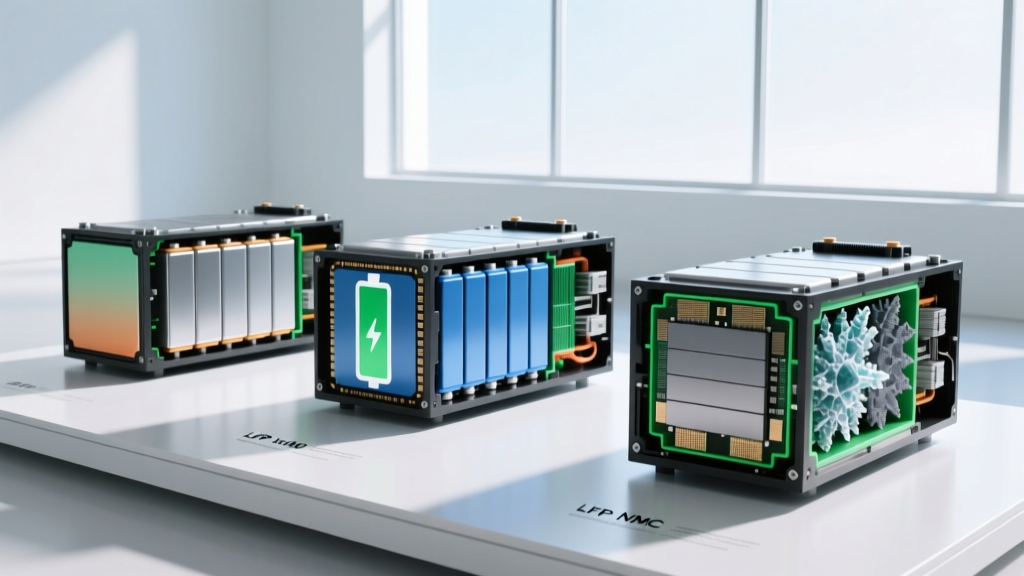
Two cathode chemistries dominate the 2026 EV market: lithium iron phosphate (LFP) and nickel-manganese-cobalt or nickel-cobalt-aluminum (NMC/NCA). Each has distinct strengths that automakers exploit for different vehicle segments.
| Attribute | LFP (LiFePO₄) | NMC 811 / NCA |
|---|---|---|
| Cell-level energy density | 160–190 Wh/kg | 250–300 Wh/kg |
| Typical cycle life (80% retention) | 3,000–5,000 cycles | 1,000–2,000 cycles |
| Cold-weather performance (−10°C) | Moderate loss; slower charge acceptance | Better low-temp discharge; preconditioning helps |
| Thermal runaway risk | Very low | Higher; requires robust BMS and cooling |
| Cobalt / nickel content | None | Significant — supply-chain and cost exposure |
| Cost per kWh (2026 pack-level) | ~$95–$115 | ~$125–$155 |
| Recommended daily SoC | 100% OK | 80% for daily; 100% only for trips |
| Common 2026 applications | Tesla Model 3 RWD, base Model Y, BYD, Rivian Standard | Long-range / performance trims, Hyundai Ioniq 5 LR, Ford Mustang Mach-E Extended Range |
For aviation use, only NMC/NCA's higher energy density is even theoretically viable — yet it still falls far short of hydrocarbon fuel. For cars, the calculus is more forgiving: an LFP-equipped Model 3 RWD sacrifices roughly 30 miles of EPA range versus the Long Range NMC variant but gains cycle life, lower cost, and freedom from daily charge-limit anxiety.
How Long Do EV Batteries Actually Last? Degradation Data
The most common buyer fear — that an EV battery will need a $20,000 swap at 80,000 miles — is not supported by field data. Multiple large-scale fleet studies, including those tracked by Geotab across tens of thousands of vehicles, show average capacity loss of roughly 1.8% to 2.3% per year under typical mixed use.
Typical degradation trajectory (NMC pack, temperate climate, mixed L2 + occasional DCFC use):
- Year 1 / 15,000 mi: ~97–98% State of Health (SoH)
- Year 3 / 45,000 mi: ~93–95% SoH
- Year 5 / 75,000 mi: ~90–92% SoH
- Year 8 / 120,000 mi: ~86–89% SoH
- Year 12 / 180,000 mi: ~80–85% SoH (projected)
LFP packs generally show slower mid-life degradation and tolerate higher average SoC without accelerated wear, which is why Tesla and Rivian recommend 100% daily charges for their LFP models. NMC packs degrade faster when routinely held above 80% SoC or exposed to repeated 150+ kW DC fast charging while hot.
The degradation curve is not linear: most chemistries show a steeper drop in the first 10,000–20,000 miles (calendar and formation effects), then settle into a long, slow decline. A 2026 Model Y Long Range with 320 EPA miles will likely still deliver 275–290 real-world miles at year eight — a meaningful loss, but not a vehicle-ending one.
What the Battery Warranty Actually Covers
Federal regulations effectively mandate an 8-year / 100,000-mile minimum warranty on high-voltage traction batteries in CARB-adopting states, and most manufacturers apply that standard nationwide. The key detail buyers miss: warranties cover capacity retention below a threshold, not any loss of range.
| Manufacturer | Term | Capacity Threshold |
|---|---|---|
| Tesla (Model 3/Y LFP) | 8 yr / 100,000 mi | 70% retained |
| Tesla (Model 3/Y LR NMC) | 8 yr / 120,000 mi | 70% retained |
| Hyundai / Kia (E-GMP) | 10 yr / 100,000 mi | 70% retained |
| Ford (Mach-E, F-150 Lightning) | 8 yr / 100,000 mi | 70% retained |
| Rivian (R1T / R1S) | 8 yr / 175,000 mi | 70% retained |
| GM (Ultium-based) | 8 yr / 100,000 mi | 70% retained (60% on commercial) |
A warranty claim requires diagnostic confirmation that the pack has fallen below the stated threshold under normal use — not from accident damage, flood, or unauthorized modification. In practice, very few packs fail this threshold within the warranty window; most claims involve defective modules or BMS faults, not bulk cell degradation.
Replacement Cost: When It's Needed and What It Costs
Outright battery replacement is rare before 150,000 miles and uncommon even at 200,000 miles for liquid-cooled packs. When it does happen — typically on high-mileage used EVs bought out of warranty or on vehicles with manufacturing defects discovered post-warranty — costs scale with pack size and chemistry.
| Vehicle / Pack Size | Chemistry | Parts + Labor Range |
|---|---|---|
| Tesla Model 3 RWD (~57 kWh usable) | LFP | $9,000 – $13,000 |
| Tesla Model Y LR (~75 kWh usable) | NMC | $13,000 – $17,000 |
| Hyundai Ioniq 5 LR (~77.4 kWh) | NMC | $14,000 – $19,000 |
| Ford F-150 Lightning Ext. Range (~131 kWh) | NMC | $22,000 – $30,000 |
| GMC Hummer EV (~212 kWh) | NMC | $35,000 – $45,000 |
Two important caveats. First, many replacements involve swapping a single faulty module rather than the whole pack, cutting cost by 60–80%. Second, pack prices per kWh continue to decline; IRS §30D tax credit rules and the used-EV credit (§25E, up to $4,000) can offset the economics of buying a newer vehicle rather than replacing a pack on an aging one. The honest framing: most EVs will be retired or traded in before the pack needs full replacement, and for those that do need one, the cost is trending downward yearly.
Factors That Accelerate or Extend Battery Life
Degradation is driven by four stressors, ranked roughly by impact for a typical US owner:
- Sustained high State of Charge. Holding an NMC pack at 100% for days at a time accelerates electrolyte oxidation. Charge to 80% daily; reserve 100% for trip days.
- Heat exposure. Repeated fast charging in Phoenix-summer heat without adequate preconditioning causes more wear than cold-climate use. Liquid-cooled packs (standard on nearly all 2026 EVs) mitigate this heavily.
- DC fast-charging frequency. Occasional 150–250 kW stops cause negligible extra wear; daily DCFC reliance can add 1–2% extra annual degradation versus exclusive Level 2 home charging.
- Deep discharge cycles. Regularly running below 10% SoC stresses cells. Most BMS designs include a bottom buffer, but routinely arriving at 0% is avoidable wear.
Practical care checklist for 2026 EV owners:
- Set daily charge limit to 80% (NMC) or 100% (LFP).
- Use scheduled departure + preconditioning for morning fast-charge sessions.
- Prefer Level 2 home charging (7–11 kW) for daily use.
- Avoid leaving the vehicle at <10% or 100% SoC for more than 24 hours.
- In extreme heat, park in shade or a garage when possible.
- Update BMS firmware when the manufacturer issues OTA updates.
Monitoring State of Health: What Owners Can Actually See
Most 2026 EVs expose State of Health (SoH) indirectly. Tesla's service menu shows a calculated degradation percentage; Hyundai/Kia surfaces it via the dealer diagnostic tool and increasingly in-app; third-party OBD-II readers from OBDLink and apps like TeslaFi or ABRP can estimate SoH from charge-log data over time.
The most reliable DIY method: track kWh added during a 10%→90% charge on a Level 2 circuit and compare against the pack's known usable capacity when new. If a 75 kWh pack accepts only 63 kWh across that window after accounting for charging losses (~5–8%), SoH is approximately 88–90%. Doing this twice yearly is sufficient; monthly tracking yields noise, not signal.
Why Battery Powered Airplanes Need a Different Revolution
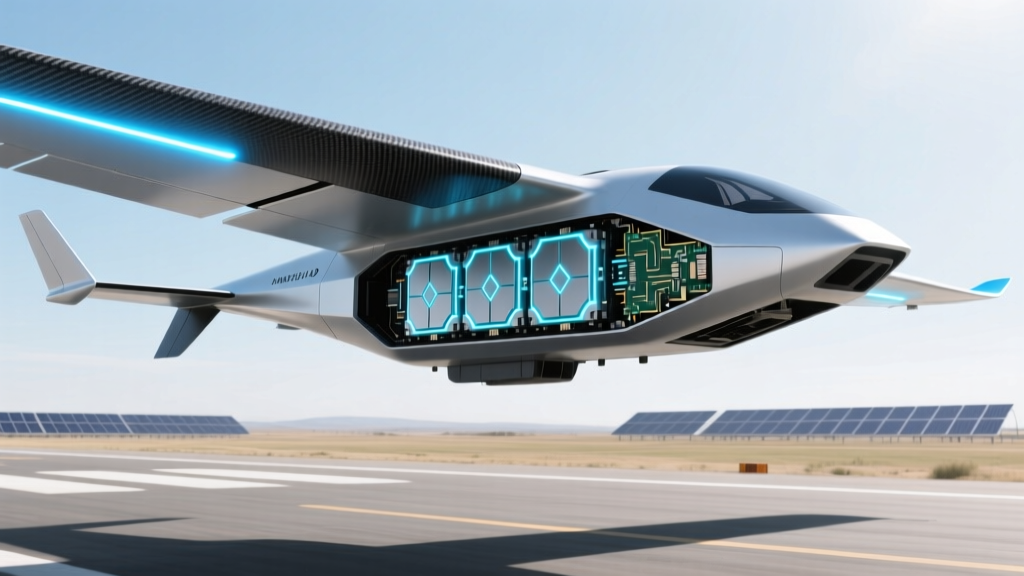
Returning to aviation: the gap between a 2026 EV and a viable regional electric airliner is not a matter of scaling up existing packs. A 50-seat turboprop flying 500 miles would need roughly 4,000–6,000 kWh of usable energy. At today's NMC pack density (~180 Wh/kg at the system level including cooling, structure, and BMS), that's 22,000–33,000 kg of battery — more than the aircraft's maximum takeoff weight. The math is unforgiving.
Current electric aircraft programs therefore cluster around two niches: (1) two-seat trainers like the Pipistrel Velis Electro (11 kWh pack, ~50-minute endurance) where the mission is short and the airframe is ultralight, and (2) cargo drones and eVTOL air taxis with 20–60 mile hop profiles. Even the much-publicized Heart ES-30 and Eviation Alice target ranges under 500 miles with passenger counts under 30, and both have slipped timelines repeatedly.
Emerging Battery Tech: What Could Close the Aviation Gap
Three research-stage technologies could meaningfully shift the calculus for both EVs and aircraft — but none are in mass production for automotive use as of 2026.
Solid-state batteries. Replacing the liquid electrolyte with a ceramic or sulfide solid promises 400–500 Wh/kg at cell level and dramatically lower flammability. Toyota, Nissan, and Samsung SDI have all announced pilot production lines targeting 2027–2029 vehicle introduction. Realistic volume deployment for mainstream EVs: 2029–2031. For aviation certification: likely mid-2030s, given FAA validation timelines.
Silicon-dominant anodes. Companies like Sila Nanotechnologies and Group14 are shipping silicon-composite anodes that boost cell energy density 15–25% over graphite. These are appearing in limited 2026 production applications (notably the Mercedes G 580 EQ) and will broaden through 2027–2028. Incremental but real.
Lithium-metal anodes. The longest-term play, pairing a pure lithium anode with solid electrolyte. Lab cells have demonstrated >500 Wh/kg, but cycle life and manufacturability remain unsolved at scale. Plausible timeline for automotive: 2032+. Plausible for certified aviation: late 2030s at the earliest.
None of these are available to buy today, and any vehicle or aircraft marketed with "solid-state" branding in 2026 should be treated as announced/preliminary until independent third-party testing confirms pack-level figures.
EV Battery FAQ
How long do EV batteries last in years and miles?
Field data shows most liquid-cooled NMC and LFP packs retain 80–88% of original capacity at 150,000 miles and 10–12 years of typical use. Many will outlast the rest of the vehicle's mechanical and structural life. Complete failure before 200,000 miles is rare.
How much does an EV battery cost to replace in 2026?
Out-of-warranty replacement ranges from roughly $9,000 for a small LFP pack (Model 3 RWD) to $30,000+ for large NMC packs (F-150 Lightning Extended Range). Most owners never face this cost; module-level repairs are far cheaper and cover the majority of real-world failures.
What does the battery warranty actually cover?
Typical 2026 warranties guarantee 70% capacity retention over 8 years / 100,000 miles (Hyundai/Kia: 10 years). Coverage applies to capacity loss and manufacturing defects under normal use, not accident damage, flood, or neglect.
How do I check my EV's battery health?
Use the in-app or service-menu SoH readout where available, or track kWh accepted during a known 10%→90% Level 2 charge and compare to the pack's original usable capacity. Third-party OBD-II tools and logging apps can also trend SoH over time.
LFP vs NMC — which battery chemistry is better?
Neither is universally better. LFP wins on cost, cycle life, safety, and daily-charging convenience; NMC wins on energy density and cold-weather performance. For buyers prioritizing longevity and lower purchase price, LFP is usually the better fit. For maximum range in a single charge and cold-climate efficiency, NMC remains preferable.
Will solid-state batteries make battery powered airplanes practical?
Eventually, partially — but not in the 2020s. Solid-state cells targeting 400–500 Wh/kg may reach automotive production around 2029–2031, and aviation certification typically lags automotive by 5–8 years. Regional electric flights under 500 miles may become viable in the 2030s; replacing long-haul jet fuel remains a multi-decade challenge.