The Global Battery Makers Powering Today's EVs
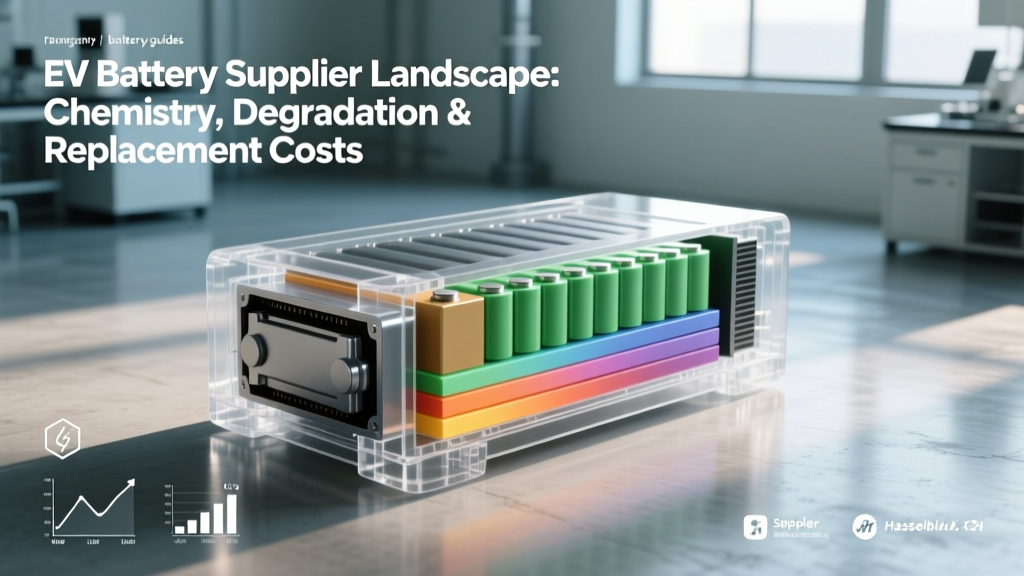
When you buy an electric vehicle in 2026, the battery pack inside it was almost certainly manufactured by one of a handful of global cell suppliers. While automakers like Tesla, Hyundai, and Ford badge the final product, the lithium-ion cells themselves come from specialized battery makers for cars — companies that invest billions in cell chemistry, manufacturing scale, and supply-chain integration.
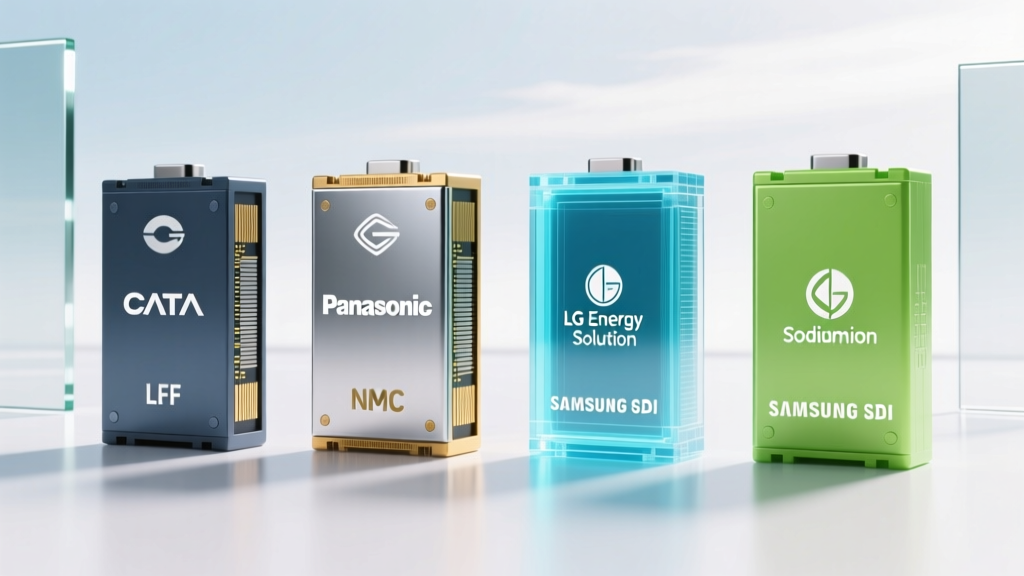
The dominant players supplying EV batteries to the U.S. market include CATL (China, the world's largest by volume), LG Energy Solution (South Korea, supplying GM, Ford, Hyundai, and others), Panasonic (Japan, Tesla's longest-standing partner), SK On (South Korea, powering Ford F-150 Lightning and Hyundai Ioniq models), Samsung SDI (South Korea, BMW and Stellantis contracts), and BYD's FinDreams Battery (China, vertically integrated with BYD vehicles and increasingly supplying Tesla and others). Each of these manufacturers produces cells with distinct chemistries, form factors, and performance profiles — and the chemistry inside your pack matters far more than the brand name on the cell.
This guide breaks down what these battery makers actually produce, how their chemistries compare, what real-world degradation data shows, and what you'll actually pay if a pack ever needs replacement.
LFP vs NMC/NCA: The Chemistry Decisions Battery Makers Are Making
The single most consequential decision any battery maker for cars makes is which cathode chemistry to produce. In 2026, two families dominate the EV market: NMC/NCA (nickel-manganese-cobalt / nickel-cobalt-aluminum) and LFP (lithium iron phosphate). Understanding the trade-offs between them is essential for any EV buyer.
| Attribute | LFP (LiFePO₄) | NMC / NCA |
|---|---|---|
| Energy Density | 150–180 Wh/kg (cell level) | 220–300 Wh/kg (cell level) |
| Typical Cycle Life | 3,000–6,000+ cycles to 80% SoH | 1,000–2,500 cycles to 80% SoH |
| Cold-Weather Performance | Weaker; ~25–35% range loss below 20°F | Better; ~15–25% range loss below 20°F |
| Cost per kWh (cell) | ~$60–$80/kWh | ~$90–$120/kWh |
| Thermal Stability | Excellent; very low thermal runaway risk | Good; requires robust BMS/cooling |
| Cobalt Content | None | Yes (reduced in latest gen, ~5–10%) |
| Typical Use Case | Standard-range, fleet, daily commuter EVs | Long-range, performance, cold-climate EVs |
| SoC Recommendation | Can charge to 100% regularly | Best kept 20–80% for daily use |
| Notable Users (2026) | Tesla Model 3/Y RWD, BYD, Ford Mustang Mach-E SR | Hyundai Ioniq 5/6, Tesla LR/Perf, GM Ultium, BMW iX |
The practical takeaway: If you commute 40 miles round-trip in a temperate climate and charge at home nightly, an LFP pack is arguably the better long-term bet — you'll get more charge cycles, can charge to 100% without guilt, and pay less upfront. If you need 300+ miles of range, regularly drive in sub-freezing weather, or tow, NMC/NCA remains the right chemistry. Battery makers like CATL and BYD have pushed LFP energy density significantly higher with cell-to-pack (CTP) architectures, narrowing the gap — but the fundamental physics trade-off between energy density and cycle life persists.
How Long Do EV Batteries Actually Last? Degradation Data
The most common question we hear: "Will I need a new battery in five years?" The data says almost certainly not. Modern EV battery packs from major battery makers for cars are engineered to outlast the vehicles they're installed in — but they do degrade gradually.
Real-World Degradation Benchmarks (aggregated fleet data):
- Year 1 / 15,000 miles: ~2–4% capacity loss (initial "break-in" degradation curve)
- Year 3 / 45,000 miles: ~5–8% total capacity loss
- Year 5 / 75,000 miles: ~7–12% total capacity loss
- Year 8 / 120,000 miles: ~10–15% total capacity loss (median across NMC packs)
- Year 10 / 150,000 miles: ~12–20% total capacity loss (varies heavily by chemistry and use)
Sources: Geotab fleet battery health study, Recurrent Auto battery degradation reports. LFP packs generally show slower degradation curves, often retaining 90%+ capacity at 100,000 miles.
These numbers represent median outcomes. Individual results vary based on charging habits, climate exposure, and how aggressively the vehicle's thermal management system operates. A Tesla Model 3 with an NMC pack driven in Phoenix and frequently DC fast-charged will degrade faster than one driven in Seattle with predominantly Level 2 home charging. The key insight: degradation is non-linear. Most packs lose a few percent quickly, then settle into a very slow, linear decline for years.
What Does the Battery Warranty Actually Cover?
Federal law in the United States mandates that EV battery packs carry a minimum warranty of 8 years or 100,000 miles (whichever comes first), with California Air Resources Board (CARB) states requiring 10 years or 150,000 miles. But the details of what triggers a warranty claim vary significantly by automaker.
| Automaker | Warranty Term | Capacity Threshold | Chemistry Notes |
|---|---|---|---|
| Tesla (Model 3/Y RWD — LFP) | 8 yr / 100,000 mi | 70% retention | LFP; longer cycle life expected |
| Tesla (Model 3/Y LR — NMC) | 8 yr / 120,000 mi | 70% retention | NMC/NCA cells (Panasonic/CATL) |
| Hyundai / Kia (E-GMP) | 10 yr / 100,000 mi | 70% retention | NMC (SK On cells) |
| GM (Ultium platform) | 8 yr / 100,000 mi | 70% retention (60% on some commercial) | NMC (LG/Ultium Cells JV) |
| Ford (Mach-E / F-150 Lightning) | 8 yr / 100,000 mi | 70% retention | NMC (SK On) / LFP (Mach-E SR) |
| BMW (iX / i4) | 8 yr / 100,000 mi | 70% retention | NMC (Samsung SDI/CATL) |
Critical detail: The capacity retention threshold (usually 70%) is the trigger point for a warranty claim. If your 82 kWh usable pack drops to 57 kWh or below within the warranty period, the manufacturer must repair or replace it — typically with a refurbished or remanufactured pack, not necessarily a brand-new one. In practice, very few packs fall below 70% within the warranty window. The vast majority of warranty claims involve defective modules or BMS faults, not wholesale capacity loss.
EV Battery Replacement Cost: What You'd Actually Pay
This is where fear-mongering runs rampant, so let's ground this in real numbers. A full battery pack replacement is rare — most out-of-warranty failures involve individual module replacement, not the entire pack. But if you do need a full pack, here's what it costs in 2026:
| Vehicle / Pack Size | Battery Capacity | Estimated Replacement Cost | Context |
|---|---|---|---|
| Tesla Model 3 RWD (LFP) | ~60 kWh | $8,000–$12,000 | LFP cell cost lower; module-level repair often possible |
| Hyundai Ioniq 5 (NMC) | ~77.4 kWh | $12,000–$18,000 | E-GMP pack; individual module swap ~$2,500–$4,000 per module |
| Ford F-150 Lightning Ext. Range | ~131 kWh | $20,000–$30,000 | Largest consumer pack; rarely needs full replacement |
| Chevrolet Equinox EV | ~85 kWh | $11,000–$16,000 | Ultium modular architecture aids partial repair |
| BMW iX xDrive50 | ~105 kWh | $18,000–$25,000 | Premium segment; labor-intensive pack access |
When is replacement typically needed? Almost never during normal ownership timelines. The median EV battery pack in 2026 is projected to retain above 80% capacity at 150,000 miles. Most EVs are scrapped or retired for reasons unrelated to the battery — collision damage, body corrosion, electronic failures, or simply owner upgrade cycles. If you're buying a new EV today, the statistical likelihood of needing a full pack replacement at your expense is very low. For used EV buyers, checking State of Health (SoH) before purchase is the smart move.
Factors That Accelerate (or Protect) Battery Life
Battery makers for cars engineer cells to withstand enormous abuse, but physics still applies. Here's what actually moves the needle on longevity:
What Hurts Your Battery:
- Frequent DC fast charging above 150 kW: Sustained high-C-rate charging generates heat. Occasional road-trip fast charging is fine; daily reliance on 350 kW chargers accelerates degradation by an estimated 1–3% over 5 years vs. Level 2 charging.
- Prolonged exposure to extreme heat: Ambient temperatures above 95°F with a pack held at high SoC is the worst-case scenario. Phoenix and Las Vegas EVs show measurably higher degradation than Pacific Northwest vehicles.
- Storing at 100% SoC for extended periods: Especially harmful for NMC packs. If you're leaving your EV parked for a week or more, set the charge limit to 50–60%.
- Regularly draining below 10% SoC: Deep discharge stresses cells. Try to charge before you hit single-digit percentages.
What Protects Your Battery:
- Predominant Level 2 home charging (7–11 kW): Gentle charge rates generate minimal heat and stress.
- Charge limits of 80% for NMC, 100% for LFP: LFP chemistry tolerates full charges far better; NMC benefits from an 80% daily ceiling.
- Preconditioning before fast charging: Most modern EVs do this automatically when you navigate to a charger, warming the pack to ~95°F for optimal charge acceptance and reduced stress.
- Garage parking in extreme climates: Even a carport reduces thermal cycling significantly.
- Using the vehicle regularly: Batteries prefer moderate, regular use over long idle periods.
How to Check and Monitor Your Battery's State of Health
State of Health (SoH) is expressed as a percentage — a brand-new pack is 100% SoH, and a pack with 12% degradation reads 88% SoH. Monitoring this number is one of the most valuable ownership habits you can develop.
How to check SoH:
- In-vehicle displays: Tesla offers a battery health estimate in the service menu (varies by software version). Hyundai/Kia's infotainment system on 2024+ E-GMP models includes a battery condition check. BMW's iDrive displays a battery health percentage in the vehicle status menu.
- OBD-II dongles + apps: Tools like OBDLink SX paired with apps such as EV Health or Leaf Spy (Nissan-specific) can pull SoH data directly from the BMS. This is the most reliable method for most vehicles.
- Manufacturer service centers: Any authorized dealer can pull a detailed battery health report. Request one at your annual service visit — it's typically free.
- Third-party services: Companies like Recurrent offer battery health reports based on telematics data, increasingly used in the used-EV market.
A practical benchmark: If your SoH drops more than 3% in a single year after the initial break-in period, investigate whether your charging habits or a faulty thermal management system are contributing. A gradual 1.5–2.5% annual decline is normal and nothing to worry about.
What's Next: Solid-State, Silicon Anodes, and the Battery Makers' Roadmap
The battery industry is investing heavily in next-generation chemistries, but it's critical to separate announced milestones from production reality.
Solid-state batteries — which replace the liquid electrolyte with a solid material, promising higher energy density (potentially 400+ Wh/kg at the cell level), faster charging, and improved safety — remain in pilot and pre-production stages as of 2026. Toyota has announced a solid-state EV for limited production in 2027–2028, and Samsung SDI targets 2027 for initial production. However, manufacturing yield challenges and cost remain significant barriers. Widespread solid-state availability in mainstream vehicles (under $50,000 MSRP) is realistically a 2030+ timeline.
Silicon-dominant anodes are closer to market. Companies like Sila Nanotechnologies and Group14 Technologies are supplying silicon-carbon composite anode materials to battery makers, enabling 10–20% energy density improvements over traditional graphite anodes. Mercedes-Benz's EQG and select 2026–2027 models from other automakers are expected to incorporate silicon-anode cells. This is an incremental but meaningful improvement, not a revolution.
Sodium-ion batteries — championed by CATL and BYD — are entering production for lower-cost, shorter-range EVs (primarily in China and emerging markets). They offer lower energy density (~120–150 Wh/kg) but dramatically lower raw material costs and excellent cold performance. U.S.-market adoption for passenger vehicles is not expected before 2028 at the earliest.
For buyers in 2026, today's lithium-ion batteries from established battery makers for cars are mature, reliable, and well-understood. The smart move is buying the chemistry that fits your use case now, rather than waiting for next-generation technology that remains years from mass-market affordability.
Frequently Asked Questions
How long do EV batteries last in years and miles?
Based on aggregated fleet data from Geotab and Recurrent Auto, the median EV battery pack retains approximately 85–90% of its original capacity at 100,000 miles and 80–88% at 150,000 miles. In calendar years, most packs are engineered for 15–20 years of service before reaching 70% capacity — the threshold at which range reduction becomes noticeably inconvenient. LFP packs from manufacturers like CATL and BYD generally show slower degradation, with some fleet data showing 90%+ retention at 100,000 miles.
How much does an EV battery cost to replace?
A full pack replacement in 2026 ranges from approximately $8,000 for a smaller LFP pack (Tesla Model 3 RWD, ~60 kWh) to $30,000 for the largest consumer packs (Ford F-150 Lightning Extended Range, ~131 kWh). However, full pack replacements are rare. Most out-of-warranty repairs involve individual module replacement at $2,500–$5,000 per module. The overwhelming majority of EV batteries never need replacement during typical ownership.
What does the battery warranty cover?
Federal law mandates a minimum 8-year/100,000-mile battery warranty for all EVs sold in the U.S., with CARB states requiring 10 years/150,000 miles. The warranty covers capacity loss below a specified threshold (typically 70% of original capacity) and manufacturing defects. It does not cover damage from collisions, improper charging equipment, or modifications. If a claim is approved, the manufacturer typically installs a refurbished or remanufactured pack with capacity meeting the threshold requirement.
LFP vs NMC — which battery chemistry is better for me?
Neither is universally "better." Choose LFP if: you drive fewer than 250 miles between charges, live in a mild climate, want the longest possible cycle life, and prefer charging to 100% without concern. Choose NMC/NCA if: you need maximum range (300+ miles), regularly drive in freezing temperatures, tow heavy loads, or prioritize performance. Battery makers for cars are increasingly offering both chemistries across their lineups — Tesla's Model 3 RWD uses LFP while the Long Range uses NMC, for example.
How do I check my EV battery's health?
Check your vehicle's built-in battery health display (available on Tesla, Hyundai/Kia, BMW, and others), use an OBD-II adapter with a compatible EV diagnostic app, or request a battery health report at your dealer's service department. For used-EV purchases, a third-party battery health report from a service like Recurrent provides an independent SoH assessment.
Does fast charging damage my EV battery?
Occasional DC fast charging has minimal impact on battery health. However, exclusive reliance on DC fast charging — especially at rates above 150 kW — can accelerate degradation by an estimated 1–3% over five years compared to predominant Level 2 charging. Modern battery management systems and preconditioning routines mitigate much of this risk. The practical recommendation: use Level 2 for daily charging and reserve DC fast charging for road trips.
For official federal EV battery warranty requirements, see EPA's EV guidance. For current tax credit eligibility related to battery sourcing requirements under §30D, consult IRS.gov.