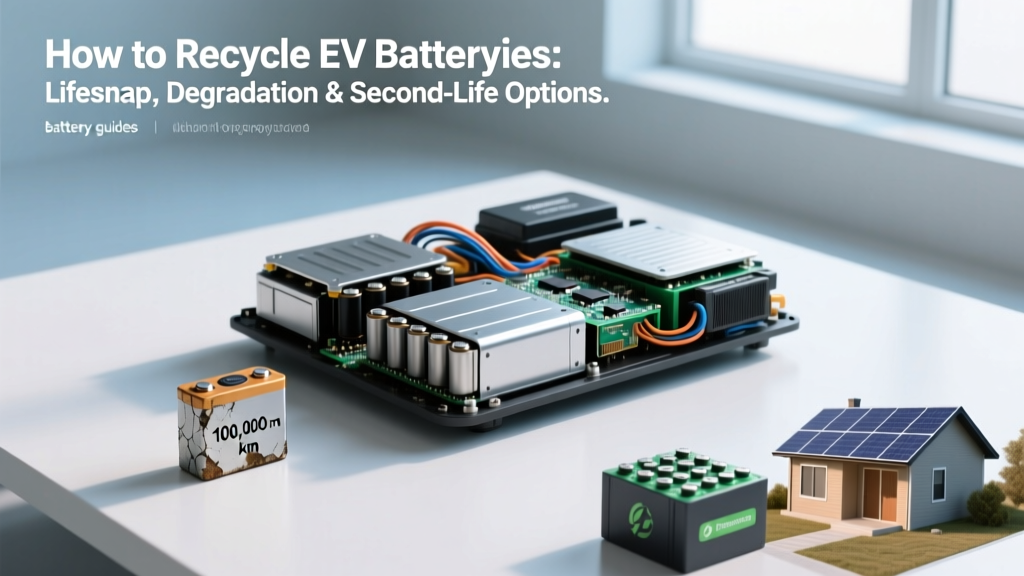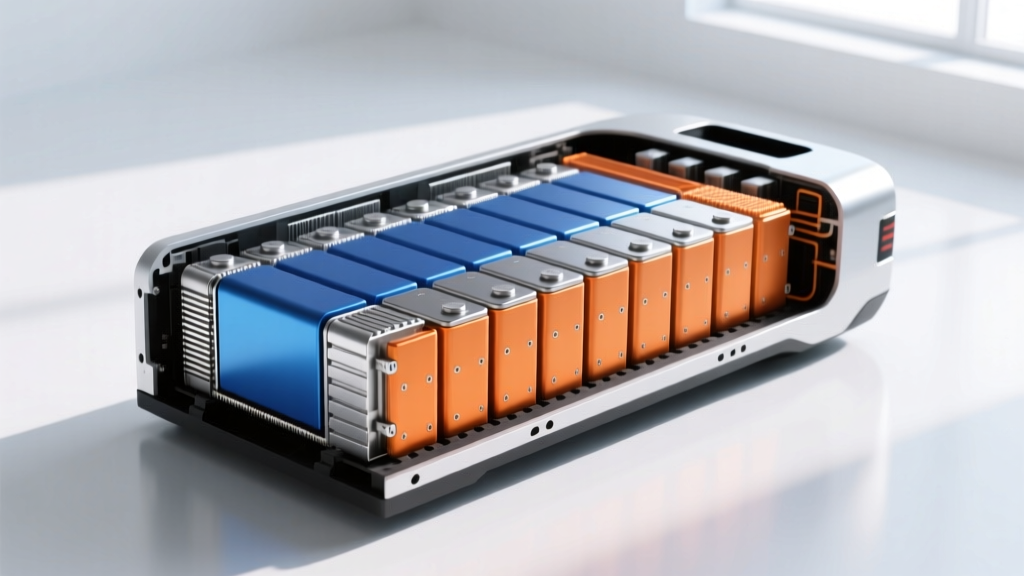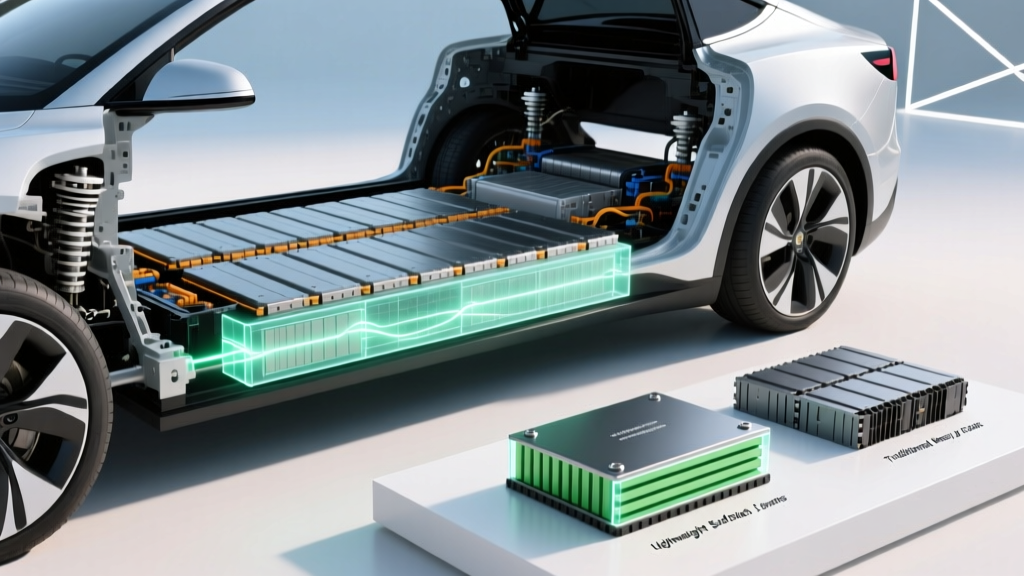
The single biggest fear for prospective EV buyers isn't range or charging speed — it's the battery. Specifically: how long will it last, and what happens when it doesn't? If you've searched for the battery cost electric car owners face when things go wrong, you've probably seen alarming five-figure numbers tossed around without context. The reality is more nuanced, and for most buyers, far less worrisome than the headlines suggest.
This guide breaks down exactly what EV batteries cost to replace in 2026, how long they actually last based on fleet and owner data, what warranties cover, and the daily habits that meaningfully extend — or shorten — your pack's useful life. We'll also compare the two dominant chemistries (LFP and NMC/NCA) so you understand what's under your floor and why it matters.
How Long Do EV Batteries Actually Last?
The short answer: longer than most owners keep their cars. Modern lithium-ion traction batteries are engineered for 1,500 to 3,000+ full charge cycles before reaching 70–80% of original capacity. Translated to miles, that's typically 150,000 to 300,000+ miles depending on pack size and usage patterns.
Real-world fleet data supports this. Tesla's 2025 Impact Report showed its Model S/X batteries retained an average of 88% capacity at 200,000 miles. Nissan Leaf fleets from the 2018–2021 era (with improved thermal management over earlier passive-cooled packs) show roughly 85–90% retention at 100,000 miles. Hyundai/Kia's E-GMP platform vehicles (Ioniq 5, EV6) are tracking similarly well in early owner reports, though large-scale long-term data is still accumulating.
The critical distinction is degradation curve shape. Most lithium-ion packs lose capacity faster in the first 1–2 years (roughly 2–5%), then the curve flattens significantly. A pack that loses 4% in year one might lose only 1–1.5% per year afterward. This means a battery reaching 80% State of Health (SoH) at 150,000 miles may still have 100,000+ useful miles left before hitting any critical threshold.
Typical EV Battery Degradation Timeline
| Year / Mileage | Typical Capacity Retained (NMC) | Typical Capacity Retained (LFP) | Notes |
|---|---|---|---|
| Year 1 / ~12,000 mi | 95–97% | 96–98% | Initial formation loss; steepest drop |
| Year 3 / ~36,000 mi | 91–94% | 93–96% | Curve flattens; linear degradation |
| Year 5 / ~60,000 mi | 88–92% | 90–94% | Noticeable but not operationally limiting |
| Year 8 / ~100,000 mi | 83–88% | 87–92% | Warranty threshold period; still functional |
| Year 10 / ~120,000 mi | 80–85% | 84–90% | Range reduction apparent; pack still viable |
| Year 15 / ~180,000 mi | 73–80% | 78–86% | Approaching end-of-automotive-life threshold |
Data synthesized from Tesla Impact Reports, Geotab fleet studies, and owner-reported SoH measurements. Individual results vary based on climate, charging habits, and chemistry.
EV Battery Replacement Cost: What You'll Actually Pay
If your battery does fail outside warranty — or degrades below a usable threshold — replacement is expensive but declining. Here's what the market looks like in 2026:
| Vehicle | Pack Size (kWh) | Chemistry | OEM Replacement Cost | Refurbished/Aftermarket |
|---|---|---|---|---|
| Tesla Model 3 (Standard) | 60 kWh | LFP | $10,000–$13,000 | $6,500–$9,000 |
| Tesla Model Y (Long Range) | 75 kWh | NMC/NCA | $13,000–$16,000 | $8,500–$11,000 |
| Hyundai Ioniq 5 | 77.4 kWh | NMC | $14,000–$18,000 | $9,000–$12,000 |
| Ford F-150 Lightning (Ext. Range) | 131 kWh | NMC | $22,000–$28,000 | $15,000–$19,000 |
| Chevrolet Equinox EV | 85 kWh | NMC (Ultium) | $14,000–$17,000 | $9,000–$12,000 |
| Nissan Leaf (62 kWh) | 62 kWh | NMC | $9,000–$12,000 | $5,500–$8,000 |
Several important caveats apply to these figures:
- Labor is included in OEM quotes but varies by region — expect $1,500–$3,000 of the total to be installation labor.
- Refurbished packs use reconditioned modules from salvaged vehicles and typically carry a 1–3 year warranty versus the OEM's 8-year coverage.
- Module-level repair is increasingly available. Many shops can replace individual failed modules within a pack for $2,000–$5,000 rather than swapping the entire battery.
- Most owners never pay this. Catastrophic battery failure outside warranty is rare. The vast majority of EVs are scrapped, traded, or sold before the pack requires full replacement.
For context on cost trajectory: according to BloombergNEF, average lithium-ion pack prices fell from roughly $1,200/kWh in 2010 to approximately $115–$130/kWh by late 2025. This decline continues to compress replacement costs year over year.
What the Battery Warranty Actually Covers
Federal law mandates a minimum 8-year/100,000-mile warranty on EV battery packs for emissions-related compliance, and most manufacturers match or exceed this. California and states adopting CARB standards require 10 years/150,000 miles. Here's how major manufacturers structure coverage in 2026:
| Manufacturer | Duration | Mileage | Capacity Threshold | Transferable? |
|---|---|---|---|---|
| Tesla (Model 3/Y LFP) | 8 years | 120,000 mi | 70% SoH | Yes |
| Tesla (Model 3/Y LR, S, X) | 8 years | 120,000–150,000 mi | 70% SoH | Yes |
| Hyundai / Kia (E-GMP) | 10 years | 100,000 mi | 70% SoH | Yes (first owner, 10/100k; second owner 5/60k in non-CARB) |
| Ford (Mach-E, F-150 Lightning) | 8 years | 100,000 mi | 70% SoH | Yes |
| GM (Ultium platform) | 8 years | 100,000 mi | 70% SoH (60% for commercial) | Yes |
| Nissan (Leaf) | 8 years | 100,000 mi | 70% SoH (capacity warranty); separate defect warranty | Yes |
| Volkswagen (ID.4) | 8 years | 100,000 mi | 70% SoH | Yes |
Key points buyers often miss:
- The 70% threshold means the warranty triggers only if your battery drops below 70% of original capacity within the warranty period. A pack at 72% SoH at year 7 is functioning within warranty specifications, even though you've lost roughly 80 miles of range on a 300-mile vehicle.
- Defect coverage is separate from degradation coverage. A manufacturing defect causing sudden failure is covered regardless of SoH. Gradual capacity loss is covered only below the threshold.
- Warranty replacement may use a refurbished pack with equivalent capacity, not necessarily a brand-new battery. The replacement pack's warranty typically runs for the remainder of the original term.
- Transferability matters for resale. A transferable battery warranty adds measurable value to a used EV — typically $1,000–$2,500 in resale premium according to used-EV market analyses.
LFP vs. NMC/NCA: Which Chemistry Is Right for You?
The two dominant cathode chemistries in 2026 EVs serve different use cases. Understanding the trade-offs helps you choose wisely — and understand your battery cost electric car ownership profile over time.
| Attribute | LFP (Lithium Iron Phosphate) | NMC/NCA (Nickel Manganese Cobalt / Nickel Cobalt Aluminum) |
|---|---|---|
| Energy Density | Lower (~160–180 Wh/kg cell-level) | Higher (~220–280 Wh/kg cell-level) |
| Range per Pack Size | Shorter; needs larger/heavier pack for equivalent range | More range from same physical pack size |
| Cycle Life | 3,000–5,000+ cycles to 80% SoH | 1,500–2,500 cycles to 80% SoH |
| Degradation Rate | Slower; more calendar-stable | Faster initial drop, then linear |
| Cold-Weather Performance | Weaker; greater range loss below 32°F, slower cold charging | Better low-temp conductivity and charge acceptance |
| Fast-Charging Tolerance | Excellent; handles repeated DCFC well | Good but degrades faster with frequent 150+ kW sessions |
| Recommended SoC Range | Can charge to 100% daily without significant harm | Best kept 20–80% for daily use; 100% for trips only |
| Cost per kWh | Lower (~$90–$110/kWh at pack level) | Higher (~$115–$140/kWh at pack level) |
| Cobalt Content | None — ethically simpler supply chain | Contains cobalt (reducing, not eliminated) |
| Common Vehicles (2026) | Tesla Model 3 RWD, Model Y RWD, some BYD models | Tesla LR/Performance, Hyundai Ioniq 5/6, Ford Mach-E, GM Ultium vehicles |
The practical takeaway: If your daily commute is under 60 miles, you have home charging, and you live in a moderate or warm climate, LFP is arguably the superior choice — it lasts longer, costs less to replace, and you can charge to 100% every night without guilt. If you need maximum range for road trips, live in a cold climate, or frequently fast-charge on the go, NMC/NCA gives you the energy density and cold-weather performance to match.
Factors That Accelerate (or Preserve) Battery Life
Battery degradation isn't random. It's driven by measurable physical and chemical stressors. Here's what actually moves the needle:
What Hurts Your Battery
- Frequent DC fast charging above 150 kW: High C-rates generate heat and lithium plating risk. Occasional road-trip fast charging is fine; daily reliance on 250+ kW chargers accelerates degradation by an estimated 1–3% additional loss over 5 years compared to Level 2 charging.
- Sustained high State of Charge: Storing an NMC pack at 100% SoC for days or weeks — especially in heat — accelerates electrolyte decomposition. This is why manufacturers recommend 80% daily limits for NMC.
- Extreme heat exposure: Ambient temperatures above 95°F combined with high SoC is the single worst combination for calendar degradation. Vehicles parked outdoors in Phoenix or Dubai show measurably higher degradation than garage-kept vehicles in temperate climates.
- Deep discharges to 0%: Running the pack to true zero (below the buffer) stresses the anode. The low-SoC buffer protects against this, but habitually arriving at 2–3% and leaving the car uncharged for days is inadvisable.
- Towing and heavy loads: Sustained high-current draw from towing generates internal pack heat. F-150 Lightning owners towing 8,000+ lbs in summer heat should monitor pack temps and avoid back-to-back fast charges afterward.
What Preserves Your Battery
- Level 2 home charging as your primary method: 7–11.5 kW AC charging generates minimal heat and is the gentlest charging method available.
- 20–80% SoC for daily use (NMC/NCA): This single habit can add years to pack life. Most vehicles let you set charge limits in the app.
- 100% SoC is fine for LFP: In fact, periodic 100% charges help LFP battery management systems calibrate cell balancing. Tesla recommends 100% at least weekly for LFP packs.
- Preconditioning before fast charging: Warming the battery to optimal temperature (typically 77–95°F / 25–35°C) before a DC fast charge reduces lithium plating risk and improves charge speed. Most EVs do this automatically when you navigate to a charger.
- Garage parking in extreme climates: A 10–15°F reduction in parked ambient temperature meaningfully slows calendar degradation in hot climates.
- Software updates: OEMs continuously refine battery management algorithms. Keeping your vehicle updated ensures you benefit from the latest thermal management and charge-curve optimizations.
Your EV Battery Care Checklist
- ☐ Set daily charge limit to 80% (NMC/NCA) or 100% (LFP)
- ☐ Install Level 2 home charger for daily use; reserve DCFC for road trips
- ☐ Enable battery preconditioning / scheduled departure
- ☐ Park in garage or shade when possible, especially in summer
- ☐ Don't leave the car at 100% SoC for extended periods (NMC/NCA)
- ☐ Don't let the car sit at near-0% SoC for more than 24 hours
- ☐ Keep vehicle software updated
- ☐ Check SoH annually via app or service center diagnostic
How to Check Your Battery's State of Health
State of Health (SoH) is expressed as a percentage of original capacity. A new 75 kWh pack at 90% SoH has approximately 67.5 kWh of usable capacity remaining. Here's how to monitor it:
Manufacturer apps and in-car displays: Tesla provides estimated range at 100% charge, which you can compare to original EPA range to estimate SoH. Hyundai/Kia's EV app shows a battery health indicator. GM's Ultium vehicles display battery condition in the driver information center. These are approximations, not laboratory-precise measurements.
Third-party OBD-II tools: Devices like the OBDLink MX+ paired with apps such as ABRP (A Better Route Planner) or Car Scanner can read the battery management system's reported SoH directly. This gives a more precise figure than range-based estimation.
Dealer diagnostic reports: Requesting a battery health check at a service center yields a detailed report showing individual module voltages, internal resistance, and overall SoH. This is the gold standard for pre-purchase inspections on used EVs and typically costs $50–$150 if not covered under warranty.
When to be concerned: If your SoH drops more than 3–4% in a single year after the initial break-in period, or if you see sudden range loss that doesn't correlate with temperature, schedule a diagnostic. Sudden drops can indicate a failing module rather than normal degradation — and that's a warranty claim.
Emerging Battery Technology: What's on the Horizon
Several next-generation technologies promise to reshape battery cost, longevity, and performance. None are widely available in consumer EVs as of 2026, but their timelines are worth tracking:
Solid-state batteries: Replacing the liquid electrolyte with a solid ceramic or polymer promises higher energy density (potentially 400+ Wh/kg), faster charging, and improved safety. Toyota has announced limited solid-state production for 2027–2028, initially in low volumes for premium models. Samsung SDI and QuantumScape are targeting similar timelines. Expect solid-state to reach mainstream, affordable EVs no earlier than 2030–2032.
Silicon-dominant anodes: Companies like Sila Nanotechnologies and Group14 are replacing graphite anodes with silicon composites, boosting energy density by 20–40%. These are beginning to appear in limited applications (Mercedes G-Wagon EV uses a Sila anode) and will proliferate through the late 2020s. They don't change the fundamental chemistry discussion above but improve the anode side of the cell.
Sodium-ion batteries: CATL and other manufacturers are producing sodium-ion cells that eliminate lithium entirely. Energy density is lower (~120–150 Wh/kg), making them suited for city cars and budget EVs with 150–200 miles of range. Cost per kWh is significantly lower, potentially pushing replacement costs well below current LFP levels. Expect these in sub-$25,000 EVs by 2027–2028.
What this means for today's buyers: Don't wait for solid-state. Current lithium-ion technology is mature, well-warrantied, and declining in cost. The battery in a 2026 EV will almost certainly outlast your ownership period. If you're buying now, choose based on current chemistry trade-offs and real-world data, not speculative future tech.
Frequently Asked Questions
How long do EV batteries last in years and miles?
Most modern EV batteries retain 80–90% of original capacity at 100,000 miles and 80–85% at 150,000 miles. In practical terms, the battery will typically outlast the vehicle's other major components. Full replacement before 200,000 miles is uncommon for liquid-cooled packs manufactured after 2018.
How much does an EV battery cost to replace?
OEM replacement ranges from approximately $9,000 for a 60 kWh pack (Tesla Model 3 LFP, Nissan Leaf) to $22,000–$28,000 for a 131 kWh pack (F-150 Lightning Extended Range). Refurbished packs reduce this by 30–40%. Module-level repair, where available, can address isolated failures for $2,000–$5,000. Prices continue declining as pack-level costs fall.
What does the battery warranty cover?
Standard coverage is 8 years/100,000 miles (10/150,000 in CARB states) against both manufacturing defects and capacity loss below 70% of original. The warranty covers replacement or repair to restore capacity above the threshold. It does not cover gradual degradation that remains above 70% — a pack at 75% SoH at year 7 is considered normal and is not a warranty claim.
How do I check and maximize my battery's health?
Monitor SoH through your vehicle's app, an OBD-II diagnostic tool, or a dealer service check. Maximize longevity by using Level 2 home charging as your primary method, keeping NMC/NCA packs between 20–80% SoC for daily use (100% is fine for LFP), preconditioning before DC fast charging, and avoiding prolonged exposure to extreme heat at high SoC.
LFP vs. NMC — which is better and why?
Neither is universally better; they serve different needs. LFP offers longer cycle life (3,000–5,000 cycles vs. 1,500–2,500), lower cost per kWh, no cobalt, and tolerance for daily 100% charging — making it ideal for commuters with home charging in moderate climates. NMC/NCA provides higher energy density (more range per pound), better cold-weather performance, and faster cold-weather charging — making it better for long-range drivers, cold climates, and frequent road-trippers. For the battery cost electric car buyer focused on lowest total cost of ownership, LFP is typically the more economical choice.
Does fast charging damage my EV battery?
Occasional DC fast charging has minimal impact. However, exclusive reliance on 150+ kW fast charging — especially in hot weather without adequate preconditioning — can accelerate degradation by 1–3% over 5 years compared to primarily Level 2 charging. Modern battery management systems actively mitigate this through thermal conditioning and charge-curve tapering, but physics still favors slower charging for long-term health.
Should I buy an extended battery warranty?
For most buyers, no. The factory 8-year/100,000-mile warranty already covers the period when catastrophic failure is most likely (manufacturing defects tend to surface early). Extended warranties can make sense for high-mileage drivers who plan to keep the vehicle past 100,000 miles, or for buyers of used EVs with remaining factory warranty under 2 years. Evaluate the cost against the statistically low probability of out-of-warranty failure.
The bottom line on EV battery cost: replacement is expensive in absolute terms but increasingly rare in practice. Modern packs are engineered to outlast the vehicles they power, warranty coverage is robust, and declining cell prices continue to compress the worst-case scenario. Buy based on today's real data, not yesterday's fears.