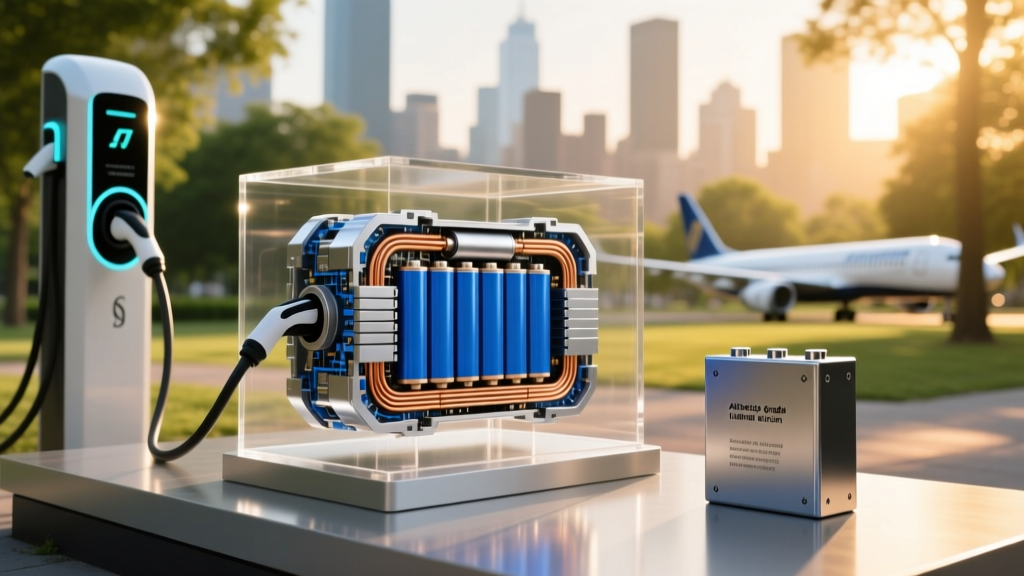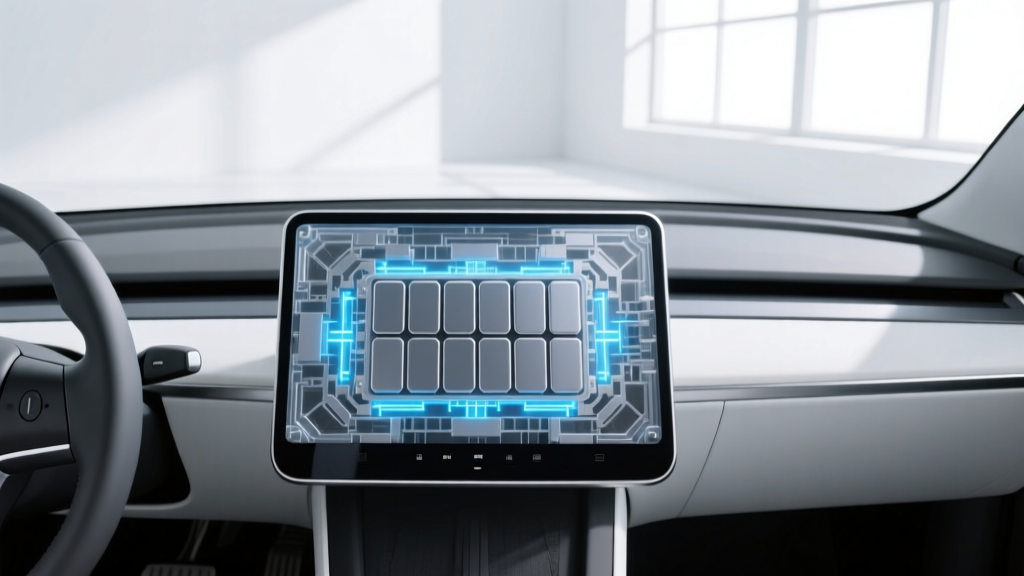
Every EV buyer obsesses over range and 0-60 times, but the single most expensive component in the vehicle — the high-voltage traction battery — often gets reduced to a single kWh number. That number is shaped by a handful of automobile battery manufacturers whose chemistry choices, cell formats, and manufacturing scale determine how far you can drive on a charge, how fast you can recharge, and how much capacity you'll retain after 100,000 miles.
In this guide, we map the major battery suppliers powering today's EVs, break down the LFP vs. NMC/NCA chemistry trade-offs that define real-world ownership, and provide hard data on degradation, warranty coverage, and replacement costs so you can buy with eyes wide open.
The Big Players: Who Supplies Your EV Battery?
As of 2026, the global EV battery supply chain is dominated by a tier of manufacturers that collectively supply over 85% of cells installed in passenger electric vehicles:
- CATL (Contemporary Amperex Technology Co. Limited): The world's largest battery maker by volume, supplying Tesla, BMW, Hyundai, Volvo, and many Chinese OEMs. CATL leads in LFP cell production and has pioneered cell-to-pack (CTP) and cell-to-chassis (CTC) architectures that boost pack-level energy density.
- LG Energy Solution: A primary supplier to GM (Ultium platform), Tesla (certain Model Y variants), Volkswagen, Hyundai, and Stellantis. LG specializes in NMC pouch and cylindrical cells with high nickel content (NCMA chemistry in Ultium packs).
- Panasonic: Tesla's longest-standing battery partner, producing 2170 and 4680 cylindrical NCA/NMC cells at the Nevada and Kansas Gigafactories. Panasonic cells historically lead in energy density per cell.
- BYD: Vertically integrated — BYD both manufactures vehicles and supplies its Blade LFP cells to Tesla (certain Model Y Standard Range), Toyota, and others. The Blade form factor emphasizes thermal stability and cycle life.
- SK On: Supplies Ford (F-150 Lightning, Mustang Mach-E), Hyundai (Ioniq 5/6 for certain markets), and is ramping U.S. production through joint ventures with Ford (BlueOval SK).
- Samsung SDI: Supplies BMW, Stellantis, and Rivian. Known for high-nickel NMC prismatic cells and a growing U.S. manufacturing footprint via JV with Stellantis.
Why does this matter to you? The manufacturer determines the cell chemistry, form factor (cylindrical, pouch, or prismatic), and thermal management design — all of which influence your charging speed, cold-weather range, and long-term degradation. A Hyundai Ioniq 5 with SK On NMC cells behaves differently over 8 years than a Tesla Model 3 with CATL LFP cells, even if the EPA range stickers look similar.
LFP vs. NMC/NCA: The Chemistry Decision That Shapes Your Ownership
Almost every EV battery on the market uses one of two lithium-ion cathode chemistries. Understanding the trade-offs is the single most useful thing you can do before purchasing an EV.
| Attribute | LFP (Lithium Iron Phosphate) | NMC / NCA (Nickel Manganese Cobalt / Nickel Cobalt Aluminum) |
|---|---|---|
| Energy Density (cell-level) | ~160–180 Wh/kg | ~220–300 Wh/kg |
| Typical Cycle Life | 3,000–5,000+ cycles | 1,000–2,000 cycles |
| Cold-Weather Performance | Moderate; more range loss below freezing | Better low-temperature discharge capability |
| Thermal Stability / Safety | Excellent; higher thermal runaway threshold | Good; requires robust BMS and cooling |
| Cost per kWh (cell) | Lower (~$80–100/kWh at scale) | Higher (~$110–140/kWh) |
| Recommended Charging Habit | Can charge to 100% daily | Best kept 20–80% for daily use |
| Notable Suppliers | CATL, BYD | LG Energy Solution, Panasonic, SK On, Samsung SDI |
| Example Vehicles (2026) | Tesla Model 3 RWD, Model Y RWD, Ford Mustang Mach-E Select (LFP option) | Tesla Model 3/Y Long Range, Hyundai Ioniq 5, Chevrolet Equinox EV, Rivian R1T |
How Long Do EV Batteries Actually Last? Real Degradation Data
The fear that EV batteries need replacement every few years is not supported by fleet data. Here's what real-world studies and manufacturer telemetry show:
- Geotab fleet study (2024, 10,000+ vehicles): Average degradation across all EV models was approximately 2.3% per year over the first 5 years, meaning a typical EV retains ~88% of its original capacity at the 5-year mark. Source: Geotab EV Battery Degradation Report.
- Tesla Impact Report (2024): Tesla reports its Model 3/Y fleet retains approximately 85% of original range at 150,000 miles. This aligns with NMC/NCA cells managed by an aggressive thermal management system.
- Taxi fleet data (Nissan Leaf, early-generation passive cooling): Higher degradation rates of 3–5% per year in hot climates, underscoring the importance of active liquid cooling — now standard on nearly all 2026 EVs.
For a 2026 EV with a 75 kWh usable battery and an EPA range of 310 miles, a 2.3%/year degradation rate means:
- Year 3: ~93% capacity → ~288 miles real-world range
- Year 5: ~88% capacity → ~273 miles
- Year 8: ~82% capacity → ~254 miles
- Year 12: ~72% capacity → ~223 miles
That Year 12 figure is still comfortably above most daily commute needs, and it's why most EV batteries outlive the vehicle they're installed in.
What Does the Battery Warranty Actually Cover?
Federal regulation mandates a minimum 8-year/100,000-mile warranty on EV battery packs for emissions-related compliance, but most manufacturers exceed this. Here's how the major warranties stack up:
| Manufacturer | Warranty Period | Mileage Cap | Capacity Retention Threshold |
|---|---|---|---|
| Tesla (Model 3/Y RWD — LFP) | 8 years | 100,000 miles | 70% |
| Tesla (Model 3/Y Long Range — NMC) | 8 years | 120,000 miles | 70% |
| Hyundai / Kia | 10 years | 100,000 miles | 70% |
| GM (Ultium platform) | 8 years | 100,000 miles | 70% (60% for commercial) |
| Ford | 8 years | 100,000 miles | 70% |
| Rivian | 8 years | 175,000 miles | 70% |
| BMW | 8 years | 100,000 miles | 70% |
Key details buyers miss:
- The warranty covers capacity below the threshold — not any degradation. If your 310-mile EV drops to 250 miles (80% retention), that's not a warranty claim. If it drops to 210 miles (68%), it is.
- Warranty claims typically result in module replacement or refurbishment, not a brand-new pack. The replacement will meet the threshold, not restore 100% capacity.
- Some warranties void coverage if the battery is subjected to prolonged storage at 0% or 100% SoC — read your owner's manual storage guidance.
EV Battery Replacement Costs: What You'd Actually Pay
If your battery falls outside warranty coverage and needs replacement — which, based on current degradation data, is unlikely during typical first-owner tenure — here's what you're looking at in 2026:
| Vehicle | Battery Size (usable kWh) | Chemistry | Estimated Replacement Cost (parts + labor) |
|---|---|---|---|
| Tesla Model 3 RWD | ~60 kWh | LFP (CATL/BYD) | $8,000–$12,000 |
| Tesla Model Y Long Range | ~75 kWh | NMC (Panasonic/LG) | $12,000–$16,000 |
| Hyundai Ioniq 5 | ~77.4 kWh | NMC (SK On) | $13,000–$18,000 |
| Chevrolet Equinox EV | ~85 kWh | NMC (LG Ultium) | $14,000–$19,000 |
| Ford F-150 Lightning (Extended Range) | ~131 kWh | NMC (SK On) | $20,000–$28,000 |
| Rivian R1T (Large Pack) | ~128 kWh | NMC (Samsung SDI) | $18,000–$25,000 |
Two important caveats: First, cell prices continue to decline — replacement costs in 2030 will likely be lower than today's figures. Second, many out-of-warranty replacements involve individual module swaps (a few thousand dollars) rather than full pack replacement, depending on the failure mode. Automobile battery manufacturers are increasingly designing packs with serviceable modules for exactly this reason.
Factors That Accelerate (or Slow) Battery Degradation
Your battery's lifespan isn't just a function of time — it's a function of how you treat it. Here's what the data says:
- Avoid routine DC fast charging above 150 kW: Occasional road-trip fast charging is fine, but daily use of 250+ kW chargers increases cell stress. Studies show vehicles that DC fast charge more than 3 times per month exhibit slightly higher degradation rates (~0.5% additional per year).
- Keep NMC/NCA between 20–80% SoC for daily use: Set your charge limit to 80% for commuting. Charge to 100% only before long trips. LFP owners can charge to 100% daily — in fact, CATL and BYD recommend periodic 100% charges for accurate SoC calibration.
- Minimize prolonged exposure to extreme heat: Parking in shade or a garage when ambient temperatures exceed 95°F reduces calendar degradation. Active thermal management helps, but it can't fully offset 110°F asphalt temperatures.
- Don't store at 0% or 100%: If leaving your EV for 2+ weeks, set SoC to ~50%. Storage at extreme SoC levels accelerates capacity loss.
- Use preconditioning before fast charging: Most 2026 EVs automatically precondition the battery when you navigate to a DC fast charger. This brings cells to the optimal ~35–40°C for charging, reducing lithium plating risk and improving charge speed.
- Regenerative braking at moderate levels: Aggressive regen in cold weather (below 32°F) can stress cells that haven't been preconditioned. Many EVs automatically reduce regen when the battery is cold.
How to Check Your Battery's State of Health (SoH)
State of Health (SoH) is the percentage of original capacity your battery currently retains. A new EV has 100% SoH; a battery at 85% SoH holds 85% of its original kWh.
How to check SoH in 2026 EVs:
- In-vehicle display: Tesla, Hyundai/Kia, BMW, and GM now include battery health indicators in the vehicle settings menu. Tesla's shows estimated range at 100% SoC vs. original; Hyundai provides a percentage SoH readout in the EV diagnostics screen.
- OBD-II diagnostic tools: Devices like the OBDLink MX+ paired with apps such as LeafSpy (Nissan), Teslamate (Tesla), or CarScanner (universal) can read the battery management system's SoH estimate directly. This is the most accurate consumer-accessible method.
- Dealer diagnostic check: Any authorized service center can pull a full battery health report. Request this when purchasing a used EV — it's the EV equivalent of a compression test.
- Third-party services: Companies like Recurrent Auto provide battery health reports based on connected-car data, useful for fleet managers and used-EV buyers.
For buyers evaluating a used EV, a SoH reading of 90%+ at 50,000 miles is excellent; 85–90% is normal; below 80% at any mileage warrants a closer look at the vehicle's charging history and climate exposure.
What's Next? Solid-State, Silicon Anodes, and Realistic Timelines
Automobile battery manufacturers are investing billions in next-generation chemistries, but the gap between lab announcements and showroom availability remains significant:
- Solid-state batteries: Toyota has announced a solid-state battery targeting 745 miles of range (WLTP) with a 10-minute fast charge, initially expected in limited production vehicles around 2027–2028. Nissan and Samsung SDI have similar timelines. However, solid-state cells face manufacturing scale-up challenges — expect limited availability in premium models first, not mass-market EVs, before 2030.
- Silicon anode technology: Companies like Sila Nanotechnologies and Group14 are supplying silicon-dominant anode materials that boost energy density by 20–40% over graphite anodes. Mercedes-Benz (via the G-Class EV) and Panasonic are early adopters. This technology is already shipping in limited applications in 2026.
- Sodium-ion batteries: CATL has begun shipping sodium-ion cells in Chinese-market EVs. These offer lower energy density than LFP but eliminate lithium entirely, reducing cost and supply-chain risk. U.S. availability is not expected before 2028.
- LMFP (Lithium Manganese Iron Phosphate): An evolution of LFP that adds manganese to boost energy density by ~15–20% while retaining LFP's safety and cycle-life advantages. CATL and Gotion are targeting 2026–2027 production. This could become the default chemistry for mid-range EVs within 3–5 years.
Frequently Asked Questions
How long do EV batteries last in years and miles?
Based on fleet data from Geotab and manufacturer telemetry, modern liquid-cooled EV batteries from major automobile battery manufacturers typically retain 80–88% of original capacity at 100,000–150,000 miles (8–12 years). Most batteries will outlast the vehicle's useful life. Complete failure before 150,000 miles is rare and typically covered under warranty.
How much does an EV battery cost to replace?
Full pack replacement in 2026 ranges from approximately $8,000 (smaller LFP packs like the Tesla Model 3 RWD) to $28,000 (large NMC packs like the F-150 Lightning Extended Range). However, most out-of-warranty failures involve individual module replacements costing $2,000–$6,000. Cell pricing continues to decline, so future replacement costs will likely be lower.
What does the EV battery warranty cover?
Federal law mandates a minimum 8-year/100,000-mile battery warranty. Most manufacturers guarantee the battery will retain at least 70% of original capacity during that period. If capacity drops below the threshold, the manufacturer will repair or replace modules to bring the pack above the threshold. The warranty covers defects and excessive degradation, not damage from accidents or improper storage.
How do I check and maximize my battery's health?
Check SoH via your vehicle's built-in diagnostics screen, an OBD-II scanner app, or a dealer diagnostic report. To maximize longevity: keep NMC/NCA batteries between 20–80% SoC for daily use (LFP can go to 100%), minimize frequent DC fast charging, precondition before fast charging, avoid prolonged storage at extreme SoC levels, and park in shade during extreme heat.
LFP vs. NMC — which battery chemistry is better?
Neither is universally better — they serve different needs. Choose LFP if you want maximum cycle life, the ability to charge to 100% daily without concern, lower cost, and superior thermal safety — and you can accept ~15–20% less range for the same pack weight. Choose NMC/NCA if you need maximum range per charge, better cold-weather performance, and faster DC fast charging capability — and you're willing to manage daily charge limits (20–80%). Most automobile battery manufacturers produce both; the choice is made at the OEM trim level.
Sources: EPA fuel economy data via fueleconomy.gov; IRS §30D tax credit rules via irs.gov; Geotab EV Battery Degradation Study; manufacturer specification sheets and warranty documentation for 2026 model-year vehicles.