Every few years, a battery breakthrough headline promises to double EV range overnight. Amprius Technologies has been at the center of one of the most persistent claims: a silicon-anode lithium-ion cell achieving 500 Wh/kg energy density — roughly double what sits in most EVs on the road in 2026. Buyers and owners want to know one thing above all: what would an Amprius 500 Wh/kg battery charging time actually look like in a production EV, and when — if ever — will it reach consumer vehicles?
This guide puts that question in context. We'll examine what Amprius has actually demonstrated, how charging physics scale with next-generation cells, and how today's proven chemistries (LFP and NMC/NCA) compare on the metrics that matter right now: degradation, warranty, replacement cost, and daily care.
What Amprius 500 Wh/kg Silicon Anode Cells Actually Are
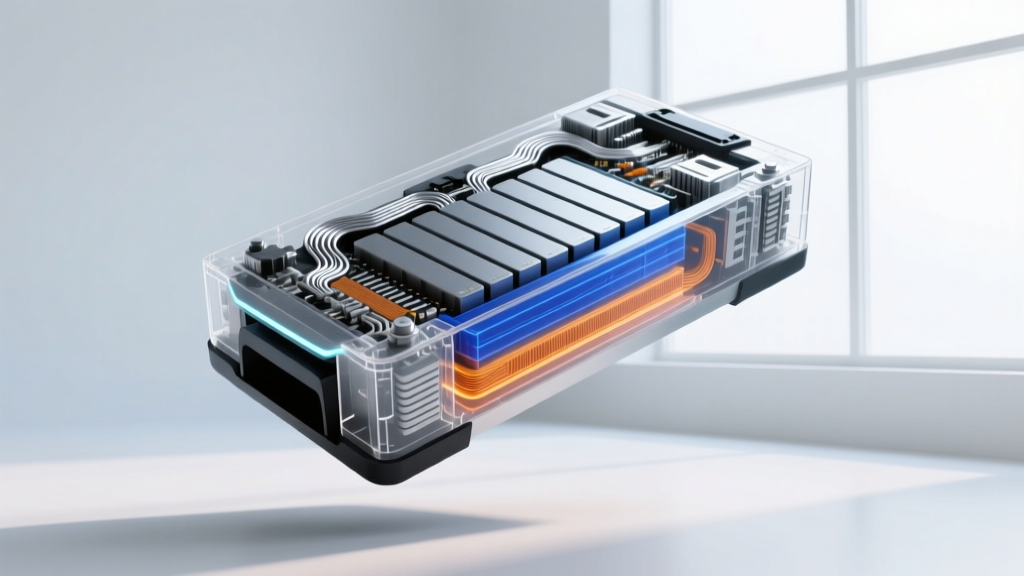
Amprius (now publicly traded as Amprius Technologies, Inc.) manufactures silicon-anode lithium-ion cells, primarily for aerospace, defense, and high-end electronics applications. Their flagship SiCore cells have demonstrated energy densities at or above 450–500 Wh/kg at the cell level, a figure confirmed in peer-reviewed testing and company disclosures.
For comparison, the best NMC cells in 2026 production EVs — such as those in the Tesla Model 3 Long Range or Hyundai Ioniq 6 — deliver roughly 250–270 Wh/kg at the cell level. Pack-level energy density (which accounts for cooling, structural housing, and bus bars) is lower still, typically 150–180 Wh/kg.
A cell that truly delivers 500 Wh/kg at scale could theoretically enable:
- A 60 kWh pack weighing ~120 kg (vs. ~380–420 kg today)
- A 100 kWh pack in the same weight envelope as today's 50–55 kWh packs
- 500+ mile EPA ranges in mid-size sedans without resorting to massive, heavy packs
But energy density is only one variable. The question of charging time depends on an entirely different set of constraints.
Amprius 500 Wh/kg Battery Charging Time: The Physics Problem
Charging speed is governed by the cell's C-rate — the ratio of charge power to battery capacity. A 1C rate charges a 100 kWh pack at 100 kW; a 2C rate charges it at 200 kW. Most current NMC EV cells sustain roughly 1.5–2.5C during DC fast charging in the 10–80% window, tapering sharply above 80% to protect the anode from lithium plating.
Silicon anodes present a unique challenge. Silicon expands up to 300% by volume when lithiated (compared to ~10% for graphite). This expansion causes mechanical stress, cracking, and solid-electrolyte interphase (SEI) layer reformation — all of which accelerate degradation when charging is aggressive. Amprius's SiCore technology uses a nanostructured silicon core with proprietary coatings to mitigate this, but the fundamental physics remain:
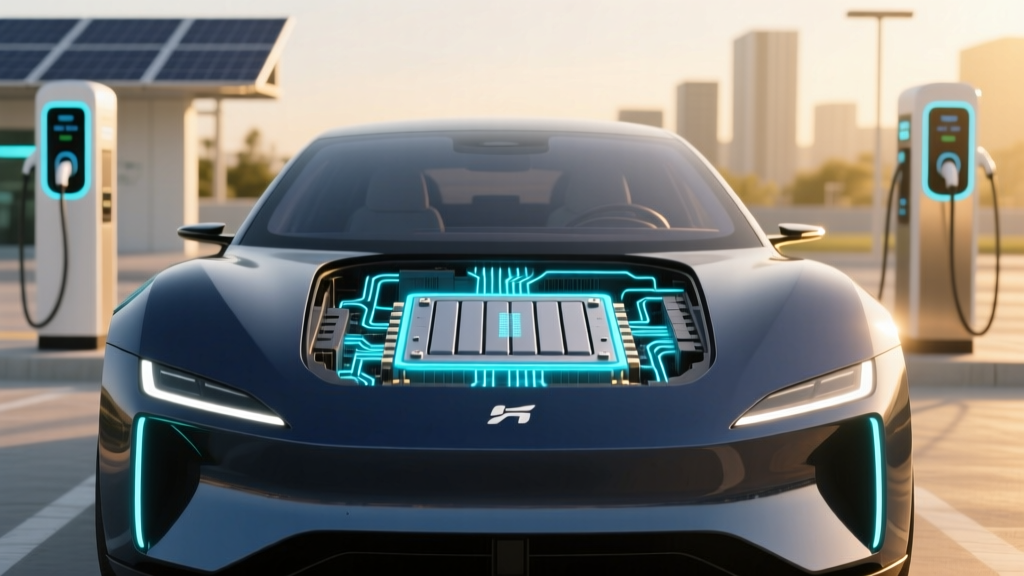
At a conservative 1C charge rate (protecting cycle life), peak power would be ~100 kW, yielding a 10–80% charge in approximately 42–48 minutes. At 2C (if cycle life permits), that drops to ~22–25 minutes — comparable to today's best 800V NMC architectures. A 3C+ rate would require thermal management breakthroughs not yet demonstrated at automotive scale.
In short: a 500 Wh/kg cell does not automatically charge faster than a 250 Wh/kg cell. It charges at whatever C-rate the silicon anode can tolerate without premature degradation. As of early 2026, Amprius has not published automotive-grade C-rate data for high-volume EV applications, and no OEM has announced a production vehicle using their cells.
Today's Proven Chemistries: LFP vs NMC/NCA Compared
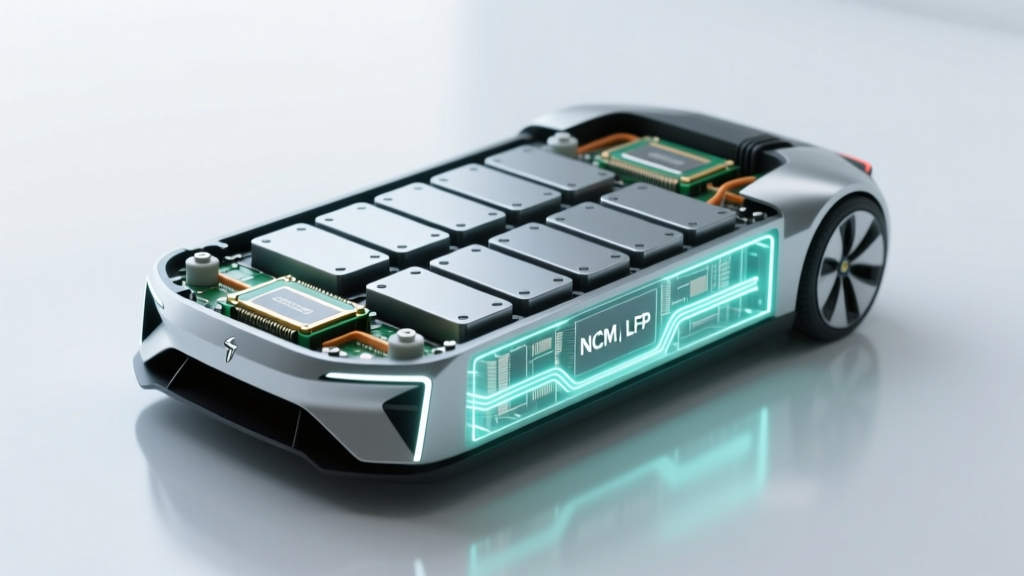
While silicon-anode technology matures, 2026 EV buyers choose between two dominant chemistries. Here's how they stack up on the metrics that affect ownership:
| Metric | LFP (Lithium Iron Phosphate) | NMC/NCA (Nickel Manganese Cobalt / Nickel Cobalt Aluminum) |
|---|---|---|
| Cell energy density | 160–200 Wh/kg | 230–270 Wh/kg |
| Typical pack examples (2026) | Tesla Model 3 RWD, BYD Seal, Ford Mustang Mach-E Select | Tesla Model 3 LR, Hyundai Ioniq 5/6, BMW iX, Rivian R1T |
| Cycle life | 3,000–6,000+ cycles to 80% SoH | 1,000–2,500 cycles to 80% SoH |
| Cold-weather performance | More range loss below 32°F; slower cold charging without preconditioning | Better low-temp discharge; still benefits from preconditioning |
| SoC flexibility | Can charge to 100% daily without accelerated degradation | Best kept 20–80% daily; 100% only for trips |
| Cost per kWh (pack level) | ~$90–$110 | ~$120–$150 |
| Thermal runaway risk | Lower (more stable chemistry) | Higher (requires more robust BMS/cooling) |
Bottom line: LFP wins on longevity, cost, and daily charging convenience. NMC/NCA wins on range-per-kilogram and cold-weather usability. Most buyers who charge at home nightly and don't need maximum range are better served by LFP. Road-trippers and cold-climate owners benefit from NMC.
How Long Do EV Batteries Actually Last? Degradation Data
The fear that an EV battery will "die" at 100,000 miles is not supported by fleet data. Modern thermal management and chemistry improvements have pushed degradation curves well beyond early-2010s expectations.
Here's what real-world data shows for 2020–2026 model-year vehicles with active liquid cooling:
| Milestone | Typical Capacity Retained (NMC) | Typical Capacity Retained (LFP) |
|---|---|---|
| 1 year / 15,000 mi | 95–97% | 97–99% |
| 3 years / 45,000 mi | 90–94% | 94–97% |
| 5 years / 75,000 mi | 86–91% | 91–95% |
| 8 years / 120,000 mi | 80–87% | 87–93% |
| 10 years / 150,000 mi | 76–84% | 84–90% |
Data aggregated from fleet analyses by Recurrent Auto and Tesla's own Impact Report. Degradation is non-linear: most loss occurs in the first 12–18 months (calendar aging and initial SEI formation), after which the curve flattens considerably.
Key takeaway: the vast majority of EV batteries will retain 80%+ capacity at the 8-year / 100,000-mile warranty threshold. Out-of-warranty replacement before 150,000 miles is statistically rare for liquid-cooled packs.
EV Battery Warranty Terms: What's Covered and What Isn't
Federal law mandates a minimum 8-year / 100,000-mile warranty on EV battery packs (10 years / 150,000 miles in California and states that follow CARB standards). Most OEMs meet or exceed this baseline:
| Manufacturer (2026 MY) | Warranty Period | Capacity Retention Threshold |
|---|---|---|
| Tesla (Model 3/Y) | 8 yr / 120,000 mi (LR/AWD); 8 yr / 100,000 mi (RWD) | 70% |
| Hyundai / Kia | 10 yr / 100,000 mi | 70% |
| Ford (Mach-E, F-150 Lightning) | 8 yr / 100,000 mi | 70% |
| BMW (iX, i4) | 8 yr / 100,000 mi | 70% |
| Rivian | 8 yr / 175,000 mi | 70% |
What's covered: Capacity loss below the stated threshold, manufacturing defects, and cell/module failures.
What's typically not covered: Damage from accidents, flooding, improper charging equipment, or modifications. Normal degradation above the threshold (e.g., losing 25% over 8 years) is considered expected wear, not a warranty claim.
EV Battery Replacement Cost: What to Budget and When
Replacement cost is the single most cited fear among prospective EV buyers. Here's what the numbers actually look like in 2026:
| Vehicle / Pack Size | Full Pack Replacement (Parts + Labor) | Typical Replacement Trigger |
|---|---|---|
| Tesla Model 3 RWD (~60 kWh LFP) | $10,000–$14,000 | Rare before 200,000+ mi |
| Tesla Model Y LR (~75 kWh NMC) | $13,000–$18,000 | Rare before 180,000+ mi |
| Hyundai Ioniq 5 (~77 kWh NMC) | $14,000–$20,000 | Rare before 180,000+ mi |
| Ford F-150 Lightning Ext. Range (~131 kWh NMC) | $22,000–$32,000 | Rare before 150,000+ mi |
| Chevrolet Bolt EV (~65 kWh NMC) | $9,000–$14,000 (post-recall replacement packs) | Many replaced under recall at no cost |
Important context: most EV owners never replace the traction battery. According to Consumer Reports, the failure rate for modern liquid-cooled packs before 150,000 miles is well under 5%. Many packs outlive the vehicle's economic life. The cost is real, but the probability is low — and declining as pack prices fall and module-level repair (replacing individual bad modules rather than the whole pack) becomes more common at independent EV shops.
Factors That Accelerate Battery Degradation (and How to Avoid Them)
Battery aging comes from two sources: calendar aging (time and temperature) and cycle aging (charge/discharge use). Here's a practical care checklist:
- Avoid sustained high SoC (NMC/NCA only): Set daily charge limit to 80%. Charge to 100% only when departing on a trip. LFP owners can charge to 100% daily — in fact, periodic 100% charges help the BMS recalibrate.
- Minimize DC fast charging frequency: Occasional road-trip fast charging is fine. Daily reliance on 150+ kW DCFC accelerates degradation by ~1–3% per year versus Level 2 home charging, per Recurrent data.
- Precondition before fast charging: Use your car's navigation-routed preconditioning (Tesla, Hyundai, BMW, Ford all offer this). A cold battery charged at high power suffers lithium plating on the anode — permanent capacity loss.
- Avoid extreme heat storage: Don't leave an EV at 100% SoC in a 100°F+ driveway for days. If parking long-term in heat, set SoC to ~50%.
- Don't let SoC sit at 0%: If storing for weeks, aim for 40–60%. Deep discharge can trigger the BMS to brick the pack to prevent copper dissolution.
- Use Level 2 (7–11 kW) for daily charging: This is the sweet spot — fast enough for overnight replenishment, gentle enough for long-term health.
How to Check Your Battery's State of Health (SoH)
State of Health (SoH) is the percentage of original capacity your pack currently holds. A new battery is 100% SoH; a degraded one might be 88%.
Built-in methods:
- Tesla: Service menu (hold model name on About screen for 3 seconds, enter "service" code) shows SoH percentage. The mobile app also displays estimated range at 100%, which you can compare to original EPA figures.
- Hyundai/Kia: The EV-specific menu in the cluster or infotainment shows battery conditioning status. For precise SoH, a dealer OBD-II scan is required.
- BMW: The My BMW app and iDrive system show a "battery health" indicator. A full SoH report is available at the dealership.
- Universal OBD-II tools: Apps like OBD2 EV Scanner, Car Scanner ELM, or ABRP (A Better Route Planner) with an OBD dongle can read SoH from the BMS on most vehicles.
When to check: Before purchasing a used EV (essential), annually thereafter, and before the warranty expiration date to establish a baseline for any future claim.
Emerging Battery Tech: Silicon Anode, Solid-State, and Realistic Timelines
Beyond Amprius's silicon-anode cells, several next-generation technologies are in development. Here's where they stand as of 2026:
- Silicon-dominant anode (Amprius, Group14, Sila Nanotechnologies): Production cells exist for consumer electronics and aerospace. Automotive qualification (A-sample testing with OEMs) is underway. Realistic consumer vehicle integration: 2028–2031 for initial low-volume applications. Cycle life at high C-rates remains the unresolved challenge for EV use.
- Solid-state batteries (Toyota, QuantumScape, Samsung SDI): Toyota has announced a 2027–2028 target for limited production in a luxury EV with ~750 km (WLTP) range. QuantumScape's cells are in B-sample testing with Volkswagen. Solid-state promises faster charging (4C+ rates), better safety, and higher energy density, but manufacturing yield and cost are unsolved at automotive scale. Realistic mass-market availability: 2030–2033.
- Sodium-ion batteries (CATL, BYD): Already in production for some Chinese-market EVs (e.g., BYD Seagull variants). Lower energy density (~140–160 Wh/kg) but cheaper, cobalt-free, and better cold performance. Likely to appear in US-market budget EVs by 2027–2029.
None of these technologies are available in a 2026 model-year vehicle you can buy today. Claims to the contrary should be treated as preliminary and forward-looking.
Frequently Asked Questions
How long do EV batteries last in years and miles?
Modern liquid-cooled EV batteries (2020–2026 model years) typically retain 80–90% capacity at 100,000–150,000 miles or 8–10 years. LFP chemistries trend toward the higher end of that range. Most packs will outlast the vehicle's useful economic life. The U.S. Department of Energy estimates average EV battery lifespan at 12–15 years under normal use.
How much does an EV battery cost to replace?
Full pack replacement ranges from ~$9,000 for a compact EV (Chevrolet Bolt, Nissan Leaf) to $22,000–$32,000 for large packs (Ford F-150 Lightning Extended Range, GMC Hummer EV). However, most owners never need a replacement — the failure rate before 150,000 miles is under 5% for liquid-cooled packs. Module-level repair (replacing individual failed modules) can reduce costs to $2,000–$6,000.
What does the EV battery warranty cover?
Federal law requires a minimum 8-year / 100,000-mile warranty covering capacity loss below 70% of original. Some OEMs (Hyundai, Kia, Rivian) extend this to 10 years or higher mileage. Warranties cover manufacturing defects and abnormal degradation but not damage from accidents, floods, or unauthorized modifications.
How do I check and maximize my battery health?
Check SoH via your vehicle's built-in service menu, the manufacturer's mobile app, or an OBD-II EV scanner. Maximize longevity by: charging NMC to 80% daily (LFP to 100%), using Level 2 home charging over DCFC when possible, preconditioning before fast charging, and avoiding prolonged storage at 0% or 100% SoC in extreme temperatures.
LFP vs NMC — which battery chemistry is better for me?
Choose LFP if you charge at home nightly, want maximum cycle life, live in a mild climate, and don't need the longest possible range. Choose NMC/NCA if you need maximum range per charge, live in a cold climate, take frequent road trips, or want faster DC fast charging in winter. Neither is universally "better" — the right choice depends on your driving pattern and climate.
When will Amprius or silicon-anode batteries be in consumer EVs?
Amprius cells are currently in production for aerospace and defense applications. Automotive qualification with OEM partners is in early stages. The earliest realistic consumer EV integration is 2028–2031, likely in premium or performance vehicles first. Charging time for these cells at automotive scale has not been publicly characterized at the C-rates needed for sub-20-minute DC fast charging.