Most EV buyers focus on range and charging speed, but the battery pack itself — its chemistry, degradation trajectory, warranty coverage, and eventual replacement cost — dictates long-term ownership economics. Add Ample battery swapping into the mix, and the calculus shifts entirely: if you never own the battery, do traditional degradation concerns still matter?
This guide breaks down everything you need to know about EV battery technology in 2026, from cell chemistry trade-offs to real-world degradation data, and examines where modular battery swapping fits into the ownership picture.
LFP vs. NMC/NCA: Choosing Your Battery Chemistry
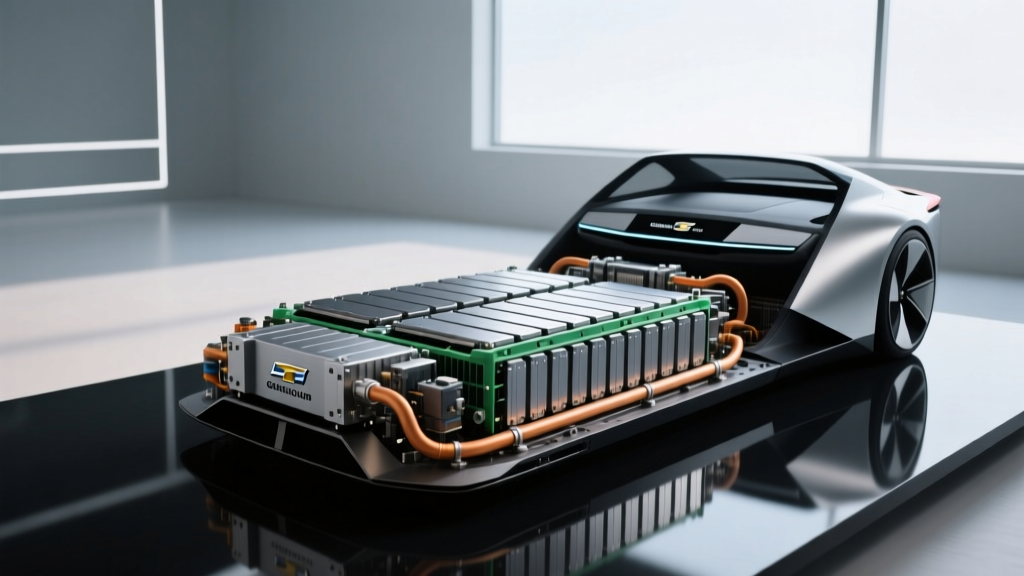
Every EV sold in the U.S. today uses one of two dominant lithium-ion chemistries: LFP (lithium iron phosphate) or NMC/NCA (nickel manganese cobalt / nickel cobalt aluminum). The chemistry determines energy density, cycle life, thermal stability, cold-weather performance, and cost.
| Attribute | LFP (Lithium Iron Phosphate) | NMC / NCA (Nickel-Based) |
|---|---|---|
| Energy Density | ~160–180 Wh/kg (lower) | ~220–300 Wh/kg (higher) |
| Cycle Life | 3,000–5,000+ cycles to 80% SoH | 1,000–2,000 cycles to 80% SoH |
| Cold Performance | Moderate; ~15–25% range loss below 32°F | Better; ~10–20% range loss below 32°F |
| Thermal Stability | Excellent; very low thermal runaway risk | Good; requires robust BMS and cooling |
| Cost (per kWh) | ~$80–$100 (lower) | ~$110–$140 (higher) |
| Typical Use Cases | Standard-range models, fleet vehicles, swapping-compatible packs | Long-range, performance models |
| Notable Adopters (2026) | Tesla Model 3/Y RWD, BYD, Ford LFP Mustang Mach-E, Ample partner fleets | Tesla Long Range, Hyundai Ioniq 5/6, Rivian, Lucid |
Which is better? It depends on your use case. NMC/NCA packs deliver more range in a lighter package — critical for long-range sedans and trucks. LFP packs sacrifice some energy density but last significantly longer (more charge cycles), tolerate daily 100% charging without accelerated degradation, and cost less to manufacture. For fleet operators and Ample battery swapping customers, LFP's longer cycle life and lower cost make it the pragmatic choice since the battery is a shared, swappable asset rather than a personal one.
How Long Do EV Batteries Actually Last?
The short answer: most EV batteries outlast the vehicles they're installed in. Data from millions of miles of real-world operation shows that modern lithium-ion packs degrade far more slowly than early EV skeptics predicted.
Typical Degradation Curve (NMC Packs, Real-World Fleet Data):
- Year 1 / 15,000 mi: ~2–4% capacity loss (initial formation loss)
- Year 3 / 45,000 mi: ~6–9% total loss
- Year 5 / 75,000 mi: ~9–12% total loss
- Year 8 / 120,000 mi: ~12–17% total loss
- Year 10 / 150,000 mi: ~15–22% total loss (varies widely by usage)
LFP packs typically show 20–40% less degradation over the same period due to their superior cycle life. Tesla's 2025 Impact Report noted that their vehicles retain approximately 85% of original range at 150,000 miles. Source: Tesla Impact Report.
For context, a pack that starts with 310 miles of EPA range and degrades 15% over a decade still delivers ~264 miles — more than sufficient for daily driving and most road trips. The battery doesn't "die" at a specific mileage; it gradually loses capacity, much like a smartphone.
What Does the EV Battery Warranty Actually Cover?
Federal law mandates a minimum 8-year / 100,000-mile battery warranty for EVs, with California Air Resources Board (CARB) states requiring 10 years / 150,000 miles. Most manufacturers meet or exceed these thresholds.
| Manufacturer | Warranty Term | Capacity Retention Threshold | Notes |
|---|---|---|---|
| Tesla (Model 3/Y RWD — LFP) | 8 yr / 120,000 mi | 70% | Long Range/Performance: 8 yr / 120,000 mi |
| Hyundai / Kia | 10 yr / 100,000 mi | 70% | Among the longest coverage terms |
| Ford (Mustang Mach-E, F-150 Lightning) | 8 yr / 100,000 mi | 70% | LFP packs on select trims |
| GM (Ultium platform) | 8 yr / 100,000 mi | 70% (60% for Bolt EUV) | Varies by model year |
| Rivian | 8 yr / 175,000 mi | 70% | Higher mileage cap for commercial/fleet use |
| BMW (i4, iX, i7) | 8 yr / 100,000 mi | 70% | Extended coverage available in CARB states |
Key detail: The warranty covers the battery falling below the stated retention threshold (typically 70% of original capacity). It does not cover gradual degradation above that line. If your 300-mile EV drops to 220 miles (73% retention) at year 7, that's within spec and not warrantable. Only if it drops below 210 miles (70%) would a claim apply.
For Ample battery swapping subscribers, this warranty dynamic is largely irrelevant — Ample retains ownership of the battery, absorbing degradation risk and replacement costs. You swap in a healthy pack at every visit, and the company manages the lifecycle of each module.
EV Battery Replacement Cost: What to Expect
Battery replacement is the single biggest fear among prospective EV buyers. Here's the reality: the vast majority of EV owners will never need a full pack replacement. But if you do, costs in 2026 have come down significantly from early EV era prices.
| Vehicle | Battery Size (kWh) | Chemistry | Replacement Cost (Parts + Labor) | Typical Replacement Trigger |
|---|---|---|---|---|
| Tesla Model 3 RWD | 60 kWh | LFP | $8,000–$11,000 | Rare before 200,000+ mi |
| Tesla Model Y Long Range | 75 kWh | NMC | $12,000–$16,000 | Rare before 180,000+ mi |
| Hyundai Ioniq 5 | 77.4 kWh | NMC | $13,000–$18,000 | Rare before 175,000+ mi |
| Ford F-150 Lightning Ext. Range | 131 kWh | NMC | $22,000–$30,000 | Rare before 150,000+ mi |
| Chevrolet Equinox EV | 85 kWh | NMC (Ultium) | $14,000–$19,000 | Rare before 175,000+ mi |
| Nissan Ariya | 91 kWh | NMC | $15,000–$20,000 | Rare before 160,000+ mi |
Two important caveats. First, module-level replacement is increasingly available — rather than swapping the entire pack, a technician can replace individual degraded modules for $2,000–$6,000 depending on the vehicle. Second, aftermarket and refurbished packs are becoming available for older models like the early Nissan Leaf and Chevy Bolt, often at 40–60% of OEM new-pack pricing.
With Ample's swapping model, this entire cost category disappears for the end user. Ample owns and maintains the batteries, rotating them through their swap stations where each module is inspected, balanced, and retired when it falls below a usable capacity threshold.
Factors That Accelerate (or Preserve) Battery Health
Battery degradation isn't purely a function of time — your charging habits and operating environment matter enormously.
Battery Care Best Practices
- Avoid sustained 100% SoC (NMC/NCA only): Daily charging to 80% significantly reduces calendar aging. LFP packs are an exception — manufacturers like Tesla recommend periodic 100% charges for LFP to allow the BMS to recalibrate.
- Minimize DC fast charging frequency: Occasional road-trip fast charging is fine, but daily 150+ kW sessions accelerate degradation by ~1–3% over the pack's life compared to Level 2 charging. The heat generated during high-C-rate charging stresses cell chemistry.
- Precondition before fast charging: Most modern EVs do this automatically when you navigate to a charger. A cold battery charged at high power suffers lithium plating, which permanently reduces capacity.
- Avoid extreme SoC in extreme temperatures: Don't leave your EV at 100% SoC in 110°F heat for days, and don't leave it near 0% in sub-zero cold. Both scenarios accelerate irreversible capacity loss.
- Use scheduled departure charging: Plugging in and setting a departure time lets the car charge just before you leave, minimizing time spent at high SoC.
- Drive it: Batteries that cycle regularly (20–80% SoC) age more gracefully than those that sit idle at extreme charge levels for weeks.
For fleet operators using Ample battery swapping, many of these concerns are managed automatically. Swap stations charge batteries at optimized rates in temperature-controlled environments, and the Ample system rotates packs to balance usage across the fleet — individual drivers don't need to micromanage SoC habits.
Monitoring Your Battery's State of Health (SoH)
Most 2026 EVs provide built-in battery health monitoring, though the level of detail varies by manufacturer.
How to Check SoH
- In-vehicle displays: Tesla, Hyundai/Kia, BMW, and GM vehicles include a battery health indicator in the settings or service menu, typically showing a percentage relative to original capacity.
- OBD-II diagnostic tools: Devices like the OBDLink SX paired with apps such as Leaf Spy (Nissan) or Scan My Tesla can read detailed cell-level data including individual cell voltages, pack impedance, and precise SoH percentage.
- Dealer diagnostics: A service center can run a full capacity test, typically requiring a controlled discharge cycle that takes 1–2 hours.
- Third-party services: Companies like Recurrent Auto provide battery health reports based on telematics data, often used for pre-purchase inspections on used EVs.
If you're tracking SoH and notice an abrupt drop (rather than the typical gradual 1–2% per year decline), that may indicate a defective module — which is exactly the type of failure the warranty is designed to cover.
Ample Battery Swapping: How It Changes the Equation
Ample's modular battery swapping model, which has expanded across fleet and commercial deployments through 2025–2026, fundamentally restructures the battery ownership question. Here's how it works and where it fits:
The Ample Model
Ample designs universal, modular battery packs that can be swapped in under 10 minutes at dedicated swap stations. The company partners with OEMs and fleet operators to integrate swap-compatible battery interfaces. As of early 2026, Ample's primary deployments serve commercial fleets — delivery vans, taxis, and ride-hail vehicles — in select metro areas including the San Francisco Bay Area, with expansion plans targeting additional U.S. and international markets.
Why Swapping Matters for Battery Economics
- Eliminates replacement risk: The fleet operator or driver never owns the battery. Ample absorbs all degradation, maintenance, and end-of-life recycling costs.
- Optimized charging extends pack life: Swap stations charge modules at moderate rates in climate-controlled racks, avoiding the thermal stress of repeated DC fast charging.
- Modular replacement: Ample's packs use individual modules (typically 5–10 kWh each). If one module degrades or fails, it's swapped out individually rather than replacing a $15,000+ monolithic pack.
- Second-life and recycling: Retired modules (those below ~70% capacity for automotive use) are redeployed for stationary energy storage or recycled, creating a closed-loop lifecycle.
For private passenger EV owners, Ample's model isn't yet broadly available — most consumer EVs use proprietary, vehicle-specific battery architectures that aren't swap-compatible. But for fleet operators evaluating total cost of ownership, swapping eliminates the largest unknown in EV economics: long-term battery health.
Emerging Battery Tech: Solid-State and Silicon Anodes
Several next-generation battery technologies are in advanced development, though none are available in production vehicles sold in the U.S. as of 2026.
Solid-State Batteries
Solid-state cells replace the liquid electrolyte with a solid material (ceramic, sulfide, or polymer), promising higher energy density (~400–500 Wh/kg projected), faster charging, and improved safety. Toyota has announced a solid-state EV for the 2027–2028 timeframe (preliminary, not yet on sale), while QuantumScape continues to validate prototype cells with OEM partners. Realistic mass-production timelines remain 2028–2030 for premium vehicles, with mainstream adoption likely post-2030.
Silicon Anode Batteries
Replacing graphite anodes with silicon can boost energy density by 20–40%. Companies like Sila Nanotechnologies and Group14 are supplying silicon-dominant anode materials to OEMs, with early production vehicles expected in the 2026–2027 model years. These cells are closer to commercialization than solid-state but still face cycle-life and cost challenges.
Forward-looking context: Both technologies will initially appear in premium, low-volume vehicles. For current buyers, today's LFP and NMC chemistries are mature, well-understood, and backed by substantial warranty coverage. Waiting for solid-state is not a practical purchase strategy for anyone who needs a vehicle in the next 2–3 years.
Frequently Asked Questions
How long do EV batteries last in years and miles?
Most modern EV batteries (2020+) retain 70–85% of their original capacity at 150,000 miles or 10 years. LFP packs generally last longer — 200,000+ miles before reaching the 70% threshold. The battery doesn't suddenly fail; it gradually loses range over time. Data from fueleconomy.gov and manufacturer fleet reports consistently support these figures.
How much does it cost to replace an EV battery?
Full pack replacement costs range from approximately $8,000 for a Tesla Model 3 LFP pack to $30,000 for a Ford F-150 Lightning extended-range pack (parts and labor, 2026 pricing). However, most owners never need a full replacement. Module-level repairs cost $2,000–$6,000, and warranty coverage typically applies if capacity drops below 70% within the warranty period (8 years / 100,000 miles minimum).
What does the EV battery warranty cover?
The federal minimum is 8 years / 100,000 miles, with CARB states requiring 10 years / 150,000 miles. The warranty covers the battery falling below a specified capacity retention threshold — usually 70% of original capacity. It covers defects and abnormal degradation, not normal gradual capacity loss above the threshold. Check your specific manufacturer's terms, as coverage details vary. See IRS clean vehicle credit rules for how battery sourcing also affects tax credit eligibility.
How do I check and maximize my EV battery health?
Check SoH through your vehicle's built-in battery health display, an OBD-II diagnostic tool, or a dealer service visit. To maximize longevity: charge NMC packs to 80% daily (100% for LFP is fine), minimize DC fast charging to road trips only, precondition before fast charging, avoid leaving the car at extreme SoC in extreme temperatures, and drive regularly rather than letting it sit for weeks.
LFP vs. NMC — which battery chemistry is better for me?
Choose LFP if you prioritize longevity, lower cost, and plan to keep the vehicle 8+ years or drive high annual miles. LFP tolerates daily 100% charging and offers 3,000–5,000+ charge cycles. Choose NMC/NCA if you need maximum range, faster acceleration, or live in a very cold climate where NMC's better low-temperature performance matters. For fleet and Ample battery swapping applications, LFP is generally preferred for its durability and lower cost per cycle.
Is Ample battery swapping available for consumer vehicles?
As of early 2026, Ample's swapping infrastructure primarily serves commercial fleets — delivery vehicles, taxis, and ride-hail operations — in select metro areas. Consumer passenger vehicles with swap-compatible architectures are not yet widely available. Ample has announced OEM partnerships that may expand swapping to broader vehicle segments, but timelines remain preliminary. For most private EV owners, traditional plug-in charging (home Level 2 + public DC fast charging) remains the standard approach.