Why EV Owners Need to Understand Air Travel with Lithium Batteries
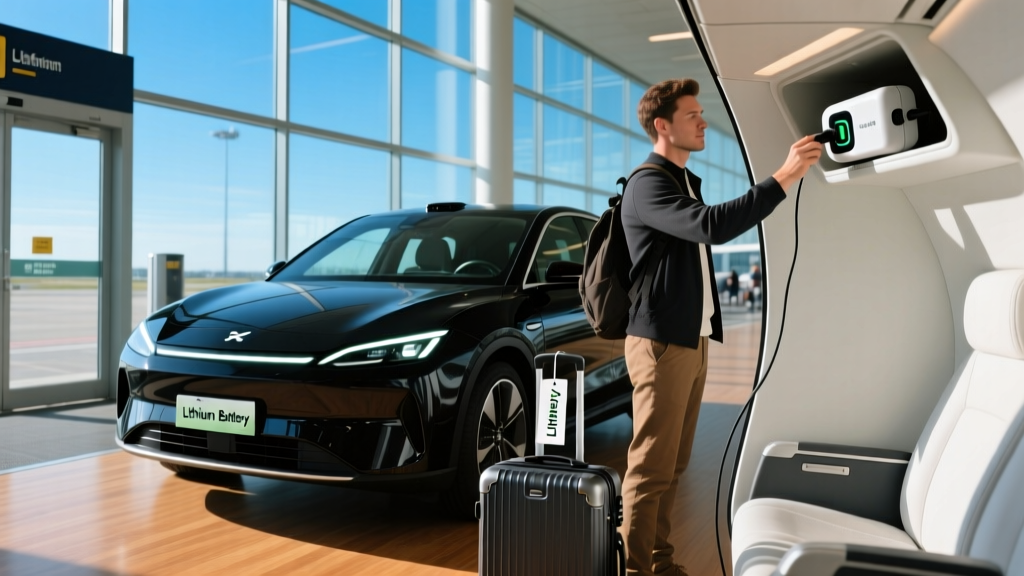
If you own an electric vehicle and fly regularly, you've likely encountered TSA scrutiny over spare batteries, power banks, or devices containing lithium cells. Air travel with lithium batteries is governed by strict IATA and FAA regulations — and the same chemistry powering your EV's traction battery sits inside your laptop, phone, and portable chargers. Understanding the differences between battery chemistries, how they degrade, and what safety protocols apply at 35,000 feet helps you navigate airport security and make smarter EV ownership decisions.
This guide covers the lithium battery technology in your EV, how it compares to the cells in your carry-on, and what the science says about longevity, replacement costs, and emerging solid-state alternatives expected later this decade.
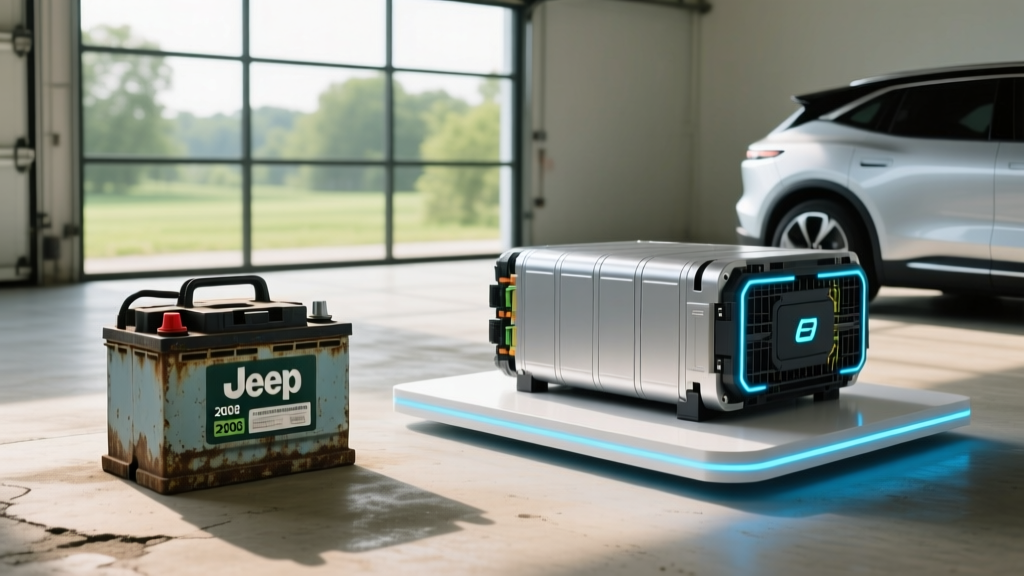
LFP vs NMC: The Chemistry Inside Your EV and Your Carry-On
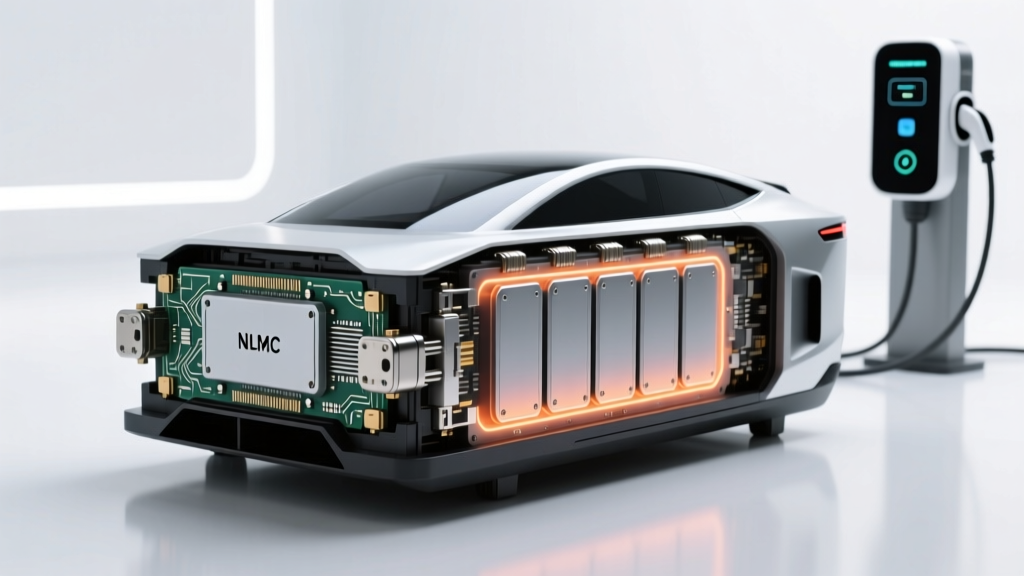
Not all lithium batteries are identical. The two dominant chemistries in modern EVs — Lithium Iron Phosphate (LFP) and Nickel Manganese Cobalt (NMC) — have distinctly different characteristics. Consumer electronics like laptops and phones typically use NMC or Lithium Cobalt Oxide (LCO) variants optimized for energy density in small form factors.
| Attribute | LFP (LiFePO4) | NMC (LiNiMnCoO2) |
|---|---|---|
| Energy Density | ~160 Wh/kg (lower) | ~220-260 Wh/kg (higher) |
| Cycle Life | 3,000-5,000+ cycles | 1,500-2,500 cycles |
| Cold-Weather Performance | Reduced; below -10°C charging limited | Better low-temp discharge, still impacted |
| Thermal Stability | Excellent; ~270°C onset | Moderate; ~210°C onset |
| Cost per kWh | ~$100-120 (2026) | ~$130-160 (2026) |
| State of Charge Tolerance | Can sustain 100% SoC daily | Best kept 20-80% for longevity |
| Common EV Applications | Tesla Model 3 RWD, BYD, Ford Mustang Mach-E Select | Hyundai Ioniq 5, Chevy Equinox EV, Tesla Long Range |
| Air Travel Relevance | More thermally stable; lower fire risk profile | Higher energy density; stricter handling protocols |
LFP's superior thermal stability is precisely why airlines and the FAA classify spare lithium batteries with such caution — thermal runaway in NMC cells occurs at lower temperatures and propagates faster. Your EV's battery management system (BMS) actively prevents conditions that could trigger runaway, but loose spare cells in cargo holds lack that protection.
How Long Do EV Batteries Actually Last? Real Degradation Data
The question "how long do EV batteries last" has a data-backed answer: most modern EV batteries outlast the vehicle itself. According to fueleconomy.gov and long-term fleet studies, the average EV battery loses approximately 5-8% of its original capacity over the first 100,000 miles, then degrades more slowly afterward.
| Mileage / Timeframe | Typical Capacity Retention (NMC) | Typical Capacity Retention (LFP) |
|---|---|---|
| Year 1 / 15,000 mi | 95-97% | 96-98% |
| Year 3 / 45,000 mi | 90-94% | 93-96% |
| Year 5 / 75,000 mi | 87-92% | 91-95% |
| Year 8 / 120,000 mi | 82-88% | 88-93% |
| Year 10 / 150,000 mi | 78-85% | 85-91% |
Real-world data from Tesla's 2025 Impact Report showed their fleet averaging ~12% degradation at 200,000 miles. Hyundai-Kia's E-GMP platform vehicles (Ioniq 5, EV6) have demonstrated similar curves in European fleet data. LFP packs consistently show 3-5 percentage points less degradation at equivalent mileage, primarily due to the chemistry's tolerance for full-charge cycling.
What Does the Battery Warranty Actually Cover?
Federal law mandates a minimum 8-year/100,000-mile warranty on EV battery packs for emissions-related components, and most manufacturers extend this to cover capacity loss. California and states adopting CARB standards (currently 17 states) require 10-year/150,000-mile coverage.
| Manufacturer | Warranty Term | Capacity Threshold | What's Covered |
|---|---|---|---|
| Tesla | 8 yr / 120,000 mi (Model 3/Y) | 70% retention | Defects + capacity below threshold |
| Hyundai / Kia | 10 yr / 100,000 mi | 70% retention | Defects + capacity below threshold |
| Ford | 8 yr / 100,000 mi | 70% retention | Defects + capacity below threshold |
| Chevrolet (Ultium) | 8 yr / 100,000 mi | 70% retention (60% for Bolt) | Defects + capacity below threshold |
| BMW | 8 yr / 100,000 mi | 70% retention | Defects + capacity below threshold |
| Rivian | 8 yr / 120,000 mi (175k Commercial) | 70% retention | Defects + capacity below threshold |
The 70% retention threshold matters: if your 82 kWh NMC pack (usable) drops below ~57.4 kWh usable capacity within the warranty period, the manufacturer must repair or replace it at no cost. In practice, warranty claims remain rare — most packs retain well above 80% at the 8-year mark under normal use.
EV Battery Replacement Cost: When and How Much
Out-of-warranty battery replacement is the cost scenario EV buyers fear most. Here's the reality: most EV batteries never need replacement during the vehicle's useful life. When they do, costs have declined significantly as pack designs have modularized.
| Vehicle / Pack Size | Estimated Replacement Cost (2026) | Typical Replacement Trigger |
|---|---|---|
| Tesla Model 3 RWD (60 kWh LFP) | $8,000 - $12,000 | Rare before 250k+ mi; collision damage |
| Hyundai Ioniq 5 (77.4 kWh NMC) | $12,000 - $16,000 | Cell imbalance; rare before 200k mi |
| Ford F-150 Lightning Ext. Range (131 kWh) | $18,000 - $25,000 | Towing-heavy use; 180-220k mi |
| Chevy Equinox EV (85 kWh NMC) | $11,000 - $15,000 | Rare before 200k mi |
| BMW i4 eDrive40 (83.9 kWh NMC) | $14,000 - $19,000 | Premium labor rates; 200k+ mi |
These figures include parts and labor at dealership rates. Independent EV specialists often quote 15-25% less. Module-level repair — replacing only degraded cell groups rather than the entire pack — is increasingly available and can reduce costs to $3,000-$7,000 depending on the fault.
Air Travel Rules for Lithium Batteries: What EV Owners Should Know
The FAA and IATA regulate lithium batteries in air travel based on watt-hour (Wh) capacity. Understanding these limits matters if you carry spare batteries, power stations, or high-capacity power banks alongside your EV ownership lifestyle.
- Under 100 Wh: Unlimited spare batteries in carry-on baggage. Most phones (~15 Wh), laptops (~50-80 Wh), and standard power banks fall here.
- 100-160 Wh: Maximum two spare batteries per passenger, carry-on only, with airline approval. Larger power stations and some camera batteries occupy this range.
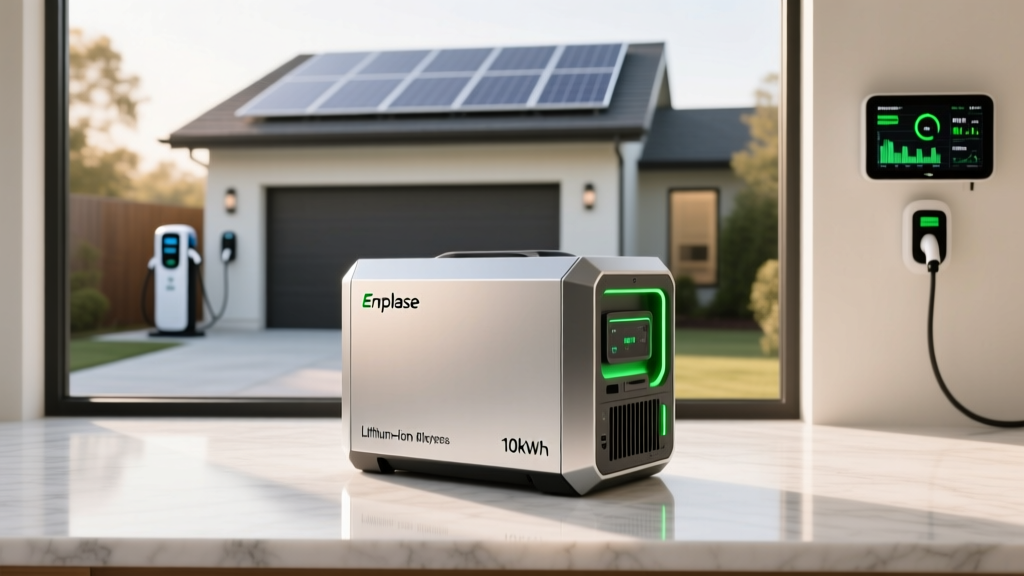
- Over 160 Wh: Prohibited on passenger aircraft entirely. This includes most portable power stations (EcoFlow Delta, Jackery 1000+) and, obviously, EV traction batteries (60,000-131,000 Wh).
Your EV's battery pack — whether a 60 kWh LFP unit or a 131 kWh NMC pack — contains between 60,000,000 and 131,000,000 Wh. This is why EVs are shipped via specialized ground or sea freight, never air cargo on passenger planes. The BMS, fire-suppression enclosures, and structural battery pack designs make installed EV batteries extraordinarily safe in vehicles, but loose cells at altitude pose unacceptable risk.
For the batteries in your bag: always carry spares in your cabin luggage, keep terminals covered or in original packaging, and never pack damaged or swollen cells. The FAA lithium battery guidance is updated regularly — check before international travel, as some carriers impose stricter limits.
Factors That Accelerate (or Preserve) Battery Health
Battery degradation isn't random — it follows predictable electrochemical patterns. Here's what actually moves the needle on your pack's lifespan:
Practices That Preserve Battery Life
- NMC owners: Set daily charge limit to 80% SoC; charge to 100% only for road trips
- LFP owners: Charge to 100% at least weekly to allow BMS cell-balancing calibration
- Precondition: Use your EV's scheduled departure feature to warm the battery before DC fast charging in cold weather
- Minimize DCFC frequency: Daily fast charging accelerates degradation ~1-2% over 100k miles vs. L2-only charging
- Avoid prolonged storage at extremes: Store at 40-60% SoC if leaving the vehicle unused for weeks
- Park in shade/garage: Sustained battery temps above 35°C (95°F) accelerate calendar aging
Practices That Accelerate Degradation
- Repeated DC fast charging above 80% SoC (the charge curve tapers here for a reason — heat generation spikes)
- Regularly draining below 10% SoC (deep discharge stresses cell chemistry)
- Leaving NMC packs at 100% SoC for extended periods, especially in heat
- Aggressive track use or repeated high-C-rate discharge without cooldown
- Towing at max capacity in high ambient temperatures (sustained 150+ kW discharge rates)
How to Check Your EV's Battery State of Health (SoH)
State of Health represents your battery's current maximum capacity as a percentage of its original factory capacity. Most EVs don't display SoH directly in the dashboard, but several methods exist:
- OBD-II diagnostic apps: Tools like OBDeleven, Leaf Spy (Nissan), or Tesla's built-in service mode can read SoH directly from the BMS. Accuracy varies by manufacturer.
- Dealer diagnostic reports: Request a battery health report during service visits — most brands provide this free upon request.
- Manual calculation: Fully charge to 100%, note the displayed range, and compare to the EPA-rated range when new. A 310-mile EPA vehicle now showing 275 miles at 100% suggests ~89% SoH (accounting for temperature and driving pattern variables).
- Third-party services: Companies like Recurrent Auto and Geotab offer fleet-level SoH monitoring via connected-car data APIs.
For a precise reading, a dealer-level diagnostic that measures actual kWh delivered during a controlled charge cycle from 10-100% is the gold standard. This accounts for BMS buffer zones and gives true usable capacity.
Emerging Battery Tech: Solid-State and Silicon Anodes
Next-generation battery technologies promise to reshape both EV ownership and air travel safety profiles — but realistic timelines matter.
Solid-state batteries replace the liquid electrolyte with a solid ceramic or polymer separator, dramatically reducing thermal runaway risk. Toyota has announced a commercial solid-state EV for 2027-2028 with a targeted 466-mile range and 10-minute fast-charge capability. Samsung SDI and QuantumScape are conducting pilot production runs. Realistically, broad market availability at competitive pricing remains a 2029-2031 prospect. These cells would theoretically face fewer air-travel restrictions due to their inherent thermal stability, but regulatory frameworks haven't yet been written for solid-state transport.
Silicon-anode batteries (used in limited form in the 2026 Porsche Macan EV and upcoming GM Ultium updates) boost energy density by 20-40% over conventional graphite anodes. They don't fundamentally change safety profiles for air travel but do extend EV range without increasing pack weight — meaning fewer raw materials per vehicle and lower replacement costs over time.
Sodium-ion batteries — entering production via CATL and BYD for lower-range urban EVs — contain no lithium at all. If these scale to US-market vehicles (expected 2028-2030), air travel restrictions specific to lithium chemistry would not apply to spare cells of this type, though watt-hour limits would still govern.
Frequently Asked Questions
Can I bring a spare EV battery module on a plane?
No. Individual EV battery modules typically range from 2,000-5,000 Wh each — far exceeding the 160 Wh passenger aircraft limit. Even shipping via air cargo requires Class 9 hazardous materials certification and specialized packaging.
How long do EV batteries last in years and miles?
Data from fleet studies and manufacturer reports indicate most modern EV batteries retain 80-90% capacity at 150,000 miles and 10 years. LFP chemistries trend toward the higher end of that range. Complete failure requiring replacement before 200,000 miles is statistically uncommon — under 2% of vehicles in major fleet datasets.
How much does an EV battery cost to replace in 2026?
Full pack replacement ranges from $8,000 (smaller LFP packs like the Tesla Model 3 RWD) to $25,000 (large NMC packs like the F-150 Lightning Extended Range). Module-level repairs, when available, cost $3,000-$7,000. Most vehicles never require replacement under normal ownership.
What does the EV battery warranty cover?
Standard warranties guarantee the battery will retain at least 70% of its original usable capacity for 8 years/100,000 miles (10 years/150,000 miles in CARB states). Coverage includes manufacturing defects, cell failures, and premature capacity loss. Damage from collisions, flooding, or unauthorized modifications is excluded.
How do I maximize my EV battery's health?
For NMC packs: limit daily charging to 80%, avoid prolonged 100% SoC storage, minimize DC fast charging frequency, precondition before fast charging in cold weather, and avoid deep discharges below 10%. For LFP packs: charge to 100% weekly for BMS calibration, but otherwise follow the same temperature and fast-charging guidelines.
LFP vs NMC — which battery chemistry is better for me?
Choose LFP if you prioritize longevity, plan to keep the vehicle 8+ years, charge at home daily (100% SoC tolerance is an advantage), and live in a moderate climate. Choose NMC if you need maximum range per charge, frequently drive in cold weather, or want the fastest available DC charging speeds. Neither chemistry is universally "better" — the right choice depends on your driving patterns and ownership timeline.
Do power banks count as lithium batteries for air travel?
Yes. Power banks are classified as spare lithium batteries and must travel in carry-on baggage. Check the Wh rating printed on the device — most consumer power banks (10,000-26,800 mAh at 3.7V) fall between 37-99 Wh and are unrestricted in quantity. Units above 100 Wh require airline approval and are limited to two per passenger.