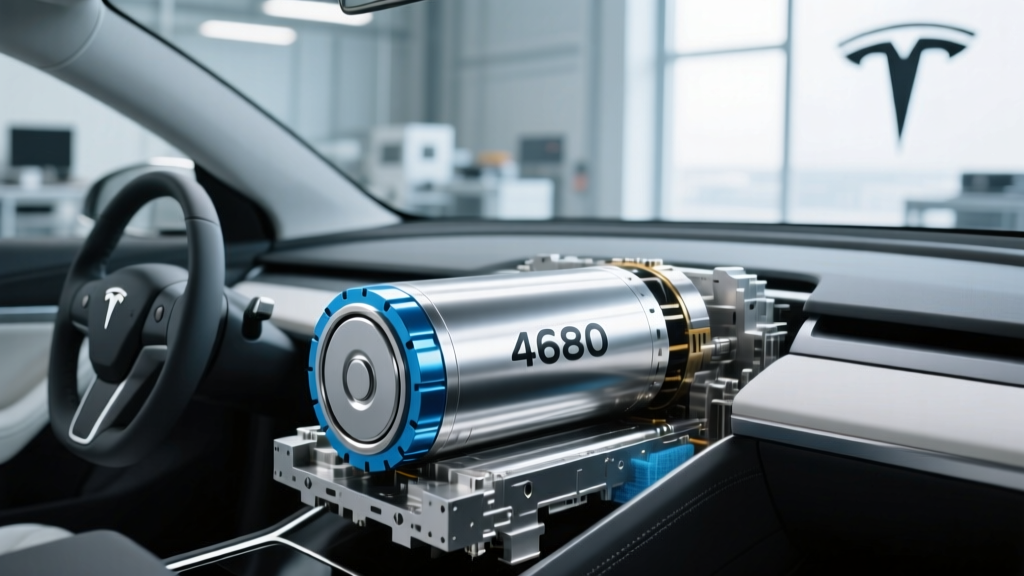
When Tesla began shipping vehicles with its in-house 4680 battery cells, the EV industry took notice. Measuring 46 mm in diameter and 80 mm in height, the 4680 cell is roughly five times the volume of the ubiquitous 2170 cylindrical cell used in Model 3 and Model Y Long Range variants. The promise: higher energy density per pack, lower manufacturing cost per kWh, and faster charging through a tabless electrode design. But for buyers and owners, the real questions are practical — does a 4680 pack deliver meaningfully more range, degrade more slowly, or charge faster in everyday use?
This guide breaks down the 4680 cell's engineering, compares it against the NMC and LFP chemistries dominating today's EV market, and provides the degradation data, warranty terms, and replacement-cost context every EV shopper needs.
What Are 4680 Battery Cells and Why Do They Matter?
The 4680 cell is a cylindrical lithium-ion format pioneered by Tesla and now being adopted or evaluated by other automakers including BMW and Samsung SDI. Compared to the 2170 cell (21 mm × 70 mm), the 4680 holds roughly 5× the energy per cell — approximately 26–28 Ah capacity versus ~5 Ah for a 2170. Fewer cells are needed per pack, simplifying structural integration.
Key engineering differences:
- Tabless (shingled spiral) electrode: Reduces internal resistance, enabling faster electron flow during DC fast charging and lowering heat generation.
- Dry electrode coating: Tesla's manufacturing process eliminates solvent use, reducing factory footprint and cost per kWh.
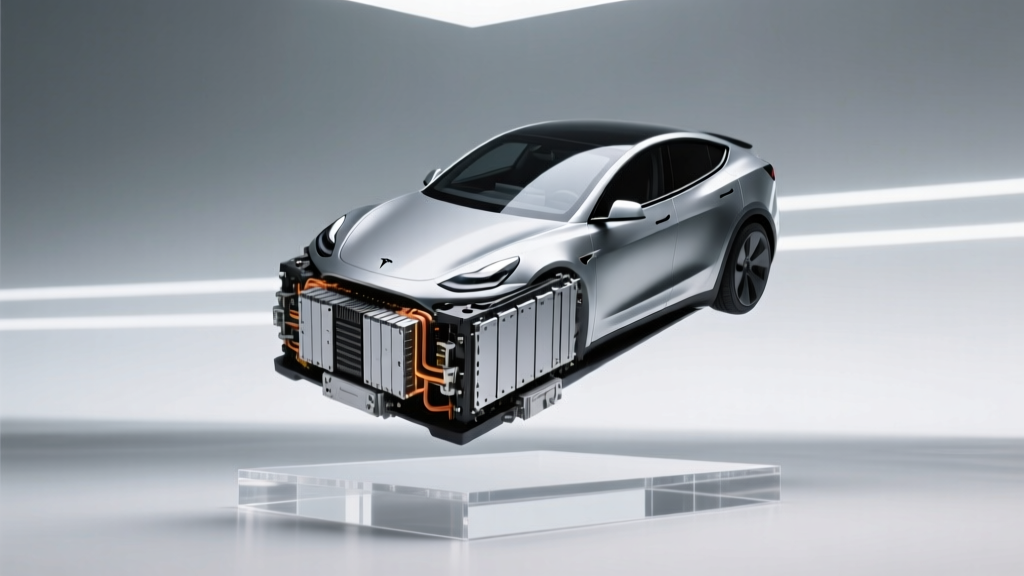
- Structural pack integration: In the Model Y built at Giga Texas, 4680 cells are bonded into a structural battery pack that serves as a stressed member of the chassis, reducing vehicle weight.
- Silicon-based anode: Some 4680 variants incorporate silicon in the anode to boost energy density, though silicon expansion remains an engineering challenge for long-term cycle life.
As of early 2026, 4680 cells are primarily found in the Tesla Model Y Standard Range (rear-wheel drive) built at Giga Texas and the Cybertruck. The EPA lists the RWD Model Y with a 270-mile range on its ~60 kWh (usable) LFP-chemistry structural pack — though note that not all 4680 packs use the same chemistry. Tesla has produced 4680 cells with both NMC-type and LFP-type cathodes depending on application.
Chemistry Showdown: LFP vs NMC/NCA in Modern EV Packs
Cell format (4680 vs 2170 vs prismatic) is only part of the story. The cathode chemistry determines energy density, cycle life, cold-weather behavior, and cost. Here is how the two dominant chemistries stack up:
| Attribute | LFP (Lithium Iron Phosphate) | NMC / NCA (Nickel Manganese Cobalt / Nickel Cobalt Aluminum) |
|---|---|---|
| Energy density (cell-level) | ~160–180 Wh/kg | ~220–260 Wh/kg |
| Typical cycle life | 3,000–5,000+ cycles to 80% SoH | 1,000–2,000 cycles to 80% SoH |
| Cold-weather performance | More range loss below 32°F; slower charging without preconditioning | Better low-temp conductivity; less range penalty |
| Recommended daily SoC | 100% (Tesla recommends charging to full regularly for BMS calibration) | 80% daily; 100% only for trips |
| Cobalt/nickel content | None — lower supply-chain risk | Significant — subject to critical-mineral sourcing rules |
| Cost per kWh (pack-level) | ~$100–120/kWh | ~$130–160/kWh |
| Common in | Tesla Model 3/Y RWD, Ford Mustang Mach-E Select, BYD Blade | Tesla Model 3/Y Long Range, Hyundai Ioniq 5, Rivian R1T |
Which is better? There is no universal answer. LFP excels for cost-conscious buyers who charge at home and prioritize longevity — its cycle life is 2–3× that of NMC. NMC wins for drivers who need maximum range in a single charge, tow frequently, or live in cold climates where LFP's winter penalty (often 25–35% range loss at highway speeds in sub-freezing temps) stings more.
The 4680 format can house either chemistry. Tesla's Giga Texas RWD Model Y uses 4680 LFP cells, while early Cybertruck packs used 4680 NMC-type cells. The format's advantage is manufacturing efficiency and structural integration, not chemistry alone.
Real-World Degradation: What the Data Shows
Every lithium-ion pack loses capacity over time and use. The question is how fast — and whether 4680 cells degrade differently from their 2170 predecessors.
Observed degradation benchmarks (fleet and owner data):
- Tesla 2020 Impact Report (NMC, 2170 cells): Model 3/Y packs retained ~88% capacity at 150,000 miles, with the steepest loss (~5%) occurring in the first 30,000 miles before stabilizing.
- Geotab fleet study (2024, mixed brands): Average EV battery degradation across 10,000+ vehicles was 2.3% per year, meaning ~89% State of Health (SoH) after 5 years.
- LFP-specific data (Tesla Model 3 RWD, CATL prismatic): Owner-reported SoH of 92–95% after 100,000 miles and 3+ years, consistent with LFP's superior cycle life.
- 4680 early data (limited): As of early 2026, most 4680-equipped vehicles are under 3 years old. Preliminary owner reports on Tesla Motors Club forums suggest Model Y RWD (4680 LFP) packs hold 94–97% SoH at 40,000–60,000 miles, though sample sizes remain small.
The takeaway: modern EV batteries — regardless of format — are lasting far longer than early-2010s packs. A well-maintained NMC pack should retain 85–90% capacity at 150,000 miles; an LFP pack may retain 90–95% over the same distance. The 4680's tabless design theoretically reduces heat-induced degradation during fast charging, but multi-year fleet data is still accumulating.
Warranty Coverage: What Automakers Guarantee
Federal regulations mandate a minimum 8-year/100,000-mile warranty on EV battery packs for emissions-related compliance, and most automakers exceed this baseline. Here is how major warranties compare:
| Automaker / Model | Battery Warranty | Capacity Retention Threshold |
|---|---|---|
| Tesla Model Y (4680 / 2170) | 8 years / 120,000 miles (Long Range); 8 yr / 100,000 mi (RWD) | 70% minimum SoH |
| Hyundai Ioniq 5 / Ioniq 6 | 10 years / 100,000 miles | 70% minimum SoH |
| Ford Mustang Mach-E | 8 years / 100,000 miles | 70% minimum SoH |
| Rivian R1T / R1S | 8 years / 175,000 miles | 70% minimum SoH |
| BMW iX / i4 | 8 years / 100,000 miles | 70% minimum SoH |
If your pack falls below the stated threshold within the warranty period, the manufacturer will repair or replace modules (or the full pack) at no cost. In practice, very few owners hit this threshold — it represents catastrophic or abnormal degradation, not the gradual 1–2% annual loss that is normal.
Battery Replacement Costs: Context and Reality
Out-of-warranty battery replacement is the single biggest fear among EV shoppers. Here is what it actually costs in 2026:
| Vehicle / Pack Size | Estimated Full Pack Replacement Cost | Typical Replacement Trigger |
|---|---|---|
| Tesla Model 3/Y (60 kWh LFP) | $8,000–$12,000 | Rare under 200,000 mi; module-level repair more common |
| Tesla Model 3/Y Long Range (75–82 kWh NMC) | $12,000–$16,000 | Rare under 200,000 mi |
| Hyundai Ioniq 5 (77.4 kWh NMC) | $10,000–$14,000 | Rare under 200,000 mi |
| Ford F-150 Lightning Extended (131 kWh NMC) | $18,000–$25,000 | Very large pack; module replacement more likely |
| Chevrolet Silverado EV (200+ kWh Ultium) | $25,000–$35,000 | Largest consumer packs; modular architecture may lower partial-repair cost |
Critical context: The vast majority of EV batteries never need full replacement. Data from NHTSA recalls and service bulletins shows that most battery-related service involves individual module or sensor replacement, not the entire pack. Tesla's modular pack design allows replacing a single degraded module for $1,500–$3,000 rather than the full assembly. Most EVs are retired or sold long before the pack reaches end-of-life — a 2026 Model Y with an 85% SoH pack at 150,000 miles still has 230+ miles of usable EPA range.
Factors That Accelerate (or Preserve) Battery Life
Battery degradation is not random — it is driven by measurable stressors. Here are the factors with the largest impact, ranked by severity:
- Extreme State of Charge (SoC): Storing an NMC pack at 100% SoC for days accelerates calendar aging. Keep daily charge at 80% for NMC/NCA; LFP tolerates 100% and benefits from periodic full charges for BMS cell-balancing.
- DC Fast Charging Frequency: Occasional DC fast charging (1–2× per week) causes negligible extra degradation. Daily fast charging at 150+ kW without preconditioning can add ~1–2% extra annual loss. Always precondition the battery before fast charging — the car's navigation to a Supercharger or Electrify America station triggers this automatically.
- Extreme Temperatures: Sustained exposure to ambient heat above 100°F (parking in desert sun without shade) degrades NMC faster. Cold weather doesn't permanently damage cells but temporarily reduces range and slows charging. Garage parking in both extremes helps.
- Deep Discharge: Letting any EV sit at 0% SoC for extended periods (weeks) risks bricking the 12V system and damaging cell voltage floors. Keep stored vehicles at 50–60% SoC.
- Aggressive Acceleration: Sustained high-current draws (repeated hard launches) generate heat. Meaningful only for track use or extreme driving — not a concern for normal owners.
How to Monitor Your Battery's State of Health
State of Health (SoH) is the percentage of original capacity your pack retains. A new pack is 100% SoH; a pack that held 80 kWh when new and now holds 72 kWh is at 90% SoH.
How to check SoH:
- Tesla app / in-car Service Mode: Tesla does not display SoH directly in the app, but owners can access Service Mode (tap Software → hold model name for 3 seconds → enter "service") to view battery health metrics including nominal full pack and energy remaining.
- Third-party OBD-II tools: Devices like the OBDLink SX paired with apps such as Scan My Tesla or Leaf Spy (for Nissan) read BMS data including SoH, cell voltage variance, and pack temperature.
- Hyundai / Kia / Ford: Some 2025–2026 models now include a battery health indicator in the infotainment system or companion app, though detail varies by manufacturer.
- Dealer diagnostic: Any authorized service center can run a full pack diagnostic and provide a printed SoH report — useful before buying a used EV.
For used-EV buyers, always request a pre-purchase battery diagnostic. A 2023 Model Y with 92% SoH at 45,000 miles is a healthier buy than one at 86% SoH, even if the price difference is $1,500–$2,000.
Looking Ahead: Solid-State, Silicon Anodes, and What's Next
The 4680 is not the final word in battery tech. Several next-generation technologies are in development, but realistic timelines matter:
- Silicon-dominant anodes: Already appearing in limited form inside some 4680 cells (Tesla) and prismatic packs (GM Ultium). Pure silicon anodes promise 20–40% energy density gains but suffer from volume expansion during charge cycles. Expect gradual integration through 2028–2030, not a sudden switchover.
- Solid-state batteries: Toyota, Samsung SDI, and QuantumScape are targeting 2027–2029 production starts. Solid-state cells replace the liquid electrolyte with a solid conductor, promising faster charging (10–80% in under 10 minutes), higher energy density, and improved safety. However, manufacturing scale-up remains the primary bottleneck. No solid-state EV is available for consumer purchase as of 2026.
- Sodium-ion batteries: CATL and BYD are deploying sodium-ion packs in Chinese-market EVs. Lower energy density (~120–140 Wh/kg) limits them to city cars and energy storage, but zero reliance on lithium or cobalt makes them attractive for cost-sensitive segments. US-market availability is unlikely before 2028.
For buyers deciding today, current lithium-ion technology — whether 4680, 2170, or prismatic, LFP or NMC — is mature, well-warranted, and lasting longer than the vehicles around it. Waiting for solid-state means waiting 3–5+ years with no guaranteed pricing advantage.
Frequently Asked Questions
How long do EV batteries last in years and miles?
Most modern EV batteries (2020 and newer) are designed to last 15–20 years or 200,000+ miles before dropping below 80% State of Health. Fleet data from Geotab and Tesla's own impact reports support this. LFP packs typically outlast NMC packs by a significant margin in cycle count. The vehicle's body, suspension, or electronics are more likely to reach end-of-life before the battery does.
How much does an EV battery cost to replace?
Full pack replacement ranges from $8,000 for a ~60 kWh LFP pack (Tesla Model 3/Y RWD) to $25,000–$35,000 for the largest packs (Silverado EV, Hummer EV). However, most service events involve individual module replacement at $1,500–$4,000. Full replacement is rare and usually only occurs after collision damage or extreme manufacturing defects covered under warranty.
What does the battery warranty actually cover?
Every major automaker warrants the high-voltage traction battery for at least 8 years / 100,000 miles against capacity loss below 70% of original. Some extend to 10 years (Hyundai/Kia) or 175,000 miles (Rivian). The warranty covers the battery pack, power electronics, and associated cooling systems. It does not cover the 12V auxiliary battery, cosmetic damage, or capacity loss from abuse (e.g., prolonged storage at 0% SoC).
How do I check and maximize my battery's health?
Monitor SoH through your vehicle's service mode, OBD-II diagnostic tools, or dealer inspections. To maximize longevity: charge NMC/NCA packs to 80% daily (100% only for trips), charge LFP packs to 100% at least weekly for cell balancing, precondition before DC fast charging, avoid storing the vehicle at extreme SoC levels, and park in shade or a garage when possible in hot climates.
LFP vs NMC — which battery chemistry is better for me?
Choose LFP if: you charge primarily at home, want maximum cycle life (3,000–5,000+ cycles), prioritize lower cost, and don't need the absolute longest single-charge range. Choose NMC/NCA if: you need 300+ miles of EPA range, live in a cold climate where LFP's winter range penalty hurts, tow frequently, or take regular road trips where energy density matters. Both chemistries are proven and well-warranted in 2026.
Do 4680 cells charge faster than 2170 cells?
In theory, the tabless design reduces internal resistance and allows higher sustained charge rates. In practice, the charging speed depends on the full system — pack thermal management, charger capability, and the vehicle's charge curve. The Cybertruck (4680 NMC) peaks at ~350 kW at a V4 Supercharger and reaches 10–80% in approximately 15 minutes. The Model Y RWD (4680 LFP) peaks lower, around 170–200 kW, with 10–80% in roughly 25–30 minutes. The cell format alone does not guarantee faster charging.
Are 4680 batteries safe?
Yes. Tesla's 4680 structural pack passed all NHTSA crash-testing requirements, and the Model Y with the 4680 pack earned the IIHS Top Safety Pick+ rating. The tabless design actually reduces internal heat generation, which is a safety positive. No widespread safety recalls specific to 4680 cells have been issued as of early 2026.