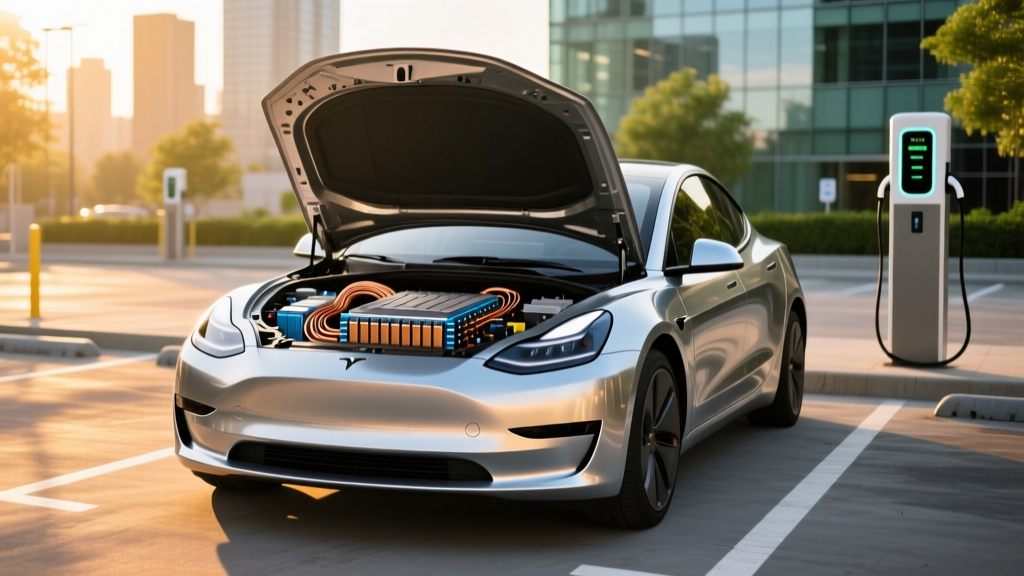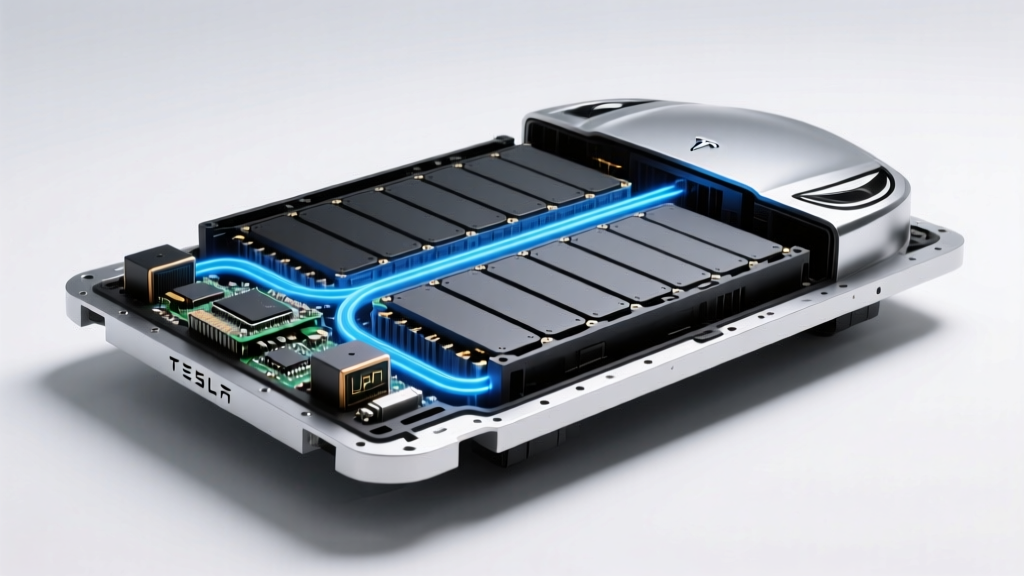
The 2026 Tesla Model Y remains one of the best-selling electric vehicles in the United States, and for good reason: competitive EPA range, access to the Supercharger network, and a mature software ecosystem. But for buyers and current owners, the single most consequential component under the floor is the high-voltage traction battery. It dictates range, charging speed, long-term value, and ultimately, how much you might pay if something goes wrong out of warranty.
This guide breaks down exactly what powers the 2026 Model Y lineup — from the Standard Range RWD's lithium iron phosphate (LFP) pack to the Long Range AWD's nickel-based chemistry — with real degradation data, warranty specifics, replacement cost ranges, and actionable care strategies.
2026 Model Y Battery Chemistry: LFP vs NMC Explained
Tesla uses two distinct battery chemistries across the 2026 Model Y lineup, and the choice affects everything from daily charging habits to cold-weather range retention. Understanding which pack your trim carries is essential before you even plug in.
The Model Y Standard Range RWD uses an LFP (lithium iron phosphate) battery — approximately 60 kWh usable. LFP cells are heavier and less energy-dense than nickel-based chemistries, but they offer dramatically longer cycle life and tolerate being held at 100% state of charge (SoC) without accelerated degradation. Tesla recommends charging LFP packs to 100% at least once per week to keep the battery management system (BMS) calibrated.
The Model Y Long Range AWD and Performance variants use NMC (nickel manganese cobalt) / NCA-type nickel-based cells — approximately 75–82 kWh usable, depending on the specific production batch and supplier (Panasonic, LG Energy Solution, or CATL). These packs deliver higher energy density, which translates to more range in a similar physical footprint, but they degrade faster when routinely charged to 100% or exposed to sustained high temperatures.
| Attribute | LFP (Standard Range RWD) | NMC/NCA (Long Range / Performance) |
|---|---|---|
| Usable capacity | ~60 kWh | ~75–82 kWh |
| Energy density | Lower (~160 Wh/kg cell-level) | Higher (~250–270 Wh/kg cell-level) |
| Cycle life | 3,000–5,000+ cycles | 1,000–2,000 cycles |
| Daily charge recommendation | 100% OK (Tesla recommends weekly 100%) | 80% daily; 100% only for trips |
| Cold-weather range loss | Greater (~30–40% at 20°F) | Moderate (~20–30% at 20°F) |
| Cost per kWh | Lower | Higher |
| Thermal stability | Excellent | Good (requires active thermal mgmt) |
The practical upshot: if you charge at home nightly and want a low-maintenance ownership experience, the LFP Standard Range is arguably the more durable choice. If you need maximum range for road trips and can discipline yourself to 80% daily limits, the NMC Long Range delivers.
Real-World Degradation: What the Data Shows
Battery degradation — the gradual, irreversible loss of usable capacity — is the number one longevity concern for EV buyers. Fortunately, real-world fleet data paints a reassuring picture for Tesla owners.
According to Tesla's own 2024 Impact Report (the most recent comprehensive fleet data available), Model Y vehicles with NMC/NCA packs retained approximately 85% of original capacity at 150,000 miles. The degradation curve is nonlinear: the steepest loss occurs in the first 20,000–30,000 miles (typically 3–5%), after which the rate flattens considerably.
For LFP packs, independent fleet analyses from sources like Recurrent Auto suggest even slower degradation, with many LFP-equipped vehicles showing less than 5% total loss after 100,000 miles. The chemistry's inherent stability at high SoC means daily 100% charging — a practice that would harm NMC — barely registers on LFP.
Typical Model Y Degradation Trajectory (NMC/NCA):
- Year 1 / ~15,000 mi: 2–4% loss (initial calibration settling)
- Year 3 / ~45,000 mi: 5–8% total loss
- Year 5 / ~75,000 mi: 7–10% total loss
- Year 8 / ~120,000 mi: 10–15% total loss
- Year 10 / ~150,000 mi: 12–18% total loss
Note: LFP packs typically run 3–5 percentage points better at each interval. Individual results vary based on charging habits, climate, and Supercharging frequency.
A critical nuance: a Model Y Long Range that started at 310 miles EPA will realistically deliver around 265–280 miles at the 8-year mark. That's still ample for most daily driving, but it matters if you regularly push the full range on road trips.
What Does the Tesla Battery Warranty Actually Cover?
Tesla's battery warranty is straightforward but has specific thresholds you need to understand before assuming you're covered.
| Model Y Trim | Warranty Period | Mileage Limit | Minimum Capacity Retention |
|---|---|---|---|
| Standard Range RWD (LFP) | 8 years | 100,000 miles | 70% |
| Long Range AWD (NMC) | 8 years | 120,000 miles | 70% |
| Performance (NMC) | 8 years | 120,000 miles | 70% |
The warranty covers replacement or repair if your battery falls below 70% of its original usable capacity within the stated period or mileage — whichever comes first. It also covers manufacturing defects and failures of the battery management system.
What it does not cover: normal degradation above the 70% threshold, damage from accidents, flooding, or unauthorized modifications, and cosmetic issues. Tesla determines SoH through its internal diagnostics, and warranty claims require a service center visit where the car's telemetry is reviewed.
The 70% threshold is important context. A Long Range Model Y with an original 310-mile EPA rating would need to drop below ~217 miles of range (at 100% SoC, measured under Tesla's diagnostic protocol) to qualify. In practice, fleet data shows very few vehicles hit this mark within the warranty period unless there's a defective module.
Battery Replacement Cost: What to Budget For
If your battery fails outside warranty — or if you're buying a used Model Y and want to plan for the worst case — replacement cost is a legitimate concern. Here's what the numbers look like in 2026.
| Scenario | Estimated Cost (Parts + Labor) | Typical When Needed |
|---|---|---|
| Full pack replacement — Standard Range (60 kWh LFP) | $12,000–$16,000 | Rarely before 200,000+ mi |
| Full pack replacement — Long Range (75–82 kWh NMC) | $16,000–$22,000 | Rarely before 180,000+ mi |
| Single module repair (if applicable) | $3,000–$7,000 | Depends on failure mode |
| Refurbished/remanufactured pack | $8,000–$14,000 | Growing availability in 2026 |
A few critical points. First, most Model Y batteries outlast the vehicle itself. The average American car is scrapped at around 170,000–200,000 miles for non-battery reasons (body damage, suspension wear, electronics failures). Tesla's battery packs are engineered to retain meaningful capacity well beyond 200,000 miles. Second, module-level repairs are increasingly viable as third-party EV shops gain expertise, reducing costs substantially versus a full pack swap. Third, refurbished pack availability is growing as early Model S/X/Y vehicles reach end-of-life, creating a secondary supply chain.
Still, if you're buying a high-mileage used Model Y (120,000+ miles) out of warranty, requesting a battery health report from Tesla or using third-party SoH tools is a smart move before purchase.
Factors That Accelerate (or Preserve) Battery Life
Not all miles are created equal when it comes to battery wear. The following factors have the most measurable impact on how quickly your Model Y's pack degrades.
Habits That Preserve Battery Health
- NMC owners: Set daily charge limit to 80%. Use 100% only for road trips. This single habit can add years of useful life.
- LFP owners: Charge to 100% at least weekly per Tesla's recommendation — this keeps BMS cell-balancing accurate.
- Precondition before DC fast charging. Navigate to a Supercharger using the car's built-in routing; the thermal management system will warm the pack to optimal temperature, reducing stress.
- Use Level 2 home charging as your primary method. Slow, overnight AC charging at 7–11 kW generates far less heat than 150–250 kW DC sessions.
- Keep SoC between 20–80% for NMC during daily use. Avoid leaving the car at very low or very high SoC for weeks.
- Garage your car when possible, especially in extreme heat. Sustained pack temperatures above 95°F accelerate chemical aging.
Habits That Accelerate Degradation
- Exclusive DC fast charging. Owners who Supercharge >80% of the time see measurably faster degradation (studies show 2–4% additional loss over 100k miles vs. primarily L2 charging).
- Routinely charging NMC to 100% and letting it sit. High SoC + high temperature is the worst combination for nickel-based cells.
- Frequent deep discharges below 10%. The buffer protects you somewhat, but regularly running the pack near empty stresses cells.
- Ignoring software updates. Tesla periodically refines BMS algorithms and thermal management via OTA — skipping updates leaves older, potentially less optimal charge profiles in place.
How to Check Your Model Y's Battery Health (SoH)
Tesla doesn't surface a clean "State of Health" percentage in the car's UI the way some competitors do. But there are several reliable methods to assess your pack's condition.
Method 1: The Range Math Approach. Charge your Model Y to 100% (or your known daily limit) and note the projected range displayed. Compare this to the original EPA rating adjusted for your SoC. For example, if a Long Range originally rated at 310 miles EPA now shows 272 miles at 100% (after BMS recalibration via a full charge cycle), that's roughly 88% retention. Repeat this test every few months to track the trend.
Method 2: Tesla Service Diagnostics. Schedule a service appointment (mobile or center) and request a battery health report. Tesla's internal tools read individual module voltages, internal resistance, and calculated SoH with far more precision than the dashboard range estimate.
Method 3: Third-Party Telemetry. Services like Recurrent and Tessie (a popular third-party Tesla app) can estimate SoH by analyzing your charging history, energy consumption, and range data over time. These are approximations but useful for trend monitoring between service visits.
Method 4: OBD-II Scan Tools. Advanced OBD-II readers with EV-specific software (such as Scan My Tesla paired with an OBDLink adapter) can pull real-time data on pack voltage, individual cell group voltages, and estimated capacity. This is the most granular owner-accessible method short of a Tesla service diagnostic.
What's Next: Solid-State and Silicon Anode Batteries
If you've followed EV battery news, you've likely seen headlines about solid-state batteries promising 500+ mile range and 10-minute charging. Here's the reality check for 2026.
Solid-state batteries replace the liquid electrolyte in current lithium-ion cells with a solid material (ceramic, sulfide, or polymer). The theoretical benefits are significant: higher energy density, faster charging, improved safety (no flammable electrolyte), and potentially longer cycle life. Companies like Toyota, Samsung SDI, and QuantumScape have demonstrated prototype cells with promising specs.
However, as of 2026, solid-state batteries remain in pre-commercial or limited-production stages. Toyota has announced plans for a solid-state EV by 2027–2028, but at limited volume and premium pricing. Mass-market solid-state packs at cost parity with current lithium-ion are not expected before 2030 at the earliest. Tesla has not announced any solid-state timeline for the Model Y.
Silicon anode technology is closer to production. By blending silicon into the graphite anode, manufacturers can increase energy density by 10–20% without a full chemistry overhaul. Companies like Sila Nanotechnologies and Group14 are supplying early-production silicon anode materials for premium EVs in 2025–2026. Tesla's 4680 cells (used in some Model Y builds) already incorporate incremental anode improvements, but a full silicon-dominant anode is still a mid-decade prospect for mass-market vehicles.
The bottom line: if you're buying a 2026 Model Y, you're buying proven, mature lithium-ion technology — not a placeholder for something better around the corner. The packs in today's vehicles are engineered for 150,000–200,000+ miles of useful life, which aligns with the vehicle's expected service life.
Frequently Asked Questions
How long do 2026 Tesla Model Y batteries last in years and miles?
Based on fleet data, most Model Y batteries retain 80–88% of original capacity at 150,000 miles (roughly 10–12 years of average driving). LFP-equipped Standard Range models tend to degrade more slowly. Full pack failure before 200,000 miles is uncommon; the vehicle is more likely to be retired for non-battery reasons first.
How much does it cost to replace a Tesla Model Y battery in 2026?
A full new pack replacement runs $12,000–$22,000 depending on the trim (LFP Standard Range vs. NMC Long Range/Performance). Refurbished packs are increasingly available for $8,000–$14,000. Module-level repairs, when applicable, can cost $3,000–$7,000. However, most owners never need a replacement — the battery typically outlasts the car.
Is LFP or NMC better for the Model Y?
It depends on your use case. LFP (Standard Range RWD) offers longer cycle life, tolerance for 100% daily charging, lower cost, and better thermal stability — at the expense of lower energy density and greater cold-weather range loss. NMC (Long Range/Performance) provides more range and better cold performance but requires disciplined 80% daily charging for longevity. For home-charging commuters, LFP is the lower-maintenance choice. For road-trippers needing maximum range, NMC wins.
Does frequent Supercharging damage the Model Y battery?
Exclusively relying on DC fast charging (150–250 kW) does measurably increase degradation versus primarily using Level 2 home charging — studies suggest 2–4% additional capacity loss over 100,000 miles. However, Tesla's thermal management system preconditioning the pack before Supercharging mitigates much of the thermal stress. Occasional Supercharging on road trips is not a concern; daily Supercharging as your only charge method is what accelerates wear.
What does the Tesla battery warranty cover and what's the threshold?
Tesla covers the battery for 8 years / 100,000 miles (Standard Range) or 8 years / 120,000 miles (Long Range/Performance), whichever comes first. The warranty guarantees at least 70% capacity retention. If diagnostics confirm the pack has fallen below 70% within the warranty period, Tesla will repair or replace it at no cost. The warranty does not cover normal degradation above 70%, accident damage, or unauthorized modifications.
How do I check my Model Y's battery State of Health?
Tesla doesn't display an SoH percentage in the UI. Your options: (1) Compare 100% charge range to original EPA specs periodically, (2) request a battery health report at a Tesla service center, (3) use third-party apps like Tessie or Recurrent that estimate SoH from charging data, or (4) use an OBD-II scan tool with Tesla-specific software for granular cell-level data.
Should I wait for solid-state batteries before buying a Model Y?
No. Solid-state batteries are not commercially available for the Model Y in 2026, and mass-market availability at competitive pricing is not expected before 2030+. Current lithium-ion packs (both LFP and NMC) are mature, well-understood, and engineered for 150,000–200,000+ mile lifespans. Waiting for solid-state means delaying an EV purchase by at least 4–5 years with no guarantee of cost parity.
Key Takeaways for 2026 Model Y Buyers and Owners
The 2026 Tesla Model Y battery lineup reflects a mature, two-chemistry strategy that gives buyers genuine choice. The LFP Standard Range prioritizes longevity and charging simplicity; the NMC Long Range and Performance prioritize range and cold-weather capability. Both chemistries, when properly cared for, deliver well beyond the warranty period with manageable degradation.
Replacement costs, while significant ($12,000–$22,000), are increasingly mitigated by refurbished pack availability and module-level repair options — and most owners will never face them. The data is clear: modern Tesla battery packs are designed to outlast the vehicles they power.
For the best ownership experience, match your charging habits to your chemistry, rely on Level 2 home charging as your primary method, and use Tesla's built-in preconditioning whenever you DC fast charge. Monitor SoH periodically, keep your software updated, and treat the battery as what it is — the most durable, least-maintained component in your EV.