Why Searching for a '2020 Nissan Altima Battery' Leads to an EV Reality Check
If you've landed here searching for a 2020 Nissan Altima battery, you're likely dealing with a dead 12V lead-acid unit — the small under-hood battery that starts your car's electronics. That's a $150–$250 fix at any auto parts store. But if you're cross-shopping a used 2020 Altima against a modern EV, or you own a Nissan Leaf and are wondering how EV traction batteries compare, this guide breaks down exactly what powers electrified vehicles, how long those batteries last, what they cost to replace, and how chemistry choices like LFP and NMC shape your ownership experience in 2026.
The gap between a conventional sedan's 12V battery and an EV's high-voltage traction battery is massive — in voltage, cost, chemistry, and lifespan. Understanding that gap is the single most important piece of EV literacy for buyers transitioning from gas or hybrid vehicles like the Altima.
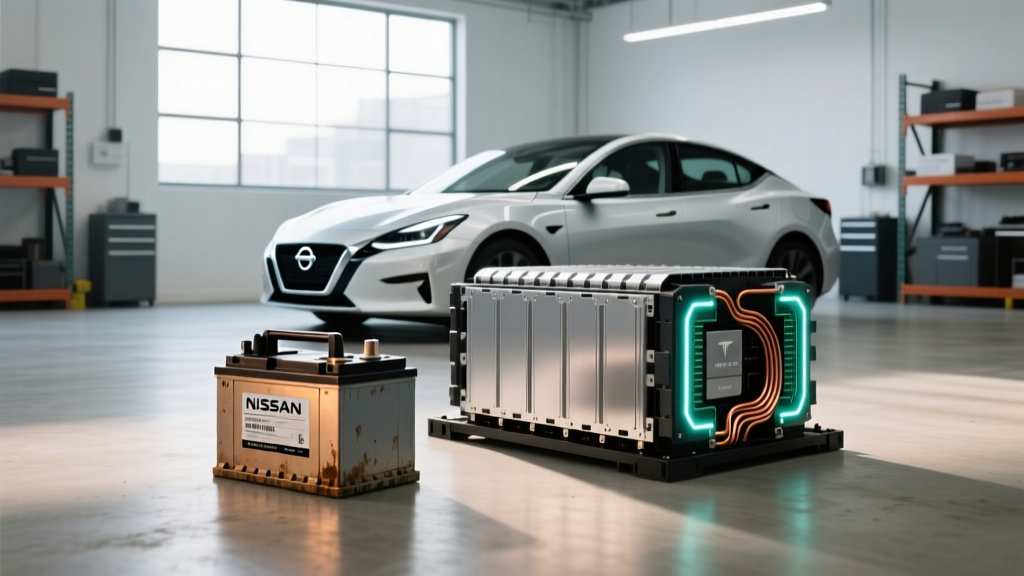
- 2020 Nissan Altima battery (12V): Lead-acid, ~12 volts, powers lights/infrastructure/engine start. Replacement: ~$150–$250.
- EV traction battery: Lithium-ion (NMC or LFP), 400–800 volts, 40–100+ kWh capacity, propels the vehicle. Replacement: $5,000–$22,000+ depending on model.
This article focuses on EV traction batteries. For your Altima's 12V battery, visit an auto parts retailer or your Nissan dealer.
EV Battery Chemistry Explained: LFP vs NMC vs NCA
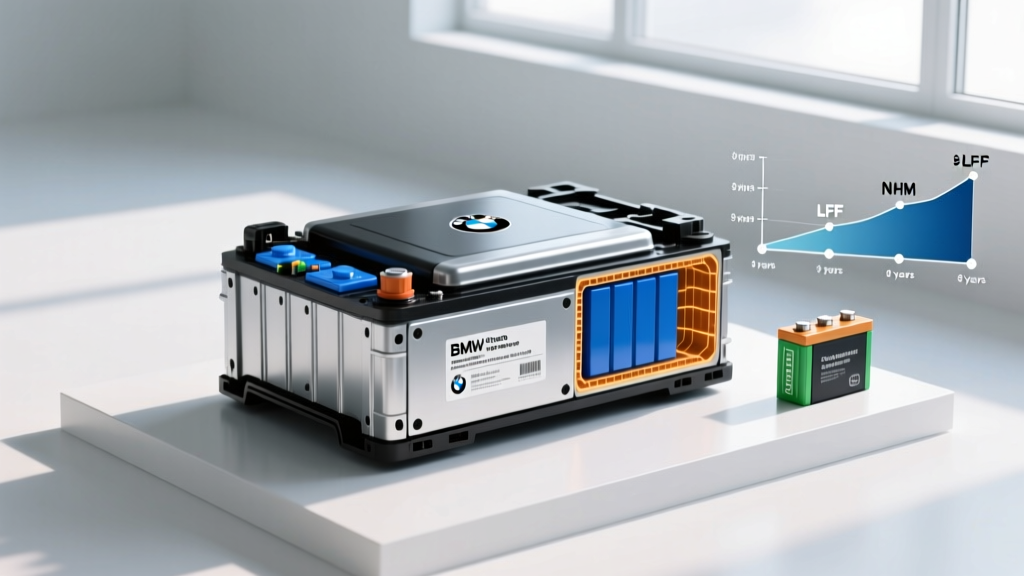
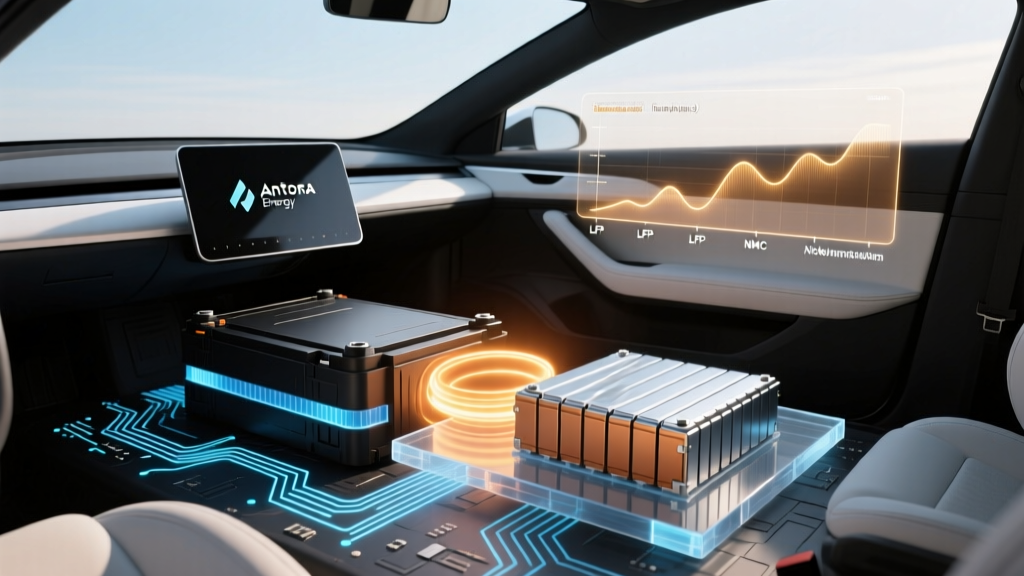
Every EV sold in 2026 uses one of two dominant lithium-ion chemistries for its traction battery: NMC/NCA (nickel-manganese-cobalt or nickel-cobalt-aluminum) or LFP (lithium iron phosphate). The chemistry inside the cells determines your vehicle's range, longevity, charging behavior, and even how you should maintain it day-to-day.
| Attribute | LFP (Lithium Iron Phosphate) | NMC/NCA (Nickel-Based) |
|---|---|---|
| Energy Density | Lower (~160–180 Wh/kg cell-level) | Higher (~220–300 Wh/kg cell-level) |
| Cycle Life | 3,000–5,000+ cycles | 1,000–2,000 cycles |
| Cold-Weather Performance | Weaker — greater range loss below 32°F | Better — more resilient in freezing temps |
| Cost (per kWh) | Lower — no cobalt or nickel | Higher — commodity-sensitive materials |
| Recommended Daily SoC | 100% daily charging is fine | 80% daily; 100% only for trips |
| Thermal Stability | Excellent — higher thermal runaway threshold | Good — requires more active thermal management |
| Common 2026 Applications | Tesla Model 3/Y RWD, Ford Mustang Mach-E Select, many Chinese-market EVs | Hyundai Ioniq 5/6, BMW i4/iX, Mercedes EQS, most long-range/performance trims |
Which Chemistry Is Better?
Neither is universally superior — it depends on your use case. If you charge at home daily, drive under 250 miles between charges, and live in a mild climate, LFP is the smarter pick: it lasts longer, costs less, and you can charge to 100% without guilt. If you need maximum range, tow frequently, or regularly face sub-freezing winters, NMC/NCA delivers the energy density and cold-weather resilience you need. Many automakers now offer both chemistries across their lineups — Tesla's RWD models use LFP while Long Range and Performance variants use NMC/NCA.
How Long Do EV Batteries Actually Last?
The short answer: most EV traction batteries outlast the vehicles they're installed in. The fear of a catastrophic $20,000 battery swap at 80,000 miles is not supported by fleet data.
- Geotab fleet study (6,300+ EVs): Average degradation of ~1.8% per year, meaning a typical EV retains approximately 82–85% of original capacity after 10 years. (Geotab)
- Tesla Impact Report (2023): Model S/X batteries showed ~12% degradation at 200,000 miles; Model 3/Y (including LFP) showed ~10% at 200,000 miles.
- Nissan Leaf (2011–2018, passively cooled): Higher degradation rates — some 24 kWh and 30 kWh packs showed 20–30% loss after 5–7 years, particularly in hot climates. The 2018+ Leaf with the 40 kWh and 62 kWh packs and improved thermal management performs significantly better.
- Consumer Reports (2024 survey): Only ~5% of EV owners reported needing a battery replacement outside of warranty.
Typical lifespan expectation in 2026: A modern, liquid-cooled EV battery (NMC or LFP) should deliver 150,000–250,000 miles before reaching 70–80% of its original capacity. LFP packs, with their higher cycle life, can theoretically exceed 300,000+ miles before hitting the same threshold. For context, the average American drives ~13,500 miles per year — that's 15+ years of driving before significant degradation.
What Does the EV Battery Warranty Cover?
Federal law mandates that EV battery warranties cover at least 8 years / 100,000 miles. In California and states that follow CARB (California Air Resources Board) emissions standards, the requirement extends to 10 years / 150,000 miles. Most manufacturers meet or exceed these minimums.
| Manufacturer | Warranty Period | Capacity Retention Threshold | Notes |
|---|---|---|---|
| Tesla | 8 yr / 100,000–150,000 mi (varies by model) | 70% | Model 3/Y RWD: 100k mi; Long Range/Perf: 120k mi; S/X: 150k mi |
| Hyundai / Kia | 10 yr / 100,000 mi | 70% | Among the longest standard coverage in the US market |
| Ford | 8 yr / 100,000 mi | 70% | Covers F-150 Lightning, Mach-E, E-Transit |
| BMW | 8 yr / 100,000 mi | 70% | Includes i4, iX, i7 |
| Chevrolet / GM | 8 yr / 100,000 mi | 60% (Bolt); 70% (Ultium vehicles) | Bolt EV/EUV warranty was 8yr/100k mi at 60% retention |
| Nissan (Leaf) | 8 yr / 100,000 mi | 66% (9 bars of 12 on the capacity gauge) | Nissan uses a bar-based display rather than a percentage |
What triggers a warranty claim? If your battery's State of Health (SoH) drops below the stated threshold (typically 70% of original capacity) within the warranty period, the manufacturer must repair or replace the pack — usually by swapping defective modules rather than the entire battery. Cosmetic degradation (say, 88% at 60,000 miles) is considered normal wear and is not covered.
How Much Does an EV Battery Cost to Replace?
Out-of-warranty battery replacement is the number-one anxiety for prospective EV buyers. Here's the data reality:
| Vehicle / Battery Size | Battery Capacity | Estimated Replacement Cost |
|---|---|---|
| Nissan Leaf (40 kWh) | 40 kWh | $8,000–$12,000 |
| Tesla Model 3 (LFP, ~60 kWh) | ~60 kWh | $10,000–$14,000 |
| Hyundai Ioniq 5 (77.4 kWh) | 77.4 kWh | $12,000–$18,000 |
| Ford F-150 Lightning (131 kWh) | 131 kWh | $18,000–$25,000+ |
| Chevrolet Bolt EV (65 kWh) | 65 kWh | $10,000–$15,000 |
When is replacement actually needed? Rarely during typical first- or second-owner lifespans. Most replacements occur on early-generation EVs (2011–2017 Leafs, early BMW i3s, first-gen Bolt EVs with recalled LG cells) that experienced accelerated degradation or manufacturing defects. For a 2024–2026 model-year EV with liquid-cooled battery management, needing a replacement before 150,000 miles is statistically uncommon.
A critical nuance: many "battery replacements" are actually module-level repairs. A technician identifies the 2–3 degraded cell modules within the pack and swaps only those, reducing cost to $2,000–$5,000 instead of a full pack swap.
Factors That Accelerate (or Preserve) Battery Life
Battery degradation is not a single-variable equation. These are the factors you can control:
- State of Charge habits: For NMC/NCA batteries, keep daily SoC between 20–80%. Charge to 100% only when you need the full range for a trip. LFP batteries should be charged to 100% at least weekly to help the BMS calibrate.
- DC fast charging frequency: Occasional DCFC (road trips) is fine. Daily reliance on 150+ kW fast charging accelerates degradation modestly — studies suggest ~0.5–1% additional annual loss vs. Level 2 home charging. Precondition your battery before fast charging (most EVs do this automatically when you navigate to a charger).
- Extreme heat: Sustained exposure to 95°F+ ambient temperatures degrades cells faster. Park in shade or a garage when possible. Liquid-cooled packs (standard on nearly all 2022+ EVs) handle this far better than passively cooled packs (older Leaf, early i3).
- Extreme cold: Cold doesn't permanently damage batteries but temporarily reduces range (20–35% loss at 20°F is normal). Preconditioning while plugged in mitigates this.
- Storage: If leaving your EV unused for weeks, store it at ~50% SoC, not 100% or near 0%.
- Regenerative braking settings: Using moderate regen rather than max regen in cold weather reduces stress on a cold battery.
How to Check Your EV Battery's State of Health (SoH)
State of Health (SoH) is the percentage of original capacity your battery still holds. A new EV has 100% SoH; a battery at 85% SoH has lost 15% of its original capacity. Here's how to monitor it:
- In-vehicle displays: Tesla shows battery health indirectly through range estimates. Hyundai/Kia's Bluelink app provides SoH percentage. Nissan Leaf uses a 12-bar capacity gauge on the dash (12/12 = new; 9/12 or below may trigger a warranty claim).
- OBD-II diagnostic tools: Devices like the OBDLink SX paired with apps such as Leaf Spy (for Nissan) or ABRP (A Better Route Planner) can read SoH data directly from the battery management system.
- Dealer diagnostic check: Any authorized dealer can run a full battery health report. Request this during routine service or before purchasing a used EV.
- Third-party inspections: Services like Recurrent Auto offer battery health reports for used EV buyers, providing an independent SoH assessment.
For buyers coming from a 2020 Nissan Altima — where "battery health" meant checking for corrosion on the terminals — this is a meaningful shift. EV battery monitoring is more data-rich but requires knowing where to look.
What's Next: Solid-State, Silicon Anode, and Emerging Battery Tech
Next-generation battery chemistries promise step-change improvements in energy density, charging speed, and longevity. Here's where they actually stand in 2026:
- Solid-state batteries: Toyota has announced solid-state cells targeting 2027–2028 production with ~750 km (466 mi) range and 10-minute fast charging. Nissan and Samsung SDI have similar timelines. However, these remain pre-production — no consumer vehicle with a solid-state pack is available for purchase in the US as of early 2026. Manufacturing scalability and cost remain unsolved challenges.
- Silicon-dominant anodes: Companies like Sila Nanotechnologies and Group14 are supplying silicon-enhanced anodes to production EVs (the Mercedes G-Class EV uses Sila's silicon anode material). This improves energy density by 20–40% over graphite anodes and is already in limited production vehicles.
- Sodium-ion batteries: CATL and BYD have begun shipping sodium-ion packs in Chinese-market vehicles. Lower energy density than LFP but cheaper and more cold-resilient. US availability is not expected before 2028.
Bottom line: current lithium-ion technology (LFP and NMC) will remain dominant through at least 2030. Buy based on today's proven chemistry, not tomorrow's press releases.
Frequently Asked Questions
How long do EV batteries last in years and miles?
Modern liquid-cooled EV batteries (2022+) typically retain 80–85% of original capacity after 10 years or 150,000 miles. LFP chemistry can extend this to 200,000+ miles at similar retention levels. Most EV batteries will outlast the useful life of the vehicle itself.
How much does an EV battery cost to replace out of warranty?
Full pack replacement ranges from ~$8,000 for a 40 kWh Nissan Leaf to $25,000+ for a 131 kWh Ford F-150 Lightning Extended Range. However, module-level repairs cost $2,000–$5,000, and needing any replacement during typical ownership (under 150,000 miles) is statistically rare for modern EVs.
What does the EV battery warranty actually cover?
Federal minimum is 8 years/100,000 miles. The warranty covers capacity loss below a specified threshold (usually 70% of original capacity) and defects. It does not cover normal gradual degradation above that threshold, damage from accidents, or modifications. CARB states get 10 years/150,000 miles.
How do I maximize my EV battery's lifespan?
For NMC/NCA: keep daily charge between 20–80%, minimize daily DC fast charging, precondition before fast charging, and avoid prolonged storage at 100% or near 0%. For LFP: charge to 100% at least weekly for BMS calibration. Park in shade in extreme heat. These habits can extend usable battery life by years.
LFP vs NMC — which battery chemistry should I choose?
Choose LFP if you charge at home, drive under 250 miles daily, want maximum cycle life, and live in a mild-to-warm climate. Choose NMC/NCA if you need the longest possible range per charge, regularly drive in freezing temperatures, or tow heavy loads. Both chemistries are proven and reliable in 2026.
Is the 2020 Nissan Altima battery the same as an EV battery?
No. The 2020 Nissan Altima uses a standard 12V lead-acid battery (~$150–$250 replacement) that powers the vehicle's electronics and engine start. An EV traction battery is a high-voltage lithium-ion pack (400–800V, 40–130+ kWh) that propels the vehicle and costs $8,000–$25,000+ to replace. They serve entirely different functions.
Sources: Geotab EV Battery Health Study, fueleconomy.gov (EPA), manufacturer warranty documentation (Tesla, Hyundai, Ford, Nissan, GM). Tax credit and incentive rules per IRS §30D — verify current-year eligibility with a tax professional.