The 2020 Chrysler Pacifica Hybrid remains one of the few plug-in hybrid minivans on the used market, and its high-voltage battery is the single most scrutinized component by prospective second-hand buyers. With a 16 kWh lithium-ion traction pack powering up to 32 miles of electric-only range (per the EPA), owners and shoppers alike want hard answers on degradation, replacement cost, and daily care. This guide breaks down the chemistry inside the Pacifica Hybrid's battery, what real-world data tells us about longevity, and how to maximize the pack's useful life whether you're at 40,000 or 140,000 miles.
What Battery Chemistry Powers the 2020 Pacifica Hybrid?
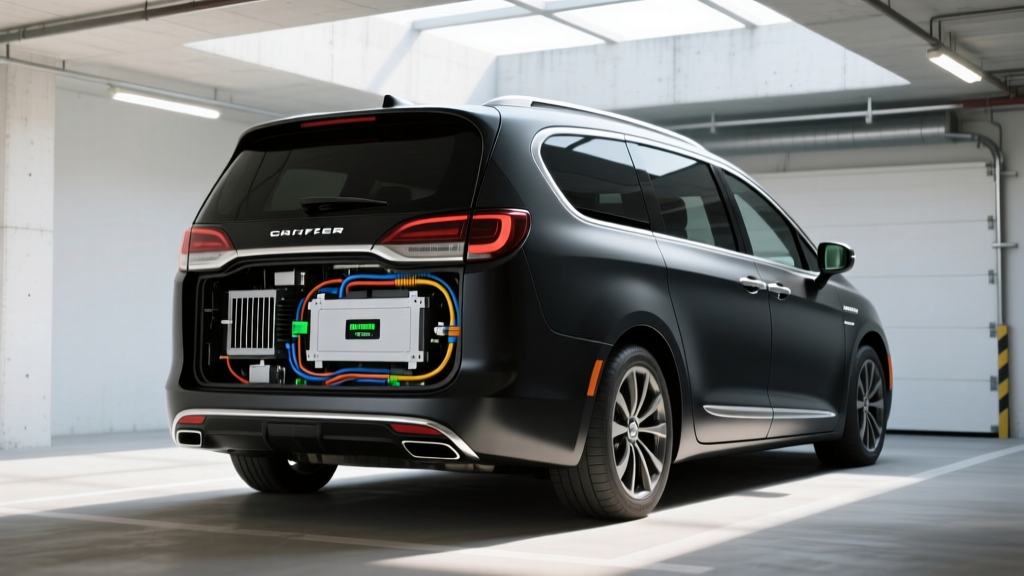
The 2020 Chrysler Pacifica Hybrid uses a lithium-ion battery pack with NMC (nickel-manganese-cobalt) chemistry, manufactured by LG Energy Solution. The pack sits beneath the second-row floor and contains 96 cells arranged in a series-parallel configuration, delivering approximately 16 kWh of total capacity (roughly 13–14 kWh usable to protect longevity via top and bottom buffers).
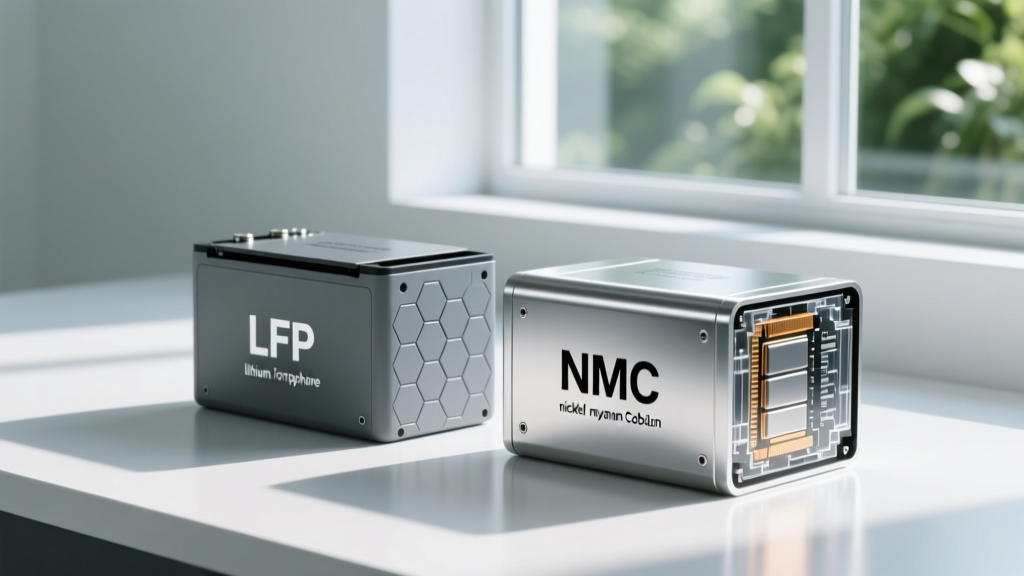
NMC chemistry was the dominant choice for PHEVs and BEVs in the 2018–2022 era because of its strong energy density — critical in a minivan where packaging space for a battery competes with Stow 'n Go seating and cargo volume. But NMC isn't the only chemistry on the market. Understanding the trade-offs between NMC and LFP (lithium iron phosphate) helps contextualize why Chrysler chose what it did, and what you can expect from the pack.
| Attribute | NMC (Pacifica Hybrid) | LFP |
|---|---|---|
| Energy Density | ~200–260 Wh/kg (higher) | ~140–180 Wh/kg (lower) |
| Cycle Life | ~1,000–2,000 full cycles | ~3,000–5,000+ full cycles |
| Cold-Weather Performance | Better low-temp discharge | Reduced performance below 32°F |
| Cost per kWh | Higher (cobalt/nickel) | Lower (iron/phosphate) |
| Thermal Stability | Good, requires active management | Excellent, more resistant to runaway |
| Typical Use Case | PHEVs, long-range BEVs | Standard-range BEVs, fleet vehicles |
For the Pacifica Hybrid, NMC made sense: Chrysler needed maximum energy in minimum space to preserve the minivan's interior versatility while delivering a meaningful electric-only range. An LFP pack of equivalent capacity would have been heavier and bulkier, compromising cargo volume.
How Long Does the 2020 Pacifica Hybrid Battery Actually Last?
The short answer based on fleet data and owner reports: the Pacifica Hybrid's NMC battery typically retains 80–90% of its original capacity after 100,000 miles or 8 years, assuming normal use patterns. Complete battery failure before 150,000 miles is uncommon when the vehicle's thermal management system is functioning properly.
Here's what the degradation curve typically looks like for NMC packs in PHEV applications like the Pacifica:
- Year 1–2 (0–30k mi): ~3–5% capacity loss (initial formation loss)
- Year 3–5 (30k–75k mi): ~1–2% additional loss per year (linear phase)
- Year 6–8 (75k–120k mi): ~1–1.5% per year (gradual taper)
- Year 10+ (120k+ mi): Cumulative loss typically 12–20%
Sources: Geotab fleet battery health studies, NREL battery aging research, Stellantis warranty data.
The Pacifica Hybrid has an advantage over pure BEVs in one key respect: its smaller 16 kWh pack is rarely cycled from 0–100% in daily use. Most owners plug in nightly and use 20–32 miles of electric range before the gas engine engages, meaning the battery operates in a partial state-of-charge window — the gentlest condition for lithium-ion chemistry. This effectively stretches cycle life well beyond what a BEV experiencing full daily cycles would see.
In practical terms, a 2020 Pacifica Hybrid that started with an EPA-rated 32 miles of electric range may deliver 26–29 miles of real-world EV range by year five or six. That's a noticeable but manageable reduction for most commutes.
What Does the Battery Warranty Cover?
Stellantis (Chrysler's parent company) provides a robust high-voltage battery warranty for the Pacifica Hybrid, and understanding its specifics is essential for used-car buyers evaluating a 2020 model.
| Coverage Element | Term |
|---|---|
| Duration | 10 years / 150,000 miles (CARB states*) |
| Duration (non-CARB) | 8 years / 100,000 miles |
| Capacity Retention Threshold | ~70% of original capacity |
| Covered Components | Battery pack, BMS, contactors, thermal management |
| Transferable to Second Owner? | Yes, remainder transfers automatically |
| What Voids Coverage | Unauthorized modifications, physical damage, flood |
*CARB states include California, Colorado, Connecticut, Delaware, Maine, Maryland, Massachusetts, New Jersey, New York, Oregon, Pennsylvania, Rhode Island, Vermont, Virginia, and Washington. If the vehicle was originally sold or is currently registered in one of these states, the longer 10/150k warranty applies.
This matters enormously for 2020 Pacifica Hybrid shoppers in 2026. A California-registered 2020 model still has battery warranty coverage through 2030 or 150,000 miles — a substantial safety net. Even in non-CARB states, a 2020 model retains coverage through 2028 or 100,000 miles.
Per Stellantis warranty documentation, the warranty covers battery replacement or repair if the pack falls below the capacity retention threshold under normal use. It does not cover gradual degradation that remains above the threshold — meaning a battery at 75% capacity at 90,000 miles is functioning within warranty parameters, even though you'll notice reduced electric range.
How Much Does a Pacifica Hybrid Battery Replacement Cost?
This is the question that keeps PHEV shoppers up at night. Let's ground it in real numbers.
| Vehicle Type / Model | Battery Size | Replacement Cost Range |
|---|---|---|
| 2020 Chrysler Pacifica Hybrid | 16 kWh (NMC) | $5,500 – $8,500 |
| Toyota RAV4 Prime (PHEV) | 18.1 kWh (NMC) | $5,000 – $7,500 |
| Chevrolet Bolt EV (BEV) | 65 kWh (NMC) | $14,000 – $18,000 |
| Tesla Model 3 Long Range (BEV) | 75–82 kWh (NMC/NCA) | $13,000 – $20,000 |
| Ford F-150 Lightning (BEV) | 98–131 kWh (NMC) | $20,000 – $32,000 |
For the Pacifica Hybrid specifically, the smaller 16 kWh pack keeps replacement costs significantly lower than a full BEV. As of 2026, a new OEM replacement pack runs approximately $5,500–$8,500 including parts and labor at a Stellantis dealership. Independent hybrid/EV repair shops may offer refurbished or reconditioned packs for $3,500–$5,500.
Context is critical here: most Pacifica Hybrid batteries never need replacement during the vehicle's typical ownership life. Given the partial-cycle usage pattern and active thermal management, the pack is statistically likely to outlast the transmission, suspension components, and infotainment system. The replacement cost is a worst-case scenario, not a probable expense — and the 8–10 year warranty provides a substantial buffer.
If replacement is needed, it's typically triggered not by gradual degradation but by a cell failure, BMS fault, or thermal management system issue — all of which usually occur within the warranty period if they're going to happen at all.
Factors That Accelerate (or Preserve) Battery Life
NMC chemistry responds predictably to specific stress factors. Understanding these lets you make informed decisions about daily habits.
- Avoid prolonged 100% SoC: If your commute doesn't require full range, set charge limits to 80–90% (if the vehicle's settings allow) or unplug once full. Sitting at 100% accelerates electrolyte decomposition in NMC cells.
- Minimize DC fast charging: The Pacifica Hybrid's charge port is J1772 for Level 1/Level 2 AC charging only — it does not support DC fast charging. This is actually a longevity advantage, as frequent DCFC is a primary degradation driver in BEVs.
- Don't store at 0%: If the vehicle will sit unused for weeks, aim for ~50% state of charge. Deep discharge during storage can cause copper dissolution in the anode.
- Use preconditioning in extreme cold: The Pacifica Hybrid's thermal management system works best when the vehicle is plugged in during cold starts. Plugging in at night allows the system to warm the battery using grid power rather than battery power.
- Keep up with cooling system maintenance: The battery's liquid cooling loop requires periodic coolant checks. A degraded cooling system is the most common cause of premature battery wear in PHEVs.
- Drive it regularly: Lithium-ion batteries prefer regular, moderate use over prolonged sitting. Even a 10-minute drive every few days keeps the BMS performing cell-balancing routines.
The biggest real-world risk to a Pacifica Hybrid battery isn't how you charge it — it's extreme heat exposure without thermal management activation. Parking in direct sun in Arizona or Texas summer heat while the vehicle is off and unplugged forces the battery to sit at elevated temperatures without active cooling. Over years, this accelerates capacity loss. Whenever possible, park in shade or a garage, and plug in so the thermal system can maintain optimal cell temperature.
How to Check Your Pacifica Hybrid's Battery Health (SoH)
State of Health (SoH) is the metric that tells you what percentage of the battery's original capacity remains. Unlike a BEV like a Tesla or Hyundai Ioniq 5 that displays battery health directly in the infotainment system, the Pacifica Hybrid doesn't surface an SoH percentage on its dashboard.
Here's how owners can assess battery health:
Method 1: Electric Range Observation
Track your real-world electric-only range over time. A fully charged Pacifica Hybrid that originally delivered 30–32 miles of EV range but now consistently shows 24–25 miles on a full charge has experienced approximately 20–25% degradation. Keep a simple log in a notes app — note the ambient temperature, as cold weather (below 40°F) can temporarily reduce range by 15–30% without indicating permanent degradation.
Method 2: OBD-II Scanner with Hybrid Data
Third-party OBD-II diagnostic tools like the OBDLink MX+ paired with apps such as Torque Pro or dedicated hybrid monitoring apps can read battery-specific PIDs (parameter IDs) from the Pacifica's BMS. These can reveal individual cell voltages, pack voltage, current, and in some cases a calculated SoH percentage. This is the most accessible DIY method for data-minded owners.
Method 3: Dealership Diagnostic Report
A Stellantis dealer can run a high-voltage battery diagnostic that produces a formal capacity report. This is the gold standard and is required if you're making a warranty claim. Request this report when purchasing a used 2020 Pacifica Hybrid — a dealer pre-purchase inspection should include it. Expect to pay $100–$200 for the diagnostic if it's not part of a warranty claim.
What's Next in Battery Tech — and Does It Affect Your Pacifica?
The battery industry is moving toward next-generation chemistries that promise longer life, faster charging, and lower cost. Here's a realistic look at what's coming and when:
- Silicon-anode batteries: Companies like Sila Nanotechnologies and Group14 are commercializing silicon-dominant anodes that boost energy density by 20–40%. These are entering production in select 2025–2027 model-year vehicles. They don't affect existing Pacifica Hybrid owners, but they'll make future PHEV packs smaller and lighter for the same capacity.
- Solid-state batteries: Toyota, Samsung SDI, and QuantumScape target 2027–2030 for initial production volumes. Solid-state cells promise 2–3x cycle life and improved safety, but costs will initially limit them to premium BEVs. Retrofitting a solid-state pack into an existing Pacifica Hybrid is not feasible due to BMS and packaging incompatibility.
- Sodium-ion batteries: CATL and others are deploying sodium-ion packs in budget EVs in China. These offer lower energy density but dramatically lower cost and excellent cycle life. They're likely destined for affordable city cars and fleet vehicles, not minivan retrofits.
The practical takeaway: your Pacifica Hybrid's NMC battery is proven, well-understood technology. It won't benefit from future chemistry advances, but it also doesn't need to — the existing pack, properly cared for, is engineered to last the vehicle's useful life. The anxiety around "missing out" on next-gen batteries shouldn't drive a replacement decision.
Frequently Asked Questions
How long do EV and PHEV batteries last in years and miles?
Modern NMC and LFP batteries in properly managed systems typically last 150,000–200,000+ miles before reaching 70–80% of original capacity. For the 2020 Pacifica Hybrid specifically, real-world data and warranty terms suggest 10+ years of useful service with 15–20% total degradation. Complete failure requiring replacement is rare and usually covered under warranty.
How much does an EV battery cost to replace?
Replacement costs scale with pack size. A PHEV like the Pacifica Hybrid (16 kWh) runs $5,500–$8,500 for a new OEM pack. A mid-size BEV (65–82 kWh) costs $13,000–$20,000. Large-truck BEVs (100+ kWh) can exceed $25,000–$32,000. Refurbished packs and independent shops can reduce costs by 30–40%. Most batteries never require replacement during typical ownership.
What does the Pacifica Hybrid battery warranty cover?
Stellantis covers the high-voltage battery for 10 years/150,000 miles in CARB states and 8 years/100,000 miles elsewhere, with a capacity retention threshold of approximately 70%. The warranty covers the battery pack, battery management system, contactors, and thermal management components. It transfers automatically to subsequent owners. Refer to the official Stellantis warranty page for current terms.
How do I check and maximize my Pacifica Hybrid battery health?
Monitor electric-only range over time, use an OBD-II scanner with hybrid-compatible apps to read BMS data, or request a dealer diagnostic report. To maximize health: avoid storing the vehicle at 100% or 0% charge, plug in during extreme cold to enable thermal preconditioning, maintain the cooling system, and park in shade during extreme heat. The Pacifica Hybrid's lack of DC fast charging is actually a longevity benefit.
LFP vs NMC — which battery chemistry is better?
Neither is universally better; they serve different needs. LFP offers superior cycle life (3,000–5,000+ cycles), lower cost, and better thermal stability, but sacrifices energy density and cold-weather performance. NMC delivers higher energy density (critical for packaging-constrained vehicles like minivans) and better cold-weather operation, but at higher cost and shorter cycle life. For the Pacifica Hybrid's application, NMC was the correct engineering choice. For a fleet sedan charged daily to 80%, LFP would be preferable.
Does the 12V battery affect the hybrid system?
The Pacifica Hybrid has a conventional 12V auxiliary battery that powers electronics, lights, and the BMS controller — it is entirely separate from the 16 kWh high-voltage traction battery. If the 12V dies, the vehicle won't start (even though the HV battery may be fully charged), because the BMS needs 12V power to close the high-voltage contactors. Replace the 12V battery on the standard 3–5 year cycle; it has no impact on hybrid battery health.
Is it worth buying a used 2020 Pacifica Hybrid in 2026?
From a battery perspective, yes — if you verify health. A 2020 model with 60,000–80,000 miles likely has 85–92% battery capacity remaining and still carries warranty protection through 2028–2030 depending on your state. Request a dealer battery diagnostic report before purchase, confirm the vehicle's registration history (CARB state = longer warranty), and factor in the used clean vehicle tax credit (up to $4,000 under IRS §25E, subject to income and price caps) if purchasing from a dealer.