Why Are People Searching for a "2019 Honda Odyssey Battery"?
If you've landed here searching for a 2019 Honda Odyssey battery, you're likely dealing with one of two situations: your Odyssey's 12-volt auxiliary battery is dying (a common issue around the 5-7 year mark), or you're researching battery longevity as you consider switching to an electric vehicle. Either way, you've found the right resource.
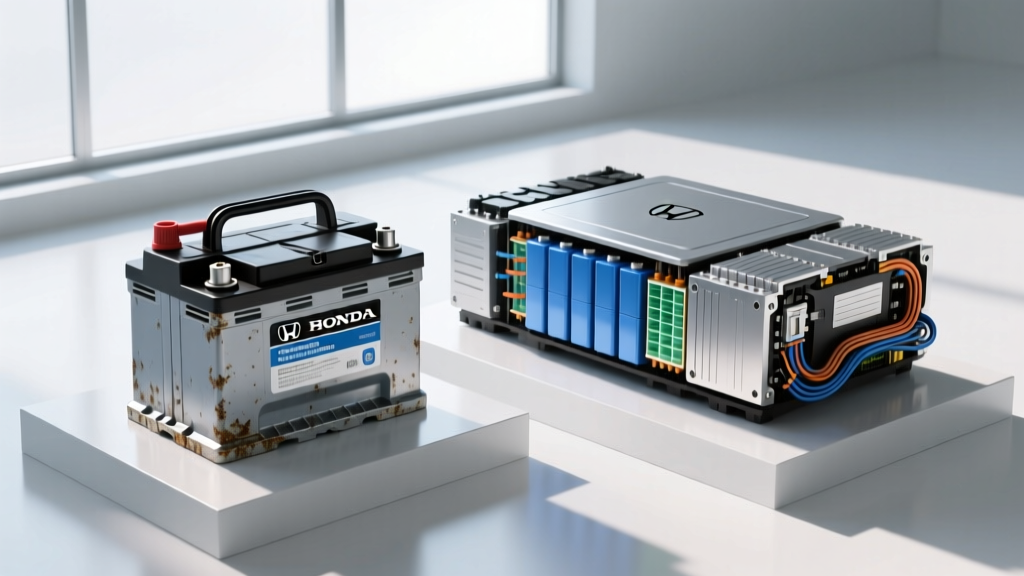
The 2019 Honda Odyssey uses a conventional 12V lead-acid battery to start its 3.5L V6 engine and power accessories. This is fundamentally different from the high-voltage traction battery in an EV, which stores tens of kilowatt-hours of energy and powers the electric motor. Understanding both systems — and how they compare — is essential for any car buyer navigating today's market.
This guide breaks down EV traction battery technology in depth while addressing the 2019 Odyssey's battery setup, giving you the full picture whether you're maintaining a minivan or planning your first EV purchase.
The 2019 Honda Odyssey Battery: What You're Actually Dealing With
The 2019 Honda Odyssey comes equipped with a standard 12V lead-acid auxiliary battery (Group 35, typically rated at 550-640 cold cranking amps). This battery powers the starter motor, ignition system, infotainment, and lighting. It has nothing to do with propulsion — the Odyssey's 3.5L V6 and 9- or 10-speed automatic transmission handle that.
Here's what Odyssey owners typically face:
- Lifespan: 3-6 years depending on climate and usage patterns
- Replacement cost: $150-$280 for the battery itself, plus potential labor
- Common failure signs: slow cranking, dashboard warnings, parasitic drain from electronics
- No high-voltage system: The Odyssey is not a hybrid — there is no traction battery
Now compare that to what an EV owner manages: a 60-100+ kWh lithium-ion traction battery pack operating at 300-800 volts, designed to last 15-20 years, with completely different chemistry, degradation patterns, and replacement economics. Let's break that down.
EV Battery Chemistry Explained: LFP vs. NMC/NCA
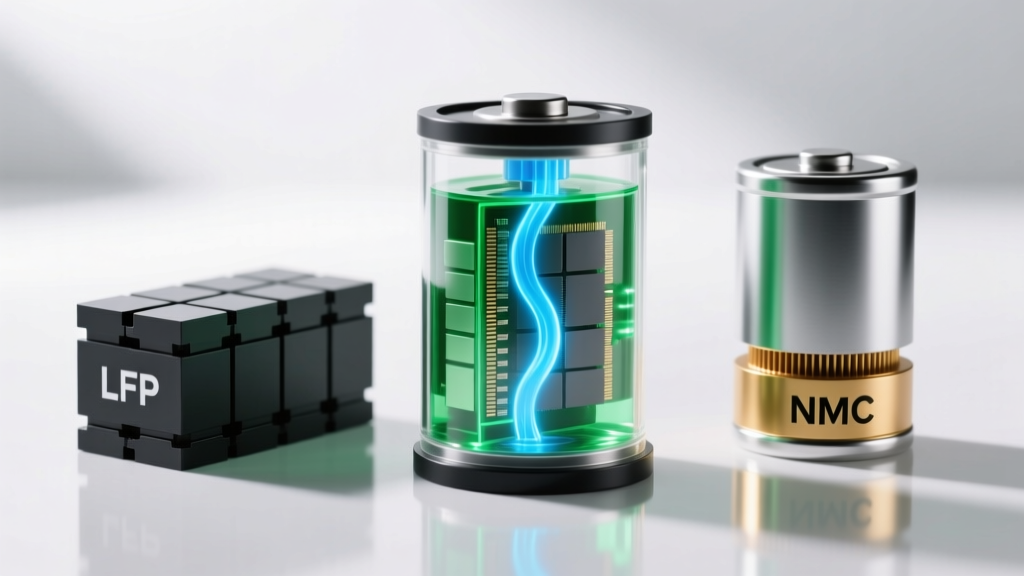
Modern EV batteries use lithium-ion cells, but not all lithium-ion is the same. The two dominant chemistries in 2026 are LFP (lithium iron phosphate) and NMC/NCA (nickel manganese cobalt / nickel cobalt aluminum). Each has distinct trade-offs that affect range, longevity, cold-weather performance, and cost.
| Attribute | LFP (Lithium Iron Phosphate) | NMC/NCA (Nickel-Based) |
|---|---|---|
| Energy Density | ~160-180 Wh/kg (lower) | ~250-300 Wh/kg (higher) |
| Cycle Life | 3,000-5,000+ cycles | 1,000-2,000 cycles |
| Cold Performance | Moderate — greater range loss below freezing | Better — more consistent in cold weather |
| Cost (per kWh) | ~$80-$100 (lower) | ~$120-$160 (higher) |
| Thermal Stability | Excellent — very low thermal runaway risk | Good — requires more active thermal management |
| Recommended SoC Range | Can charge to 100% regularly | Best kept 20-80% for daily use |
| Common Applications | Tesla Model 3 RWD, BYD vehicles, Ford Mustang Mach-E Select | Tesla Long Range, Hyundai Ioniq 5, Rivian, most premium EVs |
Which is better? It depends on your priorities. If you want maximum range in a lighter package and don't mind babying your state of charge, NMC delivers. If you prioritize long-term durability, lower cost, and the simplicity of charging to 100% without guilt, LFP is the stronger pick. For most daily commuters with home charging, LFP's cycle-life advantage translates to a battery that will likely outlast the vehicle.
How Long Do EV Batteries Last? Real Degradation Data
This is the single biggest concern among prospective EV buyers. The short answer: most EV batteries outlast the cars they're installed in. But the data tells a more nuanced story.
Typical EV Battery Degradation Curve (Based on Fleet Data):
- Year 1: ~2-3% capacity loss (initial "break-in" drop)
- Years 2-4: ~1-2% loss per year (linear, gradual)
- Years 5-8: ~1% loss per year (plateau phase)
- Year 10 average: ~85-90% of original capacity retained
- Year 15 projection: ~75-85% capacity retained (varies by chemistry and use)
Real-world data points from major fleets reinforce this:
- Tesla fleet data (2025 Impact Report): Model S/X batteries retain ~88% capacity at 150,000 miles; Model 3/Y retain ~89% at the same mileage
- Geotab study (10,000+ EVs tracked): Average annual degradation of 1.8% across all brands; worst-case vehicles at ~3% per year
- Taxi/rideshare data: High-mileage vehicles (60,000+ miles/year) show 2-4% annual loss, with DC fast-charging-heavy fleets trending higher
For context, a battery retaining 70-80% capacity still provides usable daily range. A vehicle with an original EPA range of 300 miles at 80% capacity still delivers 240 miles — more than enough for most commutes and daily driving. According to fueleconomy.gov, modern battery management systems actively protect cells from the conditions that accelerate degradation.
Factors That Accelerate (or Protect) Battery Health
Not all miles are created equal. Battery degradation is driven by chemistry, temperature, and how you treat the state of charge. Here's what actually matters:
Battery Care Checklist for Maximum Longevity
- Avoid frequent DC fast charging: Occasional road-trip charging is fine, but daily use of 150+ kW chargers accelerates wear. Level 2 home charging is gentler on cells.
- Minimize extreme state of charge: For NMC batteries, daily charging to 80% and avoiding drops below 10% reduces stress. LFP batteries tolerate 100% charging better and even benefit from periodic full charges for cell balancing.
- Manage temperature exposure: Prolonged parking in extreme heat (above 100°F) is worse than cold. Use preconditioning when plugged in to warm or cool the battery before driving.
- Drive moderately in extreme cold: Cold batteries have higher internal resistance. Gentle acceleration for the first few miles lets the thermal management system bring cells to optimal temperature.
- Keep the car plugged in when possible: This allows the BMS (battery management system) to maintain optimal cell temperature and balance voltage across cells.
- Update software regularly: OTA updates often include improved thermal management and charging algorithms.
EV Battery Warranties: What's Actually Covered
Federal law mandates that EV battery warranties cover a minimum of 8 years / 100,000 miles (10 years / 150,000 miles in CARB states like California, New York, and Massachusetts). Most manufacturers exceed this baseline. The critical detail is the capacity retention threshold — the point at which the manufacturer will replace or repair the battery.
| Manufacturer | Warranty Term | Capacity Threshold | Notes |
|---|---|---|---|
| Tesla (Model 3/Y LFP) | 8 yr / 120,000 mi | 70% retention | LFP models get higher mileage allowance |
| Tesla (Model S/X) | 8 yr / 150,000 mi | 70% retention | Longest standard mileage coverage |
| Hyundai / Kia | 10 yr / 100,000 mi | 70% retention | Among the longest time-period coverage |
| Ford (Mach-E, F-150 Lightning) | 8 yr / 100,000 mi | 70% retention | Standard across BEV lineup |
| GM (Ultium platform) | 8 yr / 100,000 mi | 70% retention | Covers Bolt EV/EUV, Blazer EV, Silverado EV |
| Rivian | 8 yr / 175,000 mi | 70% retention | Highest mileage threshold in the industry |
| BMW / Mercedes-Benz | 8 yr / 100,000 mi | 70% retention | European brands match US standard |
Key insight: The 70% threshold is conservative. Real-world data shows most batteries retain 85%+ at the 8-year mark under normal use. A warranty claim is rare — most EV batteries are never replaced under warranty because they never drop below the threshold during coverage.
Per IRS guidelines, vehicles with qualifying battery sourcing may also be eligible for the federal §30D clean vehicle credit, which can offset up to $7,500 of the purchase price — though this is tied to the vehicle purchase, not battery replacement.
EV Battery Replacement Cost: When and How Much
Here's the number that generates the most anxiety — and the most misinformation. Let's ground it in actual data.
| Vehicle / Battery Size | Battery Capacity | Estimated Replacement Cost | When Typically Needed |
|---|---|---|---|
| Tesla Model 3 (LFP) | ~60 kWh | $8,000 - $12,000 | Rarely before 200,000+ miles |
| Tesla Model Y / 3 Long Range | ~75-82 kWh | $12,000 - $16,000 | Rarely before 200,000+ miles |
| Hyundai Ioniq 5 | ~77.4 kWh | $11,000 - $15,000 | Rarely before 150,000+ miles |
| Ford F-150 Lightning (Extended) | ~131 kWh | $18,000 - $28,000 | Very large pack; rarely needed in vehicle lifetime |
| Chevrolet Bolt EV | ~65 kWh | $9,000 - $14,000 | Post-recall replacement packs show improved longevity |
| Nissan LEAF (40 kWh) | ~40 kWh | $6,500 - $9,000 | Older passive-cooling design degraded faster; 60 kWh pack preferred |
| Rivian R1T / R1S | ~128-149 kWh | $20,000 - $30,000 | Very new platform; no real-world replacement data yet |
Important context: These are full-pack replacement costs, which are rarely necessary. More commonly, individual modules can be replaced for $2,000-$5,000. And because degradation is gradual — not a sudden cliff — most EVs remain perfectly drivable at 75-80% capacity. The vehicle will typically be retired, traded, or totaled in an accident long before the battery needs replacement.
Compare this to the 2019 Honda Odyssey: you'll likely replace that 12V battery 2-4 times over the vehicle's life at $150-$280 each, and you'll also face timing belt replacement (~$1,000-$1,400 at 100,000 miles), transmission fluid changes, and other ICE maintenance that EVs simply don't require.
How to Check and Monitor EV Battery Health
Unlike the 2019 Odyssey — where you might notice a dying 12V battery through slow cranking — EV battery health requires more deliberate monitoring. Here's how owners track State of Health (SoH):
In-Vehicle Displays
Most modern EVs show estimated range and energy consumption, but few display a direct SoH percentage. Tesla's service mode (accessible through the software menu) shows battery health metrics. Hyundai/Kia models display SoH through the dealer diagnostic tool. Some vehicles, like the Chevrolet Bolt, show a "battery health" indicator in the settings menu.
OBD-II Dongles and Third-Party Apps
Devices like the OBDLink SX or Vgate iCar paired with apps such as EV Health or LeafSpy (for Nissan LEAF) can read detailed battery data including cell voltage variance, total capacity, and degradation percentage. This is the most accurate consumer-accessible method.
Dealer Diagnostics
Any authorized dealer can run a full battery health report during routine service. This is especially useful before purchasing a used EV — request a printout of the battery diagnostic showing current capacity vs. original.
Charging Data Analysis
Track how many kWh it takes to charge from a known SoC to full. If your 75 kWh battery only accepts 65 kWh from 10% to 100%, that suggests roughly 87% SoH. Apps like TeslaFi or Stats automate this tracking over time.
Emerging Battery Technology: What's Coming (and When)
While today's lithium-ion batteries are mature and reliable, several next-generation technologies are in development. These are forward-looking and not yet available in production vehicles as of 2026:
- Solid-state batteries: Replace the liquid electrolyte with a solid material, promising 2x energy density, faster charging, and improved safety. Toyota has announced limited production for 2027-2028, but widespread availability at scale remains 2029+ at the earliest. Companies like QuantumScape and Solid Power are still in pre-commercial validation.
- Silicon anode batteries: Replace graphite anodes with silicon to increase energy density by 20-40%. Sila Nanotechnologies and Amprius are shipping early cells, but automotive-scale production is expected around 2027-2028.
- Sodium-ion batteries: Use abundant sodium instead of lithium, reducing cost and supply-chain risk. CATL is producing these in China for lower-range urban EVs; US-market availability is projected for 2027+.
- Lithium-sulfur: Theoretical energy density 5x current lithium-ion, but cycle life remains a barrier. Still in lab-stage research for automotive applications.
For buyers today, current-generation LFP and NMC batteries are the practical choice — proven, warrantied, and continuously improving in cost and performance. Waiting for solid-state means waiting 3-5+ years with no guarantee of initial affordability or availability.
2019 Odyssey vs. EV: The Total Battery Cost Picture
To bring this full circle, let's compare the battery ownership experience of keeping a 2019 Honda Odyssey vs. switching to a modern EV:
| Item | 2019 Honda Odyssey | Typical EV (e.g., Tesla Model 3, Ioniq 5) |
|---|---|---|
| 12V Battery Replacements (10 yr) | $450 - $1,120 (3-4 replacements) | $150 - $300 (1-2 replacements) |
| Traction Battery Replacement | N/A (no traction battery) | $0 (overwhelmingly likely to last 10+ years) |
| Timing Belt / Water Pump | $1,000 - $1,400 | N/A |
| Transmission Fluid / Service | $300 - $600 | N/A (single-speed reduction gear) |
| Oil Changes (10 yr / 120k mi) | $1,200 - $2,000 | N/A |
| Estimated Total | $2,950 - $5,120 | $150 - $300 (12V only) |
The EV's drivetrain simplicity eliminates most of the maintenance costs that Odyssey owners face. The traction battery — the source of so much anxiety — is statistically the least likely major component to need replacement.
Frequently Asked Questions
How long do EV batteries last in years and miles?
Based on fleet data from Tesla, Geotab, and manufacturer reports, most EV batteries retain 85-90% capacity at 150,000 miles and 8-10 years. Many will exceed 200,000 miles before dropping below 70% capacity. With current thermal management and BMS technology, the battery will typically outlast the vehicle's useful economic life.
How much does an EV battery cost to replace?
Full pack replacement ranges from ~$6,500 (Nissan LEAF 40 kWh) to ~$30,000 (large packs like the F-150 Lightning Extended Range). However, full replacements are rare — most issues involve individual module replacements at $2,000-$5,000. The vast majority of EVs are retired or traded before needing any battery service.
What does the EV battery warranty actually cover?
Federal law mandates 8 years/100,000 miles of coverage (10/150,000 in CARB states). The warranty guarantees the battery will retain at least 70% of its original capacity. If degradation exceeds that threshold within the warranty period, the manufacturer will repair or replace the battery at no cost. This covers defects and abnormal degradation, not damage from accidents or improper modifications.
How do I check my EV's battery health?
Use the vehicle's built-in diagnostics (Tesla service mode, Hyundai dealer tools), OBD-II adapters with apps like LeafSpy or EV Health, or request a battery health report from your dealer. You can also estimate SoH by tracking how many kWh the battery accepts during a full charge compared to its rated capacity.
LFP vs. NMC — which battery chemistry should I choose?
Choose LFP if you prioritize longevity (3,000-5,000+ cycle life), lower cost, and the convenience of regular 100% charging. Choose NMC/NCA if you need maximum range per charge, better cold-weather performance, and don't mind keeping daily charge between 20-80%. For most daily drivers with home charging, LFP offers the best long-term ownership experience.
Is the 2019 Honda Odyssey a hybrid?
No. The 2019 Honda Odyssey sold in the US market uses a conventional 3.5L V6 gasoline engine with no hybrid or electric drivetrain. It has only a standard 12V lead-acid auxiliary battery. (A hybrid Odyssey exists in Japan but was not offered in the US market.)
Does fast charging damage my EV battery?
Occasional DC fast charging is fine and expected — that's what road trips require. However, exclusive use of DC fast charging (150+ kW) daily does accelerate degradation compared to Level 2 home charging. Fleet data shows vehicles that fast-charge more than 3 times per week degrade roughly 0.5-1% faster per year. For daily use, Level 2 charging at 7-11 kW is the best practice for long-term battery health.
Whether you're maintaining your 2019 Honda Odyssey's 12V system or evaluating an EV's traction battery, the data is clear: modern batteries — of both types — are more durable and reliable than public perception suggests. For the Odyssey, budget for periodic 12V replacements and standard ICE maintenance. For an EV, trust the chemistry, follow basic care guidelines, and let the warranty provide peace of mind. For detailed EPA range and efficiency data on specific EV models, consult fueleconomy.gov's EV comparison tool.