If you've searched for a 2017 VW Passat battery, you're likely dealing with a conventional 12-volt lead-acid replacement — that generation of the Passat was a gasoline-powered midsize sedan with no high-voltage traction pack. But that search often leads EV-curious owners to a much bigger question: how do modern electric-vehicle batteries actually hold up over time, what do they cost to replace, and what chemistry is inside them?
This guide answers those questions with real degradation data, current replacement pricing, warranty specifics, and a clear breakdown of LFP vs. NMC chemistries — so you can buy and own an EV with eyes wide open.
The 2017 VW Passat Battery vs. an EV Traction Battery: What's the Difference?
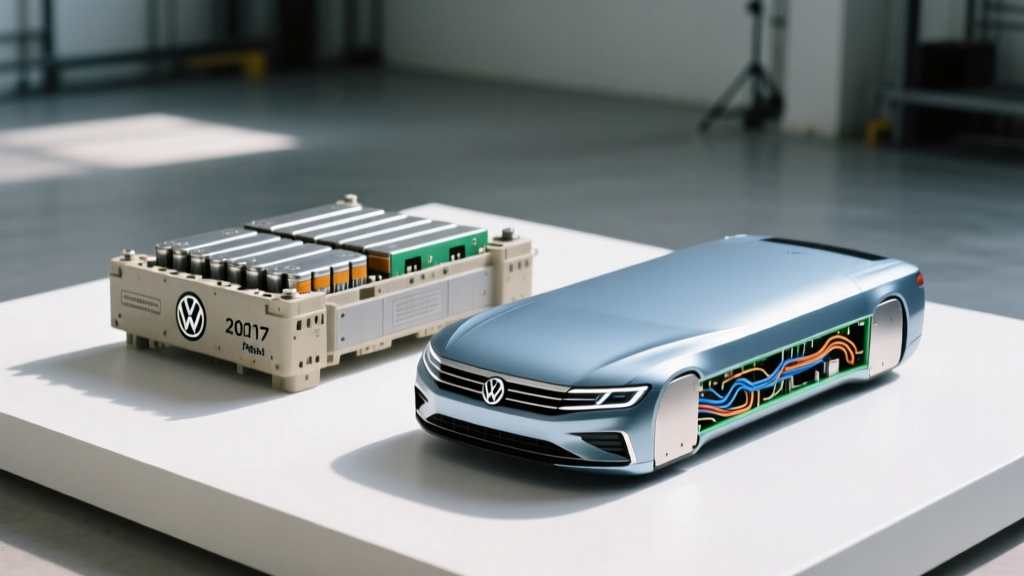
The 2017 Volkswagen Passat uses a standard 12V auxiliary battery (typically a Group 47/H5 or Group 48/H6 AGM or flooded lead-acell) to start the engine and power accessories. It has nothing in common with the 60–100+ kWh lithium-ion traction batteries that propel modern EVs.
Understanding this difference matters because fear-mongering about "EV battery replacement" often conflates the two. The 12V battery in an EV (yes, EVs have one too) is a routine maintenance item. The high-voltage traction battery is a fundamentally different component with a fundamentally different lifespan profile.
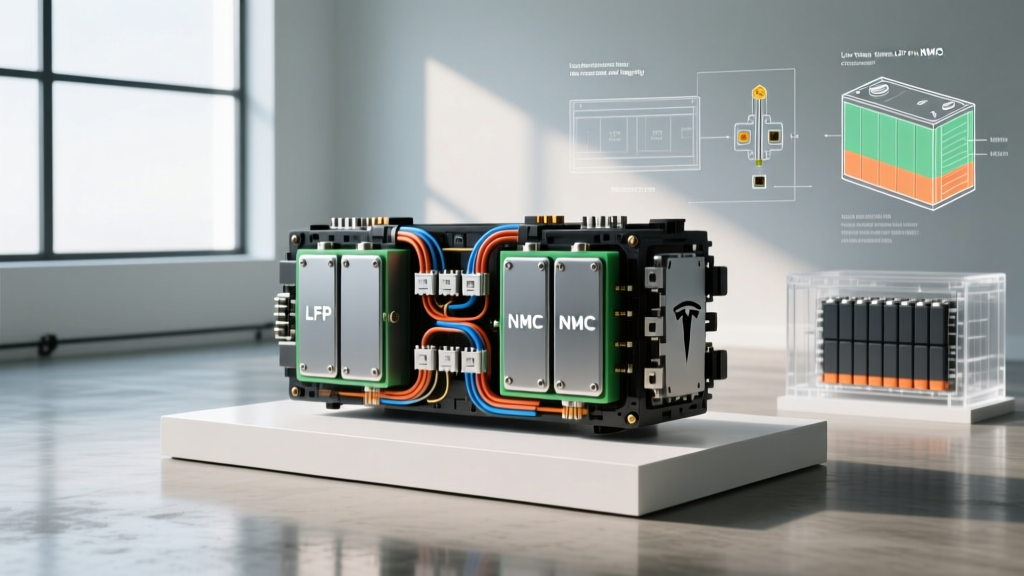
LFP vs. NMC: Which Battery Chemistry Is Right for You?
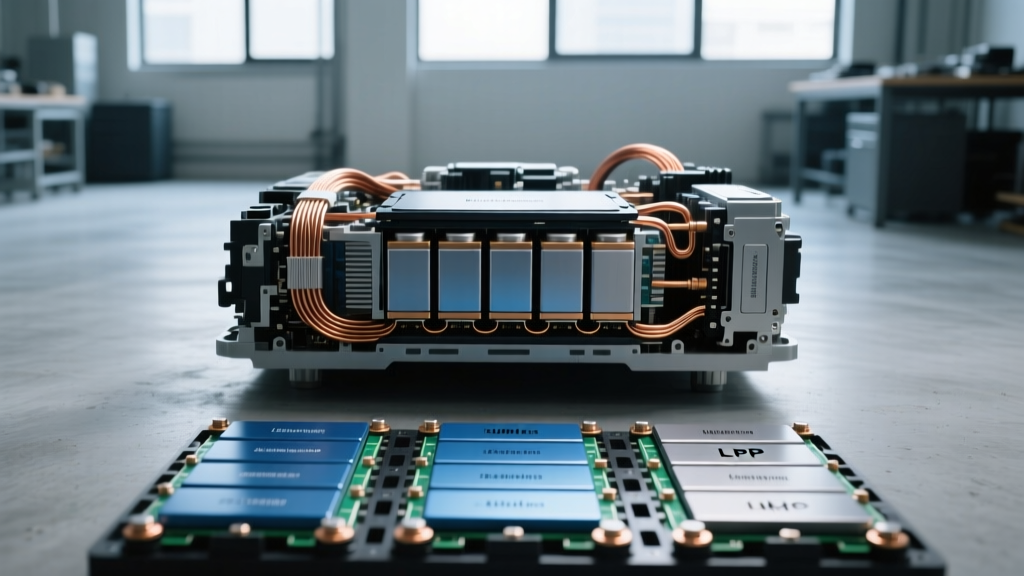
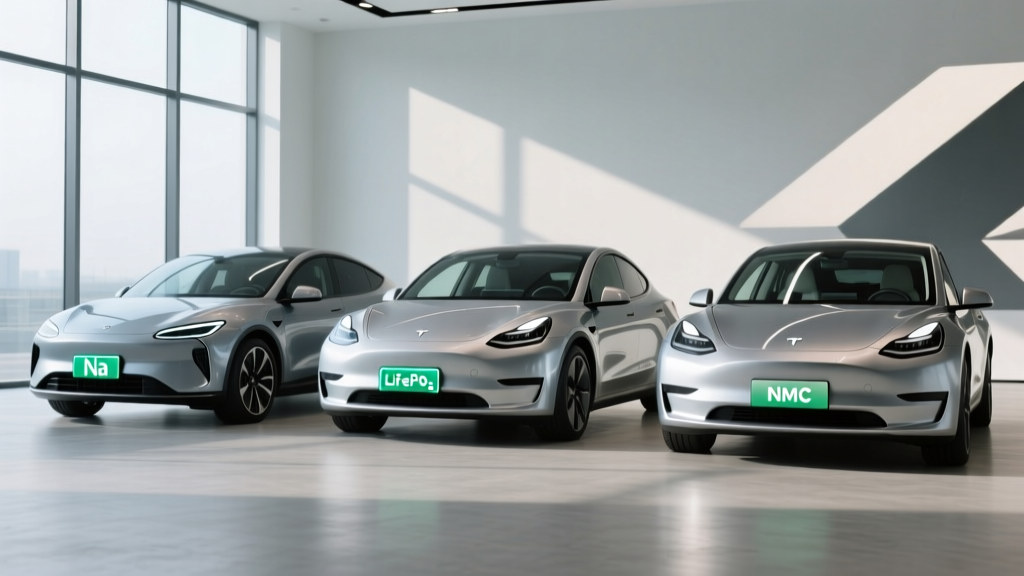
Modern EV batteries use one of two dominant lithium-ion chemistries: LFP (lithium iron phosphate) or NMC/NCA (nickel manganese cobalt / nickel cobalt aluminum). Your choice affects range, longevity, cold-weather behavior, and price.
| Attribute | LFP (Lithium Iron Phosphate) | NMC / NCA |
|---|---|---|
| Energy density | ~160–180 Wh/kg (lower — heavier pack for same range) | ~220–260 Wh/kg (higher — lighter, more range per kg) |
| Cycle life | 3,000–5,000+ cycles to 80% SoH | 1,000–2,000 cycles to 80% SoH |
| Cold-weather performance | More range loss below freezing (~35–40% loss at 20°F) | Better cold performance (~25–30% loss at 20°F) |
| Charging to 100% | Recommended regularly (helps BMS calibration) | Best kept at 80% daily; 100% only for trips |
| Cost | ~20–30% cheaper per kWh (no cobalt/nickel) | Higher raw-material cost |
| Thermal stability | Excellent — very low thermal runaway risk | Good, but requires more active thermal management |
| Common in (2025–2026 models) | Tesla Model 3/Y RWD, Ford Mustang Mach-E Select, BYD, base Chevy Equinox EV | Tesla Long Range, Hyundai Ioniq 5/6, Rivian, BMW iX, Porsche Taycan |
The bottom line: LFP wins on longevity and cost — ideal for daily commuters who can charge at home and don't need maximum range. NMC wins on energy density and cold-weather usability — better for road-trippers and cold-climate drivers. Neither is universally "better"; the right choice depends on your driving pattern.
How Long Do EV Batteries Actually Last? Real Degradation Data
EV battery degradation is not a cliff — it's a gradual, nonlinear curve. Most packs lose 5–10% of capacity in the first 2–3 years (the steepest part of the curve), then degradation slows significantly to roughly 1–2% per year thereafter.
- Tesla Model 3/Y (NMC, 2018–2023): ~10–12% loss at 100,000 miles; ~14–16% at 150,000 miles (source: Tesla Impact Reports, Recurrent Auto fleet data)
- Chevrolet Bolt EV/EUV (NMC, 2017–2023): ~8–10% loss at 80,000 miles; some early 2017–2019 models affected by recall-related battery module replacements
- Nissan Leaf (LMO/NMC, 2011–2026): Early air-cooled models (2011–2017) showed 15–25% loss at 60,000–80,000 miles; 2018+ Leaf Plus with improved thermal management performs significantly better
- Hyundai Ioniq 5 (NMC, 2022–2026): Early fleet data shows ~5–7% loss at 50,000 miles with liquid-cooled pack
- Tesla Model 3 RWD (LFP, 2021–2026): ~5–8% loss at 80,000 miles; LFP chemistry showing slower long-term degradation in fleet studies
According to data from Recurrent Auto, which tracks over 15,000 EVs in real-world conditions, the average EV battery retains approximately 90% of original capacity at 50,000 miles and 83–87% at 100,000 miles across all chemistries and model years studied.
For context, a 250-mile EPA-rated EV that degrades to 85% capacity still delivers ~212 miles of range — more than adequate for the average American's 37-mile daily commute (per fueleconomy.gov data).
EV Battery Warranty Terms: What's Actually Covered
Federal law mandates that EV batteries carry a minimum warranty of 8 years / 100,000 miles (10 years / 150,000 miles in California and states adopting CARB standards). Most manufacturers exceed this baseline.
| Manufacturer | Years / Miles | Capacity Threshold | Notes |
|---|---|---|---|
| Tesla | 8 yr / 100,000–120,000 mi | 70% | 120k mi on Long Range/Performance; 100k on RWD |
| Hyundai / Kia | 10 yr / 100,000 mi | 70% | Among the longest coverage in the industry |
| Ford | 8 yr / 100,000 mi | 70% | Covers battery and hybrid/EV components |
| General Motors (Chevy/GMC/Cadillac) | 8 yr / 100,000 mi | 70% (60% on Bolt) | Ultium platform; Bolt had 60% threshold pre-recall |
| BMW | 8 yr / 100,000 mi | 70% | Transferable to subsequent owners |
| Rivian | 8 yr / 175,000 mi | 70% | Highest mileage threshold among mainstream brands |
What triggers a warranty claim? If your battery's State of Health (SoH) drops below the stated threshold (typically 70%) within the warranty period, the manufacturer must repair or replace the battery at no cost. This covers capacity loss from normal degradation — not damage from accidents, flooding, or unauthorized modifications.
Importantly, warranty replacements are often module-level repairs (replacing degraded modules within the pack) rather than full pack swaps, which reduces downtime and cost for the manufacturer.
EV Battery Replacement Cost: What to Expect in 2026
Out-of-warranty battery replacement remains expensive, but the scenario is far less common than legacy auto narratives suggest. The vast majority of EV batteries outlast their vehicles' economic life.
| Vehicle / Pack Size | Full Pack Cost | Module Repair Cost | Typical Replacement Timeline |
|---|---|---|---|
| Chevy Bolt EV (65 kWh, NMC) | $14,000–$16,000 | $2,500–$5,000 | Rarely needed; most Bolts retain 85%+ at 100k mi |
| Tesla Model 3 RWD (60 kWh, LFP) | $12,000–$16,000 | $3,000–$6,000 | LFP cycle life makes replacement unlikely in vehicle lifetime |
| Tesla Model Y LR (82 kWh, NMC) | $15,000–$20,000 | $4,000–$7,000 | 150,000+ miles before potential need |
| Hyundai Ioniq 5 (77.4 kWh, NMC) | $15,000–$18,000 | $3,500–$6,000 | 10-year warranty reduces owner risk significantly |
| Ford F-150 Lightning (131 kWh, NMC) | $20,000–$28,000 | $5,000–$10,000 | Largest consumer packs; module-level repair preferred |
| Porsche Taycan (93.4 kWh, NMC) | $22,000–$30,000 | $6,000–$12,000 | Premium pricing; 800V architecture adds complexity |
Several trends are driving costs down: battery cell prices fell from ~$140/kWh in 2022 to roughly $95–$110/kWh in 2025–2026 (BloombergNEF data), third-party EV repair shops are increasingly offering module-level service, and refurbished packs from salvaged EVs are entering the market at 40–60% of new-pack pricing.
When is replacement typically needed? For most modern liquid-cooled EVs, a full battery replacement becomes a consideration only after 150,000–200,000+ miles — at which point the vehicle's residual value often makes replacement economically questionable versus vehicle retirement or trade-in.
Factors That Accelerate (or Slow) Battery Degradation
Battery longevity is not purely a function of time and mileage. How you charge, drive, and store your EV materially impacts the rate of capacity loss.
- Avoid sustained 100% SoC (NMC): For NMC/NCA packs, set daily charge limit to 80%. Reserve 100% for road trips. LFP packs should be charged to 100% at least weekly for BMS calibration.
- Minimize DC fast charging when possible: Frequent 150+ kW DCFC sessions accelerate degradation by ~1–2% over the pack's life compared to Level 2-only charging. Use DCFC for road trips; rely on Level 2 at home for daily needs.
- Precondition before fast charging: Battery preconditioning (automatic in Tesla, Rivian, Hyundai/Kia when navigating to a charger) warms the pack to optimal temperature, reducing lithium plating risk and improving charge speed.
- Avoid extreme SoC in extreme heat: Don't leave an NMC pack at 100% SoC in 95°F+ weather for extended periods. If storing, aim for 50–60% SoC.
- Use regenerative braking moderately in cold weather: Below freezing, aggressive regen can stress a cold battery. Many EVs automatically limit regen when the pack is cold — let the system manage this.
- Keep it plugged in during temperature extremes: Modern EVs use grid power (when plugged in) to run thermal management, protecting the battery without draining it.
How to Check Your EV Battery's State of Health (SoH)
State of Health (SoH) is expressed as a percentage of the battery's original usable capacity. A new battery is 100% SoH; a battery with 10% degradation is at 90% SoH.
Methods for checking SoH:
- In-vehicle displays: Some EVs (notably the Nissan Leaf with its 12-bar capacity gauge) show SoH directly. Most Tesla, Hyundai, and GM vehicles do not display SoH natively on the dashboard.
- OBD-II diagnostic apps: Tools like Leaf Spy (Nissan Leaf), Scan My Tesla / TeslaFi, and Carly or OBDeleven (VW/Audi/BMW) can read SoH from the battery management system via an OBD-II dongle ($20–$60 hardware).
- Dealer diagnostics: Any authorized service center can pull a battery health report. Request this during routine service or a pre-purchase inspection on a used EV.
- Third-party services: Companies like Recurrent Auto offer free battery health reports by connecting to your vehicle's telematics data (with owner permission).
- Manual range tracking: Charge to a consistent SoC (e.g., 100% for LFP, 80% for NMC) and note the displayed range. Compare this to the original EPA-rated range at the same SoC to estimate degradation over time.
Emerging Battery Technology: Solid-State and Silicon Anodes
Next-generation battery technologies promise meaningful improvements, but timelines remain longer than headlines suggest.
Solid-state batteries replace the liquid electrolyte with a solid material (ceramic, sulfide, or polymer), offering potential energy density gains of 40–60%, faster charging, and improved safety. However:
- Toyota has announced solid-state EV production for 2027–2028, initially in limited, premium models.
- Samsung SDI targets 2027 for mass production, but at significant cost premiums.
- Nissan, Honda, and BMW have prototype programs targeting 2028–2030.
- Widespread, affordable solid-state EVs are not expected before 2030–2032.
Silicon-anode batteries (from companies like Sila Nanotechnologies and Group14) increase energy density by replacing graphite anodes with silicon-dominant materials. These are closer to market — appearing in the Mercedes G-Class 580e (2025) and expected in several 2026–2027 models — but currently carry a cost premium that limits them to luxury applications.
For buyers shopping today, current-generation LFP and NMC batteries are mature, well-understood technologies backed by substantial warranties and a growing body of long-term fleet data. Waiting for solid-state means waiting at minimum 2–4 years for limited availability and likely 5+ years for mainstream pricing.
Frequently Asked Questions
Is the 2017 VW Passat battery the same as an EV battery?
No. The 2017 VW Passat uses a conventional 12V lead-acid battery (Group 47 or 48) for engine starting and accessories. It has no high-voltage traction battery because it is a gasoline vehicle. EVs use large lithium-ion packs (typically 50–130 kWh) for propulsion, plus a separate 12V battery for auxiliary systems.
How long do EV batteries last in years and miles?
Most modern liquid-cooled EV batteries are designed to last 15–20 years or 150,000–200,000+ miles before degrading to 70–80% of original capacity. Fleet data from Recurrent Auto shows average retention of 83–87% at 100,000 miles across all brands. Many first-generation Tesla Model S packs (2012–2015) are still in service at 150,000+ miles with 75–82% SoH.
How much does it cost to replace an EV battery in 2026?
Full pack replacement ranges from $12,000–$30,000 depending on pack size and vehicle. Module-level repairs (replacing individual degraded modules) cost $2,500–$12,000. However, the vast majority of EV batteries never need replacement during their vehicle's useful life, and all are covered by 8–10 year / 100,000+ mile warranties.
What does an EV battery warranty actually cover?
EV battery warranties cover capacity loss due to normal degradation. If your battery's State of Health drops below the stated threshold (typically 70% of original capacity) within the warranty period (8–10 years / 100,000–175,000 miles depending on brand), the manufacturer repairs or replaces the battery at no cost. Warranties do not cover damage from accidents, flooding, unauthorized modifications, or neglect.
Is LFP or NMC better for daily driving?
For daily commuting with home charging, LFP is generally the better choice: it tolerates regular 100% charging, has 2–3x the cycle life of NMC, and costs less. For frequent road trips, cold-climate driving, or when maximum range is essential, NMC's higher energy density and better cold-weather performance make it the stronger option. Neither chemistry is universally superior.
Does fast charging damage my EV battery?
Occasional DC fast charging does not meaningfully harm modern EV batteries — thermal management systems protect the cells. However, exclusive reliance on DCFC (never using Level 2) can accelerate degradation by roughly 1–2% over the pack's lifetime, according to Idaho National Laboratory studies. For daily charging, Level 2 at home (7–11 kW) remains the optimal approach for longevity.
Should I wait for solid-state batteries before buying an EV?
Unless you can wait until 2028–2030+ and are willing to pay a premium for early-adopter pricing, no. Current LFP and NMC batteries offer proven reliability, 8–10 year warranties, and sufficient range (250–350+ miles EPA) for most drivers. Solid-state technology will eventually deliver improvements, but mainstream affordability is at least 5 years away.