If you've searched for a 2017 Subaru Outback battery, you're likely dealing with a dead 12-volt starter battery — a $150-$250 fix at any auto parts store. But that search also lands you in a broader conversation about vehicle batteries in general. As more Outback owners consider upgrading to an electric vehicle, the question shifts: How long do EV batteries actually last, what do they cost to replace, and how do they compare to the simple lead-acid battery in a 2017 Outback?
This guide covers EV traction battery technology in depth — chemistry, degradation data, warranty terms, replacement costs, and care habits — while drawing direct comparisons to the 12V battery in the 2017 Subaru Outback where relevant. If you're researching the Outback's battery specifically, we'll address that too.
The 2017 Subaru Outback 12V Battery: Quick Reference
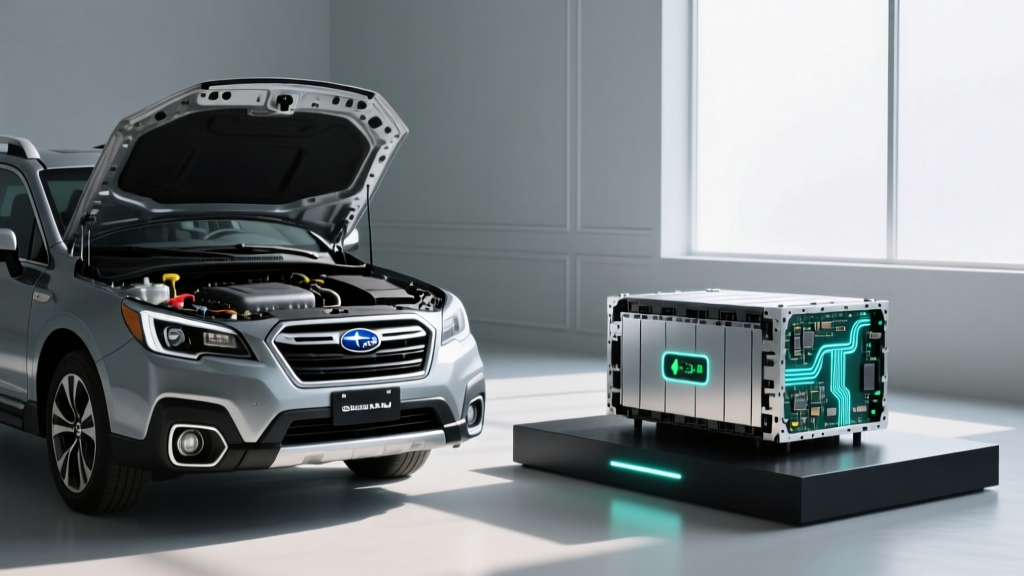
The 2017 Subaru Outback uses a standard 12-volt lead-acid (or AGM) auxiliary battery — Group 25 or Group 35, depending on trim and whether the vehicle has the EyeSight driver-assist system. This battery powers the starter motor, lights, infotainment, and ECU. It is not a traction battery and has nothing to do with propulsion in the gasoline Outback.
2017 Subaru Outback 12V Battery Specs:
- Type: Lead-acid / AGM (Group 25 or 35)
- Cold Cranking Amps (CCA): 550-640 CCA
- Typical lifespan: 3-5 years
- Replacement cost: $130-$260 (battery only, DIY or retailer install)
- Warranty: 2-4 years free replacement, prorated thereafter
The Subaru Starlink telematics system and EyeSight cameras draw small parasitic loads that can drain the 12V battery faster if the car sits unused for weeks — a common complaint in Subaru forums. For the gasoline Outback, this 12V battery is the only battery that matters.
But for EVs — and for the plug-in hybrid Subaru Solterra or Toyota bZ4X platform that Subaru co-developed — the high-voltage traction battery is the component that defines ownership cost and longevity. Let's examine that technology.
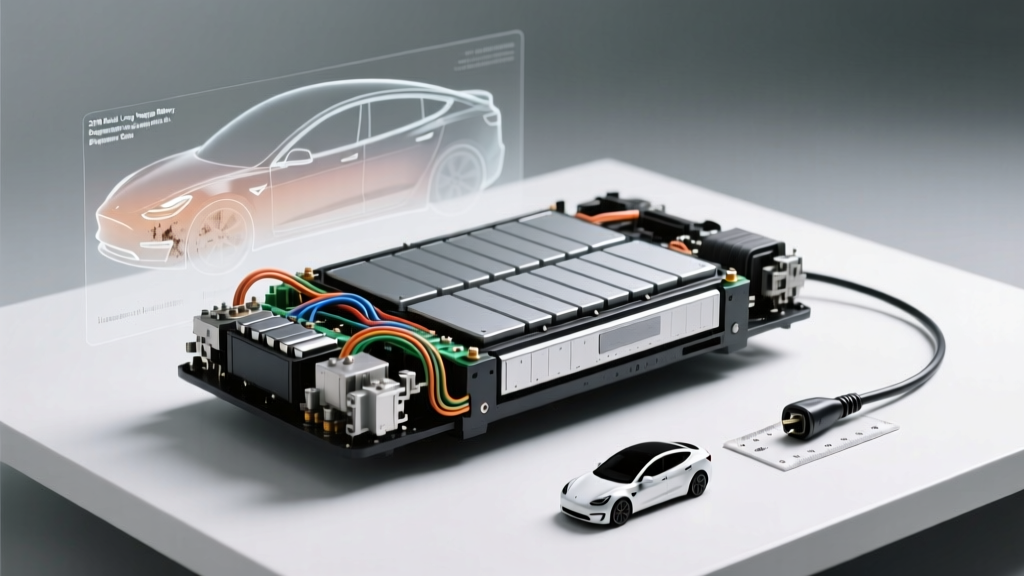
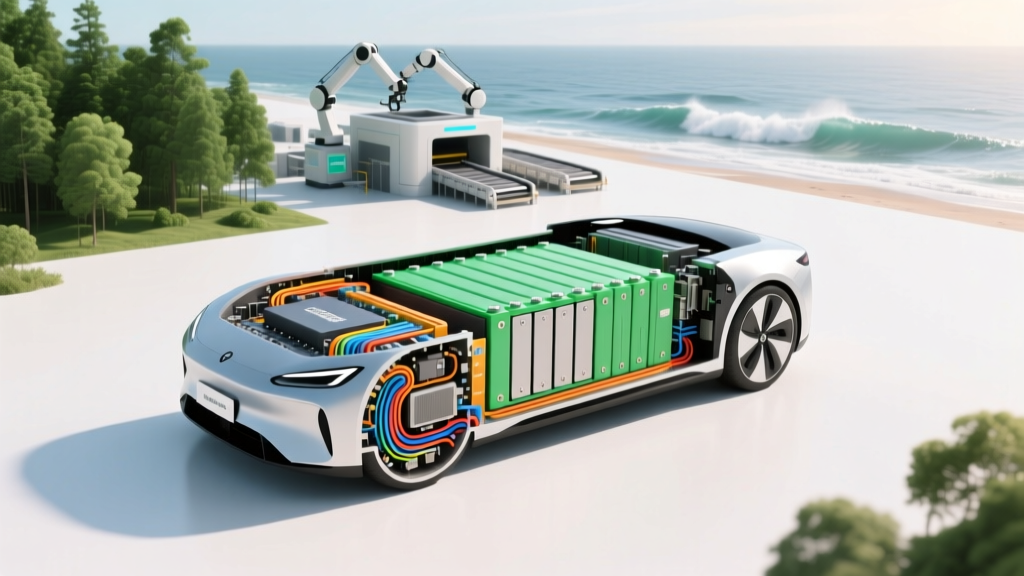
EV Traction Battery Chemistry: LFP vs NMC vs NCA
Modern EV batteries use lithium-ion cells, but the cathode chemistry varies significantly. The two dominant chemistries in 2026 are LFP (lithium iron phosphate) and NMC/NCA (nickel manganese cobalt / nickel cobalt aluminum). Each has distinct trade-offs that affect range, longevity, cold-weather performance, and cost.
| Attribute | LFP (LiFePO₄) | NMC / NCA |
|---|---|---|
| Energy density | Lower (~160-180 Wh/kg cell-level) | Higher (~220-300 Wh/kg cell-level) |
| Cycle life | 3,000-6,000+ cycles | 1,000-2,000 cycles |
| Cold-weather performance | Weaker — greater range loss below freezing | Better — retains more capacity in cold |
| Cost per kWh | Lower (~$80-$100/kWh at cell level in 2026) | Higher (~$110-$140/kWh at cell level) |
| Thermal stability / safety | Superior — very low thermal runaway risk | Good but requires more active thermal management |
| Recommended daily SoC | 100% OK — no upper-limit stress | 80% daily preferred; 100% for trips only |
| Common vehicles (2026) | Tesla Model 3/Y RWD, Ford Mustang Mach-E Select (some), BYD models | Hyundai Ioniq 5, Kia EV6, Chevy Equinox EV, Subaru Solterra, Tesla Long Range |
Which is better? For a daily commuter who charges at home and rarely needs maximum range, LFP is the superior longevity play — it simply wears out much more slowly and tolerates 100% charging. For drivers in cold climates (think Minnesota, Maine, or mountain regions) or those who need maximum range per charge, NMC/NCA offers better cold-weather usability and higher energy density in a lighter pack. Neither is universally "better" — the right choice depends on your climate, driving pattern, and ownership horizon.
How Long Do EV Batteries Last? Real Degradation Data
This is the single most common concern for prospective EV buyers, and the data is reassuring: most modern EV batteries outlast the vehicles they're installed in.
Typical EV Battery Degradation Curve (NMC/NCA packs, 2020-2026 data):
- Year 1 / 15,000 mi: ~2-5% capacity loss (initial "break-in" drop)
- Year 3 / 45,000 mi: ~6-10% total loss
- Year 5 / 75,000 mi: ~8-14% total loss
- Year 8 / 120,000 mi: ~10-18% total loss
- Year 10 / 150,000 mi: ~12-22% total loss (many packs still above 78% SoH)
Sources: Geotab fleet data (6,300+ EVs), Recurrent Auto battery health reports, Tesla Impact Reports.
LFP batteries degrade even more slowly. Tesla's LFP-equipped Model 3 RWD vehicles have shown less than 5% degradation at 100,000 miles in fleet data, largely because LFP chemistry is inherently more stable across charge cycles.
For comparison, the 12V lead-acid battery in your 2017 Subaru Outback will typically need replacement every 3-5 years — and that's considered normal. An EV traction battery losing 10% capacity over 8 years is, proportionally, far more durable.
Real-world range impact: If your EV had an EPA-rated 300-mile range when new, expect roughly 260-280 miles at 100,000 miles with an NMC pack, or 280-295 miles with an LFP pack. Highway driving at 75+ mph and cold weather (below 32°F) will further reduce usable range by 15-30% on any given day, but that's a trip-level variable, not permanent degradation.
EV Battery Warranty Terms: What's Covered
Federal regulations mandate that EV batteries carry a minimum warranty of 8 years / 100,000 miles (10 years / 150,000 miles in California Air Resources Board states, which include CA, CO, CT, ME, MD, MA, NJ, NY, OR, RI, VT, WA, and others adopting CARB rules). Most manufacturers exceed these minimums in capacity-retention guarantees.
| Manufacturer / Model | Warranty Term | Capacity Retention Threshold |
|---|---|---|
| Tesla Model 3/Y (NMC Long Range) | 8 yr / 120,000 mi | 70% minimum |
| Tesla Model 3/Y (LFP RWD) | 8 yr / 100,000 mi | 70% minimum |
| Hyundai Ioniq 5 / Kia EV6 | 10 yr / 100,000 mi | 70% minimum |
| Chevrolet Equinox EV / Blazer EV | 8 yr / 100,000 mi | 60% minimum (some trims 70%) |
| Ford Mustang Mach-E / F-150 Lightning | 8 yr / 100,000 mi | 70% minimum |
| Subaru Solterra | 8 yr / 100,000 mi | 70% minimum |
| BMW i4 / iX | 8 yr / 100,000 mi | 70% minimum |
What triggers a warranty claim? If your battery's State of Health (SoH) drops below the stated threshold (typically 70%) within the warranty period, the manufacturer must repair or replace the battery at no cost. In practice, very few EVs hit this threshold within warranty — the degradation data above shows most packs retain 82-90% capacity at 8 years.
The warranty covers defects and abnormal degradation. It does not cover damage from collisions, flooding, or improper modifications. Check your specific owner's manual for exclusions.
EV Battery Replacement Cost: When and How Much
If your battery does need replacement outside warranty — typically at 150,000+ miles or 12+ years — costs have fallen significantly but remain substantial. Here are real-world replacement cost ranges as of 2026:
| Vehicle / Pack Size | Battery Size (kWh) | Replacement Cost Range |
|---|---|---|
| Tesla Model 3 RWD (LFP) | ~60 kWh | $8,000 - $12,000 |
| Tesla Model Y Long Range (NMC) | ~75 kWh | $12,000 - $16,000 |
| Hyundai Ioniq 5 / Kia EV6 | ~77.4 kWh | $11,000 - $18,000 |
| Ford F-150 Lightning (Extended Range) | ~131 kWh | $20,000 - $30,000 |
| Chevrolet Bolt EV/EUV | ~65 kWh | $9,000 - $14,000 |
| Subaru Solterra | ~71.4 kWh | $12,000 - $17,000 |
Context that matters: These costs sound high in isolation, but consider that most EV batteries never need replacement during typical ownership. A 2017 Subaru Outback will go through 2-3 starter batteries in its lifetime ($400-$750 total). An EV might need zero traction battery replacements over 200,000 miles. The per-mile cost of EV battery ownership is, for most owners, $0 — covered entirely by the warranty period, after which the pack continues functioning with modest capacity loss.
Also worth noting: individual module replacement is increasingly available. Rather than swapping the entire pack, some shops can replace a single degraded module for $1,500-$4,000, restoring most of the lost capacity. This option is growing as the EV repair ecosystem matures.
Factors That Affect EV Battery Lifespan
Not all EV batteries age equally. Your habits directly influence how quickly the pack degrades:
Battery Care Checklist — Maximize Your Pack's Life:
- Avoid frequent DC fast charging above 150 kW. Occasional road-trip fast charging is fine, but daily use of 250-350 kW chargers accelerates degradation. Level 2 home charging (7-11 kW) is gentler on cells.
- Keep SoC between 20-80% for NMC/NCA daily use. LFP packs can sit at 100% without stress; NMC/NCA packs should only hit 100% when you're leaving for a long trip within hours.
- Don't leave the car at 0% or 100% for extended periods. Storage at extreme SoC states causes calendar degradation even when the car isn't driven.
- Precondition the battery before fast charging in cold weather. Most EVs do this automatically when you navigate to a charger; it warms the pack to optimal temperature (~70-95°F) for faster, healthier charging.
- Park in shade or a garage when possible. Sustained high battery temperatures (above 104°F / 40°C ambient) accelerate chemical aging. A hot Arizona driveway in July is harder on the pack than a cold Minnesota winter.
- Use scheduled charging to avoid sitting at high SoC. Set your charger to finish at 80% just before you leave in the morning, rather than hitting 80% at 10 PM and sitting there overnight.
The single biggest degradation accelerator is heat combined with high state of charge. An NMC battery stored at 100% SoC in 95°F heat will degrade noticeably faster than one kept at 60% SoC in moderate temperatures. LFP is far more tolerant of these conditions, which is why it's gaining market share in hot-climate regions.
How to Check and Monitor Battery Health (SoH)
State of Health (SoH) is the percentage of original capacity your battery retains. A new EV battery is 100% SoH; at 85% SoH, a 75 kWh pack effectively holds ~63.75 kWh.
How to check SoH by brand:
- Tesla: The in-car "Battery Health" screen (added in 2023 software updates) shows degradation percentage. Third-party apps like TeslaFi or Tessie log detailed SoH over time using the car's API.
- Hyundai/Kia: The infotainment system's EV diagnostics page shows battery health. Dealers can pull a detailed SoH report via the KDS diagnostic tool.
- Ford: The FordPass app and in-car settings display battery health status. Ford dealers can run a full Battery Health Check.
- General Motors (Ultium platform): The myChevrolet/myCadillac app shows battery health. OnStar diagnostics can provide detailed SoH reports.
- OBD-II scanners: Tools like the OBDLink MX+ paired with apps such as ABRP (A Better Routeplanner) or Car Scanner can read SoH data from most EVs via the OBD-II port.
When buying a used EV: Always request a battery health report from the seller or dealer. Services like Recurrent Auto provide vehicle-specific range and battery health scores based on real telematics data. A used EV at 90% SoH with 60,000 miles is generally a safer buy than one at 85% SoH with 30,000 miles — the latter suggests harsher charging habits or thermal exposure.
Emerging Battery Tech: Solid-State and Silicon Anodes
Looking beyond today's lithium-ion packs, two technologies are advancing toward production:
Solid-state batteries replace the liquid electrolyte with a solid material (ceramic, sulfide, or polymer), promising higher energy density (~400-500 Wh/kg at cell level), faster charging, and improved safety. Toyota has announced solid-state production for 2027-2028, initially in limited-run vehicles. QuantumScape is working with Volkswagen for mid-decade deployment. Samsung SDI targets 2027. These timelines are forward-looking and subject to manufacturing scale-up delays — solid-state EVs are not available for purchase in 2026.
Silicon anode batteries replace graphite anodes with silicon, which can hold roughly 10x more lithium ions per unit mass. Companies like Sila Nanotechnologies (partnered with Mercedes-Benz for the G-Class electric SUV) and Group14 (partnered with Porsche) are bringing silicon-dominant anodes to production vehicles in 2025-2027. Expect 10-20% range improvements in early implementations, scaling higher as the technology matures.
Neither technology changes the advice for today's EV buyers. Current lithium-ion packs (LFP and NMC) are proven, durable, and well-warranted. Waiting for solid-state is like waiting for a hypothetical future engine in 2010 instead of buying a reliable Camry — the existing technology already serves most needs well.
Frequently Asked Questions
How long do EV batteries last in years and miles?
Based on fleet data from Geotab and Recurrent Auto, most modern EV batteries retain 80-90% of original capacity at 150,000 miles and 10 years. Many will function acceptably (above 70% SoH) to 200,000+ miles. The vehicle's body, suspension, or electronics are more likely to end the car's life before the battery fails entirely.
How much does an EV battery cost to replace in 2026?
Full pack replacement ranges from $8,000 for smaller packs (Tesla Model 3 RWD, ~60 kWh) to $30,000 for large packs (F-150 Lightning Extended Range, ~131 kWh). Most owners never pay this — the battery outlasts their ownership period, and the 8-year/100,000-mile federal warranty covers premature degradation. Individual module replacement, where available, costs $1,500-$4,000.
What does the EV battery warranty actually cover?
Federal law mandates 8 years/100,000 miles minimum coverage (10/150,000 in CARB states). The warranty covers capacity loss below a stated threshold — typically 70% of original capacity — plus manufacturing defects. It does not cover collision damage, flood damage, or aftermarket modifications. If your SoH drops below the threshold within the warranty window, the manufacturer replaces or repairs the battery at no cost.
LFP vs NMC — which battery chemistry should I choose?
Choose LFP if you charge at home daily, live in a moderate or warm climate, prioritize maximum battery lifespan, and don't need the absolute longest range per charge. LFP tolerates 100% daily charging and degrades more slowly. Choose NMC/NCA if you live in a cold climate (below-freezing winters), need maximum range for road trips, or want the lightest possible pack for performance. NMC offers better cold-weather performance and higher energy density but prefers 80% daily SoC limits.
Does the 2017 Subaru Outback have an EV battery?
No. The 2017 Subaru Outback is a gasoline vehicle with a conventional 12-volt lead-acid starter battery (Group 25 or 35, 550-640 CCA). It has no high-voltage traction battery. If you're replacing the 12V battery, expect to pay $130-$260 at retailers like AutoZone, Advance Auto Parts, or Costco, with a typical lifespan of 3-5 years. Subaru's electrified option in 2026 is the Solterra, a fully electric SUV co-developed with Toyota, featuring a 71.4 kWh NMC battery with 228 miles of EPA range.
Can fast charging damage my EV battery?
Occasional DC fast charging is fine and expected. However, exclusive reliance on high-power DC fast charging (150-350 kW) does accelerate degradation compared to Level 2 home charging. Tesla's own data shows vehicles that fast-charge more than 90% of the time experience slightly higher degradation rates. The practical recommendation: use Level 2 (home or workplace) for daily charging, and reserve DC fast charging for road trips. Preconditioning the battery before fast charging — which most EVs do automatically when navigating to a charger — significantly reduces thermal stress.