If you've landed here searching for a 2017 Ford Explorer battery, you're likely dealing with one of two things: a dead 12V starter battery in a conventional gas Explorer, or curiosity about how that older Ford's electrical system compares to the high-voltage traction batteries powering today's EVs and hybrids. This guide addresses both — clarifying the 2017 Explorer's battery setup while providing a comprehensive look at modern electrified-vehicle battery technology, degradation, warranties, and replacement costs as of 2026.
The 2017 Ford Explorer Battery: What Owners Actually Need to Know
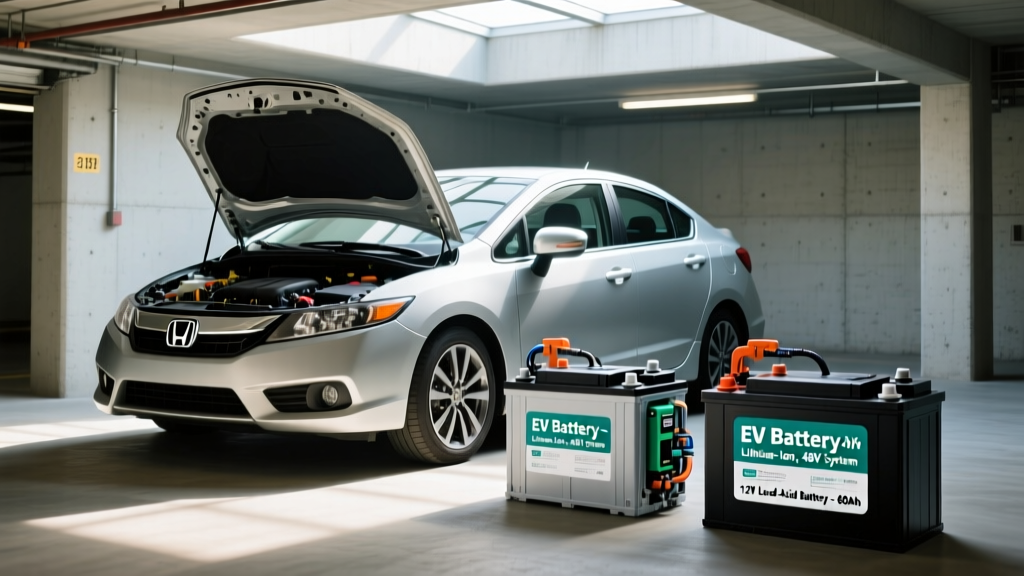
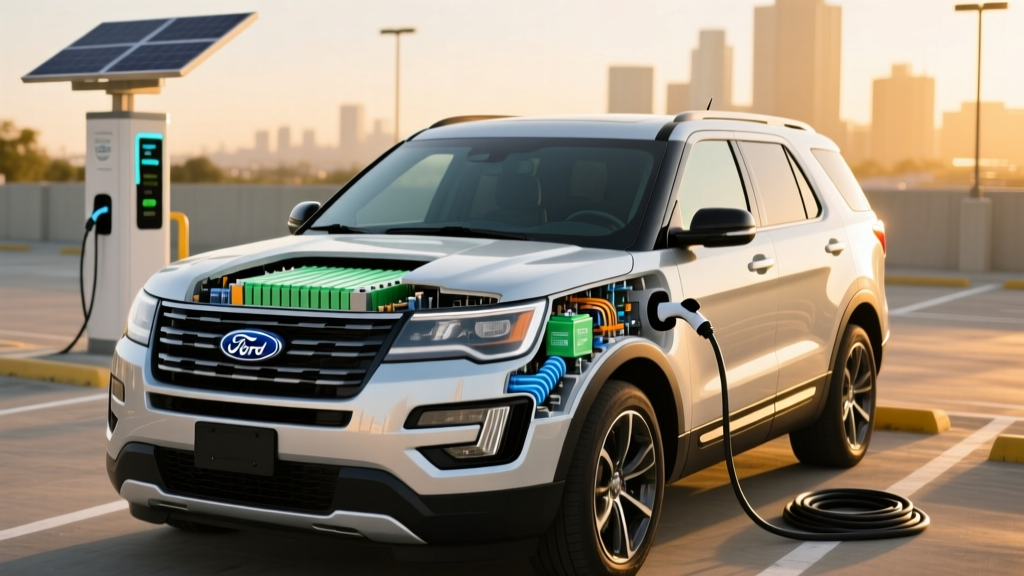
The 2017 Ford Explorer is a conventional internal-combustion SUV. It was not offered as a hybrid or plug-in hybrid in the U.S. market (Ford introduced the Explorer Hybrid for the 2020 model year with the sixth generation). That means the 2017 Explorer relies on a standard 12V lead-acid auxiliary battery — typically a Group 65 or H7 AGM battery — used solely for starting the engine, powering electronics, and running accessories when the engine is off.
This is fundamentally different from the high-voltage traction batteries (measured in kWh) found in EVs and hybrids, which store energy to actually propel the vehicle. Understanding this distinction is critical: a replacement 12V battery for a 2017 Explorer runs $150–$300 at an auto parts store, while an EV traction battery replacement can range from $5,000 to over $20,000 depending on the pack size and chemistry.
EV Battery Chemistry: LFP vs NMC vs NCA Explained
Modern EV and hybrid traction batteries use lithium-ion cells, but not all lithium-ion chemistries are equal. The two dominant families in 2026 are LFP (Lithium Iron Phosphate) and NMC/NCA (Nickel Manganese Cobalt / Nickel Cobalt Aluminum). Each has distinct trade-offs that affect range, longevity, cold-weather performance, and cost.
| Attribute | LFP (LiFePO4) | NMC / NCA |
|---|---|---|
| Energy Density | Lower (~160–180 Wh/kg cell-level) | Higher (~230–300 Wh/kg cell-level) |
| Typical Cycle Life | 3,000–5,000+ cycles | 1,000–2,500 cycles |
| Cold-Weather Performance | Moderate; greater range loss below 32°F | Better low-temp discharge capability |
| Cost per kWh | Lower ($80–$110/kWh pack-level, 2026 est.) | Higher ($110–$145/kWh pack-level, 2026 est.) |
| Charging to 100% Regularly | Recommended; BMS needs full-charge calibration | Generally advised to daily-charge to 80% |
| Cobalt Content | None | Contains cobalt/nickel (supply-chain concern) |
| Common 2026 Examples | Tesla Model 3/Y RWD, Ford Mustang Mach-E Select (LFP option), BYD models | Hyundai Ioniq 5/6, Tesla Long Range/Performance, Rivian, Lucid |
Which is better? Neither is universally superior. LFP excels in longevity and cost, making it ideal for standard-range models and owners who plan to keep their vehicle 8+ years. NMC/NCA offers higher energy density, translating to more range in a lighter, more compact pack — the choice for long-range and performance trims. If you prioritize maximum miles per charge and don't mind an 80% daily-charge habit, NMC is the play. If you want a battery that can tolerate daily 100% charges and still outlast the car, LFP is compelling.
How Long Do EV Batteries Actually Last? Degradation Data
The fear of a sudden, catastrophic battery failure at 100,000 miles is largely outdated. Real-world data from fleets and long-term owners shows that modern lithium-ion traction batteries degrade gradually and predictably.
Based on aggregated data from sources including Recurrent Auto's fleet analysis and manufacturer-reported figures:
- Year 1–2: ~2–5% capacity loss (initial "break-in" degradation curve)
- Year 3–5: Degradation slows to ~1–2% per year
- Year 8–10: Most packs retain 85–92% of original capacity
- 150,000–200,000 miles: Typical packs retain 80–90% capacity
A practical example: A 2022 Tesla Model 3 Long Range with an EPA range of 358 miles when new might show approximately 315–330 miles of range at 80,000 miles — roughly a 7–12% loss. That's noticeable but far from debilitating.
Battery Warranty Terms: What's Actually Covered
Federal regulations mandate a minimum EV battery warranty of 8 years / 100,000 miles (in CARB states like California, it extends to 10 years / 150,000 miles). Most manufacturers exceed these minimums with capacity-retention guarantees.
| Manufacturer | Warranty Period | Capacity Threshold |
|---|---|---|
| Tesla (Model 3/Y LFP) | 8 yr / 100,000 mi | 70% retention |
| Tesla (Long Range/Performance) | 8 yr / 120,000 mi | 70% retention |
| Hyundai / Kia | 10 yr / 100,000 mi | 70% retention |
| Ford (Mustang Mach-E, F-150 Lightning) | 8 yr / 100,000 mi | 70% retention |
| GM (Ultium platform) | 8 yr / 100,000 mi | 70% retention |
| Rivian | 8 yr / 175,000 mi (Large Pack) | 70% retention |
| BMW | 8 yr / 100,000 mi | 70% retention |
What does the warranty cover? These warranties guarantee that the battery will retain at least the stated percentage (typically 70%) of its original usable capacity during the warranty period. If your 75 kWh pack drops below 52.5 kWh of usable capacity within 8 years / 100,000 miles, the manufacturer will repair or replace modules to bring it above that threshold. This covers defects and abnormal degradation — not damage from accidents, flooding, or unauthorized modifications.
For context, the U.S. Department of Energy's fueleconomy.gov resource notes that most EV batteries are designed to outlast the vehicle's typical ownership period, and warranty claims for total pack replacement remain rare.
EV Battery Replacement Costs: 2026 Pricing Reality
Out-of-warranty battery replacement is the single biggest fear for prospective EV buyers. Here's what the data actually shows as of 2026:
| Vehicle Category | Battery Size | Estimated Replacement Cost |
|---|---|---|
| Compact EV (e.g., Chevy Bolt, Nissan LEAF) | 40–65 kWh | $6,500–$12,000 |
| Mid-size sedan/crossover (e.g., Model 3, Ioniq 5) | 60–82 kWh | $10,000–$16,000 |
| Large SUV/truck (e.g., F-150 Lightning, Rivian) | 98–149 kWh | $15,000–$25,000+ |
| Luxury sedan (e.g., Lucid Air, Mercedes EQS) | 90–118 kWh | $18,000–$30,000 |
| PHEV (e.g., Toyota RAV4 Prime, Jeep 4xe) | 14–25 kWh | $4,000–$8,000 |
When is replacement typically needed? For the vast majority of owners, it isn't. Battery pack prices have fallen from over $1,000/kWh in 2010 to approximately $100–$140/kWh at the pack level in 2026 (per BloombergNEF tracking). More importantly, most modern packs will retain 80%+ capacity at 200,000 miles — meaning many EVs will be retired for other reasons before the battery needs replacement.
Module-level repair is also increasingly available. Rather than replacing the entire pack, shops can identify and swap degraded individual modules for $1,500–$4,000, restoring most of the pack's original capacity.
Factors That Accelerate Battery Degradation (and How to Minimize Them)
Not all miles are equal when it comes to battery wear. The following factors have the most measurable impact on long-term State of Health (SoH):
- Frequent DC fast charging above 150 kW: Occasional road-trip fast charging is fine. Daily reliance on 250–350 kW chargers generates sustained heat that accelerates cell wear. Level 2 home charging (7–11 kW) is gentler.
- Sustained high State of Charge (NMC/NCA): Storing an NMC pack at 100% for days at a time stresses the cathode. Daily charge to 80% is the widely recommended target. LFP packs are the exception — Ford, Tesla, and BYD recommend periodic 100% charges for BMS calibration.
- Deep discharge below 10%: Regularly draining the pack to near-zero stresses cells. Try to plug in before dropping below 15–20%.
- Extreme heat exposure: Parking in direct sun in 100°F+ climates without an active thermal management system accelerates electrolyte breakdown. Garage parking or shaded spots make a measurable difference.
- Extreme cold charging without preconditioning: Charging a frozen battery at high power causes lithium plating. Always use your vehicle's preconditioning feature (most EVs activate this automatically when you navigate to a charger).
How to Check Your Battery's State of Health (SoH)
Monitoring your battery's health doesn't require a dealership visit. Here's how to stay informed:
In-vehicle tools: Many 2024–2026 EVs include a battery health indicator in the settings menu. Tesla provides estimated range at 100% charge as a proxy. Hyundai/Kia's Bluelink and Ford's FordPass apps display estimated battery capacity percentage.
OBD-II dongles and apps: Tools like OBDLink SX paired with apps such as Car Scanner or LeafSpy (for Nissan LEAF) can read the BMS-reported SoH percentage directly. Third-party services like Recurrent offer battery health reports based on telematics data.
Dealership diagnostic: A service center can run a full battery health check that reads individual cell voltages, internal resistance, and module balance. Request this when buying a used EV — it's the most authoritative snapshot of pack condition.
DIY range tracking: Charge to 100% (on an LFP vehicle or occasionally on NMC), record the displayed range, and compare it to the original EPA figure. A 2023 Model Y Long Range that displayed 330 miles at 100% when new but now shows 300 miles has experienced approximately 9% degradation.
Looking Ahead: Solid-State, Silicon Anodes, and What's Real in 2026
Next-generation battery technologies are frequently hyped, so here's a grounded timeline:
Silicon-dominant anodes: Companies like Sila Nanotechnologies and Group14 are already shipping silicon-enhanced anode materials in limited production (Mercedes G-Class 580e uses a silicon-anode battery from 2024). Expect broader adoption in premium models through 2027, offering 10–20% energy-density gains over graphite anodes.
Solid-state batteries: Toyota has announced a solid-state battery targeting 2027–2028 production with a claimed 460+ mile range and 10-minute fast-charge capability. Nissan and Samsung SDI have similar timelines. However, as of early 2026, no mass-produced vehicle on sale uses a solid-state traction battery. These remain in pilot and validation phases. Realistic consumer availability is 2028 at the earliest, likely debuting in limited, premium models before scaling.
Sodium-ion batteries: CATL and BYD have begun deploying sodium-ion packs in budget Chinese-market EVs. Lower energy density limits them to city cars, but their cost advantage and cold-weather resilience make them a potential future option for base-trim models globally.
Frequently Asked Questions
Does the 2017 Ford Explorer have a hybrid or EV battery?
No. The 2017 Ford Explorer was only sold with conventional gasoline engines (2.3L EcoBoost, 3.5L V6, or 3.5L EcoBoost). It uses a standard 12V lead-acid battery. Ford introduced the Explorer Hybrid (HEV) for the 2020 model year with a 1.35 kWh lithium-ion battery — far smaller than any full EV pack.
How long do EV batteries last in years and miles?
Most modern EV batteries (2022+ models with active thermal management) retain 85–92% capacity at 8–10 years and 80–90% at 150,000–200,000 miles. They are designed to outlast the vehicle's practical lifespan. Catastrophic failure is rare.
How much does it cost to replace an EV battery in 2026?
Out-of-warranty replacement ranges from approximately $6,500 for a compact EV (40–65 kWh pack) to $25,000+ for a large truck or luxury sedan (100+ kWh pack). Module-level repairs can reduce this to $1,500–$4,000. However, most owners never need a replacement — degradation data shows packs lasting 200,000+ miles with 80%+ retention.
What does the EV battery warranty actually cover?
Federal minimum is 8 years / 100,000 miles (10 years / 150,000 miles in CARB states). Manufacturers guarantee 70% capacity retention during this period. If your battery degrades below that threshold, the manufacturer repairs or replaces modules at no cost. Damage from accidents, neglect, or unauthorized modifications is excluded.
LFP vs NMC: which battery chemistry should I choose?
Choose LFP if you want maximum cycle life, plan to keep the vehicle 8+ years, prefer charging to 100% daily, and can accept slightly lower range in a given pack size. Choose NMC/NCA if you need maximum range per charge, live in a very cold climate, or prioritize performance. Both chemistries are proven and well-supported in 2026.
How do I maximize my EV battery's lifespan?
For NMC/NCA: daily charge to 80%, avoid prolonged storage at 100% or below 10%, use DC fast charging sparingly, and precondition before cold-weather charging. For LFP: charge to 100% at least weekly for BMS calibration, and follow the same temperature and fast-charging guidelines. Level 2 home charging (7–11 kW) is the gentlest charging method for any chemistry.