If you've searched for a battery for 2016 Hyundai Elantra, you're almost certainly looking for a standard 12-volt lead-acid or AGM auxiliary battery — the kind that starts a gas engine and powers accessories. But that same search term has become a doorway into a much larger conversation. As Hyundai's lineup has shifted dramatically toward electrification — from the original Ioniq Electric to the Ioniq 5, Ioniq 6, and Kona Electric — understanding the difference between a conventional 12V battery and a high-voltage EV traction battery has never been more important for Hyundai owners and shoppers alike.
This guide bridges both worlds. We'll clarify exactly what battery the 2016 Elantra requires, then provide a comprehensive breakdown of modern EV traction battery technology: chemistry, degradation, replacement costs, warranties, and care practices that extend battery life well past 200,000 miles.
The 2016 Hyundai Elantra Battery: What You Actually Need
The 2016 Hyundai Elantra (including the Elantra GT and Elantra Limited) uses a conventional Group 47 (H5) 12V lead-acid battery. This is not a traction battery — it's an auxiliary battery that powers the starter motor, lights, infotainment, and electronics. Key specs:
- Group size: 47 (H5)
- Cold Cranking Amps (CCA): 550–650 CCA recommended
- Voltage: 12V
- Typical cost: $120–$220 at auto parts retailers
- Typical lifespan: 3–5 years depending on climate and usage
This is a straightforward replacement available at any auto parts store. It has nothing in common with the high-voltage lithium-ion traction batteries found in Hyundai's electric and plug-in hybrid vehicles — and that distinction is where confusion often begins.
12V Auxiliary vs. EV Traction Battery: The Critical Difference
Every electric vehicle actually has two batteries: a small 12V auxiliary battery (just like the one in your 2016 Elantra) and a large high-voltage traction battery that propels the vehicle. Here's how they compare:
| Attribute | 12V Auxiliary Battery | EV Traction Battery |
|---|---|---|
| Purpose | Starts systems, powers accessories, runs 12V electronics | Stores energy to drive the electric motor(s) |
| Voltage | 12V | 400V–800V (architecture dependent) |
| Chemistry | Lead-acid or AGM | LFP or NMC/NCA lithium-ion |
| Capacity | ~0.5–1.0 kWh | 50–120+ kWh |
| Replacement cost | $120–$300 | $5,000–$22,000+ |
| Lifespan | 3–5 years | 15–20+ years (with proper care) |
Even in a fully electric Hyundai Ioniq 5, a small 12V battery handles the computers, door locks, and lighting. If that 12V dies, the car won't "start" — even though the massive traction battery underneath is fully charged. Hyundai addresses this in newer EVs with a 12V lithium-iron-phosphate auxiliary pack that recharges from the main battery, reducing the chance of a dead 12V.
EV Battery Chemistry: LFP vs NMC Explained
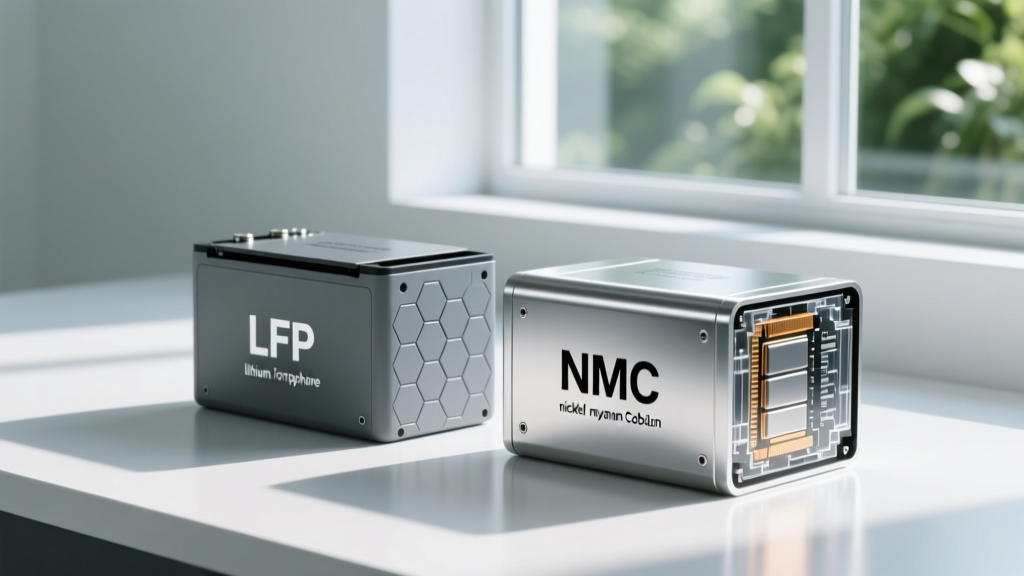
Modern EV traction batteries predominantly use one of two lithium-ion chemistries. The choice affects range, longevity, cost, and how you should charge.
| Attribute | LFP (Lithium Iron Phosphate) | NMC/NCA (Nickel Manganese Cobalt / Nickel Cobalt Aluminum) |
|---|---|---|
| Energy density | Lower (~160 Wh/kg cell-level) | Higher (~250–300 Wh/kg cell-level) |
| Cycle life | 3,000–5,000+ full cycles | 1,000–2,000 full cycles |
| Calendar aging | Slower degradation over time | Faster degradation, especially at high SoC |
| Cold-weather performance | Weaker — more range loss below freezing | Better low-temperature discharge capability |
| Cost per kWh | Lower — no cobalt or nickel | Higher — commodity-priced metals |
| Charging to 100% | Recommended periodically for BMS calibration | Daily charging to 80% recommended for longevity |
| Examples | Tesla Model 3 RWD, Ford Mustang Mach-E Select (2024+) | Hyundai Ioniq 5, Kia EV6, most long-range EVs |
Which is better? It depends on your priorities. If you want maximum range in a lighter package and don't mind charging to 80% daily, NMC is the established choice — and it's what Hyundai has predominantly used across its EV lineup. If you prioritize longevity, lower cost, and plan to keep the vehicle 10+ years, LFP's superior cycle life is compelling, though you'll accept somewhat less range per kilogram of battery weight.
Hyundai has signaled interest in LFP for future entry-level EVs to hit lower price points, but as of the 2026 model year, the Ioniq 5, Ioniq 6, and Kona Electric continue to use NMC-based cells supplied primarily by SK On and LG Energy Solution.
How Long Do EV Batteries Actually Last?
The single most common fear among prospective EV buyers is battery replacement. The data, however, tells a reassuring story: most modern EV traction batteries outlast the vehicles they're installed in.
- Geotab analysis (2024) of 10,000+ EVs showed average battery degradation of ~1.8% per year across all models — meaning after 10 years, the average EV retains roughly 82% of original capacity.
- Tesla's 2024 Impact Report documented that Model S/X batteries retained ~88% capacity at 200,000 miles.
- Hyundai/Kia EVs with NMC chemistry typically show 5–8% degradation over the first 50,000 miles, then degradation slows significantly, settling into a linear decline of roughly 1–2% per year.
- Early-generation EVs (2011–2015 Nissan Leaf with passive air cooling) showed significantly worse degradation — up to 20–30% loss in hot climates — highlighting the importance of active thermal management, which all modern Hyundai EVs include.
At the current trajectory, a 2026 Hyundai Ioniq 5 with its 77.4 kWh usable battery (NMC chemistry, liquid-cooled) should retain approximately 85–90% of original capacity at 100,000 miles and 75–82% at 200,000 miles under normal use conditions. That means a vehicle originally rated at 303 miles of EPA range would still deliver roughly 240–250 miles at 200,000 miles — still highly usable for daily driving.
EV Battery Warranty: What Hyundai Covers
Hyundai offers one of the stronger battery warranties in the industry. Here's how it breaks down for current models:
| Warranty Element | Hyundai Coverage (2026 Models) |
|---|---|
| Duration | 10 years / 100,000 miles (whichever comes first) |
| Capacity threshold | 70% of original capacity (below this triggers a warranty claim) |
| What's covered | Battery cell defects, excessive capacity loss, BMS failures |
| What's not covered | Damage from accidents, modifications, improper charging equipment, or neglect |
| Transferability | Fully transferable to subsequent owners |
The 70% threshold is significant. Given real-world degradation data showing most EVs retain 80%+ capacity at the 10-year mark, triggering a warranty claim is uncommon under normal use. Hyundai's warranty also covers the battery management system (BMS) and associated power electronics — not just the cells themselves.
For context, the U.S. Department of Energy notes that federal regulations require EV batteries to be warranted for a minimum of 8 years/100,000 miles in CARB-adopting states and 8 years/80,000 miles elsewhere. Hyundai exceeds both minimums.
How Much Does an EV Battery Replacement Cost?
If you do need an out-of-warranty replacement — typically at very high mileage (200,000+) or after the warranty period — costs are substantial but declining:
| Vehicle / Battery Size | Estimated Replacement Cost (Parts + Labor) |
|---|---|
| Hyundai Kona Electric (64 kWh) | $8,000–$12,000 |
| Hyundai Ioniq 5 (77.4 kWh) | $10,000–$16,000 |
| Hyundai Ioniq 6 (77.4 kWh) | $10,000–$16,000 |
| Large-battery EVs (100+ kWh, e.g., GMC Hummer EV, Ford F-150 Lightning Extended) | $16,000–$25,000+ |
Important context: complete battery replacement is rare. More commonly, individual modules or cells can be replaced at far lower cost ($1,500–$4,000), and many shops now specialize in module-level repair rather than full pack swaps. Battery prices at the cell level have dropped from over $1,000/kWh in 2010 to roughly $100–$130/kWh in 2025–2026, according to BloombergNEF, and this trend continues to reduce replacement costs over time.
Compare this to the 2016 Elantra's 12V battery at $120–$220, and the scale difference is obvious — but so is the value proposition. An EV traction battery delivers 150,000–300,000+ miles of service. Spread over that lifespan, the per-mile cost is modest.
Factors That Affect EV Battery Life (and How to Maximize It)
Not all miles are equal when it comes to battery wear. These factors have the most measurable impact on long-term State of Health (SoH):
- Limit DC fast charging frequency. Occasional road-trip fast charging is fine, but daily use of 150+ kW DC chargers accelerates degradation. Studies suggest vehicles that fast-charge more than 3 times per week show 2–3% additional capacity loss over 5 years compared to predominantly Level 2 charging.
- Avoid prolonged storage at 100% SoC. For NMC batteries, the sweet spot for daily use is 20–80%. Storing a vehicle at 100% for days or weeks in hot weather accelerates calendar aging.
- Don't regularly drain to 0%. Deep discharges stress cells. The battery buffer (typically ~5% at the bottom that the BMS reserves) helps, but habitually running the pack to empty isn't ideal.
- Use preconditioning. Hyundai's EVs allow you to precondition the battery before fast charging or departure. This brings cells to optimal temperature (~25–35°C), reducing stress and improving charge speed.
- Extreme heat is worse than extreme cold for degradation. Cold temporarily reduces range (expect 15–30% loss at 20°F), but it doesn't permanently damage cells. Sustained high temperatures (95°F+ ambient with a hot pack) accelerate chemical degradation permanently.
- Keep the vehicle plugged in during extreme cold. The thermal management system will use grid power to maintain battery temperature rather than draining the pack.
Monitoring Your Battery's State of Health
Modern Hyundai EVs provide multiple ways to monitor battery health:
- In-vehicle display: The Ioniq 5 and Ioniq 6 include a battery health indicator in the settings menu that shows estimated SoH as a percentage. This is calculated by the BMS based on capacity measurements over charge/discharge cycles.
- Hyundai Bluelink app: Connected services provide charging history, energy consumption data, and battery status — useful for tracking efficiency trends over time.
- OBD-II diagnostic tools: Third-party tools like Car Scanner or ABRP-linked OBD dongles can pull detailed BMS data including cell voltage variance, pack impedance, and precise SoH readings that go beyond the dashboard display.
- Dealer diagnostics: Hyundai dealerships can perform a full battery health report, which is especially useful when buying a used EV or documenting capacity for a warranty claim.
A healthy battery pack should show cell voltage variance of less than 20–30 mV across all cells at rest. Higher variance may indicate an imbalanced or degrading module that warrants dealer attention.
What's Next: Solid-State and Silicon-Anode Batteries
The next major leap in battery technology is solid-state batteries, which replace the liquid electrolyte with a solid material — promising higher energy density, faster charging, and improved safety. Hyundai Motor Group has invested in solid-state development through partnerships with Solid Energy Systems and its own internal R&D, with pilot production targeted for the late 2020s.
However, realistic timelines matter:
- Solid-state batteries are expected to enter limited production vehicles around 2028–2030, initially in premium/low-volume applications. Mass-market adoption is unlikely before 2032+.
- Silicon-anode batteries (which boost energy density by 20–40% over graphite anodes) are closer, with companies like Sila Nanotechnologies and Group14 already shipping product. Expect to see these in production EVs by 2027–2028.
- Sodium-ion batteries are emerging as a low-cost alternative for budget EVs, with CATL shipping cells in 2025. These trade energy density for cost and could appear in entry-level models within 2–3 years.
None of these technologies are available in any vehicle you can buy today. If you're shopping now, current NMC and LFP batteries — with active thermal management and proven degradation curves — represent mature, reliable technology. Waiting for solid-state means waiting at least 3–5 years for limited availability and likely a premium price.
Frequently Asked Questions
How long do EV batteries last in years and miles?
Modern liquid-cooled EV batteries (like those in Hyundai's current lineup) typically last 15–20 years or 200,000+ miles before degrading to 70–80% of original capacity. At that point, the vehicle is still fully drivable — just with reduced range. Data from Geotab and manufacturer reports confirm average degradation of roughly 1.8% per year under normal use.
How much does it cost to replace an EV battery?
A full pack replacement for a Hyundai EV currently runs $8,000–$16,000 depending on battery size. However, complete replacements are rare — module-level repairs cost $1,500–$4,000. Most EV batteries outlast the vehicle, making replacement an unlikely expense for first owners.
What does the Hyundai EV battery warranty cover?
Hyundai warrants its EV batteries for 10 years/100,000 miles against defects and capacity loss below 70% of original capacity. This covers cells, modules, and the BMS. It's fully transferable to subsequent owners. See Hyundai's official warranty page for full terms.
How do I check my EV battery health?
Use the in-vehicle battery health display, the Hyundai Bluelink app, or an OBD-II diagnostic tool for detailed cell-level data. A dealer can also run a formal battery health report. Track efficiency (kWh/100mi) over time — a gradual increase may signal degradation.
LFP vs NMC — which battery chemistry should I choose?
Choose LFP if you prioritize longevity (5,000+ cycles), lower cost, and plan to keep the vehicle 10+ years. Choose NMC if you want maximum range in a lighter package, better cold-weather performance, and faster DC charging speeds. For most Hyundai EV buyers today, NMC is the only option — and it performs well with proper care.
Is the battery for a 2016 Hyundai Elantra the same as an EV battery?
No. The 2016 Elantra uses a standard Group 47 (H5) 12V lead-acid battery costing $120–$220. This is an auxiliary battery that starts the engine and runs accessories. An EV traction battery is a 400V–800V lithium-ion pack with 50–100+ kWh of capacity — a fundamentally different component at a very different price point.
Whether you're maintaining a 2016 Elantra or evaluating a new Ioniq 5, understanding what's under the hood — or under the floor — is the foundation of smart ownership. For the latest EPA range and efficiency data on Hyundai's electric lineup, visit fueleconomy.gov.