If you own a 2016 Buick Encore and are searching for battery replacement information, you are almost certainly dealing with the vehicle's 12-volt auxiliary battery — not a high-voltage traction pack. The Encore is a conventional gasoline-powered subcompact crossover, and like every internal combustion engine (ICE) vehicle, it relies on a standard 12V lead-acid battery to start the engine and power electronics.
But the search term "2016 Buick Encore battery" also opens a useful conversation for anyone weighing their next vehicle purchase. As you consider whether to replace your Encore with another gas car, a hybrid, or a full battery-electric vehicle (BEV), understanding the fundamental differences between a $200 lead-acid starter battery and a $10,000+ lithium-ion traction battery is critical. This guide covers both — and gives you the exact numbers to plan ahead.
2016 Buick Encore 12V Battery: What You Need to Know
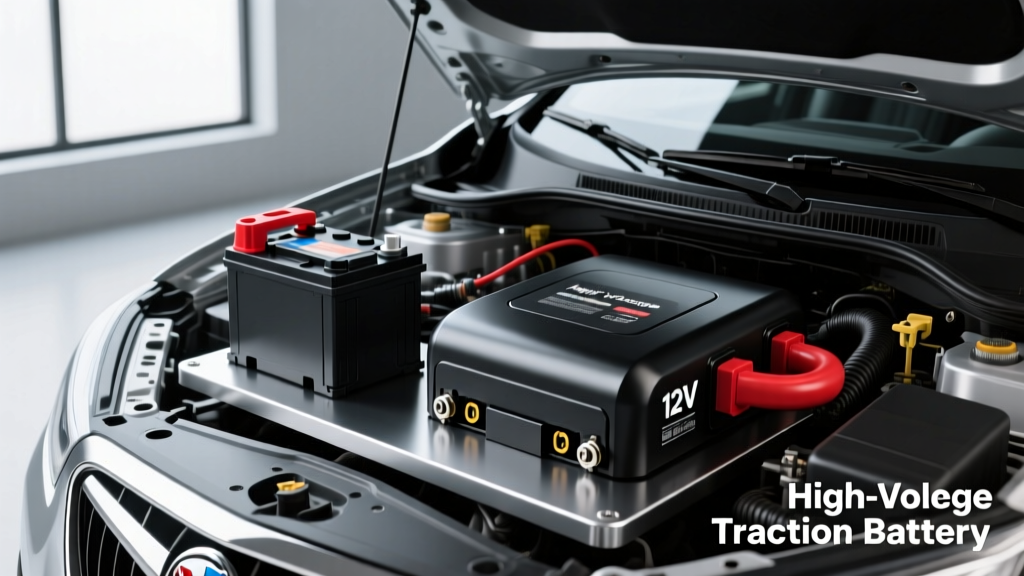
The 2016 Buick Encore uses a Group 47 (H5) 12V lead-acid battery. Here are the key specifications and replacement details:
| Specification | Detail |
|---|---|
| Battery Group Size | 47 (H5) |
| Cold Cranking Amps (CCA) | 570–650 CCA |
| Voltage | 12V |
| Typical Lifespan | 3–5 years |
| Replacement Cost (Parts) | $140–$230 |
| Installation Labor | $20–$50 (or DIY) |
| Total Replacement Cost | $160–$280 |
Signs your Encore's 12V battery is failing include slow cranking, dimming headlights, a clicking sound when turning the key, or a dashboard battery warning light. Most auto parts stores will test your battery's health for free. Replacement is straightforward — a single battery under the hood, two terminal clamps, and a hold-down bracket.
This is fundamentally different from the high-voltage traction batteries in electric vehicles, which we cover in detail below.
EV Traction Batteries: Chemistry, Capacity, and How They Work
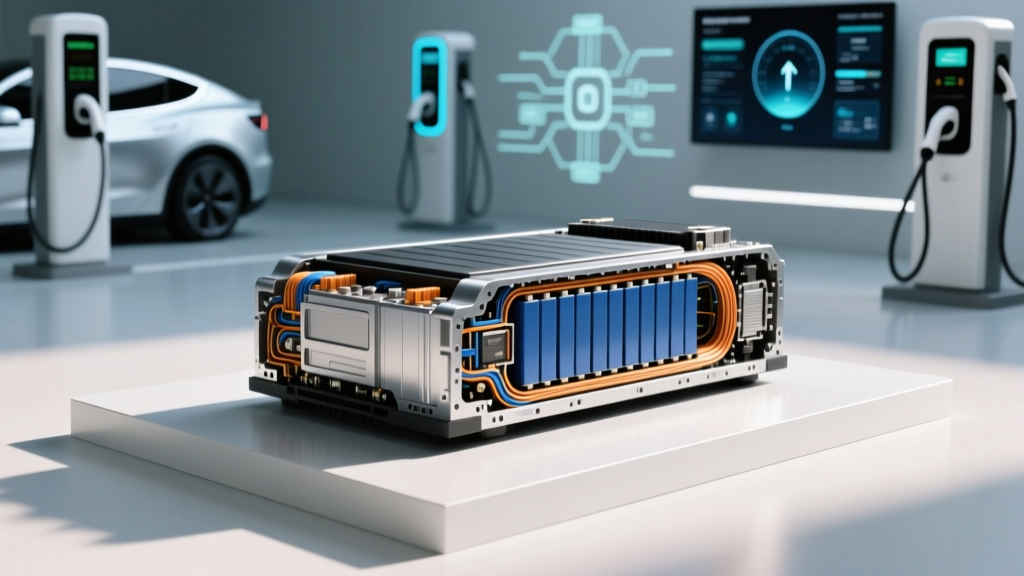
Every battery electric vehicle (BEV) and plug-in hybrid (PHEV) uses a high-voltage lithium-ion traction battery to store energy and drive the electric motor(s). These packs range from roughly 40 kWh (compact EVs) to over 130 kWh (large trucks and SUVs). For context, a kWh (kilowatt-hour) measures energy capacity — think of it as the "gallon" equivalent for electric vehicles.
The two dominant lithium-ion chemistries in 2026 EVs are NMC (nickel manganese cobalt) and LFP (lithium iron phosphate). Each has distinct trade-offs:
| Attribute | NMC / NCA | LFP (LiFePO4) |
|---|---|---|
| Energy Density | Higher (~250–300 Wh/kg cell-level) | Lower (~160–200 Wh/kg cell-level) |
| Typical EPA Range | Longer range per pack size | Shorter range, or heavier pack needed |
| Cycle Life | ~1,000–2,000 full cycles | ~3,000–6,000+ full cycles |
| Cold-Weather Performance | Better low-temp discharge | More range loss in freezing temps |
| Cost (per kWh) | Higher (cobalt/nickel supply chain) | Lower (~15–25% cheaper per kWh) |
| Recommended Charge Habit | Daily to 80%; 100% only for trips | Can charge to 100% daily safely |
| Thermal Stability | Good, requires active management | Excellent, lower thermal runaway risk |
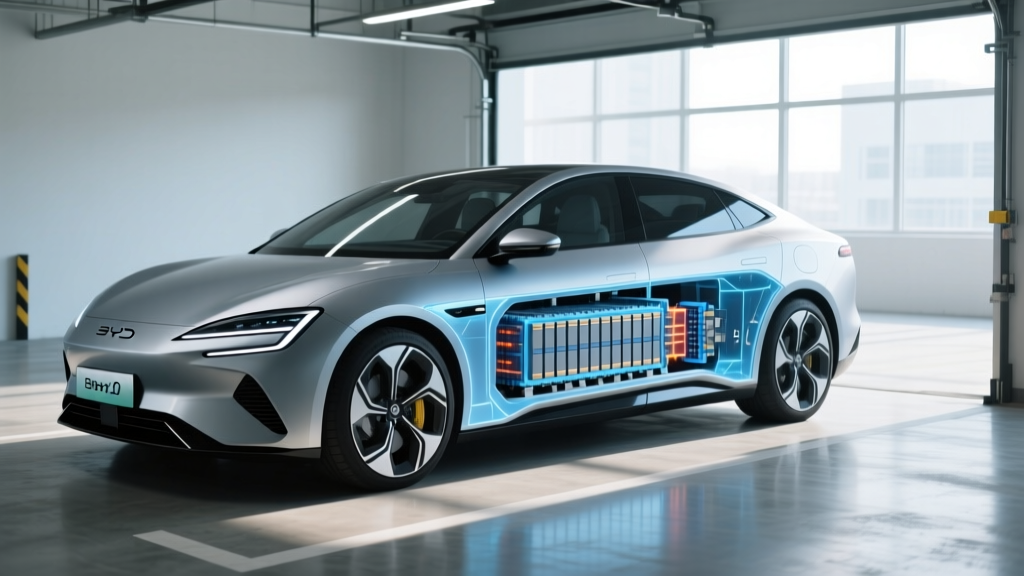
| Common 2026 Applications | Tesla Model S/X, Rivian, Hyundai Ioniq 5 (Long Range), most PHEVs | Tesla Model 3/Y RWD, Ford Mustang Mach-E Select, BYD, base-trim EVs |
Which is better? NMC delivers more range in a lighter package, making it ideal for long-range and performance trims. LFP sacrifices some energy density for dramatically longer cycle life, lower cost, and the ability to charge to 100% daily without accelerated degradation. For most daily commuters who charge at home, LFP is increasingly the pragmatic choice. For road-trippers and cold-climate drivers, NMC remains advantageous.
How Long Do EV Batteries Actually Last?
The short answer: most modern EV traction batteries outlast the vehicle itself. Data from fleet operators, manufacturer reports, and third-party testing consistently show that lithium-ion packs degrade far more slowly than early EV skeptics predicted.
Here are real-world degradation data points from vehicles on the road:
| Vehicle / Fleet | Time / Miles | Average Capacity Loss | Source Context |
|---|---|---|---|
| Tesla Model S/X (2013–2020 fleet) | ~150,000 miles | ~10–12% | Tesla Impact Report; owner-reported data |
| Nissan Leaf (2011–2017, passive cooling) | ~80,000 miles / 8 years | ~15–25% (varies by climate) | Owner surveys; noted thermal management impact |
| Chevrolet Bolt EV (2017–2022, 60 kWh) | ~100,000 miles | ~6–9% | Owner forums; GM warranty data |
| Hyundai/Kia E-GMP platform (Ioniq 5, EV6) | ~50,000 miles / 2–3 years | ~3–5% | Early fleet data; active thermal management |
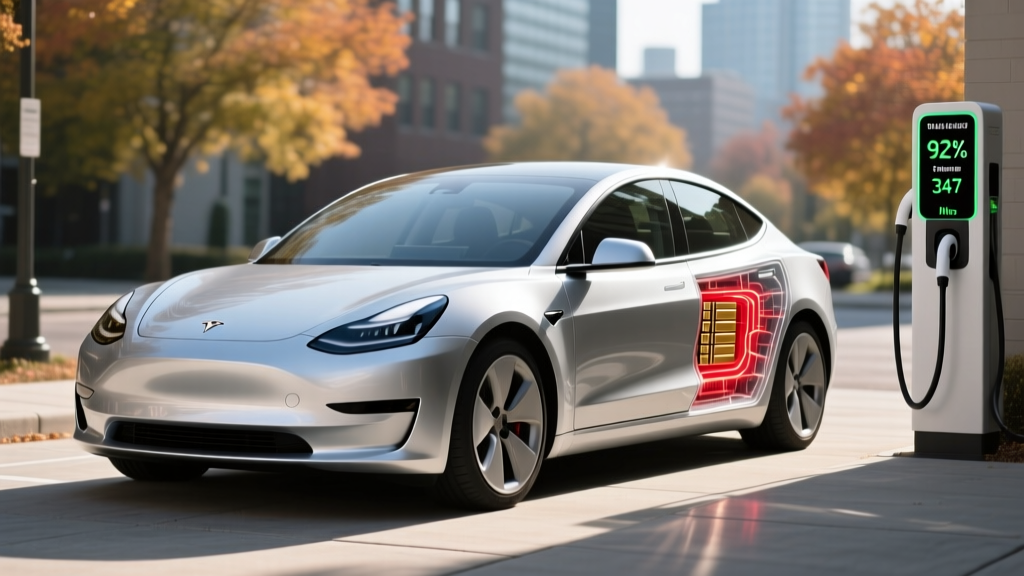
| LFP-equipped Tesla Model 3 RWD | ~60,000 miles | ~2–4% | Owner data; LFP cycle-life advantage evident |
Several factors determine how quickly a battery degrades:
- Fast-charging frequency: Occasional DC fast charging (50–350 kW) has minimal impact, but daily fast-charging without preconditioning can accelerate wear. Most EVs precondition the battery before fast charging to mitigate this.
- Extreme temperatures: Sustained exposure to heat above 95°F or cold below 10°F stresses cells. Vehicles with active liquid thermal management (Tesla, Hyundai E-GMP, GM Ultium) fare significantly better than passively cooled packs (early Nissan Leaf).
- State of Charge (SoC) habits: For NMC batteries, regularly charging to 100% or draining below 10% accelerates degradation. The 20–80% daily window is optimal. LFP batteries tolerate 100% SoC far better and manufacturers often recommend periodic full charges for cell balancing.
- Calendar aging: Even parked EVs lose some capacity over time. A vehicle sitting at 100% SoC in a hot garage degrades faster than one stored at 50% SoC in moderate temperatures.
EV Battery Warranties: What's Covered and for How Long
Federal law in the United States mandates that EV battery warranties cover a minimum of 8 years or 100,000 miles (whichever comes first). In California Air Resources Board (CARB) states, the requirement extends to 10 years or 150,000 miles. Most manufacturers meet or exceed these thresholds.
The warranty typically guarantees the battery will retain a minimum percentage of its original capacity — usually 70% — over the warranty period. If your battery degrades below that threshold, the manufacturer will repair or replace it at no cost.
| Manufacturer (2026 Models) | Battery Warranty | Capacity Retention Threshold |
|---|---|---|
| Tesla (Model 3/Y LFP) | 8 yr / 100,000 mi | 70% |
| Tesla (Model S/X Long Range) | 8 yr / 150,000 mi | 70% |
| Hyundai / Kia (E-GMP) | 10 yr / 100,000 mi | 70% |
| GM (Ultium platform) | 8 yr / 100,000 mi | 70% |
| Ford (Mach-E, F-150 Lightning) | 8 yr / 100,000 mi | 70% |
| BMW (iX, i4) | 8 yr / 100,000 mi | 70% |
| Rivian (R1T, R1S) | 8 yr / 175,000 mi | 70% |
According to fueleconomy.gov, modern EV battery packs are engineered to last the useful life of the vehicle. Warranty claims for catastrophic battery failure remain rare — most degradation is gradual and stays well above the 70% threshold within the warranty period.
How Much Does an EV Battery Cost to Replace?
This is the question that generates the most anxiety — and the most misinformation. Here are the facts with real numbers:
| Vehicle | Battery Size (kWh) | Estimated Replacement Cost (2026) | Typical Replacement Trigger |
|---|---|---|---|
| Nissan Leaf (40 kWh) | 40 kWh | $6,500–$9,000 | End-of-life degradation (10–15+ years) |
| Chevrolet Bolt EV (65 kWh) | 65 kWh | $9,000–$14,000 | Post-warranty failure (rare) |
| Tesla Model 3 (LFP, ~60 kWh) | ~60 kWh | $8,000–$12,000 | Very rare under 200,000 mi |
| Tesla Model Y (NMC, ~75 kWh) | ~75 kWh | $12,000–$16,000 | Very rare under 200,000 mi |
| Ford F-150 Lightning (Ext. Range, ~131 kWh) | ~131 kWh | $20,000–$28,000 | Post-warranty; largely untested at scale |
| Porsche Taycan (93.4 kWh) | 93.4 kWh | $22,000–$30,000+ | Premium segment; limited data |
Key context: Out-of-pocket battery replacement is uncommon. The vast majority of EVs will be retired, traded, or scrapped before the battery requires replacement. When replacement is needed, it is usually covered under warranty. For vehicles outside warranty, third-party battery refurbishment and module-level repair are increasingly available at 30–50% lower cost than full-pack replacement.
Battery costs per kWh have also declined significantly. According to industry benchmarks tracked by IRS clean vehicle credit documentation and battery market analysts, pack-level costs have fallen from over $1,000/kWh in 2010 to approximately $120–$150/kWh in 2026, with continued declines expected.
How to Check and Maximize Your EV Battery Health
Modern EVs provide several ways to monitor battery State of Health (SoH) — the percentage of original capacity remaining:
- In-vehicle displays: Many EVs show estimated range that adjusts based on battery health. Some (like the Hyundai Ioniq 5 and BMW iX) display SoH percentage directly in the settings menu.
- OBD-II diagnostic tools: Devices like the OBDLink MX+ paired with apps such as LeafSpy (Nissan), TeslaFi, or ABRP can read detailed battery health data including cell voltage variance, total energy throughput, and SoH percentage.
- Manufacturer service centers: A dealership or authorized service center can run a full battery health diagnostic, often included during routine service visits.
- Third-party testing: Services like Recurrent Auto provide battery health reports for used EV purchases, giving buyers confidence in the pack's condition.
Battery Longevity Best Practices
- For NMC batteries: Set daily charge limit to 80%. Charge to 100% only when departing for a long trip.
- For LFP batteries: Charge to 100% at least once per week to allow cell balancing.
- Minimize DC fast charging to road trips when possible. Level 2 home charging (7–11 kW) is gentler on cells.
- Use preconditioning before fast charging — most EVs do this automatically when you navigate to a charger.
- Avoid leaving the vehicle at 100% SoC or below 10% SoC for extended periods (days or weeks).
- In extreme heat, park in shade or a garage when possible. In extreme cold, plug in and precondition while connected to power.
- Keep your EV's software updated — manufacturers regularly refine battery management algorithms.
Emerging Battery Technologies: What's Next
Several next-generation battery technologies are in development, but none are widely available in production vehicles as of 2026:
Solid-state batteries replace the liquid electrolyte with a solid material, promising higher energy density (~400+ Wh/kg cell-level), faster charging, and improved safety. Toyota has announced solid-state prototypes and targets limited production in the late 2020s, but mass-market availability remains 2028–2030 at the earliest. Samsung SDI, QuantumScape, and Solid Power are also developing solid-state cells, but none have reached commercial-scale vehicle production.
Silicon-dominant anodes (replacing graphite) can increase energy density by 20–40%. Companies like Sila Nanotechnologies and Group14 are supplying silicon anode materials to select manufacturers, with early limited deployments in premium vehicles. Expect broader adoption by 2027–2028.
Sodium-ion batteries use abundant sodium instead of lithium, offering lower cost and good cycle life at the expense of energy density. CATL and BYD have begun deploying sodium-ion packs in select Chinese-market EVs. US-market availability is not expected before 2027–2028.
These technologies are promising but remain forward-looking. Current NMC and LFP lithium-ion batteries are mature, reliable, and improving incrementally with each model year.
From Buick Encore to an EV: What Changes for Your Battery
If you're replacing the 12V battery in your 2016 Buick Encore and considering an EV for your next vehicle, here's the fundamental shift:
Your Encore's 12V lead-acid battery costs ~$200, lasts 3–5 years, and is trivially replaceable. An EV's traction battery costs $8,000–$28,000, lasts 15–20+ years (or 200,000+ miles), is covered by an 8-year/100,000-mile federal warranty, and degrades gradually rather than failing suddenly.
Notably, EVs also have a 12V auxiliary battery (often lithium-ion in newer models) that powers lights, infotainment, and computers — but it does not drive the vehicle. Some 2026 EVs use a DC-DC converter to eliminate the 12V battery entirely, drawing auxiliary power from the main traction pack.
How long do EV batteries last in years and miles?
Most modern EV batteries are designed to last 15–20 years or 200,000+ miles before degrading below 70% of original capacity. Real-world data from Tesla, GM, and Hyundai fleets show average degradation of 1–2% per year under normal use. Many EVs will be retired for other reasons before the battery needs replacement.
How much does it cost to replace an EV battery?
Full replacement costs range from approximately $6,500 for a 40 kWh pack (Nissan Leaf) to $28,000+ for a 130+ kWh pack (F-150 Lightning Extended Range). However, most replacements are covered under the 8-year/100,000-mile warranty, and out-of-pocket replacements are rare because most batteries outlast the vehicle.
What does the EV battery warranty cover?
Federal law requires a minimum 8-year/100,000-mile warranty (10 years/150,000 miles in CARB states). The warranty guarantees the battery will retain at least 70% of its original capacity. If degradation falls below this threshold, the manufacturer repairs or replaces the pack at no cost. Defects and premature failures are also covered.
How do I check my EV battery's health?
Check SoH through your vehicle's onboard diagnostics menu, an OBD-II scanner with a compatible app (LeafSpy, TeslaFi, Car Scanner), a dealership diagnostic, or a third-party service like Recurrent Auto. Regular monitoring helps you track degradation trends and plan ahead.
LFP vs NMC — which battery chemistry is better?
Neither is universally better. NMC offers higher energy density and better cold-weather performance, making it ideal for long-range and performance vehicles. LFP provides longer cycle life, lower cost, better thermal safety, and the convenience of daily 100% charging — ideal for commuters and budget-conscious buyers. Choose based on your driving patterns and climate.
Is the 2016 Buick Encore battery the same as an EV battery?
No. The 2016 Buick Encore uses a conventional 12V lead-acid Group 47 battery (~$160–$280 replaced) to start its gasoline engine. EV traction batteries are high-voltage lithium-ion packs (40–130+ kWh) that store energy for the electric motor. They are fundamentally different in chemistry, size, cost, and function. EVs also have a separate 12V auxiliary battery for accessories.