If you're searching for a battery for a 2015 Nissan Versa Note, you're almost certainly looking for a conventional 12-volt lead-acid replacement — not a high-voltage lithium-ion traction pack. The Versa Note is a gasoline-only subcompact hatchback, and its electrical system runs on a standard Group 35 or Group 24F flooded or AGM 12V battery. But because the word "battery" now carries heavy EV connotations, this guide clarifies exactly what the Versa Note needs, then uses the question as a springboard into a comprehensive look at electric-vehicle traction battery technology — the chemistry, degradation, replacement costs, and care practices that every current or prospective EV owner should understand.
The 2015 Nissan Versa Note Battery: What You Actually Need
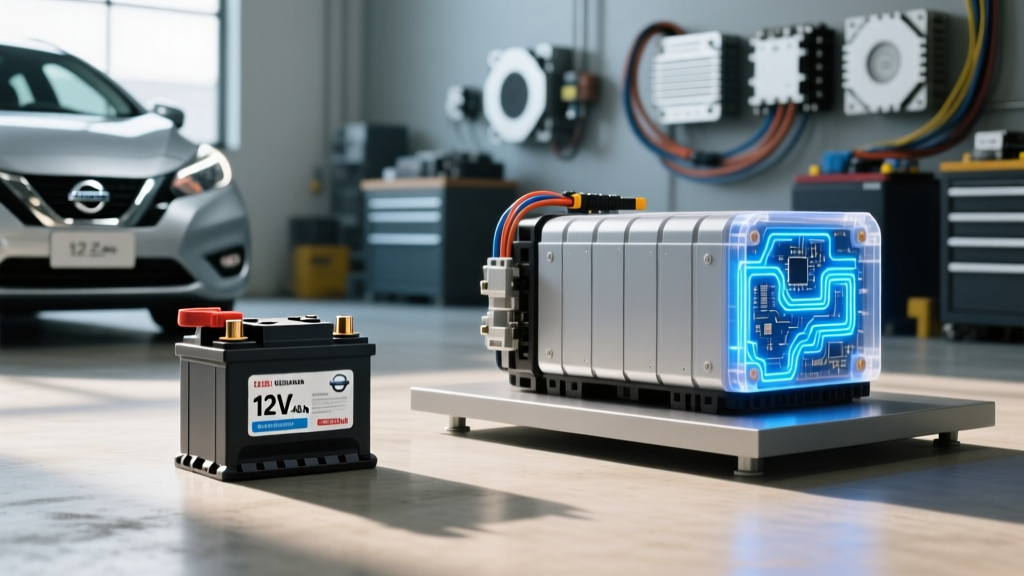
The 2015 Nissan Versa Note uses a 12V lead-acid battery to crank its 1.6-liter four-cylinder engine and power accessories (lights, infotainment, ECU memory). It does not have a high-voltage traction battery, electric motor, or any form of electrification. Here's the quick spec:
- Battery type: 12V lead-acid (flooded or AGM)
- Group size: Group 35 (OEM spec) or Group 24F (common aftermarket fit)
- Cold Cranking Amps (CCA): 410–550 CCA depending on brand
- Typical cost: $90–$180 at retail (AutoZone, Advance Auto, Costco)
- Expected lifespan: 3–5 years depending on climate and usage
Replacing this battery is a straightforward DIY job or a $20–$30 install at any auto parts store. If your Versa Note is sluggish to start, dimming headlights, or throwing a battery warning light, a new 12V is almost certainly the fix. This is entirely separate from the EV battery world — but it's where the terminology overlap trips people up, so let's pivot to what EV owners face.
EV Traction Batteries Explained: Chemistry, Capacity, and How They Work
An electric vehicle's traction battery is the high-voltage lithium-ion pack that stores energy for the electric motor. Capacity is measured in kWh (kilowatt-hours — the total energy the pack holds), while charging speed is measured in kW (kilowatts — the rate at which energy flows in). These two units are not interchangeable, and confusing them is the single most common mistake in EV discussions.
Modern EV packs range from roughly 40 kWh (Nissan LEAF S) to over 130 kWh (GMC Hummer EV). The chemistry inside the cells determines energy density, longevity, cold-weather behavior, and cost. Two chemistries dominate the 2026 market:
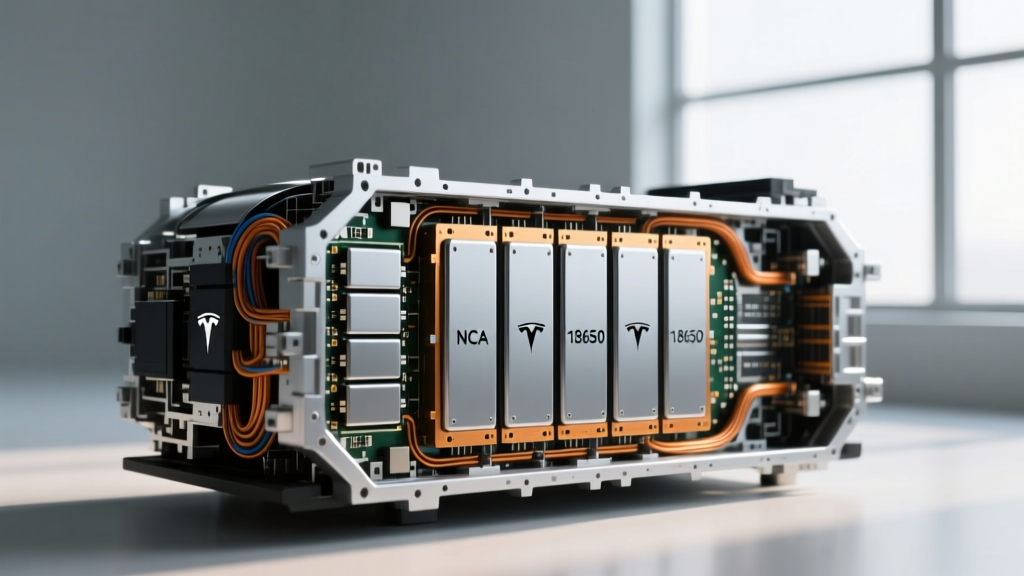
| Attribute | LFP (Lithium Iron Phosphate) | NMC / NCA (Nickel Manganese Cobalt / Nickel Cobalt Aluminum) |
|---|---|---|
| Energy density | Lower (~160–180 Wh/kg cell-level) | Higher (~220–300 Wh/kg cell-level) |
| Cycle life | 3,000–5,000+ cycles to 80% capacity | 1,000–2,000 cycles to 80% capacity |
| Cold-weather performance | More range loss below freezing (~30–40%) | Better cold retention (~20–30% loss) |
| Cost per kWh | Lower (no cobalt or nickel) | Higher (commodity-exposed metals) |
| Thermal stability / safety | Superior — less prone to thermal runaway | Good but requires more active thermal management |
| Common in (2026 models) | Tesla Model 3/Y RWD, Ford Mustang Mach-E Select, BYD, Rivian Standard | Hyundai Ioniq 5/6, Tesla Long Range, BMW iX, most long-range trims |
Which is better? It depends on your priorities. LFP wins on longevity, safety, and cost — ideal for standard-range daily drivers who charge to 100% regularly (LFP tolerates full-state-of-charge storage better). NMC/NCA wins on energy density and cold-weather range — the right pick for long-range models and colder climates. Neither is universally superior; manufacturers choose based on the vehicle's target range, price point, and market.
How Long Do EV Batteries Actually Last? Real-World Degradation Data
EV batteries don't suddenly "die" — they gradually lose capacity over time and charge cycles. The industry measures this as State of Health (SoH), expressed as a percentage of original capacity. A new pack is 100% SoH; most warranties guarantee the pack stays above 70% SoH for 8 years or 100,000 miles.
Typical EV Battery Degradation Curve (aggregated fleet data, 2020–2025 models):
- Year 1 / 15,000 mi: ~2–4% capacity loss (initial "break-in" drop)
- Year 3 / 45,000 mi: ~6–9% total loss
- Year 5 / 75,000 mi: ~8–12% total loss
- Year 8 / 120,000 mi: ~12–18% total loss
- Year 10+ / 150,000+ mi: ~15–25% total loss (many packs still functional at 75–85% SoH)
These figures align with long-term fleet studies from Recurrent Auto and manufacturer warranty data. Most EV batteries outlast the vehicle they're installed in. Catastrophic failure (sudden death) is rare — gradual capacity fade is the norm. A 2020 Tesla Model 3 with 100,000 miles typically retains 88–92% of original range, for example.
For context, a Nissan LEAF with a 40 kWh pack that has degraded to 80% SoH still delivers ~120 miles of range (down from ~150 EPA). Usable, but noticeably reduced — which is why the warranty threshold matters.
EV Battery Warranty Terms: What's Covered and for How Long
Federal law mandates that EV battery warranties cover at least 8 years / 100,000 miles (10 years / 150,000 miles in California and states that follow CARB rules). Here's how major manufacturers structure their coverage as of 2026:
| Manufacturer | Warranty Term | Capacity Retention Threshold | Notes |
|---|---|---|---|
| Tesla (Model 3/Y RWD — LFP) | 8 yr / 100,000 mi | 70% SoH | Long Range/Performance: 8 yr / 120,000 mi |
| Hyundai / Kia (Ioniq 5, EV6) | 10 yr / 100,000 mi | 70% SoH | Among the longest terms in the industry |
| Ford (Mach-E, F-150 Lightning) | 8 yr / 100,000 mi | 70% SoH | Covers battery and electric drive components |
| GM (Ultium platform — Equinox EV, Blazer EV) | 8 yr / 100,000 mi | 70% SoH (60% for fleet/commercial) | Ultium packs designed for modular cell replacement |
| Rivian (R1T, R1S) | 8 yr / 120,000 mi | 70% SoH | Longer mileage threshold reflects adventure-use positioning |
What's covered: Capacity loss below the threshold, manufacturing defects, and cell/module failures. What's not covered: Damage from accidents, modifications, improper charging equipment, or normal cosmetic wear. If your pack drops below 70% SoH within the warranty window, the manufacturer replaces or refurbishes it at no cost. In practice, very few owners hit this threshold — it's a safety net, not a prediction.
EV Battery Replacement Cost: What It Actually Takes to Swap a Pack
Out-of-warranty battery replacement is the number-one fear among prospective EV buyers. The cost is real but heavily contextual — and far less common than internet discourse suggests.
| Vehicle / Pack Size | Battery Capacity | Replacement Cost Range | When Typically Needed |
|---|---|---|---|
| Nissan LEAF (40 kWh) | 40 kWh, NMC | $6,500–$9,000 | Rarely before 150,000+ mi; many original packs still running |
| Tesla Model 3 (Standard Range, LFP) | ~60 kWh, LFP | $8,000–$12,000 | Very rare; LFP chemistry degrades extremely slowly |
| Hyundai Ioniq 5 (Long Range) | 77.4 kWh, NMC | $12,000–$18,000 | Not yet observed at scale — vehicles too new |
| Ford F-150 Lightning (Extended Range) | 131 kWh, NMC | $18,000–$28,000 | Modular design may allow partial (module-level) replacement |
| Chevrolet Bolt EV/EUV | 65 kWh, NMC | $9,000–$14,000 | 2022 recall replaced packs preemptively; post-recall packs show minimal degradation |
Several factors soften these numbers. First, modular replacement is increasingly common — instead of swapping the entire pack, a technician replaces only the degraded module(s), cutting cost by 50–70%. Second, a growing used and refurbished battery market offers packs at 40–60% of new pricing. Third, the vast majority of EV batteries never need replacement during the vehicle's usable life. According to Consumer Reports, the expected lifespan of a modern EV battery is 15–20 years under normal use.
The fear of a $20,000 surprise bill is largely based on early-generation EVs (2011–2015 Nissan LEAF with passive air-cooled packs). Modern liquid-cooled packs with advanced thermal management have largely solved the premature-degradation problem.
Factors That Accelerate (or Preserve) EV Battery Life
Not all miles are equal when it comes to battery wear. Here are the factors that move the needle most, ranked by impact:
Battery Care Checklist: Maximize Your Pack's Lifespan
- Minimize DC fast charging above 150 kW when unnecessary. Occasional road-trip fast charges are fine, but daily 250 kW sessions accelerate degradation. Level 2 home charging (7–11 kW) is gentler. Aim for 80%+ of charging on Level 2.
- Avoid extreme State of Charge (SoC) storage. For NMC/NCA packs, keep daily SoC between 20–80%. LFP packs tolerate 100% better and manufacturers (Tesla, Ford) actually recommend periodic 100% charges for LFP to calibrate the BMS.
- Precondition the battery in cold weather. Most EVs let you schedule departure times or precondition via the app. A warm battery charges faster and degrades less. Cold charging without preconditioning forces the pack to accept current at low temperatures — a known degradation accelerator.
- Park in shade or a garage during extreme heat. Sustained battery temperatures above 104°F (40°C) accelerate chemical aging. Liquid-cooled packs handle this better, but ambient temperature still matters for parked vehicles.
- Don't let the pack sit at 0% or 100% for extended periods. If storing an EV for weeks, set SoC to ~50% and plug in to a Level 1 or Level 2 charger to let the BMS manage vampire drain.
- Use regenerative braking wisely. Aggressive regen in cold weather can stress the pack. Many EVs automatically reduce regen when the battery is cold — let the system manage this.
The single biggest predictor of long battery life is moderate temperatures + moderate SoC + mostly Level 2 charging. Owners who follow this pattern routinely see sub-10% degradation at 100,000 miles.
How to Check and Monitor Your EV Battery's State of Health
Most modern EVs provide battery health data through the infotainment system or companion app, but the depth varies by manufacturer:
- Tesla: No native SoH percentage in the app. Owners use third-party tools like TeslaFi or Scan My Tesla (OBD-II + app) to pull BMS-reported capacity. Alternatively, compare your current range at 100% SoC to the original EPA figure — a rough but useful proxy.
- Hyundai / Kia: The EV app and infotainment system display a battery health indicator. Dealership service departments can pull a detailed SoH report via the KDS diagnostic tool.
- Ford: The FordPass app shows estimated range trends. For a precise SoH number, request a battery health check at a Ford EV-certified dealer.
- Nissan LEAF: The dashboard displays "capacity bars" (12 bars = 100% SoH; each lost bar ≈ 6–8% degradation). Third-party tools like LeafSpy provide precise SoH percentages and cell-level voltage data via OBD-II.
- Universal: Apps like Recurrent and Battery Health (iOS/Android) aggregate charging data to estimate SoH over time without a dealership visit.
If you're buying a used EV, always request a battery health report before purchase. A dealership diagnostic printout or a LeafSpy/TeslaFi screenshot is worth more than any verbal assurance. Check whether the pack is still under warranty and how much capacity margin remains above the 70% threshold.
Emerging Battery Tech: Solid-State, Silicon Anodes, and What's Realistic
The next generation of battery technology promises step-change improvements — but timelines matter more than headlines.
- Solid-state batteries: Replace the liquid electrolyte with a solid ceramic or polymer, enabling higher energy density (~400+ Wh/kg), faster charging, and improved safety. Toyota has announced a solid-state EV for 2027–2028 with a claimed 750 km (~465 mi) range. Samsung SDI and QuantumScape are targeting similar timelines. However, manufacturing scale and cost remain unsolved — expect solid-state to debut in premium/limited-production vehicles first, with mainstream availability not before 2030.
- Silicon anode batteries: Replacing graphite anodes with silicon can boost energy density 20–40%. Sila Nanotechnologies and Group14 are already supplying silicon-dominant anode materials to manufacturers. Expect to see these in production EVs starting 2026–2027 as incremental range and charge-speed improvements, not revolutionary leaps.
- Sodium-ion batteries: Cheaper and cobalt-free, but lower energy density (~140 Wh/kg). CATL and BYD are deploying sodium-ion in Chinese-market micro-EVs and energy storage. US-market adoption for passenger vehicles is unlikely before 2028+ and will target budget segments.
- LFP improvements: Ongoing cell-level engineering is closing the energy-density gap between LFP and NMC. CATL's "Shenxing" LFP cells support 4C charging (10–80% in ~10 minutes) and are already in production. This makes LFP increasingly viable for long-range applications, not just standard-range trims.
None of these technologies are available in vehicles you can buy today. If you're deciding on an EV purchase now, current LFP and NMC packs are mature, well-warrantied, and proven to last 150,000+ miles with proper care. Waiting for solid-state means waiting years — and paying a premium when it arrives.
Frequently Asked Questions
How long do EV batteries last in years and miles?
Most modern EV batteries (2020+) last 15–20 years or 150,000–200,000+ miles before degrading below 70–75% of original capacity. Fleet data from Recurrent Auto shows that the average EV loses only about 10–15% of range over the first 8 years. Catastrophic failure is rare with liquid-cooled packs.
How much does an EV battery cost to replace?
Full pack replacement ranges from $6,500 (smaller packs like the Nissan LEAF 40 kWh) to $28,000 (large packs like the F-150 Lightning 131 kWh). However, most replacements are covered under the 8-year/100,000-mile federal warranty, and modular repairs can cut out-of-warranty costs by 50–70%. The majority of EV batteries never need replacement during the vehicle's life.
What does the EV battery warranty actually cover?
Federal law requires at minimum 8 years / 100,000 miles of coverage (10 years / 150,000 miles in CARB states). The warranty guarantees the pack will retain at least 70% of original capacity. If it drops below that threshold, the manufacturer replaces or refurbishes the pack at no cost. Manufacturing defects and cell failures are also covered. Damage from accidents, abuse, or unauthorized modifications is excluded.
How do I check my EV battery's health?
Methods vary by brand: Tesla owners use third-party tools like TeslaFi; Nissan LEAF owners use LeafSpy; Hyundai/Kia/Ford owners can request a dealer diagnostic report. You can also track your 100%-charge range over time and compare it to the original EPA figure. When buying used, always get a documented SoH report.
LFP vs NMC — which battery chemistry is better?
Neither is universally better. LFP excels in cycle life (3,000–5,000 cycles), safety, and cost — ideal for daily commuters who charge at home and don't need maximum range. NMC/NCA offers higher energy density and better cold-weather performance — better for long-range needs and cold climates. Choose based on your driving pattern, not chemistry alone.
Does the 2015 Nissan Versa Note have an EV battery?
No. The 2015 Nissan Versa Note is a gasoline-only vehicle with a conventional 12V lead-acid battery (Group 35, ~410–550 CCA, $90–$180 replacement cost). It has no high-voltage traction battery, electric motor, or hybrid system. If you're looking for an electrified Nissan from that era, the 2015 Nissan LEAF is the all-electric option with a 24 kWh (later 30 kWh) NMC traction pack.