If you've searched for a 2015 Kia Forte battery, you're likely dealing with a familiar scenario: a dead 12-volt lead-acid starter battery that needs a swap from your local auto parts store for roughly $150–$220. But that search also opens a much bigger question for anyone considering an electric vehicle: how long do EV batteries actually last, what do they cost to replace, and what chemistry is inside them?
This guide bridges that gap. We'll start with what a 2015 Kia Forte battery actually is (spoiler: it's not a high-voltage traction pack), then dive deep into modern EV battery technology — chemistry, degradation data, warranty terms, replacement costs, and the care habits that maximize pack life. Whether you're maintaining a conventional car or shopping for a 2026 EV, the battery is the single most expensive component, and understanding it is essential.
What the 2015 Kia Forte Battery Actually Is (and Isn't)
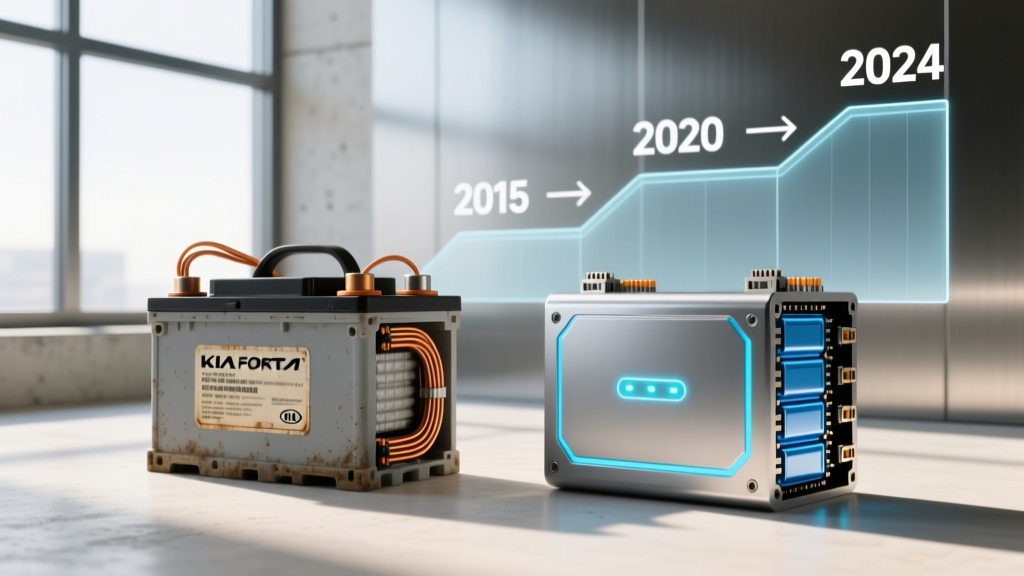
The 2015 Kia Forte uses a conventional 12V lead-acid auxiliary battery (typically Group 47/H5 or Group 121R depending on trim) to start its internal combustion engine and power accessories. This is a starter battery, not a traction battery. It stores roughly 0.6–0.8 kWh of energy, produces 12 volts, and costs between $140 and $220 to replace. Typical lifespan: 3–5 years.
By contrast, a modern EV's high-voltage traction battery — the pack that actually propels the car — operates at 400V (or 800V in some architectures), stores 60–120+ kWh of energy, and costs $10,000–$25,000+ to replace. Even EVs that still carry a 12V auxiliary battery (many do, to power lights, infotainment, and control modules) have a fundamentally different primary energy source.
The rest of this guide focuses on those high-voltage traction batteries — the technology, economics, and longevity data that matter for EV buyers and owners.
LFP vs. NMC: The Chemistry Decision That Shapes Your EV
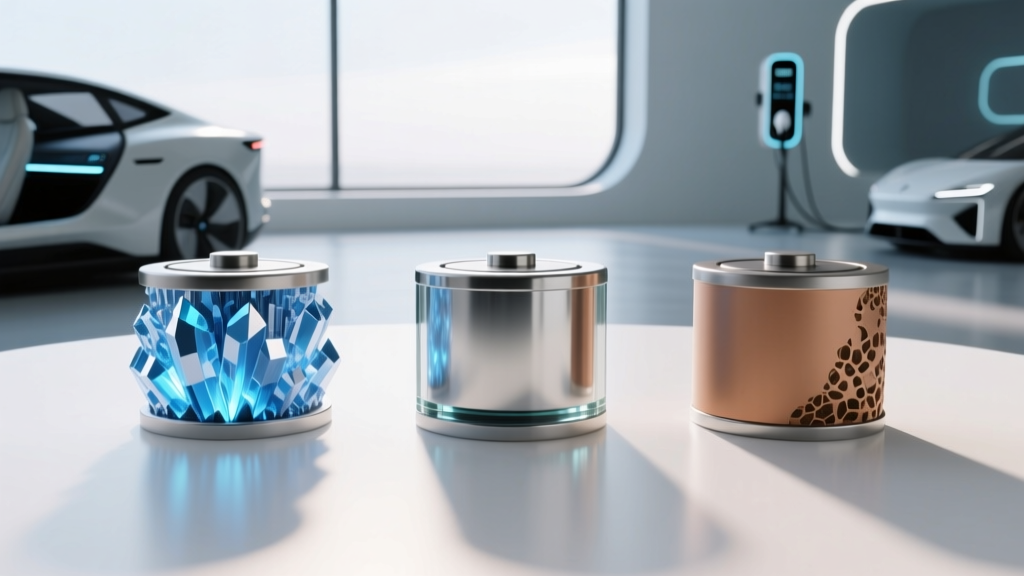
Every EV battery pack is built from individual cells, and those cells use one of two dominant lithium-ion chemistries in 2026:
- LFP (Lithium Iron Phosphate — LiFePO4): Lower energy density but exceptional cycle life, thermal stability, and lower cost. Uses no cobalt or nickel.
- NMC (Nickel Manganese Cobalt) / NCA (Nickel Cobalt Aluminum): Higher energy density for longer range in a given pack size, but higher cost, shorter cycle life, and greater thermal sensitivity.
| Attribute | LFP (Lithium Iron Phosphate) | NMC / NCA |
|---|---|---|
| Energy Density | ~160–200 Wh/kg (cell level) | ~220–300 Wh/kg (cell level) |
| Typical Cycle Life | 3,000–6,000+ cycles to 80% SoH | 1,000–2,500 cycles to 80% SoH |
| Cost per kWh (2026) | ~$70–$90 (pack level) | ~$110–$140 (pack level) |
| Cold-Weather Performance | Moderate — slower charge acceptance below 32°F | Better low-temp charge acceptance |
| Thermal Stability | Excellent — very low thermal runaway risk | Good — requires more active thermal management |
| Recommended Charge Habit | Can charge to 100% daily without significant harm | Best kept 20–80% for daily use; 100% for trips only |
| Common In 2026 Models | Tesla Model 3/Y RWD, BYD, base Ford Mustang Mach-E, Rivian Standard | Hyundai Ioniq 5/6, Tesla Long Range, BMW iX, Lucid Air |
Which is better? It depends on your use case. If you prioritize maximum range per charge and don't mind managing state of charge, NMC delivers more miles in a lighter pack. If you want a battery you can charge to 100% nightly, keep for 15+ years, and pay less upfront, LFP is increasingly the pragmatic choice. BYD's global dominance and Tesla's shift to LFP in standard-range models reflect this trade-off clearly.
How Long Do EV Batteries Actually Last?
The short answer: far longer than most buyers expect. The high-voltage traction battery in a modern EV is engineered to outlast the vehicle's economic life in most cases.
Here's what the data shows:
Typical EV Battery Degradation Curve (Industry Data):
- Year 1 / 15,000 miles: ~2–4% capacity loss (initial "break-in" drop)
- Year 3 / 45,000 miles: ~5–8% total capacity loss
- Year 5 / 75,000 miles: ~8–12% total capacity loss
- Year 8 / 120,000 miles: ~10–15% total capacity loss
- Year 10+ / 150,000+ miles: ~12–20% total capacity loss (varies widely by chemistry and care)
Sources: Geotab fleet data (6,300+ EVs), Recurrent Auto battery research, manufacturer warranty thresholds.
Geotab's large-scale fleet study found that the average EV battery loses roughly 2.3% of capacity per year under typical use, meaning at 10 years, most packs retain 77–85% of original capacity. LFP packs in moderate climates frequently outperform this, while NMC packs subjected to frequent DC fast charging in hot climates may degrade toward the higher end of the range.
Real-world example: Tesla's 2025 Impact Report showed that Model S/X batteries retained approximately 88% capacity at 150,000 miles, while Model 3/Y LFP packs showed even slower degradation curves. Hyundai/Kia's 8-year data on the Kona Electric and Niro EV similarly shows most packs above 85% SoH at warranty expiry.
The key insight: battery replacement is rare before 150,000+ miles. Catastrophic failure (sudden cell or module death) is covered under warranty and is uncommon. Gradual degradation — losing 20–40 miles of range over a decade — is the norm, not a crisis.
EV Battery Warranty Terms: What's Covered and What Isn't
Federal law (EPA emissions warranty requirements) effectively mandates that EV batteries carry at least 8 years / 100,000 miles of coverage (10 years / 150,000 miles in California and states adopting CARB standards). Most manufacturers meet or exceed this baseline.
| Manufacturer | Battery Warranty | Capacity Retention Threshold | Chemistry (Primary) |
|---|---|---|---|
| Tesla (Model 3/Y RWD) | 8 yr / 100,000 mi | 70% minimum | LFP |
| Tesla (Model 3/Y LR) | 8 yr / 120,000 mi | 70% minimum | NMC/NCA |
| Hyundai / Kia | 10 yr / 100,000 mi | 70% minimum | NMC |
| Ford (Mustang Mach-E) | 8 yr / 100,000 mi | 70% minimum | NMC / LFP |
| GM (Ultium platform) | 8 yr / 100,000 mi | 70% minimum | NMC |
| Rivian | 8 yr / 175,000 mi | 70% minimum | NMC / LFP |
| BMW | 8 yr / 100,000 mi | 70% minimum | NMC |
What's covered: Capacity loss below the stated threshold (typically 70% of original capacity), manufacturing defects, and cell/module failures. If your 82 kWh pack drops below ~57 kWh usable within the warranty period, the manufacturer must repair or replace it.
What's not covered: Normal degradation above the threshold, damage from accidents, flooding, or unauthorized modifications, and range loss from tire/weight/aero changes. Some warranties also exclude vehicles used commercially (rideshares, delivery fleets) unless a commercial warranty was purchased.
Source: fueleconomy.gov and manufacturer warranty documentation.
EV Battery Replacement Costs: What to Budget and When
Battery replacement is the single biggest fear among prospective EV buyers. Here's the reality in 2026:
| Vehicle / Pack Size | Battery Size (kWh) | Replacement Cost (Parts + Labor) | Typical Replacement Timeline |
|---|---|---|---|
| Nissan Leaf (40 kWh) | 40 kWh | $8,000 – $12,000 | Rarely needed; 10–15+ yr |
| Chevrolet Bolt EV/EUV | 65 kWh | $14,000 – $17,000 | Rarely needed; 12–15+ yr |
| Tesla Model 3 RWD (LFP) | 60 kWh | $12,000 – $16,000 | Rarely needed; 15+ yr |
| Tesla Model Y Long Range | 75 kWh | $16,000 – $22,000 | Rarely needed; 12–15+ yr |
| Hyundai Ioniq 5 | 77.4 kWh | $15,000 – $20,000 | Rarely needed; 12–15+ yr |
| Ford F-150 Lightning Ext. | 131 kWh | $22,000 – $30,000 | Rarely needed; 10–15+ yr |
| Lucid Air Grand Touring | 112 kWh | $20,000 – $28,000 | Rarely needed; 12+ yr |
These costs have been declining steadily. Pack-level pricing fell from ~$200/kWh in 2020 to roughly $110–$130/kWh for NMC and $70–$90/kWh for LFP by 2026, driven by manufacturing scale and chemistry improvements. However, labor costs and dealer markup keep total replacement prices higher than raw cell costs suggest.
When is replacement actually needed? In practice, very few EV owners replace their traction battery. The vast majority of EVs are retired (due to collision, rust, or general end-of-life) before the battery fails. Data from Recurrent Auto shows that fewer than 1.5% of EVs in their study cohort required battery replacement, and most of those were under warranty.
Compare this to the 2015 Kia Forte battery scenario: you'll likely replace that $180 lead-acid battery 3–4 times over 15 years of ownership ($540–$720 total), while the EV traction battery is designed to last the vehicle's lifetime with gradual, manageable degradation.
Factors That Accelerate (or Preserve) Battery Life
Not all miles are equal when it comes to battery wear. These are the factors with the most measurable impact on long-term State of Health (SoH):
Battery Care Best Practices:
- Avoid chronic 100% SoC (NMC/NCA only): For daily driving, charge to 80%. Reserve 100% for road trips. LFP packs can be charged to 100% regularly without significant harm — in fact, periodic 100% charges help BMS calibration.
- Minimize DC fast charging above 150 kW when unnecessary: Occasional fast charging is fine; daily 250 kW sessions in hot weather accelerate degradation. Use Level 2 (7–11.5 kW) for routine overnight charging.
- Precondition before fast charging: Most EVs do this automatically when you navigate to a charger. A warm battery (68–95°F) charges faster and with less stress.
- Avoid prolonged storage at extreme SoC: If parking for weeks, leave the car at ~50% SoC, not 100% or 0%.
- Extreme heat is worse than extreme cold for degradation: Sustained ambient temps above 95°F with high SoC is the worst-case scenario. Garage parking in hot climates measurably helps.
- Cold weather reduces range temporarily, not permanently: A 20–30% range drop at 20°F is normal and reversible. It does not damage the battery.
- Keep software updated: OTA updates often include improved thermal management and charging algorithms that protect long-term health.
Monitoring Your Battery's State of Health (SoH)
State of Health (SoH) is the percentage of your battery's original usable capacity that remains accessible. A new 82 kWh pack at 90% SoH delivers ~73.8 kWh usable.
Here's how to check it:
- In-vehicle displays: Some EVs (notably the Hyundai Ioniq 5/6, Kia EV6, and BMW iX) show SoH or degradation estimates in the infotainment or driver display menus.
- OBD-II diagnostic tools: Devices like the OBDLink SX paired with apps such as EVNotify, LeafSpy (Nissan Leaf), or Scan My Tesla can read the BMS-reported SoH directly.
- Manufacturer apps: Tesla's app shows rated range vs. original; comparing current rated range at 100% to the original EPA figure gives a rough SoH estimate.
- Third-party services: Companies like Recurrent Auto offer free battery health reports that compare your pack's degradation to their fleet database of 15,000+ EVs.
- Dealer diagnostics: During service visits, dealerships can pull a full BMS report showing individual cell voltages, total capacity, and SoH percentage.
For buyers of used EVs, requesting a battery health report before purchase is essential. A 2022 model with 45,000 miles and 94% SoH is a very different value proposition than the same model at 87% SoH.
What's Next: Solid-State, Silicon Anodes, and Realistic Timelines
Several next-generation battery technologies are in development, but it's critical to separate lab announcements from showroom availability:
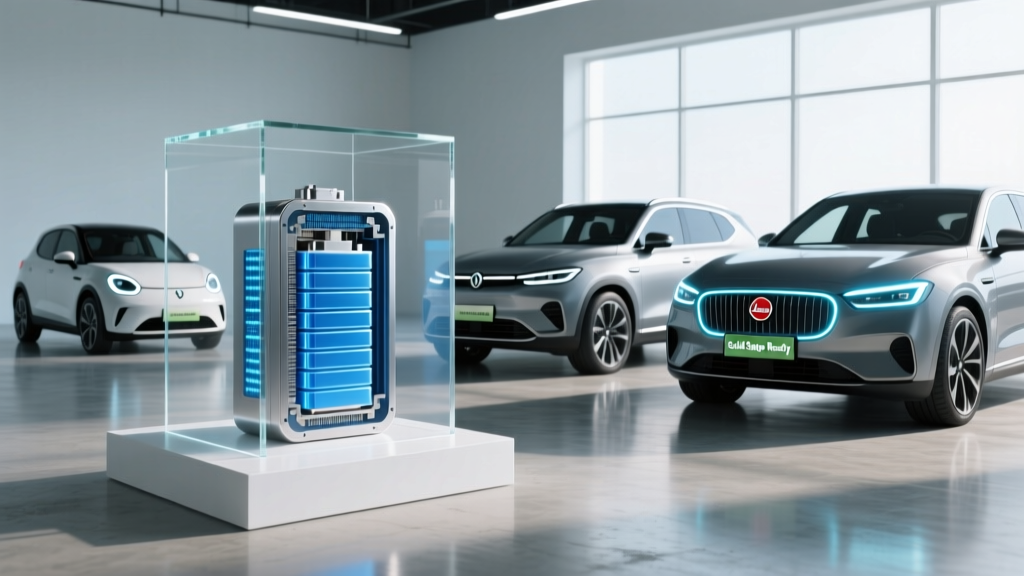
- Solid-state batteries: Replace the liquid electrolyte with a solid ceramic or polymer, promising 30–50% higher energy density and faster charging. Toyota has announced a 2027–2028 production timeline for limited solid-state models, but these will debut in low-volume, high-price vehicles. Mass-market solid-state EVs remain unlikely before 2030–2032. Samsung SDI and QuantumScape are also targeting 2027–2029 pilot production.
- Silicon-dominant anodes: Replacing graphite anodes with silicon can boost energy density by 20–40%. Companies like Sila Nanotechnologies (partnered with Mercedes-Benz/Panasonic) and Group14 (partnered with Porsche) are targeting 2026–2028 production vehicles. This is more near-term than solid-state and may appear in premium models first.
- Sodium-ion batteries: Use abundant sodium instead of lithium, offering lower cost but lower energy density (~120–160 Wh/kg). BYD and CATL are producing sodium-ion cells for budget EVs in China as of 2025–2026. US-market adoption is expected in entry-level models by 2027–2028.
Practical takeaway: If you're buying an EV in 2026, LFP and NMC are mature, proven chemistries with extensive real-world data. Waiting for solid-state means waiting 4–6+ years for mass-market availability at accessible prices. The current generation of batteries is already good enough to outlast most ownership periods.
Frequently Asked Questions
How long do EV batteries last in years and miles?
Most modern EV batteries (2020 and newer) are designed to retain 70–85% of original capacity after 8–10 years or 100,000–150,000 miles. Fleet data from Geotab shows an average degradation rate of ~2.3% per year. Many packs will outlast the vehicle itself. LFP chemistries often exceed these figures, with cycle life ratings of 3,000–6,000 cycles (equivalent to 600,000–1,200,000 miles at 200 miles per cycle).
How much does an EV battery cost to replace?
Full replacement costs range from roughly $8,000 for a 40 kWh pack (Nissan Leaf) to $22,000–$30,000 for large packs like the Ford F-150 Lightning Extended Range (131 kWh). However, actual replacement is rare — fewer than 1.5% of EVs in large fleet studies have needed battery replacement, and most of those were covered under warranty. Pack costs continue to decline, with 2026 pricing at ~$110–$130/kWh for NMC and ~$70–$90/kWh for LFP.
What does the EV battery warranty cover?
Federal requirements mandate a minimum of 8 years / 100,000 miles (10 years / 150,000 miles in CARB states). Warranties cover capacity loss below a defined threshold (typically 70% of original capacity), manufacturing defects, and cell failures. They do not cover normal degradation above the threshold, accident damage, or unauthorized modifications. See the warranty comparison table above for manufacturer-specific terms.
How do I check and maximize my EV battery health?
Check SoH via your vehicle's infotainment display, an OBD-II reader with an EV-specific app, or a dealer diagnostic report. To maximize longevity: charge NMC/NCA packs to 80% for daily use (LFP can go to 100%), use Level 2 charging for routine needs, precondition before DC fast charging, avoid prolonged storage at extreme SoC, and keep the vehicle garaged in hot climates when possible.
LFP vs NMC — which battery chemistry is better for me?
Choose LFP if you want lower cost, longer cycle life, the ability to charge to 100% daily, and don't need maximum range per charge. Choose NMC/NCA if you need the longest possible EPA range, better cold-weather charge acceptance, and are willing to manage SoC habits (20–80% daily). Neither is universally "better" — the right choice depends on your driving patterns, climate, and ownership timeline.
Is the 2015 Kia Forte battery the same as an EV battery?
No. The 2015 Kia Forte uses a standard 12V lead-acid auxiliary battery (Group 47/H5 or 121R, ~$150–$220, 3–5 year lifespan) to start its gasoline engine. This is fundamentally different from an EV's high-voltage traction battery (400V+, 60–130+ kWh, $10,000–$30,000, 10–15+ year lifespan). Even modern EVs that retain a 12V auxiliary battery use it only for low-voltage accessories, not propulsion.