The 2015 Chevrolet Spark EV was one of the first affordable compliance electric vehicles sold in the United States, and more than a decade later, many of these compact hatchbacks are still on the road. If you own one, are considering buying a used example, or simply want to understand how early-generation EV batteries age, this guide breaks down everything you need to know about the 2015 Chevrolet Spark battery — from its NMC chemistry and real-world degradation to replacement costs and daily care habits that maximize longevity.
While the Spark EV is long discontinued (Chevrolet ended production in 2016), its battery pack provides a valuable case study in how first-generation lithium-ion EV batteries hold up over time. We'll also put the Spark's battery in the broader context of modern EV battery technology — including LFP vs. NMC chemistry, emerging solid-state cells, and what today's buyers can learn from early adopters.
2015 Chevrolet Spark EV Battery: Core Specifications
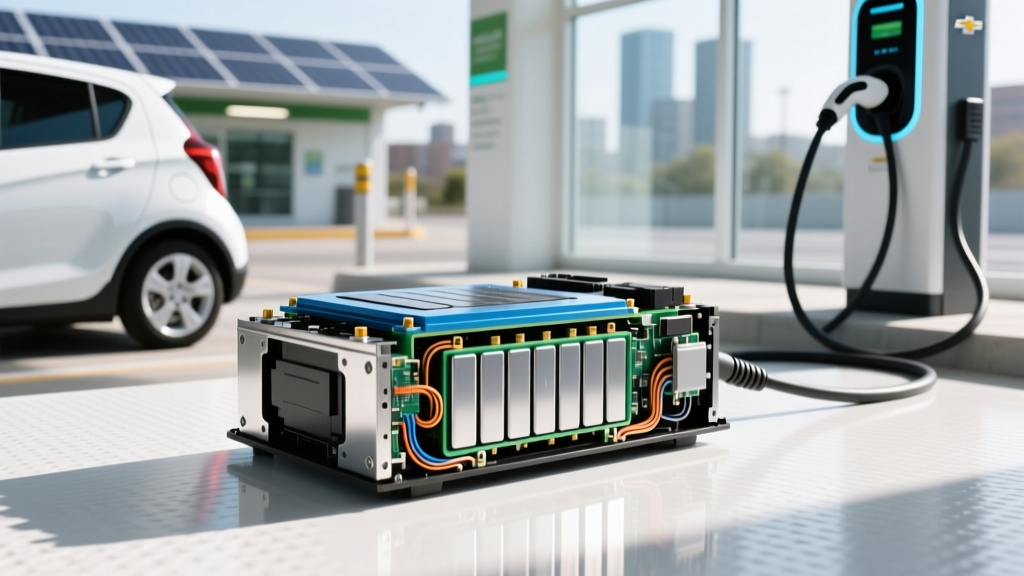
Before examining degradation and replacement, let's establish the baseline specs of the 2015 Spark EV's high-voltage traction battery. (Note: this is the main drive battery, not the standard 12V auxiliary battery that powers accessories.)
| Specification | Value |
|---|---|
| Battery chemistry | NMC (Nickel Manganese Cobalt) |
| Total battery capacity | 19 kWh (gross) |
| Usable capacity | ~17.5 kWh (buffer-protected) |
| EPA range (original) | 82 miles |
| EPA efficiency | 119 MPGe combined |
| Motor output | 143 hp / 327 lb-ft torque |
| 0–60 mph | ~7.2 seconds |
| DC fast charge (SAE Combo/CCS) | Up to 50 kW (10–80% in ~30 min) |
| Level 2 AC charge | 3.3 kW onboard charger (~7 hours 0–100%) |
| Battery cooling | Liquid thermal management |
| Original battery warranty | 8 years / 100,000 miles |
The 2015 model year received a slightly revised battery compared to the 2014 Spark EV, swapping from an A123 Systems pack to an LG Chem NMC pack, reducing weight by about 21 kg while maintaining the same 19 kWh gross capacity. According to fueleconomy.gov, the 2015 Spark EV achieved 119 MPGe combined — respectable for its era, though far below modern EVs like the Chevrolet Bolt EV (120 MPGe with 259 miles of range) or Hyundai Kona Electric (120 MPGe, 261 miles).
Battery Chemistry Explained: NMC vs. LFP
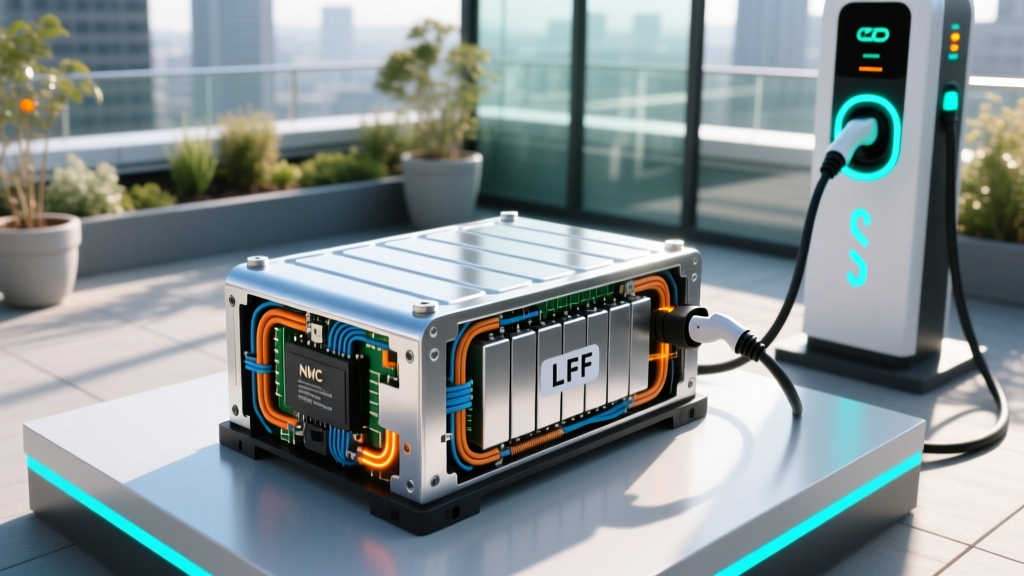
The 2015 Spark EV uses an NMC (Nickel Manganese Cobalt) lithium-ion battery — the dominant chemistry of its era and still widely used in 2026 for vehicles prioritizing range and performance. However, LFP (Lithium Iron Phosphate) chemistry has gained significant market share in recent years, particularly in standard-range models from Tesla, BYD, and Ford.
Understanding the trade-offs between these two chemistries is essential for any EV buyer or owner assessing battery longevity.
| Attribute | NMC (Nickel Manganese Cobalt) | LFP (Lithium Iron Phosphate) |
|---|---|---|
| Energy density | Higher (~250–300 Wh/kg cell-level) | Lower (~160–200 Wh/kg cell-level) |
| Cycle life | ~1,000–2,000 full cycles | ~3,000–5,000+ full cycles |
| Calendar life | 10–15 years typical | 15–20+ years typical |
| Cold-weather performance | Better at sub-freezing temps | Reduced performance below 32°F; needs preconditioning |
| Thermal stability | Good; requires active management | Excellent; inherently more stable |
| Cost per kWh | Higher (cobalt/nickel commodity costs) | Lower (iron/phosphate abundant) |
| Typical use case | Long-range, performance EVs | Standard-range, fleet, daily-driver EVs |
| Optimal daily SoC | 20–80% recommended | Can charge to 100% regularly without harm |
Which is better? It depends on your use case. NMC wins on energy density — meaning more range in a smaller, lighter pack — which is why the Spark EV, Bolt EV, and most long-range vehicles use it. LFP wins on longevity and cost, making it ideal for high-mileage commuters and budget-oriented models. The 2015 Spark EV's NMC pack was a practical choice for its time, prioritizing compact packaging and adequate range in a subcompact car.
How Long Do EV Batteries Last? Degradation Data
This is the question every EV owner and prospective buyer asks. The short answer: most modern EV batteries outlast the vehicles they're installed in. But degradation is real, measurable, and varies by chemistry, climate, and usage patterns.
For the 2015 Chevrolet Spark EV specifically, owners on forums such as SparkEV.com and data aggregated by sources like Recurrent Auto show the following typical degradation trajectory for the LG Chem NMC pack:
- Year 1–2 (0–30,000 miles): ~2–5% capacity loss (initial formation loss)
- Year 3–5 (30,000–75,000 miles): ~5–10% cumulative loss
- Year 6–8 (75,000–100,000 miles): ~10–15% cumulative loss
- Year 9–11 (100,000–140,000 miles): ~15–22% cumulative loss
At the 11-year mark in 2026, a well-maintained 2015 Spark EV battery may retain approximately 78–85% of its original usable capacity — translating to roughly 64–70 miles of real-world range from the original 82-mile EPA rating. This is consistent with broader industry data. According to Recurrent Auto's battery degradation study, the average EV battery retains about 80–85% capacity at 100,000 miles, with liquid-cooled packs (like the Spark EV's) performing better than passively cooled alternatives.
Importantly, battery degradation is not linear. Most loss occurs in the first two years (calendar and formation aging), after which the curve flattens considerably. A 2015 Spark EV that still shows 80% State of Health (SoH) at year 10 is likely to retain 75%+ at year 14 — it won't suddenly "fall off a cliff."
Factors That Accelerate Degradation
- DC fast-charging frequency: Daily 50 kW DC charging increases cell stress. Occasional use is fine; daily reliance accelerates wear.
- Extreme temperatures: Sustained exposure above 95°F or below 10°F without preconditioning strains cells.
- High State of Charge storage: Parking at 100% SoC for days or weeks accelerates calendar aging, especially in heat.
- Deep discharge: Regularly driving below 10% SoC stresses the battery; the Spark EV's buffer helps protect against this.
- Lack of thermal management: The Spark EV's liquid cooling is a significant advantage over passively cooled packs (e.g., early Nissan Leaf).
What Does the 2015 Spark EV Battery Warranty Cover?
Chevrolet originally backed the 2015 Spark EV's battery with an 8-year / 100,000-mile warranty (10 years / 150,000 miles in CARB states including California, Connecticut, Maine, Maryland, Massachusetts, New Jersey, New York, Oregon, Rhode Island, Vermont, and Washington). This warranty has now expired for most vehicles outside CARB states, and is expiring or has expired even in CARB states for 2015 model-year vehicles.
| Coverage | Standard States | CARB States |
|---|---|---|
| Duration | 8 years | 10 years |
| Mileage limit | 100,000 miles | 150,000 miles |
| Capacity retention threshold | Below ~60–70% (defect/failure) | Below ~60–70% (defect/failure) |
| Covered failures | Defects, excessive capacity loss | Defects, excessive capacity loss |
| Exclusions | Damage, abuse, unauthorized modification | Damage, abuse, unauthorized modification |
| Status in 2026 | Expired | Expired or expiring |
What the warranty actually covered: GM's warranty addressed manufacturing defects and capacity loss below a defined threshold — generally interpreted as below 60–70% of original capacity during the warranty period. It did not cover gradual, normal degradation that stayed above this threshold. For comparison, modern EV warranties in 2026 follow a similar structure: the federal minimum requires 8 years / 100,000 miles for battery coverage, with many manufacturers guaranteeing 70% capacity retention over that period. Chevrolet's current warranty guide outlines terms for newer models like the Bolt EV and Equinox EV.
2015 Chevrolet Spark Battery Replacement Cost
With the original warranty now expired, replacement cost is the primary concern for Spark EV owners experiencing significant degradation or cell failure. Here's what to expect:
| Vehicle / Pack Size | Battery Cost (Part) | Labor | Total Range |
|---|---|---|---|
| 2015 Spark EV (19 kWh) | $4,000–$7,000 | $1,500–$3,000 | $5,500–$10,000 |
| Chevrolet Bolt EV (65 kWh) | $9,000–$14,000 | $2,000–$3,500 | $11,000–$17,500 |
| Tesla Model 3 (75 kWh) | $10,000–$16,000 | $1,500–$3,000 | $11,500–$19,000 |
| Ford F-150 Lightning (131 kWh) | $18,000–$28,000 | $3,000–$5,000 | $21,000–$33,000 |
For the 2015 Spark EV specifically, replacement is complicated by parts scarcity. Chevrolet no longer manufactures the Spark EV, and OEM replacement packs must be sourced through GM dealer channels or salvaged from wrecked vehicles. Options include:
- OEM new-old-stock (NOS) pack via GM dealer: $7,000–$10,000 installed, if available
- Salvaged/remanufactured pack: $4,000–$6,500 installed through an independent EV shop
- Module-level repair: If only specific cell modules have failed, individual module replacement can cost $500–$1,500 per module (the Spark EV pack contains multiple modules), plus labor
When is replacement actually needed? Most 2015 Spark EV batteries will never need a full replacement. The more common scenario is a gradual range reduction that owners adapt to over time. Full replacement typically becomes necessary only when:
- Capacity drops below 60% (approximately 50 miles of range), making the car impractical for daily use
- A specific cell module develops a fault causing voltage imbalance or error codes
- Physical damage from road debris or collision compromises the pack
Given that a clean-title 2015 Spark EV sells for roughly $5,000–$8,000 on the used market in 2026, a $7,000+ battery replacement may exceed the vehicle's value — a common economic reality for aging compliance EVs. Owners facing this decision should weigh the replacement cost against the vehicle's remaining useful life, insurance costs, and whether the funds are better applied toward a modern EV with 250+ miles of range.
How to Check and Maximize Your Spark EV Battery Health
Checking State of Health (SoH)
State of Health (SoH) is a percentage representing your battery's current maximum capacity relative to its original capacity. There are several ways to check it on the 2015 Spark EV:
- OBD-II scanner with EV-capable app: Devices like the OBDLink MX+ paired with apps such as LeafSpy (adapted for GM protocols) or EVNotify can read battery management system (BMS) data including SoH, cell voltages, and pack temperature. This is the most accurate DIY method.
- GM dealer diagnostic scan: A Chevrolet dealer can run a battery health report through GM's GDS2 diagnostic tool, providing a formal SoH reading and individual cell module balance data.
- Manual calculation: Fully charge to 100%, note the kWh drawn from your EVSE (accounting for ~10% charging loss), and compare to the original ~17.5 kWh usable capacity. If your EVSE reports 14 kWh drawn for a full charge, your SoH is approximately 14 / 17.5 = 80%.
- Range observation: If your full-charge range estimator consistently shows 65 miles where it once showed 82, that's roughly 79% SoH — a quick sanity check, though less precise due to temperature and driving-condition variables.
Maximizing Battery Longevity
- Charge to 80–90% for daily use. Reserve 100% charges for days when you need maximum range. The Spark EV's small pack makes this a balancing act — 80% of 82 miles is only ~66 miles.
- Avoid leaving the car at 100% SoC for extended periods. If you must charge fully, drive the car soon after reaching full charge.
- Minimize DC fast charging. The Spark EV's 50 kW CCS charging is useful for road trips, but daily DC fast charging adds thermal stress. Rely on Level 2 (3.3 kW) for routine charging.
- Precondition the battery in cold weather. If your Spark EV supports scheduled departure or preconditioning while plugged in, use it. Warming the pack before driving reduces internal resistance and wear.
- Park in shade or a garage during summer. Sustained high temperatures are the single biggest accelerator of calendar aging for NMC cells.
- Don't let the car sit below 10% SoC for days. If storing the vehicle, aim for 40–60% SoC.
Looking Ahead: Emerging Battery Technologies
While the 2015 Spark EV's NMC battery represents first-generation EV technology, the battery landscape has evolved significantly — and continues to advance. Here's what's on the horizon, with realistic timelines:
- Silicon-dominant anodes: Companies like Sila Nanotechnologies and Group14 are commercializing silicon-anode materials that boost energy density by 20–40% over conventional graphite anodes. These are beginning to appear in limited production vehicles in 2025–2026 and should reach broader availability by 2028–2030.
- Solid-state batteries: Promising higher energy density, faster charging, and improved safety by replacing liquid electrolyte with a solid conductor. Toyota, Samsung SDI, and QuantumScape have announced production timelines targeting 2027–2030, but mass-market availability at affordable price points remains likely in the 2030–2035 window. These are not available for purchase today in any production vehicle.
- Sodium-ion batteries: CATL and BYD have begun producing sodium-ion packs for budget EVs in China, offering lower cost and excellent cold performance at the expense of energy density. These may appear in US-market entry-level EVs by 2028–2030.
- LFP adoption expansion: LFP is no longer "emerging" — it's mainstream. In 2026, LFP powers the Tesla Model 3 RWD, Ford Mustang Mach-E Select, and several other standard-range models, offering 3,000+ cycle life at lower cost.
None of these technologies will retroactively upgrade a 2015 Spark EV, but they inform the buying decision for anyone considering a new EV today and evaluating how well their battery investment will hold up over the next decade.
Frequently Asked Questions
How long do EV batteries last in years and miles?
Most liquid-cooled EV batteries, including the 2015 Spark EV's LG Chem NMC pack, last 10–15 years and 150,000–200,000 miles before capacity drops to a level that significantly impacts usability (below 70% SoH). Data from Recurrent Auto shows that the vast majority of EV batteries are never replaced — most outlive the vehicles they're installed in. The Spark EV's liquid cooling system is a key longevity advantage over air-cooled packs.
How much does it cost to replace the battery in a 2015 Chevrolet Spark EV?
Expect to pay $5,500–$10,000 for a full battery replacement in a 2015 Spark EV, depending on whether you source an OEM pack through a GM dealer ($7,000–$10,000) or a salvaged/remanufactured pack through an independent shop ($4,000–$6,500 plus labor). Module-level repairs are cheaper ($500–$1,500 per module) if only specific cells have failed. Given that a used 2015 Spark EV is worth $5,000–$8,000 in 2026, a full replacement often exceeds the car's value.
What does the battery warranty cover, and is it still valid?
The original warranty covered 8 years/100,000 miles (10 years/150,000 miles in CARB states) against defects and excessive capacity loss below approximately 60–70%. As of 2026, this warranty has expired or is expiring for all 2015 model-year vehicles. Any battery failure now is an out-of-pocket expense unless covered by an extended warranty or goodwill program from GM.
How do I check my Spark EV battery's State of Health?
The most reliable DIY method is using an OBD-II scanner with an EV-compatible app (such as OBDLink MX+ with a GM-compatible reader) to pull BMS data. Alternatively, a GM dealer can run a formal battery health report. You can also estimate SoH by measuring the kWh drawn during a full charge on your EVSE and comparing it to the original ~17.5 kWh usable capacity.
Is LFP or NMC better for battery longevity?
LFP batteries last longer — typically 3,000–5,000+ full charge cycles versus 1,000–2,000 for NMC — and can be charged to 100% daily without accelerated degradation. However, NMC offers higher energy density, meaning more range in a smaller, lighter pack. The 2015 Spark EV's NMC pack was the right choice for its era, prioritizing compact packaging. If you're buying a new EV in 2026 for daily commuting and want maximum battery life, an LFP-equipped model is worth serious consideration.
Does DC fast charging damage the Spark EV battery?
Occasional DC fast charging at the Spark EV's 50 kW peak rate will not meaningfully harm the battery. However, daily reliance on DC fast charging increases thermal stress and accelerates degradation over time. The Spark EV's liquid cooling helps mitigate this, but for routine charging, a Level 2 home charger (3.3 kW for the Spark EV) is gentler on the cells and significantly cheaper per kWh than public DC stations.