How Long to Charge a Battery Car: The Real Numbers by Charger Type
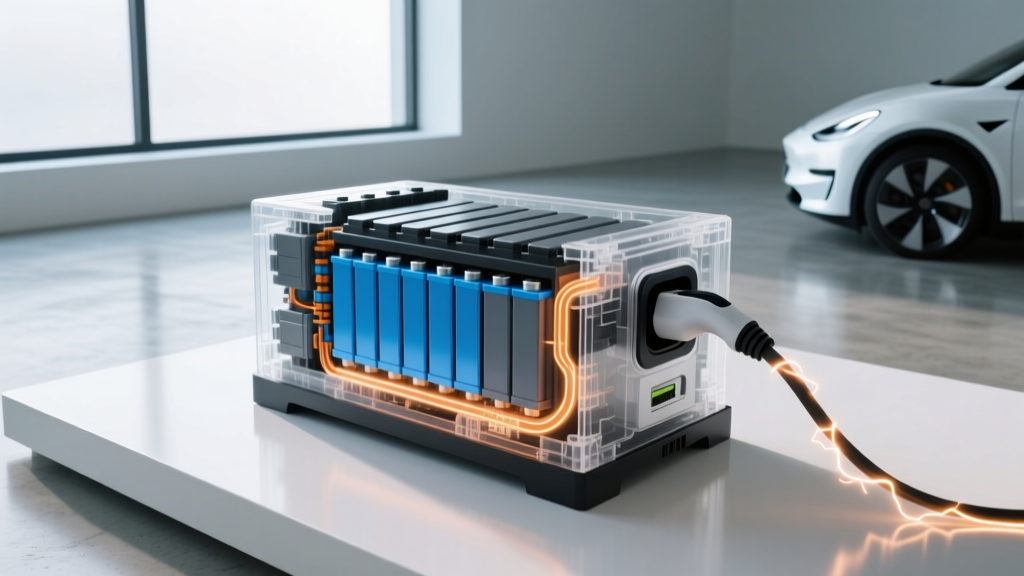
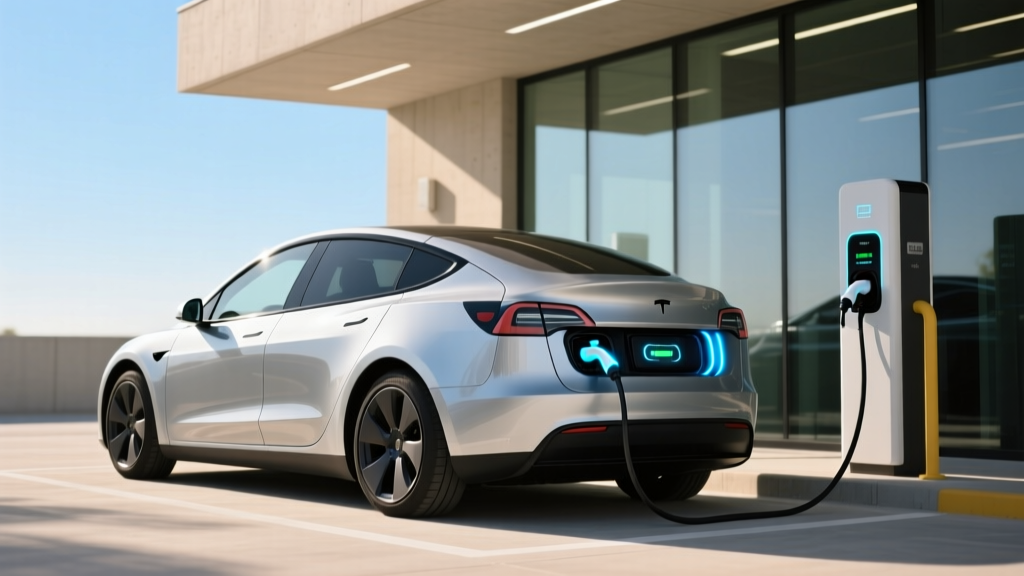
When shoppers ask "how long to charge a battery car," the answer depends entirely on the charger's power output (measured in kilowatts, or kW) and the vehicle's battery capacity (measured in kilowatt-hours, or kWh). A 75 kWh battery charging at 11 kW takes roughly 7 hours; that same battery at a 150 kW DC fast charger can reach 80% in about 30 minutes. The distinction between kW (power, or how fast energy flows) and kWh (energy, or how much the battery holds) is the single most important concept for new EV owners.
Below is a breakdown of actual charging times across the three charging levels you'll encounter, with miles-per-hour rates based on an average EV efficiency of 3.5 miles per kWh.
| Charging Level | Power (kW) | Miles Added per Hour | 10–80% Time (75 kWh Battery) | Typical Use Case |
|---|---|---|---|---|
| Level 1 (120V household outlet) | 1.0–1.4 kW | 3–5 mi/hr | ~50+ hours | Emergency / overnight trickle |
| Level 2 (240V home / public) | 7.2–19.2 kW | 25–67 mi/hr | 4–8 hours | Daily home charging, workplace |
| DC Fast Charging (Level 3) | 50–350 kW | 175–1,000+ mi/hr | 15–40 minutes | Road trips, rapid top-ups |
Several factors compress or stretch these numbers. Battery size is the obvious one — a 131 kWh Ford F-150 Lightning Extended Range pack takes longer to fill than a 58 kWh Hyundai Kona Electric pack at the same charger. But so does the charge curve: DC fast chargers deliver peak power only at low states of charge (typically 10–50%). Above 80%, charging speed tapers dramatically to protect the battery from heat damage. A vehicle advertising "250 kW peak" may sustain that rate for only 10–12 minutes before dropping to 100 kW or less. This is why manufacturers quote 10–80% times rather than 0–100%.
Real-world charging tip: Preconditioning matters. If your EV supports it (Tesla, Hyundai/Kia E-GMP vehicles, BMW iX, and others), the car will warm the battery en route to a fast charger, enabling it to accept peak power immediately upon arrival. Without preconditioning — especially in cold weather — you may see charge rates cut by 30–50% for the first several minutes as the battery management system (BMS) slowly warms the cells.
LFP vs NMC Battery Chemistry: Which Is in Your EV?
Not all EV batteries are built alike. The two dominant lithium-ion chemistries in 2026 passenger vehicles are LFP (lithium iron phosphate) and NMC/NCA (nickel manganese cobalt / nickel cobalt aluminum). The chemistry inside your car directly affects range, longevity, charging behavior, and cold-weather performance.
| Attribute | LFP (Lithium Iron Phosphate) | NMC/NCA (Nickel-Based) |
|---|---|---|
| Energy Density | Lower (~160–180 Wh/kg cell-level) | Higher (~220–300 Wh/kg cell-level) |
| Typical Range per kWh | Slightly less range for same pack weight | More range for same pack weight |
| Cycle Life | 3,000–5,000+ full cycles | 1,000–2,000 full cycles |
| Calendar Aging | Slower degradation at high SoC | Faster degradation if held at 100% long-term |
| Cold Performance | Weaker below freezing (~15–25% range loss) | Better cold performance (~10–20% range loss) |
| Recommended Daily Charge Limit | 100% (manufacturer-recommended for calibration) | 80% for daily use; 100% only for trips |
| Cost | Lower (no cobalt or nickel) | Higher (commodity-sensitive metals) |
| Safety / Thermal Stability | Higher thermal runaway threshold | Good, but lower threshold than LFP |
| Common In (2026 US Models) | Tesla Model 3/Y RWD, base Chevy Equinox EV, some BYD imports | Most long-range/AWD trims, Rivian, Hyundai Ioniq 5/6, BMW, Mercedes EQ |
Which is better? Neither is universally superior. LFP is the pragmatic choice for daily commuters who want maximum cycle life, can charge to 100% regularly without anxiety, and don't regularly face sub-freezing drives. NMC is preferable for drivers who need maximum range from a lighter pack, regularly drive in cold climates, or tow heavy loads. Many automakers are now segmenting their lineups accordingly — offering LFP in base trims and NMC in long-range and performance variants.
How Long Do EV Batteries Actually Last?
The short answer: longer than most buyers assume. Data aggregated from fleet vehicles, Tesla's impact reports, and independent testing by organizations like Geotab shows that the average EV battery loses approximately 1.5–2.5% of its original capacity per year under normal use. That translates to roughly 85–90% of original capacity retained after 8 years and 100,000 miles.
Here is what degradation looks like in practice across popular models:
Observed Degradation Benchmarks (Fleet & Owner Data):
- Tesla Model 3/Y (NMC, 2019–2023): ~5% loss at 50,000 mi, ~8–10% loss at 100,000 mi. Most packs retain 88–92% SoH at 100k miles.
- Chevrolet Bolt EV/EUV (NMC, 2017–2023): ~4–6% loss at 60,000 mi. GM's aggressive thermal management keeps degradation modest.
- Nissan Leaf (passive air-cooled, 2013–2019): 10–20% loss at 60,000 mi in hot climates — a cautionary example of why active liquid cooling matters.
- Hyundai Ioniq 5 (NMC, 2022–2025): Early fleet data suggests ~3–4% loss at 40,000 mi, on track for ~90% SoH at 100k miles.
- Tesla Model 3 RWD (LFP, 2022–2025): Minimal degradation observed — LFP cells showing <3% loss at 50,000 mi in fleet samples, consistent with the chemistry's longer cycle life.
The critical insight: degradation is not linear. Most batteries experience a steeper drop in the first 10,000–20,000 miles (2–4%) as the cells stabilize, then settle into a slow, gradual decline. A battery that has 93% health at 30,000 miles is very likely to still be above 85% at 120,000 miles.
According to fueleconomy.gov, modern EV batteries are engineered to outlast the typical ownership period, and most drivers will sell or trade the vehicle before the battery reaches a capacity level that meaningfully affects daily usability.
What Does the EV Battery Warranty Cover?
Federal law mandates that all EV batteries carry a minimum warranty of 8 years or 100,000 miles (whichever comes first). In California Air Resources Board (CARB) states — which include California, New York, Massachusetts, and over a dozen others — the requirement extends to 10 years or 150,000 miles. Most manufacturers exceed these minimums.
| Manufacturer | Warranty Period | Mileage Limit | Capacity Retention Threshold |
|---|---|---|---|
| Tesla (Model 3/Y RWD – LFP) | 8 years | 100,000 mi | 70% of original capacity |
| Tesla (Model 3/Y LR, Model S/X) | 8 years | 120,000–150,000 mi | 70% of original capacity |
| Hyundai / Kia | 10 years | 100,000 mi | 70% of original capacity |
| General Motors (Ultium-based) | 8 years | 100,000 mi | 70% of original capacity (60% for Bolt) |
| Ford (Mach-E, F-150 Lightning) | 8 years | 100,000 mi | 70% of original capacity |
| BMW | 8 years | 100,000 mi | 70% of original capacity |
| Rivian | 8 years | 120,000–175,000 mi | 70% of original capacity |
The capacity threshold is the key detail: the warranty replaces or repairs the battery only if it falls below the stated percentage (typically 70%) during the warranty period. A battery at 72% health at year 7 is functioning within warranty spec, even though you've lost roughly 28% of your original range. In practice, warranty claims remain rare — the vast majority of packs stay well above the threshold.
How Much Does an EV Battery Cost to Replace?
Out-of-warranty battery replacement is the single biggest fear for prospective EV buyers — and the most overstated. Here are realistic replacement costs based on current parts pricing and service data:
| Vehicle | Battery Capacity | Replacement Cost Range | Notes |
|---|---|---|---|
| Nissan Leaf (40 kWh) | 40 kWh | $6,500–$9,000 | Older platform; third-party options available |
| Chevrolet Bolt EV | 65 kWh | $9,000–$14,000 | GM recall replacement was free; post-recall packs improved |
| Tesla Model 3 (NMC LR) | ~75 kWh | $12,000–$16,000 | Tesla offers refurbished packs at lower cost |
| Hyundai Ioniq 5 | 77.4 kWh | $11,000–$18,000 | Modular pack allows partial module replacement |
| Ford F-150 Lightning (ER) | 131 kWh | $20,000–$30,000+ | Largest consumer pack; labor-intensive removal |
| Tesla Model S/X | 100 kWh | $13,000–$22,000 | Refurbished units common at ~$13k–$15k |
When is replacement actually needed? Almost never during normal ownership. Battery replacement typically becomes relevant only after 150,000–200,000+ miles, or if a manufacturing defect causes premature cell failure (which the warranty covers). Catastrophic failure from physical damage is handled by insurance. For the overwhelming majority of owners, the battery will outlast the vehicle's economic life, and the car will be retired for other reasons — suspension wear, body damage, or simply upgrading to newer technology.
The trend is favorable: battery pack prices have fallen from over $1,000/kWh in 2010 to approximately $115–$140/kWh at the cell level in 2025–2026, according to BloombergNEF tracking. As packs age out of warranty in larger volumes, a robust refurbished and aftermarket supply chain is developing, further reducing out-of-pocket costs.
Factors That Accelerate Battery Degradation (and How to Avoid Them)
Battery longevity isn't random — it responds predictably to how you charge, drive, and store the vehicle. The following factors have the most measurable impact on long-term State of Health (SoH):
Best Practices for Maximizing EV Battery Life:
- Daily charge limit: Set to 80% for NMC/NCA batteries; 100% is fine for LFP. Use your car's scheduled charging or charge-limit feature.
- Avoid DC fast charging as a daily routine: Occasional road-trip fast charging is fine. Daily reliance on 150+ kW chargers adds heat stress that accelerates degradation by an estimated 1–3% over 5 years compared to Level 2 charging.
- Minimize time at 100% or near 0%: Don't charge to 100% and leave the car sitting for days. If you need a full charge for a trip, time it so you depart shortly after charging completes.
- Extreme heat is worse than extreme cold: Prolonged exposure to ambient temperatures above 95°F (35°C) with a high state of charge accelerates calendar aging. Park in shade or a garage when possible.
- Precondition before fast charging: Enable navigation-based preconditioning (if your car supports it) to bring the battery to optimal temperature before arriving at a DC fast charger.
- Don't baby it excessively: Modern BMS systems are sophisticated. Driving normally, using regen braking, and charging at home on Level 2 will yield excellent longevity without obsessive micromanagement.
How to Check Your EV's Battery Health (State of Health)
State of Health (SoH) is the percentage of original battery capacity remaining. A new EV starts at 100% SoH; a vehicle showing 92% SoH has lost 8% of its original capacity. Here's how to monitor it:
- In-car displays: Tesla provides a battery health estimate in the service menu (varies by software version). Hyundai/Kia's connected car app shows estimated SoH. BMW's iDrive includes a traction battery health indicator.
- OBD-II diagnostic tools: Third-party devices like the OBDLink MX+ paired with apps such as ABRP (A Better Route Planner) or Car Scanner can read the BMS-reported SoH value directly.
- Dealer diagnostics: Any authorized service center can run a full battery health report, often as part of routine service. Request this if you're buying a used EV.
- Real-world range tracking: The simplest method — track your actual miles per kWh over time. If your car originally achieved 3.8 mi/kWh and now averages 3.5 mi/kWh on the same route in similar weather, that's roughly an 8% capacity loss.
According to NHTSA, battery health transparency is increasingly a focus of EV safety and consumer information standards, and future model years may mandate more prominent in-vehicle SoH displays.
What's Next: Solid-State and Silicon-Anode Batteries
Two emerging technologies promise to reshape EV batteries within the next decade, though neither is commercially available in mass-market passenger vehicles as of 2026:
- Solid-state batteries: Replace the liquid electrolyte with a solid ceramic or polymer, enabling higher energy density (potentially 400–500 Wh/kg), faster charging, and improved safety. Toyota has announced limited production in select models by 2027–2028, with broader availability not expected until 2030+. Samsung SDI, QuantumScape, and Solid Power are also advancing prototypes. Expect initial deployments in premium/low-volume vehicles first.
- Silicon-anode batteries: Replace graphite anodes with silicon-dominant materials, increasing energy density by 20–40% without changing the cathode chemistry. Companies like Sila Nanotechnologies and Group14 are supplying early production cells. Mercedes-Benz's next-generation EQ platform is expected to incorporate silicon-anode cells. This technology will likely reach production vehicles sooner than full solid-state — potentially 2027–2029 model years.
Both technologies are genuinely promising but remain in pre-production or limited-pilot stages. Buyers making purchase decisions today should evaluate current LFP and NMC chemistries on their merits — both are mature, well-understood, and backed by extensive real-world longevity data.
Frequently Asked Questions
How long does it take to charge an EV battery from empty to full?
On a Level 2 home charger (typically 7.2–11.5 kW), a full charge takes 6–12 hours depending on battery size — most owners plug in overnight and wake up to a full battery. On a DC fast charger, expect 20–45 minutes to reach 80%, with the final 20% taking significantly longer due to charge-curve taper.
Is it bad to charge my EV to 100% every night?
For NMC/NCA batteries, regularly charging to 100% and holding at that level accelerates degradation. Set your daily limit to 80%. For LFP batteries, manufacturers like Tesla actually recommend periodic 100% charges for accurate state-of-charge calibration — the chemistry tolerates full charges far better.
Does fast charging damage my EV battery?
Occasional DC fast charging has minimal measurable impact. Studies from Geotab's fleet data show that vehicles fast-charging more than three times per week degrade approximately 1–3% more over 3–5 years than those primarily using Level 2. The BMS actively manages temperature and current to protect cells, but sustained heat from repeated high-power sessions does add cumulative stress.
Will my EV battery need to be replaced?
Statistically, very few owners ever need a battery replacement. The vast majority of EV batteries retain 80–90% of original capacity at 150,000 miles. Replacement becomes a consideration only if the battery falls below the warranty threshold (typically 70%) during the coverage period, or if the vehicle accumulates 200,000+ miles and range reduction becomes practically limiting.
How does cold weather affect EV battery life and charging?
Cold temperatures temporarily reduce range by 15–30% (depending on severity and whether you use cabin heating) and slow charging speeds until the battery warms. This is a reversible, temporary effect — it does not cause permanent degradation. Preconditioning the battery before driving and charging mitigates both issues significantly.
What happens if my battery degrades past the warranty threshold?
If your battery falls below the warranty's capacity threshold (e.g., 70%) within the warranty period, the manufacturer will repair or replace it at no cost. Out of warranty, replacement costs range from roughly $6,500 for a small pack to $30,000+ for a large truck battery. However, even a battery at 70% capacity still provides usable daily range — a 300-mile EPA vehicle at 70% SoH still delivers ~210 miles, sufficient for most commutes.