If you've searched for a battery for a 2014 Kia Sorento, you were almost certainly looking for a conventional 12-volt lead-acid starter battery — the kind that cranks a gasoline engine and powers the infotainment screen. That search reveals something important about how far automotive batteries have come, and it gives us a perfect launching point to understand the high-voltage traction batteries that power today's electric vehicles.
The 2014 Sorento used a Group 124R or H6 12V battery costing roughly $150–$250 at an auto parts store, designed to deliver a short burst of cold-cranking amps and last three to five years. Modern EV traction batteries, by contrast, store 60–120 kWh of energy, cost $10,000–$25,000 to replace, and are engineered to outlast the vehicles they power. Understanding the chemistry, degradation patterns, warranties, and care practices behind these packs is essential for any EV buyer or owner in 2026.
The 2014 Kia Sorento Battery vs. an EV Traction Battery: Two Completely Different Worlds
Before diving into EV battery technology, let's address the keyword directly. The 2014 Kia Sorento — available with a 2.4L four-cylinder or 3.3L V6 — uses a standard 12V lead-acid battery. This battery has one primary job: start the internal combustion engine. It stores roughly 0.5–0.7 kWh of usable energy, weighs about 35–45 pounds, and costs under $200.
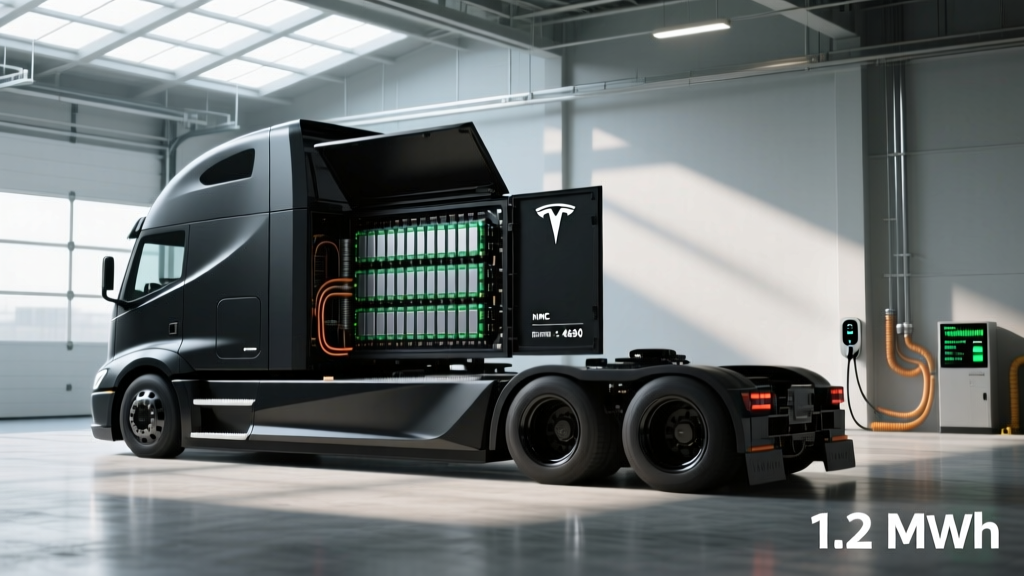
An EV traction battery, like the 77.4 kWh NMC pack in a 2026 Hyundai Ioniq 5 or the 82 kWh LFP pack in a Tesla Model 3 Rear-Wheel Drive, is a fundamentally different machine:
| Attribute | 2014 Sorento 12V Battery | 2026 EV Traction Battery (Typical) |
|---|---|---|
| Type | Lead-acid (flooded or AGM) | Lithium-ion (NMC or LFP) |
| Voltage | 12V nominal | 400V–800V nominal |
| Energy capacity | ~0.5–0.7 kWh | 60–120 kWh |
| Weight | 35–45 lbs | 750–1,500 lbs |
| Replacement cost | $150–$250 | $10,000–$25,000+ |
| Typical lifespan | 3–5 years | 15–20+ years |
| Purpose | Engine cranking, accessories | Vehicle propulsion, thermal management |
The critical takeaway: when discussing EV batteries, we are talking about the high-voltage traction pack — not the 12V auxiliary battery that every EV also carries for low-voltage systems. (Yes, EVs still have a small 12V battery too, but it's not what determines your range or your $20,000 replacement bill.)
Battery Chemistry Deep Dive: LFP vs. NMC/NCA
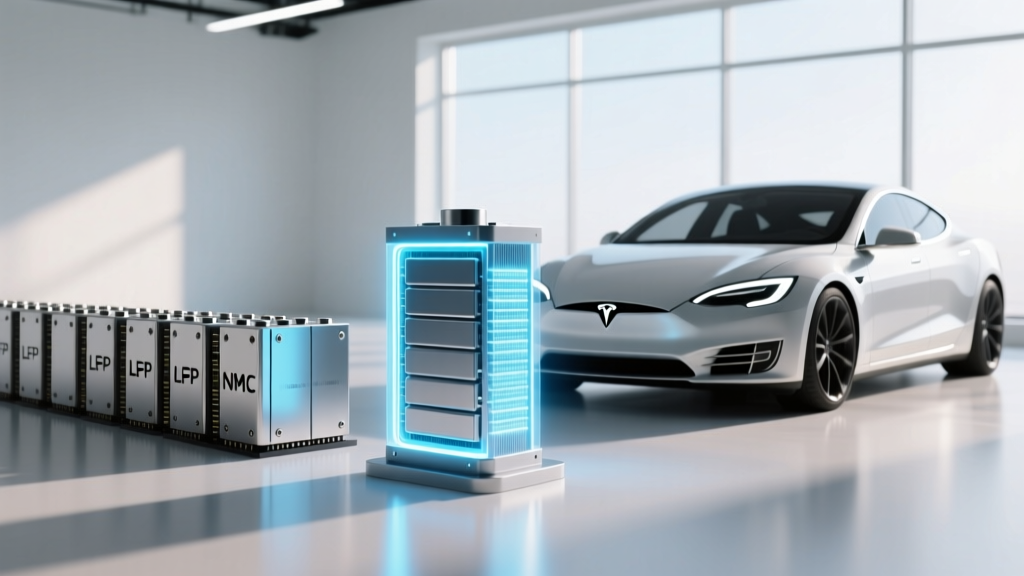
Every EV battery in 2026 uses lithium-ion cells, but the cathode chemistry splits into two dominant camps: NMC/NCA (nickel manganese cobalt / nickel cobalt aluminum) and LFP (lithium iron phosphate). Your choice of chemistry affects range, longevity, cold-weather behavior, and price.
| Factor | LFP (Lithium Iron Phosphate) | NMC / NCA (Nickel-Based) |
|---|---|---|
| Energy density | ~160–180 Wh/kg (lower) | ~220–280 Wh/kg (higher) |
| Range per kg of battery | Less — heavier pack for same kWh | More — lighter pack for same kWh |
| Cycle life | 3,000–5,000+ cycles to 80% SoH | 1,000–2,000 cycles to 80% SoH |
| Calendar life | Excellent — slower degradation at rest | Good — degrades faster if stored at high SoC |
| Cold-weather performance | Weaker — greater range loss below 32°F | Better — retains more capacity in cold |
| Fast-charging tolerance | Excellent — handles frequent DCFC well | Moderate — frequent DCFC accelerates wear |
| Recommended daily SoC | 100% (no penalty) | 80% (to prolong life) |
| Cost per kWh (cell-level) | ~$75–$95/kWh | ~$100–$130/kWh |
| Cobalt/nickel dependency | None — iron and phosphate | Yes — supply chain and ethics concerns |
| Notable 2026 users | Tesla Model 3 RWD, BYD, Rivian Standard | Hyundai Ioniq 5, Ford F-150 Lightning Extended, BMW iX |
Which is better? Neither is universally superior — it depends on your use case. If you charge at home nightly, want maximum cycle life, and don't need the longest possible range, LFP is the pragmatic pick. If you need 320+ miles of EPA range, tow frequently, or live in a cold climate where every percentage of capacity retention matters, NMC's higher energy density justifies its trade-offs.
How Long Do EV Batteries Really Last? Degradation Data
The fear that EV batteries need frequent, wallet-destroying replacement is the single biggest misconception in electric mobility. Real-world data from millions of vehicles tells a different story.
EV batteries don't "die" suddenly like a phone battery might. They gradually lose capacity — a process measured as State of Health (SoH), where 100% is brand-new capacity and 70–80% is typically considered end-of-first-life for automotive use.
Typical Degradation Curve (NMC Battery, Moderate Climate)
| Age / Mileage | Average SoH | Capacity Lost | Notes |
|---|---|---|---|
| Year 1 / 12,000 mi | 96–98% | 2–4% | Initial "break-in" loss — steepest drop |
| Year 3 / 36,000 mi | 92–95% | 5–8% | Curve flattens significantly |
| Year 5 / 60,000 mi | 89–93% | 7–11% | Most owners notice minimal daily impact |
| Year 8 / 96,000 mi | 85–90% | 10–15% | Warranty threshold period |
| Year 10 / 120,000 mi | 82–88% | 12–18% | Still functional — reduced range, not failure |
| Year 15 / 180,000 mi | 75–85% | 15–25% | Approaching end-of-automotive-life |
Data from Geotab's fleet study of over 10,000 EVs showed an average annual degradation rate of roughly 1.8% per year across all chemistries and climates — meaning a typical pack retains about 82% capacity after 10 years. LFP packs in moderate climates often outperform this; NMC packs subjected to frequent DC fast charging and extreme heat may degrade faster.
A 2026 Tesla Model 3 Long Range with an EPA-rated 341 miles and 85% SoH after 10 years would still deliver approximately 290 real-world miles — more than enough for 95% of American daily driving patterns.
What Does the EV Battery Warranty Actually Cover?
Federal law mandates a minimum battery warranty of 8 years / 100,000 miles for EVs sold in the United States, with California and states adopting CARB emissions standards requiring 10 years / 150,000 miles. But the details matter enormously.
| Manufacturer | Warranty Period | Mileage Cap | Capacity Threshold | What Triggers a Claim |
|---|---|---|---|---|
| Tesla (Model 3/Y RWD — LFP) | 8 years | 100,000 mi | 70% SoH | Capacity falls below 70% as measured by Tesla diagnostics |
| Tesla (Model 3/Y LR — NMC) | 8 years | 120,000 mi | 70% SoH | Same threshold |
| Hyundai / Kia | 8 years | 100,000 mi | 70% SoH | Capacity below 70% — among the clearest terms |
| Ford (F-150 Lightning) | 8 years | 100,000 mi | 70% SoH | Battery capacity below 70% |
| GM (Ultium-based) | 8 years | 100,000 mi | 70% SoH | Propulsion battery below 70% usable capacity |
| Rivian | 8 years | 175,000 mi | 70% SoH | Higher mileage cap reflects adventure-use positioning |
| BMW (iX / i4) | 8 years | 100,000 mi | 70% SoH | Net usable capacity below 70% |
Key caveats:
- 70% is the universal trigger. If your 80 kWh pack can only store 55 kWh, that's 68.75% SoH — a warranty claim. At 57 kWh (71.25%), you're on your own.
- The warranty covers defects and excessive degradation, not damage from accidents, flooding, or unauthorized modifications.
- "Replacement" may mean refurbished or remanufactured modules, not a brand-new pack — which is perfectly acceptable if capacity is restored to the threshold or above.
- Warranty is transferable to subsequent owners in most cases, supporting EV resale values.
EV Battery Replacement Costs: The Numbers Nobody Wants to Hear (But Should Know)
Out-of-warranty battery replacement is expensive — but context is critical. The vast majority of EV batteries never need replacement during the vehicle's useful life. According to data compiled by Consumer Reports and Recurrent Auto, fewer than 5% of EVs have required traction battery replacement as of 2025, and most of those were covered under warranty.
| Vehicle / Pack Size | Battery Capacity | Chemistry | Estimated Replacement Cost | When Typically Needed |
|---|---|---|---|---|
| Tesla Model 3 RWD | 60 kWh | LFP | $12,000–$15,000 | 200,000+ mi / 15+ years (if ever) |
| Tesla Model Y Long Range | 75 kWh | NMC | $14,000–$18,000 | 180,000+ mi / 15+ years |
| Hyundai Ioniq 5 | 77.4 kWh | NMC | $15,000–$20,000 | 180,000+ mi / 15+ years |
| Ford F-150 Lightning Ext. Range | 131 kWh | NMC | $22,000–$30,000 | 150,000+ mi / 15+ years |
| Chevrolet Equinox EV | 85 kWh | NMC (Ultium) | $16,000–$21,000 | 180,000+ mi / 15+ years |
| Nissan Leaf (40 kWh pack) | 40 kWh | NMC | $8,000–$12,000 | 120,000+ mi / 12+ years (passive cooling accelerates wear) |
For perspective, the average American spends $4,000–$6,000 on engine and transmission repairs over the lifetime of a gasoline vehicle. A $15,000 battery replacement at year 18 of EV ownership — if it's needed at all — is comparable to a major powertrain overhaul on an ICE car that's already well past its prime.
Costs are also declining. Cell-level pricing has fallen from over $1,000/kWh in 2010 to roughly $80–$130/kWh in 2026, according to BloombergNEF. By the time most 2026 EVs need a battery replacement (2040+), packs will likely cost 40–60% less than today's estimates.
Five Factors That Accelerate (or Preserve) Battery Life
Battery degradation isn't random — it's driven by specific, controllable factors. Here's what the chemistry actually responds to:
What Hurts Your Battery
- Frequent DC fast charging above 150 kW: High C-rates generate heat inside cells. Occasional road-trip fast charging is fine; daily reliance on 250+ kW chargers accelerates degradation by an estimated 0.3–0.5% annually versus Level 2 charging.
- Sustained high State of Charge (NMC only): Storing an NMC battery at 100% SoC for days or weeks stresses the cathode. LFP batteries are immune to this — charge to 100% freely.
- Extreme heat exposure: Ambient temperatures above 95°F with a high SoC is the worst-case scenario. Active thermal management (liquid cooling) mitigates this significantly — another reason passively-cooled packs (older Nissan Leaf) degrade faster.
- Deep discharges to 0%: Dropping below 5% regularly strains the anode. The bottom buffer (typically 2–5 kWh hidden from the driver) provides some protection, but habitual near-zero driving isn't ideal.
- High-mileage fast-charge cycles: Fleet vehicles that DCFC daily show measurably more degradation than those using Level 2 overnight — roughly 2–4% additional loss over 100,000 miles.
What Preserves Your Battery
- Level 2 home charging (7–11 kW): Slow, gentle charging generates minimal heat. This is the single best thing you can do for longevity.
- Moderate SoC range (20–80% for NMC): The "middle half" of the battery is its happy place. Set your charge limit to 80% for daily use.
- Preconditioning before DCFC: Most modern EVs warm or cool the battery to optimal temperature before a fast-charge session, reducing stress. Always navigate to a charger via the car's built-in nav to trigger this.
- Garage parking in extreme climates: Keeping the pack out of 100°F+ ambient heat (or -20°F cold) when parked for extended periods reduces calendar degradation.
- Regular software updates: OEMs periodically refine battery management algorithms — Tesla and Hyundai have both issued OTA updates that improved charge-limit logic and thermal management.
How to Check and Monitor Your Battery's State of Health
State of Health (SoH) is the percentage of original capacity your battery can still store. Unlike a gas gauge, there's no federally mandated SoH display — but you have several options to check it:
OEM Built-In Tools
- Tesla: The service menu (accessible via the software screen) shows a "Battery Health" test that runs a diagnostic and reports SoH as a percentage. Tesla also provides this data through the app upon request.
- Hyundai/Kia: The EV-specific menu in the infotainment system shows battery health status. Dealers can pull detailed cell-level data via the KDS diagnostic tool.
- GM (Ultium): The myChevrolet/myCadillac app includes a battery health indicator, and OnStar can provide detailed reports.
- Ford: FordPass shows battery health status; dealers can run a full diagnostic.
Third-Party Tools
- OBD-II dongles + apps: Devices like the OBDLink SX paired with apps such as EVNotify or Car Scanner can read SoH directly from the BMS (Battery Management System) on many EVs.
- Recurrent Auto: This free service (for participating owners) tracks your battery health over time and compares it against a fleet of identical vehicles — providing a degradation curve specific to your car and driving habits.
- Dealer diagnostic report: Any authorized dealer can pull a full battery health report. Request this before buying a used EV — it's the single most important data point.
DIY Estimation
Charge to 100% (or your normal limit), note the displayed range, and compare it to the EPA-rated range at the same SoC when the car was new. If your 300-mile EPA car now shows 265 miles at 100%, you're at roughly 88% SoH — a perfectly healthy battery at five to seven years of age.
Emerging Battery Technology: Solid-State and Silicon Anodes
The next generation of EV battery technology is genuinely promising — but timelines matter. Here's where things stand in 2026:
Solid-State Batteries
Solid-state cells replace the liquid electrolyte with a solid material (ceramic, sulfide, or polymer), offering:
- Energy density: 350–500 Wh/kg projected (vs. ~250 Wh/kg for current NMC) — enabling 500+ mile ranges without increasing pack weight.
- Safety: No flammable liquid electrolyte — dramatically reduced thermal runaway risk.
- Charge speed: Potential for 10–80% in under 10 minutes due to better ion conductivity and heat tolerance.
Realistic timeline: Toyota has announced limited solid-state production for 2027–2028, initially in low-volume hybrid applications. Samsung SDI and QuantumScape are targeting 2028–2030 for broader automotive deployment. Widespread, affordable solid-state EVs are a 2030+ reality — not a reason to delay an EV purchase today.
Silicon Anode Batteries
Replacing graphite anodes with silicon increases energy density by 20–40% at the cell level. Companies like Sila Nanotechnologies and Group14 Technologies are supplying silicon-dominant anode materials to manufacturers including Mercedes-Benz (for the upcoming G-Class EV) and Panasonic.
Realistic timeline: Silicon-enhanced anodes are entering production in 2026–2027 in premium vehicles. Full silicon anodes with acceptable cycle life are expected by 2028–2030. This is an incremental improvement, not a revolution — but it will meaningfully extend range and reduce pack weight.
Sodium-Ion Batteries
CATL and BYD have begun deploying sodium-ion batteries in Chinese-market EVs. These offer lower energy density (~140 Wh/kg) but dramatically lower cost and zero lithium/cobalt dependency. They're viable for city cars and fleet vehicles but won't replace lithium-ion in long-range applications in the near term.
Frequently Asked Questions
How long do EV batteries last in years and miles?
Based on fleet data from Geotab and Recurrent Auto, the average EV battery retains 82–88% of its original capacity after 10 years or 120,000 miles. Most packs remain functional — with reduced range — well beyond 15 years and 180,000 miles. Complete failure is rare; gradual capacity loss is the norm. The 8-year/100,000-mile federal warranty minimum provides a strong safety net.
How much does an EV battery cost to replace?
Out-of-warranty replacement costs range from approximately $8,000 for a small pack (Nissan Leaf 40 kWh) to $30,000 for a large pack (Ford F-150 Lightning 131 kWh). The typical mid-size EV (75–85 kWh) falls in the $14,000–$20,000 range including labor. However, fewer than 5% of EVs have required out-of-warranty battery replacement, and cell costs continue to decline roughly 8–12% annually.
What does the EV battery warranty cover?
Federal law requires a minimum 8-year/100,000-mile warranty on EV traction batteries. The warranty covers capacity loss below a stated threshold — typically 70% State of Health — as well as manufacturing defects. It does not cover accident damage, misuse, or unauthorized modifications. In California and CARB-adopting states, the minimum extends to 10 years/150,000 miles. Always review the specific terms in your vehicle's warranty booklet.
How do I check and maximize my EV battery health?
Check SoH through your vehicle's built-in diagnostics (Tesla service menu, Hyundai EV menu, FordPass), a third-party OBD-II tool, or a dealer diagnostic report. To maximize longevity: charge primarily on Level 2 at home, limit NMC batteries to 80% SoC for daily use (LFP can go to 100%), avoid daily DC fast charging when possible, precondition before fast charging, and avoid leaving the car at 100% or near 0% for extended periods.
LFP vs. NMC — which battery chemistry is better?
It depends on your priorities. Choose LFP if you want maximum cycle life (3,000–5,000+ cycles), don't mind slightly lower range, charge to 100% regularly, and want the lowest cost per kWh. Choose NMC/NCA if you need the longest EPA range, tow heavy loads, live in a cold climate where energy density matters, or prioritize lighter vehicle weight. Both chemistries will comfortably outlast the average ownership period with proper care.
Can I put an EV battery in a 2014 Kia Sorento?
No — the 2014 Sorento is a conventional gasoline vehicle with no high-voltage architecture. It requires a standard 12V lead-acid battery (Group 124R or H6). If you're interested in electrification, Kia now offers the EV6 and EV9 as fully electric alternatives, and the Sorento PHEV provides a plug-in hybrid option with roughly 32 miles of electric-only range.
Does fast charging really damage EV batteries?
Occasional DC fast charging has minimal impact. The concern is frequent reliance on high-power DCFC (150+ kW) as your primary charging method. Fleet data suggests daily DCFC use adds roughly 2–4% additional degradation over 100,000 miles compared to Level 2 charging. For most owners who charge at home overnight and use DCFC only on road trips, the impact is negligible — well within the warranty threshold.
Whether you're replacing a $200 lead-acid battery in a 2014 Kia Sorento or evaluating the 77.4 kWh NMC pack in a 2026 EV, understanding what's inside the battery — and how to care for it — is the foundation of smart ownership. The data is clear: modern lithium-ion traction batteries are durable, well-warranted, and improving every year. The question isn't whether they'll last. It's whether you'll keep the car long enough to find out.