From the 2014 Buick Verano to Today's EVs: Why Battery Longevity Still Matters
If you've been searching for 2014 Buick Verano battery information, you've likely discovered that GM never released an electrified Verano — the model remained a conventional gasoline compact throughout its production run. However, that search often points to a much bigger question: how long do modern EV batteries actually last, and what does replacement cost?
In 2026, electric vehicle battery technology has matured significantly since the early plug-in era. Modern lithium-ion packs routinely outlast 200,000 miles with manageable degradation, and newer chemistries like LFP (lithium iron phosphate) promise even longer cycle life. This guide breaks down everything current EV buyers and owners need to know about traction battery longevity, chemistry trade-offs, real-world degradation data, warranty coverage, and replacement economics.
LFP vs NMC/NCA: Understanding Battery Chemistry Trade-Offs
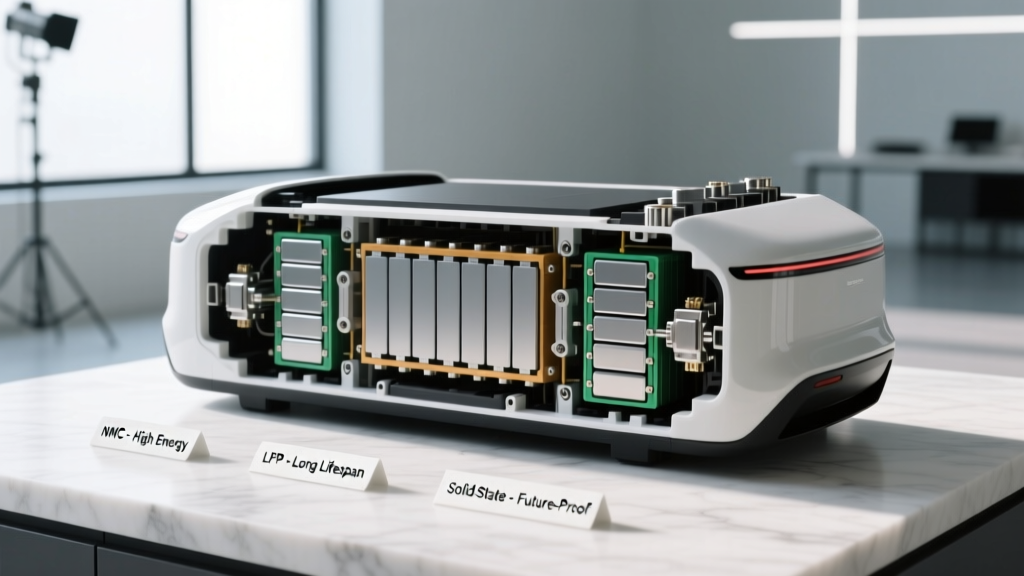
Not all EV batteries are created equal. The two dominant lithium-ion chemistries in 2026 — LFP and NMC/NCA — serve different use cases and come with distinct engineering trade-offs.
| Attribute | LFP (Lithium Iron Phosphate) | NMC/NCA (Nickel Manganese Cobalt / Nickel Cobalt Aluminum) |
|---|---|---|
| Energy Density | ~160–180 Wh/kg (lower) | ~220–300 Wh/kg (higher) |
| Cycle Life | 3,000–5,000+ cycles | 1,000–2,500 cycles |
| Cold-Weather Performance | Moderate — greater range loss below 32°F | Better low-temp discharge capability |
| 100% SoC Charging | Recommended regularly for cell balancing | Best kept at 80% daily; 100% for trips only |
| Thermal Stability | Excellent — lower thermal runaway risk | Good, but requires more active thermal management |
| Cost per kWh | Lower (~$80–100/kWh at cell level) | Higher (~$110–140/kWh at cell level) |
| Common 2026 Applications | Tesla Model 3 RWD, Model Y RWD, Ford Mustang Mach-E Select (base), many Chinese-market EVs | Tesla Long Range/Performance, Hyundai Ioniq 5/6, BMW i4/iX, Rivian, most long-range trims |
Which is better? It depends on your driving pattern. If you want maximum range per charge and live in a cold climate, NMC/NCA delivers higher energy density and better winter performance. If you prioritize longevity, lower cost, and can charge to 100% without worry, LFP is the stronger choice for daily commuting. Many automakers now offer both chemistries across their lineups, letting buyers choose based on their priorities.
How Long Do EV Batteries Actually Last? Real Degradation Data
The fear that EV batteries need replacement every few years is not supported by fleet data. Modern lithium-ion packs are engineered for the life of the vehicle, and real-world evidence confirms this.
- Year 1–2: 2–5% capacity loss (initial formation loss, then stabilizes)
- Year 5 / ~75,000 miles: 8–12% total loss (90–92% State of Health)
- Year 8 / ~100,000 miles: 10–15% total loss (85–90% SoH)
- Year 10+ / 150,000+ miles: 15–20% loss for NMC; 10–15% for LFP
Tesla's 2025 Impact Report showed that Model S/X batteries retained approximately 88% of their original capacity at 150,000 miles. Hyundai and Kia's early Ioniq Electric fleet data (vehicles now exceeding 100,000 miles) show similar retention curves — most packs remain above the 70% warranty threshold well past 150,000 miles.
LFP batteries tend to degrade more slowly and linearly, while NMC packs often show a steeper initial drop (the first 2–3%) followed by a very gradual decline. Neither chemistry typically reaches the point of requiring replacement during normal vehicle ownership.
According to data compiled by fueleconomy.gov and real-world fleet tracking from Recurrent Auto, the median EV battery in 2026 loses roughly 1.5–2.3% of capacity per year under normal use conditions — meaning a 300-mile EPA-rated vehicle might offer 270–280 miles after five years, not a catastrophic drop.
EV Battery Warranty Coverage: What's Protected and for How Long
Federal law mandates a minimum 8-year/100,000-mile warranty on EV battery packs (extended to 10 years/150,000 miles in CARB states like California, New York, and others). Most manufacturers meet or exceed this baseline.
| Manufacturer | Warranty Period | Capacity Retention Threshold | Notes |
|---|---|---|---|
| Tesla | 8 yr / 120,000 mi (Long Range) | 70% | Model 3/Y RWD: 8 yr / 100,000 mi |
| Hyundai / Kia | 10 yr / 100,000 mi | 70% | Among the longest coverage periods |
| Ford | 8 yr / 100,000 mi | 70% | Mach-E, F-150 Lightning |
| GM (Chevrolet, Cadillac) | 8 yr / 100,000 mi | 60–70% (varies by model) | Ultium platform vehicles |
| BMW | 8 yr / 100,000 mi | 70% | i4, iX, i7 |
| Rivian | 8 yr / 175,000 mi | 70% | Highest mileage threshold in market |
What triggers a warranty claim? If your battery's State of Health drops below the stated threshold (typically 70% of original capacity) within the warranty period, the manufacturer will repair or replace the pack — often by swapping defective modules rather than the entire battery. Warranties cover defects and abnormal degradation, not damage from accidents, flooding, or unauthorized modifications.
EV Battery Replacement Cost: What to Expect in 2026
Out-of-warranty battery replacement is the number-one concern among prospective EV buyers. The good news: the vast majority of EV batteries never need replacement during typical ownership. But if you're buying a used EV or planning to keep one past the warranty period, here are realistic figures.
| Vehicle / Battery Size | Pack Capacity | Estimated Replacement Cost (2026) | Notes |
|---|---|---|---|
| Tesla Model 3 RWD (LFP) | ~60 kWh | $8,000–$12,000 | Module-level repair often possible for less |
| Tesla Model Y Long Range | ~75 kWh | $12,000–$16,000 | NMC pack; third-party options emerging |
| Hyundai Ioniq 5 | 77.4 kWh | $11,000–$15,000 | Modular design allows partial replacement |
| Ford F-150 Lightning (Extended) | 131 kWh | $18,000–$25,000 | Largest consumer pack; highest cost |
| Chevrolet Equinox EV | ~85 kWh | $12,000–$17,000 | Ultium modular platform |
When is replacement actually needed? Most EV batteries reach end-of-life (below 70% SoH) at 200,000+ miles — a point where many vehicles are retired for other reasons. Module-level repairs (replacing individual cell groups within the pack) are increasingly available through third-party EV specialists for $2,000–$6,000, significantly reducing the cost compared to a full pack swap.
Battery prices have declined roughly 80% since 2013, and that trend continues. By the time most 2026-model EVs actually need a battery replacement (2036+), costs are projected to be substantially lower, and a robust refurbished/remanufactured battery market is expected to exist.
Factors That Affect EV Battery Lifespan
While modern battery management systems (BMS) do excellent work protecting cells from abuse, owner habits still influence long-term degradation. Here are the evidence-based factors that matter most:
Battery Care Best Practices
- Avoid chronic DC fast charging: Occasional road-trip fast charging is fine, but daily reliance on 150+ kW DC charging accelerates degradation by an estimated 1–3% over the pack's life compared to Level 2 home charging. The high C-rates generate more heat stress on cells.
- Maintain moderate State of Charge (NMC/NCA): For nickel-based chemistries, keeping daily SoC between 20–80% reduces stress. Reserve 100% charges for road trips. LFP owners should charge to 100% at least weekly for accurate BMS cell balancing.
- Manage extreme temperatures: Prolonged exposure to ambient heat above 95°F accelerates calendar degradation. In cold climates, preconditioning the battery before fast charging (most EVs do this automatically when a charger is navigated to) protects cells from lithium plating.
- Don't store at 100% or 0%: If leaving your EV unused for weeks, aim for 50–60% SoC. Extended storage at full charge or near-empty causes irreversible capacity loss.
- Use regenerative braking wisely: Aggressive regen in cold weather (below 32°F) can stress cells. Many EVs automatically reduce regen intensity when the battery is cold — let the system manage this.
How to Monitor and Check Your EV Battery Health
Knowing your battery's State of Health (SoH) is essential, especially when buying a used EV. Here's how to check it:
1. In-Vehicle Displays: Some manufacturers (notably Tesla, Hyundai, and BMW) provide a battery health percentage in the vehicle's settings menu or service screen. Tesla's "Battery Health" test, accessible through the service menu, provides an SoH estimate based on recent charge/discharge cycles.
2. OBD-II Diagnostic Tools: Third-party tools like OBDeleven, LeafSpy (for Nissan Leaf), and manufacturer-specific diagnostic apps can read the BMS-reported SoH directly. These typically cost $30–$150 for the hardware plus a subscription.
3. Dealer Diagnostics: Any authorized dealer can run a full battery health report. Request this during routine service or before purchasing a used EV. The report shows pack-level SoH, individual module voltage variance, and any fault codes.
4. Third-Party Services: Companies like Recurrent Auto offer free battery health monitoring that tracks your SoH over time and compares it to fleet averages for your specific model.
Red flags to watch for: If individual module voltages vary by more than 0.2V at rest, or if SoH has dropped more than 5% in a single year, further investigation is warranted. These can indicate a failing module that may be covered under warranty.
Emerging Battery Technologies: What's Next (and When)
Several next-generation battery technologies are in development, but realistic timelines matter — none of these are available in production vehicles as of 2026.
Solid-State Batteries: Promising 30–50% higher energy density and faster charging, solid-state cells replace the liquid electrolyte with a solid material. Toyota has announced limited production in select 2027–2028 models, and Samsung SDI targets 2027 for mass production. However, manufacturing scale-up remains a significant challenge, and initial deployment will likely be limited to premium vehicles at high price points.
Silicon Anode Batteries: Companies like Sila Nanotechnologies and Group14 are replacing graphite anodes with silicon-dominant composites, boosting energy density by 20–40%. Early commercial deployments appeared in niche applications in 2025, with automotive-scale production expected between 2027–2029. Mercedes-Benz has signaled adoption in upcoming EQ models.
Sodium-Ion Batteries: CATL and BYD have begun limited sodium-ion production for budget EVs in China. These offer lower energy density than lithium-ion but dramatically lower material costs and better cold-weather performance. US-market availability is not expected before 2028 at the earliest.
Frequently Asked Questions
How long do EV batteries last in years and miles?
Based on 2026 fleet data, most modern EV batteries retain 85–90% of their original capacity at 100,000 miles (roughly 8 years of average driving). The vast majority remain above the 70% warranty threshold past 150,000–200,000 miles. LFP chemistries typically outlast NMC by 20–30% in cycle life. Full pack replacement during normal ownership is uncommon.
How much does it cost to replace an EV battery?
Full pack replacement costs range from approximately $8,000 for smaller packs (60 kWh, like the Tesla Model 3 RWD) to $25,000 for the largest (131 kWh, Ford F-150 Lightning Extended Range). Module-level repairs, which address individual cell failures rather than the entire pack, typically cost $2,000–$6,000. Most owners never face these costs because the battery outlasts the vehicle or is covered under warranty.
What does the EV battery warranty actually cover?
Federal law requires a minimum 8-year/100,000-mile battery warranty (10 years/150,000 miles in CARB states). Coverage applies if the battery's capacity drops below the manufacturer's stated threshold — typically 70% of original capacity. This covers defects and abnormal degradation. It does not cover physical damage from accidents, environmental damage (flooding), or modifications to the battery system. Always check the specific terms for your model, as thresholds vary between 60–70%.
How do I check and maximize my EV battery health?
Check SoH through your vehicle's built-in diagnostics, OBD-II scanner tools, dealer service reports, or third-party monitoring services like Recurrent Auto. To maximize longevity: rely primarily on Level 2 home charging rather than daily DC fast charging, keep NMC/NCA batteries between 20–80% SoC for daily use (charge LFP to 100% weekly), precondition in cold weather, and avoid prolonged storage at extreme charge levels.
LFP vs NMC — which battery chemistry is better for me?
Choose LFP if you want maximum cycle life (3,000–5,000+ cycles), lower cost, the ability to charge to 100% daily without concern, and prioritize longevity over maximum single-charge range. Choose NMC/NCA if you need the longest possible EPA range per charge, live in a cold climate where nickel-based chemistries perform better in winter, or want the highest performance (acceleration/sustained power). Neither is universally "better" — they optimize for different priorities.
Did the 2014 Buick Verano have an electric or hybrid battery?
No. The 2014 Buick Verano was offered exclusively with a gasoline 2.4L four-cylinder engine. GM did not produce an electrified Verano variant. If you're researching battery longevity for a current or future EV purchase, the data and guidance in this article applies to all modern battery electric vehicles on the market in 2026.
Sources: Battery degradation data referenced from fueleconomy.gov, manufacturer warranty documentation, and fleet analysis by Recurrent Auto. Tax credit and incentive rules are subject to change — consult IRS.gov §30D guidelines for current eligibility.