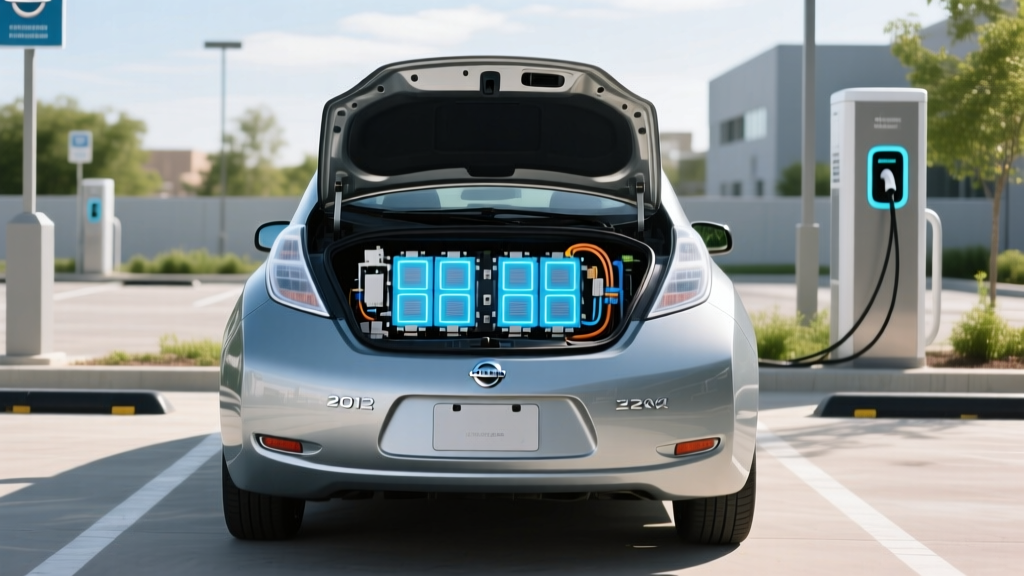
The 2012 Nissan Leaf was one of the first mass-market electric vehicles sold in the United States, and more than a decade later, many of these pioneering EVs are still on the road. But with original batteries now well past the 8-year/100,000-mile warranty window, owners face a critical question: what does a 2012 Nissan Leaf battery replacement cost, and is it worth the investment? This guide breaks down real replacement pricing, degradation expectations, and the broader battery technology landscape every EV owner or buyer should understand.
2012 Nissan Leaf Battery Replacement Cost: What You'll Actually Pay
The 2012 Leaf shipped with a 24 kWh lithium-ion battery pack using laminated lithium manganese oxide (LMO) cells — a chemistry Nissan chose for thermal stability but which proved more susceptible to capacity loss than the NMC (nickel manganese cobalt) packs used in most modern EVs. By 2026, most original 24 kWh packs have degraded to between 60% and 75% of their original capacity, translating to roughly 44–55 miles of real-world range from the car's original 73-mile EPA estimate.
| Option | Battery Size | Estimated Cost (Parts + Labor) | Expected Range After Install |
|---|---|---|---|
| Refurbished OEM 24 kWh pack | 24 kWh | $4,500 – $5,500 | 60 – 70 miles |
| Nissan dealer replacement (24 kWh new/reman) | 24 kWh | $6,500 – $8,000 | 65 – 73 miles |
| Aftermarket 30 kWh upgrade (where available) | 30 kWh | $7,000 – $9,500 | 80 – 95 miles |
| Used/salvage pack from wrecking yard | 24 kWh (variable SoH) | $2,500 – $4,000 | 45 – 65 miles (depends on SoH) |
These figures include labor, which typically runs 4–8 hours at $100–$150/hour for a qualified EV technician. Independent EV shops often undercut Nissan dealer pricing by $1,500–$2,500 on the same job. The critical variable is State of Health (SoH) — if you're buying a used or refurbished pack, demand a LeafSpy report showing capacity bars and internal resistance readings before committing.
How Long Do EV Batteries Last? Degradation Data Across Chemistries
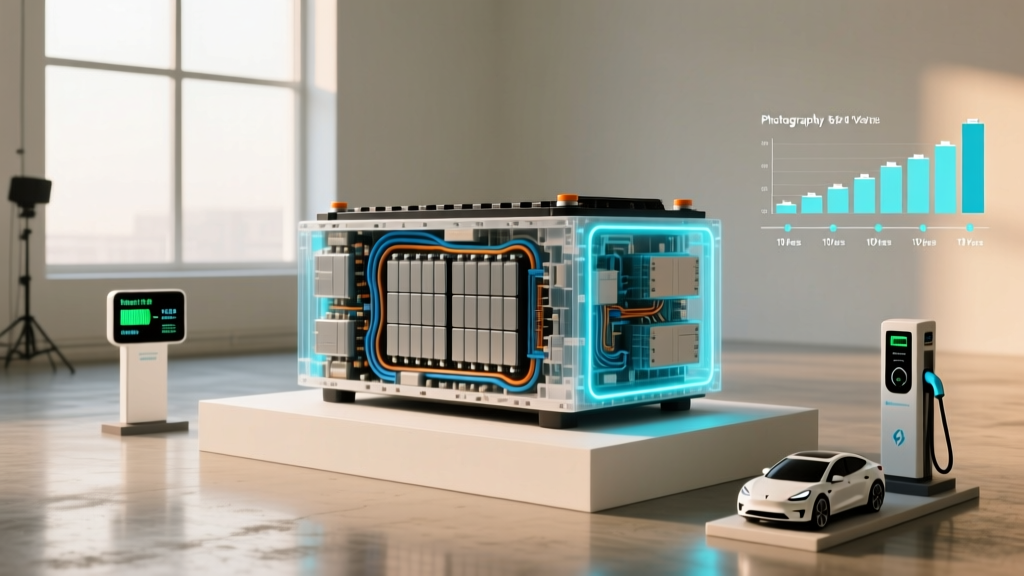
The question of EV battery lifespan depends heavily on chemistry, thermal management, and owner habits. Modern liquid-cooled packs routinely exceed 150,000 miles with less than 15% degradation. The 2012 Leaf's passively air-cooled LMO pack is an outlier — it degrades faster, especially in hot climates.
| Vehicle / Chemistry | Year 1 | Year 3 | Year 5 | Year 8 | Year 10+ |
|---|---|---|---|---|---|
| 2012–2015 Nissan Leaf (24 kWh, LMO, passive cooling) | ~5% loss | ~12–15% loss | ~20–25% loss | ~28–35% loss | ~35–45% loss |
| 2018+ Nissan Leaf (40/62 kWh, NMC, passive cooling) | ~3% loss | ~7–9% loss | ~12–15% loss | ~18–22% loss | ~22–28% loss |
| Tesla Model 3/Y (NMC/NCA, liquid-cooled) | ~2–3% loss | ~5–7% loss | ~8–10% loss | ~10–13% loss | ~13–17% loss |
| Hyundai Ioniq 5 / Kia EV6 (NMC, liquid-cooled) | ~2% loss | ~4–6% loss | ~7–9% loss | ~10–12% loss | ~12–16% loss |
| LFP-equipped vehicles (Tesla Model 3 RWD, BYD) | ~1–2% loss | ~3–4% loss | ~5–6% loss | ~7–9% loss | ~9–12% loss |
Sources: Geotab fleet data, Recurrent Auto battery health reports, manufacturer warranty disclosures. Figures represent fleet medians; individual results vary with climate and charging habits.
The data tells a clear story: liquid-cooled NMC and LFP packs lose capacity far more slowly than the passively cooled cells in early Leafs. Tesla's 2023 Impact Report noted that Model 3/Y batteries retain roughly 85% of original capacity at 150,000 miles. LFP chemistry, now used in standard-range Teslas and many Chinese-market EVs, shows even slower degradation thanks to its inherently stable olivine crystal structure.
LFP vs NMC vs NCA: Which Battery Chemistry Is Better?
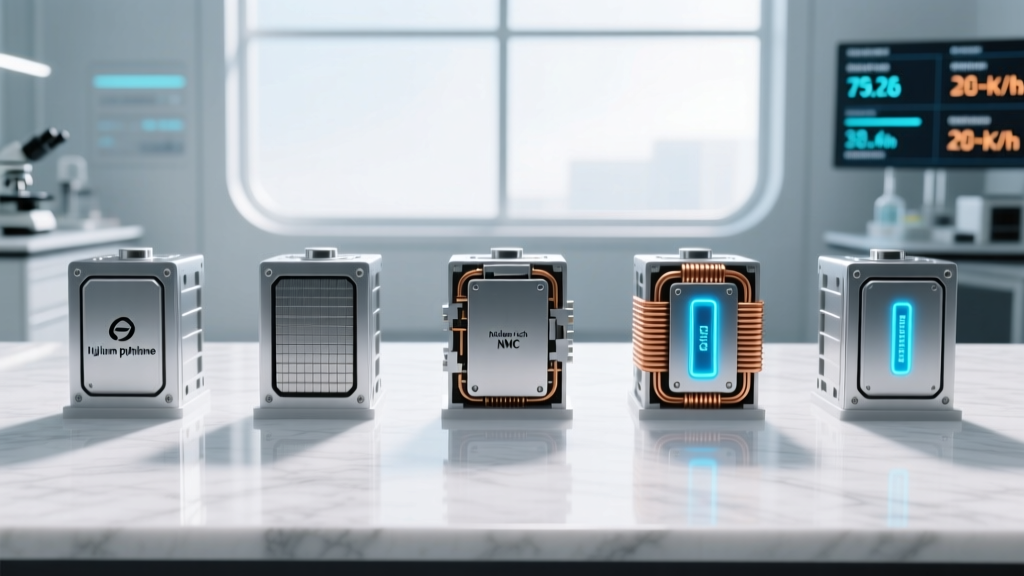
Understanding battery chemistry is essential for evaluating any EV — whether you're assessing a replacement pack for an aging Leaf or shopping for a new 2026 model. Here's how the three dominant chemistries compare:
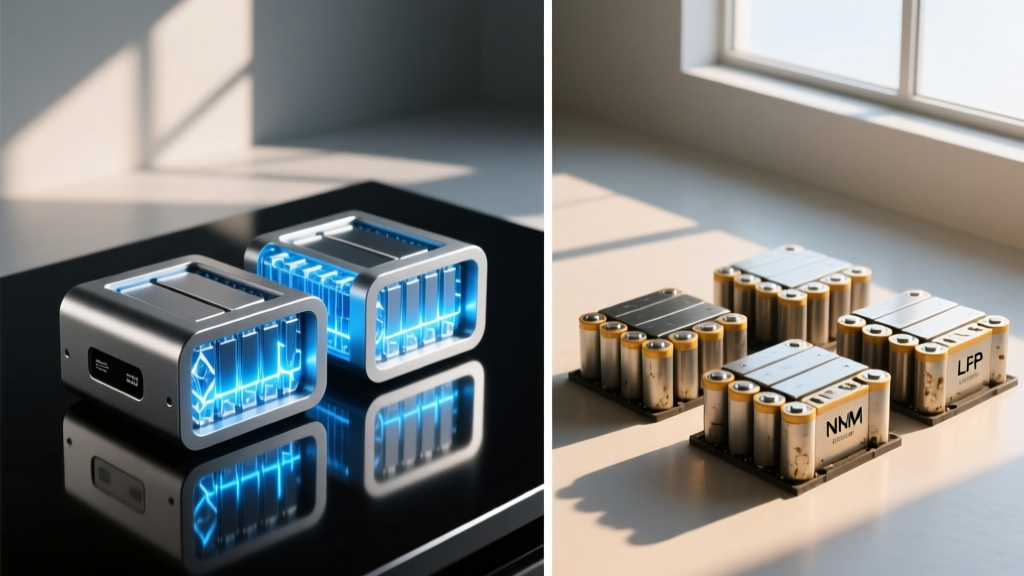
| Attribute | LFP (Lithium Iron Phosphate) | NMC (Nickel Manganese Cobalt) | NCA (Nickel Cobalt Aluminum) |
|---|---|---|---|
| Energy Density | Lower (~160 Wh/kg cell-level) | Higher (~220–260 Wh/kg) | Highest (~250–280 Wh/kg) |
| Cycle Life | Excellent (3,000–5,000+ cycles) | Good (1,000–2,000 cycles) | Good (1,000–1,500 cycles) |
| Cold-Weather Performance | Weaker below 32°F; needs preconditioning | Better low-temp discharge | Better low-temp discharge |
| Thermal Stability / Safety | Excellent — very resistant to thermal runaway | Good with active cooling | Good with active cooling |
| Cost | Lower — no cobalt or nickel | Higher — cobalt/nickel price exposure | Higher — cobalt/nickel |
| SoC Recommendation | Can charge to 100% daily | Best kept 20–80% for longevity | Best kept 20–80% for longevity |
| Common Applications (2026) | Tesla Model 3 RWD, BYD models, Ford Mustang Mach-E Select LFP | Most long-range EVs, Hyundai/Kia/GM | Tesla Model S/X, some Panasonic cells |
The takeaway: LFP wins on longevity and cost but sacrifices energy density and cold-weather range. NMC/NCA deliver more range per kilogram but degrade faster if routinely charged to 100% or exposed to extreme heat. For a 2012 Leaf owner evaluating replacement options, you're limited to the original LMO/NMC-adjacent chemistry — but if you're shopping new, LFP is the smarter pick for a daily commuter that garages overnight and rarely needs 300+ miles in one trip.
What Does the EV Battery Warranty Cover?
Federal law mandates that EV batteries carry a minimum warranty of 8 years or 100,000 miles (whichever comes first) in most states, extending to 10 years/150,000 miles in California Air Resources Board (CARB) states. For the 2012 Leaf, that warranty expired years ago — but understanding current warranty structures matters for anyone buying a newer EV or evaluating whether a replacement pack carries its own coverage.
| Manufacturer | Warranty Period | Capacity Retention Threshold | Notes |
|---|---|---|---|
| Nissan (Leaf) | 8 yr / 100,000 mi | Below 9 of 12 capacity bars (~70%) | Bar-based system, not precise % |
| Tesla (Model 3/Y) | 8 yr / 100,000–120,000 mi (varies by trim) | Below 70% retention | Long-range models get 120k mi |
| Hyundai / Kia | 10 yr / 100,000 mi | Below 70% retention | Among the longest coverage |
| GM (Ultium platform) | 8 yr / 100,000 mi | Below 70% retention | Covers battery and hybrid/EV components |
| Ford (Mach-E, F-150 Lightning) | 8 yr / 100,000 mi | Below 70% retention | Transferable to second owner |
Source: Manufacturer warranty documentation, fueleconomy.gov. Always verify specific terms for your model year and trim.
Warranties cover defects and excessive degradation — typically defined as falling below 70% of original capacity. They do not cover damage from accidents, flooding, improper charging equipment, or modifications. If you install an aftermarket replacement battery in your 2012 Leaf, expect a 1–3 year warranty from the supplier, not the 8-year coverage that came with the original pack.
Factors That Accelerate (or Extend) Battery Life
Battery degradation is inevitable, but the rate is largely within your control. Here's what the data shows:
Practices That Accelerate Degradation
- Frequent DC fast charging above 50 kW — especially without preconditioning. Repeated high-C-rate charging stresses cells and generates heat. The 2012 Leaf's passive cooling makes this particularly damaging.
- Sustained high State of Charge — storing an NMC/NCA vehicle at 100% SoC for days accelerates electrolyte decomposition. LFP is more tolerant of 100% storage.
- Deep discharge below 10% — letting the pack sit near-empty causes copper dissolution in the anode current collector.
- Extreme heat exposure — ambient temperatures above 95°F combined with high SoC is the single worst condition for lithium-ion cells. Arizona and Texas Leaf owners saw notably faster degradation.
- Aggressive acceleration in cold weather — drawing high current from a cold pack without preconditioning causes lithium plating on the anode.
Practices That Extend Battery Life
- Keep SoC between 20–80% for daily use (NMC/NCA vehicles); LFP owners can safely charge to 100%.
- Use Level 2 home charging (6–11 kW) as your primary method; reserve DC fast charging for road trips.
- Precondition the battery before fast charging — most modern EVs do this automatically when you navigate to a charger.
- Garage your vehicle when possible, especially in hot climates.
- Drive moderately in extreme cold until the battery warms up through use.
How to Check Your EV Battery's State of Health (SoH)
State of Health (SoH) is the percentage of original capacity your battery can still hold. A new 24 kWh Leaf battery at 100% SoH holds 24 kWh; at 75% SoH, it holds roughly 18 kWh, which translates directly to reduced range.
For Nissan Leaf owners: The dashboard displays capacity bars (12 bars when new). You can also use the LeafSpy Pro app with an OBD-II Bluetooth dongle (~$30 for the dongle, ~$20 for the app) to read precise SoH percentage, cell voltage variance, and battery temperature. LeafSpy is the gold standard for Leaf diagnostics and is invaluable when evaluating a used Leaf or a replacement pack.
For other EVs: Most modern EVs display SoH in the vehicle settings menu or through the manufacturer's app. Third-party tools like Recurrent Auto provide ongoing battery health monitoring by connecting to your vehicle's telematics. Tesla owners can check battery health via the service menu or third-party apps like TeslaFi.
When to consider replacement: Most EV owners never need a battery replacement — data from Consumer Reports and Recurrent shows that fewer than 5% of modern EVs require battery replacement outside of warranty-covered defects. For a 2012 Leaf, replacement becomes practical when SoH drops below 60–65% (roughly 35–40 miles of range), making the car impractical for daily commuting. At that point, weigh the $5,000–$8,000 replacement cost against the vehicle's market value of $3,000–$5,500 in 2026.
Broader EV Battery Replacement Costs Across Models
While the 2012 Leaf is a specific case, understanding replacement costs across the EV landscape provides useful context:
| Vehicle | Battery Size | Chemistry | Estimated Replacement Cost |
|---|---|---|---|
| 2011–2015 Nissan Leaf | 24 kWh | LMO | $4,500 – $8,000 |
| 2016–2018 Nissan Leaf (30 kWh) | 30 kWh | NMC | $5,500 – $9,000 |
| 2018+ Nissan Leaf (40 kWh) | 40 kWh | NMC | $6,500 – $10,000 |
| Tesla Model 3 (75 kWh) | 75 kWh | NCA/NMC | $12,000 – $16,000 |
| Chevrolet Bolt EV (60 kWh) | 60 kWh | NMC | $9,000 – $14,000 |
| Ford Mustang Mach-E (70 kWh) | 70 kWh | NMC | $12,000 – $18,000 |
| Hyundai Ioniq 5 (77.4 kWh) | 77.4 kWh | NMC | $13,000 – $19,000 |
Larger packs cost more to replace, but they also degrade more slowly in practice because owners use a smaller percentage of total capacity daily. A 77 kWh Ioniq 5 owner who charges to 80% daily uses roughly 62 kWh — meaning individual cells undergo shallower charge-discharge cycles than a Leaf owner using 20 of 24 kWh. Shallower cycles mean less degradation per mile driven.
Emerging Battery Technology: What's on the Horizon
While current lithium-ion technology is mature and proven, several next-generation battery technologies are in development:
Solid-state batteries replace the liquid electrolyte with a solid ceramic or polymer, promising higher energy density (potentially 400+ Wh/kg), faster charging, and improved safety. Toyota has announced plans for limited solid-state EV production by 2027–2028, while Nissan targets 2028 for a solid-state pilot line. Samsung SDI and QuantumScape are also advancing solid-state cells, but mass-market availability at competitive pricing remains 2029 or later by most analyst estimates. These are not available in any production vehicle today.
Silicon-dominant anodes replace graphite with silicon, which can store roughly 10x more lithium ions per unit mass. Companies like Sila Nanotechnologies and Group14 are supplying silicon anode materials to battery manufacturers, with early commercial deployments appearing in 2025–2026 model-year vehicles. Expect 10–20% energy density improvements in the near term, with more dramatic gains as the technology scales.
Sodium-ion batteries use abundant sodium instead of lithium, offering lower cost and better cold-weather performance at the expense of energy density. CATL has begun mass-producing sodium-ion cells for budget EVs in China, and the technology may reach the U.S. market in entry-level models by 2027–2028.
For a 2012 Leaf owner deciding on replacement today, these technologies are too distant to wait for. But for anyone buying a new EV in 2028 or beyond, the battery landscape will look meaningfully different.
Frequently Asked Questions
How long do EV batteries last in years and miles?
Modern liquid-cooled EV batteries (NMC, NCA, LFP) routinely last 150,000–200,000 miles with 70–85% capacity retention. In years, that's typically 12–18 years of average driving. The 2012 Nissan Leaf's passively cooled pack is an exception — many degraded to 70% within 6–8 years, particularly in hot climates. According to NHTSA and industry data, complete battery failure (unable to hold a charge) is rare; gradual capacity loss is the norm.
How much does an EV battery cost to replace?
Replacement costs range from roughly $4,500 for a refurbished 24 kWh Nissan Leaf pack to $18,000+ for a new large-format pack in a long-range SUV. For the 2012 Leaf specifically, expect to pay $4,500–$8,000 depending on whether you choose refurbished, dealer-new, or aftermarket options. Labor typically adds $500–$1,200.
What does the EV battery warranty cover?
EV battery warranties cover manufacturing defects and excessive capacity degradation — typically defined as dropping below 70% of original capacity within 8 years/100,000 miles (10 years/150,000 miles in CARB states). Warranties do not cover damage from accidents, improper charging, or environmental events like flooding. The 2012 Leaf's original warranty has expired; aftermarket replacement packs typically carry 1–3 year warranties.
How do I check and maximize my EV battery health?
Check SoH through your vehicle's settings menu, the manufacturer's app, or third-party tools like LeafSpy (Nissan Leaf), TeslaFi (Tesla), or Recurrent Auto (most brands). Maximize longevity by charging to 80% daily (100% is fine for LFP), using Level 2 charging at home, preconditioning before DC fast charging, avoiding extreme SoC (below 10% or above 90%) for extended periods, and garaging in hot climates.
LFP vs NMC — which is better and why?
Neither is universally better; it depends on your use case. LFP offers superior cycle life (3,000–5,000+ cycles vs 1,000–2,000), lower cost, better thermal safety, and tolerance for 100% daily charging — making it ideal for daily commuters who charge at home. NMC delivers higher energy density (more range in a lighter, smaller pack) and better cold-weather performance, making it better for long-range vehicles and cold-climate drivers. For a second EV, city commuter, or fleet vehicle, LFP is the practical winner. For a primary vehicle that needs 300+ miles of range, NMC remains the standard.
Is it worth replacing the battery in a 2012 Nissan Leaf?
It depends on the car's overall condition and your needs. A 2012 Leaf in good mechanical shape with a $5,000 battery replacement yields a functional 60–70 mile commuter car for under $10,000 total investment. However, the car's resale value in 2026 is roughly $3,000–$5,500, so you won't recoup the replacement cost at sale time. If you plan to keep driving it for 3+ more years as a city commuter, replacement makes financial sense versus buying a newer EV. If the car has other issues (suspension, brakes, interior wear), putting $5,000+ into a 14-year-old vehicle may not be the best use of funds.