If you've searched for a 2012 Chevy Malibu battery, you're likely dealing with a familiar automotive headache: a dead 12V lead-acid battery that costs $150–$250 to swap at any auto parts store. But if that search has you thinking about batteries in general — perhaps because you're considering a switch to an electric vehicle — the conversation changes dramatically. Modern EVs don't rely on a simple lead-acid unit to get going. They use high-voltage lithium-ion traction batteries that store 50 to 100+ kWh of energy, power a 200–500+ hp electric motor, and are engineered to last well over a decade.
This guide bridges that gap. We'll explain exactly what powers an EV, how those batteries compare to the familiar 12V battery in a 2012 Malibu, and what you actually need to know about chemistry, degradation, warranties, and replacement costs before buying electric.
How Long Do EV Batteries Actually Last?
The short answer: far longer than most buyers expect. Data from fleet operators, manufacturer reports, and third-party testing consistently shows that modern lithium-ion EV batteries retain 85–92% of their original capacity after 100,000 miles. Many packs are projected to outlast the vehicles they're installed in.
Here's what real-world degradation data tells us:
| Source / Vehicle | Miles Driven | Capacity Retained | Chemistry |
|---|---|---|---|
| Tesla Model 3/Y fleet (2023 Impact Report) | 150,000 mi | ~85% | NCA/NMC |
| Nissan Leaf (Geotab fleet study, 2023) | 100,000 mi | ~82–88% | NMC (passive air cooling) |
| Chevrolet Bolt EV (Recurrent data, 2024) | 80,000 mi | ~90% | NMC (liquid cooled) |
| Tesla Model 3 LFP (anecdotal fleet data) | 100,000 mi | ~92%+ | LFP |
| Hyundai Ioniq 5 (owner reports, 2025) | 60,000 mi | ~93–95% | NMC |
For context, the average American drives about 13,500 miles per year according to the Federal Highway Administration. At that rate, a 200,000-mile battery lifespan translates to nearly 15 years of use — well beyond the typical vehicle ownership cycle.
The key takeaway: battery replacement is not a routine ownership event for most EV buyers. It's a tail-risk scenario, not an inevitability.
LFP vs NMC: Which Battery Chemistry Is Right for You?
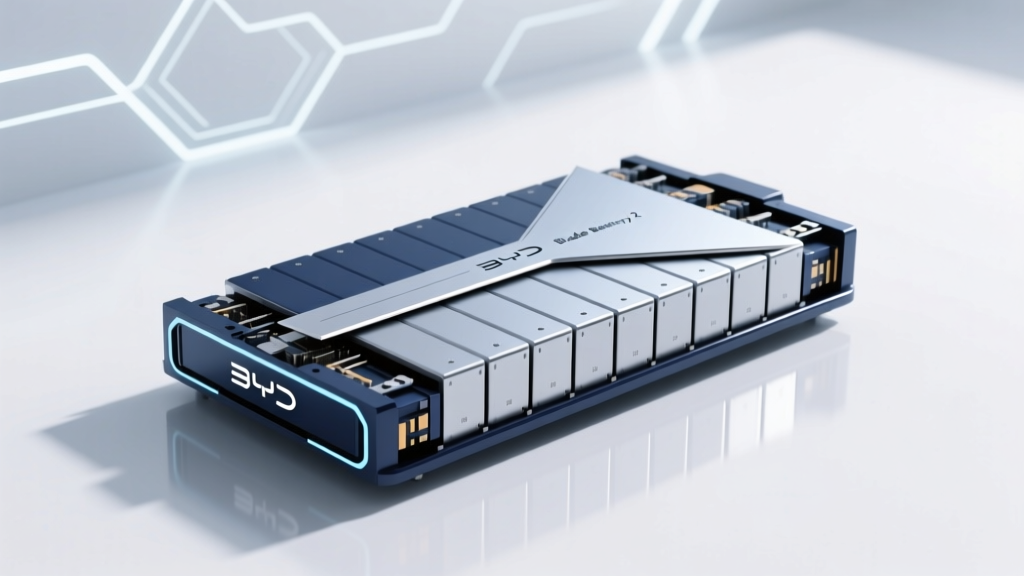
Not all lithium-ion batteries are created equal. The two dominant chemistries in 2026 EVs are LFP (lithium iron phosphate) and NMC/NCA (nickel manganese cobalt / nickel cobalt aluminum). The chemistry inside your pack determines energy density, cycle life, cold-weather behavior, and cost.
| Attribute | LFP (Lithium Iron Phosphate) | NMC/NCA (Nickel-Based) |
|---|---|---|
| Energy Density | Lower (~160–180 Wh/kg cell-level) | Higher (~220–300 Wh/kg cell-level) |
| Cycle Life | 3,000–6,000+ cycles to 80% SoH | 1,000–2,500 cycles to 80% SoH |
| Cold Performance | Weaker — more range loss below freezing | Better low-temp discharge capability |
| Charging Recommendation | Can (and should) charge to 100% daily | 80% daily recommended; 100% for trips |
| Cost | ~20–30% cheaper per kWh (no cobalt/nickel) | Higher — tied to commodity nickel/cobalt prices |
| Thermal Stability | Excellent — very low thermal runaway risk | Good — requires robust thermal management |
| Common In (2026) | Tesla Model 3 RWD, Model Y RWD, Ford Mustang Mach-E Select (base), BYD models | Tesla Long Range, Hyundai Ioniq 5/6, Kia EV6/EV9, Chevy Equinox EV, BMW iX |
What Does an EV Battery Warranty Actually Cover?
Federal law mandates a minimum EV battery warranty of 8 years / 100,000 miles (whichever comes first) for the high-voltage traction battery. In California Air Resources Board (CARB) states — which include CA, CO, CT, ME, MD, MA, NJ, NY, OR, RI, VT, WA, and others adopting CARB rules — that mandate extends to 10 years / 150,000 miles.
But what triggers a warranty claim? The industry standard threshold is 70% capacity retention. If your battery's usable capacity drops below 70% of its original spec within the warranty period, the manufacturer must repair or replace it. Some brands set a slightly more generous bar:
| Manufacturer / Model | Warranty Term | Capacity Threshold | Notes |
|---|---|---|---|
| Tesla (Model 3/Y Long Range) | 8 yr / 120,000 mi | 70% | RWD trim: 8 yr / 100,000 mi |
| Hyundai (Ioniq 5/6) | 10 yr / 100,000 mi | 70% | Among the longest terms |
| Kia (EV6/EV9) | 10 yr / 100,000 mi | 70% | Matches Hyundai sibling |
| Chevrolet (Equinox EV / Blazer EV) | 8 yr / 100,000 mi | 70% (60% for Bolt-era) | GM's Ultium platform standard |
| Ford (Mustang Mach-E / F-150 Lightning) | 8 yr / 100,000 mi | 70% | Covers battery + EV components |
| BMW (i4/iX) | 8 yr / 100,000 mi | 70% | Transferable to second owner |
Important nuance: the warranty covers defects and abnormal degradation, not normal wear. Gradual capacity loss from 100% to, say, 88% over eight years is considered normal aging. Only a drop below the stated threshold (typically 70%) triggers coverage. In practice, warranty claims remain rare — most packs never breach that floor during the warranty period.
How Much Does an EV Battery Cost to Replace?
This is the question that generates the most anxiety — and the most misinformation. Let's ground it in actual numbers.
| Vehicle | Battery Size | Estimated Pack Cost | Total w/ Labor |
|---|---|---|---|
| Tesla Model 3 (LFP, ~60 kWh) | 60 kWh | $7,000–$10,000 | $10,000–$14,000 |
| Tesla Model Y LR (~75 kWh) | 75 kWh | $10,000–$14,000 | $13,000–$18,000 |
| Chevrolet Bolt EV (65 kWh) | 65 kWh | $9,000–$12,000 | $12,000–$16,000 |
| Hyundai Ioniq 5 (77.4 kWh) | 77.4 kWh | $11,000–$15,000 | $14,000–$19,000 |
| Ford F-150 Lightning Ext. (131 kWh) | 131 kWh | $18,000–$25,000 | $22,000–$30,000 |
| BMW iX xDrive50 (111.5 kWh) | 111.5 kWh | $16,000–$22,000 | $20,000–$28,000 |
Those are big numbers — but context matters. Battery cell prices have fallen roughly 80–90% since 2010, dropping to around $100–$130/kWh at the pack level in 2025–2026 according to BloombergNEF tracking. By the time a 2026 EV actually needs a replacement (likely 2035+), prices will have dropped further, and refurbished or remanufactured packs will offer lower-cost alternatives.
Also consider: a 2012 Chevy Malibu's engine replacement runs $4,000–$7,000, and its transmission replacement $3,000–$5,000. Over 200,000 miles, a gas car accumulates thousands in powertrain maintenance (timing belts, water pumps, catalytic converters, exhaust systems) that an EV simply doesn't have. The battery is the EV's single large-cost component — but it's also the component least likely to fail within normal ownership timelines.
What Kills an EV Battery? Factors That Accelerate Degradation
Lithium-ion batteries degrade through two mechanisms: calendar aging (time-dependent, happens even when parked) and cycle aging (use-dependent, tied to charge/discharge cycles). You can't stop calendar aging, but you can significantly slow cycle aging by managing these factors:
- Sustained high State of Charge (SoC): Storing an NMC battery at 100% for days or weeks stresses the cathode. LFP batteries are immune to this — charge to 100% freely.
- Frequent DC fast charging at high power: Occasional fast charging is fine. Daily use of 150–350 kW chargers without battery preconditioning increases heat stress. Most modern EVs precondition the battery when navigating to a charger, mitigating this.
- Extreme heat exposure: Prolonged parking in 100°F+ environments without thermal management active. Liquid-cooled packs (standard on nearly all 2026 EVs) handle this far better than passively cooled packs.
- Deep discharge cycles: Regularly draining below 10% SoC stresses cells. The 20–80% rule (for NMC) minimizes stress on both ends.
- High-mileage fast-charge patterns: Fleet vehicles that fast-charge multiple times daily show measurably faster degradation than home-charged counterparts — but still typically retain 80%+ at 150,000 miles.
Battery Health Monitoring: How to Check Your EV's State of Health
State of Health (SoH) is the percentage of your battery's original capacity that remains usable. A new battery is 100% SoH; one that has degraded to hold only 77.4 kWh out of an original 84 kWh sits at about 92% SoH.
How to check SoH in 2026 EVs:
- In-car displays: Tesla shows battery health in the service menu (or via the Tesla app on newer software). Hyundai/Kia provide SoH readouts through the infotainment engineering menu. BMW and Mercedes include SoH in their connected-services apps.
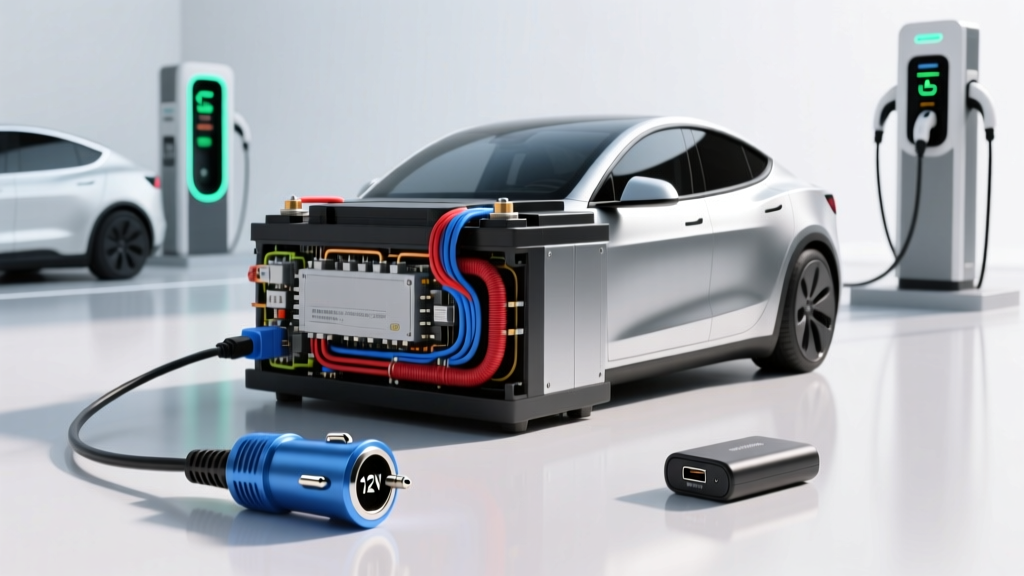
- OBD-II dongles + apps: Tools like OBDeleven, LeafSpy (Nissan), and Scan My Tesla pull real SoH data from the battery management system (BMS). These range from $30–$120 for the hardware plus a small app subscription.
- Dealer diagnostics: Any authorized service center can run a full battery health report. Request this when buying a used EV — it's the single most important data point.
- Third-party services: Companies like Recurrent Auto and Geotab offer fleet-level and consumer battery health tracking using connected-car data.
For used-EV buyers: always verify SoH before purchase. A 2020 Tesla Model 3 Long Range at 88% SoH with 60,000 miles is a healthy car. One at 76% SoH with the same mileage deserves scrutiny — it may be approaching warranty-claim territory.
Maximizing Battery Life: A Practical Care Checklist
- NMC owners: Set daily charge limit to 80%. Charge to 100% only when departing on a trip.
- LFP owners: Charge to 100% at least once per week — the BMS needs full-charge calibration, and LFP chemistry tolerates it well.
- Home charge whenever possible: Level 2 home charging (7–11.5 kW) is gentler on cells than daily DC fast charging.
- Use battery preconditioning: When navigating to a DC fast charger, let the car warm or cool the battery. Tesla, Hyundai, Ford, and most 2026 EVs do this automatically.
- Avoid long-term storage at extremes: If parking for weeks, leave NMC at ~50% SoC. LFP is more forgiving but 50–60% is still ideal.
- Don't obsess over cold-weather range loss: Winter range drops of 20–30% are normal and reversible. They don't indicate permanent degradation.
- Keep software updated: OTA updates frequently improve BMS algorithms, thermal management, and charging profiles.
What's Next? Solid-State, Silicon Anodes, and Future Battery Tech
The battery lab pipeline is active, but timelines matter. Here's where next-generation tech actually stands as of 2026:
Solid-state batteries replace the liquid electrolyte with a solid conductor, promising higher energy density (potentially 400–500 Wh/kg), faster charging, and improved safety. Toyota has announced a solid-state battery targeting 2027–2028 production in limited models, initially in Japan. Samsung SDI and QuantumScape are in pilot production phases. Realistic mass-market availability: 2029–2032.
Silicon anode technology replaces graphite anodes with silicon-dominant materials, boosting energy density by 20–40%. Sila Nanotechnologies and Group14 are supplying early production cells. The Mercedes G-Class 580 EQ (announced) is expected to feature silicon-anode cells. Realistic broader adoption: 2027–2029.
Sodium-ion batteries use abundant sodium instead of lithium, offering lower cost and excellent cold performance at the trade-off of lower energy density. CATL and BYD are producing these for Chinese-market vehicles. US market availability: uncertain, likely 2028+ for budget segments.
EV Battery vs. 2012 Chevy Malibu Battery: The Bottom Line
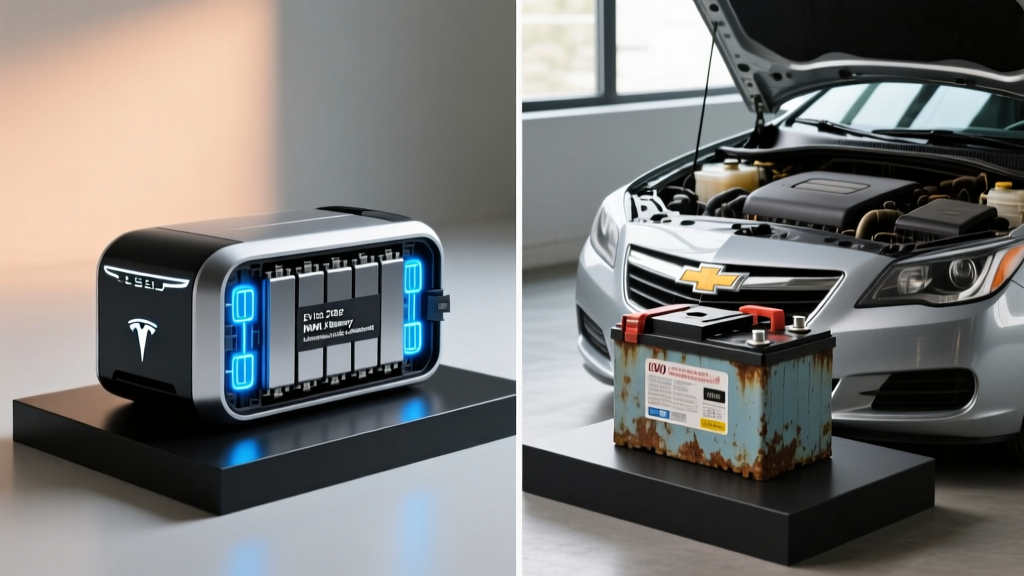
Here's the fundamental comparison: your 2012 Malibu's 12V lead-acid battery is a $160 consumable you'll replace every 3–5 years. An EV's traction battery is a $10,000–$25,000 engineered system designed to last 150,000–200,000+ miles with gradual, manageable degradation. The EV battery is more expensive in absolute terms — but it replaces the entire internal combustion powertrain (engine, transmission, exhaust, fuel system) and its associated maintenance costs over the vehicle's life.
For EV shoppers, the practical advice is simple: check the battery chemistry (LFP or NMC), understand the warranty terms (8 yr/100,000 mi minimum, 70% threshold), follow basic care practices, and don't let replacement-cost headlines deter you. The data consistently shows that modern EV batteries outlast most owners' time with the vehicle.
Frequently Asked Questions
How long do EV batteries last in years and miles?
Most modern EV batteries (2020+) are designed for 200,000+ miles and 15+ years of service. Real-world fleet data shows 85–92% capacity retention at 100,000 miles. LFP chemistry batteries often exceed 3,000 charge cycles before reaching 80% capacity, which translates to well over 300,000 miles for most vehicles.
How much does it cost to replace an EV battery?
Replacement costs range from roughly $10,000–$14,000 for a smaller pack (Tesla Model 3 LFP, ~60 kWh) to $22,000–$30,000 for large truck packs (Ford F-150 Lightning Extended Range, 131 kWh). These costs are expected to decline as cell prices continue falling. Most EVs never need a battery replacement during typical ownership.
What does the EV battery warranty cover?
Federally mandated minimum coverage is 8 years / 100,000 miles, with a capacity retention threshold of 70% (meaning the manufacturer must repair or replace the battery if it degrades below 70% of original capacity within that period). CARB states extend this to 10 years / 150,000 miles. Hyundai and Kia offer 10 years / 100,000 miles nationwide.
How do I check my EV battery's State of Health?
Most 2026 EVs display SoH through the infotainment system, connected app, or service menu. Third-party OBD-II tools (LeafSpy, Scan My Tesla, OBDeleven) can read BMS data directly. Always request a battery health report from the dealer when purchasing a used EV.
LFP vs NMC — which battery is better for daily driving?
For daily commuting with home charging, LFP is often the better choice: it lasts longer (more charge cycles), costs less, and can be charged to 100% daily without harm. NMC is preferable if you need maximum range, live in a very cold climate, or frequently take long road trips. Both chemistries are proven and reliable — the "better" choice depends on your driving pattern.
Does fast charging damage my EV battery?
Occasional DC fast charging causes negligible additional degradation. Daily high-power fast charging (150–350 kW) without preconditioning does accelerate wear slightly, but modern battery management systems mitigate most of this. Studies show the difference between exclusive home-charging and frequent fast-charging is typically 2–5% additional capacity loss over 100,000 miles — not a dealbreaker for most owners.
Sources: fueleconomy.gov (EPA range/efficiency data), IRS.gov (§30D clean vehicle credit rules), manufacturer warranty documentation (Tesla, Hyundai, Kia, GM, Ford, BMW — 2026 model year).