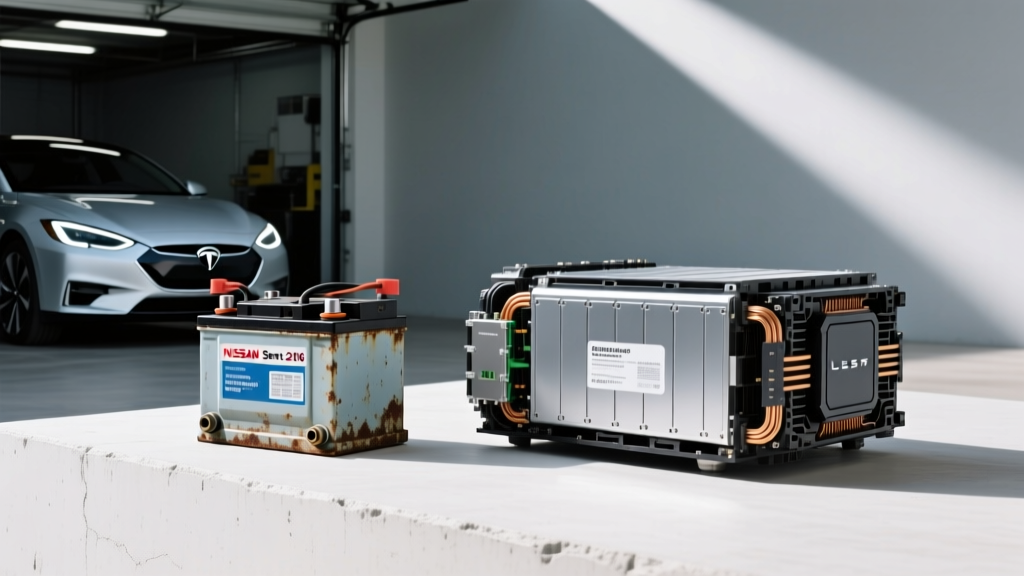
If you've ever replaced the 12V battery in a 2011 Ford Fiesta — a Group 48 or H5 lead-acid unit costing around $130–$180 at an auto parts store — you already understand the basic idea of a car battery. But stepping into the EV world means encountering a fundamentally different beast: the high-voltage traction battery. This guide bridges that gap, using the familiar 2011 Ford Fiesta battery as a reference point before diving deep into modern EV battery chemistry, degradation, warranties, replacement costs, and care strategies that every EV buyer and owner needs to know in 2026.
The 2011 Ford Fiesta Battery vs. an EV Traction Battery: What's Actually Different?
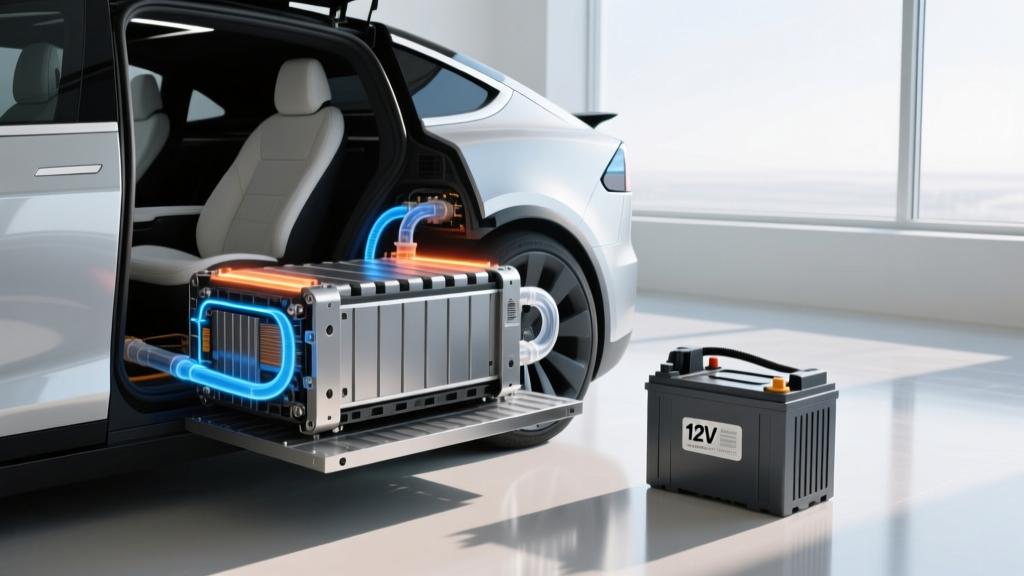
The 2011 Ford Fiesta uses a conventional 12V lead-acid starter battery. Its job is simple: crank a small internal-combustion engine and power accessories when the engine is off. It stores roughly 0.6–0.8 kWh of usable energy, weighs about 30–35 lbs, and typically lasts 3–5 years before sulfation or plate degradation forces a swap.
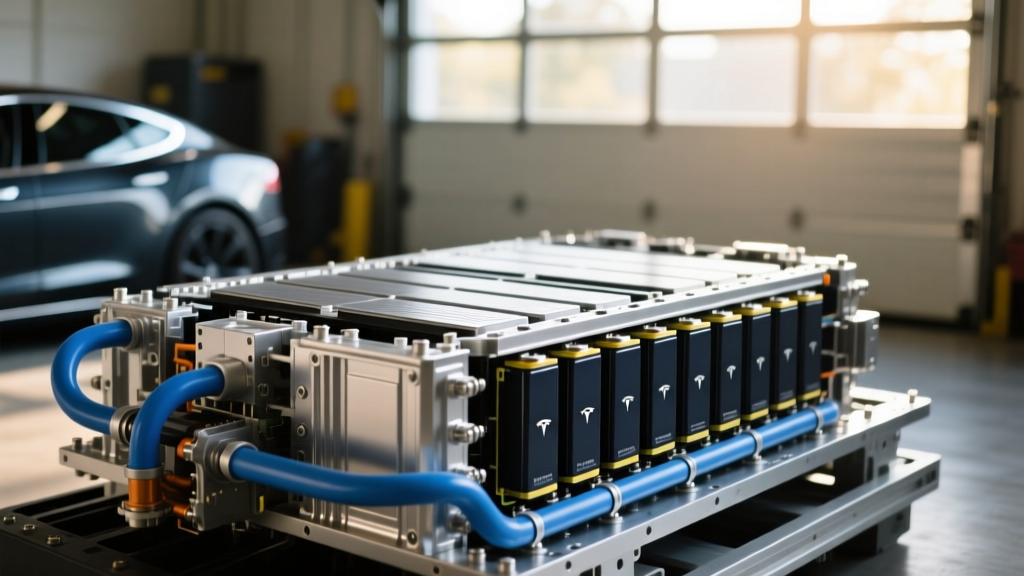
An EV traction battery, by contrast, is the vehicle's primary energy source. A 2026 Tesla Model Y Long Range, for instance, carries an ~75 kWh (usable) NMC pack weighing over 1,000 lbs. A base-model Nissan Leaf runs a ~40 kWh pack. These are lithium-ion systems composed of hundreds or thousands of individual cells managed by sophisticated battery management systems (BMS) that monitor voltage, temperature, and state of charge at the cell-module level.
Even EVs still carry a 12V auxiliary battery (or increasingly, a 16V lithium-ion auxiliary unit as in recent Tesla models) to power lights, infotainment, and safety systems when the high-voltage contactors are open. But when we talk about "EV batteries," we mean the traction pack — and that's what this guide covers.
LFP vs. NMC/NCA: Understanding EV Battery Chemistry Trade-Offs
The two dominant lithium-ion chemistries in 2026 EVs are LFP (lithium iron phosphate) and NMC/NCA (nickel manganese cobalt / nickel cobalt aluminum). Each has distinct strengths, and neither is universally "better" — the right choice depends on your driving pattern, climate, and budget.
| Attribute | LFP (LiFePO₄) | NMC / NCA |
|---|---|---|
| Energy Density | ~160–200 Wh/kg (lower) | ~250–300 Wh/kg (higher) |
| Typical Range per Pack Size | Less range for same weight/volume | More range for same weight/volume |
| Cycle Life | 3,000–5,000+ full cycles | 1,000–2,500 full cycles |
| Cold-Weather Performance | Reduced; slower charging below 32°F | Better low-temp conductivity |
| Thermal Stability | Excellent; less prone to thermal runaway | Good but requires more active cooling |
| Cost per kWh (2026) | ~$80–$100 (pack-level) | ~$110–$140 (pack-level) |
| Recommended Charge Habit | Can be charged to 100% regularly | Best kept 20–80% for daily use |
| Common Applications | Tesla Model 3/Y RWD, Ford Mustang Mach-E Select (LFP trims), BYD models | Long-range/performance trims, Rivian, Hyundai Ioniq 5 AWD |
Bottom line: LFP wins on longevity, cost, and safety — ideal for daily commuters who charge at home and don't need maximum range. NMC/NCA wins on energy density and cold-weather usability — better for road-trippers and cold-climate drivers who need every mile of EPA-rated range.
How Long Do EV Batteries Actually Last? Degradation Data by the Numbers
This is the question that generates the most anxiety, but the real-world data is reassuring. Modern lithium-ion EV batteries are engineered to outlast the vehicles they're installed in for most original owners.
Here's what degradation actually looks like based on aggregated fleet data and owner reports:
- Year 1 / 15,000 miles: 2–4% capacity loss (initial break-in period)
- Year 3 / 45,000 miles: 5–8% total loss
- Year 5 / 75,000 miles: 8–12% total loss
- Year 8 / 120,000 miles: 10–15% total loss
- Year 10 / 150,000 miles: 12–20% total loss
Sources: Geotab fleet data, Recurrent Auto battery health reports. Individual results vary by chemistry, climate, and charging habits.
For context, a Tesla Model 3 Long Range with an EPA-rated 341 miles that loses 12% over eight years still delivers roughly 300 miles — plenty for the vast majority of drivers. LFP packs generally degrade more slowly than NMC, with some fleet data showing under 10% loss at 100,000 miles.
Compare this to the 2011 Ford Fiesta battery you might have replaced twice or three times by now. The EV traction pack is designed for an entirely different lifespan paradigm.
Battery Warranty Terms: What's Actually Covered?
Federal regulations mandate that EV battery warranties cover a minimum of 8 years / 100,000 miles (10 years / 150,000 miles in California Air Resources Board states). But the capacity-retention threshold — the point at which the manufacturer will replace or repair the pack — varies by brand.
| Manufacturer | Warranty Period | Capacity Threshold | Notes |
|---|---|---|---|
| Tesla (Model 3/Y LFP) | 8 yr / 100,000 mi | 70% | Applies to standard-range RWD |
| Tesla (Model 3/Y LR/Perf) | 8 yr / 120,000 mi | 70% | NMC packs, higher mileage coverage |
| Hyundai / Kia | 10 yr / 100,000 mi | 70% | Among the longest calendar coverage |
| Ford (Mach-E, F-150 Lightning) | 8 yr / 100,000 mi | 70% | Covers battery components + capacity |
| GM (Chevy, Cadillac EVs) | 8 yr / 100,000 mi | 70% | Ultium platform coverage |
| Rivian | 8 yr / 175,000 mi | 70% | Highest mileage threshold in market |
| BMW (i4, iX) | 8 yr / 100,000 mi | 70% | Includes cell-level repair option |
Key detail: These warranties cover capacity loss below the threshold — not normal gradual degradation. If your pack retains 72% at year seven, you're within spec. If it drops to 68%, the manufacturer is obligated to repair or replace it. Warranty terms reference fueleconomy.gov's EV technology guidelines for standardized definitions.
EV Battery Replacement Cost: What You'll Actually Pay (and When)
Out-of-warranty battery replacement is the scenario that generates headlines, but it remains rare. Most EV batteries outlive their original ownership period, and many second owners never need a full pack swap. When replacement is needed — typically after 150,000–200,000+ miles or due to physical damage — here's the current cost landscape:
| Model | Pack Size (Usable) | Chemistry | Est. Replacement Cost |
|---|---|---|---|
| Tesla Model 3 RWD | ~57 kWh | LFP | $8,000–$12,000 |
| Tesla Model Y Long Range | ~75 kWh | NMC | $12,000–$16,000 |
| Hyundai Ioniq 5 (AWD) | ~77.4 kWh | NMC | $11,000–$15,000 |
| Ford Mustang Mach-E Ext. Range | ~91 kWh | NMC | $14,000–$20,000 |
| Ford F-150 Lightning Ext. Range | ~131 kWh | NMC | $20,000–$30,000 |
| Chevrolet Equinox EV | ~85 kWh | NMC (Ultium) | $12,000–$17,000 |
| Nissan Leaf (40 kWh) | ~40 kWh | NMC | $6,500–$9,000 |
These figures include the battery pack and labor but can vary by region, dealer, and whether the manufacturer offers refurbished packs (often 30–50% cheaper than new). Some manufacturers, like Tesla and Hyundai, offer module-level repair — replacing only the degraded cell groups rather than the entire pack — for $2,000–$6,000.
For perspective, the 2011 Ford Fiesta battery replacement cost was roughly $150, but you'd have replaced it several times over 15 years. An EV pack costs far more once, but is designed to last the vehicle's life.
Factors That Accelerate (or Preserve) EV Battery Health
Battery degradation isn't random — it's driven by specific, controllable factors. Understanding these is the difference between a pack that retains 85% capacity at year eight and one that drops to 72%.
- Daily charging limit: Set to 80% for NMC packs; 100% is fine for LFP. This single habit is the highest-impact factor.
- DC fast-charging frequency: Occasional road-trip use is fine. Daily DCFC sessions (especially >150 kW) accelerate degradation by 2–4% over 100,000 miles vs. primarily Level 2 charging.
- Extreme heat exposure: Sustained ambient temps above 95°F without active cooling degrade cells faster. Garage parking helps in hot climates.
- Extreme cold: Cold doesn't permanently damage the battery, but charging without preconditioning in sub-freezing temps can cause lithium plating. Always use preconditioning.
- State of charge storage: If storing for weeks, leave NMC at ~50% SoC. Avoid leaving any pack at 100% or below 10% for extended periods.
- Regenerative braking settings: High regen in cold weather can stress cells; many EVs automatically limit regen when the pack is cold or near full.
Preconditioning — warming the battery to optimal temperature before fast charging — is critical. A cold NMC pack at a 150 kW DC fast charger might accept only 30–40 kW until it warms up. Using your EV's navigation to route to a charger typically triggers automatic preconditioning. This single feature can shave 10–15 minutes off a 10–80% session in cold weather and protect long-term health.
How to Monitor Your EV's Battery State of Health (SoH)
State of Health (SoH) is the percentage of original capacity your battery currently retains. Most modern EVs provide some visibility into this metric, though the level of detail varies.
Built-in tools: Tesla's service menu shows battery health percentage. Hyundai/Kia's infotainment system includes a battery condition screen. Ford's SYNC system on the Mach-E and Lightning provides a basic health indicator. Check your owner's manual for the specific path.
OBD-II scanners and apps: Third-party tools like OBDeleven, LeafSpy (for Nissan Leaf), and Teslalogger can pull detailed cell-level data including individual module voltage variance, total energy throughput, and precise SoH percentage.
Dealer diagnostics: Any authorized service center can run a full battery health report, typically free during scheduled service. Request this if you're considering a used EV purchase.
What to watch for: A healthy pack shows cell voltage variance under 20–30 mV across modules at a given SoC. Variance exceeding 50–100 mV can indicate a weak module that may need attention before the full pack hits the warranty threshold.
Emerging Battery Technology: Solid-State, Silicon Anodes, and What's Realistic
Multiple next-generation battery technologies are in development, but it's essential to separate lab announcements from showroom availability.
Solid-state batteries replace the liquid electrolyte with a solid material, promising higher energy density (potentially 400+ Wh/kg), faster charging, and improved safety. Toyota has announced a solid-state EV targeted for 2027–2028 with a claimed 600+ mile range. Samsung SDI and QuantumScape are also advancing prototypes. However, manufacturing scale-up remains the primary bottleneck — no solid-state EV is currently available for purchase in 2026, and broad market availability is realistically 2029–2032 at the earliest.
Silicon-dominant anodes (replacing graphite) can boost energy density by 20–40%. Companies like Sila Nanotechnologies and Group14 are supplying silicon-anode materials to battery manufacturers. Some 2026 models use silicon-blend anodes in small percentages, but full silicon-dominant packs are still in pilot production.
Sodium-ion batteries are emerging as a low-cost alternative for budget and city EVs, using abundant sodium instead of lithium. CATL has begun production for Chinese-market vehicles. Energy density is lower (~120–160 Wh/kg), making them best suited for shorter-range applications. US-market availability is likely 2027+.
These technologies are genuinely promising but remain forward-looking. For a 2026 purchase decision, today's LFP and NMC packs are mature, well-understood, and backed by substantial warranty coverage.
Frequently Asked Questions
How long do EV batteries last in years and miles?
Based on aggregated fleet data, most modern EV batteries retain 80–88% of original capacity at 100,000 miles and 75–85% at 150,000 miles. In calendar terms, that translates to 12–20+ years of usable service life before the pack drops below 70% capacity. Many first-generation Nissan Leafs from 2011–2013 are still on their original packs at 100,000+ miles, though with notable range loss on the smaller 24 kWh packs.
How much does an EV battery cost to replace in 2026?
Out-of-warranty replacement ranges from approximately $6,500 for a small pack (Nissan Leaf 40 kWh) to $20,000–$30,000 for large packs (F-150 Lightning 131 kWh). Most owners never pay this — the battery is covered under the 8-year/100,000-mile minimum warranty, and packs routinely outlast the vehicle. Module-level repair, where available, costs $2,000–$6,000.
What does the EV battery warranty actually cover?
Federally mandated minimum coverage is 8 years / 100,000 miles against capacity loss below 70% of original. CARB states extend this to 10 years / 150,000 miles. The warranty covers defects and abnormal degradation — not damage from accidents, flooding, or unauthorized modifications. Check IRS guidelines if you're also evaluating how battery sourcing affects federal tax credit eligibility.
LFP vs. NMC — which chemistry should I choose?
Choose LFP if: you primarily charge at home, want maximum cycle life, drive in moderate climates, and don't need the longest possible range. Choose NMC/NCA if: you need maximum range per charge, live in a cold climate, take frequent road trips requiring fast charging, or want the best cold-weather charging performance. Neither is universally superior — it's a use-case decision.
How do I check and maximize my EV's battery health?
Check SoH through your vehicle's built-in diagnostics screen, an OBD-II scanner app, or a dealer service visit. To maximize longevity: limit NMC daily charging to 80%, minimize daily DC fast charging, use preconditioning before fast charging in cold weather, avoid storing at extreme SoC levels, and park in shade or a garage in hot climates. LFP owners can charge to 100% regularly without concern.
Is a used EV with high mileage a battery risk?
Not necessarily. A well-maintained EV with 80,000 miles on an NMC pack likely retains 88–92% capacity. The key is requesting a battery health report before purchase. Vehicles that were primarily Level 2-charged and garage-kept tend to show less degradation than those frequently DC fast-charged in hot climates. Remaining warranty coverage transfers to subsequent owners.