If you landed here searching for a 2009 Chevy Cobalt battery, you're likely dealing with a dead 12-volt lead-acid unit in a gasoline compact — a $150 fix at any auto parts store. But that search also opens the door to a much bigger question in 2026: how do modern high-voltage EV traction batteries compare, how long do they really last, and what does it cost when one eventually needs replacement?
This guide bridges that gap. We'll cover everything from the fundamentals of lithium-ion chemistry to real-world degradation data, warranty coverage, replacement costs, and the daily habits that determine whether your EV battery outlasts the car itself.
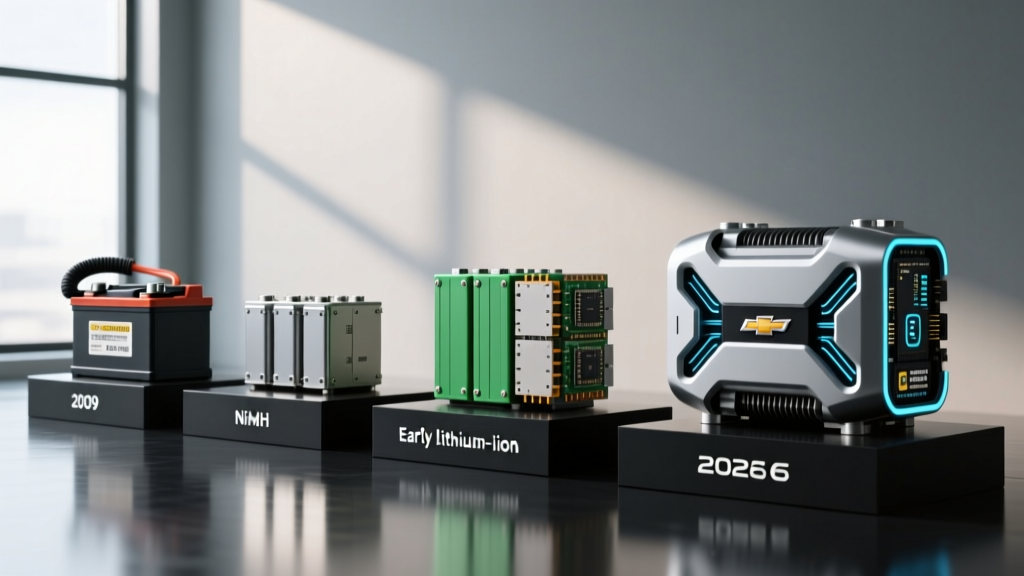
The 2009 Chevy Cobalt Battery vs. a Modern EV Traction Battery
The 2009 Chevrolet Cobalt uses a conventional Group 48 12V lead-acid battery rated around 600 cold-cranking amps (CCA). It powers the starter motor, lights, and infotainment — not the drivetrain. Typical lifespan: 3–5 years. Replacement cost: $120–$180.
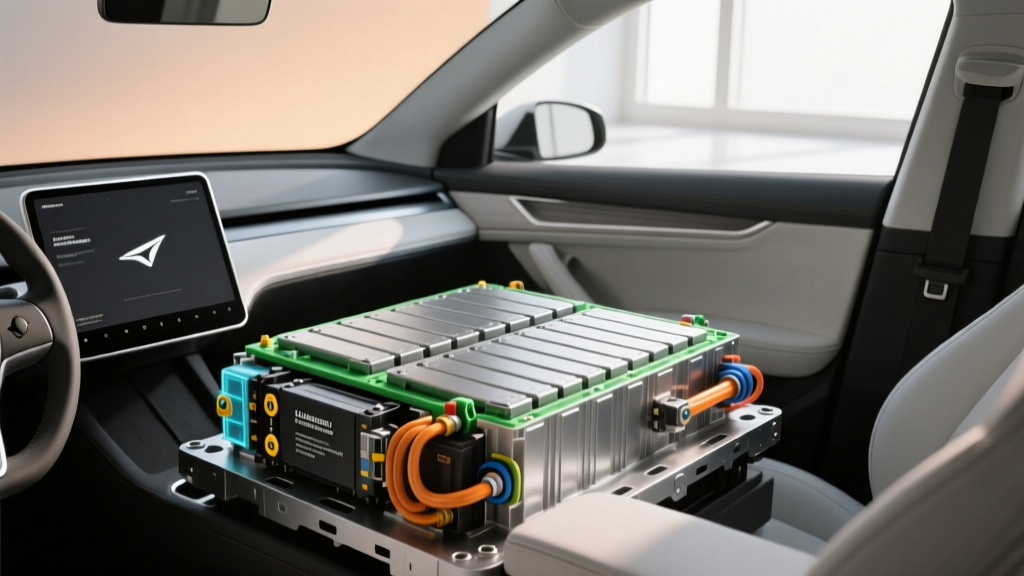
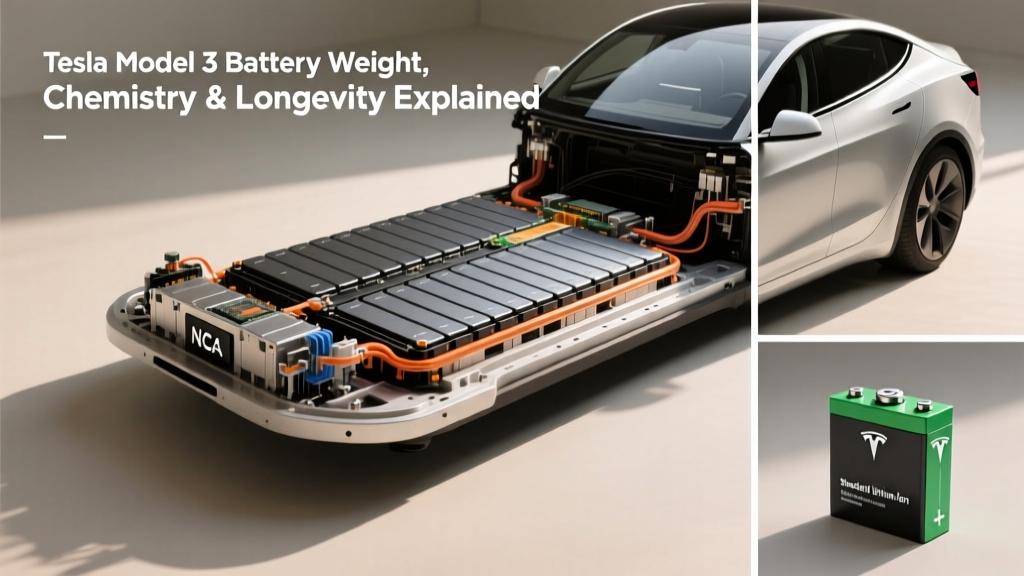
Contrast that with a 2026 EV traction battery. A Tesla Model 3 Long Range carries an 82 kWh NMC (nickel manganese cobalt) pack weighing roughly 1,060 lbs. A base Ford Mustang Mach-E Select uses a 75.7 kWh LFP (lithium iron phosphate) pack. These batteries power the electric motors, handle regenerative braking, and are engineered for 150,000–200,000+ miles of service.
The 2009 Cobalt's 12V battery stores about 0.6 kWh of usable energy. A modern EV pack stores 60–100+ kWh — roughly 100x more energy — and does it with lithium-ion chemistry that degrades gradually over thousands of charge cycles rather than failing abruptly like a lead-acid cell.
EV Battery Chemistry: LFP vs. NMC/NCA Explained
Two dominant chemistries power today's EVs, and the choice between them affects range, longevity, cold-weather behavior, and price.
| Factor | LFP (Lithium Iron Phosphate) | NMC / NCA (Nickel Manganese Cobalt / Nickel Cobalt Aluminum) |
|---|---|---|
| Energy Density | Lower (~160 Wh/kg cell-level) | Higher (~250–300 Wh/kg cell-level) |
| Cycle Life | 3,000–5,000+ cycles to 80% SoH | 1,500–2,500 cycles to 80% SoH |
| Cold Performance | Weaker below 32°F; slower charge acceptance | Better cold-weather range retention and charging |
| Cost (per kWh) | ~$80–100/kWh at pack level (2026) | ~$120–145/kWh at pack level (2026) |
| Thermal Stability | Excellent; very low thermal runaway risk | Good; requires more active thermal management |
| State-of-Charge Ceiling | Can be charged to 100% daily without harm | Best kept at 80% daily; 100% for trips only |
| Common Applications | Tesla Model 3 RWD, Ford Mach-E Select, many Chinese-market EVs | Tesla Model 3/Y Long Range, Hyundai Ioniq 5, BMW i4, most long-range models |
Which is better? It depends on your use case. If you commute daily, charge at home, and don't need 350+ miles of range, LFP's superior cycle life and 100% daily charging convenience make it ideal. If you road-trip frequently, live in a cold climate, or need maximum range from a smaller pack, NMC/NCA is the stronger choice.
How Long Do EV Batteries Last? Real Degradation Data
The most common fear among EV shoppers is catastrophic battery failure. The data tells a more reassuring story: most modern EV batteries outlast the vehicles they're installed in.
Typical Degradation Trajectory (NMC and LFP packs, 2020–2026 models):
- Year 1 (0–15,000 mi): 2–5% capacity loss (initial formation loss)
- Year 3 (~45,000 mi): 5–8% total loss
- Year 5 (~75,000 mi): 7–12% total loss
- Year 8 (~120,000 mi): 10–18% total loss
- Year 10 (~150,000 mi): 12–22% total loss
According to data compiled by Geotab from over 10,000 EVs in fleet service, the average annual degradation rate across all chemistries is approximately 2.3% per year, with most of the loss occurring in the first two years before leveling off. LFP packs tend to degrade more slowly — often under 1.5% annually after the initial break-in period.
A 2026 Tesla Model Y Long Range with an EPA-rated 330 miles that loses 15% capacity over eight years still delivers roughly 280 miles of range — more than adequate for most drivers. The battery doesn't "die" at 70% health; it simply holds less energy, much like a phone that needs charging sooner but still functions.
Battery Warranty Terms: What's Covered and for How Long
Federal law mandates that EV batteries carry a minimum warranty of 8 years / 100,000 miles. In California Air Resources Board (CARB) states, that extends to 10 years / 150,000 miles. Most manufacturers exceed these minimums.
| Manufacturer (2026 Models) | Battery Warranty | Capacity Retention Threshold |
|---|---|---|
| Tesla (Model 3/Y Long Range) | 8 yr / 120,000 mi | 70% of original capacity |
| Tesla (Model 3 RWD — LFP) | 8 yr / 100,000 mi | 70% of original capacity |
| Hyundai / Kia (Ioniq 5, EV6) | 10 yr / 100,000 mi | 70% of original capacity |
| Ford (Mustang Mach-E) | 8 yr / 100,000 mi | 70% of original capacity |
| Chevrolet (Equinox EV, Blazer EV) | 8 yr / 100,000 mi | 70% of original capacity |
| BMW (i4, iX) | 8 yr / 100,000 mi | 70% of original capacity |
| Rivian (R1T, R1S) | 8 yr / 175,000 mi | 70% of original capacity |
What triggers a warranty claim? If your battery's State of Health (SoH) drops below the threshold — typically 70% — within the warranty period, the manufacturer must repair or replace it at no cost. In practice, warranty claims are rare. According to data from Recurrent Auto, fewer than 2% of EVs have required a battery replacement under warranty as of 2025.
Warranties cover defects and abnormal degradation. They do not cover damage from accidents, flooding, or modifications. Read your owner's manual for specific exclusions.
EV Battery Replacement Cost: What to Actually Expect
This is where the 2009 Cobalt comparison becomes stark. Replacing a lead-acid 12V battery costs $150. Replacing a high-voltage EV traction battery is a major service event — but one that most owners will never face.
| Battery Size / Model Category | Replacement Cost Range (Parts + Labor, 2026) | Typical Replacement Timeline |
|---|---|---|
| 40–60 kWh (Nissan Leaf, base models) | $6,500 – $10,000 | Rare before 150,000+ mi |
| 60–80 kWh (Tesla Model 3 RWD, Mach-E Select) | $8,000 – $14,000 | Rare before 175,000+ mi |
| 80–100 kWh (Model Y LR, Ioniq 5, BMW i4) | $12,000 – $18,000 | Rare before 200,000+ mi |
| 100+ kWh (Model S/X, Rivian R1T, Hummer EV) | $16,000 – $25,000+ | Rare before 200,000+ mi |
Several factors are driving costs down. Pack-level pricing has fallen from over $1,000/kWh in 2010 to roughly $110–130/kWh in 2026, per BloombergNEF data. Module-level repairs (replacing individual degraded modules rather than the entire pack) are increasingly available from independent EV shops for $2,000–$5,000.
Used and refurbished packs from salvaged EVs are another option, typically running 40–60% less than new OEM packs. However, sourcing a quality used pack with verified SoH requires a reputable supplier.
Factors That Accelerate (or Preserve) Battery Life
Battery longevity isn't just about time — it's about how you treat the pack. Here's what the electrochemistry tells us:
Habits that preserve battery health:
- Keep daily SoC between 20–80% (NMC/NCA) — or charge LFP to 100% regularly as recommended by Tesla and Ford for LFP packs
- Use Level 2 home charging as your primary method — slower charging generates less heat and stress on cells
- Precondition the battery before DC fast charging (most EVs do this automatically when you navigate to a charger)
- Avoid prolonged storage above 90% SoC or below 10% SoC — if leaving the car for weeks, set charge limit to ~50%
- Park in shade or a garage during extreme heat — sustained 100°F+ ambient temps accelerate degradation
Habits that accelerate degradation:
- Frequent DC fast charging (3+ sessions/week) — Geotab data shows EVs that fast-charge more than three times per month in hot climates degrade roughly 2x faster than those that primarily use Level 2
- Regularly draining below 10% SoC — deep discharge stresses the anode
- Leaving the car at 100% SoC in hot weather for extended periods
- Aggressive track use or sustained high-speed driving generating excessive pack heat without adequate cool-down
One nuance often missed: DC fast charging itself isn't inherently damaging. The issue is heat. A well-thermally-managed pack (Tesla, Hyundai E-GMP, BMW) can handle frequent DC fast charging better than a passively cooled pack (older Nissan Leaf). Charging at 150 kW generates less heat than charging at 350 kW, so there are times when a slightly slower charger is actually gentler on the battery.
How to Monitor Your Battery's State of Health (SoH)
State of Health (SoH) is the percentage of original capacity your battery can still hold. A brand-new battery is 100% SoH; one that holds 85 kWh of its original 100 kWh is at 85% SoH.
Built-in methods:
- Tesla: The mobile app shows estimated range at 100% charge. Compare this to the original EPA rating to approximate SoH. Service mode (accessible via the software menu) provides more granular data.
- Hyundai/Kia: The EV Settings menu includes a battery conditioning status and estimated range display. Dealers can pull detailed SoH via diagnostic tools.
- GM (Ultium platform): The myChevrolet/myCadillac app displays battery health metrics, and OnStar diagnostics include battery status reports.
- Ford: FordPass shows estimated range and charging history. Dealership OBD-II scans provide full SoH reports.
Third-party tools:
- OBD-II dongles + apps like ABRP (A Better Route Planner) with an OBDLink adapter can read real-time battery data including cell voltages, pack temperature, and SoH estimates.
- Recurrent Auto offers a free battery health report that compares your pack's degradation to thousands of identical vehicles in their fleet database.
- Dealer diagnostic reports remain the gold standard for warranty claims — request one at each service visit.
For buyers of used EVs, a pre-purchase battery health check is as essential as a compression test was for the 2009 Cobalt era. Ask the seller for a recent SoH report or arrange one through a dealer or service like Recurrent.
Emerging Battery Tech: Solid-State and Silicon Anodes
Looking ahead, two technologies promise to reshape EV batteries — but neither is available in a production vehicle you can buy today.
Solid-state batteries replace the liquid electrolyte with a solid ceramic, polymer, or sulfide material. Benefits include higher energy density (potentially 400+ Wh/kg at cell level), faster charging, and improved safety. Toyota has announced a solid-state battery targeting 2027–2028 production, initially in limited-run vehicles. Samsung SDI and QuantumScape are also in advanced testing. However, manufacturing scalability and cost remain significant hurdles — expect solid-state packs to carry a substantial price premium through at least 2030.
Silicon anode technology replaces or supplements the graphite anode with silicon, which can hold roughly 10x more lithium ions per gram. Companies like Sila Nanotechnologies and Group14 are supplying silicon-dominant anode materials to automakers now. The Mercedes-Benz G-Class electric (2025+) uses a silicon-anode pack from Sila, achieving higher energy density in the same physical footprint. Expect silicon anodes to become mainstream in NMC packs by 2027–2028, offering 15–25% more range from the same pack size.
Both technologies are announced and in development, not currently available at scale. For buyers shopping today, LFP and NMC remain the proven, well-understood options with extensive real-world track records.
Frequently Asked Questions
How long do EV batteries last in years and miles?
Based on fleet data from Geotab and Recurrent Auto, modern EV batteries (2020+) typically retain 78–88% of original capacity after 10 years or 150,000 miles. Many packs remain functional well beyond 200,000 miles, albeit with reduced range. Complete failure before 150,000 miles is statistically rare — under 2% of vehicles.
How much does it cost to replace an EV battery in 2026?
Full pack replacement ranges from approximately $6,500 for a small 40 kWh pack to $25,000+ for a 100+ kWh pack in a large SUV or truck. Module-level repairs (replacing only degraded sections) cost $2,000–$5,000. Most owners never pay for a replacement because the battery outlasts the vehicle or is covered under the 8-year/100,000-mile federal warranty minimum.
What does the EV battery warranty actually cover?
Federal law requires at minimum 8 years/100,000 miles of coverage (10 years/150,000 miles in CARB states). The warranty guarantees the battery will retain at least 70% of its original capacity. If SoH drops below that threshold within the warranty period, the manufacturer repairs or replaces the battery at no cost. Warranties do not cover accident damage, flooding, or unauthorized modifications.
LFP vs NMC — which battery chemistry should I choose?
Choose LFP if: you primarily commute, charge at home, want maximum cycle life (3,000–5,000 cycles), and don't mind slightly less range or reduced cold-weather performance. Choose NMC/NCA if: you need 300+ miles of range, road-trip frequently, live in a cold climate, or want the fastest DC charging speeds. Both chemistries are proven and will comfortably last the life of the vehicle.
Does fast charging damage my EV battery?
DC fast charging generates more heat than Level 2 charging, and heat is the primary driver of accelerated degradation. However, modern EVs with active thermal management (liquid cooling/heating) mitigate this significantly. Data from Geotab shows that vehicles fast-charging 3+ times per week in hot climates degrade roughly twice as fast as those using primarily Level 2 — but even the "fast" group averages only about 3.5% annual loss vs. 1.8%. Occasional fast charging on road trips is perfectly fine.
How do I check my EV battery health before buying used?
Request a State of Health (SoH) report from the seller, obtained via a dealer diagnostic scan or a third-party service like Recurrent Auto. Compare the current full-charge range to the original EPA rating. Check for any active battery warranty (it transfers to subsequent owners). If possible, use an OBD-II adapter with an app like LeafSpy (Nissan) or a generic EV scanner to read cell-level voltage variance — large variance between cells can indicate module imbalance.
Is a 2009 Chevy Cobalt battery the same as an EV battery?
No. The 2009 Cobalt uses a 12V lead-acid battery (Group 48, ~0.6 kWh) to start the engine and power accessories. An EV traction battery is a high-voltage (400V–800V) lithium-ion pack storing 60–100+ kWh that powers the electric drivetrain. Even EVs have a separate 12V auxiliary battery for accessories — but confusing the two is a common mistake. The 12V battery in an EV costs $150–$300 to replace; the traction battery is an entirely different system.