If you've landed here searching for a 2008 Toyota Tundra battery, you're likely dealing with a dead 12-volt lead-acid starter battery — a $150–$250 fix at any auto parts store. But if you're also weighing whether your next truck should be electric, understanding modern EV traction batteries is critical. The two battery systems couldn't be more different, and the confusion between a conventional 12V auxiliary battery and a high-voltage EV battery pack is one of the most common pitfalls for shoppers transitioning to electric.
This guide bridges that gap. We'll cover what you need to know about the 2008 Tundra's 12V battery, then go deep on EV battery technology in 2026: chemistry, degradation data, warranty coverage, replacement costs, and how to maximize longevity whether you drive a Tesla, Ford Lightning, or Rivian R1T.
The 2008 Toyota Tundra Battery: What You're Actually Replacing
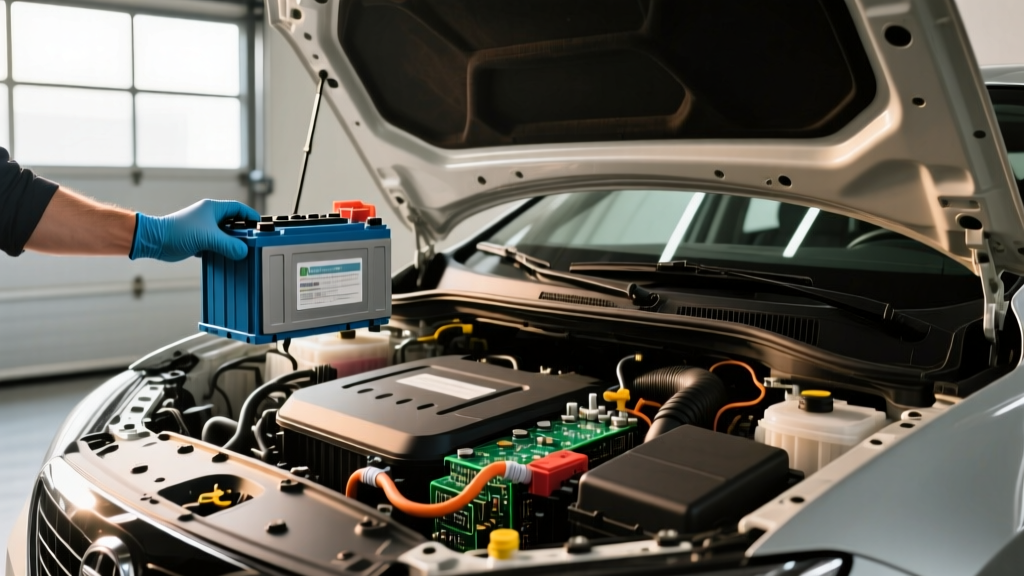
The 2008 Toyota Tundra uses a conventional Group 24F or Group 27F 12V lead-acid battery (depending on engine — the 4.7L V8 and 5.7L V8 have slightly different tray sizes). This battery serves one purpose: cranking the starter motor and powering accessories when the engine is off. It has nothing to do with propulsion.
- Typical cost: $140–$240 for an AGM or flooded lead-acid replacement
- Lifespan: 3–5 years in moderate climates; 2–3 years in extreme heat (Arizona, Texas summers)
- Cold cranking amps (CCA): 580–710 CCA recommended
- Warranty: Typically 2–3 years free replacement from retailers like AutoZone, Interstate, or Optima
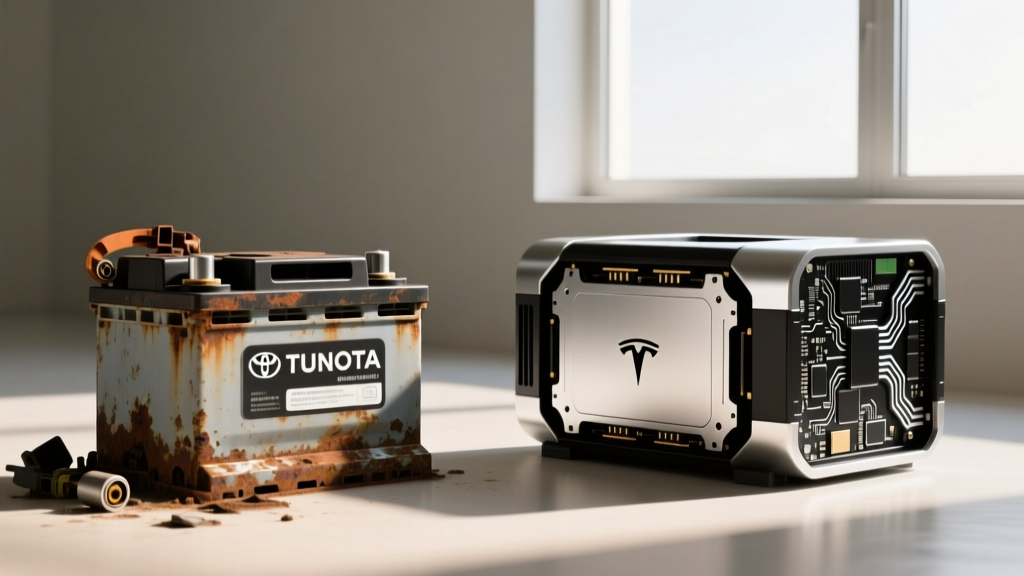
This is a wear item, like brake pads. No one expects a 12V battery to last a decade, and replacement is straightforward. Now compare that to an EV's traction battery — a 60–150 kWh lithium-ion pack that does propel the vehicle and is engineered to last the life of the truck.
EV Traction Batteries: Chemistry, Capacity, and the kWh Distinction
Before comparing chemistries, let's nail the most-misunderstood distinction in EV ownership:
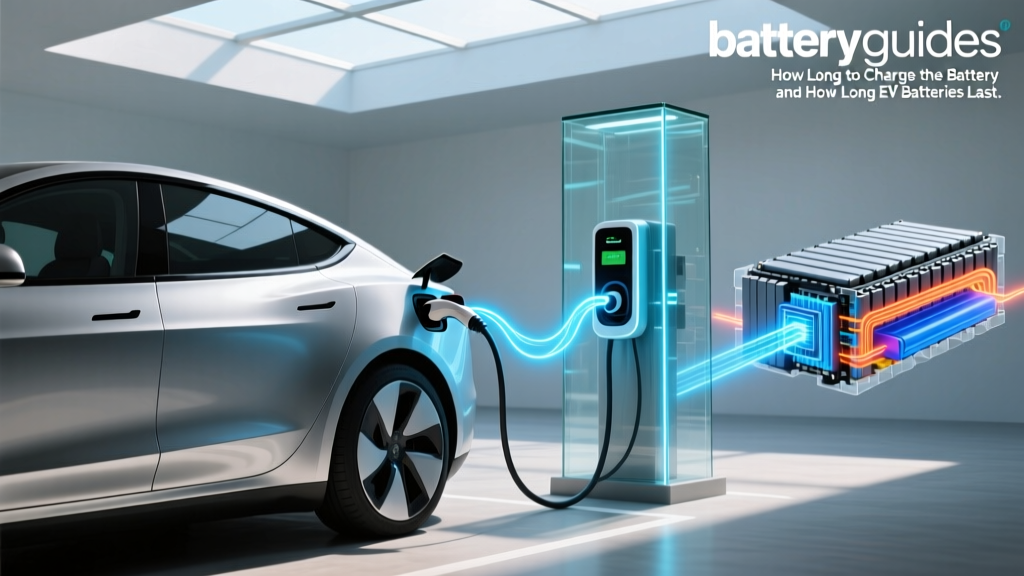
- kWh (kilowatt-hours) = energy capacity. Think of it as the "gallon" equivalent — how much energy the battery holds. A Ford F-150 Lightning Extended Range has a ~131 kWh usable battery.
- kW (kilowatts) = power or charge rate. Think of it as flow speed — how fast energy moves into or out of the battery. A 150 kW DC fast charger delivers energy at that rate (peak, not sustained).
Two dominant lithium-ion chemistries power EVs sold in the US in 2026:
| Attribute | LFP (Lithium Iron Phosphate) | NMC / NCA (Nickel Manganese Cobalt / Nickel Cobalt Aluminum) |
|---|---|---|
| Energy Density | Lower (~160–180 Wh/kg cell-level) | Higher (~220–300 Wh/kg cell-level) |
| Cycle Life | 3,000–5,000+ cycles to 80% SoH | 1,000–2,500 cycles to 80% SoH |
| Cold-Weather Performance | Moderate — greater range loss below 20°F | Better low-temp discharge characteristics |
| Cost (per kWh, pack-level) | ~$95–$115/kWh (2026) | ~$120–$155/kWh (2026) |
| Thermal Stability | Excellent — higher thermal runaway threshold | Good — requires more robust BMS cooling |
| Recommended Daily SoC | 100% OK (LFP tolerates full charge well) | 80% preferred for daily; 100% for trips only |
| Common in (2026 models) | Tesla Model 3/Y RWD, Ford Mustang Mach-E Select, Rivian Standard | Tesla Long Range, F-150 Lightning Ext. Range, Hyundai Ioniq 5, most luxury EVs |
Which is better? Neither is universally superior. LFP wins on longevity, cost, and safety — ideal for daily commuters who charge at home and don't need maximum range. NMC/NCA wins on energy density and cold-weather efficiency — better for long-range models and buyers in northern climates. The trade-off is real: a Tesla Model 3 RWD with LFP sacrifices ~40 miles of EPA range versus the Long Range NMC variant, but gains thousands of dollars in lower purchase price and potentially double the cycle life.
How Long Do EV Batteries Last? Real Degradation Data
EV batteries don't "die" suddenly like a 12V lead-acid battery. They gradually lose capacity — measured as State of Health (SoH), where 100% is factory-new capacity. Most manufacturers define end-of-life as falling below 70% SoH, but in practice, most packs remain functional well beyond that threshold.
Typical EV battery degradation curve (fleet and owner-reported data, 2020–2025 model years):
- Year 1 / 15,000 miles: ~2–5% capacity loss (initial formation loss)
- Year 3 / 45,000 miles: ~5–8% total loss
- Year 5 / 75,000 miles: ~7–12% total loss
- Year 8 / 120,000 miles: ~10–17% total loss (varies heavily by chemistry and usage)
- Year 10 / 150,000 miles: ~12–22% total loss for NMC; ~8–15% for LFP
These figures come from aggregated fleet data reported by sources like Geotab's EV battery health study and Tesla's own Impact Report. Key takeaway: the steepest degradation occurs in year one, then the curve flattens significantly. A 2022 Tesla Model Y Long Range with 80,000 miles might show 89% SoH — meaning its 330-mile EPA range is now realistically ~294 miles. Still very usable.
For context, the average US driver covers ~13,500 miles per year (per FHWA data). At that rate, reaching 150,000 miles takes over 11 years — and most EV batteries will retain 78–88% of original capacity at that point.
Battery Warranty Coverage: What's Protected and for How Long
Federal law mandates that EV battery warranties cover a minimum of 8 years / 100,000 miles (in CARB states like California, New York, and others, it's 10 years / 150,000 miles for certain emission-related components, though battery-specific terms vary). Here's how major manufacturers structure coverage in 2026:
| Manufacturer | Warranty Period | Capacity Retention Threshold | Notes |
|---|---|---|---|
| Tesla (Model 3/Y RWD — LFP) | 8 yr / 100,000 mi | 70% SoH | Transferable to second owner |
| Tesla (Long Range / Performance — NMC) | 8 yr / 120,000 mi | 70% SoH | Higher mileage cap on AWD models |
| Ford (F-150 Lightning, Mach-E) | 8 yr / 100,000 mi | 70% SoH | Covers battery and hybrid/electric components |
| Hyundai / Kia (Ioniq 5, EV6, EV9) | 10 yr / 100,000 mi | 70% SoH | Among the longest coverage in the US market |
| GM (Ultium-based: Silverado EV, Blazer EV, Equinox EV) | 8 yr / 100,000 mi | 70% SoH | Some commercial fleet models carry extended terms |
| Rivian (R1T, R1S) | 8 yr / 120,000 mi | 70% SoH | Covers module-level replacement if needed |
What triggers a warranty claim? If your battery falls below the stated SoH threshold within the coverage period, the manufacturer will repair or replace the pack (or individual modules, depending on architecture) at no cost. In practice, warranty claims for capacity loss are rare — most degradation stays above the 70% line within the warranty window.
Important caveat: warranties cover defects and abnormal degradation. Physical damage (collision, flood, rodent damage to wiring), unauthorized modifications, or failure to follow basic maintenance guidelines may void coverage. Always check your specific owner's manual and warranty booklet.
EV Battery Replacement Cost: The Numbers and the Reality
This is where fear-mongering peaks, so let's ground the discussion in actual data. Yes, an EV battery pack is expensive. But context matters enormously:
| Vehicle / Battery Size | Approximate Replacement Cost (2026) | When Is It Typically Needed? |
|---|---|---|
| Tesla Model 3 RWD (~60 kWh LFP) | $12,000–$16,000 | Rarely before 200,000+ mi; most packs outlive the vehicle |
| Tesla Model Y LR (~82 kWh NMC) | $16,000–$22,000 | Uncommon within first 150,000 mi |
| Ford F-150 Lightning Ext. Range (~131 kWh NMC) | $25,000–$35,000 | Very few replacements reported; fleet data shows <1% failure rate |
| Hyundai Ioniq 5 (~77.4 kWh NMC) | $15,000–$20,000 | Module-level repair often possible, reducing cost |
| Chevrolet Bolt EV/EUV (~65 kWh NMC) | $14,000–$17,000 | Recall-related replacements were free; organic failure is rare |
| Rivian R1T (~135 kWh NMC) | $28,000–$38,000 | Module-level service architecture reduces full-pack swaps |
The honest reality: According to data aggregated by Consumer Reports and warranty claim rates published by major automakers, fewer than 2–3% of EV batteries require replacement within the first 10 years or 150,000 miles. Most packs retain enough capacity to remain functional for 200,000+ miles. Compare this to a gas truck's engine or transmission, which may require a $4,000–$8,000 overhaul at similar mileage — but receives far less hand-wringing in online forums.
If you're cross-shopping a used 2008 Toyota Tundra (where a transmission rebuild runs $3,000–$5,000 and a new engine $5,000–$8,000) against a modern EV pickup, the battery replacement conversation deserves proportional context. Both vehicles face major component costs at high mileage; EVs simply concentrate that cost in one component rather than spread across engine, transmission, exhaust, and fuel system.
Factors That Affect EV Battery Lifespan
Not all miles are created equal. How you charge, drive, and store your EV significantly impacts long-term battery health:
- DC fast-charging frequency: Occasional DC fast charging (1–2 times per week) has minimal impact. Daily use of 150+ kW chargers accelerates degradation by an estimated 1–3% over 100,000 miles compared to Level 2 home charging. Use fast chargers for road trips; rely on Level 2 for daily needs.
- State of Charge habits: For NMC/NCA batteries, keeping SoC between 20–80% for daily use minimizes stress. LFP batteries tolerate 100% SoC well and actually benefit from periodic full charges for cell balancing. Avoid leaving any EV at 100% SoC for days in hot weather.
- Extreme temperatures: Sustained exposure to ambient temperatures above 95°F accelerates chemical degradation. Battery thermal management systems mitigate this, but parking in shade or a garage extends pack life. Cold weather reduces range temporarily (20–35% loss below 20°F) but does not cause permanent damage.
- Deep discharges: Routinely draining below 10% SoH stresses lithium-ion cells. Plug in when you can; don't wait for the battery warning light habitually.
- Preconditioning: Using your EV's preconditioning feature (warming or cooling the battery before fast charging) optimizes charge speed and reduces thermal stress. Tesla, Ford, Hyundai, and Rivian all include this feature.
How to Check and Monitor Your EV's Battery Health
Most EVs provide some form of State of Health (SoH) visibility, though the level of detail varies:
- Tesla: The mobile app shows estimated range at 100% charge, which you can compare to the original EPA figure. Third-party apps like Tessie or TeslaFi calculate SoH more precisely using energy-in vs. energy-out data from the vehicle's API.
- Hyundai / Kia: The infotainment system's EV diagnostics menu includes a battery health percentage (on 2023+ models). Dealers can pull a detailed SoH report during service visits.
- Ford: The FordPass app provides battery status. For a granular SoH reading, request a Battery Health Report from a Ford EV-certified dealer.
- OBD-II scanners: Devices like the OBDeleven or dedicated EV tools (e.g., EVBattScan) can read battery management system (BMS) data on many models, showing individual cell voltages and estimated SoH.
- Dealer diagnostic: Any authorized service center can run a full battery health check, typically free during warranty-period service visits. Request this before purchasing a used EV.
Pro tip for used-EV buyers: Before purchasing any used electric vehicle, request a battery SoH report from the seller or a dealer. A 2021 Tesla Model Y showing 92% SoH at 40,000 miles is healthy; one at 84% SoH at the same mileage may indicate heavy fast-charging use or thermal exposure worth investigating.
What's Next: Solid-State and Silicon-Anode Batteries
Emerging battery technologies promise step-change improvements, but realistic timelines matter:
- Solid-state batteries: These replace the liquid electrolyte with a solid material, offering higher energy density (~400+ Wh/kg projected), faster charging, and improved safety. Toyota, Samsung SDI, and QuantumScape are leading development. Toyota has announced a solid-state EV for 2027–2028 with ~750 km (466 mi) range and 10-minute 10–80% charging — but production volumes will be extremely limited initially, with mainstream availability not expected before 2030. These are announced/preliminary targets, not shipping products.
- Silicon-anode batteries: Companies like Sila Nanotechnologies and Group14 are replacing graphite anodes with silicon-dominant composites, boosting energy density 20–40%. These are entering production in 2025–2026 in limited applications (Mercedes G-Class EV, select consumer electronics). Wider automotive adoption is expected by 2028–2030.
- Sodium-ion batteries: CATL and others are commercializing sodium-ion packs for lower-cost, shorter-range EVs. These offer reduced energy density but eliminate cobalt and nickel entirely. Best suited for urban commuter vehicles and fleet applications; unlikely to appear in US-market trucks or long-range sedans before 2028.
For buyers shopping today, current lithium-ion technology (both LFP and NMC) is mature, well-warrantied, and proven over billions of real-world miles. Waiting for solid-state means waiting years for limited-availability, premium-priced vehicles. The battery in a 2026 EV will serve you well for a decade or more.
Frequently Asked Questions
How long do EV batteries last in years and miles?
Most modern EV batteries retain 78–88% of original capacity at 150,000 miles (roughly 11 years of average US driving). LFP chemistry packs often outperform this, with some fleet data showing 85%+ SoH at 200,000 miles. Federal warranty requirements mandate coverage for at least 8 years / 100,000 miles.
How much does an EV battery cost to replace?
Full-pack replacement ranges from ~$12,000 for a smaller pack (Tesla Model 3 RWD, 60 kWh LFP) to ~$38,000 for a large pack (Rivian R1T, 135 kWh NMC). However, fewer than 3% of EV batteries require replacement within the first 10 years. Module-level repairs, where supported, can cost 40–60% less than a full pack swap.
What does the EV battery warranty cover?
Manufacturer warranties cover defects and abnormal capacity degradation — typically defined as falling below 70% State of Health within the warranty period (8 years / 100,000 miles for most brands; 10 years / 100,000 miles for Hyundai/Kia). Physical damage, unauthorized modifications, and neglect may void coverage.
How do I check and maximize my EV battery health?
Monitor SoH through your vehicle's app, infotainment diagnostics, or dealer service reports. Maximize longevity by favoring Level 2 home charging over daily DC fast charging, keeping NMC batteries between 20–80% SoC for daily use, avoiding prolonged 100% SoC in hot weather, and using preconditioning before fast charging. LFP owners can charge to 100% regularly without concern.
LFP vs NMC — which battery chemistry is better?
It depends on your use case. Choose LFP if you prioritize longevity (3,000–5,000+ cycles), lower cost, and daily home charging — and can accept slightly lower range and reduced cold-weather efficiency. Choose NMC/NCA if you need maximum range, better cold-weather performance, or faster DC charging speeds — and are willing to manage SoC between 20–80% for daily driving. Both chemistries are proven and well-warrantied in 2026 models.
Is a 2008 Toyota Tundra battery the same as an EV battery?
No. The 2008 Tundra uses a 12V lead-acid battery (Group 24F/27F, ~$150–$240) solely for engine cranking and accessories. An EV traction battery is a high-voltage lithium-ion pack (60–150+ kWh, $12,000–$38,000) that propels the vehicle. EVs also have a separate 12V auxiliary battery for onboard electronics, but the traction battery is an entirely different system.