When the 2006 Ford Escape Hybrid rolled off the assembly line, it carried a 1.3 kWh nickel-metal hydride (NiMH) pack that most industry skeptics assumed would need replacement within five years. Two decades later, many of those original packs are still functioning — degraded, certainly, but still propelling the vehicle. That single data point has reshaped how engineers, buyers, and analysts think about electrified-vehicle battery longevity.
If you've landed here searching for information on the 2006 Ford Escape Hybrid battery, you'll find specifics on that pack below. But the bigger story is what twenty years of real-world degradation data — from that NiMH pack to today's 100+ kWh NMC and LFP lithium-ion batteries — tells us about how long modern EV batteries actually last, what they cost to replace, and how to maximize their lifespan.
The 2006 Ford Escape Hybrid Battery: Specs, Lifespan, and Lessons
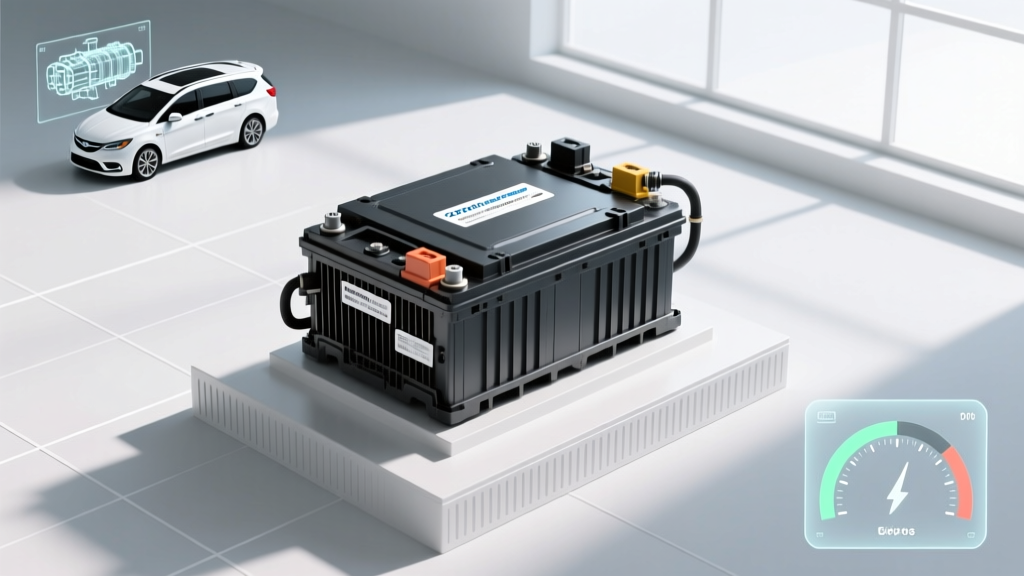
The 2006 Ford Escape Hybrid used a Sanyo-built NiMH battery pack rated at approximately 1.3 kWh (usable capacity roughly 0.9 kWh) and 330 volts nominal. It was a mild full-hybrid system — the battery enabled low-speed electric-only driving and assisted the 2.3L Atkinson-cycle engine during acceleration, but it was never designed for sustained EV-only range.
Ford warranted the hybrid battery for 8 years or 100,000 miles (10 years/150,000 miles in California-emissions states). In practice, fleet data from New York City taxis — which ran Escape Hybrids well past 200,000 miles — showed capacity retention of approximately 70-75% at the 150,000-mile mark. Many packs survived the life of the vehicle without replacement.
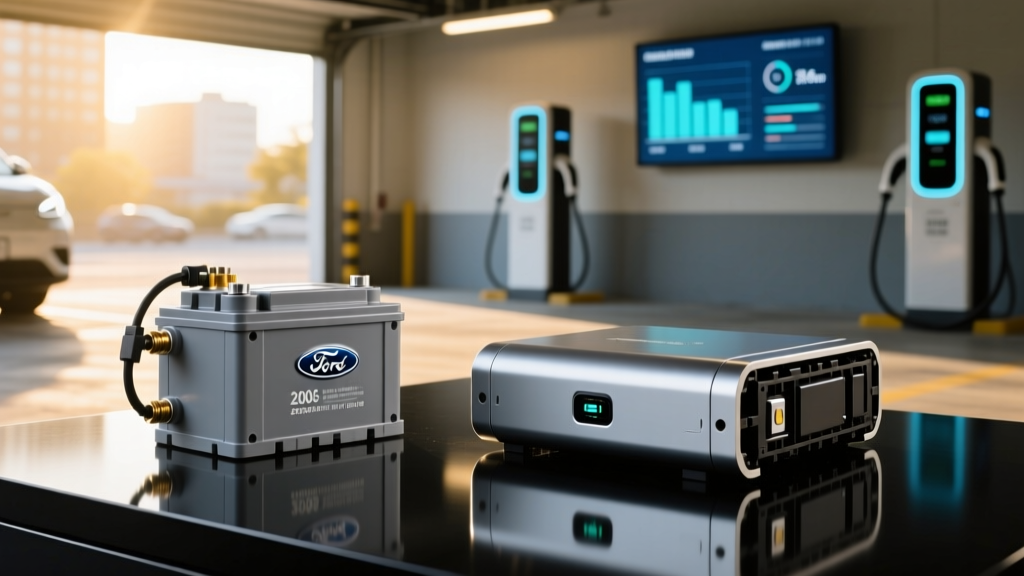
2006 Ford Escape Hybrid Battery — Quick Specs
- Chemistry: Nickel-Metal Hydride (NiMH)
- Total capacity: ~1.3 kWh (usable ~0.9 kWh)
- Nominal voltage: 330V
- Warranty: 8 yr / 100,000 mi (10/150k in CARB states)
- Replacement cost (2026): $2,500–$4,500 (remanufactured or new-old-stock)
- Typical lifespan observed: 150,000–250,000+ miles before failure
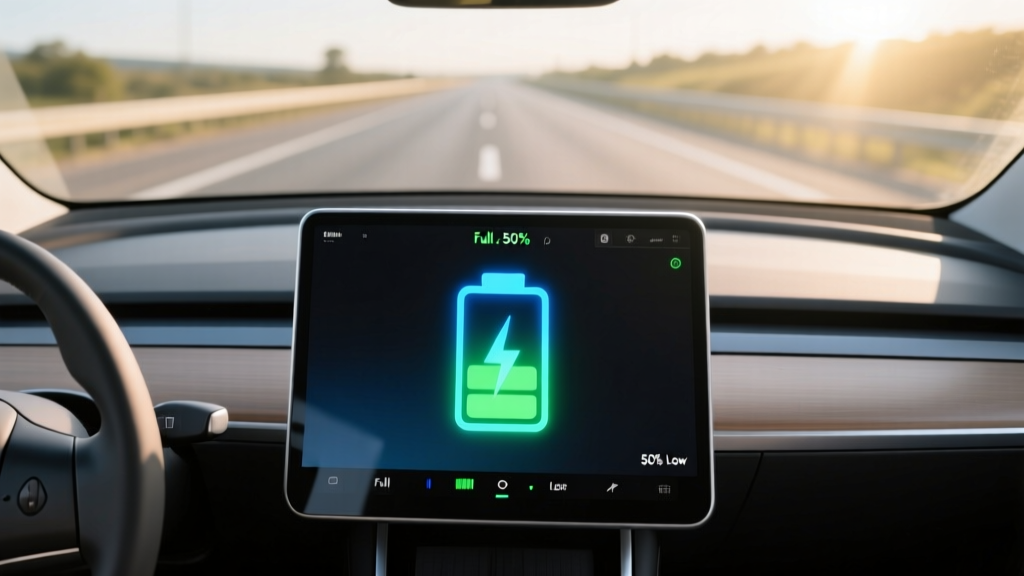
The Escape Hybrid's longevity surprised the industry because NiMH chemistry is generally less energy-dense and more self-discharge-prone than modern lithium-ion. Its success was largely due to conservative state-of-charge management: the vehicle's battery management system (BMS) kept the pack between roughly 40% and 60% SoC at all times, avoiding the high and low extremes that accelerate degradation.
That conservative-buffer strategy is exactly what modern EV manufacturers have adopted — and it's the first principle every EV owner should understand.
Modern EV Battery Chemistry: LFP vs NMC vs NCA
Today's battery electric vehicles use lithium-ion cells in two dominant chemistries: LFP (lithium iron phosphate, LiFePO4) and NMC/NCA (nickel manganese cobalt / nickel cobalt aluminum). The chemistry in your EV determines its energy density, cycle life, cold-weather behavior, and cost. Here's how they compare:
| Attribute | LFP (Lithium Iron Phosphate) | NMC / NCA (Nickel-based) |
|---|---|---|
| Energy density | Lower (~160 Wh/kg cell-level) | Higher (~250-300 Wh/kg cell-level) |
| Cycle life | 3,000–6,000+ cycles to 80% SoH | 1,000–2,500 cycles to 80% SoH |
| Cold performance | More range loss below 32°F; slower charging in cold | Better cold-weather range retention and charge acceptance |
| Thermal stability | Excellent — very low thermal runaway risk | Good — requires more robust BMS thermal management |
| Cost | Lower — no cobalt or nickel | Higher — commodity-priced nickel and cobalt |
| SoC recommendation | Can charge to 100% regularly (recommended for calibration) | Best kept at 80% daily; 100% only for trips |
| Typical 2026 vehicles | Tesla Model 3/Y RWD, Ford Mustang Mach-E Select (base), BYD models | Tesla Long Range, Hyundai Ioniq 5/6, Rivian, most premium EVs |
Which is better? It depends on your use case. If you drive moderate daily distances, have home charging, and live in a temperate or warm climate, LFP's superior cycle life and lower cost make it the pragmatic choice. If you need maximum range per charge, frequently drive in cold weather, or tow, NMC/NCA's energy density is worth the trade-off. Neither is universally superior — they're engineering compromises optimized for different priorities.
How Long Do EV Batteries Actually Last? Degradation Data
The most common question from prospective EV buyers is: "Will I need a new battery, and when?" Two decades of data — from the 2006 Ford Escape Hybrid's NiMH pack to 2025-era lithium-ion BEVs — provide a clear answer: most EV batteries outlast the vehicle they're installed in.
Here's what real-world degradation data shows across different chemistries and mileages:
Observed Battery Degradation — Real-World Data Points
- Geotab fleet study (2024, 10,000+ EVs): Average capacity loss of ~1.8% per year, or roughly 12-14% over 8 years under mixed use. Source: Geotab
- Tesla Model S/X (NMC/NCA, 2013-2020): ~10% degradation at 150,000 miles, then the curve flattens significantly. Tesla's own 2023 Impact Report cited ~12% loss at 200,000 miles.
- Nissan Leaf (early passive-cooled NMC, 2011-2017): Faster degradation — some 24 kWh packs lost 20-30% capacity by year 5, especially in hot climates. Active thermal management in later models corrected this.
- Chevrolet Bolt (NMC, 60-65 kWh, 2017-2023): Recalled for fire risk (manufacturing defect, not normal degradation); post-recall replacement packs show minimal degradation at current mileages.
- LFP packs (Tesla Model 3 RWD, BYD): Early fleet data suggests <1% annual degradation under normal use, with projections of 90%+ SoH at 200,000 miles.
- 2006 Ford Escape Hybrid (NiMH): ~25-30% loss over 150,000-200,000 miles — still functional, just reduced electric-assist contribution.
The pattern is consistent: lithium-ion EV batteries lose capacity most rapidly in the first 1-2 years (roughly 3-5%), then degradation slows to a nearly linear 1-2% per year. A modern EV battery reaching 70-75% State of Health at 200,000 miles is typical — and a pack at 75% capacity still provides usable daily range for most drivers.
Battery Warranty Terms: What's Actually Covered
Federal law mandates that EV and hybrid battery warranties cover a minimum of 8 years or 100,000 miles. In California Air Resources Board (CARB) states — which include California, New York, Massachusetts, and over a dozen others — the requirement extends to 10 years or 150,000 miles.
But warranty details vary significantly by manufacturer. Here's what to look for:
| Manufacturer (2025-2026 Models) | Warranty Term | Capacity Threshold | Notes |
|---|---|---|---|
| Tesla (Model 3/Y, Model S/X) | 8 yr / 100k-150k mi (varies by model) | 70% retention | Long Range/Performance: 120k mi; RWD: 100k mi |
| Hyundai / Kia (Ioniq 5/6, EV6, EV9) | 10 yr / 100,000 mi | 70% retention | Among the longest standard warranties in the US market |
| Ford (Mustang Mach-E, F-150 Lightning) | 8 yr / 100,000 mi | 70% retention | Covers battery components and capacity loss below threshold |
| GM (Chevy Equinox EV, Blazer EV, Silverado EV) | 8 yr / 100,000 mi | 60-70% retention (varies) | Ultium platform; check specific model terms |
| Rivian (R1T, R1S) | 8 yr / 120,000 mi | 70% retention | Higher mileage threshold than most competitors |
| Toyota (bZ4X, Prius PHEV) | 10 yr / 150,000 mi | 70% retention | Toyota extends hybrid/EV battery warranty nationally to 10/150k |
The critical detail is the capacity retention threshold. Most manufacturers define a warranty claim as the battery falling below 70% of its original capacity within the warranty period. If your 80 kWh pack degrades to 58 kWh (72.5%), that's within spec — no replacement. Below 56 kWh (70%), the manufacturer must repair or replace it at no cost. According to the U.S. Department of Energy, the vast majority of EV batteries never trigger a warranty claim.
EV Battery Replacement Cost: What to Budget For
Replacement cost is the single biggest fear among prospective EV buyers. The reality, backed by data: most EV batteries are never replaced. When they are, costs have been declining steadily.
| Vehicle / Pack Size | Battery Capacity | Replacement Cost Range (2025-2026) | When Typically Needed |
|---|---|---|---|
| 2006 Ford Escape Hybrid | 1.3 kWh NiMH | $2,500 – $4,500 | 200,000+ mi or 18+ years |
| Nissan Leaf (24-40 kWh) | 24-40 kWh NMC | $6,500 – $9,000 | 100,000-150,000 mi (early models, hot climates) |
| Tesla Model 3 RWD (LFP) | ~60 kWh LFP | $8,000 – $12,000 | Rarely needed; projected 300,000+ mi life |
| Tesla Model Y Long Range (NMC) | ~75-82 kWh NMC | $12,000 – $16,000 | Rarely needed; 200,000+ mi typical |
| Hyundai Ioniq 5 (NMC) | 77.4 kWh NMC | $10,000 – $15,000 | Rarely needed; covered under 10/100k warranty |
| Ford F-150 Lightning (extended) | ~131 kWh NMC | $18,000 – $28,000 | Rarely needed; largest consumer packs on market |
| Chevrolet Bolt EV/EUV | 65 kWh NMC | $14,000 – $16,000 (pre-recall); many replaced under recall at no cost | Recall-related, not normal degradation |
For context, the average transaction price of a new vehicle in 2026 exceeds $48,000. A battery replacement at $10,000-$16,000 — needed by a small minority of owners, typically well past the 150,000-mile mark — is comparable to an engine or transmission replacement on a conventional vehicle. The difference is that EV batteries rarely fail catastrophically; they slowly lose capacity, meaning the car remains drivable even with a degraded pack.
Battery pack prices have fallen from over $1,200/kWh in 2010 to approximately $115-$135/kWh at the pack level in 2025, according to BloombergNEF. This downward trend continues, meaning replacement costs in 2030 will likely be significantly lower than today's figures.
Factors That Affect EV Battery Lifespan
Not all degradation is equal. How you charge, drive, and store your EV meaningfully impacts how long the battery retains useful capacity. Here are the primary factors, ranked by impact:
Battery Longevity Checklist — Maximize Your Pack's Life
- Avoid sustained 100% SoC (NMC/NCA only): Daily charging to 80% is ideal. Charge to 100% only when you need the full range for a trip, and drive soon after reaching full charge. LFP packs are an exception — manufacturers recommend periodic 100% charges for BMS cell-balancing calibration.
- Minimize DC fast charging when Level 2 is available: DC fast charging at 150+ kW generates significant heat. Occasional road-trip fast charging is fine, but daily reliance on DCFC accelerates degradation. Level 2 home charging (7-19 kW) is gentler on cells.
- Avoid deep discharges below 10%: Just as 100% SoC stresses cells, sitting at very low SoC causes copper dissolution in the anode. Plug in when you reach 15-20% rather than running the pack to near-empty.
- Manage extreme temperatures: Park in shade or a garage during summer heat; use preconditioning (plugged in) during winter cold. Most EVs have active thermal management, but it works best when the car is plugged in and can draw grid power for climate control rather than battery power.
- Don't store at extreme SoC: If leaving the vehicle unused for weeks, set the charge limit to 50-60%. Long-term storage at 100% or near 0% accelerates calendar degradation.
- Use preconditioning before DC fast charging: Most EVs (Tesla, Hyundai/Kia, Ford, GM) will warm or cool the battery to optimal temperature when you navigate to a fast charger. This improves charge speed AND reduces thermal stress on cells.
The 2006 Ford Escape Hybrid inadvertently demonstrated the value of these principles. Its BMS kept the NiMH pack in a narrow 40-60% SoC window — the electrochemical "sweet spot" that minimizes stress. Modern EVs offer much more usable capacity, but the same physics applies: the less time a lithium-ion cell spends at voltage extremes, the longer it lasts.
How to Check and Monitor Battery State of Health (SoH)
State of Health (SoH) is the percentage of original capacity your battery currently holds. A new EV starts at 100% SoH; a pack at 85% SoH has lost 15% of its original capacity. Here's how to check it:
- In-vehicle displays: Tesla provides a rated-range figure that indirectly reflects SoH. Hyundai/Kia's infotainment system includes a battery-health readout on newer models. Some vehicles display SoH as a percentage in the service or diagnostics menu.
- Mobile apps and OBD-II readers: Third-party tools like LeafSpy (Nissan Leaf), TeslaFi, or generic OBD-II scanners with EV support (e.g., OBDeleven, Carista) can read battery management system data directly, including SoH, cell voltage variance, and cycle count.
- Dealer diagnostics: Any authorized service center can run a battery health report. Request one during routine service — it's typically free or low-cost and provides a detailed cell-by-cell analysis.
- Manual calculation: Charge to 100% (on an NMC vehicle, do this occasionally for measurement, not daily), note the displayed range, and compare it to the original EPA-rated range. If your Ioniq 5 originally showed 303 miles at 100% and now shows 270, your SoH is approximately 89%. Account for temperature — cold weather temporarily reduces displayed range without indicating permanent degradation.
Monitoring SoH every few months is sufficient. Daily obsession with fractional-percentage changes is unnecessary; degradation is slow and non-linear.
Emerging Battery Technology: Solid-State and Silicon Anodes
Next-generation battery technologies are in active development, but it's critical to separate laboratory progress from production reality:
- Solid-state batteries: These replace the liquid electrolyte with a solid material, promising higher energy density (potentially 400-500 Wh/kg), faster charging, and improved safety. Toyota has announced limited solid-state production for 2027-2028, initially in low volumes for premium models. Samsung SDI and QuantumScape are targeting similar timelines. Widespread, affordable solid-state EVs are realistically a 2030+ proposition.
- Silicon-dominant anodes: Replacing graphite anodes with silicon can boost energy density by 20-40%. Companies like Sila Nanotechnologies and Group14 are supplying silicon-composite anode materials to manufacturers now, with incremental adoption in 2025-2027 model-year vehicles. This is an evolution, not a revolution — expect gradual range improvements rather than a step-change.
- Sodium-ion batteries: CATL and BYD are producing sodium-ion packs for lower-cost, shorter-range EVs (primarily in China). These eliminate lithium entirely, reducing cost and supply-chain risk, but at lower energy density. US-market availability remains uncertain as of 2026.
For current buyers: don't delay an EV purchase waiting for solid-state. Today's lithium-ion packs — both LFP and NMC — already deliver 200,000+ mile lifespans with manageable degradation. The incremental improvements coming in the next 3-5 years will be meaningful but not transformative enough to justify waiting if you need a vehicle now.
Frequently Asked Questions
How long do EV batteries last in years and miles?
Modern lithium-ion EV batteries (both LFP and NMC) typically retain 70-85% of their original capacity at 200,000 miles or 12-15 years of use. Fleet data from Geotab, Tesla's Impact Report, and independent studies consistently show annual degradation of 1-2% after the initial break-in period. The 2006 Ford Escape Hybrid's NiMH pack demonstrated similar longevity — many are still functioning at 18-20 years old. Most EV batteries will outlast the vehicle's body, interior, and suspension components.
How much does an EV battery cost to replace in 2026?
Replacement costs range from approximately $8,000 for a ~60 kWh LFP pack (Tesla Model 3 RWD) to $28,000 for a ~131 kWh extended-range NMC pack (Ford F-150 Lightning). Mid-size crossovers like the Hyundai Ioniq 5 or Tesla Model Y typically fall in the $10,000-$16,000 range. These costs have been declining ~10-15% annually and will continue to fall. Critically, the vast majority of EV owners never need a battery replacement — the pack degrades gradually rather than failing outright.
What does the EV battery warranty actually cover?
Federal law requires a minimum 8-year/100,000-mile warranty on EV and hybrid batteries. The warranty covers capacity loss below a specified threshold — typically 70% of original capacity. If your battery falls below that threshold within the warranty period, the manufacturer must repair or replace it at no cost. Some manufacturers (Hyundai, Kia, Toyota) offer 10-year/100,000-150,000-mile coverage. The warranty does not cover damage from accidents, modifications, or improper charging equipment. Always check the specific terms for your model year on the manufacturer's website or via fueleconomy.gov.
How do I check and maximize my EV battery health?
Check SoH through your vehicle's infotainment diagnostics menu, a third-party OBD-II app, or a dealer diagnostic report. To maximize longevity: charge NMC/NCA batteries to 80% daily (100% only for trips); charge LFP batteries to 100% periodically for calibration; minimize DC fast charging when Level 2 is available; avoid leaving the vehicle at very high or very low SoC for extended periods; use preconditioning in extreme temperatures; and keep the vehicle plugged in during heat waves or cold snaps so the thermal management system can draw grid power.
LFP vs NMC — which battery chemistry is better for me?
Choose LFP if: you want maximum cycle life (3,000-6,000+ cycles), lower purchase price, the ability to charge to 100% without concern, and you live in a moderate or warm climate. LFP is ideal for daily commuting with home charging. Choose NMC/NCA if: you need maximum range per charge (300+ miles), frequently drive in cold weather (below 32°F), tow heavy loads, or take regular road trips where energy density matters. NMC is the better choice for long-range and performance-oriented use cases. Neither chemistry is "better" universally — the right choice depends on your driving patterns and climate.
Is the 2006 Ford Escape Hybrid battery still available for replacement?
Yes, though options are narrowing. Remanufactured NiMH packs are available from specialty hybrid-battery suppliers for $2,500-$4,500 installed. Some Ford dealers may still source new-old-stock units, though availability is declining as the model ages. Independent hybrid shops often offer the best combination of price and expertise for Escape Hybrid battery replacement. Given the vehicle's age, weigh the replacement cost against the vehicle's current market value before committing.