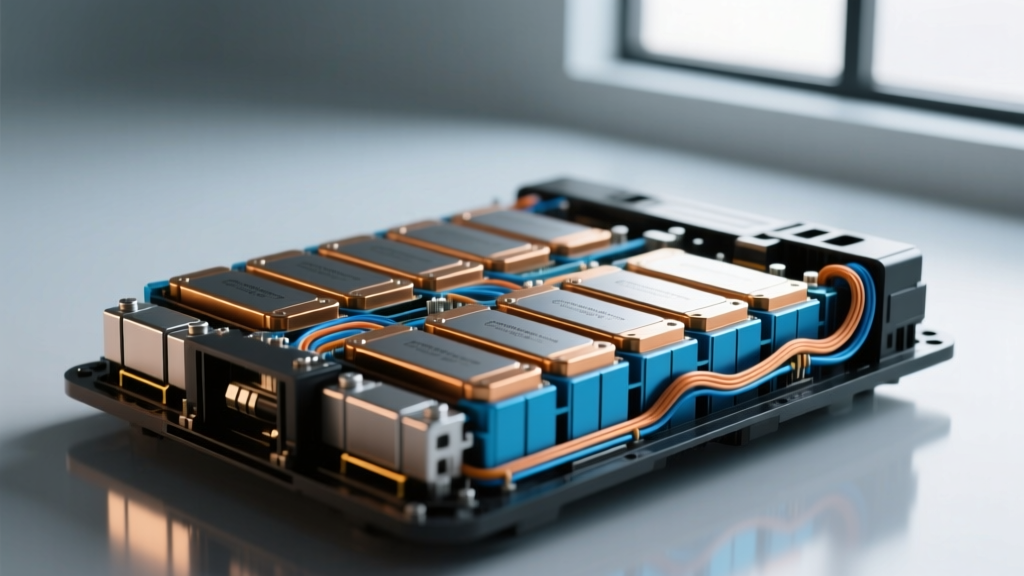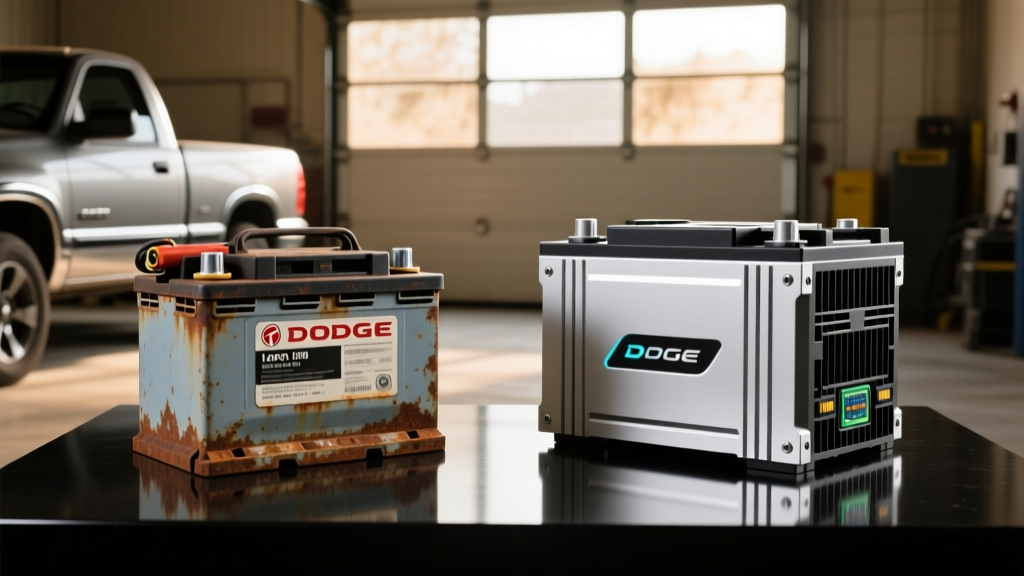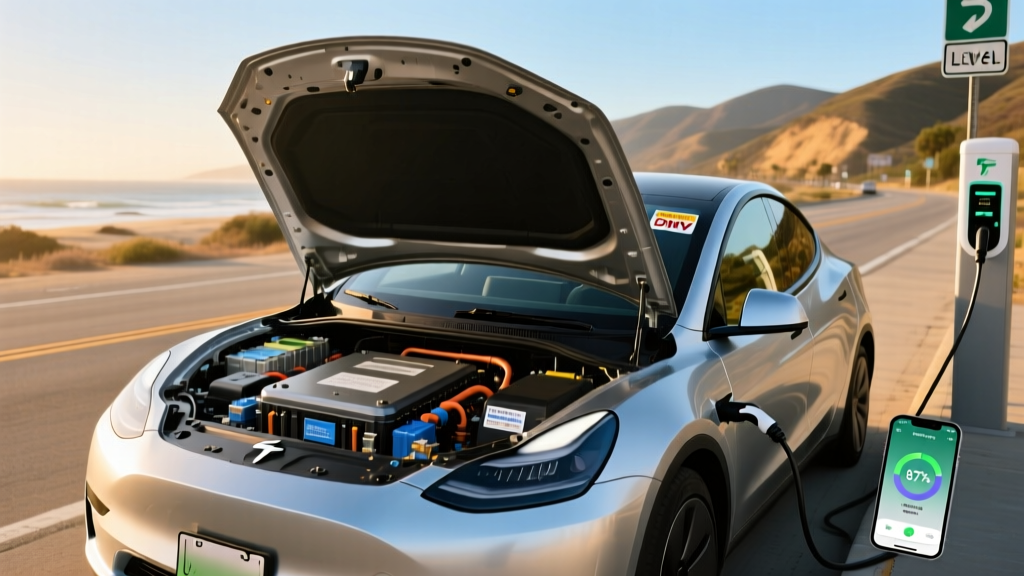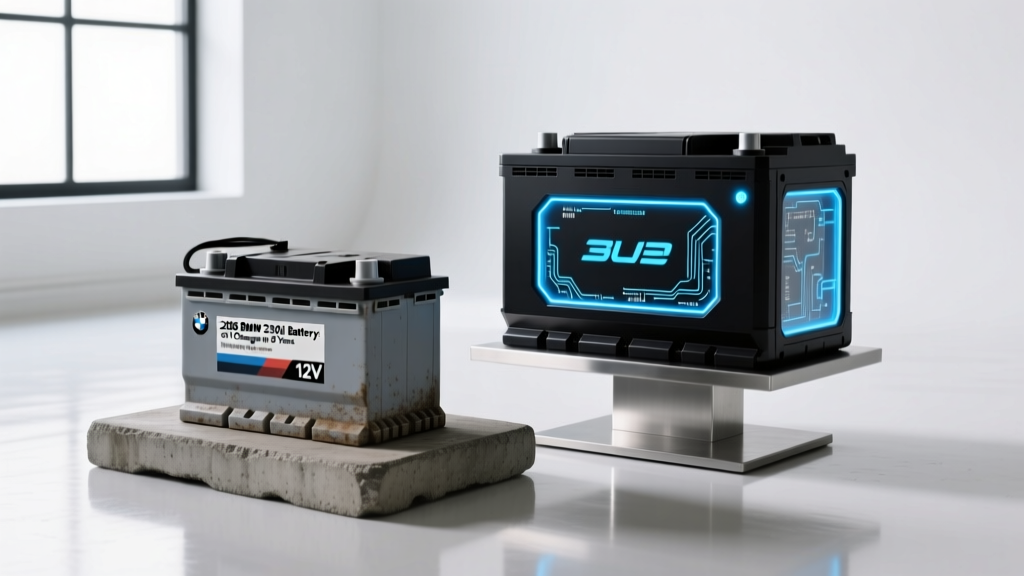
If you've ever searched for a 2006 BMW 330i battery, you were probably looking for a 12-volt lead-acid unit — roughly 70 Ah, weighing about 45 pounds, and costing $150–$250 at an auto parts store. That battery's only job was cranking a 3.0-liter inline-six and running accessories when the alternator wasn't spinning. Twenty years later, the word "battery" in an automotive context means something radically different: a 60–120 kWh high-voltage lithium-ion traction pack that powers the entire vehicle, weighs 800–1,200 pounds, and costs $10,000–$25,000 to replace.
This guide uses that contrast to explain modern EV battery technology end to end — chemistry, degradation, warranties, replacement costs, and how to maximize longevity. Whether you're maintaining an aging E90 330i or shopping for a 2026 EV, understanding what's inside the pack is the single most important factor in your ownership experience.
The 2006 BMW 330i Battery: A Baseline for Comparison
The 2006 BMW 330i (E90 generation) used a conventional flooded lead-acid or AGM (absorbed glass mat) 12V battery, typically group size H8/49, rated around 80 Ah and 800 CCA (cold cranking amps). It powered the starter motor, ECU, lights, and infotainment. Total energy capacity: roughly 0.96 kWh — less than 1% of what a modern EV carries.
Typical lifespan for that 12V battery was 3–5 years, with replacement running $150–$300 depending on brand and chemistry. The E90 was notorious for parasitic drain from its iDrive system and comfort-access modules, which could kill a marginal battery over a week of sitting. BMW eventually required battery registration via OBD-II tool after replacement so the car's intelligent battery sensor (IBS) could adjust charging profiles.
Fast-forward to a 2026 EV like the BMW i4 eDrive40: its high-voltage traction battery stores 83.9 kWh of usable energy (NMC chemistry), powers a 335-hp electric motor, and is warranted for 8 years or 100,000 miles. It also has a separate 12V lithium-ion auxiliary battery for low-voltage systems — but that's a different discussion. The traction pack is what matters here.
EV Battery Chemistry Explained: LFP vs NMC vs NCA
Modern EV traction batteries use lithium-ion cells, but not all lithium-ion is the same. The cathode chemistry determines energy density, cycle life, thermal stability, cold-weather performance, and cost. In 2026, two chemistries dominate the US market:
| Attribute | NMC / NCA (Nickel Manganese Cobalt / Nickel Cobalt Aluminum) | LFP (Lithium Iron Phosphate) |
|---|---|---|
| Energy Density | Higher (200–300 Wh/kg cell-level) | Lower (150–200 Wh/kg cell-level) |
| Cycle Life | 1,000–2,000 full cycles to 80% capacity | 3,000–5,000+ full cycles to 80% capacity |
| Cold Performance | Better at -10°C and below | Reduced range and slower charging in deep cold |
| Thermal Stability | Good; requires active thermal management | Excellent; inherently more stable |
| Cost (per kWh) | $110–$140 (2026 pack-level) | $80–$110 (2026 pack-level) |
| Typical Use | Long-range, performance, AWD models | Standard-range, fleet, daily-driver models |
| Charging to 100% | Not recommended daily (80% daily limit) | Can charge to 100% regularly without harm |
| Notable 2026 Vehicles | Tesla Model 3 LR, BMW i4, Hyundai Ioniq 5 LR | Tesla Model 3 RWD, Ford Mustang Mach-E SR, BYD models |
The practical trade-off: NMC/NCA gives you more range in the same physical space and handles cold weather better — critical if you live in Minnesota or Maine. LFP gives you dramatically longer cycle life, lower cost, and the freedom to charge to 100% without accelerating degradation. For a daily commuter who charges at home and doesn't need 350 miles of range, LFP is often the smarter pick. For road-trippers and cold-climate drivers, NMC remains the default.
Neither chemistry is universally "better." Your choice depends on driving patterns, climate, and how long you plan to keep the vehicle.
How Long Do EV Batteries Actually Last?
The short answer: longer than most buyers expect, and in most cases, longer than the rest of the car remains economically viable. Data from fleet operators, manufacturer reports, and independent testing consistently show modern liquid-cooled lithium-ion packs retaining 85–92% of original capacity after 100,000 miles.
| Milestone | Typical Capacity Retained (NMC) | Typical Capacity Retained (LFP) | Source Context |
|---|---|---|---|
| 1 year / 15,000 mi | 96–98% | 97–99% | Initial formation loss settles |
| 3 years / 45,000 mi | 92–95% | 95–98% | Linear degradation phase |
| 5 years / 75,000 mi | 88–93% | 92–96% | Still well above warranty threshold |
| 8 years / 100,000 mi | 83–90% | 88–94% | Approaching warranty boundary |
| 10 years / 150,000 mi | 78–87% | 84–92% | Noticeable range reduction; still drivable |
| 15 years / 200,000 mi | 70–82% | 78–88% | Beyond warranty; replacement may be considered |
These figures assume liquid-cooled packs with modern battery management systems (BMS), typical mix of Level 2 home charging and occasional DC fast charging, and operation in moderate climates. Extreme conditions shift these numbers — more on that below.
The key insight: degradation is non-linear. Most packs lose 2–5% in the first year (formation and SEI layer stabilization), then settle into a slow, roughly linear decline of 1–2% per year. According to data compiled by Geotab's fleet analysis of over 10,000 EVs, the average annual degradation rate across chemistries is approximately 1.8% per year — meaning a 300-mile EPA-rated EV would still offer roughly 270 miles after five years.
Battery Warranty Terms: What's Actually Covered
Federal law mandates a minimum 8-year/100,000-mile warranty on EV traction batteries (10 years/150,000 miles in California Air Resources Board states). But the details matter — specifically the capacity retention threshold and what triggers a claim.
| Manufacturer (2026 Models) | Warranty Period | Capacity Threshold | Notes |
|---|---|---|---|
| Tesla (Model 3/Y) | 8 yr / 100,000 mi (SR) or 120,000 mi (LR) | 70% retention | LFP packs on RWD; NMC on LR/AWD |
| BMW (i4, iX) | 8 yr / 100,000 mi | 70% retention | NMC chemistry across lineup |
| Hyundai / Kia (Ioniq 5, EV6) | 10 yr / 100,000 mi | 70% retention | Industry-leading duration |
| Ford (Mach-E, F-150 Lightning) | 8 yr / 100,000 mi | 70% retention | LFP on standard range; NMC on extended |
| GM (Equinox EV, Blazer EV) | 8 yr / 100,000 mi | 60% retention (some trims 70%) | Verify trim-specific terms |
| Rivian (R1S, R1T) | 8 yr / 175,000 mi | 70% retention | Higher mileage cap reflects truck use |
What triggers a warranty replacement? If your pack's State of Health (SoH) drops below the stated threshold within the warranty period, the manufacturer must repair or replace it — typically by swapping in a refurbished pack with capacity above the threshold, not necessarily a brand-new unit. Most warranty claims involve individual module or cell replacement rather than full-pack swaps.
What's NOT covered: Gradual capacity loss above the threshold (e.g., dropping from 100% to 75% over 8 years is normal), damage from accidents, flooding, improper charging equipment, or modifications. Always read the specific warranty booklet for your model year.
EV Battery Replacement Costs: When and How Much
This is where the 2006 BMW 330i comparison becomes stark. That $200 lead-acid battery? Trivial. A modern EV traction pack replacement? A significant financial event — but one that's increasingly rare and increasingly affordable on a per-kWh basis.
| Battery Size / Vehicle Class | 2026 Replacement Cost Range (Parts + Labor) | Typical When Needed | Per-kWh Cost |
|---|---|---|---|
| 50–60 kWh (Standard range sedans/crossovers) | $8,000 – $14,000 | 150,000–250,000+ mi | $140–$230/kWh |
| 70–85 kWh (Long range / mid-size SUVs) | $12,000 – $20,000 | 150,000–250,000+ mi | $140–$235/kWh |
| 90–120 kWh (Large SUVs, trucks, performance) | $16,000 – $28,000 | 150,000–250,000+ mi | $150–$240/kWh |
| LFP packs (various sizes) | $6,000 – $15,000 | 200,000–300,000+ mi | $100–$180/kWh |
Context matters enormously here. According to BloombergNEF's 2025 lithium-ion battery price survey, average pack-level prices fell below $115/kWh in 2025, with continued declines expected. Out-of-warranty replacement prices remain higher because they include dealer labor, diagnostics, shipping, and markup — but the trend is clearly downward.
Most EVs on the road today will never need a full battery replacement. The pack will outlast the vehicle's economic life, or degradation will plateau at a level the owner finds acceptable (a 300-mile EV with 75% SoH still delivers 225 miles — plenty for most commutes). Full-pack replacements are overwhelmingly concentrated in high-mileage fleet vehicles, early-generation EVs with passive air-cooling (like the 2011–2017 Nissan Leaf), or vehicles with manufacturing defects caught under warranty.
Factors That Accelerate (or Slow) Battery Degradation
Not all miles are equal when it comes to battery wear. The following factors have the largest measurable impact on long-term State of Health:
What Hurts Your Battery
- Frequent DC fast charging above 150 kW: High C-rates generate internal heat. Occasional road-trip fast charging is fine; daily 350 kW sessions accelerate calendar aging. Sustained charging at 50–100 kW is a reasonable compromise for frequent fast-charge users.
- Consistently charging to 100% (NMC/NCA only): High state of charge increases cathode stress. For NMC packs, set your daily limit to 80% and charge to 100% only before long trips. LFP packs can and should be charged to 100% regularly — the BMS needs full-charge calibration.
- Deep discharges below 10%: Letting the pack sit at very low SoC causes copper dissolution in the anode current collector. Plug in promptly after a low-charge drive.
- Extreme heat exposure: Parking in 110°F+ ambient for extended periods without thermal management active accelerates electrolyte decomposition. Garage parking helps significantly in desert climates.
- Aggressive driving in extreme cold: Drawing high current from a cold pack causes lithium plating on the anode. Preconditioning (warming the battery before driving or charging) mitigates this.
What Helps Your Battery
- Level 2 home charging at 7–11 kW: The gentlest charging method. Overnight Level 2 is ideal for daily use.
- Keeping SoC between 20% and 80% (NMC): The "middle 60%" is the longevity sweet spot.
- Preconditioning before DC fast charging: Most modern EVs do this automatically when a charger is set as a navigation destination. The battery warms to 25–35°C for optimal charge acceptance and reduced stress.
- Driving regularly: Lithium-ion cells prefer use to sitting. A car driven 30 miles daily degrades slower than one sitting at 90% SoC for weeks.
- Software updates: Manufacturers routinely improve BMS algorithms via OTA updates, optimizing charge profiles and thermal management. Keep your vehicle updated.
Monitoring Your Battery's State of Health (SoH)
State of Health (SoH) is the percentage of original capacity your pack can still hold. A new 80 kWh pack at 90% SoH can store 72 kWh. Here's how to check it:
- In-vehicle displays: Tesla, BMW, Hyundai/Kia, and others offer battery health readouts in the service menu or app. Tesla's service mode (accessible via the software menu) shows nominal full-pack capacity vs. original.
- OBD-II diagnostic tools: Apps like LeafSpy (Nissan), ABRP OBD, or Torque Pro with EV-specific PIDs can read cell-level voltage, pack SoH, and individual module balance. A $30–$50 OBD-II Bluetooth adapter plus a $10–$20 app gives you dealer-level data.
- Dealer diagnostic reports: Request a battery health report during service visits. Most manufacturers can print a cell-by-cell voltage and resistance summary.
- Third-party services: Companies like Recurrent offer ongoing battery health tracking by connecting to your vehicle's telematics, providing range-vs.-SoH trend reports useful for resale valuation.
What to watch for: A sudden drop in SoH (more than 3–4% in a single month) or significant cell imbalance (any cell more than 0.1V below the pack average at full charge) warrants a dealer visit. Gradual, linear decline is normal and expected.
Emerging Battery Tech: Solid-State, Silicon Anodes, and What's Real
The EV battery landscape is evolving rapidly, but it's critical to separate announced technology from what's actually available in a 2026 vehicle you can buy today.
Silicon-anode batteries: Companies like Sila Nanotechnologies and Group14 are supplying silicon-dominant anode materials to manufacturers including Mercedes-Benz and Panasonic. Silicon anodes offer 20–40% higher energy density than graphite. The 2025–2026 Mercedes G-Class EV uses a silicon-anode pack achieving approximately 450 Wh/L at the cell level. This technology is real and shipping in limited production vehicles now, but remains premium-priced.
Solid-state batteries: Toyota, Samsung SDI, and QuantumScape have demonstrated solid-state cells with 500+ Wh/L energy density and 10-minute 10–80% charging capability in lab settings. Toyota has announced a 2027–2028 production timeline for vehicles using solid-state packs, initially in limited volumes. QuantumScape's cells are in validation with Volkswagen Group. No solid-state EV is available for consumer purchase as of 2026. Expect initial solid-state vehicles to carry significant price premiums and limited availability through 2029.
Sodium-ion batteries: CATL and BYD have begun producing sodium-ion packs for lower-cost, shorter-range vehicles (primarily in China). Energy density is roughly 60–70% of LFP, but cost is significantly lower and cold-weather performance is superior. US-market availability for sodium-ion EVs is not expected before 2028 at the earliest.
For buyers in 2026, today's NMC and LFP packs are mature, well-understood, and backed by extensive warranty coverage. Waiting for next-generation chemistry is rarely the optimal financial decision given current pack longevity data.
From the E90 to the i4: The Ownership Economics Shift
The 2006 BMW 330i's battery was a consumable — a $200 item you replaced every four years without thinking twice. The i4's battery is a structural, warrantied component that will likely outlast the vehicle. The economics of EV ownership have inverted the old paradigm: instead of regular small maintenance expenses (battery, alternator, starter motor, belts, oil), you accept a higher upfront purchase price in exchange for dramatically lower operating costs and minimal drivetrain maintenance.
According to the US Department of Energy's EV technology overview, EVs have roughly 20 moving parts in their drivetrain compared to 2,000+ in an internal combustion engine. The traction battery is the single largest component by cost and mass — but it's also the one most likely to still be functional at 200,000 miles.
FAQ: EV Battery Questions Answered
How long do EV batteries last in years and miles?
Most modern liquid-cooled EV batteries retain 80–90% of original capacity at 100,000 miles and 78–87% at 150,000 miles. In years, expect 12–20 years of usable service before capacity drops below 70%. Many packs will outlast the vehicle they're installed in. Early-generation air-cooled packs (2011–2017 Nissan Leaf) degraded faster, but that era is over for mainstream EVs.
How much does an EV battery cost to replace?
Out-of-warranty replacement in 2026 ranges from $8,000 to $28,000 depending on pack size and vehicle, with most mid-size packs falling in the $12,000–$18,000 range including labor. Per-kWh costs at the pack level are approximately $115–$140 and declining. Full replacements are rare — most out-of-warranty service involves individual module replacement at significantly lower cost. Under warranty (8 years/100,000+ miles), replacement is free if SoH drops below the manufacturer's threshold.
What does the EV battery warranty actually cover?
Federal minimum is 8 years/100,000 miles (10/150,000 in CARB states). Coverage applies if the pack's State of Health drops below the stated retention threshold — typically 70% for most manufacturers, 60% for some GM models. The warranty covers defects and abnormal degradation, not gradual expected capacity loss above the threshold, accident damage, or abuse from improper charging. Hyundai/Kia offer an industry-leading 10-year/100,000-mile term.
How do I check and maximize my EV battery health?
Check SoH through your vehicle's app or service menu, an OBD-II diagnostic tool with EV-specific PIDs, or a dealer diagnostic report. To maximize longevity: charge primarily on Level 2 at home, limit NMC packs to 80% daily SoC (LFP can charge to 100%), avoid frequent DC fast charging above 150 kW, precondition before fast charging, avoid letting the pack sit at very low or very high SoC for extended periods, and keep your vehicle's software updated for the latest BMS optimizations.
LFP vs NMC — which battery chemistry is better for me?
Choose LFP if: you charge at home nightly, want maximum cycle life (3,000–5,000+ cycles), don't need more than 250–270 miles of range, live in a moderate climate, and want to charge to 100% freely. Choose NMC if: you need 300+ miles of range, regularly drive in sub-freezing temperatures, take frequent road trips requiring fast charging, or want the highest performance in cold weather. Neither is objectively superior — the right choice depends on your driving patterns and climate.
Can I still drive my EV if the battery degrades to 70%?
Absolutely. A 300-mile EPA-rated EV at 70% SoH still delivers approximately 210 miles of range — sufficient for the vast majority of daily driving and even many road trips with planned charging stops. Degradation reduces convenience on long trips but doesn't make the vehicle undrivable. Many owners report satisfaction with degraded packs well below warranty thresholds.