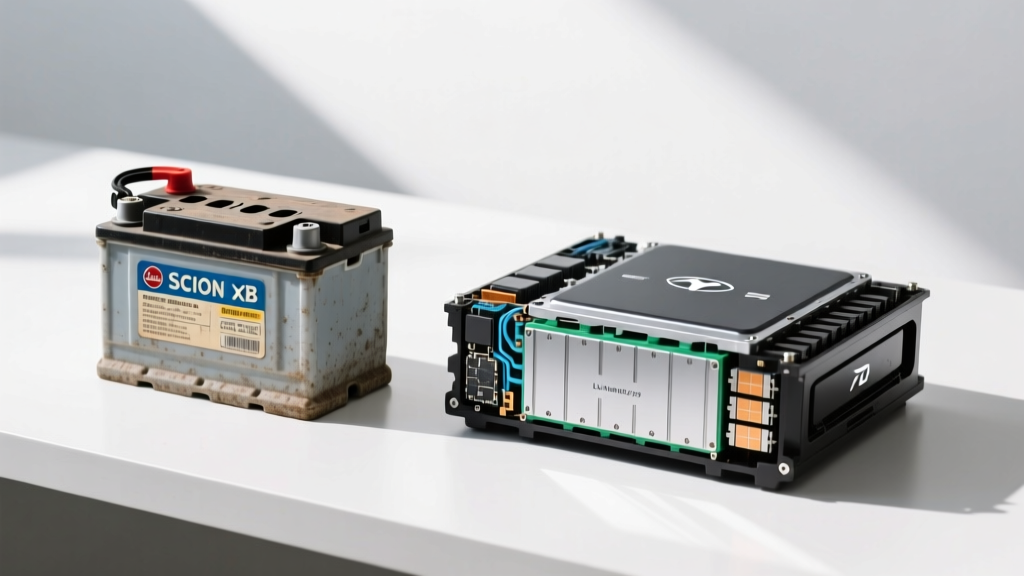
If you've ever searched for a 2005 Scion xB battery, you were almost certainly looking for a standard 12-volt lead-acid replacement — the kind that costs $120 at an auto parts store and takes five minutes to swap. That little box-shaped Toyota hatchback had no high-voltage traction pack, no thermal management system, and no battery degradation curve to worry about. Its electrical demands were simple: crank the starter, run the headlights, power the stereo.
Two decades later, the word "battery" in an automotive context means something radically different. A 2026 electric vehicle carries a high-voltage lithium-ion traction battery weighing 800–1,200 pounds, storing 60–120 kWh of energy, and costing $8,000–$25,000 to replace. Understanding how these modern packs work — and how they differ from the humble 12V unit in a first-generation Scion xB — is essential for any EV buyer or owner.
This guide covers the chemistry, degradation science, warranty protection, replacement economics, and future technology behind modern EV batteries, with context on how far we've come since the era of the 2005 Scion xB.
From 12V Lead-Acid to Lithium-Ion: A 20-Year Leap
The 2005 Scion xB used a Group 24F or 35 lead-acid battery rated at roughly 0.5–0.7 kWh of total energy storage. Its job was to deliver a short burst of cranking amps (around 550–650 CCA) to start a 1.5-liter four-cylinder engine, then get recharged by the alternator. Lifespan: typically 3–5 years. Replacement cost: $90–$160.
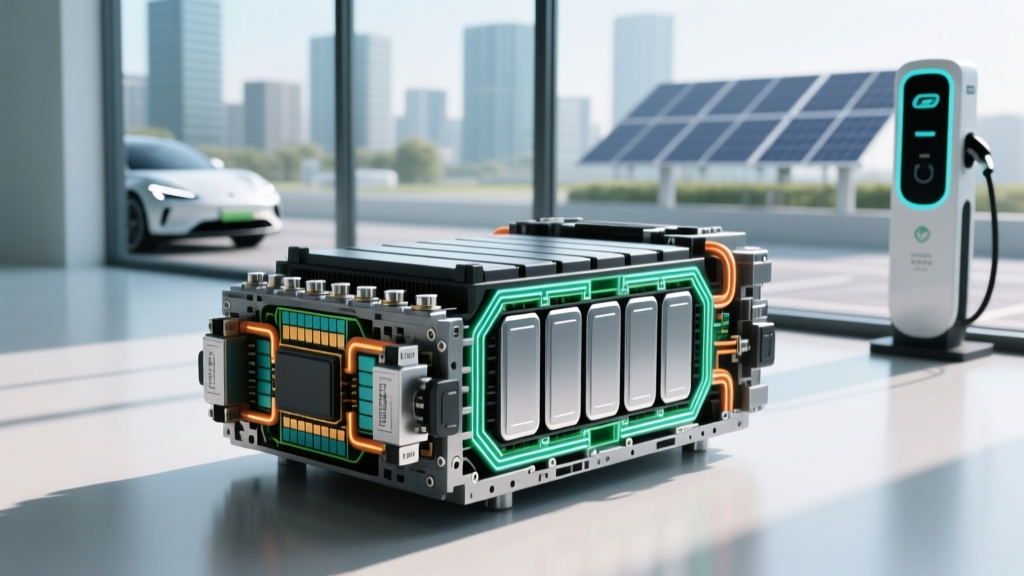
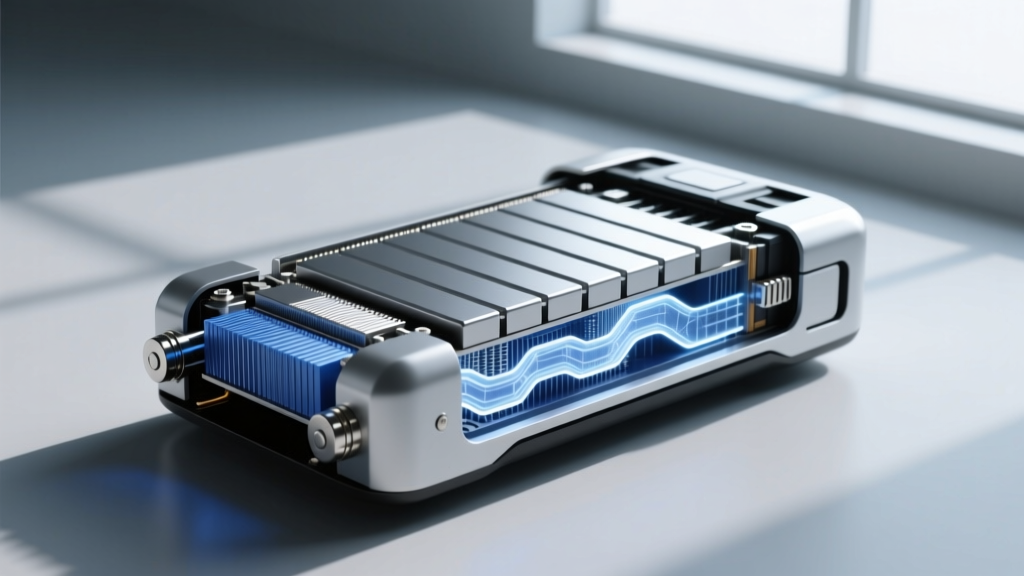
Compare that to a 2026 Tesla Model Y Long Range, which carries an ~82 kWh NMC (nickel manganese cobalt) lithium-ion pack providing 310+ miles of EPA range. Or a base Tesla Model 3 RWD with a ~60 kWh LFP (lithium iron phosphate) pack good for 272 EPA miles. These packs operate at 350–800 volts, are liquid-cooled, managed by sophisticated battery management systems (BMS), and are warrantied for 8 years or 100,000–150,000 miles.
The fundamental difference: a 12V battery is a starting accessory. An EV traction battery is the powertrain. That's why understanding battery chemistry, degradation, and warranty coverage matters enormously for EV ownership costs.
LFP vs. NMC: The Chemistry Decision
Modern EV batteries overwhelmingly use one of two lithium-ion chemistries: LFP (lithium iron phosphate, LiFePO₄) or NMC/NCA (nickel manganese cobalt / nickel cobalt aluminum). Your choice of chemistry affects range, longevity, cold-weather performance, and cost.
| Attribute | LFP (Lithium Iron Phosphate) | NMC/NCA (Nickel-based) |
|---|---|---|
| Energy Density | Lower (~140–170 Wh/kg cell-level) | Higher (~200–280 Wh/kg cell-level) |
| Typical EV Range | 220–300 miles EPA | 270–400+ miles EPA |
| Cycle Life | 3,000–5,000+ full cycles | 1,500–2,500 full cycles |
| Cold Performance | Moderate — more range loss below 32°F | Better — less range loss in cold |
| Cost (per kWh) | Lower — no cobalt or nickel | Higher — commodity-sensitive materials |
| Charging to 100% | Recommended regularly for BMS calibration | Best kept at 80% daily; 100% for trips only |
| Thermal Stability | Excellent — very low thermal runaway risk | Good — requires active thermal management |
| Examples (2026) | Tesla Model 3 RWD, Ford Mustang Mach-E Select, BYD models | Tesla Model Y LR, Hyundai Ioniq 5, BMW iX |
Which is better? It depends on your use case. LFP is the superior choice for daily commuters who charge at home and don't need maximum range — the longer cycle life and lower cost make it an ownership bargain. NMC/NCA is better for road-trippers, cold-climate drivers, and anyone who needs 300+ miles of range in a single pack. Neither is universally "better" — the right chemistry matches your driving pattern.
How Long Do EV Batteries Actually Last?
The short answer: almost certainly longer than you think. Real-world data from fleet operators, manufacturer reports, and independent testing shows that modern EV batteries retain a high percentage of their original capacity well beyond 100,000 miles.
Degradation Data Points (Real-World)
- Tesla Model 3/Y (NMC, 2018–2023): Average ~12% capacity loss at 100,000 miles, based on Tesla's 2023 Impact Report and independent fleet data. Degradation curve flattens significantly after the initial 20,000–30,000 miles.
- Chevrolet Bolt EV/EUV (NMC, 2017–2023): Reported average ~8–10% loss at 80,000 miles among owner communities. GM's liquid-cooled thermal management proved highly effective.
- Nissan LEAF (passive air-cooled, 2011–2017): Earlier generations showed 15–25%+ loss at 60,000–80,000 miles in hot climates — a cautionary tale about inadequate thermal management that the industry has since addressed.
- LFP-equipped Tesla Model 3 RWD (2021–present): Early data suggests 5–8% loss at 60,000 miles, consistent with LFP's superior cycle life.
- Hyundai/Kia E-GMP platform (Ioniq 5, EV6, NMC): ~7–10% reported loss at 50,000–70,000 miles in owner surveys; still early in lifecycle.
The key takeaway: a modern, liquid-cooled EV battery from a major manufacturer should retain 75–85% of its original capacity at 150,000 miles under normal use. That means a 300-mile-range EV might drop to ~240 miles of real range after a decade and 150k miles — still highly usable.
According to data aggregated by the U.S. Department of Energy and fleet studies, the average annual degradation rate for liquid-cooled packs is approximately 1.5–2.5% per year, with higher rates in the first year or two (the so-called "break-in" degradation) tapering to roughly 1% annually thereafter.
What Does the Battery Warranty Actually Cover?
Federal law (EPA emissions warranty requirements) effectively mandates that EV manufacturers warranty their traction batteries for a minimum of 8 years or 100,000 miles (whichever comes first). In California Air Resources Board (CARB) states, that extends to 10 years or 150,000 miles. Most manufacturers meet or exceed these thresholds nationwide.
| Manufacturer | Warranty Period | Capacity Retention Threshold | Notes |
|---|---|---|---|
| Tesla (Model 3/Y) | 8 yr / 120,000 mi (LR/AWD); 8 yr / 100,000 mi (RWD) | 70% | RWD (LFP) has 100k mi limit |
| Hyundai / Kia | 8 yr / 100,000 mi | 70% | 10 yr / 100k mi in CARB states |
| Ford (Mach-E, F-150 Lightning) | 8 yr / 100,000 mi | 70% | Components covered separately |
| GM (Chevy, Cadillac EVs) | 8 yr / 100,000 mi | 70% (some models 60% for propulsion) | Check specific model terms |
| BMW | 8 yr / 100,000 mi | 70% | Extended options available |
| Volkswagen (ID.4) | 8 yr / 100,000 mi | 70% | Transferable to second owner |
| Rivian | 8 yr / 175,000 mi | 70% | Higher mileage threshold |
What triggers a warranty claim? If your battery's State of Health (SoH) drops below the threshold — typically 70% of original capacity — within the warranty period, the manufacturer will repair or replace the pack (or individual modules, depending on design) at no cost. This is not a "pro-rated" warranty; it's binary. You're either above or below the threshold.
What's NOT covered: Damage from accidents, improper charging equipment, modifications, or neglect (e.g., leaving the vehicle at 0% SoC for extended periods in extreme heat). Always read your specific owner's manual warranty section.
EV Battery Replacement Costs: The Real Numbers
This is the concern that generates the most anxiety among prospective EV buyers. Let's put it in perspective with actual data rather than worst-case headlines.
| Vehicle / Pack Size | Battery Capacity | Full Pack Replacement (Parts + Labor) | Typical Replacement Timeline |
|---|---|---|---|
| Tesla Model 3 RWD (LFP) | ~60 kWh | $10,000–$14,000 | Rarely before 200,000+ mi |
| Tesla Model Y Long Range (NMC) | ~82 kWh | $14,000–$18,000 | Rarely before 200,000+ mi |
| Hyundai Ioniq 5 (NMC) | ~77.4 kWh | $12,000–$16,000 | Rarely before 150,000+ mi |
| Ford Mustang Mach-E ER (NMC) | ~91 kWh (usable) | $15,000–$20,000 | Rarely before 150,000+ mi |
| Chevrolet Equinox EV | ~85 kWh | $12,000–$16,000 | Rarely before 150,000+ mi |
| BMW iX xDrive50 | ~105 kWh (usable) | $20,000–$28,000 | Rarely before 150,000+ mi |
Context that matters: According to IRS §30D tax credit rules, you may save $3,750–$7,500 on a new EV purchase (subject to MSRP caps, income limits, and battery sourcing requirements). That offsets a significant portion of any eventual replacement cost — which, based on current degradation data, most original owners will never face. The vehicle is more likely to be totaled, traded, or scrapped before the battery requires replacement.
Industry data from Recurrent Auto and other battery analytics firms shows that fewer than 1.5% of EV batteries have been replaced out-of-warranty as of 2025, and the vast majority of replacements occurred under warranty due to manufacturing defects, not end-of-life degradation.
Factors That Accelerate (or Preserve) Battery Life
Not all miles are created equal when it comes to battery wear. Here's what the science says about maximizing your pack's lifespan:
- State of Charge (SoC) habits: For NMC/NCA packs, keep daily SoC between 20–80%. Charge to 100% only when you need the full range for a trip. LFP packs are an exception — charge to 100% at least weekly for BMS calibration.
- Avoid prolonged storage at extremes: Don't leave your EV sitting at 100% SoC or 0% SoC for days or weeks, especially in hot weather. If storing, set SoC to ~50%.
- DC fast charging frequency: Occasional DC fast charging is fine. Daily reliance on 150+ kW DC fast charging accelerates degradation modestly (~1–3% additional loss over 100k miles vs. Level 2 charging). Use Level 2 home charging as your primary method.
- Extreme temperatures: Lithium-ion batteries degrade faster when frequently exposed to ambient temperatures above 95°F or below 10°F. Preconditioning (heating the battery before charging or driving) helps in cold weather; parking in shade or a garage helps in heat.
- Regenerative braking settings: Moderate regen settings are fine for battery health. Maximum regen in very cold conditions (below 20°F) can stress a cold battery — most modern BMS systems limit regen automatically when the pack is cold.
- Software updates: Keep your vehicle's firmware current. Manufacturers regularly refine BMS algorithms to improve longevity via over-the-air updates.
The Fast-Charging Question
DC fast charging generates significant heat within battery cells. At 250 kW peak charge rates (like Tesla V3 Superchargers or Electrify America 350 kW stations), internal cell temperatures can spike. Modern liquid-cooled packs handle this well, but sustained high-C-rate charging does incrementally accelerate electrolyte decomposition and lithium plating.
Practical guidance: if you road-trip twice a month and rely on DC fast charging for those trips, the impact on your battery over 100,000 miles is likely 2–4% additional capacity loss compared to exclusive Level 2 charging. That's meaningful but not catastrophic — your 300-mile pack might show 235 miles instead of 245 at the 100k-mile mark.
Monitoring Your Battery's State of Health (SoH)
State of Health (SoH) is the percentage of original capacity your battery retains. A new pack is 100% SoH; a pack that can now store only 80 kWh of its original 100 kWh is at 80% SoH.
How to Check SoH
- In-vehicle displays: Many EVs (Tesla, Hyundai/Kia, BMW, Rivian) show battery health metrics in the settings or service menu. Tesla's mobile app provides a degradation graph under "Battery Health."
- OBD-II diagnostic tools: Third-party devices like the OBDLink MX+ paired with apps such as EV Health or manufacturer-specific software can read the BMS-reported SoH directly.
- Dealer/service center diagnostics: A service visit can pull a full battery health report with cell-level voltage variance, internal resistance measurements, and SoH percentage.
- Third-party services: Companies like Recurrent Auto offer battery health reports based on telematics data, often used for used-EV valuations.
When to be concerned: If your SoH drops more than 3–4% in a single year after the initial break-in period, or if you notice sudden range drops that don't correlate with temperature, schedule a BMS diagnostic. Cell imbalance (one module degrading faster than others) can sometimes be corrected via BMS rebalancing without a full pack replacement.
Looking Ahead: Solid-State and Silicon Anode Batteries
Next-generation battery technologies are in active development, though commercial availability for mass-market EVs remains years away.
Solid-State Batteries
Solid-state batteries replace the liquid electrolyte with a solid material (ceramic, polymer, or sulfide-based), promising higher energy density (potentially 400+ Wh/kg at the cell level), faster charging, improved safety, and longer cycle life. Toyota has announced plans for a solid-state-equipped EV by 2027–2028, and companies like QuantumScape and Solid Power are in advanced testing phases with OEM partners.
Realistic timeline: Limited-production solid-state EVs are expected in the 2027–2029 window, likely in premium vehicles first. Broad, affordable availability is not expected before the early 2030s. Cost remains the primary barrier — current solid-state cell manufacturing is estimated at 2–4x the cost of equivalent lithium-ion cells.
Silicon Anode Technology
Replacing graphite anodes with silicon-dominant anodes can increase energy density by 20–40%. Companies like Sila Nanotechnologies and Group14 Technologies are supplying early-production silicon anode materials. The Mercedes-Benz G-Class EV (2025) and select upcoming models incorporate partial silicon anode content.
Realistic timeline: Incremental silicon anode adoption is happening now (5–15% silicon content in anodes). Full silicon-dominant anodes in mainstream EVs are projected for the 2027–2030 timeframe.
Frequently Asked Questions
How long do EV batteries last in years and miles?
Based on current data, modern liquid-cooled EV batteries from major manufacturers typically last 15–20 years or 200,000+ miles before dropping below 70% of original capacity. Many will outlast the vehicle itself. Early degradation (the first 20,000–30,000 miles) accounts for the steepest part of the curve; after that, capacity loss slows to roughly 1% per year.
How much does an EV battery cost to replace?
Full traction battery replacement costs range from approximately $10,000 for smaller packs (~60 kWh, like a Tesla Model 3 RWD) to $25,000+ for large packs (~100+ kWh, like a BMW iX or GMC Hummer EV). Labor adds $1,000–$3,000. However, fewer than 2% of EV owners have needed an out-of-warranty replacement as of 2025. Most replacements occur under the 8-year/100,000-mile warranty at no cost to the owner.
What does the EV battery warranty cover?
Standard EV battery warranties cover capacity loss below a defined threshold (typically 70% of original capacity) for 8 years or 100,000 miles (10 years/150,000 miles in CARB states). If your battery falls below the threshold within the warranty period, the manufacturer repairs or replaces it at no charge. Warranties do not cover damage from accidents, abuse, or neglect.
How do I check and maximize my EV battery health?
Check SoH via your vehicle's built-in battery health display, a compatible OBD-II scanner with EV software, or a dealer diagnostic. Maximize longevity by keeping NMC packs between 20–80% SoC for daily use, charging LFP packs to 100% weekly, minimizing daily DC fast charging, preconditioning in extreme cold, and avoiding prolonged storage at very high or very low SoC.
LFP vs. NMC — which battery chemistry is better?
Neither is universally better. LFP offers longer cycle life (3,000–5,000+ cycles), lower cost, better thermal stability, and the ability to charge to 100% regularly — making it ideal for daily commuters and second-car use. NMC offers higher energy density, better cold-weather performance, and longer range per charge — making it better for road-trippers, cold-climate drivers, and buyers who need 300+ miles of range. Choose based on your driving pattern, not marketing claims.
Will a 2005 Scion xB's battery work in an EV?
No. The 2005 Scion xB uses a 12V lead-acid battery for engine cranking and accessory power. EVs use high-voltage (350–800V) lithium-ion traction batteries that are vehicle-specific, liquid-cooled, and managed by a dedicated BMS. However, most EVs do still carry a separate 12V auxiliary battery — conceptually identical to the one in a 2005 Scion xB — to power onboard electronics. That 12V battery can still fail and need replacement just as it would in any conventional vehicle.
Sources: fueleconomy.gov (EPA range and efficiency data), IRS §30D Clean Vehicle Credit (tax credit eligibility), manufacturer warranty documentation (Tesla, Hyundai, Ford, GM, BMW, Rivian, Volkswagen).