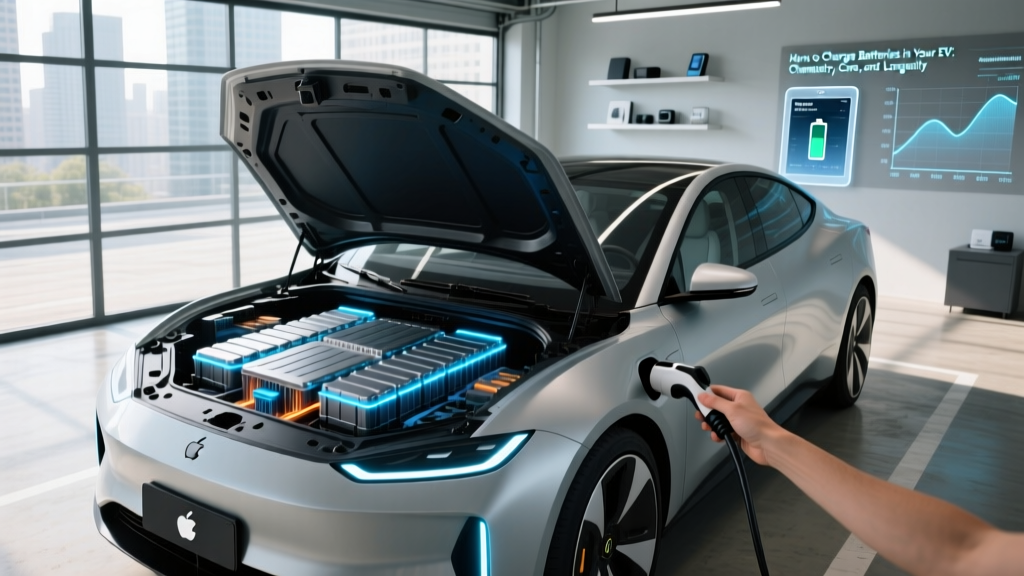
If you've landed here searching for a 2005 Chrysler 300C battery, you might be replacing a worn 12V lead-acid unit in a classic Hemi sedan — or you might be curious how that old-school battery compares to the high-voltage lithium-ion packs powering today's electric vehicles. Either way, this guide covers both worlds: what you need to know about the 300C's conventional battery, and a deep dive into modern EV traction battery technology, chemistry, degradation, warranties, and replacement costs.
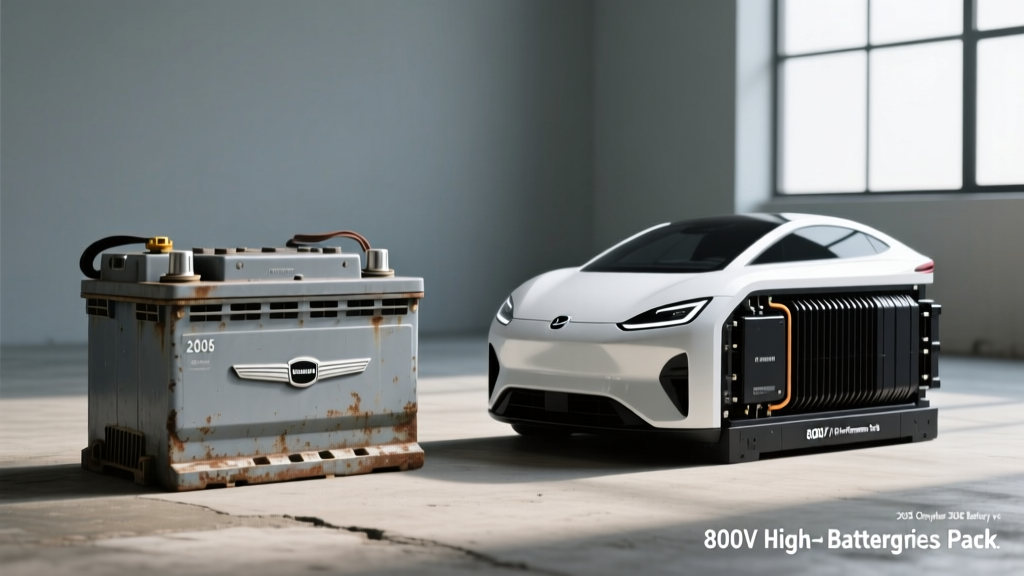
The gap between a 2005 Chrysler 300C's 12V starter battery and a 2026 EV's 80+ kWh traction battery is enormous — in voltage, chemistry, cost, and lifespan. Understanding that gap helps whether you're maintaining a classic sedan or shopping for your first EV.
The 2005 Chrysler 300C Battery: What You Need to Know
The 2005 Chrysler 300C uses a conventional 12V lead-acid battery (Group Size H7 or 94R, typically 70–80 Ah) to start its 5.7L Hemi V8 and run accessories. This is a cranking battery, not a traction battery — it delivers a short burst of high current (700–800 cold cranking amps) but stores less than 1 kWh of usable energy.
Replacement 12V batteries for the 2005 300C typically cost $150–$250 at retail (AGM or flooded lead-acid) and last 3–5 years depending on climate and use. This is straightforward auto maintenance — entirely different from the EV traction battery conversation below.
EV Battery Chemistry Explained: LFP vs NMC vs NCA
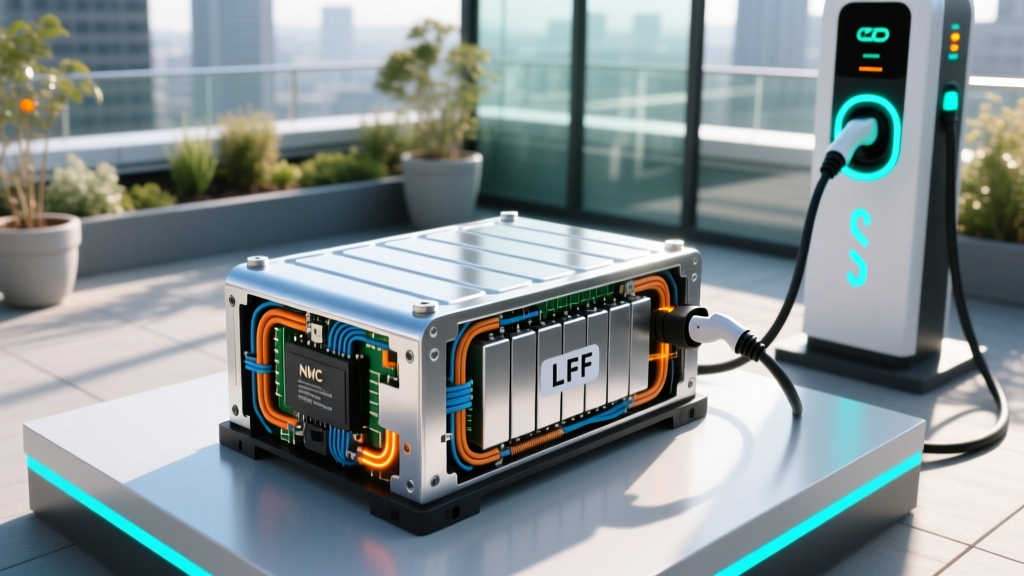
Modern EVs use lithium-ion traction batteries, but not all lithium-ion chemistry is the same. The two dominant families in 2026 are LFP (lithium iron phosphate) and NMC/NCA (nickel manganese cobalt / nickel cobalt aluminum). The chemistry inside the cells determines energy density, cycle life, cold-weather performance, and cost.
| Attribute | LFP (Lithium Iron Phosphate) | NMC / NCA (Nickel-based) |
|---|---|---|
| Energy Density | 160–180 Wh/kg (lower — heavier pack for same range) | 220–300 Wh/kg (higher — lighter, more compact) |
| Cycle Life | 3,000–5,000+ cycles to 80% SoH | 1,000–2,000 cycles to 80% SoH |
| Cold-Weather Performance | Weaker — greater range loss below 32°F | Better — less capacity loss in freezing temps |
| Cost per kWh | $80–$100/kWh (cell level, 2026) | $110–$140/kWh (cell level, 2026) |
| Thermal Stability | Excellent — highly resistant to thermal runaway | Good — requires more active thermal management |
| Recommended SoC Range | Can charge to 100% daily (no degradation penalty) | 20–80% daily; 100% only for trips |
| Common In (2026) | Tesla Model 3/Y RWD, Ford Mustang Mach-E Select, BYD, Rivian Standard | Tesla Long Range, Hyundai Ioniq 5/6, GM Ultium, BMW, Mercedes |
Which is better? Neither — it depends on your use case. LFP wins on longevity, safety, and cost, making it ideal for daily commuters who charge at home and don't need maximum range. NMC/NCA wins on energy density and cold-weather usability, better for long-range road trippers and cold-climate drivers. Tesla's strategy of using LFP in Standard Range and NMC in Long Range trims exemplifies this split.
How Long Do EV Batteries Last? Degradation Data
The fear that EV batteries need frequent replacement is largely a myth carried over from laptop and phone batteries. Automotive-grade lithium-ion packs are engineered for 15–20+ years and 150,000–200,000+ miles of service. Here's what the real-world data shows:
- Year 1 / 15,000 mi: ~2–3% capacity loss (initial formation loss)
- Year 3 / 45,000 mi: ~5–7% total loss
- Year 5 / 75,000 mi: ~8–10% total loss
- Year 8 / 120,000 mi: ~10–14% total loss
- Year 10 / 150,000 mi: ~12–17% total loss
Sources: Geotab fleet data (6,300+ vehicles), Tesla Impact Reports, Recurrent Auto battery studies. Degradation is non-linear — rapid initial drop, then a long, slow plateau.
For context, a 2026 Tesla Model 3 Long Range with an 82 kWh (usable) NMC battery losing 12% over 10 years still retains ~72 kWh — enough for roughly 280 of its original 330 EPA-rated miles. Most EV batteries will outlast the vehicle's body, suspension, and interior.
The 2005 Chrysler 300C's 12V lead-acid battery, by contrast, typically lasts 3–5 years before sulfation and plate degradation require replacement. That's a fundamentally different technology with a fundamentally different lifespan.
What Does the EV Battery Warranty Actually Cover?
Federal law in the US mandates a minimum EV battery warranty of 8 years / 100,000 miles. In California and states adopting CARB standards, that extends to 10 years / 150,000 miles. Most manufacturers exceed these minimums. Here's how major warranties compare in 2026:
| Manufacturer | Warranty Term | Capacity Retention Threshold | Chemistry |
|---|---|---|---|
| Tesla (Model 3/Y) | 8 yr / 120,000 mi (LR/AWD); 8 yr / 100,000 mi (RWD) | 70% of original capacity | NMC (LR) / LFP (RWD) |
| Hyundai / Kia (E-GMP) | 10 yr / 100,000 mi | 70% of original capacity | NMC |
| GM (Ultium platform) | 8 yr / 100,000 mi | 70% of original capacity (60% on some commercial) | NMC |
| Ford (Mustang Mach-E, F-150 Lightning) | 8 yr / 100,000 mi | 70% of original capacity | NMC / LFP (some trims) |
| Rivian (R1T / R1S) | 8 yr / 175,000 mi | 70% of original capacity | NMC / LFP (Standard) |
| BMW (i4, iX, i7) | 8 yr / 100,000 mi | 70% of original capacity | NMC |
What triggers a warranty claim? If your battery's State of Health (SoH) drops below the threshold (typically 70% of original capacity) within the warranty period, the manufacturer will repair or replace modules — not necessarily the entire pack. Most warranties cover defects and excessive degradation but exclude damage from accidents, flooding, or unauthorized modifications.
EV Battery Replacement Cost: What to Expect
If your battery falls outside the warranty window and needs replacement, costs are substantial but declining. Here's the current landscape:
| Vehicle / Pack Size | Full Pack Replacement | Module Repair (if available) | Typical Need Timeline |
|---|---|---|---|
| Compact EV (50–65 kWh, e.g., Chevy Bolt, Nissan Leaf) | $8,000–$14,000 | $2,500–$5,000 | Rarely before 200,000 mi |
| Mid-size EV (75–90 kWh, e.g., Tesla Model 3/Y, Ioniq 5) | $12,000–$18,000 | $3,000–$7,000 | Rarely before 200,000 mi |
| Large EV / Truck (100–135 kWh, e.g., F-150 Lightning, Rivian) | $18,000–$28,000 | $4,000–$10,000 | Rarely before 150,000 mi |
| Luxury EV (100+ kWh, e.g., Mercedes EQS, BMW iX) | $22,000–$35,000 | $5,000–$12,000 | Rarely before 150,000 mi |
Critical context: The vast majority of EV owners will never pay for a traction battery replacement. Data from Recurrent Auto and fleet operators shows that fewer than 1.5% of EV batteries have been replaced outside of recalls, and most of those were under warranty. The battery is one of the most durable components in an EV — far outlasting brakes, tires, suspension, and often the vehicle itself.
Compare this to the 2005 Chrysler 300C: you'll likely replace its 12V battery 3–4 times over a 15-year ownership span, at $150–$250 each — roughly $500–$1,000 total. The EV traction battery costs far more upfront but is engineered to last the life of the car.
Factors That Affect EV Battery Lifespan
Not all miles age a battery equally. These are the primary factors that accelerate or slow degradation:
- Minimize DC fast charging — Frequent 150+ kW sessions generate heat that accelerates degradation. Use Level 2 (7–19 kW) for daily charging; save DC fast charging for road trips.
- Avoid extreme State of Charge — For NMC/NCA batteries, keep daily SoC between 20–80%. LFP batteries can be charged to 100% daily without penalty (and Tesla recommends periodic 100% charges for LFP calibration).
- Precondition before fast charging — Most modern EVs warm the battery to optimal temperature (~95°F) before accepting peak DC charge rates. This protects cells and improves charge speed.
- Avoid prolonged storage at 100% or 0% — If storing for weeks, leave SoC around 50%. Both extremes stress cell chemistry.
- Extreme heat is worse than extreme cold — Sustained ambient temperatures above 95°F accelerate calendar aging more than cold does. Cold temporarily reduces range but doesn't cause permanent damage.
- Use regenerative braking wisely — Aggressive regen in cold weather (below 50°F) can stress a cold battery. Many EVs automatically reduce regen when the pack is cold.
How to Check and Monitor Battery Health (SoH)
State of Health (SoH) is expressed as a percentage of the battery's original usable capacity. A new EV starts at 100% SoH; a battery at 85% SoH holds 85% of its original energy. Here's how to monitor it:
- In-vehicle displays: Tesla shows estimated range at 100% charge (compare to original EPA figure). Hyundai/Kia Ioniq models display SoH percentage directly in the EV menu. BMW and Mercedes provide SoH in their diagnostic menus.
- OBD-II apps: Tools like Leaf Spy (Nissan Leaf), Scan My Tesla, or ABRP OBD dongles read actual battery capacity, cell voltages, and degradation data from the BMS (Battery Management System).
- Dealer diagnostics: Any authorized service center can run a full battery health report. Request this during routine service or before buying a used EV.
- Third-party services: Companies like Recurrent Auto offer battery health reports for used EVs based on telematics data, useful for pre-purchase inspections.
When to be concerned: If SoH drops more than 3–4% per year after the first year, or if you notice sudden range drops, uneven cell voltages, or charging speed reductions, schedule a diagnostic. These can indicate a failing module rather than normal degradation.
Emerging Battery Technology: What's Next
Current lithium-ion technology is mature and reliable, but next-generation chemistries are in development. Here's a realistic timeline — none of these are available in production vehicles as of 2026:
- Solid-state batteries: Replace the liquid electrolyte with a solid conductor, promising 30–50% more energy density and faster charging. Toyota has announced a target of limited production by 2027–2028, but cost and manufacturing scale remain unsolved. Expect mainstream availability no earlier than 2029–2030.
- Silicon anode batteries: Replace graphite anodes with silicon to boost energy density by 20–40%. Companies like Sila Nanotechnologies and Group14 are supplying early production cells, with limited automotive deployment expected 2026–2027 in premium models.
- Sodium-ion batteries: Use abundant sodium instead of lithium, dramatically reducing cost. CATL has begun production for Chinese-market EVs; US/European adoption for low-cost city EVs is expected by 2027–2028.
- Lithium-sulfur (Li-S): Theoretical energy density 3–5× current lithium-ion, but cycle life remains a fundamental challenge. Still in laboratory and early prototype stage; commercialization is likely 2030+.
For buyers today, current-generation LFP and NMC batteries are the proven choice — backed by warranty, real-world data, and declining costs.
Frequently Asked Questions
How long do EV batteries last in years and miles?
Based on fleet data from Geotab and manufacturer reports, modern EV batteries typically last 15–20 years and 150,000–200,000+ miles before reaching 70–80% of original capacity. Many will outlast the vehicle itself. LFP chemistry batteries often exceed 300,000 miles in cycle-life testing.
How much does an EV battery cost to replace?
Full pack replacement ranges from $8,000 for a small pack (50–65 kWh) to $28,000–$35,000 for large luxury/truck packs (100–135 kWh). Module-level repairs are $2,500–$12,000 depending on the vehicle. However, fewer than 1.5% of EV batteries have required out-of-warranty replacement based on current fleet data. The federal warranty minimum of 8 years / 100,000 miles covers most owners.
What does the EV battery warranty cover?
EV battery warranties cover defects in materials and workmanship plus excessive capacity loss — typically defined as dropping below 70% of original capacity within the warranty period (8 years / 100,000 miles minimum, 10 years / 150,000 miles in CARB states). Warranties do not cover damage from accidents, flooding, unauthorized modifications, or normal wear within the threshold. Check your specific manufacturer's terms, as coverage varies.
How do I check and maximize my EV battery health?
Monitor SoH through your vehicle's display, OBD-II apps, or dealer diagnostics. Maximize lifespan by: using Level 2 charging for daily needs, keeping NMC batteries between 20–80% SoC, preconditioning before DC fast charging, avoiding prolonged storage at extreme SoC levels, and minimizing exposure to sustained high heat. LFP owners can charge to 100% daily without degradation concerns.
LFP vs NMC — which battery chemistry is better for me?
Choose LFP if: you charge at home daily, prioritize longevity and lower cost, live in a moderate climate, and don't need maximum range. Choose NMC/NCA if: you need 300+ miles of EPA range, frequently drive in cold weather, take regular road trips requiring fast DC charging, or want the lightest possible vehicle. Both chemistries are proven and durable — the right choice depends on your driving patterns.
Can I put a 2005 Chrysler 300C battery in an EV?
No. The 2005 Chrysler 300C uses a 12V lead-acid starter battery (Group H7/94R) designed for internal combustion engines. EVs use high-voltage (400V–900V) lithium-ion traction batteries that are vehicle-specific, custom-engineered, and not interchangeable. That said, EVs do have their own 12V auxiliary battery (often lithium-ion in newer models) for accessories — but it serves a completely different function than a traction battery.