If you've ever replaced the 12V lead-acid battery in a 2009 Honda Accord, you know the drill: $150–$250 at an auto parts store, a few wrench turns, and you're back on the road. But when shoppers search for 09 Honda Accord battery information and then start cross-shopping modern electric vehicles, the battery conversation shifts entirely. An EV's high-voltage traction battery is a fundamentally different component — one that costs thousands, lasts well over a decade in most cases, and involves chemistry, thermal management, and warranty terms that most gas-car owners never think about.
This guide breaks down everything you need to know about EV battery technology in 2026, using the familiar 2009 Honda Accord battery as a reference point for just how far automotive energy storage has come — and what it costs to own, maintain, and eventually replace these systems.
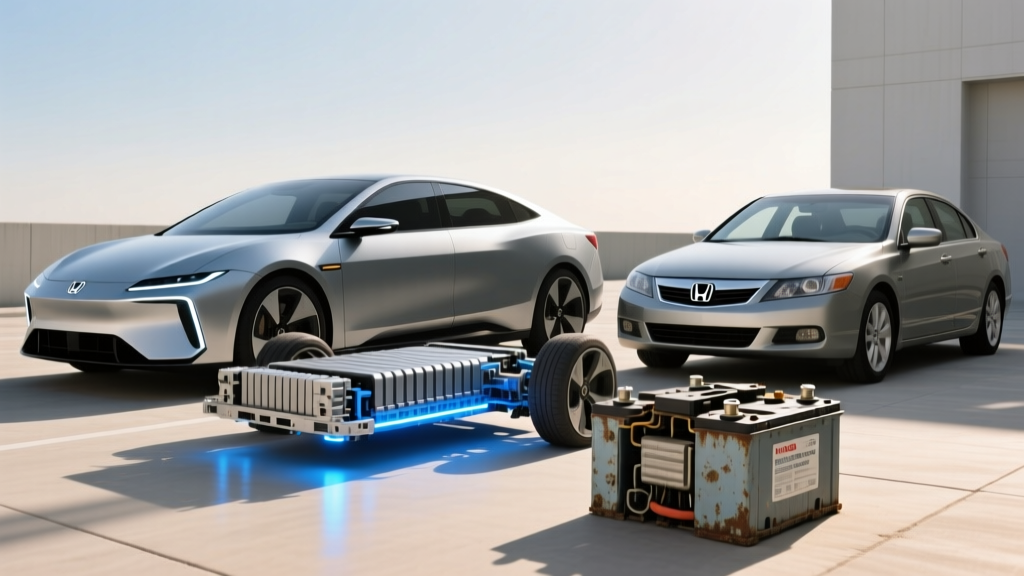
The 2009 Honda Accord Battery vs. an EV Traction Battery
The 2009 Honda Accord uses a conventional 12V lead-acid battery (Group 51R or 35, depending on engine). It supplies roughly 0.5–0.7 kWh of energy, weighs about 30–35 lbs, and cranks a starter motor. Typical lifespan: 3–5 years. Replacement cost: $130–$260 for the part alone.
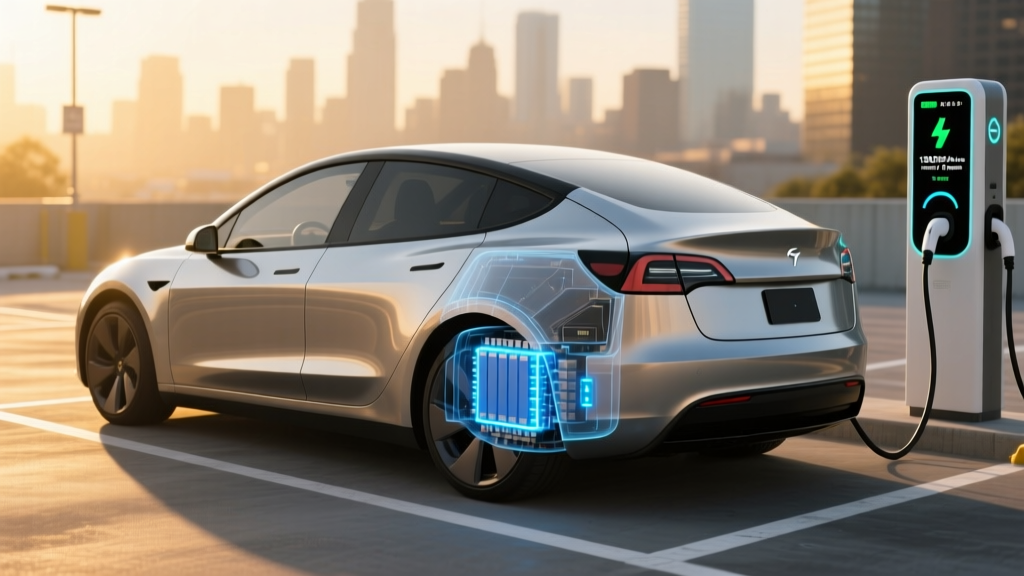
An EV traction battery, by contrast, stores between 50 and 130+ kWh of energy, weighs 700–1,500 lbs, and powers one or more electric motors directly. It operates at 350–800 volts and is managed by a sophisticated battery management system (BMS) that monitors temperature, cell voltage, and state of charge hundreds of times per second.
Battery Chemistry: LFP vs. NMC/NCA Explained
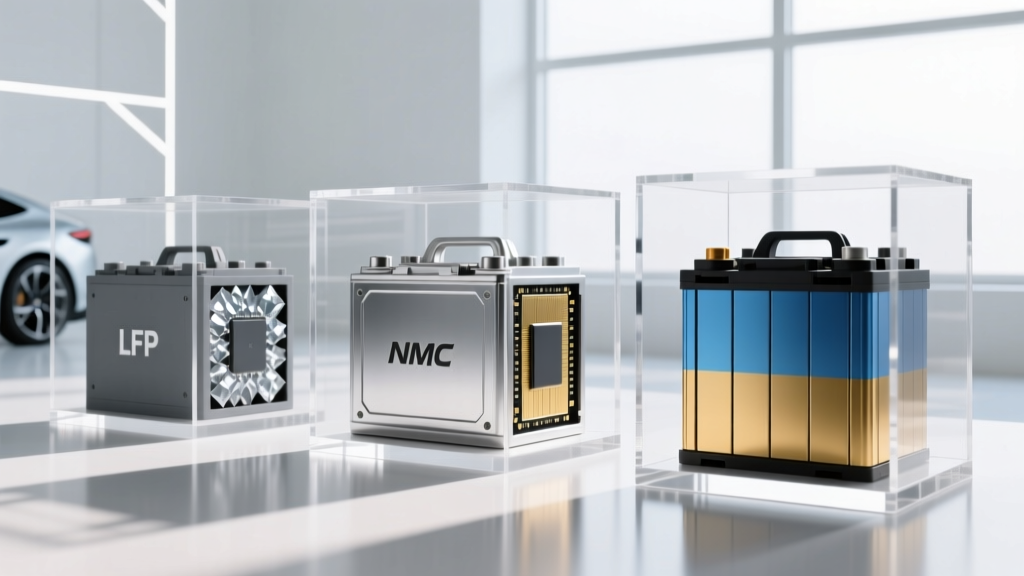
Modern EV batteries use lithium-ion cells, but the cathode chemistry varies significantly. The two dominant types in 2026 are LFP (lithium iron phosphate) and NMC/NCA (nickel manganese cobalt / nickel cobalt aluminum). Each has distinct trade-offs that affect range, longevity, and cost.
| Attribute | LFP (LiFePO₄) | NMC / NCA |
|---|---|---|
| Energy Density | ~160–180 Wh/kg (lower) | ~220–300 Wh/kg (higher) |
| Cycle Life | 3,000–5,000+ cycles | 1,000–2,500 cycles |
| Cold-Weather Performance | Moderate — greater range loss below freezing | Better low-temp discharge characteristics |
| Thermal Stability | Excellent — very resistant to thermal runaway | Good — requires more active thermal management |
| Cost per kWh | ~$85–$105 (lower) | ~$110–$145 (higher) |
| Recommended Daily SoC | 100% (can charge fully without degradation concern) | 80% for daily; 100% only for trips |
| Common In (2026 Models) | Tesla Model 3/Y RWD, Ford Mustang Mach-E Select, BYD models | Tesla Long Range, Hyundai Ioniq 5/6, BMW iX, Rivian |
Which is better? Neither is universally superior. LFP wins on longevity, safety, and cost — ideal for standard-range models where daily charging to 100% is convenient. NMC/NCA wins on energy density — necessary for long-range vehicles where packing maximum kWh into a limited space matters. If you drive 30–40 miles daily and can charge at home, LFP is arguably the more practical and durable choice. If you regularly need 300+ miles of range, NMC is the chemistry that makes it possible.
How Long Do EV Batteries Actually Last?
The short answer: far longer than most buyers expect, and almost certainly longer than a 2009 Honda Accord's original 12V battery lasted. Real-world fleet data from 2025–2026 tells a consistent story.
- Tesla Model 3/Y (NMC, 2018–2022): Average ~8–10% capacity loss at 100,000 miles, per Tesla's 2025 Impact Report. Most packs retain ~88–92% State of Health (SoH) at this milestone.
- Chevrolet Bolt EV/EUV (NMC, 2017–2023): Recurrent Energy fleet data shows ~7–12% degradation at 80,000–120,000 miles. Some early 2017 models with aggressive DC fast-charging habits showed up to 15% loss.
- Hyundai Ioniq 5 (NMC, 2022–2025): Limited long-term data but early fleet reports indicate ~5–7% loss at 50,000 miles, consistent with Hyundai's strong thermal management system.
- LFP-equipped Tesla Model 3 RWD (2021–2024): Emerging data suggests <5% degradation at 60,000 miles, consistent with LFP's superior cycle life.
- Nissan Leaf (passive air-cooled, 2011–2017): The outlier — up to 20–30% degradation at 80,000–100,000 miles due to lack of active thermal management. This is the cautionary tale that drove the industry toward liquid-cooled packs.
For context, a modern liquid-cooled EV battery losing ~1% per year or ~1% per 12,000–15,000 miles is typical. That means at 150,000 miles, a well-maintained pack might retain 85–90% of its original capacity — still delivering 220+ miles from a pack originally rated at 260 miles EPA.
Compare that to the 09 Honda Accord battery, which is typically dead within 4 years and offers no meaningful "degradation curve" — it simply fails to hold a charge.
Battery Warranty Terms: What's Covered and for How Long
Federal law mandates that EV batteries carry a minimum warranty of 8 years / 100,000 miles (10 years / 150,000 miles in California and states adopting CARB standards). Most manufacturers exceed this baseline. Here's how major brands structure coverage in 2026:
| Manufacturer | Coverage Period | Capacity Threshold | Notes |
|---|---|---|---|
| Tesla | 8 yr / 120,000 mi (Model 3/Y RWD); 8 yr / 120,000 mi (Long Range) | 70% retention | Covers defects + capacity below threshold |
| Hyundai / Kia | 10 yr / 100,000 mi | 70% retention | Among the longest coverage in the industry |
| Ford | 8 yr / 100,000 mi | 70% retention | Applies to Mustang Mach-E, F-150 Lightning |
| GM (Chevrolet, Cadillac) | 8 yr / 100,000 mi | 60–70% (varies by model) | Ultium platform; check specific model terms |
| BMW | 8 yr / 100,000 mi | 70% retention | Transferable to second owner |
| Rivian | 8 yr / 175,000 mi | 70% retention | Highest mileage cap among major OEMs |
What triggers a warranty claim? The battery must fall below the stated capacity retention threshold (typically 70%) during the coverage period. Gradual degradation that stays above 70% is considered normal wear and is not covered. Manufacturing defects — such as a faulty cell group or BMS failure — are covered regardless of capacity level.
Per fueleconomy.gov, vehicles with valid battery warranties also support continued eligibility for certain ownership benefits, and the warranty transfers to second owners in most cases, which supports resale value.
EV Battery Replacement Cost: What You'll Actually Pay
This is the number that generates the most anxiety — and the most misinformation. Let's anchor the data with real figures.
| Vehicle | Pack Size | Full Replacement Cost | Typical Need Timeline |
|---|---|---|---|
| Tesla Model 3 RWD (LFP) | ~60 kWh | $12,000–$16,000 | Rarely needed; 200,000+ mi expected life |
| Tesla Model Y Long Range (NMC) | ~75 kWh | $14,000–$20,000 | Rarely needed within ownership period |
| Hyundai Ioniq 5 (NMC) | 77.4 kWh | $15,000–$22,000 | Warranty covers most failures through 10 yr |
| Ford F-150 Lightning (Extended) | ~131 kWh | $22,000–$32,000 | Very large pack; module repair may be possible |
| Chevrolet Bolt EV | 65 kWh | $14,000–$17,000 | Post-recall packs show strong longevity |
| Nissan Leaf (40/62 kWh) | 40–62 kWh | $8,000–$14,000 | Earlier replacement likely due to passive cooling |
Context that matters: According to data from Recurrent Energy, fewer than 5% of EVs on the road today have required a full battery replacement outside of warranty-covered recalls. Most EV batteries will outlast the vehicle's body, suspension, and interior. The cost is real, but the probability of paying it out-of-pocket is low for any modern liquid-cooled pack.
Compare: replacing the engine or transmission in a 2009 Honda Accord at 150,000 miles costs $3,000–$6,000 — a near-certainty for an ICE vehicle at that mileage. The EV battery replacement is more expensive but far less likely to be needed.
Factors That Accelerate (or Preserve) Battery Life
Battery degradation isn't random. It follows predictable electrochemical patterns. Here's what actually moves the needle:
- Limit DC fast charging frequency. Occasional road-trip use is fine, but daily reliance on 150+ kW DC charging accelerates degradation. Aim for Level 2 home charging as your primary routine.
- Avoid prolonged 100% or 0% state of charge. For NMC batteries, storing at 100% SoC for days stresses cells. Keep daily charge at 80%. LFP batteries tolerate 100% better and actually benefit from periodic full charges for BMS calibration.
- Precondition before fast charging. Most EVs do this automatically when you navigate to a charger. Cold batteries charge slower and experience more stress. Preconditioning warms cells to ~30–35°C for optimal charge acceptance.
- Park in shade or a garage during extreme heat. Sustained battery temperatures above 40°C (104°F) accelerate calendar degradation. Liquid cooling mitigates this, but it doesn't eliminate it.
- Don't baby it excessively. Modern BMS systems are sophisticated. Driving normally, using regen braking, and charging when convenient will yield excellent results. The engineering margin is substantial.
How to Check Your EV Battery's State of Health
Unlike the 09 Honda Accord battery — where you test voltage with a multimeter and hope for 12.6V — EV batteries offer multiple ways to monitor health:
1. In-Vehicle Displays: Most EVs show a battery health indicator or estimated range that reflects current capacity. Tesla's menu shows rated range vs. original, letting you calculate approximate SoH. Hyundai/Kia models display battery health percentage in the EV settings menu.
2. OBD-II Diagnostic Apps: Tools like Leaf Spy (Nissan), Scan My Tesla, or generic OBD-II readers with EV-capable apps can read individual cell voltages, pack voltage, and estimated capacity. This is the most granular method available to owners.
3. Third-Party Reports: Services like Recurrent and some dealership diagnostic tools generate battery health reports showing capacity retention percentage and cell balance data.
4. Charging Data Analysis: If your pack originally accepted 75 kWh from 0–100% and now only takes 67 kWh under the same conditions, you're seeing ~11% degradation. Track this over time using your charger's app or the vehicle's energy history screen.
What's Next: Solid-State and Silicon-Anode Batteries
The EV battery landscape is shifting, but timelines matter. Here's where emerging technology actually stands in 2026:
Solid-State Batteries: Toyota has announced limited production of solid-state-equipped vehicles for 2027–2028, with claims of 450+ mile range and 10-minute charging. Samsung SDI and QuantumScape are also in pilot production. However, solid-state packs remain in low-volume, high-cost manufacturing — expect them in premium models first, with mainstream availability not before 2030. These are announced and in testing, not currently available for purchase.
Silicon-Anode Batteries: Companies like Sila Nanotechnologies and Group14 are supplying silicon-dominant anode materials that boost energy density by 20–40% over graphite anodes. These are beginning to appear in limited 2026 model-year applications (notably in some Mercedes-Benz and GM prototypes) but are not yet in mass-market vehicles.
Sodium-Ion Batteries: CATL and BYD are producing sodium-ion packs for lower-cost, shorter-range EVs (primarily in China). These offer lower energy density but dramatically lower material costs and better cold-weather performance. US-market availability remains limited as of 2026.
The practical takeaway: today's LFP and NMC batteries are mature, well-understood technologies that will serve most buyers well for 15+ years. Waiting for solid-state is not a practical strategy for anyone who needs a vehicle in the next 3–5 years.
Frequently Asked Questions
How long do EV batteries last in years and miles?
Most modern liquid-cooled EV batteries retain 85–90% of their original capacity at 150,000 miles or 12–15 years. Tesla's fleet data shows packs lasting 200,000+ miles before approaching the 70% warranty threshold. The vehicle's body and interior will typically show more wear than the battery.
How much does it cost to replace an EV battery?
Full replacement ranges from $8,000 (smaller packs like the Nissan Leaf) to $32,000 (large packs like the F-150 Lightning Extended Range). However, fewer than 5% of modern EVs require out-of-warranty replacement. Most failures during the 8–10 year warranty period are covered by the manufacturer.
What does the EV battery warranty actually cover?
Battery warranties cover manufacturing defects and capacity loss below a stated threshold (usually 70% of original capacity) for 8 years/100,000 miles minimum (10 years/150,000 miles in CARB states). Normal gradual degradation above the threshold is not covered. Check IRS.gov for how battery sourcing requirements also affect federal tax credit eligibility.
Is LFP better than NMC for daily driving?
For daily commuting with home charging, LFP is often the better choice. It tolerates 100% daily charging, offers 3,000–5,000+ cycle life (vs. 1,000–2,500 for NMC), and costs less per kWh. The trade-off is lower energy density, which means less range in the same physical space — acceptable if you don't need 300+ miles.
How is an EV battery different from a 09 Honda Accord battery?
The 2009 Honda Accord uses a $150–$250 lead-acid 12V battery that lasts 3–5 years and provides ~0.5 kWh. An EV traction battery provides 50–130+ kWh, costs $8,000–$32,000 to replace, but lasts 150,000–300,000+ miles. EVs also have a separate 12V auxiliary battery (similar to the Accord's) for accessories — that one still costs ~$200 to replace.
Does frequent DC fast charging damage the battery?
Exclusive reliance on DC fast charging (150+ kW) can add 2–4% more degradation over 100,000 miles compared to primarily Level 2 charging. Occasional fast charging on road trips has negligible impact. The key factor is sustained high cell temperatures — modern thermal management systems mitigate this significantly, but daily fast charging without cooldown periods does accumulate stress over time.