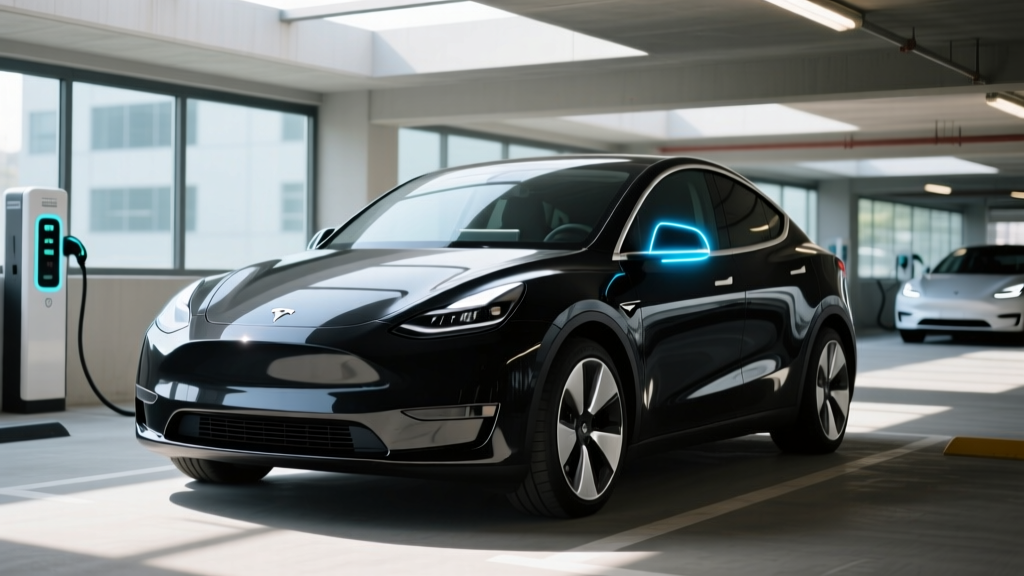
Ford's BlueOval Battery Park Michigan represents a pivotal shift in American EV battery manufacturing. The Marshall, Michigan facility — producing lithium iron phosphate (LFP) battery cells domestically for the first time at scale — signals that the industry is moving beyond a single-chemistry approach. For EV buyers and owners, understanding what's happening at this plant illuminates the broader battery technology landscape: which chemistry suits your driving habits, how long these packs actually last, and what replacement really costs if the worst happens.
This guide breaks down the battery tech powering today's EVs — from the LFP cells rolling out of BlueOval Battery Park Michigan to the NMC packs in long-range models — with real degradation data, warranty specifics, and ownership strategies that extend pack life.
Why BlueOval Battery Park Michigan Matters for EV Buyers
BlueOval Battery Park Michigan is Ford's $3 billion LFP battery plant in Marshall, Michigan, licensed using CATL's cell technology. Initially announced with a 35 GWh capacity target, the facility was scaled to approximately 20 GWh as Ford adjusted to evolving EV demand forecasts. By 2026, the plant is ramping production of prismatic LFP cells destined for vehicles like the Ford Mustang Mach-E and future Ford EV models.
The strategic importance: LFP batteries contain no nickel or cobalt, reducing exposure to volatile critical-mineral supply chains and helping vehicles qualify for the IRS §30D federal tax credit under domestic content and sourcing rules. For buyers, this means more affordable EV trims with batteries engineered for longevity over maximum range.
LFP vs NMC/NCA: The Chemistry Showdown
| Attribute | LFP (Lithium Iron Phosphate) | NMC/NCA (Nickel Manganese Cobalt / Nickel Cobalt Aluminum) |
|---|---|---|
| Energy Density | ~160-180 Wh/kg (lower) | ~220-300 Wh/kg (higher) |
| Cycle Life | 3,000-5,000+ cycles | 1,000-2,000 cycles |
| Calendar Lifespan | 15-20+ years typical | 10-15 years typical |
| Cold-Weather Performance | Moderate range loss (~30-40% at -20°C) | Better cold performance (~20-30% loss at -20°C) |
| Cost per kWh (cell level) | ~$50-70/kWh | ~$80-120/kWh |
| Thermal Stability | Excellent (less prone to thermal runaway) | Good (requires more active management) |
| Optimal Daily SoC | Can charge to 100% regularly | Best kept 20-80% for longevity |
| Typical Use Case | Standard-range trims, fleet, high-mileage drivers | Long-range, performance trims |
The trade-off is straightforward: LFP sacrifices roughly 15-25% energy density for dramatically longer cycle life, lower cost, and the ability to charge to 100% daily without accelerated degradation. NMC/NCA packs deliver more range in the same physical space but require more careful state-of-charge management to maximize lifespan.
How Long Do EV Batteries Actually Last?
The fear that EV batteries need replacement every few years is not supported by real-world data. Modern liquid-cooled battery packs are engineered to outlast most ownership cycles.
Real-World Degradation Data
Degradation is non-linear: expect a steeper drop in the first year or two (2-5%), followed by a long, gradual decline. Here's what the data shows across major platforms:
| Vehicle / Platform | Chemistry | Avg. Degradation at 100k Miles | Avg. Degradation at 150k Miles | Source |
|---|---|---|---|---|
| Tesla Model 3/Y (NMC/NCA) | NCA/NMC | ~8-12% | ~12-15% | Tesla Impact Report, Recurrent Auto |
| Tesla Model 3 Standard Range (LFP) | LFP | ~4-7% | ~7-10% | Recurrent Auto fleet data |
| Chevrolet Bolt EV/EUV | NMC | ~6-9% | ~10-13% | Recurrent Auto, owner surveys |
| Hyundai Ioniq 5 / Kia EV6 | NMC | ~5-8% | ~9-12% | Manufacturer warranty claims data |
| Ford Mustang Mach-E (Extended Range) | NMC | ~7-10% | ~11-14% | Recurrent Auto |
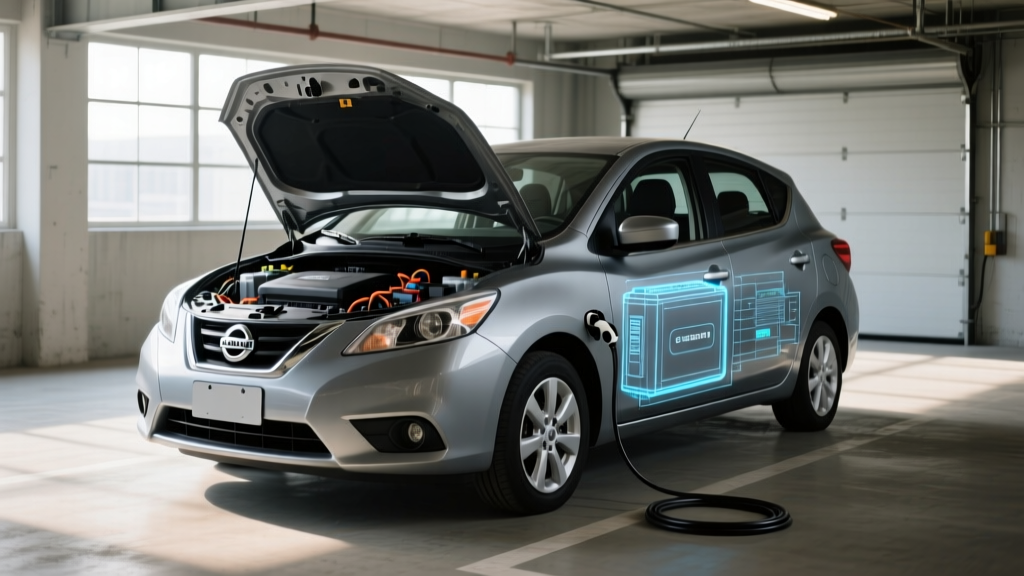
| Nissan LEAF (passive cooling) | NMC/LMO | ~15-20% | ~20-30% | Owner data, fleet studies |
Note: The Nissan LEAF's passive air-cooling system accelerates degradation compared to liquid-cooled packs. Most 2024-2026 EVs use active liquid thermal management.
At a 12% capacity loss over 150,000 miles, a vehicle with an original EPA range of 310 miles would still deliver roughly 273 miles — well within usable daily driving for most owners. According to data compiled by Recurrent Auto, the average EV battery in their 15,000-vehicle study fleet showed approximately 90% capacity retention at 100,000 miles across multiple brands.
When Is Replacement Typically Needed?
For most modern liquid-cooled EVs, a full battery replacement due to degradation alone is uncommon within the first 15 years or 200,000 miles. Replacements typically occur when:
- A manufacturing defect causes premature cell failure (covered under warranty)
- Physical damage from a collision or road debris compromises the pack
- Capacity drops below 60-70% — usually well beyond 200,000+ miles for liquid-cooled packs
EV Battery Warranty: What's Actually Covered
Federal law mandates that EV batteries carry a minimum warranty of 8 years or 100,000 miles (10 years/150,000 miles in CARB states including California, New York, Massachusetts, and others). Most manufacturers exceed these minimums.
| Manufacturer | Warranty Period | Capacity Retention Threshold | Coverage Details |
|---|---|---|---|
| Tesla (Model 3/Y LFP) | 8 yr / 100,000 mi | 70% | Defects + degradation below threshold |
| Tesla (Model 3/Y Long Range) | 8 yr / 120,000 mi | 70% | Defects + degradation below threshold |
| Ford (Mustang Mach-E, F-150 Lightning) | 8 yr / 100,000 mi | 70% | Defects + degradation below threshold |
| Hyundai / Kia | 10 yr / 100,000 mi | 70% | Defects + degradation below threshold |
| General Motors (Ultium-based) | 8 yr / 100,000 mi | 70% | Defects + degradation below threshold |
| Volkswagen (ID.4) | 8 yr / 100,000 mi | 70% | Defects + degradation below threshold |
| Rivian | 8 yr / 175,000 mi | 70% | Defects + degradation below threshold |
The 70% retention threshold is the industry standard. If your battery's usable capacity drops below 70% of its original kWh rating within the warranty period, the manufacturer will repair or replace the pack (or individual modules, depending on pack architecture) at no cost. Note that gradual degradation above 70% is considered normal wear and is not a warranty claim.
How Much Does an EV Battery Replacement Cost?
Out-of-warranty battery replacement remains expensive, but costs have been declining as cell prices fall and refurbishment programs expand.
| Vehicle | Battery Size (kWh) | Chemistry | Full Replacement Cost (2026 Est.) | Typical Replacement Trigger |
|---|---|---|---|---|
| Tesla Model 3 Standard Range | ~60 kWh | LFP | $8,000 – $12,000 | 200,000+ mi or physical damage |
| Tesla Model Y Long Range | ~75 kWh | NMC | $10,000 – $15,000 | 200,000+ mi or physical damage |
| Ford Mustang Mach-E Extended Range | ~91 kWh | NMC | $14,000 – $20,000 | 200,000+ mi or physical damage |
| Ford F-150 Lightning Extended Range | ~131 kWh | NMC | $18,000 – $28,000 | 200,000+ mi or physical damage |
| Hyundai Ioniq 5 | ~77.4 kWh | NMC | $10,000 – $16,000 | 200,000+ mi or physical damage |
| Chevrolet Equinox EV | ~85 kWh | NMC (Ultium) | $12,000 – $18,000 | 200,000+ mi or physical damage |
| Rivian R1T / R1S (Max Pack) | ~149 kWh | NMC | $22,000 – $32,000 | 200,000+ mi or physical damage |
Several factors soften these figures:
- Module-level repair: Many packs (especially Ultium and some Hyundai/Kia architectures) allow individual module replacement rather than full-pack swaps, reducing costs to $2,000-$6,000 per module.
- Refurbished packs: Third-party suppliers and OEM programs offer remanufactured packs at 30-50% below new pricing.
- LFP longevity: LFP packs — like those from BlueOval Battery Park Michigan — are projected to outlast the vehicle itself in most use cases, making out-of-warranty replacement a low-probability event.
Factors That Accelerate Battery Degradation
Not all miles are equal when it comes to battery wear. Understanding the stressors helps you protect your pack's State of Health (SoH).
Battery Care Best Practices
- Minimize DC fast charging to >80% SoC: Charging above 80% at high power generates excess heat and stresses cells. Use DCFC for road trips; rely on Level 2 at home for daily charging.
- Avoid sustained 100% SoC (NMC/NCA only): If you drive an NMC/NCA vehicle, set your daily charge limit to 80-90%. Charge to 100% only when departing on a trip. LFP owners can charge to 100% daily — this actually helps the BMS calibrate.
- Don't let SoC sit at 0% or 100% for extended periods: If storing the vehicle for weeks, aim for 50-60% SoC. Extreme states accelerate calendar aging.
- Precondition in extreme temperatures: Use your vehicle's preconditioning feature before fast charging in cold weather. This warms the pack to optimal temperature (~25-35°C), reducing charge time and cell stress.
- Limit exposure to extreme heat: Parking in shade or a garage during summer reduces calendar degradation. Sustained pack temperatures above 45°C accelerate capacity loss.
- Drive moderately in hot weather: Aggressive acceleration and sustained high-speed driving generate internal pack heat. Moderate driving preserves SoH.
The Fast-Charging Question
Frequent DC fast charging does accelerate degradation, but the effect is smaller than many fear. A study by the Idaho National Laboratory found that vehicles charged exclusively via DC fast charging showed approximately 5-8% more degradation over 50,000 miles compared to vehicles charged primarily on Level 2. For most owners who mix home Level 2 with occasional road-trip DCFC, the impact is negligible — typically 1-2% additional loss over the pack's life.
The real risk is repeated fast charging in extreme heat without adequate preconditioning. Modern thermal management systems (standard on virtually all 2024-2026 EVs) actively cool the pack during DCFC sessions, mitigating most of the thermal damage.
How to Check and Monitor Battery Health (SoH)
State of Health (SoH) represents your battery's current maximum capacity as a percentage of its original capacity. A new battery is 100% SoH; one that holds only 65 kWh of its original 75 kWh is at 86.7% SoH.
Methods to Check SoH
In-vehicle displays: Some manufacturers (Tesla via the service menu, Hyundai/Kia via the infotainment diagnostics page) provide SoH readouts directly. Tesla's approach: navigate to Service > Battery Health for a percentage readout on 2024+ models.
OBD-II dongles + apps: Third-party tools like OBDeleven (VW/Audi/Hyundai/Kia), LeafSpy (Nissan LEAF), and Scan My Tesla (Tesla) read battery management system (BMS) data via the OBD-II port, displaying SoH, cell voltage variance, and pack temperature.
Manufacturer diagnostics: Dealership service departments can run a full battery health report. Request this during routine service visits, especially before the warranty expires.
Third-party services: Companies like Recurrent Auto offer free battery health reports for participating owners, using connected-car data to track degradation trends over time.
Manual calculation: Charge to 100%, note the displayed range, and compare to the original EPA range adjusted for your typical efficiency. This is imprecise (displayed range depends on recent driving patterns) but gives a rough estimate.
Emerging Battery Technology: What's Next
While LFP and NMC dominate today's EV market, several next-generation technologies are advancing through development and early production stages.
Solid-State Batteries
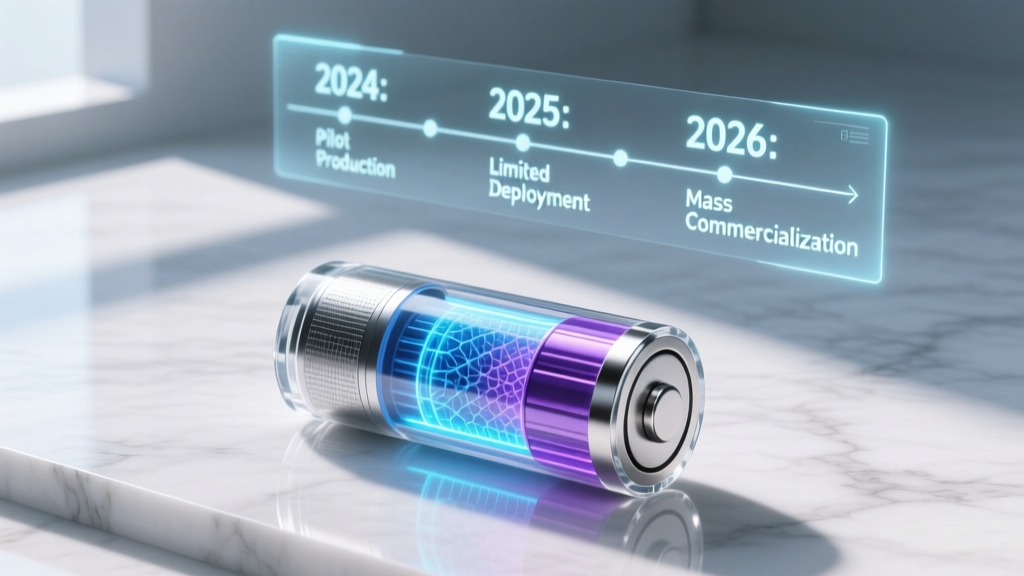
Solid-state batteries replace the liquid electrolyte with a solid material, promising higher energy density (potentially 400-500 Wh/kg), faster charging, and improved safety. Toyota, Samsung SDI, and QuantumScape are leading development. Toyota has announced a solid-state EV for 2027-2028 with a targeted 745-mile range, though production volumes will initially be very limited. Realistic mass-market availability: 2029-2032.
Silicon Anode Batteries
Replacing graphite anodes with silicon can increase energy density by 20-40%. Companies like Sila Nanotechnologies and Group14 Technologies are supplying silicon anode materials to battery manufacturers. Mercedes-Benz's partnership with Factorial Energy targets a silicon-dominant anode pack for testing in 2026-2027. Expect gradual integration into NMC cells starting 2027-2029.
Sodium-Ion Batteries
Sodium-ion chemistry eliminates lithium entirely, using abundant sodium instead. Energy density is lower (~120-160 Wh/kg), but cost is significantly reduced. CATL and BYD are producing sodium-ion cells for budget EVs in China. US-market availability for passenger vehicles: 2028-2030, likely in entry-level trims or urban runabouts.
These technologies are forward-looking and not currently available in production vehicles sold in the US market. LFP and NMC remain the practical choices for 2026 buyers — with the LFP cells from facilities like BlueOval Battery Park Michigan playing an increasingly central role.
LFP vs NMC: Which Is Better for Your Driving Pattern?
There is no universally "better" chemistry — the right choice depends on how you drive, where you live, and what you prioritize.
Choose LFP If:
- You want to charge to 100% daily without guilt (simplifies routine)
- You prioritize maximum cycle life and plan to keep the vehicle 10+ years
- You drive a standard-range commute and don't need 300+ miles of EPA range
- You live in a moderate climate (less concern about cold-weather range loss)
- You want a lower purchase price (LFP trims typically cost $3,000-$6,000 less)
- You operate a fleet vehicle with high daily mileage and frequent charging cycles
Choose NMC/NCA If:
- You need maximum range for frequent long-distance road trips
- You live in a cold climate and want to minimize winter range penalty
- You want the highest performance (NMC/NCA supports higher discharge rates for faster acceleration)
- You're comfortable managing charge limits (setting 80% daily, 100% for trips)
- You prioritize energy density for towing or heavy cargo applications
The cells produced at BlueOval Battery Park Michigan will primarily serve Ford's standard-range EV trims, giving budget-conscious buyers access to LFP's longevity advantages. Ford's extended-range and performance models will continue using NMC cells sourced from SK On and other suppliers.
Frequently Asked Questions
How long do EV batteries last in years and miles?
Modern liquid-cooled EV batteries (both LFP and NMC) typically last 15-20+ years or 200,000+ miles before reaching 70% capacity retention. LFP packs often exceed 3,000-5,000 charge cycles, which translates to 300,000-500,000+ miles of driving. Most EV batteries outlast the vehicle's other major components.
How much does an EV battery cost to replace in 2026?
Full pack replacement costs range from approximately $8,000 for a 60 kWh LFP pack to $28,000-$32,000 for a 130+ kWh NMC pack (e.g., F-150 Lightning Extended Range, Rivian Max Pack). Module-level repairs cost $2,000-$6,000. However, most modern packs never require replacement during typical ownership due to improved durability.
What does the EV battery warranty cover?
Federal law requires a minimum 8-year/100,000-mile battery warranty (10 years/150,000 miles in CARB states). Coverage includes manufacturing defects and capacity loss below a specified threshold — typically 70% of original capacity. If your battery falls below this threshold within the warranty period, the manufacturer repairs or replaces it at no charge. Gradual degradation above the threshold is considered normal.
How do I check my EV battery's State of Health?
Use your vehicle's built-in diagnostics (available on Tesla, Hyundai/Kia, and others), an OBD-II scanner with an EV-compatible app (OBDeleven, LeafSpy, Scan My Tesla), or request a battery health report from your dealership. Third-party services like Recurrent Auto also provide free SoH tracking for connected vehicles.
Is LFP better than NMC?
Neither is universally better. LFP offers longer cycle life (3,000-5,000+ vs 1,000-2,000 cycles), lower cost, better thermal stability, and the ability to charge to 100% daily. NMC delivers 15-25% higher energy density (more range per kWh), better cold-weather performance, and higher power output. LFP suits daily commuters and high-mileage drivers; NMC suits long-range and cold-climate use.
Does frequent DC fast charging damage the battery?
DC fast charging causes slightly more degradation than Level 2 charging — approximately 1-2% additional capacity loss over the pack's life for mixed-use owners. The bigger risk is repeated fast charging in extreme heat without preconditioning. Modern thermal management systems mitigate most of this risk. Using DCFC for road trips while relying on Level 2 at home is the optimal approach.
Will BlueOval Battery Park Michigan batteries be covered by the federal tax credit?
Vehicles equipped with domestically manufactured LFP cells from BlueOval Battery Park Michigan are positioned to meet IRS §30D critical mineral and battery component sourcing requirements, potentially qualifying buyers for up to $7,500 in federal tax credits (subject to MSRP caps, buyer income limits, and annual rule changes). Always verify current eligibility on IRS.gov or consult a tax professional before purchasing.
BlueOval Battery Park Michigan represents more than a single factory — it's evidence that the EV industry is maturing into a multi-chemistry, domestically sourced ecosystem. Whether your next EV runs on LFP from Marshall, Michigan, or NMC from a global supplier, the data is clear: modern EV batteries are durable, well-warranted, and far less fragile than early skepticism suggested. Understanding your chemistry, monitoring SoH, and following basic care practices will ensure your pack delivers reliable service for the life of the vehicle.