Why a "06 Nissan Sentra Battery" Search Leads Straight to EV Battery Questions
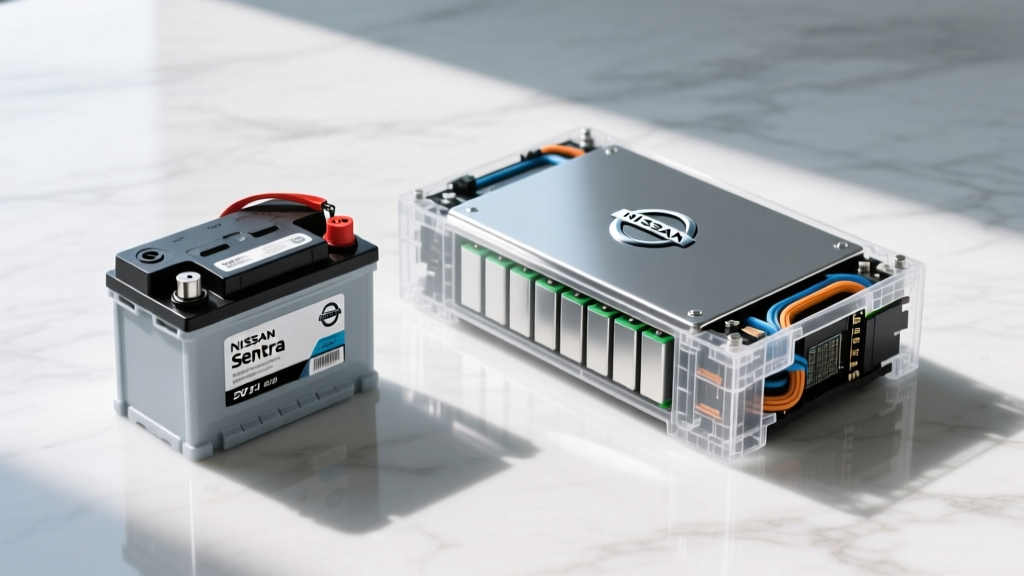
If you've landed here searching for a 06 Nissan Sentra battery, you're likely facing a familiar scenario: your 2006 Sentra won't start, and you need a 12V replacement (typically a Group 35 or 26R flooded lead-acid or AGM battery costing $120–$220 at AutoZone or Advance Auto Parts). That's a straightforward swap.
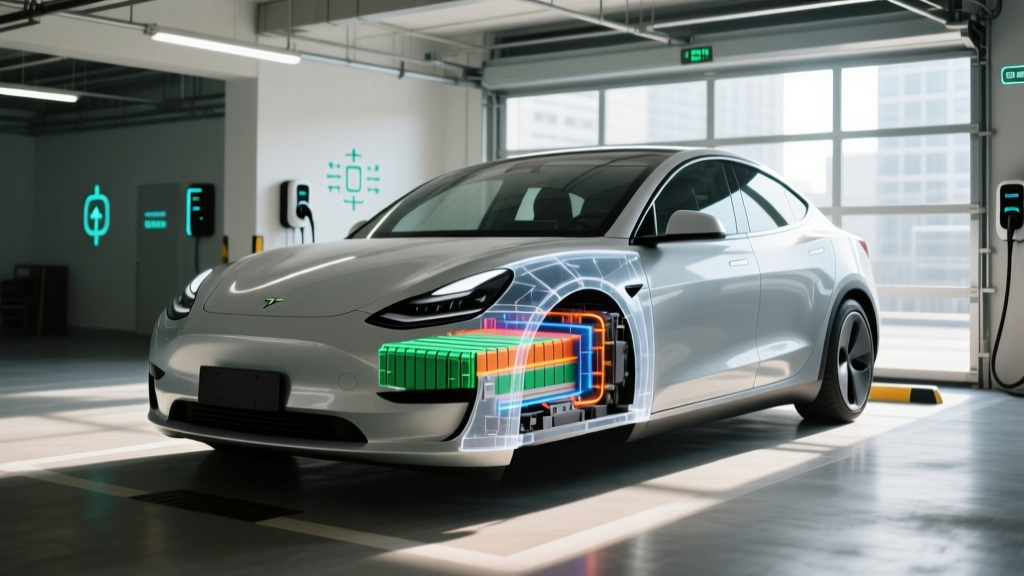
But many readers landing on that search are actually asking a bigger question in 2026: how do car batteries really work, and what happens when an EV battery degrades? The gap between a $160 lead-acid 12V battery and a $10,000+ lithium-ion EV traction battery is enormous — and understanding the difference is critical whether you're keeping a 20-year-old Sentra alive or shopping for your first EV.
This guide bridges both worlds. We'll cover what EV battery technology actually looks like today, with real degradation data, warranty terms, replacement costs, and the chemistry choices that determine how long your pack will last.
The 12V vs. High-Voltage Traction Battery: A Critical Distinction
Before diving into lithium-ion chemistry, let's eliminate the most common confusion in EV ownership:
Your 06 Sentra's 12V battery stores roughly 0.6 kWh of energy. A 2026 Nissan Ariya's traction battery stores 87 kWh usable — about 145 times more energy. That scale difference explains why EV battery replacement is a five-figure concern while a Sentra 12V swap is a parking-lot job.
LFP vs. NMC/NCA: The Chemistry Decision That Defines Your Battery's Life
Modern EV traction batteries use one of two dominant lithium-ion chemistries. The choice affects range, longevity, cold-weather performance, and price.
| Attribute | LFP (Lithium Iron Phosphate) | NMC / NCA (Nickel Manganese Cobalt / Nickel Cobalt Aluminum) |
|---|---|---|
| Energy Density | ~160–180 Wh/kg (lower) | ~220–280 Wh/kg (higher) |
| Cycle Life | 3,000–5,000+ cycles to 80% SoH | 1,000–2,500 cycles to 80% SoH |
| Cold Performance | Weaker — ~25–35% range loss below 20°F | Better — ~15–25% range loss below 20°F |
| Charging to 100% | Recommended regularly (helps BMS calibration) | Best kept at 80% daily; 100% only for trips |
| Cost per kWh | ~$85–$105/kWh (2026 pack-level) | ~$110–$140/kWh (2026 pack-level) |
| Notable 2026 Models | Tesla Model 3/Y RWD, Ford Mustang Mach-E Select (LFP option), BYD models | Hyundai Ioniq 5/6, Kia EV6/EV9, Chevy Equinox EV, BMW iX, most long-range/AWD trims |
Which is better? It depends on your use case. If you drive in moderate climates, charge at home, and want a battery that can outlast the car's body, LFP is the longevity champion. If you need maximum range per charge, live in a cold climate, or want the fastest DC charging speeds, NMC/NCA delivers higher energy density and better winter performance. Neither is universally superior — the "better" chemistry is the one matched to your driving pattern.
How Long Do EV Batteries Actually Last? Real Degradation Data
The fear that EV batteries need replacing every 5–7 years is not supported by fleet data. Here's what degradation actually looks like:
- Year 1: ~2–4% capacity loss (initial "break-in" drop)
- Years 2–5: ~1–2% loss per year (linear slow phase)
- Years 6–10: ~0.5–1.5% loss per year (plateau phase)
- At 100,000 miles: Most packs retain 88–94% of original capacity
- At 150,000 miles: Most packs retain 82–90% of original capacity
- At 200,000 miles: Data-limited, but NMC packs averaging 78–86%; LFP packs averaging 85–93%
Sources: Geotab fleet battery health study, Recurrent Auto battery data reports, Tesla Impact Reports.
The non-linear degradation pattern is important: the steepest loss happens early, then the curve flattens. A battery that has lost 5% in the first 30,000 miles has not lost 25% by 150,000 miles. Most EV batteries will outlast the mechanical components around them — suspension, HVAC compressors, and interior trim often fail before the traction pack reaches end-of-life (defined as 70% State of Health).
What Does the Battery Warranty Cover? (2026 Terms)
Federal law mandates a minimum 8-year/100,000-mile warranty on EV battery packs for emissions-related compliance in CARB states, and most manufacturers match or exceed this nationally. Here's how major brands structure coverage in 2026:
| Manufacturer | Warranty Term | Capacity Threshold | Notes |
|---|---|---|---|
| Tesla | 8 yr / 120,000 mi (Model 3/Y RWD); 8 yr / 150,000 mi (LR/Perf) | 70% retention | Covers defects + degradation below threshold |
| Hyundai / Kia | 10 yr / 100,000 mi | 70% retention | Among the longest terms in the US market |
| Ford | 8 yr / 100,000 mi | 70% retention | Applies to Mustang Mach-E, F-150 Lightning |
| GM (Chevy/Cadillac) | 8 yr / 100,000 mi | 70% retention (60% for some commercial) | Ultium packs covered; module-level repair available |
| Nissan (Ariya) | 8 yr / 100,000 mi | ~70% retention | Improved thermal management vs. early Leaf |
What's covered: Defects in materials/workmanship, and capacity loss below the stated threshold (typically 70% of original capacity). What's not covered: Damage from accidents, flooding, unauthorized modifications, or using non-approved charging equipment. Normal gradual degradation above the threshold is expected and not warrantable.
EV Battery Replacement Cost: What It Actually Takes
Out-of-warranty battery replacement is the number-one fear among prospective EV buyers. Here's what it costs in 2026 — and how often it's actually needed:
| Vehicle / Battery Size | Full Pack Replacement Cost | Module-Level Repair | When Typically Needed |
|---|---|---|---|
| Nissan Leaf (40–62 kWh) | $6,500–$9,000 | $1,500–$3,000 per module | 150,000+ mi (early Leafs degraded faster due to passive cooling) |
| Tesla Model 3/Y (60–82 kWh) | $12,000–$16,000 | $3,000–$5,500 (5 modules) | 200,000+ mi; rare failures before that |
| Hyundai Ioniq 5 (77.4 kWh) | $11,000–$15,000 | $2,500–$4,500 per module group | 180,000+ mi projected |
| Ford F-150 Lightning (98–131 kWh) | $18,000–$25,000 | $4,000–$7,000 per module | 200,000+ mi projected; larger packs degrade slower in % terms |
| Chevy Equinox EV (85 kWh) | $10,000–$14,000 | $2,500–$4,000 per module | 175,000+ mi projected |
The reality check: According to data from Recurrent Auto, fewer than 2% of EVs in their study cohort have required a full battery replacement — and the vast majority of those were covered under warranty. For comparison, your 06 Sentra will likely go through 4–6 lead-acid 12V batteries over the same period an EV traction pack lasts. The total cost of those 12V swaps ($600–$1,200) is still a fraction of one out-of-warranty EV pack replacement, but the frequency and predictability of EV battery longevity makes it a manageable risk.
Factors That Accelerate (or Preserve) Battery Life
Battery degradation is not purely a function of time. Your habits matter significantly:
- ✅ Keep daily SoC between 20–80% for NMC/NCA packs (charge to 100% only before long trips). LFP packs should be charged to 100% at least weekly for BMS calibration.
- ✅ Minimize DC fast charging to road trips. Daily Level 2 home charging (7–11.5 kW) is gentler on cells. Studies show exclusive DCFC use can add 1–3% extra degradation over 100k miles.
- ✅ Precondition before fast charging. Most EVs do this automatically when you navigate to a charger. Cold batteries charge slower and accept charge less efficiently.
- ✅ Avoid prolonged storage at 100% or 0% SoC. If leaving the car for weeks, set charge limit to ~50%.
- ✅ Park in shade or a garage when possible. Sustained heat above 95°F accelerates calendar degradation more than cold does.
- ❌ Don't obsess over avoiding regen braking. The thermal load from regen is minimal compared to DC fast charging. Use your car normally.
- ❌ Don't trickle-charge to 100% every night on an NMC pack. Set your charge limit and let the car manage the rest.
How to Check Your EV Battery's State of Health (SoH)
State of Health (SoH) is the percentage of original capacity your battery currently holds. A new pack is 100% SoH; a pack with 10% degradation is at 90% SoH. Here's how to monitor it:
- In-car displays: Tesla shows battery health in the service menu (Software → Battery Health on recent updates). Hyundai/Kia displays SoH in the EV settings menu. Nissan Ariya shows estimated range trends that correlate to SoH.
- OBD-II diagnostic apps: Tools like Leaf Spy (Nissan), Scan My Tesla, or Car Scanner ELM OBD2 can read the BMS (Battery Management System) directly and report SoH, cell voltage variance, and cycle count.
- Dealer diagnostic reports: Any authorized service center can pull a full battery health report. Request one before buying a used EV — it's the EV equivalent of a compression test.
- Third-party services: Companies like Recurrent and AVT offer battery health reports based on telematics data, useful for pre-purchase inspections.
A healthy used EV should show SoH above 90% at under 60,000 miles, and above 85% at under 100,000 miles. Anything below 80% on a vehicle still under warranty should trigger a warranty claim.
What's Next: Solid-State and Silicon Anode Batteries
Emerging battery technologies promise step-change improvements, but realistic timelines matter:
- Solid-state batteries (replacing liquid electrolyte with a solid conductor) promise 30–50% more energy density, faster charging, and reduced fire risk. Toyota has announced pilot production for 2027–2028, with limited deployment in luxury models first. Mass-market availability is not expected before 2030. Samsung SDI and QuantumScape are also in advanced testing phases.
- Silicon anode batteries (replacing graphite anodes with silicon for higher lithium-ion capacity) are closer to market. Sila Nanotechnologies and Group14 are supplying silicon-dominant anode materials to manufacturers now, with incremental 10–20% energy density gains appearing in 2026–2027 model-year vehicles. These are evolutionary, not revolutionary — they improve existing NMC cells rather than replacing the chemistry entirely.
- Sodium-ion batteries (using sodium instead of lithium) are entering production in China via CATL and BYD for budget city cars. US-market availability is not expected before 2028 and will likely target fleet/entry-level vehicles where cost matters more than range.
Bottom line: If you're buying an EV in 2026, current lithium-ion technology (both LFP and NMC) is mature, well-understood, and backed by extensive real-world data. Waiting for solid-state means waiting 3–5+ years for limited availability at premium prices.
Frequently Asked Questions
How long do EV batteries last in years and miles?
Most modern EV batteries (2020 and later) are engineered for 150,000–200,000+ miles before reaching 70–80% State of Health. In calendar years, that's typically 12–20 years for an average driver (12,000–15,000 miles/year). Early EVs like the 2011–2017 Nissan Leaf degraded faster due to passive air cooling and smaller packs operated at higher C-rates, but liquid-cooled packs from 2020 onward show significantly better longevity.
How much does an EV battery cost to replace in 2026?
Full pack replacement ranges from $6,500 (Nissan Leaf) to $25,000 (large trucks like the F-150 Lightning Extended Range). Most mainstream EVs fall in the $10,000–$16,000 range. However, module-level repairs (replacing individual failed cell groups rather than the entire pack) cost $1,500–$7,000 and are increasingly common. Fewer than 2% of EVs currently need any battery replacement before the vehicle is retired.
What does the EV battery warranty actually cover?
Standard warranties cover defects in materials and workmanship, plus capacity degradation below a threshold (usually 70% of original capacity) within 8 years/100,000 miles minimum (10 years/100,000 miles for Hyundai/Kia). They do not cover accident damage, flood damage, unauthorized modifications, or normal gradual degradation above the threshold. Always check your specific manufacturer's warranty document for exclusions.
How do I check and maximize my EV battery health?
Check SoH through your car's built-in display, an OBD-II diagnostic app (Leaf Spy, Scan My Tesla, Car Scanner), or a dealer diagnostic report. To maximize longevity: charge NMC packs to 80% daily and 100% only for trips; charge LFP packs to 100% at least weekly; minimize DC fast charging; precondition before fast charging; avoid storing at extreme SoC levels; and park in cool/shaded areas when possible.
LFP vs NMC — which battery chemistry should I choose?
Choose LFP if: you want maximum cycle life (3,000–5,000+ cycles), live in a moderate climate, charge primarily at home, and want the lowest cost per kWh. Choose NMC/NCA if: you need maximum range per charge, live in a cold climate (better winter performance), want the fastest DC charging speeds, or are buying a long-range/AWD trim (which typically uses NMC). Neither chemistry is universally "better" — they're optimized for different priorities.
Is an EV battery replacement more expensive than maintaining a gas car's powertrain?
Context matters. A $12,000 EV battery replacement at 180,000 miles sounds steep — but by that mileage, a gas car may have needed a $3,000–$5,000 transmission rebuild, $1,500–$3,000 in timing belt/chain service, $800–$1,500 in catalytic converter replacement, and thousands more in oil changes, spark plugs, and exhaust repairs. Over 200,000 miles, total powertrain maintenance for an EV (including a potential battery replacement) often compares favorably to ICE cumulative costs. Your 06 Sentra will need far fewer expensive repairs than an EV battery replacement — but it will also never see 200,000 miles without significant mechanical work.