If you've searched for a 06 Chevy Equinox battery, you're likely dealing with a conventional 12-volt lead-acid replacement — a Group 34 or Group 48 flooded or AGM cell that starts a 3.4L V6 engine. That's a $140–$220 parts-counter purchase. But if you landed here because you're comparing that simple swap to the high-voltage traction batteries powering 2026 electric vehicles, you've found the right guide.
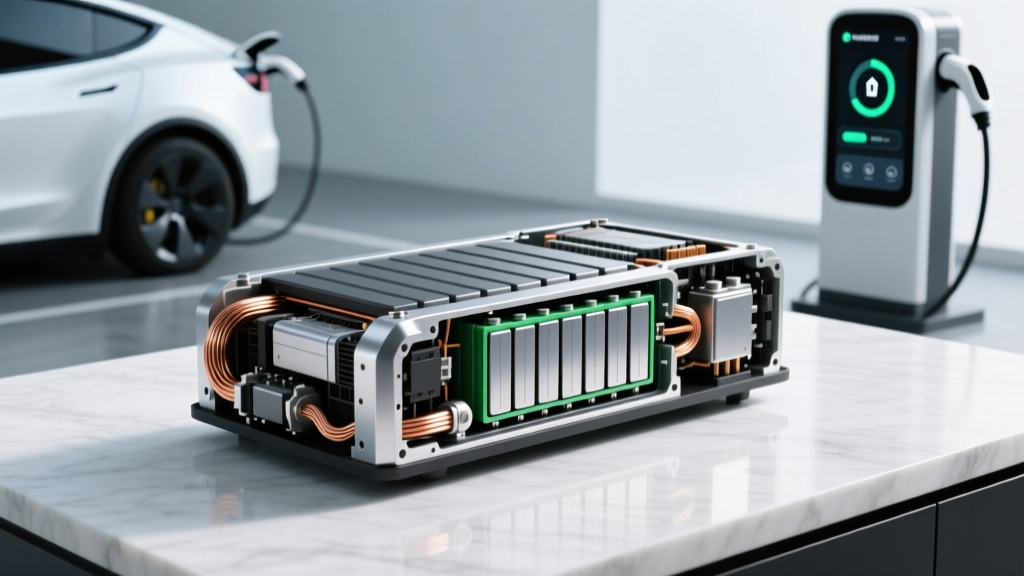
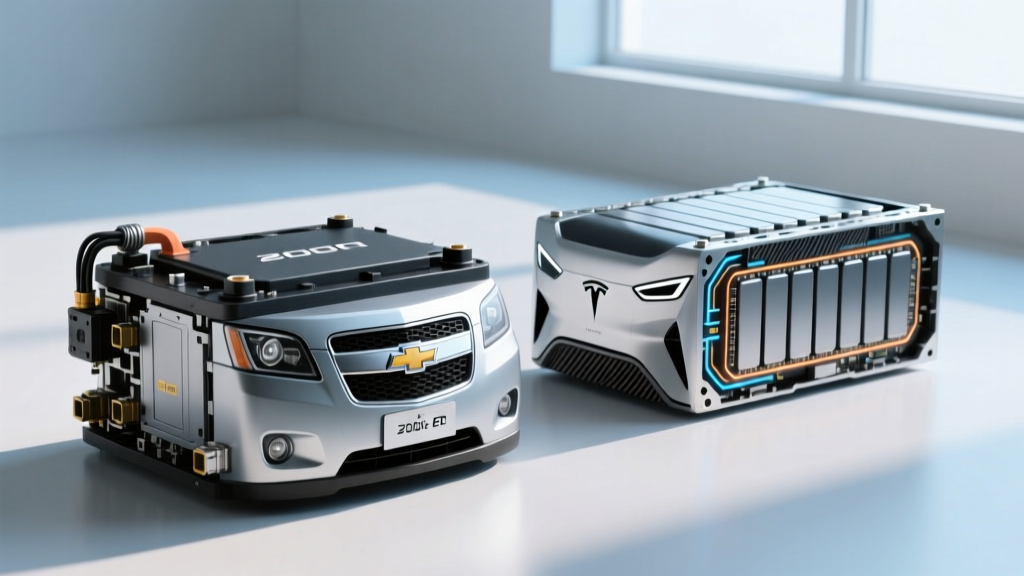
The distance between a 2006 Equinox 12V battery and a 2026 EV lithium-ion pack is staggering: one stores roughly 0.7 kWh of energy and weighs 40 pounds; the other stores 65–100+ kWh, weighs 800–1,200 pounds, and uses advanced thermal management to last 200,000+ miles. This article uses that contrast as a teaching tool — walking through every aspect of modern EV battery technology, from chemistry and degradation to replacement cost and warranty coverage.
EV Battery Chemistry in 2026: LFP vs NMC vs NCA
Not all lithium-ion batteries are the same. The cathode chemistry determines energy density, lifespan, cold-weather behavior, and cost. In 2026, three chemistries dominate the EV market:
- LFP (Lithium Iron Phosphate): Used in standard-range Tesla Model 3/Y, base Ford Mustang Mach-E, and the Chevrolet Equinox EV 2LT. No cobalt or nickel.
- NMC (Nickel Manganese Cobalt): Found in extended-range and performance models — Hyundai Ioniq 5, BMW iX, Ford F-150 Lightning Extended Range.
- NCA (Nickel Cobalt Aluminum): Primarily Tesla's long-range and performance packs.
| Attribute | LFP | NMC (811) | NCA |
|---|---|---|---|
| Energy Density (cell-level) | 160–180 Wh/kg | 250–300 Wh/kg | 260–310 Wh/kg |
| Typical Cycle Life (to 80% SoH) | 3,000–5,000 cycles | 1,000–2,000 cycles | 1,000–1,500 cycles |
| Cold Performance (at -10°C / 14°F) | Moderate loss (~25–35% range reduction) | Better low-temp conductivity (~15–25% loss) | |
| Fast-Charging Tolerance | Excellent — handles daily DCFC well | Good — prefers 20–80% SoC window | |
| Recommended Daily Charge Limit | 100% (LFP benefits from full charges) | 80% (to slow degradation) | |
| Cobalt / Nickel Content | None | Yes (varies by ratio) | Yes (lower cobalt than NMC) |
| Relative Pack Cost ($/kWh) | $95–$115 | $120–$145 | $125–$150 |
| Notable 2026 Vehicles | Tesla Model 3 RWD, Equinox EV 2LT, base Mach-E | Ioniq 5, EV6, F-150 Lightning ER, BMW iX | Tesla Model Y LR, Model S |
LFP vs NMC — Which Is Better and Why?
There is no universal winner. LFP is better for cost-conscious buyers who charge at home daily and don't need maximum range. Its longer cycle life (potentially 4,000+ cycles before hitting 80% State of Health) means it will likely outlast the vehicle. The trade-off: lower energy density means heavier packs for the same range, and worse cold-weather performance.
NMC is better for range-maximizing buyers who take road trips and need every EPA mile. Higher energy density means lighter, more compact packs. The trade-off: shorter cycle life, higher cost, and more sensitivity to sustained high SoC (keeping it at 100% accelerates degradation).
How Long Do EV Batteries Last? Real Degradation Data
The most persistent myth in EV ownership is that batteries need replacing every few years — like the 12V battery in your 06 Equinox. Real-world data from millions of EV miles tells a very different story.
According to data compiled by Recurrent Auto, which tracks over 15,000 EVs in real-world conditions, the average EV battery retains approximately:
- 95–97% State of Health (SoH) after 1 year / 15,000 miles
- 90–93% SoH after 3 years / 45,000 miles
- 85–90% SoH after 5 years / 75,000 miles
- 80–87% SoH after 8 years / 120,000 miles
- 75–83% SoH after 10 years / 150,000 miles
What Causes the Steep-Then-Flat Degradation Curve?
EV batteries experience their fastest capacity loss in the first 12–18 months (typically 3–5%), then settle into a slow, linear decline of roughly 1–2% per year. This initial drop is caused by solid electrolyte interphase (SEI) layer formation on the anode — a normal electrochemical process. After that, degradation is gradual and predictable.
What Does the EV Battery Warranty Cover?
Federal law mandates a minimum 8-year/100,000-mile warranty on EV battery packs for emissions-related compliance, and every major automaker meets or exceeds this. Here's what 2026 warranties look like:
| Manufacturer | Duration | Mileage | Capacity Threshold | Chemistry |
|---|---|---|---|---|
| Tesla (Model 3/Y RWD — LFP) | 8 years | 100,000 mi | 70% retention | LFP |
| Tesla (Model 3/Y LR — NCA) | 8 years | 120,000 mi | 70% retention | NCA |
| Chevrolet (Equinox EV) | 8 years | 100,000 mi | 70% retention (60% for fleet) | LFP (2LT) / NMC (RS) |
| Hyundai / Kia | 10 years | 100,000 mi | 70% retention | NMC |
| Ford (F-150 Lightning) | 8 years | 100,000 mi | 70% retention | NMC |
| BMW (iX, i4) | 8 years | 100,000 mi | 70% retention | NMC |
| Rivian (R1T, R1S) | 8 years | 175,000 mi | 70% retention | NMC (Max) / LFP (Standard) |
The 70% threshold is critical: if your battery drops below 70% of original capacity within the warranty period, the manufacturer must repair or replace it at no cost. In practice, warranty claims are rare — most packs retain well above 70% at the 8-year mark.
EV Battery Replacement Cost: What You'll Actually Pay
Out-of-warranty battery replacement is the cost that haunts EV-curious buyers. Here's the 2026 reality:
| Vehicle Class | Pack Size | Replacement Cost (Parts + Labor) | Typical Replacement Timeline |
|---|---|---|---|
| Compact EV (e.g., Chevy Equinox EV) | 65–85 kWh | $9,000–$14,000 | Rarely before 150,000+ mi |
| Midsize Sedan/Crossover (Tesla Model 3, Ioniq 5) | 75–84 kWh | $11,000–$16,000 | Rarely before 150,000+ mi |
| Full-Size Truck/SUV (F-150 Lightning, Rivian R1T) | 100–135 kWh | $16,000–$25,000 | Rarely before 150,000+ mi |
| Luxury EV (BMW iX, Mercedes EQS) | 100–120 kWh | $18,000–$30,000 | Rarely before 150,000+ mi |
When Is Replacement Actually Needed?
Full pack replacement is uncommon. More often, individual modules within the pack can be serviced (on designs that allow it). Most EVs reach end-of-life due to collision damage, electronics failure, or economic obsolescence — not battery death. Data from IIHS and manufacturer service bulletins show that fewer than 2% of EVs require traction battery replacement before 150,000 miles.
Factors That Affect EV Battery Life
Your battery's longevity isn't random. These are the variables you control:
1. State of Charge (SoC) Habits
For NMC/NCA batteries, the 20–80% SoC window minimizes stress. Sitting at 100% for extended periods (days, not hours) accelerates electrolyte decomposition. LFP batteries are the exception — they tolerate and even benefit from periodic 100% charges, which help the battery management system (BMS) recalibrate cell balancing.
2. DC Fast Charging Frequency
Occasional DC fast charging (1–2 times per week on road trips) has minimal impact. Daily DCFC sessions, especially at 250+ kW on a battery not preconditioned, can increase degradation by 1–3% over several years. The effect is real but smaller than early EV fear-mongering suggested.
3. Temperature Extremes
Heat is the primary enemy of lithium-ion longevity. Battery packs in Phoenix or Houston will degrade 2–5% more over 8 years than identical packs in Seattle or Minneapolis. Modern EVs use active liquid cooling to mitigate this, but sustained ambient temperatures above 95°F still accelerate calendar aging. Extreme cold doesn't permanently damage cells but temporarily reduces available capacity (15–35% range loss at 14°F, recovering when the pack warms).
4. Depth of Discharge
Regularly draining the battery to 5% or below stresses cells more than shallow cycles. A daily commute that uses 30–40% of capacity and recharges to 80% is gentler than frequent full-cycle deep discharges.
- Set daily charge limit to 80% (NMC/NCA) or 100% (LFP)
- Use Level 2 home charging as your primary method — reserve DCFC for road trips
- Enable battery preconditioning before fast charging (most EVs do this automatically when a charger is set as your navigation destination)
- Avoid leaving the vehicle at 100% SoC for more than 24 hours
- In extreme heat, park in shade or a garage when possible
- Don't let SoC drop below 10% regularly — charge before it gets critical
- Use scheduled departure charging to minimize time at peak SoC
How to Check and Monitor Battery Health (SoH)
State of Health (SoH) is the percentage of original capacity your battery can still hold. A new pack is 100% SoH; at 70% SoH, an 85 kWh pack holds ~59.5 kWh usable.
Methods Available in 2026:
In-Vehicle Displays: Most 2026 EVs show battery health in the settings menu. Tesla displays estimated range at 100% (which you can compare to the original EPA figure). Hyundai/Kia provides a SoH percentage directly. The Chevrolet Equinox EV shows battery health via the Driver Information Center.
OBD-II Dongles + Apps: Third-party tools like OBDeleven, Car Scanner ELM OBD2, or Scan My Tesla can read detailed BMS data including cell voltage variance, pack SoH, and individual module temperatures. These cost $30–$60 for the dongle plus a free or low-cost app subscription.
Dealer Diagnostics: Any authorized service center can pull a full battery health report. Request this before buying a used EV — it's the most reliable SoH measurement available.
Third-Party Services: Companies like Recurrent Auto offer free battery health reports that compare your pack to fleet averages for your specific model and climate zone.
Emerging Battery Technology: What's Next (2027 and Beyond)
The battery landscape is evolving rapidly, but timelines matter. Here's what's real versus what's still in the lab:
Silicon Anode Batteries
Companies like Sila Nanotechnologies and Group14 are replacing graphite anodes with silicon-dominant materials, boosting energy density by 20–40%. These are entering limited production in 2026–2027 (the Mercedes G-Class EV uses a Sila anode). Expect broader adoption by 2028–2029.
Semi-Solid-State Batteries
These replace the liquid electrolyte with a gel or ceramic-polymer composite, improving safety and energy density. NIO's 150 kWh semi-solid pack is available in China (2024–present). US-market availability is projected for 2027–2028, likely in premium vehicles first.
True Solid-State Batteries
Fully solid electrolytes promise 2x energy density, faster charging, and near-zero fire risk. Toyota, Samsung SDI, and QuantumScape target 2028–2030 for limited production. These are not yet available in any production vehicle as of 2026. Realistic mass-market timelines extend into the early 2030s.
From 2006 to 2026: The Battery Evolution in Perspective
The 06 Chevy Equinox battery is a $180 commodity item: 12 volts, ~0.7 kWh of stored energy, 3–5 year lifespan, no thermal management, no software. The 2026 Chevrolet Equinox EV's 85 kWh LFP pack is a $12,000+ engineered system: 400 volts nominal, liquid-cooled, BMS-managed, warrantied for 8 years, and designed to deliver 319 miles of EPA range for 200,000+ miles.
That 120x increase in energy capacity — coupled with a 4–5x increase in lifespan — represents one of the most significant engineering transformations in automotive history. Understanding the chemistry, degradation patterns, and care requirements of modern EV batteries isn't just academic — it's essential to making a confident purchase decision.
Frequently Asked Questions
How long do EV batteries last in years and miles?
Based on fleet data from Recurrent Auto and manufacturer reports, most 2026 EV batteries retain 80–87% of original capacity at 8 years / 120,000 miles, and 75–83% at 10 years / 150,000 miles. LFP chemistry packs often exceed these figures. Full replacement before 150,000 miles is statistically rare (under 2% of vehicles).
How much does an EV battery cost to replace?
Out-of-warranty replacement costs range from $9,000–$14,000 for compact EVs (65–85 kWh packs) to $16,000–$30,000 for large trucks and luxury vehicles (100–135 kWh packs). Most vehicles never need this service — the battery outlasts the car's economic value.
What does the EV battery warranty cover?
All 2026 EV batteries carry a minimum 8-year/100,000-mile warranty guaranteeing 70% capacity retention (some manufacturers like Hyundai/Kia offer 10 years). If SoH drops below the threshold within the warranty period, the manufacturer repairs or replaces the pack at no charge.
How do I check my EV battery's State of Health?
Use your vehicle's built-in battery health display (most 2026 EVs include one), an OBD-II dongle with a battery diagnostics app ($30–$60), a dealer diagnostic report, or a third-party service like Recurrent Auto. Check SoH before purchasing any used EV.
Is LFP or NMC better for my EV battery?
LFP is better for daily drivers who charge at home, prioritize longevity, and don't need maximum range — it offers 3,000–5,000 cycle life and tolerates 100% charging. NMC is better for road-trip-heavy drivers who need maximum energy density and range — it offers 1,000–2,000 cycles and performs better in cold weather. Neither is universally superior.
Does fast charging damage my EV battery?
Occasional DC fast charging (1–2x per week) has minimal impact on longevity. Daily DCFC sessions without preconditioning can increase degradation by 1–3% over several years. Modern BMS systems actively manage charge rates and temperatures to protect cells, but Level 2 home charging remains the gentlest method for daily use.
Can I replace just one module instead of the whole pack?
On some pack designs (including certain Tesla, Hyundai, and BMW architectures), individual modules can be replaced rather than the entire pack. This reduces out-of-warranty costs significantly. However, module-level service requires specialized high-voltage training and should only be performed by certified technicians.