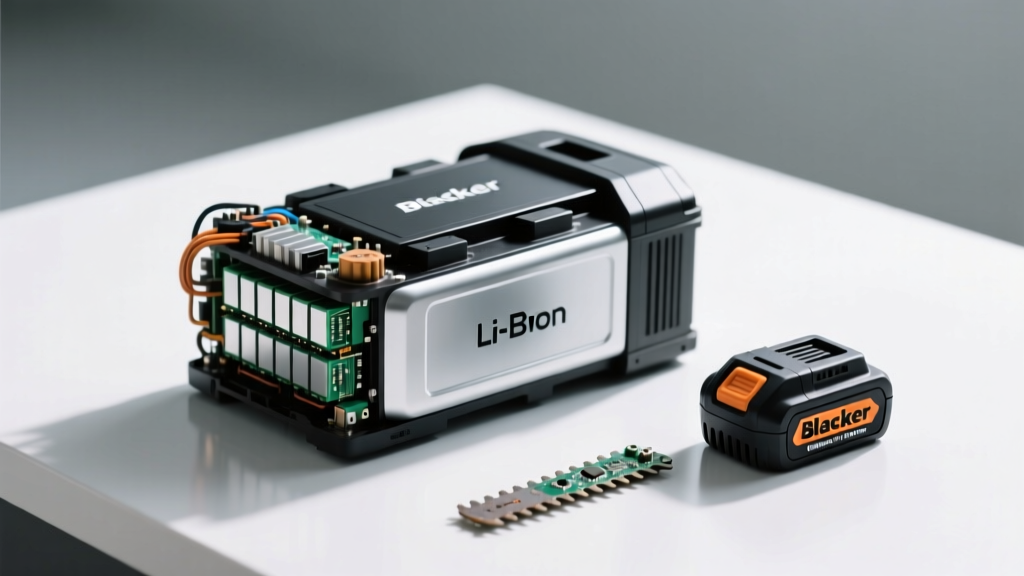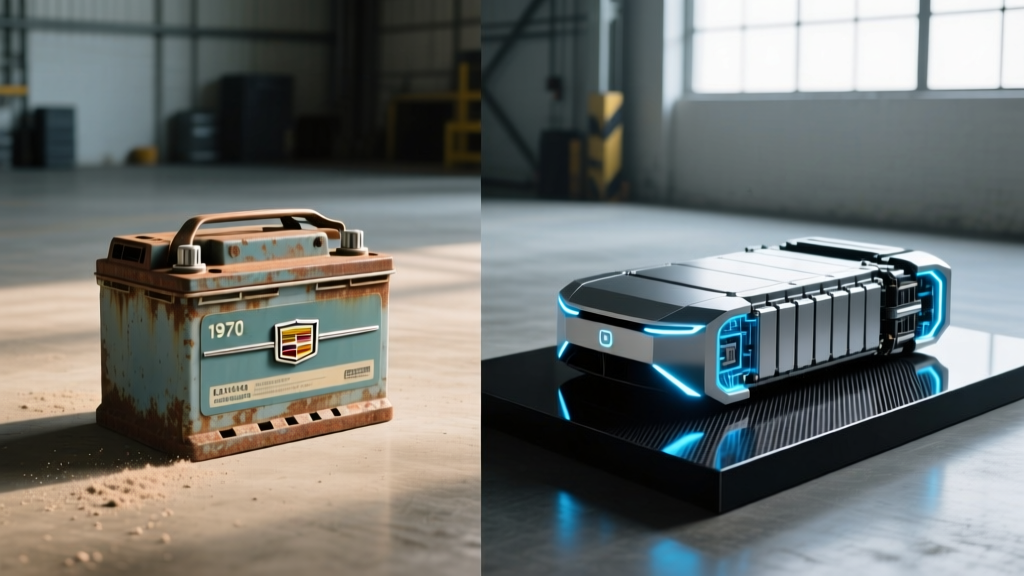
If you've ever replaced the 12V battery in a 2004 Cadillac DeVille, you know the drill: a $150–$200 Group 79 AGM or lead-acid unit, swapped in the driveway in twenty minutes. That experience shapes expectations — and anxieties — when shoppers first encounter a modern electric vehicle's high-voltage traction battery. The two systems share almost nothing in common beyond the word "battery," yet the confusion persists. This guide uses that familiar reference point to explain exactly what sits under the floor of a 2026 EV, how long it lasts, what it costs to replace, and what you can do to maximize its lifespan.
The Chemistry Inside Modern EV Batteries
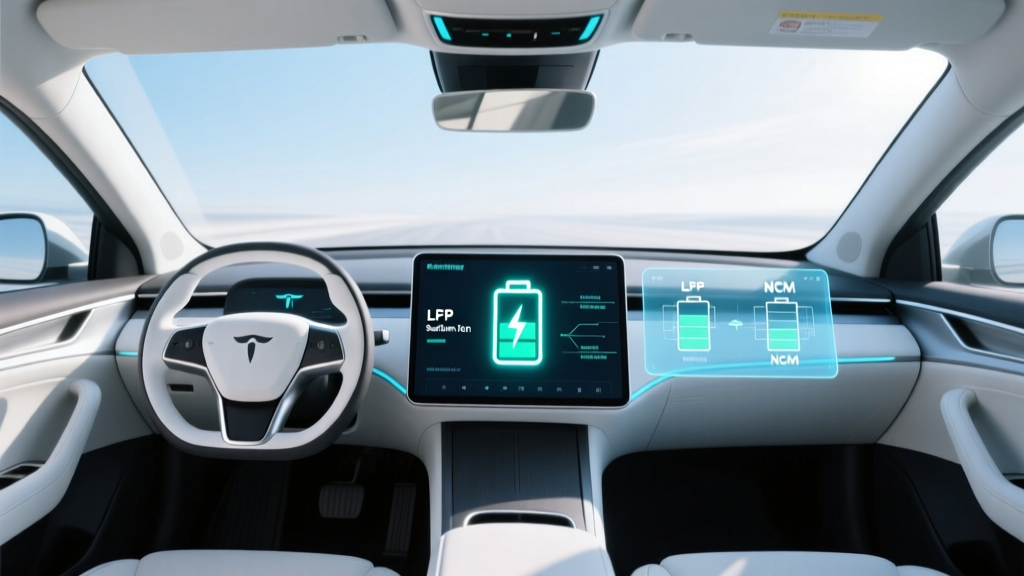
Every EV sold in the US in 2026 uses lithium-ion cells, but the cathode chemistry varies significantly between models. The two dominant families are NMC (nickel manganese cobalt) / NCA (nickel cobalt aluminum) and LFP (lithium iron phosphate). The choice affects range, longevity, cost, and cold-weather behavior — and understanding the trade-off is the single most important battery decision you'll make as a buyer.
| Attribute | LFP (Lithium Iron Phosphate) | NMC / NCA |
|---|---|---|
| Energy Density | Lower (~160–180 Wh/kg cell-level) | Higher (~220–300 Wh/kg cell-level) |
| Cycle Life | 3,000–6,000+ full cycles | 1,000–2,500 full cycles |
| Calendar Aging | Slower; tolerates high SoC storage | Faster at high SoC; prefers 50–80% storage |
| Cold Performance | Weaker — greater range loss below 32°F | Better low-temp discharge and charge acceptance |
| Cost (per kWh) | Lower — no cobalt or nickel | Higher — commodity-sensitive metals |
| Thermal Stability | Excellent — very resistant to thermal runaway | Good with active management; more sensitive |
| SoC Estimation | Flat voltage curve makes gauge less precise | Sloped voltage curve — accurate gauge |
| Typical 2026 Vehicles | Tesla Model 3/Y RWD, Ford Mustang Mach-E Select, Chevrolet Equinox EV | Tesla Long Range, Hyundai Ioniq 5/6, Rivian R1T/R1S, BMW iX |
Which is better? There is no universal winner. LFP is the pragmatic choice for daily commuters who charge at home, want maximum cycle life, and don't regularly drive in sub-freezing weather. NMC/NCA earns its premium for buyers who need maximum range per charge, tow frequently, or live in cold climates. Both chemistries in 2026 vehicles are engineered to outlast 200,000 miles with proper care — the data supports this, as we'll cover below.
How Long Do EV Batteries Actually Last?
The short answer: longer than most buyers assume, and almost certainly longer than you kept your last gas car. Real-world fleet data from multiple manufacturers and independent studies consistently shows that modern liquid-cooled lithium-ion packs lose roughly 10–15% of their original capacity over 150,000–200,000 miles.
- Tesla fleet average: ~12% capacity loss at 200,000 miles (per Tesla's 2025 Impact Report, covering Model 3/Y vehicles from 2018–2023)
- Nissan Leaf (passive air-cooled, 2013–2017): 20–30% loss at 100,000 miles — a cautionary data point for thermal management importance
- Chevrolet Bolt EV/EUV (liquid-cooled, 65 kWh NMC): ~8–12% loss at 100,000 miles per owner-reported datasets
- Hyundai/Kia E-GMP platform (Ioniq 5, EV6): ~5–10% loss at 60,000 miles in early fleet data
- LFP packs (Tesla Model 3 RWD): Showing as little as 5–8% loss at 100,000 miles in high-mileage taxi/rideshare samples
The pattern is clear: liquid-cooled packs with active thermal management degrade far more slowly than the passively cooled packs of the early 2010s. Calendar aging (time-based degradation regardless of mileage) also plays a role — expect roughly 1.5–2.5% loss per year even if the car sits. For a 2026 EV with a 75 kWh battery and 300-mile EPA range, a 12% loss at 200,000 miles means you'd still have approximately 264 miles of range. That's still more daily utility than most drivers need.
To put this in perspective with our reference vehicle: the 04 Cadillac DeVille's 4.6L Northstar V8 was rated for roughly 150,000–200,000 miles before major engine work was common. The EV equivalent — the traction battery — is lasting at least that long with a fraction of the maintenance.
What Does the EV Battery Warranty Actually Cover?
Federal law (via EPA and CARB regulations adopted by most states) effectively mandates that EV manufacturers warrant the battery pack for a minimum of 8 years / 100,000 miles. California Air Resources Board (CARB) states — which include CA, NY, WA, CO, OR, and over a dozen others — require 10 years / 150,000 miles for PZEV/TZEV-classified vehicles, and many manufacturers apply this standard nationwide for simplicity.
| Manufacturer | Coverage Period | Capacity Retention Threshold | Notes |
|---|---|---|---|
| Tesla | 8 yr / 120,000 mi (Model 3/Y RWD); 8 yr / 150,000 mi (LR/Performance) | 70% | Covers defects + capacity below threshold |
| Hyundai / Kia | 10 yr / 100,000 mi | 70% | Among the longest calendar terms |
| General Motors (Chevrolet, Cadillac) | 8 yr / 100,000 mi | 70% (some models 60%) | Ultium platform; verify per model |
| Ford | 8 yr / 100,000 mi | 70% | Mustang Mach-E, F-150 Lightning |
| BMW | 8 yr / 100,000 mi | 70% | iX, i4, i7 |
| Rivian | 8 yr / 175,000 mi (R1T Max Pack) | 70% | Higher mileage cap on larger packs |
The capacity retention threshold is the critical number. A 70% threshold means the manufacturer will repair or replace the battery (or individual modules, where supported) if diagnostic testing confirms it has fallen below 70% of its original usable capacity within the warranty window. Normal degradation above that threshold is not a warranty claim — it's expected wear, like brake pads on any vehicle.
How Much Does an EV Battery Replacement Cost?
This is the question that drives the most anxiety, and it deserves a direct, data-backed answer. Full battery pack replacement costs in 2026 range from roughly $5,000 to $22,000 depending on pack size, chemistry, and labor — but the context matters enormously.
| Vehicle / Pack Size | Chemistry | Parts Cost (est.) | Labor + Total (est.) |
|---|---|---|---|
| Tesla Model 3 RWD (~57 kWh) | LFP | $5,000–$8,000 | $7,000–$10,000 |
| Tesla Model Y LR (~75 kWh) | NMC | $8,000–$12,000 | $10,000–$15,000 |
| Hyundai Ioniq 5 (~77.4 kWh) | NMC | $9,000–$14,000 | $12,000–$17,000 |
| Ford F-150 Lightning Ext. Range (~131 kWh) | NMC | $15,000–$20,000 | $18,000–$22,000 |
| Chevrolet Equinox EV (~85 kWh) | NMC (Ultium) | $8,000–$13,000 | $11,000–$16,000 |
When is replacement typically needed? Based on current degradation curves, most liquid-cooled EV batteries from 2020 onward are not reaching the 70% capacity threshold until well past 200,000 miles — if they reach it at all within the vehicle's practical life. The vast majority of EVs will be retired for collision damage, body rust, or interior wear before the battery requires full replacement. Module-level repair (replacing individual cell groups rather than the entire pack) is increasingly supported by manufacturers like GM and Hyundai, reducing out-of-warranty costs to $2,000–$5,000 for a partial fix.
Compare this to the 04 Cadillac DeVille: a Northstar V8 head gasket failure — common on that engine — ran $2,500–$4,000 in 2010s labor rates, and a full engine rebuild could exceed $5,000. The EV equivalent is a rarer event and increasingly serviceable at the module level.
What Affects EV Battery Life? A Care Guide
Battery degradation is driven by three primary stressors: heat, high state of charge, and charge rate. Managing these is the difference between a pack that lasts 250,000 miles with 85% capacity remaining and one that hits 70% at 150,000 miles.
- Daily charging limit: Set to 80% for NMC/NCA packs. LFP packs can (and should) be charged to 100% at least weekly for SoC calibration — their chemistry tolerates full charge better.
- Avoid prolonged 100% storage: Don't charge to 100% and leave the car parked for days. If you need full range for a road trip, time the charge to finish close to departure.
- DC fast charging: Occasional use (road trips) is fine. Daily DCFC — especially at 250+ kW on a hot pack without preconditioning — accelerates degradation. Prioritize Level 2 home charging for daily needs.
- Precondition before fast charging: Use the car's navigation-based preconditioning (Tesla, Hyundai, Ford, BMW all support this) to bring the battery to optimal temperature before arriving at a DC fast charger. This reduces charge time AND degradation.
- Extreme heat: If you live in Phoenix, Las Vegas, or similar climates, park in shade or a garage when possible. Sustained pack temperatures above 95°F accelerate calendar aging.
- Extreme cold: Cold doesn't degrade the battery permanently, but it does temporarily reduce range (20–40% loss below 20°F is normal) and slow charge acceptance. Preconditioning mitigates both.
- Low SoC storage: Don't leave the car at 5–10% for weeks. Store at 40–60% if the vehicle will sit unused.
Monitoring Your Battery's State of Health (SoH)
State of Health (SoH) is the percentage of original capacity your battery currently holds. A new pack is 100% SoH; at 70% SoH, you've hit the typical warranty threshold. Here's how to check it in 2026:
- In-vehicle displays: Tesla offers a battery health estimate in the service menu (introduced via OTA in 2024). Hyundai/Kia's infotainment system includes an EV battery diagnostics page showing SoH percentage. GM's Ultium-based vehicles surface this through the myChevrolet/myCadillac app.
- OBD-II diagnostic apps: Third-party apps like Scan My Tesla, Leaf Spy (for Nissan), and Car Scanner read the BMS (Battery Management System) directly via an OBD-II dongle, showing actual vs. nominal capacity in kWh.
- Dealer diagnostics: Any authorized service center can run a full pack health report. Request this when buying a used EV — it's the EV equivalent of a compression test.
- Charging data analysis: Track how many kWh it takes to charge from 10% to 80% over time. If that number shrinks noticeably over 20,000–30,000 miles, degradation is progressing. Apps like Tessie and Recurrent automate this tracking.
Recurrent, an independent EV battery analytics company, provides free battery health reports for many popular models based on aggregated real-world fleet data, accessible at recurrentauto.com.
Emerging Battery Technology: What's Next and When
The battery landscape is evolving rapidly, but timelines matter. Here's a realistic assessment of what's coming — and what's still years away from your driveway.
Silicon-dominant anodes (2025–2027 production): Companies like Sila Nanotechnologies and Group14 are replacing graphite anodes with silicon composites, boosting energy density by 15–25%. GM has announced silicon-anode cells for select 2026–2027 Ultium-based models. This means more range from the same physical pack size, or a smaller, lighter pack for the same range.
Semi-solid-state batteries (2026–2028 limited production): Toyota, Samsung SDI, and QuantumScape are piloting semi-solid-state cells that use a solid or gel electrolyte instead of liquid. These promise 20–40% energy density gains and improved safety. Toyota has announced a 2027–2028 production target for limited models. Expect initial availability in premium vehicles at significant cost premiums.
Full solid-state batteries (2029–2032 realistic volume production): The "holy grail" — solid electrolyte, lithium metal anode, potential for 500+ mile ranges with 10-minute charging. Multiple manufacturers have announced programs, but volume manufacturing challenges remain substantial. Industry consensus, per BloombergNEF analysis, places meaningful consumer availability no earlier than 2030.
Frequently Asked Questions
How long do EV batteries last in years and miles?
Based on fleet data from Tesla, Hyundai, GM, and independent trackers like Recurrent, modern liquid-cooled EV batteries from 2020 onward typically retain 85–90% of their original capacity at 150,000 miles and 80–88% at 200,000 miles. In calendar terms, that's 12–18 years for the average driver (12,000–15,000 miles/year). Most packs will outlast the vehicle's body, interior, and suspension components.
How much does an EV battery cost to replace?
Full pack replacement ranges from approximately $7,000–$10,000 for a smaller LFP pack (Tesla Model 3 RWD) to $18,000–$22,000 for a large NMC pack (Ford F-150 Lightning Extended Range). However, most EVs never need a full replacement — module-level repairs cost $2,000–$5,000, and degradation data shows most packs remain above the 70% warranty threshold well past 200,000 miles. Cell prices have fallen roughly 90% since 2010 (per BloombergNEF), and this trend continues to push replacement costs down.
What does the EV battery warranty cover?
Federal minimum is 8 years / 100,000 miles. Many manufacturers offer 8 years / 100,000–150,000 miles, with Hyundai/Kia at 10 years / 100,000 miles. The warranty covers defects in materials/workmanship AND capacity loss below a stated threshold (typically 70% of original capacity). It does not cover damage from collisions, flooding, or unauthorized modifications. Normal degradation above the threshold is not a warranty event.
How do I check and maximize my EV battery health?
Check SoH through your vehicle's built-in diagnostics menu, a third-party OBD-II app, or a dealer service visit. To maximize lifespan: charge NMC/NCA to 80% daily (100% for LFP weekly), avoid leaving the car at 100% or below 10% for extended periods, use Level 2 home charging for daily needs, precondition before DC fast charging, and park in shade in extreme heat climates.
LFP vs NMC — which battery chemistry is better for me?
Choose LFP if you charge at home daily, want the longest possible cycle life (3,000–6,000+ cycles), don't mind slightly less range, and live in a moderate climate. Choose NMC/NCA if you need maximum range per charge, tow frequently, regularly fast-charge on road trips, or live in a cold climate where low-temperature performance matters. Both chemistries in 2026 vehicles are engineered for 200,000+ mile lifespans with proper care.
Is the 12V battery in my EV the same as a 04 Cadillac DeVille battery?
No. Your EV does have a small 12V auxiliary battery (increasingly a lithium 12V unit rather than lead-acid) that powers the computers, lights, and accessories — similar in function to the Group 79 battery in a 04 Cadillac DeVille. But the high-voltage traction battery that propels the vehicle is an entirely separate system operating at 400–800V, storing 60–130+ kWh, and weighing hundreds of pounds. The 12V battery costs $100–$300 to replace and is a routine maintenance item; the traction battery is engineered to last the life of the vehicle.
Sources: fueleconomy.gov (EPA range and efficiency data), IRS.gov (§30D Clean Vehicle Credit rules), manufacturer warranty documentation (Tesla, Hyundai, GM, Ford, BMW, Rivian — 2025–2026 model year), Recurrent Auto fleet degradation data.