Why Compare an EV Battery to a Black Decker Hedge Trimmer Battery?
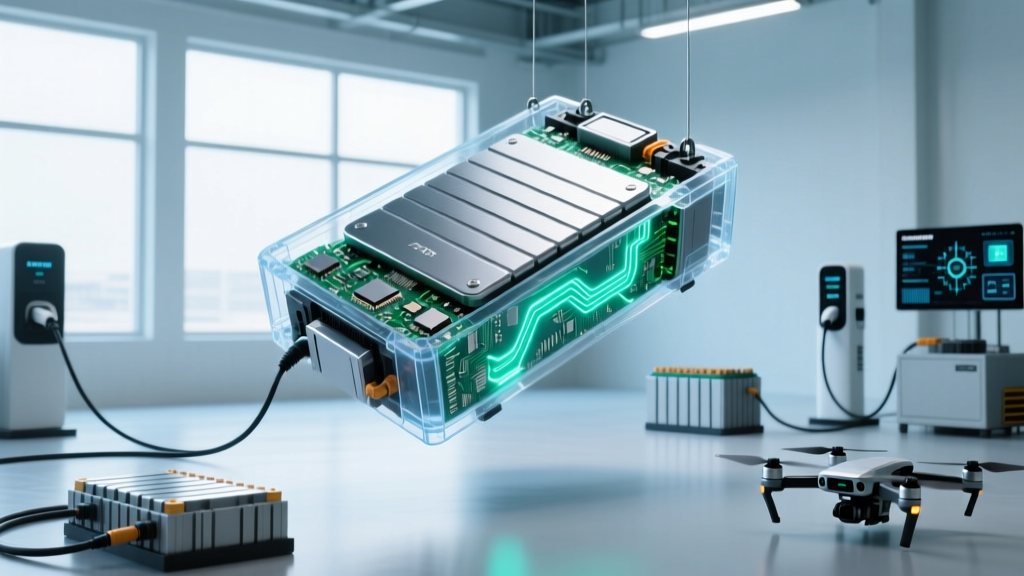
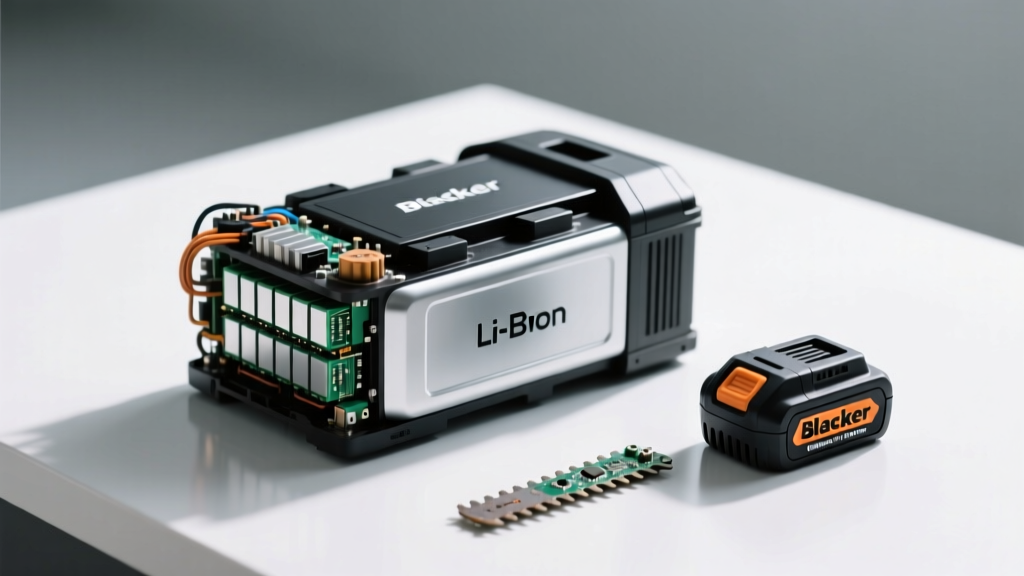
If you own a cordless yard tool, you've probably noticed the same lithium-ion branding on a Black Decker hedge trimmer battery and on the window sticker of a new electric vehicle. Both are lithium-ion. Both degrade over time. Both eventually need replacement. But the engineering, scale, and economics diverge dramatically once you look past the surface.
A 20V 2.0 Ah Black Decker hedge trimmer battery stores roughly 0.04 kWh of energy — enough to trim hedges for 30–45 minutes. A 2026 Tesla Model Y Long Range battery stores about 75 kWh usable — roughly 1,875 times more energy — and is engineered to last 200,000+ miles with managed degradation. Understanding what separates a $49 replacement power-tool pack from a $12,000+ EV traction battery illuminates the real science of battery chemistry, thermal management, and longevity that every EV buyer should grasp.
This guide covers the chemistry, degradation data, warranty terms, replacement costs, and care practices that determine how long an EV battery actually lasts — with direct comparisons to small-format lithium-ion packs where the contrast is instructive.
LFP vs NMC/NCA: The Chemistry That Defines Your EV
The single biggest battery decision you make when buying an EV is the cell chemistry. Two dominant families power nearly every EV on the road in 2026:
- NMC (Nickel Manganese Cobalt) / NCA (Nickel Cobalt Aluminum): Higher energy density, better cold-weather performance, but shorter cycle life and higher raw-material cost.
- LFP (Lithium Iron Phosphate): Lower energy density, longer cycle life, lower cost, and a flatter discharge curve — but weaker cold-weather range and heavier per kWh.
| Attribute | NMC / NCA | LFP |
|---|---|---|
| Energy Density (cell-level) | 250–300 Wh/kg | 160–200 Wh/kg |
| Typical Cycle Life | 1,000–2,000 cycles | 3,000–5,000+ cycles |
| Cold-Weather Performance | Better (lower internal resistance) | Reduced range in sub-freezing temps |
| Cost per kWh (pack-level, 2026) | ~$110–$130 | ~$75–$95 |
| Thermal Stability | Good (requires active management) | Excellent (inherently safer) |
| State-of-Charge Recommendation | Daily charge to 80% preferred | Can charge to 100% regularly |
| Notable 2026 Vehicles | Tesla Model Y LR, Hyundai Ioniq 5, BMW i4 | Tesla Model 3 RWD, Ford Mustang Mach-E Select (LFP option), BYD models |
By contrast, the lithium-ion cells inside a Black Decker hedge trimmer battery (and most cordless power tools) are typically small-format NMC 18650 or 21700 cylindrical cells — the same cell form factor Tesla used in early Model S and Model 3 vehicles. The difference is scale, thermal management, and depth-of-discharge engineering. A hedge trimmer pack has no active cooling, no cell-level balancing hardware, and is routinely drained to near-zero and left uncharged for months — conditions that would destroy an EV battery's lifespan if replicated at scale.
Which Chemistry Is Better for You?
Choose NMC/NCA if you need maximum range per charge, regularly drive in cold climates, or want the longest highway range from a given pack size. Choose LFP if you charge at home nightly, prioritize long-term cycle life and lower cost, and don't need peak cold-weather range. LFP's ability to accept daily 100% charges partially offsets its lower energy density in real-world commuting use.
How Long Do EV Batteries Actually Last?
The short answer: far longer than most buyers assume, and almost always longer than a Black Decker hedge trimmer battery — which typically delivers 300–500 charge cycles before noticeable capacity loss.
Real-World Degradation Data Points:
- Tesla fleet data (2025 Impact Report): Model S/X batteries retain approximately 88% capacity at 200,000 miles — meaning roughly 12% degradation over the vehicle's expected lifetime.
- Geotab fleet study (6,300+ EVs): Average annual degradation across all brands is approximately 1.8% per year in the first few years, tapering to roughly 1% per year after year 4–5.
- Nissan Leaf (passive-cooled NMC, earlier generations): Higher degradation observed — some 2013–2017 Leafs lost 20–30% capacity by year 8–10, largely due to lack of active thermal management in hot climates.
- Modern liquid-cooled packs (2022–2026): Most Hyundai, Kia, BMW, Ford, and Tesla models show 5–10% total degradation over 100,000 miles with normal use.
Most EV batteries in liquid-cooled 2026 models will outlast the vehicle's structural and mechanical components. The battery isn't the weak link — it's the component most likely to still be functional when the car is retired.
What Does the EV Battery Warranty Cover?
Federal regulations mandate a minimum 8-year / 100,000-mile battery warranty for EVs sold in the US (extended to 10 years / 150,000 miles in California and states adopting CARB standards). Most manufacturers exceed the floor. Here's how major 2026 warranties compare:
| Manufacturer | Warranty Period | Capacity Retention Threshold |
|---|---|---|
| Tesla (Model 3/Y RWD – LFP) | 8 yr / 100,000 mi | 70% |
| Tesla (Model Y LR/AWD – NMC) | 8 yr / 120,000 mi | 70% |
| Hyundai / Kia | 10 yr / 100,000 mi | 70% |
| Ford (Mach-E, F-150 Lightning) | 8 yr / 100,000 mi | 70% |
| BMW (i4, iX) | 8 yr / 100,000 mi | 70% |
| GM (Ultium-based) | 8 yr / 100,000 mi | 70% (some models 60% for Bolt-era) |
The capacity retention threshold is critical: the warranty only triggers a replacement or repair if your battery's State of Health (SoH) drops below the stated percentage within the time/mileage window. A drop from 100% to 72% over 8 years is considered normal wear, not a warranty claim.
By comparison, a Black Decker hedge trimmer battery typically carries a 2–3 year limited warranty with no guaranteed capacity threshold — reflecting the far shorter expected lifespan and lack of sophisticated management.
How Much Does an EV Battery Cost to Replace?
This is the question that generates the most anxiety — and the most misinformation. Here are realistic 2026 replacement costs for out-of-warranty scenarios:
| Vehicle | Battery Size (kWh) | Estimated Replacement Cost | Typical Need Timeline |
|---|---|---|---|
| Tesla Model 3 RWD (LFP) | ~60 kWh | $8,000 – $12,000 | Rarely needed; 200,000+ mi expected |
| Tesla Model Y LR (NMC) | ~75 kWh | $12,000 – $16,000 | Rarely needed; 200,000+ mi expected |
| Hyundai Ioniq 5 | ~77.4 kWh | $11,000 – $15,000 | Rarely needed; 150,000–200,000 mi |
| Ford F-150 Lightning Ext. Range | ~131 kWh | $18,000 – $25,000 | Rarely needed; 150,000+ mi expected |
| Nissan Leaf (40 kWh, older) | 40 kWh | $6,500 – $9,000 | More likely at 100,000–150,000 mi (passive cooling) |
Important context: most EV owners never replace the battery. The pack typically outlasts the vehicle's economic life. And when replacement is needed, individual module replacement (rather than the full pack) is increasingly possible, reducing costs to $2,000–$5,000 for targeted repairs.
Compare this to a Black Decker hedge trimmer battery: a 20V 2.0 Ah replacement pack costs roughly $39–$59 and is typically needed every 3–5 years with regular use. The cost-per-kWh of the replacement is astronomically higher than EV batteries — roughly $500–$750 per kWh for the tool battery versus $100–$160 per kWh for an EV pack in 2026.
Factors That Accelerate (or Preserve) Battery Life
Battery degradation is not random. It follows predictable electrochemical rules. Here are the primary factors — and they apply whether you're managing a 75 kWh EV pack or a 0.04 kWh hedge trimmer battery:
Battery Care Best Practices
- Avoid sustained 100% SoC (NMC/NCA only): Daily charging to 80% significantly reduces calendar degradation. LFP batteries are an exception — manufacturers recommend periodic 100% charges for cell balancing.
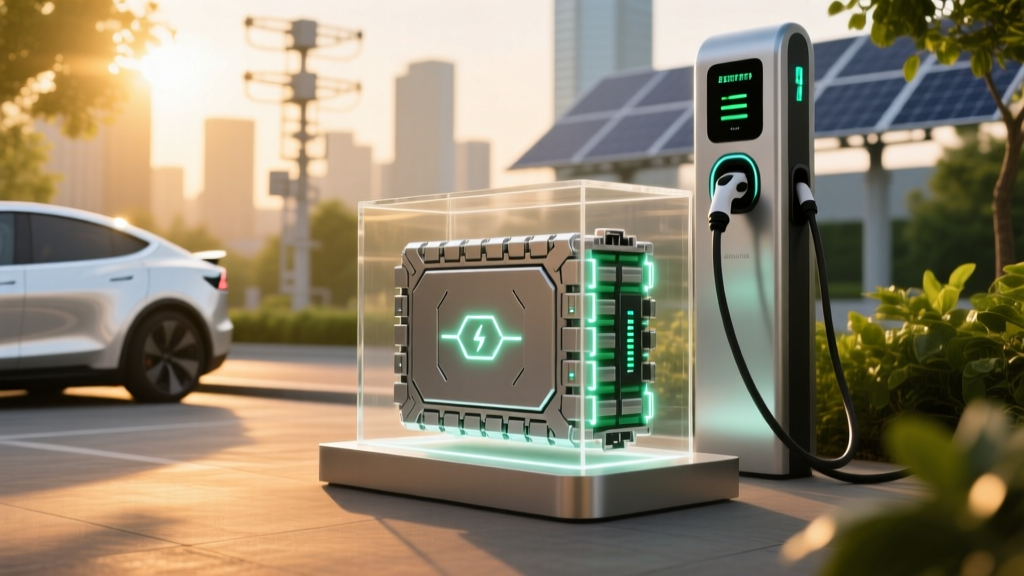
- Minimize DC fast charging frequency: Occasional road-trip fast charging is fine. Daily reliance on 150+ kW DC charging accelerates degradation by ~0.5–1% annually vs. Level 2 home charging (fueleconomy.gov).
- Precondition before fast charging: Most 2026 EVs automatically precondition the battery when a Supercharger or DC fast station is navigated to. This brings cells to optimal temperature (roughly 30–40°C), reducing lithium plating risk.
- Avoid extreme heat exposure: Parking in direct sun in Phoenix with a full charge accelerates calendar aging more than any other single habit. Liquid-cooled packs mitigate this, but garage parking helps.
- Don't store at 0% or 100% for extended periods: If leaving the vehicle for weeks, set SoC to 50–60%. This applies equally to your Black Decker hedge trimmer battery — store it at ~50% charge during off-seasons.
- Use regenerative braking thoughtfully in cold weather: Cold batteries resist accepting regen current; most 2026 EVs limit regen automatically until the pack warms up.
How to Check and Monitor Battery Health (SoH)
State of Health (SoH) is the percentage of your battery's original capacity that remains available. A new EV starts at 100% SoH; a battery at 85% SoH holds 85% of its original kWh.
Methods to Check SoH in 2026 EVs:
- In-vehicle displays: Tesla, BMW, Hyundai, and others now show SoH percentage or degradation graphs in the vehicle's service menu or app. Tesla's app shows estimated range at 100% charge, which you can compare to the original EPA figure.
- OBD-II diagnostic tools: Devices like the OBDLink SX paired with apps such as EVNotify or LeafSpy (for Nissan) can read SoH directly from the BMS (Battery Management System).
- Dealer diagnostic reports: Any authorized service center can pull a full battery health report showing individual module voltages, internal resistance, and SoH.
- Third-party testing: Companies like Recurrent Auto provide battery health reports for used EVs, increasingly requested during pre-purchase inspections.
For a Black Decker hedge trimmer battery, there's no SoH readout — you judge health by runtime. If a pack that once trimmed for 40 minutes now dies in 15, it's degraded to roughly 35–40% SoH and needs replacement. The lack of a BMS in consumer tool batteries is precisely why they degrade faster and offer no transparency into their condition.
Emerging Battery Technology: What's Next (and When)
Several next-generation technologies are in development, but none are available in production EVs as of early 2026. Here's a realistic timeline:
Solid-State Batteries
Solid-state cells replace the liquid electrolyte with a solid ceramic, polymer, or glass separator — promising higher energy density (400+ Wh/kg projected), faster charging, and improved safety. Toyota has announced a 2027–2028 production timeline for a limited solid-state EV, with broader availability expected by 2030. Samsung SDI and QuantumScape are targeting similar windows. Expect early solid-state EVs to carry premium pricing and limited availability.
Silicon Anode Technology
Replacing graphite anodes with silicon can increase energy density by 20–40%. Companies like Sila Nanotechnologies and Group14 are supplying silicon-dominant anode materials to manufacturers. Partial silicon anodes are already in some 2025–2026 packs (blended with graphite), but full silicon anodes remain 3–5 years from mass production due to swelling challenges during charge cycles.
Sodium-Ion Batteries
CATL and BYD are producing sodium-ion cells for lower-cost, lower-range EVs — primarily in the Chinese market. Sodium-ion offers lower energy density (~120–150 Wh/kg) but dramatically lower raw-material cost and excellent cold performance. US-market availability is estimated for 2027–2028 in entry-level models.
None of these technologies should delay a 2026 EV purchase. Current lithium-ion batteries are mature, well-warrantied, and demonstrably long-lasting based on fleet data.
Frequently Asked Questions
How long do EV batteries last in years and miles?
Modern liquid-cooled EV batteries (2022–2026) typically last 200,000+ miles with 10–15% degradation, spanning 15–20 years of average driving (13,500 miles/year). Older passively-cooled packs (early Nissan Leaf) showed higher degradation, but current engineering has largely solved this.
How much does an EV battery cost to replace?
Full pack replacement ranges from $8,000 to $25,000 depending on battery size and vehicle, but most owners never need a replacement. Module-level repairs cost $2,000–$5,000. For comparison, a Black Decker hedge trimmer battery replacement costs $39–$59 but may be needed every 3–5 years.
What does the EV battery warranty actually cover?
Federally mandated minimum: 8 years / 100,000 miles with a capacity retention threshold of 70% (most manufacturers). If SoH drops below 70% within the warranty window, the manufacturer must repair or replace the battery. Normal gradual degradation above the threshold is not covered.
How do I maximize my EV battery's lifespan?
Charge NMC/NCA batteries to 80% daily (100% for LFP), minimize daily DC fast charging, precondition before fast charging, avoid storing at extreme SoC levels, and park in shade or a garage in hot climates. Home Level 2 charging at 7–11 kW is gentler on the battery than frequent 150+ kW DC sessions.
LFP vs NMC — which is better and why?
Neither is universally better. NMC/NCA offers higher energy density (more range per kg), better cold-weather performance, and faster charging — ideal for long-range and cold-climate drivers. LFP offers longer cycle life (3,000–5,000+ cycles), lower cost, inherent thermal safety, and the ability to charge to 100% daily — ideal for commuters who charge at home. The gap in real-world usability is narrow for most buyers.
Can I use the same charger for my EV and my Black Decker hedge trimmer battery?
No. EV Level 2 chargers use a J1772 (or NACS) connector delivering 240V AC at 6–19 kW. A Black Decker hedge trimmer battery charges on a proprietary 20V DC wall adapter at roughly 30–60 watts. The voltage, connector, protocol, and power levels are entirely incompatible.