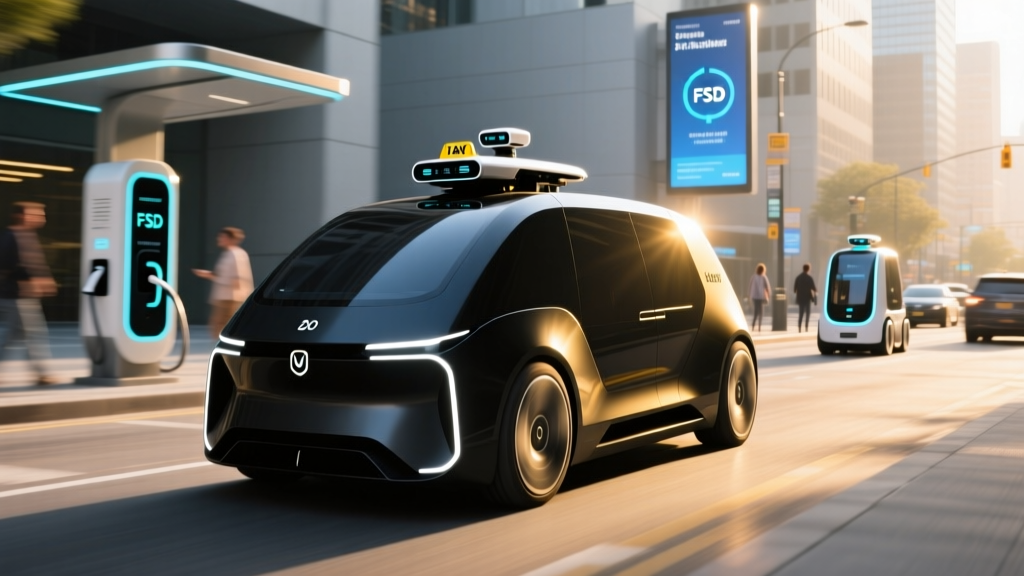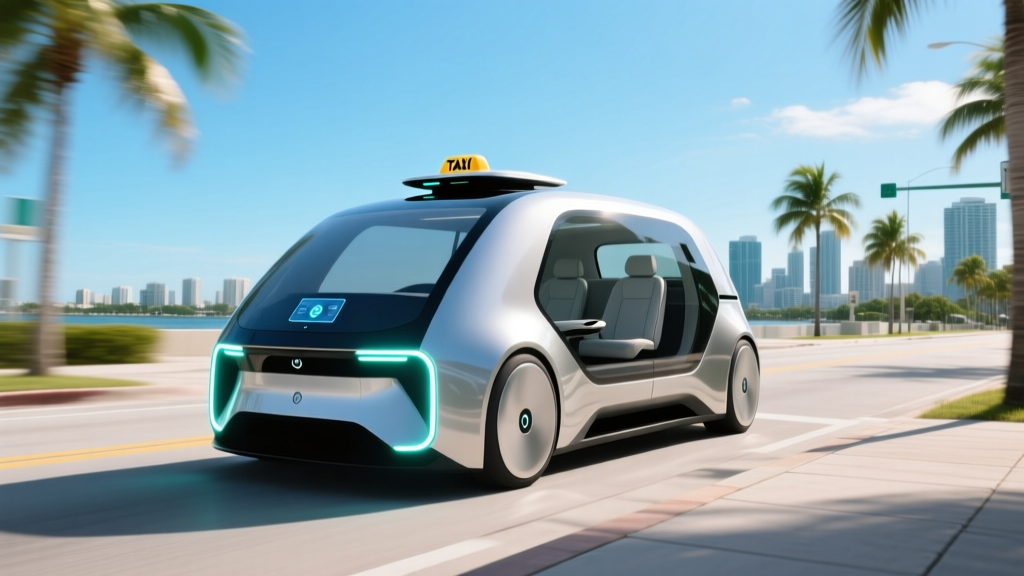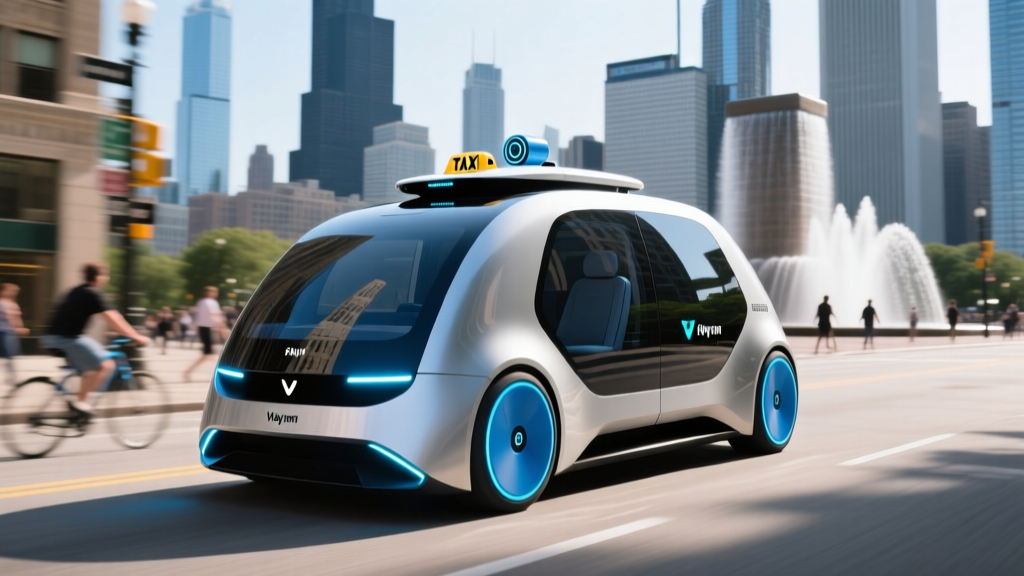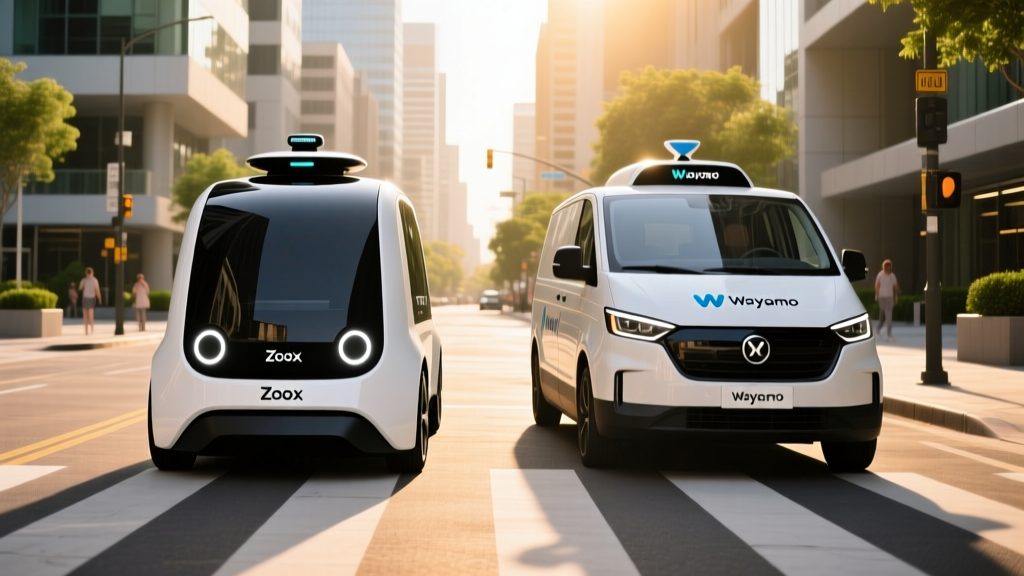
If you've opened a rideshare app in Phoenix, San Francisco, or Los Angeles recently, you may have been offered a ride in a vehicle with no one behind the wheel. Level 4 robotaxis are no longer a future promise — they're an active commercial service. The two most visible players in the U.S. market are Waymo (Alphabet's autonomous driving division) and Zoox (Amazon's self-driving subsidiary). But their approaches, vehicles, coverage areas, and maturity levels differ significantly.
This comparison breaks down exactly where each service operates, what technology powers them, how their safety records compare, what a ride actually costs, and what limitations you'll hit today. Whether you're an EV enthusiast tracking autonomous tech or a practical rider wondering if you should trust a driverless car, this guide gives you the numbers.
SAE Automation Levels: Why Level 4 Matters
Before comparing these two services, it's essential to understand where they sit on the SAE International automation scale. This is not a marketing label — it defines who is legally responsible when something goes wrong.
| Level | Name | Who Drives | Examples |
|---|---|---|---|
| 0 | No Automation | Human does everything | Standard vehicles |
| 1 | Driver Assistance | Human + one system (steering OR speed) | Adaptive cruise control |
| 2 | Partial Automation | Human supervises; system handles steering AND speed | Tesla Autopilot, GM Super Cruise, Ford BlueCruise |
| 3 | Conditional Automation | System drives in limited conditions; human takes over on request | Mercedes DRIVE PILOT (limited markets) |
| 4 | High Automation | System drives fully within its operational design domain; no human needed | Waymo One, Zoox |
| 5 | Full Automation | System drives everywhere, all conditions | Does not exist commercially |
Where Can You Actually Ride a Robotaxi Right Now?
Service availability is the most practical differentiator between Waymo and Zoox. Waymo has a multi-year head start in commercial operations; Zoox is in early commercial rollout.
| City | Waymo One | Zoox | Notes |
|---|---|---|---|
| Phoenix, AZ | ✅ Full commercial | ❌ Not available | Waymo's largest and longest-running market since 2020 |
| San Francisco, CA | ✅ Full commercial | ✅ Testing / early access | Waymo operates city-wide; Zoox in controlled testing zones |
| Los Angeles, CA | ✅ Full commercial | ✅ Testing / early access | Waymo expanded across LA basin; Zoox in limited zones |
| Austin, TX | ✅ Commercial launch | ❌ Not available | Waymo expanded to Austin in 2025 |
| Las Vegas, NV | ⏳ Announced / testing | ✅ Testing operations | Both companies have active testing programs |
| Atlanta, GA | ✅ Commercial launch | ❌ Not available | Waymo expanded service in 2025 |
Where can I use this robotaxi service right now? If you're in Phoenix, San Francisco, Los Angeles, Austin, or Atlanta, you can download the Waymo One app and request a ride today — no waitlist, no special invitation. Zoox, by contrast, is not yet a fully open commercial service. In San Francisco and Las Vegas, Zoox has offered limited rides to select users and employees, but the general public cannot yet hail a Zoox on demand the way they would an Uber.
Waymo has completed over 10 million paid autonomous rides as of early 2026, according to Waymo's official blog. Zoox has not disclosed a comparable paid-ride figure, reflecting its earlier stage of commercial deployment.
Vehicle & Technology Stack: Purpose-Built vs Retrofit
The most visible difference between Waymo and Zoox is the vehicle itself — and that design choice cascades into every aspect of their technology and operations.
Waymo: Jaguar I-PACE with 6th-Gen Sensor Suite
Waymo's current fleet is built on the Jaguar I-PACE electric crossover, retrofitted with Waymo's proprietary 6th-generation Driver system. Key hardware:
- LiDAR: Multiple roof- and bumper-mounted units providing 360° 3D point clouds, with effective range exceeding 200 meters
- Cameras: High-resolution surround-view array for object classification, traffic-light recognition, and lane detection
- Radar: Imaging radar units for velocity detection and adverse-weather performance
- Audio sensors: External microphones to detect emergency vehicle sirens
- Compute: Custom-designed onboard computer running Waymo's AI driving stack
The I-PACE platform gives Waymo a proven EV with a 75 kWh battery (EPA range ~234 miles), allowing a full shift of operation before returning to a depot for charging. However, the retrofit approach means Waymo inherits the I-PACE's interior layout — a conventional steering wheel and driver's seat that go unused.
Zoox: Purpose-Built Carriage Vehicle
Zoox took a radically different path. Its vehicle — internally called the Zoox Carriage — was designed from scratch as a robotaxi with no driver controls whatsoever:
- Form factor: Compact, symmetrical, bidirectional vehicle (can drive equally well in either direction — no "front" or "back")
- Seating: Four passengers face each other in a carriage-style layout; no driver's seat
- LiDAR: Roof-mounted 360° LiDAR array plus additional short-range units
- Cameras: Full surround camera system
- Radar: Multiple radar units for redundancy
- Top speed: 75 mph (designed for urban use, not highway corridors)
- Battery: Estimated ~75 kWh usable; designed for all-day urban operation
The purpose-built approach gives Zoox advantages in passenger experience (spacious, social seating; large windows; no wasted driver space) and in sensor placement (designed around the sensor suite rather than adapting to an existing body). The trade-off: Zoox had to homologate an entirely new vehicle with NHTSA, a process that took years and required exemptions from several Federal Motor Vehicle Safety Standards (FMVSS) that assume a human driver.
| Attribute | Waymo (6th-Gen Driver) | Zoox Carriage |
|---|---|---|
| Vehicle platform | Jaguar I-PACE (retrofit EV) | Purpose-built Zoox Carriage |
| Driver controls | Present (unused) | None — no steering wheel or pedals |
| Primary sensors | LiDAR + cameras + radar + audio | LiDAR + cameras + radar |
| Vision-only approach? | No — multi-sensor fusion | No — multi-sensor fusion |
| Top speed | ~65+ mph (highway capable) | 75 mph |
| Passenger capacity | 3 (rear seats only) | 4 (face-to-face) |
| Geofencing | Yes — mapped urban zones | Yes — mapped urban zones |
| Remote assistance | Yes (fleet support, not remote driving) | Yes (fleet support) |
Both companies use multi-sensor fusion (LiDAR + cameras + radar). Neither relies on a camera-only approach, which is the strategy Tesla uses for its Level 2 FSD system. The presence of LiDAR gives both Waymo and Zoox a direct, hardware-validated depth perception capability that camera-only systems must infer computationally — a significant advantage in edge cases involving unusual objects, low light, or partial occlusions.
Safety Record: What the Data Actually Shows
"How safe are robotaxis?" is the question every potential rider asks. Both Waymo and Zoox publish safety data, but Waymo has far more miles logged — and therefore far more statistically meaningful data.
- Over 30 million fully autonomous miles driven on public roads
- Over 10 million paid passenger trips completed
- Waymo's published analysis (peer-reviewed methodology) shows a 85% reduction in injury-causing crash rates compared to human benchmarks in comparable urban environments, per Waymo's safety reports
- Contact rates (any physical contact with another object) significantly lower than human drivers in the same cities
- Zoox has accumulated millions of autonomous test miles but has not published a comparable peer-reviewed safety study
- No reported at-fault injuries to passengers or pedestrians during testing operations
- Smaller fleet and fewer operational miles mean statistical comparisons to human benchmarks are not yet robust
Important context on safety data: Robotaxi safety metrics must be compared against human driver benchmarks in the same cities and conditions. Urban driving in Phoenix or San Francisco has different baseline crash rates than rural highway driving. Waymo's comparisons use NHTSA crash data filtered for comparable urban environments, which is the correct methodology — but it means the "safer than humans" claim applies specifically to urban robotaxi operating domains, not all driving scenarios.
Both companies are required to report collisions to state regulators (California DMV, Arizona DOT) and to NHTSA under Standing General Order 2021-01, which mandates crash reporting for all ADS-equipped vehicles. This regulatory transparency is a significant advantage over human-driver safety data, which relies on police reports and insurance claims with substantial underreporting.
Pricing: Robotaxi vs Uber and Lyft
How much does a robotaxi ride cost compared to Uber or Lyft? The answer depends on the city, time of day, and trip distance — but the general pattern is clear.
| Service | Base Fare | Per-Mile Rate | Per-Minute Rate | Surge Pricing? | Typical 5-Mile Trip |
|---|---|---|---|---|---|
| Waymo One | ~$3.50 | ~$1.15 | ~$0.30 | Limited / rare | ~$12–$16 |
| UberX | ~$2.50 | ~$1.25 | ~$0.35 | Yes (frequent) | ~$11–$20+ |
| Lyft Standard | ~$2.50 | ~$1.20 | ~$0.33 | Yes (frequent) | ~$11–$19+ |
| Zoox (early access) | Free / subsidized | N/A | N/A | No | N/A (not yet priced) |
Waymo One pricing is broadly competitive with UberX and Lyft Standard on a base-rate basis. The critical difference: Waymo rarely surges. During peak hours, rain, or events when Uber and Lyft apply 1.5x–3x surge multipliers, Waymo's pricing remains stable. This makes Waymo frequently cheaper than rideshare during high-demand periods, even if its base fare is marginally higher.
Waymo also offers Waymo One membership tiers with discounted rates for frequent riders, similar to Uber One or Lyft Pink.
Zoox has not yet announced commercial pricing. During its early-access and testing phases, rides have been offered free or at heavily subsidized rates. When Zoox launches commercial service, industry analysts expect pricing competitive with or below Waymo, given Amazon's deep pockets and willingness to subsidize market entry.
Regulatory Landscape: Who Approves Robotaxi Operations?
Robotaxi deployment in the U.S. is governed by a patchwork of state and local regulations — there is no single federal license to operate a driverless service nationwide.
- California (CPUC + DMV): The California Public Utilities Commission issues permits for commercial passenger service; the DMV issues testing and deployment permits. Waymo holds both. Zoox holds DMV testing permits and has been working toward full CPUC commercial authorization.
- Arizona: Among the most permissive states for autonomous vehicles. Waymo has operated commercially in Phoenix since 2020 under a relatively straightforward state registration process. No special state-level operating permit is required beyond standard business licensing.
- Texas: Autonomous vehicle operations are governed under state law (HB 3932). Waymo received authorization to operate in Austin.
- Nevada: Requires a state-issued autonomous vehicle license. Both Waymo and Zoox have testing operations in Las Vegas.
- Federal (NHTSA): NHTSA does not "approve" robotaxi services but sets vehicle safety standards (FMVSS). Zoox's purpose-built vehicle required FMVSS exemptions since it lacks a steering wheel, mirrors, and other driver-oriented features. NHTSA granted Zoox's exemption petition, a precedent-setting decision for purpose-built robotaxis.
This state-by-state approach means expansion is slow and deliberate. Each new city requires regulatory engagement, mapping, testing, and local approval — which is why Waymo's expansion to roughly six cities over several years represents significant regulatory navigation, not just technical capability.
Current Limitations: Where Robotaxis Can't Go (Yet)
What are the current limitations? Both Waymo and Zoox operate within significant constraints that define the boundaries of Level 4 autonomy today.
Hard Limitations — Both Waymo and Zoox
- Geofenced zones only: Neither service operates outside its pre-mapped service area. If your trip crosses the geofence boundary, the ride cannot be completed. Waymo's Phoenix geofence covers ~225 square miles; SF and LA are smaller.
- Weather restrictions: Heavy rain, fog, snow, and ice degrade sensor performance. Waymo may pause or limit service during severe weather events. Neither service operates in snow-belt cities.
- No highway driving (Zoox): Zoox's vehicle is designed for urban speeds (up to 75 mph but primarily deployed on surface streets). Waymo's I-PACE fleet can handle highway segments within its geofence.
- Construction zones and road closures: While both systems handle temporary lane shifts and detours, major unplanned road changes can cause the vehicle to pull over and wait for remote fleet support guidance.
- No intercity trips: You cannot take a robotaxi from San Francisco to Sacramento. These are urban point-to-point services.
- Accessibility: Waymo's I-PACE requires passengers to enter a conventional SUV. Zoox's carriage design with a low floor and wide door opening offers improved wheelchair accessibility, though full ADA-compliant deployment is still being validated.
- Passenger capacity limits: Waymo seats 3 passengers; Zoox seats 4. Neither accommodates large groups, car seats (in most cases), or significant cargo.
Is this truly self-driving or driver-assist? Yes — Waymo and Zoox are genuinely self-driving within their operational domains. There is no human driver, no remote operator steering the vehicle, and no expectation that a passenger will take control. Remote fleet support exists to assist with routing decisions or edge-case resolution (similar to an air traffic controller, not a remote driver), but the vehicle's AI handles all real-time driving decisions. This is categorically different from Level 2 systems like Tesla Autopilot or Ford BlueCruise, where the human driver remains legally and operationally responsible.
Decision Framework: Which Robotaxi Fits Your Needs?
Choose Waymo One if:
- You live in or visit Phoenix, San Francisco, Los Angeles, Austin, or Atlanta and want to ride today
- You need a reliable, on-demand robotaxi with predictable pricing and no surge
- You want a service with millions of paid rides and published safety data backing it
- You need highway-capable segments within the geofence (Phoenix, LA)
Watch Zoox if:
- You're interested in the future of purpose-built autonomous vehicle design
- You want a more social, spacious passenger experience (face-to-face seating, panoramic windows)
- You're in Las Vegas or San Francisco and may get early-access opportunities
- You care about accessibility design innovations in robotaxi form factors
Frequently Asked Questions
Can I hail a Zoox robotaxi on the street right now?
No. As of 2026, Zoox is not a fully open commercial service. Zoox has provided rides to select participants in San Francisco and Las Vegas, but there is no public app for on-demand hailing comparable to Waymo One or Uber. Zoox is expected to launch broader commercial service in the coming years, but a firm date has not been announced.
How does Waymo handle situations it can't navigate?
When Waymo's system encounters an edge case it cannot resolve — such as an unusual construction pattern or an accident blocking the road — the vehicle will pull over safely and contact Waymo's remote fleet support team. Fleet support provides guidance (such as approving an alternate route) but does not remotely drive the vehicle. The onboard AI remains in control of all driving actions.
Are Waymo and Zoox vehicles electric?
Yes. Waymo's fleet is based on the Jaguar I-PACE, a battery-electric SUV with a 75 kWh battery. Zoox's purpose-built Carriage is also fully electric. Both companies benefit from the lower operating cost and smoother ride characteristics of EV powertrains, and both charge at depot-based Level 2 and DC fast-charging stations between shifts.
What happens if a robotaxi gets into an accident?
Both companies carry commercial insurance policies that cover passengers and third parties. Because these are Level 4 systems with no human driver, liability falls on the operating company (Waymo or Zoox), not the passenger. All incidents are reported to state regulators and to NHTSA under the Standing General Order for ADS-equipped vehicles.
Will robotaxis replace Uber and Lyft drivers?
Not in the near term. Waymo and Zoox combined operate in fewer than 10 U.S. cities and are constrained by geofencing, weather, and fleet size. Uber and Lyft operate in thousands of cities with millions of human drivers. Robotaxis will increasingly compete in dense urban cores where their operational domain excels, but human-driven rideshare will remain dominant in suburbs, rural areas, and cities without robotaxi infrastructure for years to come.
How do I request a Waymo ride?
Download the Waymo One app (iOS or Android), create an account, and request a ride within the service area. The app shows the exact geofence boundary, estimated pickup time, and fare before you confirm. Waymo accepts credit cards and offers membership plans for frequent riders.