What the Zoox SF Waitlist Actually Gets You
If you have been searching for the zoox sf waitlist, you are looking at one of the few genuinely driverless ride-hail services operating on public roads in the United States. Unlike Tesla's FSD (Supervised) or GM's Super Cruise — which are SAE Level 2 driver-assist systems requiring a human behind the wheel — Zoox operates at SAE Level 4 within its geofenced service area. There is no steering wheel, no pedals, and no driver. The vehicle handles all driving tasks within its approved operational design domain (ODD), and if it encounters a scenario it cannot manage, it pulls over safely rather than handing control to a passenger.
| Level | Name | Who Drives | Example |
|---|---|---|---|
| Level 2 | Driver Assistance | Human (always) | Tesla Autopilot, FSD Supervised, BlueCruise |
| Level 3 | Conditional Automation | System (limited), human on standby | Mercedes Drive Pilot (select markets) |
| Level 4 | High Automation | System (within ODD) | Zoox, Waymo One |
| Level 5 | Full Automation | System (everywhere) | Does not exist commercially |
Zoox operates at Level 4 — fully driverless within its geofenced zones. It cannot currently drive everywhere, in all conditions, but within its approved area, no human intervention is required or possible.
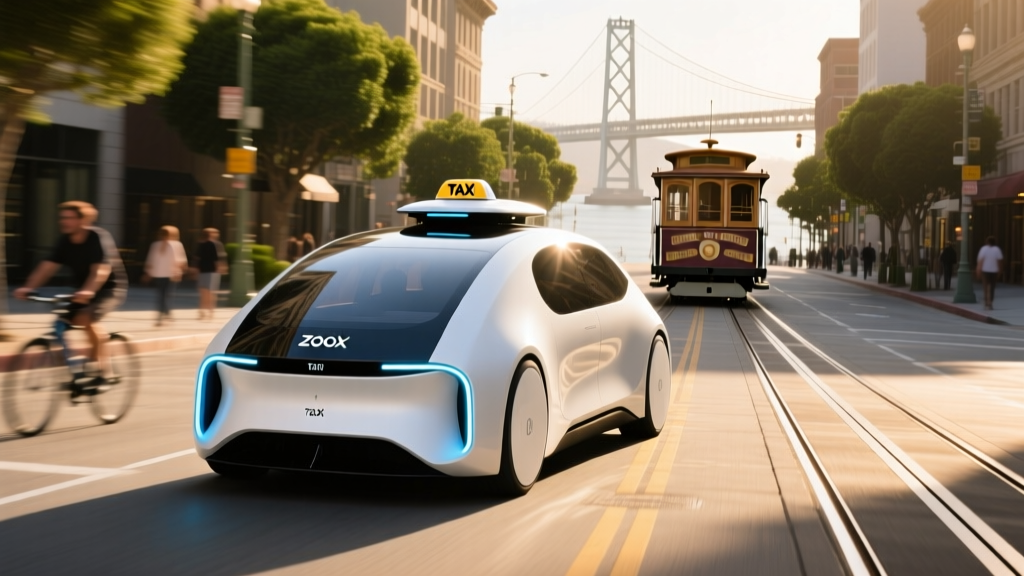
Zoox, the autonomous vehicle company acquired by Amazon in 2020 for approximately $1.3 billion, has been building toward commercial passenger service with its purpose-built robotaxi — a compact, bidirectional, carriage-style vehicle with no front or back, seating four passengers face-to-face. After years of testing with safety drivers in a Toyota Highlander fleet, Zoox received its California DMV driverless deployment permit and began offering rides to early-access riders in Foster City and parts of San Francisco.
Where Can I Ride a Zoox Robotaxi Right Now?
Zoox's commercial service is geofenced — meaning the vehicles operate only within a digitally mapped and approved zone. As of early 2026, confirmed operational areas include:
| City / Region | Status | Service Area Notes |
|---|---|---|
| Foster City, CA | Live — early access riders | Initial deployment zone; suburban roads, moderate traffic |
| San Francisco, CA | Live — waitlist / phased rollout | Select neighborhoods; expanding geofence over time |
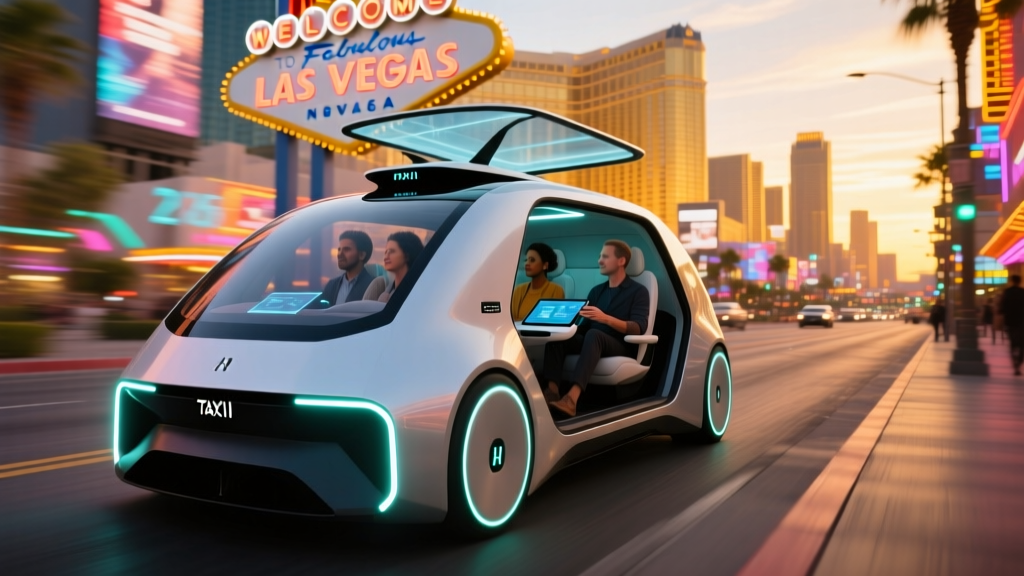
| Las Vegas, NV | Testing (safety-driver fleet) | Strip-adjacent corridors; commercial launch TBD |
| Austin, TX | Testing | Mapping and validation phase |
The zoox sf waitlist is the gateway for San Francisco residents and visitors. Access is granted in waves — Zoox prioritizes riders within specific neighborhoods as the geofence expands. Signing up does not guarantee immediate rides; some waitlist members have reported waits of several months before receiving an invitation to download the Zoox rider app and book their first trip.
To join, visit the Zoox website's rider section and submit your email and San Francisco zip code. You will receive a confirmation and, eventually, an invitation when capacity opens in your area. There is no paid fast-track option as of this writing.
Zoox Pricing: How Does It Compare to Uber and Lyft?
During its early-access phase, Zoox has offered rides at no cost to invited riders or at heavily subsidized promotional rates. This is a deliberate strategy: Zoox is prioritizing data collection, rider feedback, and operational validation over revenue in this phase. Waymo followed a similar playbook when launching Waymo One in Phoenix before introducing per-ride pricing.
| Service | Typical Base Fare (SF) | Per-Mile Rate | Per-Minute Rate | 3-Mile Trip Estimate |
|---|---|---|---|---|
| Zoox (early access) | $0 (promo) | $0 | $0 | $0 |
| Zoox (projected commercial) | ~$2.50 | ~$1.25 | ~$0.30 | ~$8–11 |
| UberX (SF avg) | $3.00 | $1.50 | $0.40 | ~$12–18 |
| Lyft (SF avg) | $2.80 | $1.40 | $0.38 | ~$11–17 |
| Waymo One (where available) | $2.50 | $1.30 | $0.35 | ~$9–14 |
Projected Zoox commercial pricing is estimated based on industry analyst reports and Zoox executive statements. Actual commercial rates have not been published as of early 2026. Uber/Lyft estimates reflect typical SF pricing outside surge periods.
The long-term economic thesis for robotaxi operators is compelling: remove the driver (who typically earns 60–75% of the fare on Uber/Lyft), and the per-ride cost can undercut traditional rideshare while still being profitable. Zoox's purpose-built vehicle — with no driver controls — is designed specifically for this unit-economic advantage. However, the high capital cost of each Zoox vehicle (estimated at $150,000–$200,000+ per unit with its sensor suite) means the company needs high utilization rates to achieve profitability.
The Zoox Vehicle and Technology Stack
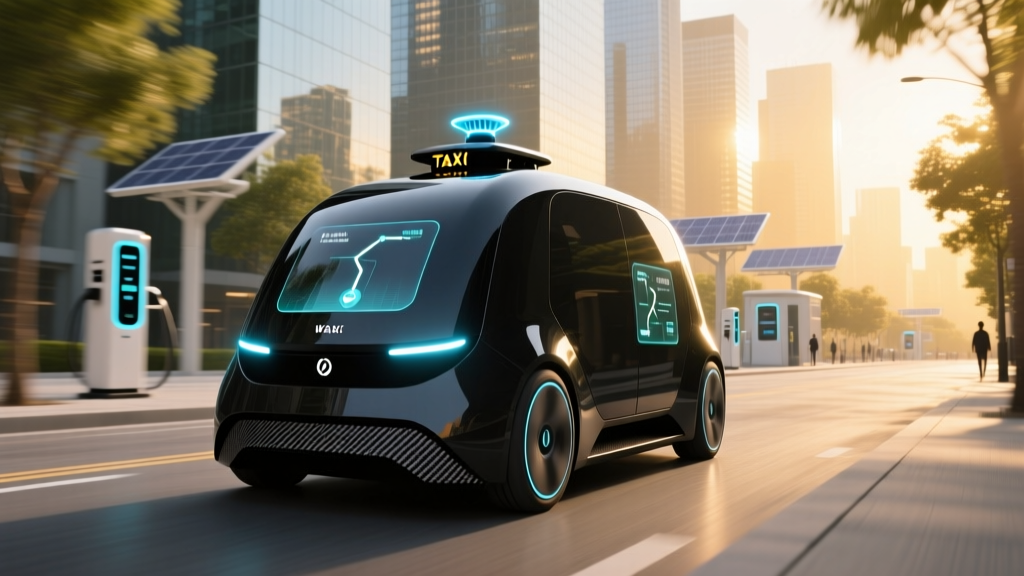
The Zoox robotaxi is not a retrofitted consumer car. It is a ground-up, purpose-built vehicle that looks more like a small carriage or pod than a traditional automobile. Key vehicle specifications:
- Dimensions: Approximately 12 feet long (significantly shorter than a sedan), enabling tight urban maneuvering and bidirectional driving (it has no designated front or rear)
- Seating: 4 passengers, face-to-face bench configuration
- Powertrain: Fully electric (BEV), with battery capacity estimated at ~75–80 kWh
- Top speed: Governed to 75 mph (sufficient for freeway segments within the geofence)
- Doors: Sliding doors on both sides for curb-side loading flexibility
Zoox uses a multi-modal sensor approach — not the camera-only strategy favored by Tesla. The vehicle carries:
- LiDAR: Multiple solid-state and spinning LiDAR units providing 360-degree, high-resolution 3D point clouds out to ~150+ meters. LiDAR is critical for depth perception independent of lighting conditions.
- Cameras: A surround-camera array (likely 12+ cameras) covering all angles for object classification, traffic-sign reading, lane detection, and redundancy.
- Radar: Forward and corner radar units for velocity detection of moving objects, particularly useful in rain or fog where LiDAR and cameras degrade.
- Microphones: External microphones to detect emergency-vehicle sirens — a requirement for California DMV autonomous vehicle permits.
- Compute: Custom onboard computing platform (details proprietary) running Zoox's perception, prediction, and planning stack in real time.
This sensor redundancy is a hallmark of Level 4 systems. If one modality degrades (e.g., heavy rain blinding cameras), LiDAR and radar maintain situational awareness. This contrasts sharply with Tesla's vision-only approach on its consumer vehicles.
Zoox also relies on HD mapping — centimeter-precise 3D maps of every road within its geofence. The vehicle localizes itself against these maps in real time, which is why it cannot currently operate outside its pre-mapped zones. This is fundamentally different from Tesla's approach of attempting to generalize to any road.
Safety Record: What the Data Actually Shows
- Testing miles (cumulative): Millions of miles across safety-driver and driverless fleets in California, Nevada, and other states
- California DMV disengagement reports: Zoox files annual disengagement data as required. In recent reporting periods, Zoox has reported decreasing intervention rates as its system matures — a trend consistent across the AV industry
- Reported at-fault collisions: As of early 2026, Zoox has not been involved in a publicly reported serious-injury or fatal collision during driverless operations
- NHTSA Standing General Order: All Level 4 operators, including Zoox, must report crashes involving their ADS-equipped vehicles within 24 hours under NHTSA's Standing General Order
Source: California DMV autonomous vehicle reports, NHTSA crash reporting database. Specific incident-level data should be verified at dmv.ca.gov.
Context matters enormously when evaluating robotaxi safety. Zoox operates in relatively constrained urban environments at moderate speeds (mostly under 45 mph within its geofence). This is a fundamentally different risk profile from highway driving at 75 mph. The company's safety case rests on several pillars:
- Sensor redundancy: LiDAR + camera + radar means no single sensor failure causes a loss of perception
- Conservative driving policy: Zoox vehicles are programmed to yield, stop, and pull over rather than attempt aggressive maneuvers in uncertain situations
- Remote assistance: If a vehicle encounters a scenario it cannot resolve (e.g., an unusual construction zone), it can contact a remote operations team for guidance — though this team does not "joystick" the car; they approve high-level plans
- Crashworthiness: The Zoox vehicle includes an innovative airbag system designed for the face-to-face seating configuration, plus a reinforced safety cell
For comparison, IIHS and NHTSA data consistently show that approximately 94% of motor-vehicle crashes involve human error (distraction, impairment, speeding). The robotaxi safety proposition is that removing the impaired, distracted, or fatigued human driver — even within a geofenced area — should reduce crash rates. The data from Waymo's millions of driverless miles in Phoenix and San Francisco has shown lower at-fault crash rates per mile than human benchmarks, though direct statistical comparison is complicated by differing operational conditions.
Regulatory Landscape: Who Approves Robotaxi Operations?
Robotaxi deployment in the United States is governed by a patchwork of state and local regulations. There is no comprehensive federal framework for Level 4 operations as of 2026. Key regulatory bodies for Zoox:
- California DMV: Issues autonomous vehicle testing and deployment permits. Zoox holds a Driverless Deployment Permit, which allows it to operate without a safety driver and to offer rides to the public (though initially restricted to invited riders). The DMV tracks disengagement reports and collision data. Visit dmv.ca.gov for current permit status.
- California Public Utilities Commission (CPUC): Regulates passenger-carrying services, including robotaxis. CPUC approval is required for commercial fare-charging operations.
- NHTSA (federal): Sets vehicle safety standards (FMVSS). Zoox received a notable exemption from certain FMVSS requirements (like having a steering wheel and mirrors) since its vehicle has no driver position. NHTSA also mandates crash reporting under the Standing General Order.
- San Francisco Municipal Transportation Agency (SFMTA): Manages street access, curb use, and local operational agreements. Robotaxi operators must coordinate with SFMTA on pickup/dropoff zones and traffic integration.
Nevada, Texas, and other states where Zoox tests have their own regulatory frameworks, generally less restrictive than California's. Nevada's DMV issues autonomous vehicle licenses, and the state has been more permissive of commercial robotaxi operations, which is why Las Vegas is a likely early expansion market.
Current Limitations: What Zoox Cannot Do
- No driving outside the geofence: You cannot hail a Zoox to take you from SF to Oakland, SFO airport (unless within the current geofence boundary), or any unmapped area. The vehicle will not operate outside its approved zone.
- Weather restrictions: Heavy rain, dense fog, or unusual weather events may cause the system to restrict operations or pull over. While LiDAR and radar provide some weather resilience, extreme conditions exceed the system's validated ODD.
- No highway driving (currently): Zoox's current deployment focuses on surface streets. While the vehicle is technically capable of 75 mph, freeway operations require separate validation and regulatory approval.
- Limited hours: Service may not operate 24/7 during the early-access phase. Hours may be restricted to daylight or low-complexity periods as the system validates nighttime and high-traffic scenarios.
- No special requests: You cannot ask the vehicle to make an unplanned stop, wait for you at a destination, or deviate from its planned route. It operates point-to-point within its map.
- Accessibility considerations: The Zoox vehicle's compact design and sliding doors accommodate most passengers, but wheelchair accessibility specifics should be confirmed with Zoox directly.
These limitations are not unique to Zoox — they apply broadly to all Level 4 robotaxi services, including Waymo. The fundamental constraint is the geofence: Level 4 autonomy means the system handles everything within a defined domain, and that domain is currently small relative to the full geography of a metro area.
Edge cases remain a challenge for the entire AV industry. Unusual road configurations, temporary construction zones, emergency-vehicle interactions, and erratic human behavior (jaywalkers, aggressive drivers, protest marches) all require the system to make conservative decisions — often resulting in the vehicle stopping and waiting, which can frustrate passengers and other road users.
How to Join the Zoox SF Waitlist and What to Expect
Here is the practical process for getting a ride:
- Sign up: Visit the Zoox website and enter your email and San Francisco zip code on the rider waitlist page.
- Wait for invitation: Zoox onboards riders in cohorts as the geofence expands and fleet capacity increases. Wait times vary — some riders in Foster City were invited within weeks; SF riders have reported waits of 2–6 months.
- Download the app: Once invited, you receive access to the Zoox rider app, which functions similarly to Uber/Lyft — enter pickup and dropoff locations within the service zone.
- Book a ride: The app shows vehicle ETA, a map of the approaching Zoox, and a vehicle identifier (so you can find the right pod at the curb).
- Ride: Enter through the sliding doors, buckle up (the vehicle will not move until all passengers are belted), and the ride begins. Screens inside the vehicle show the route and the system's perception of surrounding objects — a transparency feature that helps build rider trust.
- Provide feedback: Post-ride, the app prompts for ratings and comments. Early-access riders are essentially beta testers, and Zoox uses this feedback to refine the experience.
A practical tip: riders in the Foster City deployment area have reported that the experience is notably different from a rideshare. The vehicle drives conservatively — it obeys speed limits precisely, yields generously at intersections, and occasionally pauses longer than a human driver would before proceeding. If you are accustomed to aggressive urban driving, expect a calmer, more deliberate ride.
Frequently Asked Questions
Is the Zoox robotaxi truly self-driving, or is there a remote driver?
Zoox operates at SAE Level 4, meaning the onboard AI system handles all driving tasks within its geofenced area with no human driver — either in the vehicle or remotely "joystick-driving" it. A remote operations team can provide high-level guidance if the vehicle encounters an unusual situation (e.g., approving a path around an obstacle), but they do not directly steer or accelerate the vehicle in real time. The vehicle's driving decisions are made by the onboard compute platform.
How much does a Zoox ride cost compared to Uber or Lyft?
During the early-access phase, Zoox rides are free or heavily subsidized for invited riders. When Zoox transitions to commercial pricing, industry estimates suggest fares competitive with or slightly below UberX/Lyft — roughly $8–11 for a typical 3-mile urban trip, compared to $12–18 for conventional rideshare in San Francisco. Exact commercial pricing has not been announced as of early 2026.
Can I take a Zoox to SFO airport or across the Bay Bridge?
Not currently. Zoox operates within a geofenced area of select San Francisco neighborhoods and Foster City. Airport trips, bridge crossings, and inter-city rides are outside the current operational design domain. Expansion to SFO and other high-demand destinations is likely a long-term goal but requires additional mapping, validation, and regulatory approval.
How safe are Zoox robotaxis compared to human drivers?
Zoox has not reported any serious-injury or fatal collisions during its driverless operations as of early 2026. The company's multi-sensor stack (LiDAR + cameras + radar) and conservative driving policy are designed to minimize crash risk. NHTSA requires all ADS operators to report crashes within 24 hours under the Standing General Order. Direct statistical comparison with human drivers is complex due to differing operational conditions (lower speeds, geofenced urban areas), but the available data from the robotaxi industry suggests competitive or better safety outcomes per mile driven in comparable conditions.
What happens if the Zoox vehicle encounters something it cannot handle?
The vehicle is programmed to execute a minimal-risk condition (MRC) — typically slowing down, pulling to the curb, and stopping. It can then contact Zoox's remote operations team for guidance. The vehicle will not attempt a maneuver it is uncertain about. This conservative approach occasionally results in longer trip times or unexpected stops, but it prioritizes safety over efficiency.
Is the Zoox waitlist available for other cities besides San Francisco?
As of early 2026, the public rider waitlist is primarily for San Francisco. Foster City riders were onboarded through a separate early-access program. Las Vegas and Austin are in testing phases with safety-driver vehicles and do not yet have public rider waitlists. Check the Zoox website for the latest city-specific availability.