What Zoox SF Actually Is: A True Level 4 Robotaxi
If you've spotted a compact, symmetrical vehicle with no steering wheel gliding through SoMa or the Embarcadero, you've likely seen Zoox in action. Zoox, the Amazon-owned autonomous vehicle company, operates a fully driverless robotaxi service in San Francisco — one that requires zero human intervention within its approved operational design domain (ODD).
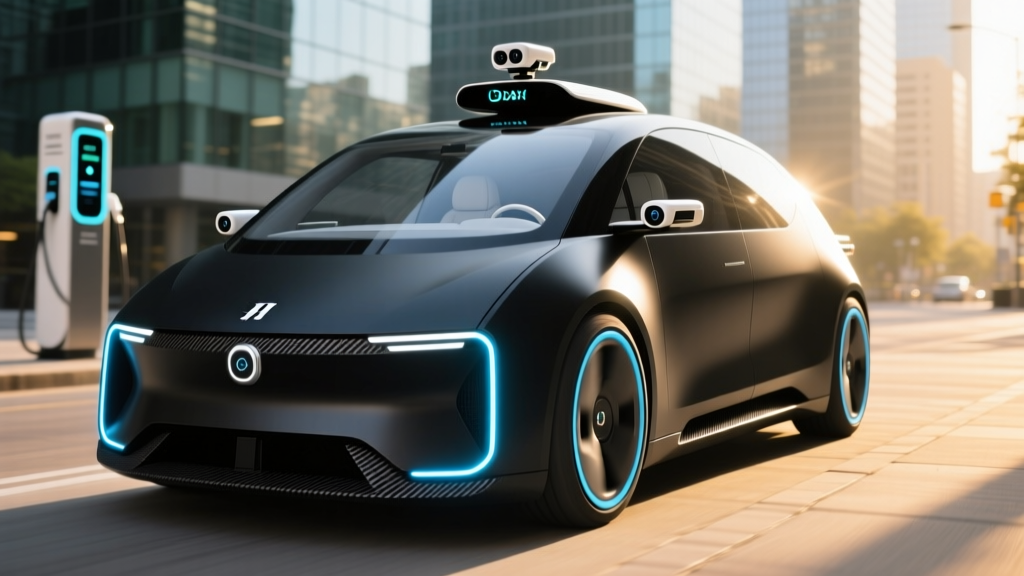
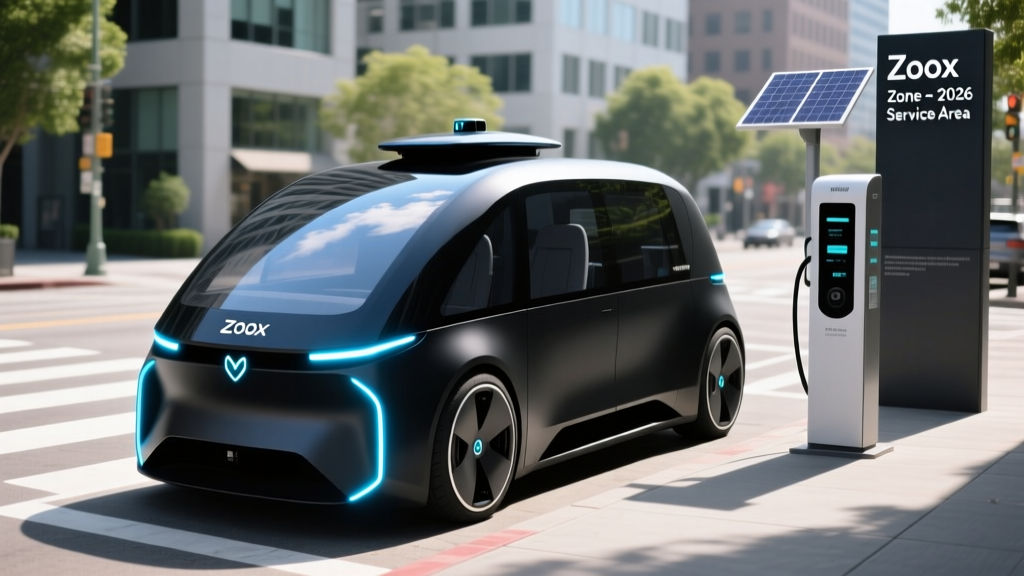
Zoox's robotaxi is an SAE Level 4 system — meaning the vehicle handles all driving tasks within its geofenced service area without any human driver onboard or remote teleoperator actively steering. This is fundamentally different from Level 2 driver-assist systems like Tesla Autopilot, GM Super Cruise, or Ford BlueCruise, which require continuous driver supervision. Zoox has no steering wheel, no pedals, and no driver's seat. The vehicle is the driver.
Zoox began offering rides to members of the public in San Francisco in mid-2024, initially through a limited early-rider program, and has progressively expanded its operational footprint and availability hours through 2025 and into 2026. Unlike Waymo, which retrofits existing vehicles (currently the Jaguar I-PACE and soon the Hyundai Ioniq 5 and Zeekr RT), Zoox designed its vehicle from the ground up as a purpose-built robotaxi — a bidirectional, carriage-style cabin with facing bench seats and no forward-facing windshield in the traditional sense.
Where Can You Use Zoox in San Francisco Right Now?
Zoox's service area in San Francisco has expanded considerably since launch, but it remains geofenced — the vehicle will only operate within a mapped and approved zone. As of early 2026, the Zoox SF operational area covers a significant portion of the city's core:
| Area | Status | Notes |
|---|---|---|
| SoMa / South of Market | Active | Core operating zone since launch |
| Embarcadero / Financial District | Active | Waterfront routes included |
| Mission District | Active | Expanded in late 2025 |
| North Beach / Chinatown | Active | Dense urban streets, limited hours |
| Hayes Valley / Civic Center | Active | Mid-city expansion zone |
| Sunset / Richmond | Not yet available | Outside current geofence |
| Golden Gate Bridge / Presidio | Not yet available | No timeline announced |
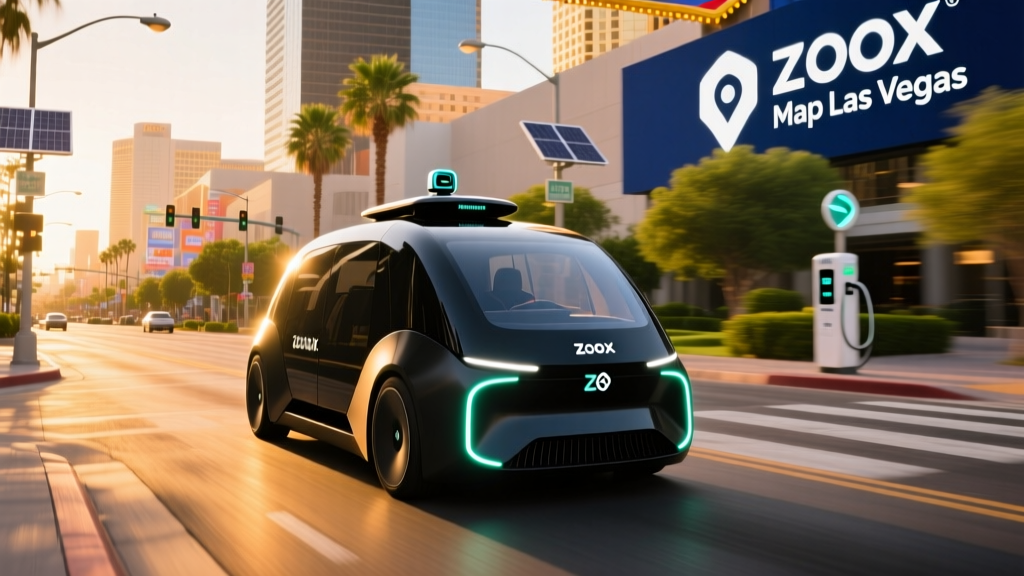
Zoox also operates testing and limited rider services in Las Vegas (near the Strip and downtown) and continues testing in Foster City, California (near its headquarters). However, San Francisco remains the primary public-facing deployment city.
Operating hours: Zoox SF currently runs roughly 16 hours per day, typically from early morning through late evening. Overnight service availability may be limited. Check the Zoox app for real-time service windows.
How to Ride Zoox and What It Costs vs. Uber and Lyft
Riding Zoox in SF requires downloading the Zoox app (available on iOS and Android), creating an account, and requesting a ride much like you would with Uber or Lyft. During the early-rider phase, Zoox offered free rides to build operational experience and gather user feedback. As of 2026, Zoox has begun transitioning to a paid model in select markets, though promotional pricing and free-ride credits remain common in San Francisco.
| Service | Base Fare | Per-Mile Rate | Typical 3-Mile Ride |
|---|---|---|---|
| Zoox (current pricing) | ~$0–$2 | ~$1.00–$1.50/mi | $3–$7 |
| UberX (SF average) | ~$3–$5 | ~$1.50–$2.00/mi | $9–$14 |
| Lyft Standard (SF average) | ~$3–$4 | ~$1.40–$1.90/mi | $8–$13 |
| Waymo One (SF) | ~$2–$4 | ~$1.30–$1.80/mi | $7–$12 |
Key context: Zoox's current pricing is heavily subsidized as the company scales operations. Long-term pricing is expected to be competitive with rideshare — Zoox's business model eliminates the driver cost (typically 60–75% of a rideshare fare), which gives it structural cost advantages once fleet utilization reaches scale. However, don't expect today's promotional rates to persist indefinitely.
How it works in practice: Open the app, enter your pickup and dropoff locations (both must be within the geofence), confirm the ride, and walk to the pickup point. The Zoox vehicle arrives, unlocks its doors automatically, and you select your seat via the in-cabin screen. The ride begins without any human driver interaction. In-cabin screens display your route, speed, and what the vehicle's sensors are seeing in real time.
Zoox Safety Record: What the Data Actually Shows
Safety is the most scrutinized aspect of any robotaxi operation, and Zoox has faced particular attention given its unconventional vehicle design and later market entry compared to Waymo. Here's what we know from publicly available data:
- Autonomous miles driven in SF: Estimated 1+ million driverless miles since public launch (Zoox does not publish a live counter; this is based on regulatory filings and industry estimates)
- Contactable incidents: Zoox has reported a small number of minor contact incidents to the NHTSA Standing General Order database, primarily low-speed collisions with stationary objects or other vehicles in complex urban scenarios
- Injuries reported: No serious passenger injuries reported in Zoox operations as of early 2026
- Disengagement rate: Not directly comparable to Level 2 systems — Zoox does not have a driver to "disengage," but remote assistance events (where the vehicle pauses and requests remote guidance) occur at a rate Zoox has not publicly quantified
For comparison, NHTSA data on human drivers in San Francisco shows a collision rate of approximately 1 reported crash per 500,000 miles in dense urban environments. Waymo, with significantly more autonomous miles (tens of millions across multiple cities), has published peer-reviewed data showing a roughly 85% reduction in injury-causing crashes compared to human benchmarks in its operating areas.
Zoox's smaller operational footprint means the statistical sample is still limited. The company has not yet published a comprehensive peer-reviewed safety study comparable to Waymo's. This is an important caveat: fewer miles means wider confidence intervals on any safety metric.
The Zoox vehicle itself is designed with safety as a primary architectural advantage. Its symmetrical design provides 360-degree sensor coverage without blind spots typical of conventional vehicles. The cabin features custom airbags designed for the facing-seat configuration, and the vehicle's lower top speed (limited to approximately 75 mph, though it rarely approaches this in urban SF) reduces kinetic energy in potential collisions.
The Zoox Technology Stack: Sensors, Compute, and Geofencing
Zoox takes a sensor-rich approach to autonomous driving — fundamentally different from Tesla's camera-only (Tesla Vision) philosophy. The Zoox vehicle integrates multiple redundant perception systems:
- LiDAR: Multiple solid-state and spinning LiDAR units providing high-resolution 3D point clouds up to 150+ meters — critical for depth perception in low-light and complex urban scenes
- Cameras: A suite of high-dynamic-range cameras covering 360 degrees, used for object classification, traffic signal recognition, lane detection, and semantic understanding
- Radar: Multiple radar units for velocity detection, adverse-weather perception, and redundancy when LiDAR or cameras are degraded
- Microphones: External microphones to detect emergency vehicle sirens and other acoustic cues
- Compute: Custom onboard computing platform with redundant processing paths — if one compute module fails, a backup can bring the vehicle to a safe stop
- HD Maps: Zoox relies on centimeter-accurate pre-mapped routes within its geofence, updated regularly to reflect construction, lane changes, and other infrastructure modifications
The geofencing approach is central to Zoox's Level 4 strategy. Rather than attempting to drive anywhere (Level 5), Zoox restricts its vehicles to areas it has exhaustively mapped and validated. Within that zone, the system handles the full driving task. Outside that zone, the vehicle simply will not operate. This is a pragmatic tradeoff: limited coverage in exchange for dramatically higher reliability within the covered area.
Zoox's vehicle is also fully electric, with a battery pack estimated at approximately 80–90 kWh (usable), providing enough range for a full day of urban robotaxi operations (typically 100–150 miles of city driving) before returning to a depot for charging. The bidirectional drive capability — the vehicle can travel equally well in either direction — simplifies maneuvers like U-turns and three-point turns in tight urban spaces.
Regulatory Landscape: Who Approves Zoox Operations in SF?
Operating a driverless robotaxi in California requires navigating a layered regulatory framework involving both state and local authorities:
- California DMV: Issues Autonomous Vehicle Testing Permits and, critically, the Driverless Testing Permit that allows operations without a safety driver. Zoox holds this permit, which requires meeting specific insurance, reporting, and technology requirements.
- California Public Utilities Commission (CPUC): Regulates commercial passenger service. Zoox must obtain CPUC approval to charge fares for autonomous rides — a separate process from DMV testing permits. Waymo received its CPUC permit for commercial driverless service in 2024; Zoox has been progressing through a similar approval pathway.
- NHTSA (Federal): Zoox received a notable exemption from the Federal Motor Vehicle Safety Standards (FMVSS) — specifically, approval to operate a vehicle without traditional controls like a steering wheel and pedals. This NHTSA exemption, granted in 2024, was a landmark for purpose-built robotaxis.
- San Francisco Municipal Transportation Agency (SFMTA): Manages local street operations, parking, and pickup/dropoff zones. Zoox coordinates with SFMTA on designated stop locations and traffic integration.
This multi-agency framework means expansion is incremental. Each new neighborhood or city requires mapping, validation, and regulatory coordination — which is why robotaxi service areas grow methodically rather than overnight.
Current Limitations: Where Zoox Cannot (Yet) Operate
- Geofence boundary: Large portions of SF remain outside the service area — you cannot ride to the Sunset, Richmond, or across the Golden Gate Bridge
- Heavy fog and rain: While Zoox's multi-sensor stack handles moderate weather better than camera-only systems, severe fog (common in SF summers) and heavy rain can trigger the vehicle to pull over or reduce speed significantly
- Construction zones: Unmapped construction can force the vehicle to stop and request remote assistance, adding minutes to your trip
- Airport runs: SFO and OAK are currently outside the operational geofence — Zoox cannot replace airport rideshare or taxi trips
- Freeway driving: Zoox's SF operations are primarily on surface streets; highway/freeway segments are limited or excluded
- No multi-city trips: You cannot take a Zoox from SF to Oakland, Berkeley, or anywhere outside the mapped zone
- Accessibility: While the Zoox vehicle is designed for wheelchair accessibility, real-world deployment of ADA-compliant boarding at all SF curb locations remains a work in progress
- Peak demand: Fleet size is still limited — wait times during rush hour or weekend evenings can exceed 15–20 minutes
These limitations are not unique to Zoox — Waymo faces similar geofence and weather constraints. The difference is scale: Waymo's larger fleet and longer operational history mean shorter wait times and slightly broader coverage within San Francisco. If you need a guaranteed ride across the entire city at 2 AM, Uber and Lyft remain the fallback.
Zoox vs. Waymo in San Francisco: A Quick Comparison
| Attribute | Zoox | Waymo One |
|---|---|---|
| SAE Level | Level 4 | Level 4 |
| Vehicle | Purpose-built Zoox carriage | Jaguar I-PACE (modified) |
| SF coverage | Core neighborhoods, expanding | Most of SF proper |
| Operating hours | ~16 hours/day | 24/7 |
| Autonomous miles (all cities) | Low millions (est.) | 40+ million |
| Wait time (avg) | 5–15+ min | 3–8 min |
| Other cities | Las Vegas (limited) | Phoenix, LA, Austin (expanding) |
| Airport service | No | SFO (limited), PHX (yes) |
Is This Truly Self-Driving or Just Driver-Assist?
This is the most important distinction in the autonomous vehicle space, and the answer for Zoox is unambiguous: Zoox is genuinely self-driving within its operational domain. There is no human behind a screen remotely piloting the vehicle in real time, no safety driver ready to grab a wheel, and no steering wheel to grab.
This places Zoox in a fundamentally different category from consumer vehicles equipped with Level 2 driver-assist:
| Level | Who Drives | Examples | Can You Zone Out? |
|---|---|---|---|
| Level 0 | Human only | Basic cruise control | No |
| Level 1 | Human + one assist | Adaptive cruise OR lane-keep | No |
| Level 2 | Human supervises | Tesla Autopilot/FSD, Super Cruise, BlueCruise | No — you must watch the road |
| Level 3 | System drives, human on standby | Mercedes Drive Pilot (limited conditions, Germany/NV) | Conditionally, at low speed |
| Level 4 | System drives fully in geofence | Zoox, Waymo, Cruise (suspended) | Yes — no driver needed |
| Level 5 | System drives everywhere | Does not exist commercially | Theoretical |
When you ride in a Zoox vehicle in San Francisco, you are experiencing Level 4 autonomy — a genuinely driverless trip with no human fallback inside the vehicle. That's a milestone that consumer vehicles, regardless of marketing claims about "full self-driving," have not reached.
Frequently Asked Questions
Where can I use Zoox robotaxi service right now?
Zoox operates a driverless robotaxi service in central San Francisco neighborhoods including SoMa, the Embarcadero, Mission District, Financial District, North Beach, and Hayes Valley. Service is geofenced — both pickup and dropoff must be within the approved zone. Zoox also has limited operations in Las Vegas. Check the Zoox app for the current service boundary map.
How much does a Zoox ride cost compared to Uber or Lyft?
As of 2026, Zoox has been transitioning from free promotional rides to paid service. Current estimated fares are roughly $3–$7 for a typical 3-mile trip in SF, which undercuts UberX ($9–$14) and Lyft Standard ($8–$13) for comparable distances. This pricing is subsidized and expected to increase as the service matures, though Zoox's driverless model gives it long-term structural cost advantages.
How safe are Zoox robotaxis based on real data?
Zoox has accumulated an estimated 1+ million driverless miles in SF with no reported serious passenger injuries as of early 2026. A small number of low-speed contact incidents have been reported to NHTSA as required by the Standing General Order. The statistical sample is still relatively small compared to Waymo's 40+ million miles, so definitive safety comparisons require more operational data. Zoox's multi-sensor stack (LiDAR + radar + cameras) and purpose-built vehicle design are engineered for urban safety.
What are the current limitations of Zoox in SF?
Key limitations include: geofenced service area (no Sunset, Richmond, or airport trips), reduced operations in heavy fog, potential delays in unmapped construction zones, no freeway driving, limited fleet size causing longer wait times during peak hours, and operating hours that don't cover the full 24-hour cycle. Zoox is actively expanding its coverage and capabilities, but these constraints are real today.
Is Zoox truly self-driving or is someone remotely controlling it?
Zoox is a genuine SAE Level 4 autonomous vehicle — there is no human driver inside the vehicle, no remote operator actively steering it, and no steering wheel or pedals in the cabin. The vehicle makes its own driving decisions within its geofenced operational area. Remote support staff may provide guidance in edge cases (e.g., the vehicle encounters an unexpected road closure and asks for routing help), but they do not drive the vehicle in real time.
Can I hail a Zoox to SFO airport?
Not currently. San Francisco International Airport is outside Zoox's operational geofence. For airport trips, you'll still need Uber, Lyft, Waymo (limited SFO service), BART, or a taxi.
Zoox's SF operations continue to evolve. Service areas, pricing, and hours may change. Always check the Zoox app for the most current information before planning a trip. For regulatory details, refer to the California DMV Autonomous Vehicle Program.