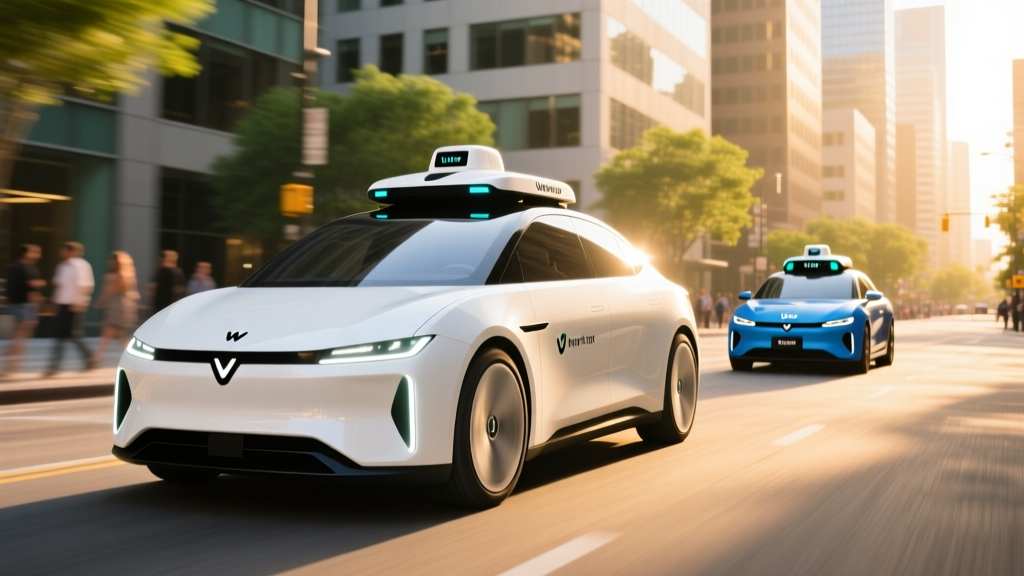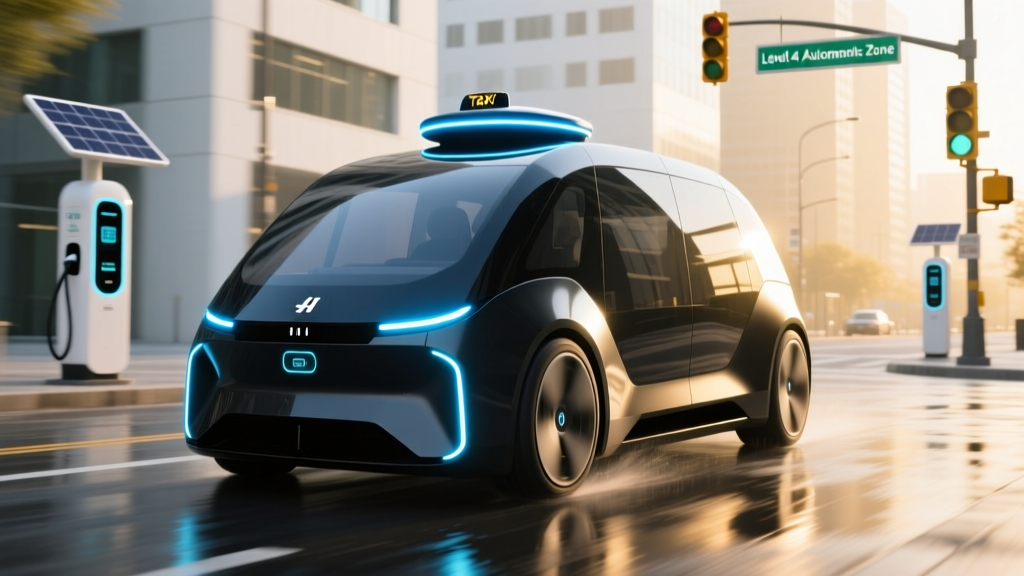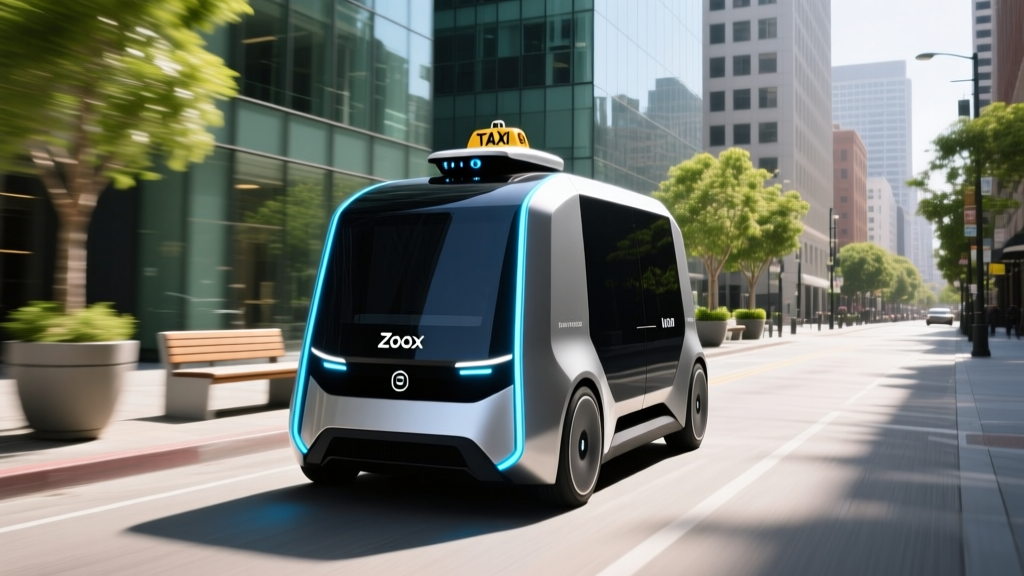
Amazon-backed Zoox has been testing its purpose-built autonomous vehicle on the streets of San Francisco for years, but the question on every local commuter's mind remains: when is Zoox launching in SF as a commercial, rider-accessible service? As of early 2026, Zoox holds a permit from the California Public Utilities Commission (CPUC) to offer driverless rides in San Francisco, but the rollout has been phased and geofenced rather than a city-wide flip of the switch. Here's what we know about the timeline, where you can actually hail one today, and how the service stacks up on safety, cost, and real-world limitations.
Zoox's SAE Autonomy Level: What "Driverless" Actually Means
Zoox operates at SAE Level 4, meaning the vehicle handles all driving tasks within a defined operational design domain (ODD) — specific streets, speed limits, and weather conditions — with no human driver present. This is fundamentally different from Level 2 systems like Tesla Autopilot, GM Super Cruise, or Ford BlueCruise, which require an attentive driver behind the wheel at all times. Zoox's vehicle has no steering wheel, no pedals, and no driver seat.
The distinction matters enormously for consumer expectations. When you step into a Zoox, there is no one in the front row to grab the wheel. The vehicle's AI handles routing, lane changes, unprotected left turns, pedestrian interactions, and construction-zone navigation entirely on its own — or it pulls over safely if it encounters a scenario it cannot resolve. This is the same SAE Level 4 classification held by Waymo's robotaxi fleet in Phoenix and San Francisco.
| Level | Name | Who Drives? | Example |
|---|---|---|---|
| Level 0 | No Automation | Human | Legacy gas cars |
| Level 1 | Driver Assistance | Human (system assists steering OR speed) | Adaptive cruise control |
| Level 2 | Partial Automation | Human (must supervise at all times) | Tesla Autopilot, GM Super Cruise |
| Level 3 | Conditional Automation | System (human must take over on request) | Mercedes Drive Pilot (limited markets) |
| Level 4 | High Automation | System (no human needed in ODD) | Zoox, Waymo (geofenced areas) |
| Level 5 | Full Automation | System (anywhere, any condition) | Does not yet exist commercially |
When Is Zoox Launching in SF? The 2026 Rollout Timeline
Zoox's path to a commercial San Francisco launch has unfolded in regulatory stages, each requiring separate approval from California's two key agencies — the California Department of Motor Vehicles (DMV) for testing permits and the California Public Utilities Commission (CPUC) for commercial passenger service.
- 2022–2023: Zoox received its DMV driverless testing permit and began testing its purpose-built vehicle (no steering wheel) on public roads in Foster City and San Francisco's SoMa district with safety drivers monitoring remotely.
- Mid-2024: CPUC granted Zoox a Phase 1 (Tier 2) permit allowing driverless rides with a limited pool of invited users — primarily employees and early-access participants — in a tightly geofenced area of San Francisco.
- Early 2025: Zoox expanded its invite-only rider program to include portions of the SoMa, Mission Bay, and Embarcadero neighborhoods, operating during daylight and early evening hours.
- 2026 (current): Zoox continues to operate under its CPUC Tier 2 permit in San Francisco, gradually expanding its rider pool and geofence boundaries. A full commercial launch — open to any rider via a public app, comparable to Waymo's open-access service — has not been assigned a firm public date but is widely anticipated for late 2026 or 2027, pending CPUC approval for a Tier 3 (full commercial) permit.
| City | Status | Access Type | Operating Hours |
|---|---|---|---|
| San Francisco, CA | Active (geofenced) | Invite-only rider program | Daylight / early evening |
| Foster City, CA | Active (testing) | Employee / internal testing | Varies |
| Las Vegas, NV | Active (testing / limited rides) | Invite-only / employee shuttles | Varies |
| Seattle, WA | Testing (no rider service) | Internal R&D | N/A |
| Austin, TX | Announced (mapping / testing) | Not yet available | N/A |
Where Can I Use Zoox Right Now?
If you're in San Francisco and wondering whether you can hail a Zoox today, the honest answer is: probably not yet, unless you're in the invite-only program. Unlike Waymo, which opened its San Francisco service to all riders in 2024 and operates across a broad swath of the city, Zoox's current footprint is confined to a geofenced zone covering parts of SoMa, Mission Bay, and the Embarcadero. Rides are booked through Zoox's proprietary app, but access requires an invitation or an early-access signup that Zoox has been approving in waves.
For practical purposes, if you need a robotaxi in San Francisco in 2026, Waymo One remains the only broadly accessible Level 4 service. Zoox is the second player building toward open commercial access, but the timeline depends on CPUC regulatory milestones, fleet scaling, and safety-validation thresholds that Zoox must meet before the agency grants a Tier 3 commercial permit.
Zoox Pricing vs. Uber, Lyft, and Waymo
During its invite-only phase, Zoox has offered rides free of charge to early-access riders — a common strategy for robotaxi companies accumulating real-world miles and rider feedback before monetization. Once Zoox transitions to full commercial service, pricing is expected to follow a model similar to Waymo's:
| Service | Base Fare | Per-Mile Rate | Per-Minute Rate | Typical 3-Mile Ride |
|---|---|---|---|---|
| Zoox (current) | $0 (free beta) | $0 | $0 | $0 |
| Zoox (projected commercial) | ~$3.50 | ~$1.25 | ~$0.35 | ~$10–$13 |
| Waymo One | ~$3.00–$4.00 | ~$1.20–$1.50 | ~$0.30–$0.40 | ~$10–$15 |
| UberX (SF avg) | ~$2.50 | ~$1.10–$1.40 | ~$0.25–$0.35 | ~$12–$18 (surge varies) |
| Lyft Standard (SF avg) | ~$2.50 | ~$1.05–$1.35 | ~$0.25–$0.35 | ~$11–$17 (surge varies) |
The key pricing advantage robotaxis hold over Uber and Lyft is the absence of surge pricing. Human rideshare fares can double or triple during peak demand; robotaxi pricing is algorithmically stable because there's no driver supply constraint. However, robotaxis may charge a small "service fee" or "autonomous vehicle fee" that traditional rideshare does not. Zoox's final commercial pricing has not been publicly confirmed as of this writing.
Safety Record: What the Data Shows
- Total autonomous miles driven (public roads): Estimated 1+ million driverless miles across all test and service cities (Zoox does not publish a live counter; this figure is based on DMV disengagement reports and company disclosures).
- DMV disengagement reports: California requires all AV testers to file annual disengagement reports. Zoox's reported disengagement rate has decreased year-over-year, but direct comparison to Waymo is difficult because reporting methodologies differ.
- Reported collisions: Zoox has filed a small number of NHTSA Standing General Order collision reports, primarily low-speed contact events during testing — consistent with the broader AV industry's pattern of minor incidents during dense urban testing.
- No passenger injuries reported in Zoox's rider program as of early 2026.
Context matters here. Zoox's fleet is significantly smaller than Waymo's (which has logged tens of millions of commercial miles across Phoenix, San Francisco, and Los Angeles). Smaller fleets mean fewer total miles and therefore less statistical data — not necessarily better or worse safety, just a smaller sample size. The National Highway Traffic Safety Administration (NHTSA) requires all Level 4 operators to report crashes within 24 hours under the Standing General Order issued in 2021, so incident data is publicly trackable.
For comparison, Waymo's published safety data (from its 2024 safety report) showed a 85% reduction in injury-causing crash rates compared to human benchmarks in Phoenix, based on over 7 million autonomous miles. Zoox has not yet published an equivalent large-scale safety study, which is one reason the company remains in a phased, invite-only rollout rather than full commercial deployment.
Zoox Technology Stack: Lidar, Cameras, and the Purpose-Built Vehicle
Zoox takes a fundamentally different hardware approach from Tesla's camera-only FSD system. The Zoox vehicle uses a redundant, multi-sensor suite designed for Level 4 operation with no human fallback:
- Lidar: Multiple solid-state lidar units provide 360° 3D point-cloud mapping, critical for depth perception and object detection in low-light conditions where cameras struggle.
- Cameras: A surround-camera array (multiple high-resolution units) handles lane-line detection, traffic-sign recognition, traffic-light state classification, and semantic understanding of the scene.
- Radar: Forward and corner radar units detect velocity and range of moving objects, particularly useful in rain or fog where lidar returns degrade.
- Ultrasonic sensors: Short-range proximity detection for low-speed maneuvers, curb alignment, and parking.
- Compute: Custom onboard AI hardware processes sensor fusion in real time, running Zoox's proprietary perception, prediction, and planning stack.
The vehicle itself is a purpose-built "carriage-style" pod — symmetrical, bidirectional (it can drive equally well in either direction), with four-wheel steering for tight urban maneuvering. It seats four passengers face-to-face, has no steering wheel or pedals, and is designed exclusively for dense urban environments at speeds up to approximately 75 mph. This contrasts with Waymo, which retrofits the Jaguar I-PACE with its sensor suite, and Cruise, which used the Chevrolet Bolt EV (and planned the purpose-built Origin before restructuring).
The sensor redundancy is not optional for Level 4. Without a human driver to take over, the system must be able to detect and classify objects even if one sensor modality is temporarily degraded — for example, heavy rain scattering lidar returns, or direct sunlight blinding cameras. This multi-sensor approach is the industry consensus for Level 4, shared by Waymo, Aurora, and Motional.
Regulatory Landscape: Who Approves Robotaxi Service?
Operating a commercial robotaxi in California requires navigating a two-agency gauntlet that most consumers don't realize exists:
- California DMV — Autonomous Vehicle Testing Permit: Required for any vehicle operating autonomously on public roads, even without passengers. Zoox has held this permit since 2022. The DMV publishes annual disengagement reports and can suspend permits for safety violations.
- California CPUC — Autonomous Vehicle Passenger Service Permit: Required to carry passengers, whether free or paid. The CPUC's Tiered Permit Program phases operators through Tier 1 (safety driver present), Tier 2 (driverless, limited deployment), and Tier 3 (full commercial, no restrictions beyond the ODD). Zoox currently holds a Tier 2 permit for San Francisco.
- NHTSA (Federal): Does not currently "approve" robotaxi operations but mandates crash reporting under the Standing General Order and retains authority over vehicle safety standards (FMVSS). Zoox's purpose-built vehicle received a FMVSS exemption from NHTSA because it lacks traditional controls like a steering wheel — a necessary regulatory step for any vehicle without manual driving capability.
The CPUC's Tier 3 approval is the key gate for Zoox's full commercial SF launch. The commission evaluates safety data, rider complaint records, accessibility compliance, insurance coverage, and community impact before granting unrestricted commercial authority. This process is deliberate and timeline-uncertain — it cannot be rushed by the operator.
Current Limitations: Where Zoox Cannot Go
- Geofence boundaries: The vehicle will not operate outside its approved ODD map. If you request a ride to a destination outside the geofenced zone, the app will not allow the booking.
- Highway driving: Zoox's current ODD is limited to surface streets. Freeway on-ramps, highway merges, and high-speed interstate travel are not supported.
- Severe weather: Heavy rain, dense fog, and flooding can cause the system to restrict operations or pull over safely. The vehicle's lidar and camera performance degrades in precipitation beyond a certain threshold.
- Construction zones: While Zoox handles minor lane closures, major unplanned construction with flaggers, temporary signals, or completely rerouted roads may exceed the system's capability, triggering a safe stop and remote-assist intervention.
- Night operations (limited): Early rider-program hours have been concentrated in daylight and early evening. Full 24/7 operation requires additional CPUC approval and validated night-driving safety data.
- Accessibility: The current Zoox vehicle requires passengers to step up into the cabin. Wheelchair-accessible variants have been announced but are not yet deployed in the rider fleet.
- Pets and cargo: Service animals are accommodated, but large cargo, bicycles, or oversized items cannot be carried in the four-passenger pod configuration.
These limitations are not unique to Zoox — they reflect the current state of Level 4 autonomy industry-wide. Waymo's San Francisco service also operates within a geofence, avoids highways, and restricts operations in heavy fog. The difference is scale: Waymo's geofence covers a much larger portion of the city and operates around the clock, while Zoox's is still expanding.
Is Zoox Truly Self-Driving or Driver-Assist?
This is the question that causes the most public confusion, and the answer is unambiguous: Zoox is truly self-driving (Level 4) within its operational domain. There is no human driver in the vehicle. There is no steering wheel for a human to grab. The system either drives itself or it stops safely — there is no intermediate state where it hands control to a passenger.
This is categorically different from Tesla's Full Self-Driving (Supervised), which despite its name is a Level 2 system requiring constant driver attention. Tesla's FSD has no geofence (it operates on any road), but it also has no liability shift — the driver is legally and operationally responsible at all times. Zoox, by contrast, assumes full liability for the driving task within its ODD. If a Zoox vehicle causes a collision while operating autonomously, Zoox (and its insurer) bears responsibility, not the passenger.
Remote assistance exists: Zoox employs fleet operations specialists who can provide high-level guidance to a vehicle encountering an unusual scenario (e.g., confirming whether a flagger's hand signal means "stop" or "go"). However, these specialists do not "drive" the vehicle remotely — they approve or select from pre-generated options, and the vehicle's AI still executes the maneuver.
Frequently Asked Questions
Can I sign up for Zoox rides in San Francisco right now?
You can register interest through Zoox's website, but access to the rider program is currently by invitation only. Zoox has been expanding its rider pool in waves throughout 2025 and 2026, but there is no public waitlist timeline. For immediate robotaxi access in SF, Waymo One is the open-access alternative.
How much will Zoox rides cost when the service goes fully commercial?
Zoox has not published commercial pricing. Based on Waymo's current San Francisco pricing and standard rideshare rates, expect per-ride costs of approximately $10–$15 for a typical 3-mile urban trip, without surge pricing. During the invite-only phase, rides are free.
Is Zoox owned by Amazon?
Yes. Amazon acquired Zoox in June 2020 for approximately $1.3 billion. Zoox operates as an independent subsidiary and has not integrated its ride-hailing service with Amazon's retail or logistics platforms as of 2026, though Amazon's resources fund Zoox's fleet scaling.
What happens if a Zoox vehicle encounters a situation it can't handle?
The vehicle will execute a "minimal risk condition" maneuver — typically pulling to the curb and stopping safely. It may contact a remote fleet operations specialist for guidance. If the situation cannot be resolved, the ride is terminated and the passenger is notified. The vehicle will not proceed unsafely or hand control to a passenger (there are no controls to hand over).
How does Zoox compare to Waymo in San Francisco?
Waymo has a significant head start: broader geofence coverage, 24/7 operation, open public access, and tens of millions of commercial miles logged. Zoox offers a purpose-built vehicle designed from scratch for autonomy (no retrofitted production car), a unique carriage-style interior, and Amazon's financial backing. However, Zoox is earlier in its commercial rollout and has fewer public miles and less safety data published.
When will Zoox be available in other cities?
Zoox is testing in Las Vegas, Seattle, and has announced Austin as a future market. However, each new city requires separate regulatory approval, mapping, and safety validation. No firm dates for commercial service outside California have been published as of 2026.