When Will Zoox Be Available in San Francisco? The 2026 Rollout Reality
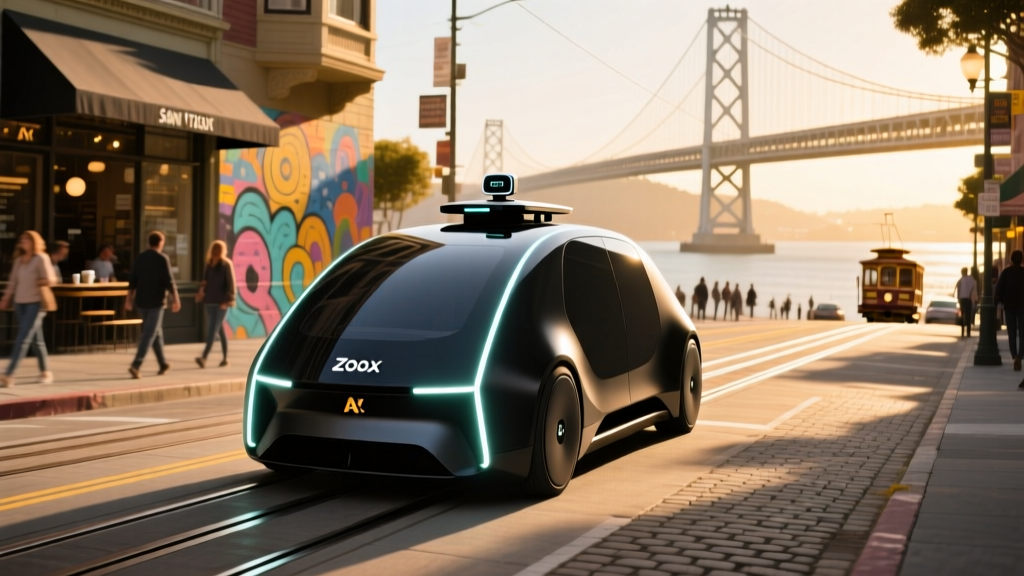
If you have been searching for when Zoox will be available in San Francisco, the short answer is: limited commercial operations have begun as of early 2026, but widespread public access across the city is still ramping up. The Amazon-backed autonomous vehicle company received its California Public Utilities Commission (CPUC) driverless pilot permit and has been expanding its purpose-built robotaxi service incrementally through San Francisco neighborhoods — but this is not yet a city-wide, on-demand replacement for Uber or Lyft.
Here is everything you need to know about Zoox's San Francisco availability, how the service works, what it costs, and the real safety and technology picture behind the headlines.
What Is Zoox and How Does It Differ From Other Robotaxis?
Zoox is an autonomous vehicle company founded in 2014 and acquired by Amazon in 2020 for approximately $1.3 billion. Unlike Waymo, which retrofits existing vehicles (currently the Jaguar I-PACE and Zeekr minivan) with autonomous hardware, Zoox designed a purpose-built, bidirectional robotaxi from the ground up. The vehicle has no steering wheel, no pedals, and no driver's seat — it is a symmetrical, carriage-style pod seating four passengers face-to-face.
This design distinction matters because it represents a fundamentally different engineering philosophy: rather than adapting a human-driven car for autonomy, Zoox built a vehicle that only exists to be autonomous. The trade-off is that the Zoox vehicle cannot be manually driven by a human in an emergency, which is why regulatory approval has taken longer and why the company has been more cautious in its rollout pace compared to Waymo.
Zoox operates at SAE Level 4, meaning the vehicle performs all driving tasks within a defined operational design domain (ODD) — specific geofenced areas under certain conditions — with no human driver present or required. This is fundamentally different from Level 2 systems like Tesla Autopilot, GM Super Cruise, or Ford BlueCruise, which require continuous driver supervision and are not self-driving. Zoox vehicles have no steering wheel or pedals; there is no human to supervise.
Where Can You Use Zoox Right Now? Service Availability Map
Zoox's commercial footprint is expanding but remains limited to specific cities and tightly geofenced zones within those cities. Here is where the service operates as of mid-2026:
| City | Status | Service Area | Public Access |
|---|---|---|---|
| San Francisco | Commercial pilot (driverless) | Select neighborhoods (SoMa, Mission Bay, portions of downtown); expanding | Waitlist + invite-only; gradually opening |
| Las Vegas | Commercial pilot (driverless) | Las Vegas Strip corridor, downtown, airport-adjacent zones | Waitlist + invite-only; broader access than SF |
| Foster City, CA | Testing (with safety driver) | Limited suburban zone | Not public — employee/authorized riders only |
| Seattle | Testing (with safety driver) | South Lake Union and select corridors | Not public |
| Austin, TX | Announced / early testing | TBD | Not public |
San Francisco specifics: Zoox's San Francisco geofence covers a growing but still limited footprint. Early commercial rides have concentrated on areas with wider streets, lower pedestrian density, and fewer construction zones — think SoMa, Mission Bay, and parts of the Embarcadero corridor rather than the steep, narrow streets of Nob Hill or the dense traffic of the Tenderloin. The company has stated plans to expand the geofence progressively throughout 2026, but full city-wide coverage is not expected until 2027 at the earliest.
How to Ride Zoox: App, Waitlist, and What to Expect
Riding Zoox is not yet as simple as opening Uber and tapping a button. Here is how the process works in practice:
- Download the Zoox app (available on iOS and Android) and join the waitlist for your city.
- Receive an invitation — Zoox has been onboarding riders in waves, prioritizing early waitlist sign-ups, employees of partner companies, and select community members.
- Request a ride within the geofenced service area. Pickup and drop-off points are constrained to approved locations (not every street corner is accessible).
- The vehicle arrives — a compact, symmetrical pod with sliding doors on both sides. There is no driver. You and up to three other passengers sit face-to-face.
- In-ride experience — screens inside the vehicle show your route, current speed, and what the vehicle's sensors are detecting (pedestrians, other cars, cyclists). You can control music and climate from a center console.
- Remote assistance — if the vehicle encounters an ambiguous situation (e.g., a construction zone with a flagger), it can pull over and connect to a remote Zoox operator for guidance. The remote operator does not "drive" the vehicle in real time but can authorize a path or maneuver.
Zoox Pricing vs. Uber and Lyft: What Does a Ride Cost?
During its pilot phase, Zoox has been offering rides at promotional pricing or free to build ridership data and gather user feedback. This is not sustainable long-term pricing, but it reflects the current growth-stage strategy shared by most robotaxi operators.
Based on publicly available information and comparable Waymo One pricing in other markets, here is what to expect once Zoox moves to standard commercial rates:
| Service | Short Trip (2-3 mi) | Medium Trip (5-7 mi) | Surge Pricing? | Tip Expected? |
|---|---|---|---|---|
| Zoox (pilot pricing) | Free – $5 | Free – $10 | No (currently) | No (no driver) |
| Zoox (projected standard) | $8 – $14 | $15 – $25 | Likely minimal | No |
| Waymo One | $10 – $16 | $18 – $30 | Limited surge | Optional in-app |
| UberX (SF average) | $12 – $18 | $20 – $35 | Yes, frequent | Expected (15-20%) |
| Lyft (SF average) | $11 – $17 | $19 – $33 | Yes, frequent | Expected (15-20%) |
Key takeaway: At standard commercial rates, robotaxis are expected to be price-competitive with — or slightly cheaper than — UberX and Lyft, primarily because there is no driver to pay. The elimination of the human driver removes roughly 60-70% of the per-ride cost structure. However, robotaxi operators are absorbing enormous upfront costs in hardware (each Zoox vehicle is estimated to cost $150,000+ to build), remote operations staff, mapping, and insurance. Long-term profitability at scale remains unproven for the entire industry.
How Safe Are Zoox Robotaxis? The Real Data
As of mid-2026, Zoox has accumulated an estimated 1+ million autonomous miles across its testing and pilot fleet in multiple cities. The company reports disengagement (human safety driver intervention) rates during testing phases that are competitive with industry leaders, though exact per-mile figures have not been published as transparently as Waymo's. Zoox's purpose-built vehicle includes over 100 safety innovations not found in retrofitted vehicles, according to the company, including rear-facing airbags and a crumple-zone architecture designed around passenger pods rather than a front-mounted engine.
Zoox was the first company to receive a NHTSA exemption to operate a vehicle without traditional manual controls (steering wheel, pedals, mirrors). The company has published its safety framework publicly, outlining a "three-pillar" approach: vehicle design safety, AI driving competence, and operational safety protocols.
No publicly reported at-fault collisions involving Zoox robotaxis carrying passengers have been documented in NHTSA or CPUC filings as of early 2026. However, the total mileage base remains small compared to Waymo (which has surpassed 30 million driverless miles), so statistical confidence intervals are wider.
How this compares to human drivers: The Insurance Institute for Highway Safety (IIHS) and NHTSA data consistently show that human drivers experience approximately 1.5 to 2.0 police-reported crashes per million vehicle miles. Robotaxi operators aim to beat this benchmark substantially, but making direct comparisons is complicated by the fact that robotaxis currently operate in geofenced, mapped areas and tend to drive more conservatively (lower speeds, wider following distances) than human drivers.
Zoox Technology Stack: Sensors, AI, and the Purpose-Built Advantage
Zoox uses a multi-modal sensor suite — combining lidar, cameras, and radar — which places it firmly in the "sensor fusion" camp rather than the camera-only approach championed by Tesla's FSD. Here is the hardware breakdown:
| Component | Specification / Role |
|---|---|
| Lidar | Multiple roof-mounted and corner units; 360° coverage with redundancy; provides precise depth mapping to ~200+ meters |
| Cameras | High-resolution surround cameras for object classification, traffic light/signal reading, lane detection, and sign recognition |
| Radar | Forward and corner radar for velocity detection of moving objects; functions in rain/fog where lidar and cameras degrade |
| Compute | Custom onboard AI processing; real-time sensor fusion, path planning, and prediction models |
| HD Mapping | Pre-scanned centimeter-accurate maps of every operational zone; vehicle localizes against these maps in real time |
| V2X / Connectivity | Persistent cellular connection for remote assistance, fleet coordination, and OTA updates |
Why the purpose-built design matters technically: Because Zoox designed the vehicle from scratch, the sensor placement is optimized — not retrofitted. Lidar units sit at ideal roof and corner positions without being constrained by a conventional car's body lines. The bidirectional capability (the vehicle drives equally well in either direction) means it can execute three-point turns, U-turns, and recovery maneuvers that a conventional vehicle cannot, which is useful when the vehicle needs to exit a dead-end or blocked street.
Battery and powertrain: The Zoox vehicle is fully electric, with an estimated battery capacity in the range of 75-100 kWh (exact specs have not been publicly confirmed by Zoox). The vehicle is designed for continuous urban operation with opportunity charging between ride cycles — the fleet returns to depots for DC fast charging during low-demand periods. Range per charge is estimated at approximately 150-200 miles in urban stop-and-go driving, which is sufficient for a full shift before recharging.
The Regulatory Landscape: Who Approves Zoox Operations?
Operating a driverless robotaxi in the United States requires navigating a layered regulatory framework. Zoox must satisfy requirements at both the federal and state level:
- NHTSA (federal): Oversees vehicle safety standards (FMVSS). Zoox received a historic exemption from NHTSA to operate a vehicle without a steering wheel, pedals, or mirrors — the first such exemption granted for a purpose-built autonomous vehicle. NHTSA also requires crash reporting for all vehicles operating with automated driving systems.
- California DMV: Issues Autonomous Vehicle Testing Permits (with and without safety drivers) and Deployment Permits. Zoox holds a driverless testing permit and has progressed toward deployment authorization.
- California Public Utilities Commission (CPUC): Regulates passenger-carrying commercial transport. Zoox received a CPUC permit to operate a driverless pilot program, which allows it to offer rides to the public (currently under a pilot/limited framework). Full commercial deployment permits — which would allow unrestricted paid service — are the next regulatory milestone.
- San Francisco local government: The San Francisco Municipal Transportation Agency (SFMTA) and the Board of Supervisors have been actively involved in setting conditions for robotaxi operations, including speed limits, school-zone restrictions, and event-crowd protocols. After high-profile incidents involving other operators in 2023-2024, the city imposed additional operational restrictions that apply to all robotaxi companies.
This multi-layered approval process is why expansion is slow and deliberate. Each new city requires its own set of state and local approvals, HD mapping, and operational agreements with municipal authorities.
Current Limitations: What Zoox Cannot Do (Yet)
Zoox operates at SAE Level 4 within a defined operational design domain. This means there are significant scenarios where the service is unavailable or the vehicle will refuse to operate:
- Geofence boundaries: If your origin or destination falls outside the mapped service zone, Zoox cannot serve that trip. The geofence in San Francisco covers a subset of the city, not the full 47 square miles.
- Heavy rain and fog: While the radar system provides some all-weather capability, lidar and camera performance degrade in heavy precipitation. Zoox may reduce speed, extend following distances, or pause operations during severe weather — a limitation shared by all lidar-dependent systems.
- Construction zones and unmapped changes: If a street has been significantly altered since the last HD map update (new construction, rerouted lanes), the vehicle may pull over and request remote assistance or decline the route.
- Highway driving: Zoox's current ODD is urban environments at speeds up to approximately 35-45 mph. There is no highway or freeway capability in the current service.
- Steep hills: San Francisco's famously steep grades (some exceeding 30% grade) present challenges for any autonomous system. Zoox's initial geofence avoids the steepest neighborhoods.
- No intercity trips: You cannot take a Zoox from San Francisco to Oakland, SFO airport (unless within the geofence), or any destination outside the service area.
- Accessibility: While the vehicle is designed with a low floor and wide doors, wheelchair accommodation specifics and ADA compliance details for all scenarios are still being validated in real-world operations.
Zoox vs. Waymo in San Francisco: A Direct Comparison
For San Francisco residents, the practical question is often not "robotaxi or no robotaxi" but "which robotaxi?" Waymo One has been operating commercially in San Francisco since 2022 and offers a much broader service area. Here is how the two stack up:
| Attribute | Zoox | Waymo One |
|---|---|---|
| Vehicle | Purpose-built bidirectional pod (no steering wheel) | Jaguar I-PACE (retrofitted); Zeekr minivan (newer fleet) |
| SAE Level | Level 4 | Level 4 |
| SF coverage | Limited / expanding geofence | Most of SF (broad geofence) |
| Public access | Waitlist / invite-only pilot | Open to public via Waymo app |
| Driverless miles (cumulative) | ~1M+ (estimated, multi-city) | 30M+ (multi-city) |
| Sensors | Lidar + camera + radar (fusion) | Lidar + camera + radar (fusion) |
| Parent company | Amazon | Alphabet (Google) |
Bottom line: If you need a robotaxi ride in San Francisco today, Waymo One is the practical choice — it is open to the public, covers most of the city, and has years of operational data. Zoox is the one to watch for the future, with its purpose-built vehicle offering a fundamentally different passenger experience, but access remains limited in 2026.
Frequently Asked Questions About Zoox in San Francisco
Is Zoox truly self-driving, or is there a remote human controlling it?
Zoox is SAE Level 4 — fully driverless within its geofenced service area. There is no human driver in the vehicle, no steering wheel, and no pedals. However, remote operators can assist the vehicle if it encounters an ambiguous scenario (e.g., an unusual construction setup). The remote operator does not steer or accelerate the vehicle in real time; they authorize a plan or path that the vehicle then executes autonomously. Think of it as a human "advisor," not a remote-control driver.
When will Zoox be fully available across all of San Francisco?
Full city-wide coverage is not expected until 2027 at the earliest. The current geofence covers select neighborhoods, and Zoox has been expanding incrementally. Each expansion requires additional HD mapping, regulatory approval, and operational validation. The pace of expansion will depend on safety performance data, regulatory decisions by the CPUC and SFMTA, and fleet scaling.
How much does a Zoox ride cost compared to Uber?
During the pilot phase, rides are free or heavily subsidized (typically $0-$10 for most trips). Once Zoox moves to standard commercial pricing, expect fares in the range of $8-$25 depending on distance — competitive with or slightly below UberX and Lyft, with the added advantage of no surge pricing and no tipping. The long-term pricing model has not been officially published.
How safe is Zoox compared to a human Uber driver?
Zoox has not reported any publicly documented at-fault collisions during passenger-carrying operations as of early 2026. The vehicle's sensor suite provides 360-degree awareness with no blind spots, no distraction, and no fatigue. However, Zoox's total driverless mileage is still relatively small (~1M+ miles across all cities), so the statistical sample is not yet large enough for definitive safety-rate comparisons. Human drivers average roughly 1.5-2.0 police-reported crashes per million miles; Waymo's published data suggests robotaxis can achieve rates significantly below this, and Zoox aims for the same.
Can I use Zoox to get to SFO Airport?
As of mid-2026, the Zoox geofence in San Francisco does not extend to San Francisco International Airport (SFO). Airport service would require separate regulatory approval and geofence mapping, which has not been announced. For airport trips, Waymo One (which has expanded to select airport routes) or traditional rideshare remain your options.
What happens if the Zoox vehicle breaks down or gets stuck?
If the vehicle encounters a situation it cannot resolve autonomously (e.g., a completely blocked road, a sensor fault), it will pull over safely and connect to a remote Zoox operations center. If the issue cannot be resolved remotely, Zoox dispatches a roadside assistance team to retrieve the vehicle and passengers. The company also offers in-app support and a direct line to operations staff throughout every ride.