Zoox Robotaxi: The Quick Verdict on Where You Can Ride Today
If you've been searching for where Zoox operates its purpose-built, fully driverless robotaxi, the answer is narrower than most headlines suggest. As of early 2026, Zoox — the Amazon-owned autonomous vehicle company — runs limited commercial robotaxi service in Las Vegas, Nevada, and Foster City/San Francisco, California, with a controlled early-rider program in Austin, Texas. Unlike Waymo, which has scaled paid operations across Phoenix, San Francisco, and Los Angeles, Zoox has taken a slower, more geofenced approach to deployment.
This guide maps every confirmed Zoox operating zone, breaks down the vehicle's SAE Level 4 architecture, compares pricing to conventional rideshare, and examines the safety data and regulatory framework behind each deployment. If you're evaluating whether a robotaxi is a realistic part of your transportation mix, this is the grounded, data-first picture.
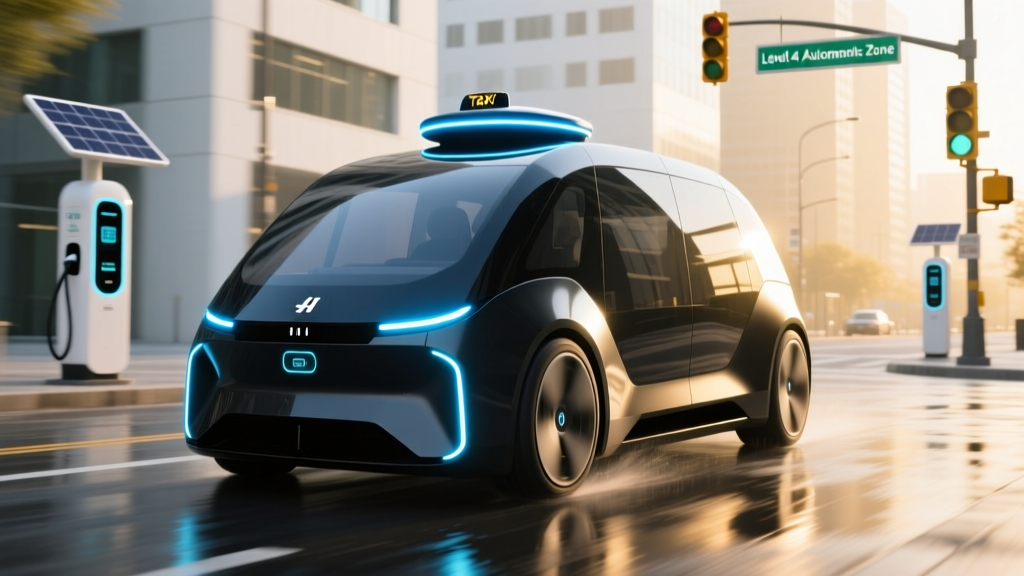
Zoox's robotaxi operates at SAE Level 4 within its approved operational design domain (ODD). This means the vehicle handles all driving tasks — steering, braking, navigation, lane changes — without any human driver present, but only within a pre-mapped, geofenced area under defined conditions (fair weather, mapped roads). This is fundamentally different from Level 2 systems like Tesla Autopilot or GM Super Cruise, which require an attentive human driver at all times. There is no steering wheel or pedal set in the Zoox vehicle — no human override is possible or expected.
Where Can I Use Zoox Right Now? City-by-City Service Map
Zoox does not operate a single, sprawling network. Each city deployment requires separate regulatory approval, geofence mapping, and operational validation. Here is the current status as of Q1 2026:
| City | Status | Service Type | Geofence Notes |
|---|---|---|---|
| Las Vegas, NV | Live — Paid Service | Commercial robotaxi (invite-based, expanding) | Las Vegas Strip corridor, downtown, Convention Center area |
| Foster City, CA | Live — Paid Service | Commercial robotaxi | Zoox HQ zone; suburban streets and select commercial corridors |
| San Francisco, CA | Live — Limited Paid | Commercial robotaxi (restricted zones) | Select neighborhoods; avoiding highest-density corridors during initial rollout |
| Austin, TX | Early Rider Program | Testing / invite-only preview | Limited downtown and South Austin zones; not yet commercial pricing |
Key takeaway: Zoox's footprint is intentionally small. The company has prioritized proving safety and reliability in controlled zones before scaling. If you're outside these metros, Zoox is not yet an option. Waymo remains the only robotaxi with multi-city paid service at meaningful scale in the U.S. as of 2026.
For official service-area details and rider eligibility, check the Zoox ride page directly, as geofence boundaries update periodically.
How to Use Zoox: App, Booking, and the Riding Experience
Using Zoox is closer to a traditional rideshare than you might expect, with a few important differences tied to the vehicle's design.
Step-by-step: Requesting a ride
- Download the Zoox app (iOS/Android) and create an account in a supported city.
- Request a ride — set pickup and dropoff within the geofenced service area. The app will confirm whether both points are inside the operational zone.
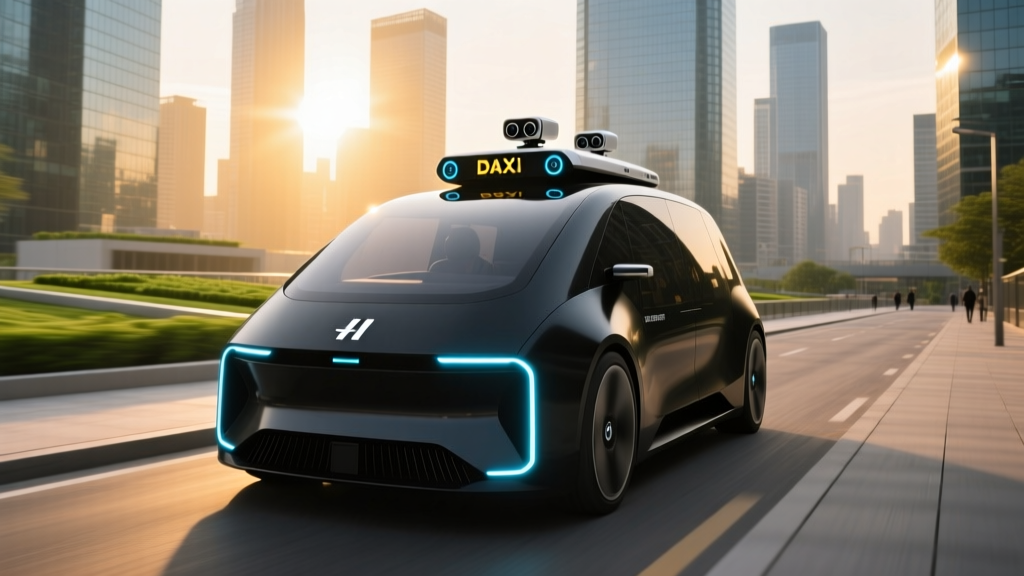
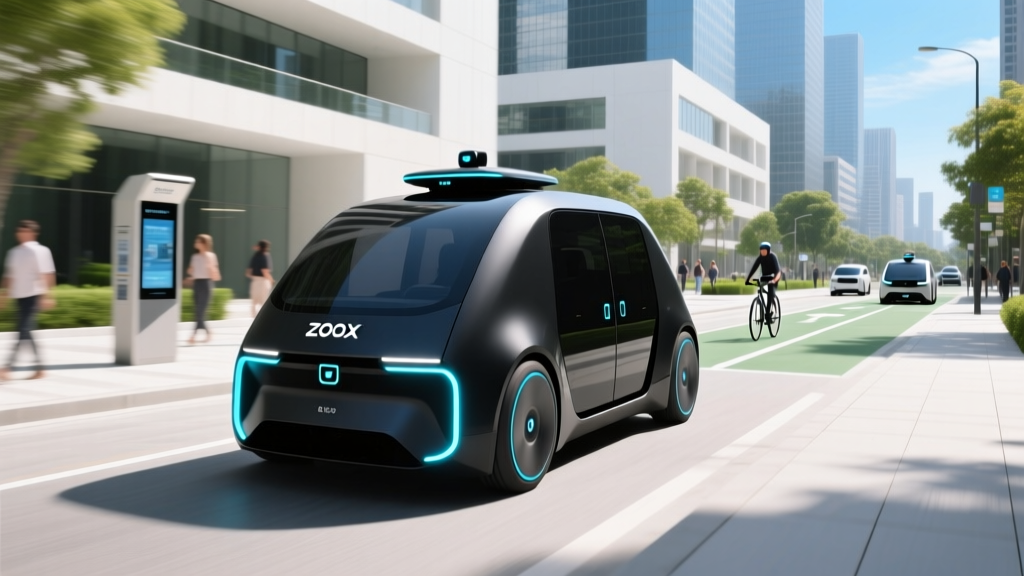
- Vehicle arrives — the Zoox vehicle is a compact, carriage-style pod with no hood or trunk. It seats up to four passengers face-to-face on bench seats.
- Authenticate — confirm your ride via the app or an in-cabin screen. Doors unlock automatically.
- Ride — the vehicle is fully autonomous. There is no driver, no steering wheel, no pedals. An in-cabin screen shows your route, speed, and detected objects in real time.
- Arrival — the vehicle stops, doors unlock, and you exit. Payment is processed through the app.
What makes the Zoox vehicle different
The Zoox Gen 3 vehicle is purpose-built for autonomy, not a retrofitted production car. Key design features:
- Bidirectional driving — the vehicle is symmetrical and can drive equally well in either direction, which simplifies three-point turns and tight urban maneuvers.
- Four-wheel steering — enables tight turning radii in narrow city streets.
- No driver controls — no steering wheel, pedals, or mirrors. This is a Level 4 design commitment, not a modified consumer vehicle.
- Battery-electric — powered by an onboard battery pack (estimated ~75 kWh usable capacity based on Zoox disclosures), targeting a full day of operation on a single charge.
Zoox Pricing vs. Uber and Lyft: What Does a Ride Cost?
Robotaxi economics are a central question for buyers weighing whether to adopt the service. Zoox has adopted an introductory pricing model designed to undercut conventional rideshare in its operating zones, though this is subsidized and expected to adjust as the service scales.
| Service | Base Fare | Per-Mile Rate | Per-Minute Rate | Est. 5-Mile Trip |
|---|---|---|---|---|
| Zoox | $0–$2.50 | $1.00–$1.50 | $0.25–$0.40 | $8–$14 |
| UberX | $2.50–$3.50 | $1.50–$2.50 | $0.35–$0.55 | $14–$22 |
| Lyft | $2.00–$3.00 | $1.40–$2.30 | $0.30–$0.50 | $13–$20 |
| Waymo | $2.00–$3.00 | $1.30–$2.00 | $0.30–$0.45 | $12–$19 |
Important caveats: Zoox's current pricing is promotional and subject to change. Surge pricing does not yet apply in Zoox's limited zones, but conventional rideshare surge in dense urban cores can push UberX/Lyft well above these estimates. Zoox's geofence also limits where you can go — a trip that crosses outside the operational zone simply cannot be booked.
How Safe Are Zoox Robotaxis? Real Data and Safety Record
Safety is the single most scrutinized aspect of robotaxi operations, and for good reason. Unlike Level 2 driver-assist systems where a human is always the fallback, Level 4 robotaxis carry full responsibility for every driving decision.
Zoox Safety Data Snapshot (through late 2025)
- Autonomous miles driven: Estimated 2+ million driverless miles across testing and commercial operations (Zoox does not publish a live odometer; this is derived from California DMV disengagement reports and company disclosures).
- DMV disengagement reports: Zoox files annual disengagement data with the California DMV. Disengagement rates have trended downward year-over-year, with the most recent reporting period showing fewer than 1 disengagement per 1,000 autonomous miles in complex urban environments.
- Reported collisions: Zoox has reported a small number of minor-contact incidents to NHTSA as required under Standing General Order 2021-01 for ADS-equipped vehicles. None have involved serious injuries to passengers or pedestrians as of the latest public filings.
- Vehicle design safety: The Zoox vehicle includes a reinforced passenger safety cell, airbags for all four seating positions, and a low center of gravity from the floor-mounted battery pack.
Context: Robotaxi safety vs. human drivers
Direct statistical comparison between robotaxis and human drivers remains difficult because robotaxi fleets operate in limited, pre-mapped zones under favorable conditions — they don't yet drive in blizzards, unmapped rural roads, or construction-zone chaos the way human drivers do daily. The NHTSA requires all ADS operators to report crashes, which provides transparency that conventional driving lacks, but the datasets are not yet large enough for definitive per-mile fatality comparisons.
What the data does show: robotaxis like Zoox and Waymo have strong records in avoiding the most common human-caused crash types (DUI, texting, drowsy driving) but face edge cases — unusual road configurations, erratic human behavior, sensor degradation in heavy rain — that remain engineering challenges.
Under the Hood: Zoox's Technology Stack Explained
Zoox takes a sensor-fusion approach that differs sharply from Tesla's camera-only FSD strategy. Understanding the tech stack helps explain both the capabilities and the limitations.
Sensor Suite
| LiDAR | Multiple roof- and body-mounted LiDAR units providing 360° 3D point-cloud mapping out to ~200+ meters. LiDAR gives precise depth data independent of lighting conditions — critical for night driving and detecting objects cameras might miss. |
| Cameras | A surround-camera array covering 360° with overlapping fields of view. Used for lane-line detection, traffic-sign recognition, signal-light state, and object classification (pedestrian vs. cyclist vs. vehicle). |
| Radar | Multiple radar units for velocity measurement of surrounding objects, redundancy in low-visibility conditions (fog, light rain), and close-range detection. |
| Ultrasonic | Short-range sensors for low-speed maneuvering, curb detection, and docking precision at pickup/dropoff. |
| HD Mapping | Zoox pre-maps every inch of its geofenced service area at centimeter-level resolution. The vehicle localizes against this map in real time, which is why it cannot operate outside approved zones. |
Compute and Software
Onboard compute runs Zoox's proprietary perception, prediction, and planning stack. The system processes sensor data in real time, predicts the behavior of surrounding agents (pedestrians, other vehicles, cyclists), and plans a safe trajectory — all within milliseconds. Remote assistance is available: if the vehicle encounters a scenario it cannot resolve (e.g., a double-parked truck blocking the only lane), a remote human operator can provide high-level guidance (not direct driving) to help the vehicle decide how to proceed.
LiDAR vs. Camera-Only: Why it matters
Tesla's FSD (Supervised) relies exclusively on cameras and neural networks — a lower hardware cost but a system that still requires human supervision (Level 2). Zoox, Waymo, and Cruise all use LiDAR as a core sensor because Level 4 operation — no human fallback — demands sensor redundancy. LiDAR provides ground-truth depth data that cameras must infer, and it performs consistently in darkness. The trade-off is cost: each Zoox vehicle likely carries $30,000–$50,000+ in sensor hardware, a price point that only makes sense in a fleet-ownership model where vehicles run 16+ hours per day.
Regulatory Landscape: Who Approves Zoox Operations?
Robotaxi deployment in the U.S. is not governed by a single federal permit. Instead, it's a patchwork of state and local approvals that vary significantly by jurisdiction.
California (CPUC and DMV)
In California, Zoox must hold permits from two agencies:
- California DMV: Issues autonomous vehicle testing permits and requires annual disengagement reports. Zoox has held a DMV testing permit for years.
- California Public Utilities Commission (CPUC): Regulates commercial passenger service. Zoox received a Driverless Pilot permit from the CPUC, allowing it to offer paid rides without a safety driver in approved zones. Full commercial deployment permits (TCP — Transportation Charter-Party Carrier) require additional safety and insurance documentation.
Nevada (DMV and Local Authorities)
Nevada has been comparatively permissive on autonomous vehicle testing and deployment. Zoox received approval to operate on public roads in Las Vegas through the Nevada DMV's autonomous vehicle program and local municipal agreements. The Las Vegas Strip corridor is a high-visibility deployment that Nevada officials have actively supported as a tourism and technology showcase.
Texas (TxDOT and City-Level)
Texas lacks a comprehensive state-level autonomous vehicle regulatory framework comparable to California's, which means deployment largely depends on city-level agreements and TxDOT coordination for any state-road involvement. Zoox's Austin operations are currently in the testing/early-rider phase under local agreements.
Federal (NHTSA)
At the federal level, NHTSA sets vehicle safety standards and requires crash reporting via Standing General Order 2021-01, but does not currently issue operational permits for robotaxis. Zoox has received NHTSA exemptions for certain Federal Motor Vehicle Safety Standards (FMVSS) that assume a human driver — for example, requirements for a steering wheel or rearview mirrors — since its vehicle has neither.
Current Limitations: Where Zoox Cannot Go (and Why)
What Zoox Does NOT Do Today
- No highway driving: Zoox operates on surface streets only. You cannot book a Zoox ride between cities or on freeways. The vehicle's top speed and operational design domain are limited to urban/suburban roads.
- No heavy rain or flooding: LiDAR and camera performance degrades in heavy precipitation. Zoox will suspend or restrict service during significant weather events. Light rain is generally manageable; downpours are not.
- No service outside the geofence: If your destination falls outside the mapped zone, the ride cannot be booked. There is no "manual mode" — the vehicle simply cannot operate in unmapped areas.
- No airport pickups (most locations): Airport access requires specific commercial agreements and geofencing that Zoox has not yet fully secured at all nearby airports.
- No wheelchair accessibility (current vehicle): The Zoox vehicle's compact carriage design does not currently accommodate wheelchair users. This is a known gap that the company has acknowledged.
- Limited hours in some zones: While Zoox vehicles can technically operate 24/7, some service zones may have restricted hours based on local agreements or demand patterns.
- Construction zones and road closures: If the pre-mapped route is disrupted by unexpected construction, the vehicle may stop and request remote assistance, which can add significant delay or result in ride cancellation.
Edge cases that still challenge Level 4 systems
Even within approved zones, certain scenarios push the system to its limits:
- Unusual road users: Horse-drawn carriages, oversized loads, or funeral processions with non-standard formations can confuse prediction algorithms.
- Temporary signage: Hand-held stop signs by crossing guards or temporary traffic-control signs at construction sites require interpretation that HD maps don't pre-encode.
- Aggressive human drivers: Predicting the behavior of drivers who consistently violate traffic rules (wrong-way driving, illegal U-turns) remains an ongoing challenge for all ADS developers.
Frequently Asked Questions
Is Zoox truly self-driving, or is there a remote human controlling it?
Zoox is genuinely self-driving (SAE Level 4) within its geofence. There is no remote human "driving" the vehicle via joystick. Remote operators provide high-level guidance when the vehicle encounters an ambiguous situation — for example, confirming it's safe to go around a double-parked car — but the vehicle executes all steering, braking, and acceleration decisions autonomously. This is fundamentally different from Level 2 systems like Tesla FSD (Supervised), which require a human driver in the seat.
How much does a Zoox ride cost compared to Uber or Lyft?
Zoox's current pricing is promotional and generally 20–40% below comparable UberX or Lyft rides for the same distance within its service zone. A typical 5-mile trip costs $8–$14 on Zoox vs. $13–$22 on conventional rideshare. However, this pricing is subsidized to build ridership and is expected to adjust. Zoox also cannot match rideshare on coverage — if your trip crosses outside the geofence, you'll need Uber/Lyft regardless.
Where does Zoox operate outside the U.S.?
As of 2026, Zoox operates exclusively in the United States. There are no international deployments. Amazon's ownership could eventually facilitate global expansion, but regulatory approval for autonomous passenger service must be secured country-by-country, and Zoox has not announced international timelines.
Can I hail a Zoox on the street, or do I need the app?
You need the Zoox app. Street hails are not supported. The app handles geofence validation, identity confirmation, routing, and payment. This also means you need a smartphone and data connection to use the service.
What happens if the Zoox vehicle gets stuck or confused?
The vehicle will pull to a safe stop and contact a remote assistance operator. The operator reviews the situation via the vehicle's sensor feeds and provides guidance (e.g., "proceed around the obstruction" or "wait for the crossing guard to clear"). If the situation cannot be resolved, the ride may be canceled and you'll be offered alternative transport or a refund.
How does Zoox compare to Waymo?
Waymo has a significantly larger operational footprint in 2026, with paid service in Phoenix, San Francisco, Los Angeles, and expanding to additional cities. Waymo uses a modified Jaguar I-PACE (and next-gen Geely-based vehicle), while Zoox uses its own purpose-built pod. Both are Level 4, both use LiDAR + camera + radar sensor fusion, and both have strong safety records in their respective zones. If you need a robotaxi today in a city where both operate, availability and wait times — not technology — will likely determine your choice.
Will Zoox expand to more cities in 2026–2027?
Zoox has signaled plans to expand beyond its current four-city footprint, and Austin's early-rider program suggests it may become the next full commercial deployment. However, each new city requires months of mapping, regulatory negotiation, and operational validation. Expect gradual, city-by-city expansion rather than a rapid national rollout. Monitor the Zoox website and local transportation authority announcements for confirmed new markets.
Bottom Line: Who Should Consider Zoox Today?
Zoox is a real, operational Level 4 robotaxi — not a concept, not a demo, not a driver-assist system pretending to be autonomous. But its availability in early 2026 is limited to specific zones in Las Vegas, the San Francisco Peninsula, and parts of San Francisco proper, with Austin still in preview mode.
Choose Zoox if: you live or work within its geofenced zones, want to experience a purpose-built driverless vehicle, and your trips are short-to-medium surface-street rides that fit within operating hours.
Stick with Uber/Lyft or your own EV if: you need airport runs, highway travel, trips outside the geofence, wheelchair accessibility, or service in a city where Zoox hasn't launched. For most U.S. drivers in 2026, robotaxis remain a supplement to — not a replacement for — personal EV ownership or conventional rideshare.
As Zoox scales and secures additional city permits, this page will be updated with new service areas and pricing changes. Bookmark it and check back, or sign up for the Zoox app to get notified when service reaches your area.