If you've been following autonomous vehicles, you've likely seen Amazon's Zoox testing its distinctive, carriage-style robotaxi in select cities. But the practical question for most riders is simple: how much is a Zoox ride, and can you actually hail one today?
As of early 2026, Zoox operates a limited rider-hailing service in specific geofenced zones — and the pricing model is meaningfully different from Uber or Lyft. Below, we break down exactly what a Zoox ride costs, where the service is live, how safe the data says it is, and what limitations you'll encounter before you tap "request ride."
What Zoox Actually Is: A Level 4 Robotaxi, Not Driver-Assist
SAE Automation Level: Level 4 (High Automation)
Zoox operates at SAE Level 4 — meaning the vehicle handles all driving tasks within its defined operational design domain (geofenced urban areas, fair weather) with no human driver present. There is no steering wheel, no pedals, and no option for a passenger to take over.
This is fundamentally different from Level 2 systems like Tesla Autopilot, Ford BlueCruise, or GM Super Cruise, which require constant driver supervision. Zoox is a true driverless service, comparable to Waymo's robotaxi operations.
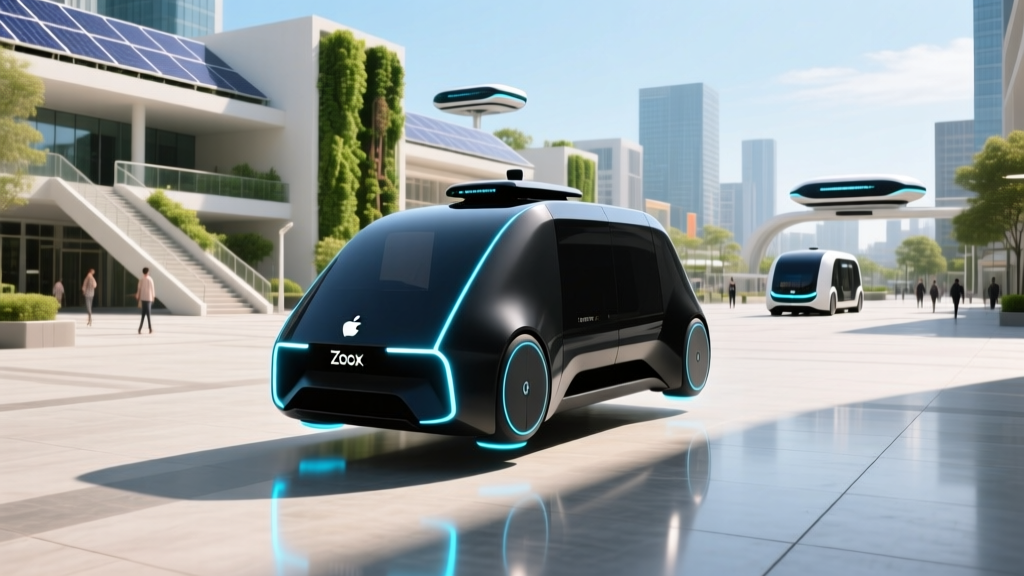
Zoox was acquired by Amazon in 2020 for approximately $1.2 billion and has developed both the autonomous driving software and a custom-built, bidirectional electric vehicle designed from the ground up as a robotaxi — not a retrofitted consumer car. The Zoox vehicle seats four passengers face-to-face, has no driver's seat, and features four-wheel steering for tight urban maneuvering.
Where Can I Use Zoox Right Now?
Zoox's commercial rider service is not available nationwide. The company has been progressively expanding its paid ride-hailing operations through 2025 and into 2026, but access remains limited to specific geofenced zones within a handful of cities.
| City | Status | Service Area Notes |
|---|---|---|
| Las Vegas, NV | Paid rides live | Las Vegas Strip corridor and surrounding resort areas |
| Foster City, CA | Paid rides live | San Francisco Peninsula — limited geofence around Zoox HQ and nearby commercial zones |
| San Francisco, CA | Limited paid service | Select zones — expanded from testing-only; availability varies by time of day |
| Austin, TX | Testing / early access | Public road testing underway; limited invited-rider programs |
| Seattle, WA | Testing | Amazon home turf — mapping and validation; no public ride-hailing yet |
To request a ride where service is live, you download the Zoox app (iOS/Android), set your pickup and dropoff within the geofenced zone, and confirm. Wait times vary — in Las Vegas, riders have reported 3–8 minute waits during off-peak hours, with longer waits during convention peaks.
How Much Does a Zoox Ride Cost vs. Uber and Lyft?
Zoox has positioned its pricing to be competitive with conventional rideshare, not premium. The company's stated goal is to undercut Uber and Lyft on comparable routes to drive adoption — funded by Amazon's deep pockets and the absence of a human driver's earnings cut.
| Service | ~3-Mile Ride | ~8-Mile Ride | Pricing Model |
|---|---|---|---|
| Zoox | $5–$8 | $12–$18 | Per-ride fare; introductory promos common |
| UberX | $8–$13 | $18–$28 | Base + per-mile + per-minute; surge pricing applies |
| Lyft | $7–$12 | $17–$26 | Similar to Uber; Prime Time surges apply |
| Waymo (where available) | $7–$11 | $15–$24 | Comparable to rideshare; limited surge behavior |
Key pricing notes:
- Zoox has offered promotional and discounted rides during its launch phases — early riders in Las Vegas have reported fares as low as $3–$5 for short trips.
- Unlike Uber/Lyft, Zoox does not employ surge pricing in the traditional sense. However, availability may be limited during peak demand rather than raising prices.
- There is no tipping — there's no driver to tip.
- Long-term, Zoox's unit economics depend on high fleet utilization. Amazon's backing allows sustained below-market pricing during the growth phase.
How Safe Are Zoox Robotaxis? The Data
Safety Data Snapshot
- Testing miles: Zoox has accumulated millions of autonomous miles across its test fleet in multiple cities, though it publishes fewer public mileage reports than Waymo.
- NHTSA Standing General Order: Like all ADS operators, Zoox is required to report crashes involving Level 4 vehicles to NHTSA within 24 hours under the Standing General Order issued in 2021 and updated since.
- Disengagement data: California DMV disengagement reports (for Foster City/SF testing) track how often a safety operator needed to intervene. Zoox's reported rates have improved year-over-year, though direct comparison to Waymo or Cruise is complicated by differing operational domains.
- Vehicle design safety: The purpose-built Zoox vehicle includes a reinforced battery structure, symmetric seating with airbags for all four passengers, and crumple zones designed for bidirectional travel. It has undergone NHTSA compliance testing for Federal Motor Vehicle Safety Standards (FMVSS) — with specific exemptions granted for the absence of a steering wheel and mirrors.
It's important to contextualize robotaxi safety: these vehicles operate in geofenced, mapped urban areas at moderate speeds (typically under 45 mph). They are not navigating rural highways or unmapped roads. The safety case rests on 360-degree sensor coverage, redundant computing, and the elimination of human driver impairment — but the data set is still small compared to the billions of human-driven miles annually.
For authoritative safety and crash data, riders can check NHTSA's crash reporting database and the IIHS for any vehicle safety assessments as they become available.
Under the Hood: Zoox's Sensor and Technology Stack
Zoox takes a sensor-rich, multi-modal approach to perception — distinctly different from Tesla's camera-only FSD architecture. The Zoox vehicle is bristling with hardware designed for redundant, overlapping environmental awareness:
Zoox Sensor & Compute Stack
| LiDAR | Multiple solid-state and spinning LiDAR units providing 360° 3D point-cloud mapping out to ~150+ meters |
| Cameras | Multi-camera array covering 360° with overlapping fields of view for object classification, traffic-light detection, and lane reading |
| Radar | Forward and corner radars for velocity detection and all-weather object tracking |
| Compute | Redundant onboard computing with failover — if one system faults, a secondary can bring the vehicle to a safe stop |
| HD Mapping | Centimeter-precision pre-mapped routes within the geofence; real-time perception cross-referenced against the map |
| Vehicle Platform | Purpose-built bidirectional EV — 74 kWh battery pack (estimated), four-wheel steering, ~75 mph top speed, symmetric design |
This multi-sensor redundancy is standard across Level 4 operators (Waymo uses a similar LiDAR + camera + radar approach). The trade-off is cost: each Zoox vehicle is estimated to carry well over $100,000 in sensor and compute hardware — a significant barrier to scaling compared to camera-only approaches, but one that provides the safety margin regulators and riders expect from a driverless service.
Current Limitations: What Zoox Can't Do Yet
Operational Limitations — Be Aware Before You Ride
- Geofenced only: You can only request rides within pre-mapped zones. If your destination falls outside the geofence, the app won't let you book. This means no airport runs or suburban trips in most markets.
- Weather restrictions: Heavy rain, fog, snow, or dust storms can cause the service to pause. LiDAR and cameras degrade in precipitation, and Zoox (like Waymo) pulls vehicles from service rather than risk reduced perception.
- Speed and road type: Zoox vehicles are designed for urban streets — typically under 45 mph. They do not operate on high-speed freeways or highways.
- Limited hours: Service may not operate 24/7 in all cities. Late-night availability depends on local permits and fleet logistics.
- No manual override: There is no steering wheel or pedals. If the vehicle encounters an edge case it cannot resolve, it will pull over safely and contact remote assistance — it will not ask you to drive.
- Accessibility: The Zoox vehicle is designed with a low floor and wide doors, but wheelchair-accessible variants and full ADA compliance details are still being rolled out.
- Construction zones and detours: While the system can handle minor obstacles, significant unplanned road changes may cause the vehicle to reroute conservatively or stop and request remote guidance.
Regulatory Landscape: Who Approves Robotaxi Operations?
Robotaxi services like Zoox operate under a patchwork of state and federal regulation:
- Federal (NHTSA): Regulates vehicle safety standards. Zoox received specific FMVSS exemptions for its steering-wheel-free design. NHTSA also mandates crash reporting under the Standing General Order.
- State level: Each state sets its own rules for autonomous vehicle testing and commercial deployment. California's DMV and CPUC (Public Utilities Commission) jointly regulate robotaxi operations — the CPUC's Autonomous Vehicle Program issues permits for paid driverless service. Nevada and Texas have their own frameworks, generally more permissive than California.
- Local/municipal: Cities may impose additional requirements — designated operating zones, time-of-day restrictions, fleet-size caps, and first-responder interaction protocols.
This regulatory fragmentation means Zoox's expansion timeline depends not just on technology readiness but on permit approvals in each new jurisdiction. This is why service availability remains limited even as the technology matures.
The Zoox Vehicle: Purpose-Built EV Specs
Unlike Waymo (which uses the Jaguar I-PACE and Zeekr vehicles), Zoox designed its own electric platform from scratch — a decision that adds years of development time but yields a vehicle optimized for the robotaxi use case.
| Spec | Value |
|---|---|
| Vehicle Type | Purpose-built Level 4 robotaxi (no steering wheel/pedals) |
| Seating | 4 passengers, face-to-face |
| Battery (estimated) | ~74 kWh, NMC lithium-ion |
| Range (estimated) | ~150–200 miles per charge (urban cycle) |
| Top Speed | ~75 mph |
| Steering | Four-wheel steering (bidirectional driving) |
| Sensors | LiDAR + cameras + radar (360° redundant coverage) |
| Availability | Not for consumer purchase — fleet-only |
The bidirectional design is a notable engineering choice: the vehicle is symmetrical front-to-back, meaning it can drive equally well in either direction. This simplifies three-point turns and tight urban navigation — a practical advantage in dense city grids where the vehicle operates.
Frequently Asked Questions
How much is a Zoox ride in 2026?
Zoox rides typically cost $5–$18 depending on distance, positioning them below comparable Uber/Lyft fares. Promotional pricing during launch phases has brought some short rides as low as $3–$5. There is no surge pricing and no tipping.
Can I buy a Zoox vehicle?
No. The Zoox robotaxi is a fleet-only vehicle — it is not available for consumer purchase. It operates exclusively as part of Zoox's ride-hailing service, backed by Amazon.
Is Zoox truly self-driving or is there a remote driver?
Zoox is a true SAE Level 4 driverless vehicle. There is no human driver in the car and no remote joystick control. However, remote fleet assistants can provide guidance if the vehicle encounters an unusual situation it cannot resolve autonomously — they do not "drive" the car but can confirm a path or authorize a maneuver.
How does Zoox compare to Waymo?
Both are Level 4 robotaxis, but Waymo has a significantly larger operational footprint (Phoenix, San Francisco, Los Angeles, Austin) and more accumulated public miles. Zoox differentiates with its purpose-built vehicle (no steering wheel, bidirectional, face-to-face seating) and Amazon's financial backing, which allows aggressive pricing. Waymo uses retrofitted consumer EVs (Jaguar I-PACE, Zeekr).
What happens if the Zoox vehicle breaks down or gets stuck?
The vehicle is designed to pull over safely and contact Zoox's remote operations center. A fleet response team can be dispatched, or the vehicle can be guided through the situation remotely. Passengers can also contact support through the in-vehicle interface or the app at any time.
Is the Zoox robotaxi wheelchair accessible?
Zoox has stated that accessibility is a design priority, with a low floor and wide-opening doors. However, full wheelchair-accessible vehicle variants and ADA compliance specifics are still being deployed as of early 2026. Check the Zoox app for current accessibility options in your city.