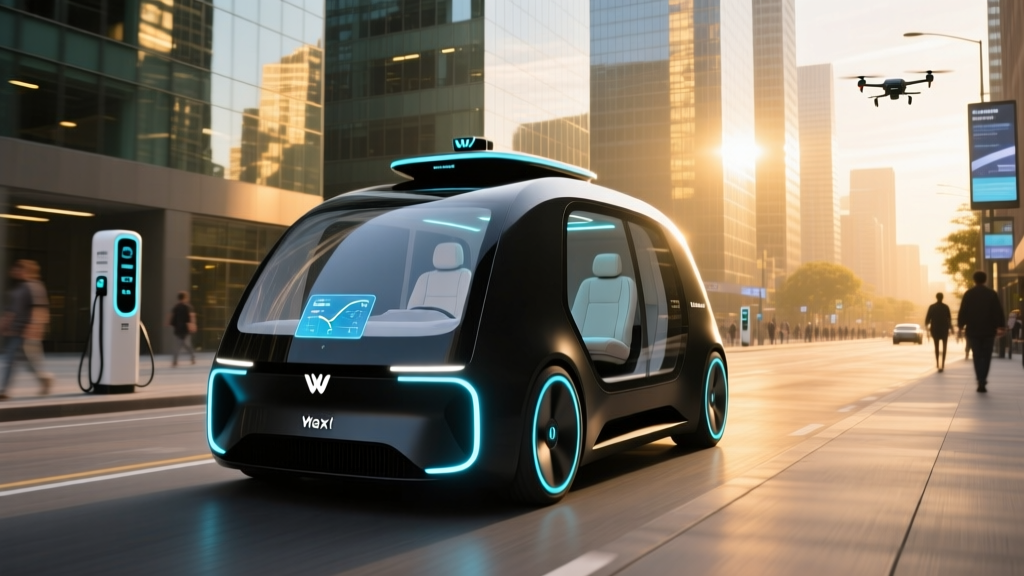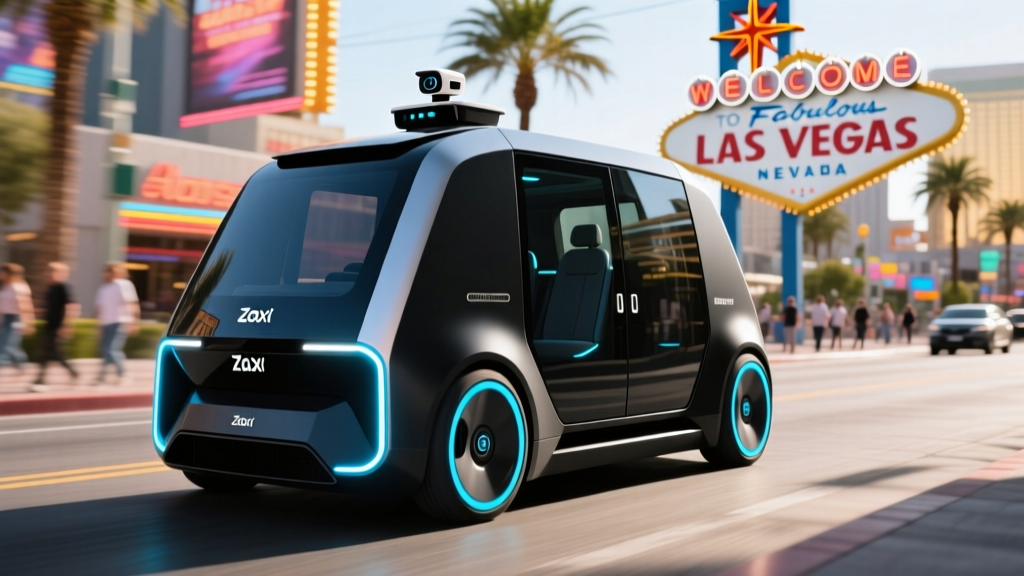
If you have spent any time on the Las Vegas Strip in late 2025 or early 2026, you have likely spotted them: compact, symmetrical, carriage-style vehicles with no steering wheel, gliding between the casino hotels and the convention center. Those are Zoox cars in Vegas, and they represent one of only two commercially available Level 4 robotaxi services operating on American public roads today, alongside Waymo. Amazon acquired Zoox in 2020 for roughly $1.3 billion, and after years of closed-course testing, the company has moved into paid public rides in its launch market.
Here is everything you need to know before you hail one: where Zoox actually operates, how the ride experience compares to Uber or Lyft, what the safety record looks like with real numbers, and the hard limitations that still define robotaxi travel in 2026.
Is Zoox Truly Self-Driving? The SAE Level 4 Distinction
Before examining the service, it is critical to establish what Zoox actually is and, just as importantly, what it is not. The SAE International J3016 standard defines six levels of driving automation, and consumer confusion between them remains one of the biggest misinformation vectors in the EV space.
| Level | Name | Driver Required? | Examples |
|---|---|---|---|
| Level 2 | Driver Assistance | Yes — hands on or eyes on | Tesla Autopilot, GM Super Cruise, Ford BlueCruise |
| Level 3 | Conditional Automation | Yes — must take over on request | Mercedes Drive Pilot (limited markets) |
| Level 4 | High Automation | No — within operational design domain | Zoox, Waymo (driverless configs) |
| Level 5 | Full Automation | No — anywhere, any condition | Does not exist commercially |
Zoox operates at SAE Level 4. That means within its approved operational design domain (ODD) — specific geofenced zones under specific conditions — the vehicle handles all driving tasks with no human behind the wheel. There is no steering wheel, no pedals, and no driver seat. This is categorically different from Tesla's FSD (Supervised), which remains a Level 2 system requiring continuous driver attention and hands-on-wheel engagement. Conflating the two is not just inaccurate; it is dangerous.
Where Can I Ride Zoox Cars in Vegas Right Now?
As of early 2026, Zoox operates paid robotaxi service in Las Vegas, Nevada, and the San Francisco Bay Area (specifically parts of San Francisco proper and Foster City). Las Vegas was the company's second commercial launch market, with rides beginning for invited users in late 2024 and expanding to a broader waitlist and paid public access through 2025.
| City | Status | Service Area | Hours |
|---|---|---|---|
| Las Vegas, NV | Paid public rides | ~14 sq mi: Strip corridor, downtown, Convention Center, Arts District | ~8 AM – midnight |
| San Francisco, CA | Paid public rides | Select zones in SF and Foster City | ~8 AM – midnight |
| Other cities | Testing (no public rides) | Seattle, Austin — closed-course and mapped-road testing only | N/A |
The Las Vegas geofence covers the core tourist corridor: you can ride between major Strip resorts (Caesars, Bellagio, MGM Grand, Venetian, Wynn), the Las Vegas Convention Center, the Arts District, and portions of downtown including Fremont Street. However, Zoox does not currently serve Harry Reid International Airport, the suburban residential areas beyond the geofence, or destinations on the far north or south ends of the Strip. If your destination falls outside the ODD, the app will not allow you to book the ride.
Important: Expansion to additional cities has been announced in press releases, but announced service is not live service. Until Zoox opens paid public rides in a new metro, treat any "coming soon" timeline as preliminary.
How to Hail a Zoox and What It Costs vs Uber or Lyft
Riding in a Zoox requires downloading the Zoox app (available on iOS and Android), creating an account, and requesting a ride within the geofenced zone. During the initial Vegas rollout, access was limited to a waitlist and invite codes. By early 2026, Zoox has progressively opened access, though wait times during peak convention hours (CES, SEMA, major fight weekends) can stretch to 15–25 minutes due to fleet-size constraints.
- The Zoox vehicle seats up to four passengers, facing each other in a carriage-style layout.
- There is no steering wheel, no pedals, no trunk. Luggage capacity is extremely limited — a backpack or small bag per person, max.
- Rides are currently limited to one stop (pickup to drop-off). No multi-stop trips.
- The app provides real-time vehicle location, ETA, and a ride summary post-trip.
Pricing: Zoox vs Rideshare in Las Vegas
Zoox has used competitive pricing to build ridership in its launch markets. Based on observed ride fares in late 2025 and early 2026, here is how a typical Vegas trip compares:
| Service | Typical Fare | Surge Pricing? | Wait Time |
|---|---|---|---|
| Zoox | $8 – $15 | No dynamic surge | 5 – 25 min |
| UberX | $12 – $28 | Yes — can 2–3x during events | 3 – 10 min |
| Lyft Standard | $11 – $25 | Yes | 3 – 12 min |
| Waymo (not yet in Vegas) | N/A | N/A | N/A |
Zoox fares tend to be lower than surge-priced Uber/Lyft rides during major events, and the absence of dynamic surge is a genuine advantage during CES or New Year's Eve. However, standard (non-surge) UberX fares are comparable, and Uber/Lyft still win on wait time and coverage area. Zoox is a cost-effective option for short, within-corridor trips — not a full replacement for rideshare across the metro.
Safety Record: What the Real Data Shows
Safety is the single most scrutinized dimension of any robotaxi service, and rightfully so. Zoox, like all commercial autonomous vehicle operators in California and Nevada, is required to report disengagement data and collision reports to regulators.
- Miles driven in autonomous mode: Zoox has accumulated several million driverless miles across its test and commercial fleet in SF and Las Vegas combined. Exact cumulative figures are reported to the California DMV and NHTSA Standing General Order.
- Disengagement rate: In its most recent California DMV disengagement report, Zoox reported a disengagement rate (human safety operator taking control during testing) in the range of one per several thousand autonomous miles — competitive with other Level 4 operators, though direct comparison is complicated by differing ODD complexity.
- Reported collisions: Zoox has reported a small number of minor contact incidents to NHTSA under the Standing General Order. As of early 2026, no fatal or serious-injury collisions involving a Zoox vehicle in autonomous mode have been publicly reported. Most reported incidents involved low-speed contact with other road users (e.g., a vehicle rear-ending a stopped Zoox at an intersection).
- No safety driver in commercial service: Unlike early Waymo and Cruise testing phases, Zoox's paid Las Vegas rides operate with no human safety operator in the vehicle.
For context, the NHTSA Standing General Order (SGO), issued in 2021 and updated since, requires all manufacturers and operators of Level 2+ and Level 3–5 automated driving systems to report crashes within 24 hours. This is the most comprehensive public dataset for comparing robotaxi safety, though it captures all severity levels including minor fender-benders that human drivers would typically not report.
The honest assessment: Zoox's safety record in commercial operation is short but clean at the severe-incident level. The sample size of paid, driverless miles is still small compared to Waymo's 30+ million autonomous miles. Drawing definitive "safer than humans" conclusions at this stage would be premature and irresponsible — the data simply is not mature enough. What the data does show is that Level 4 robotaxis operating within constrained ODDs can function without catastrophic failures, which is a meaningful milestone.
The Technology Stack: How Zoox Vehicles See and Navigate
The Zoox vehicle — sometimes called the "carriage" — is a ground-up, purpose-built robotaxi, not a retrofitted production car. This is a significant engineering distinction. While Waymo's current fleet uses modified Jaguar I-PACE EVs and Cruise used modified Chevrolet Bolts, Zoox designed its vehicle from the chassis up for autonomous operation.
Sensor Suite
Zoox uses a multi-modal sensor fusion approach, combining lidar, cameras, and radar — in contrast to Tesla's camera-only (Tesla Vision) approach for its Level 2 FSD system. The sensor layout includes:
- Lidar: Multiple high-resolution lidar units providing 360-degree 3D point-cloud mapping, critical for depth perception and object detection at range.
- Cameras: A surround camera array covering all directions with overlapping fields of view for redundancy, used for lane detection, traffic-signal recognition, and classification of objects and road users.
- Radar: Forward and surround radar for velocity detection of moving objects and performance in conditions where lidar or cameras may be degraded (heavy rain, dust).
- Redundancy: Zoox has emphasized dual-redundant compute, steering, and braking systems — if one subsystem fails, the vehicle can execute a safe stop (a "minimal risk condition" or MRC).
Geofencing and HD Mapping
Zoox vehicles operate within a pre-mapped, geofenced operational design domain. Before a Zoox vehicle drives a street autonomously, that street has been mapped at centimeter-level resolution using lidar survey runs. The vehicle's real-time sensor data is continuously compared against this HD map for localization. If the vehicle detects that it has drifted outside its geofenced zone, or encounters a road configuration not present in its map, it will execute a safe stop and request remote assistance from Zoox's fleet operations center.
This is fundamentally different from Tesla's approach with FSD, which attempts generalized driving on unmapped roads using neural networks and camera data alone. The geofencing approach is more conservative but significantly more predictable within its domain.
Current Limitations: Where Zoox Cannot (and Will Not) Drive
Level 4 autonomy is not Level 5. Zoox vehicles are highly capable within their ODD, but they have defined limitations that riders should understand before booking.
- Geofence boundaries: No service outside the mapped zone. You cannot ride to the airport, to suburban Henderson, or to the far ends of the Strip.
- Weather constraints: Heavy rain, flooding, or dense fog can trigger service suspension. The Las Vegas market is relatively favorable (dry climate), but monsoon-season storms can shut down operations temporarily.
- Construction zones: Major, unmapped road construction can cause the vehicle to stop and request remote guidance. Vegas's perpetual roadwork on and around the Strip is a known challenge.
- No luggage-friendly rides: The vehicle has no trunk. Airport runs (even if the geofence allowed it) would be impractical with suitcases.
- Limited fleet size: Wait times during peak demand can exceed 20 minutes. This is not yet a "tap and go in 3 minutes" service like Uber in most cities.
- No highway driving: Zoox operates on surface streets within its ODD. Highway-speed autonomous driving is not part of the current commercial service.
- Accessibility: The Zoox vehicle's entry height and seating configuration may not accommodate all wheelchair users or passengers with significant mobility limitations. ADA compliance for robotaxis remains an evolving regulatory area.
Regulatory Landscape: Who Approves Zoox to Operate?
Robotaxi operations in the United States are governed by a patchwork of state and local regulations — there is no single federal license to operate a driverless taxi nationwide.
In Nevada, the Nevada DMV issues autonomous vehicle testing and deployment permits under state law (NRS 482A). Zoox holds a deployment permit for commercial driverless operations in its approved Las Vegas zone. The Nevada Public Utilities Commission (PUCN) also has jurisdiction over transportation network company (TNC) aspects of the service.
In California, the California DMV issues testing and deployment permits, while the California Public Utilities Commission (CPUC) regulates the commercial passenger service component. Zoox holds permits from both agencies for its San Francisco operations.
At the federal level, NHTSA retains authority over vehicle safety standards. Zoox received a notable exemption from the Federal Motor Vehicle Safety Standards (FMVSS) to operate its purpose-built vehicle, which lacks traditional controls (steering wheel, mirrors, pedals) that FMVSS historically required. This exemption is limited in scope and fleet size — it is not a blanket approval for unlimited production.
The regulatory environment remains in flux. Following Cruise's high-profile pedestrian-dragging incident in San Francisco in October 2023 and its subsequent permit suspension by the California DMV, regulators in multiple states have increased scrutiny of robotaxi operators. Zoox has not been subject to similar enforcement actions, but the regulatory bar for all Level 4 operators has risen.
Zoox vs Waymo: How the Two Level 4 Services Compare
| Attribute | Zoox | Waymo |
|---|---|---|
| SAE Level | Level 4 | Level 4 |
| Vehicle | Purpose-built Zoox "carriage" | Modified Jaguar I-PACE (6th-gen sensor kit) |
| Parent Company | Amazon | Alphabet (Google) |
| Live Cities | Las Vegas, San Francisco | Phoenix, SF, LA, Austin (expanding) |
| Autonomous Miles (cumulative) | Millions (exact undisclosed) | 30+ million driverless miles |
| Seating Capacity | 4 passengers | 3–4 passengers |
| Sensor Approach | Lidar + cameras + radar | Lidar + cameras + radar |
| Highway Driving | No | Limited (select freeway segments in Phoenix) |
Waymo has a substantial lead in fleet size, cumulative miles, and city coverage. Zoox's advantage is its purpose-built vehicle design, which offers a more passenger-centric interior and potentially lower per-unit manufacturing cost at scale. Both are legitimate Level 4 operators — neither should be confused with Level 2 driver-assist systems marketed to consumers.
Frequently Asked Questions
Can I ride a Zoox car in Las Vegas without an invite code?
As of early 2026, Zoox has progressively opened its Las Vegas service beyond the initial invite-only phase. You can download the Zoox app, create an account, and request rides within the geofenced zone. Availability is subject to fleet capacity and demand, so wait times vary. Check the app for current access status in your area.
How much does a Zoox ride cost compared to Uber or Lyft?
Zoox fares in Las Vegas typically range from $8 to $15 for short Strip-corridor trips (2–4 miles). This is generally cheaper than surge-priced Uber/Lyft during major events, and comparable to or slightly cheaper than standard non-surge UberX fares. Zoox does not currently use dynamic surge pricing.
Is Zoox safe? Has a Zoox vehicle ever been in a serious crash?
As of early 2026, no fatal or serious-injury collisions involving a Zoox vehicle in autonomous mode have been publicly reported to NHTSA. Zoox has reported minor contact incidents under the NHTSA Standing General Order, consistent with low-speed urban driving. The cumulative driverless mile count is still growing, so long-term safety conclusions require more data.
Can Zoox drive me to the Las Vegas airport?
No. Harry Reid International Airport is currently outside Zoox's geofenced operational design domain in Las Vegas. You will need to use Uber, Lyft, a taxi, or the RTC transit system for airport trips.
What is the difference between Zoox and Tesla FSD?
Zoox is a Level 4 driverless robotaxi — there is no human driver, no steering wheel, and no expectation that a passenger will intervene. Tesla FSD (Supervised) is a Level 2 driver-assist system that requires a licensed, attentive driver behind the wheel at all times. They are fundamentally different categories of automation and should never be compared as equivalents.
Does Zoox operate in bad weather?
Zoox may suspend service during heavy rain, flooding, or severely reduced visibility. Las Vegas's dry climate means weather-related suspensions are infrequent, but monsoon-season thunderstorms (typically July–September) can trigger temporary service pauses.