If you've searched for Zoox Resorts World and wondered what the autonomous shuttle actually involves, you're not alone. Amazon's Zoox has been operating a purpose-built robotaxi on and around the Resorts World Las Vegas campus, offering one of the few publicly accessible Level 4 driverless ride experiences in the United States. This guide breaks down exactly what the service is, where it runs, how safe it has been, and what riders should expect in 2026.
What Is the Zoox Resorts World Robotaxi?
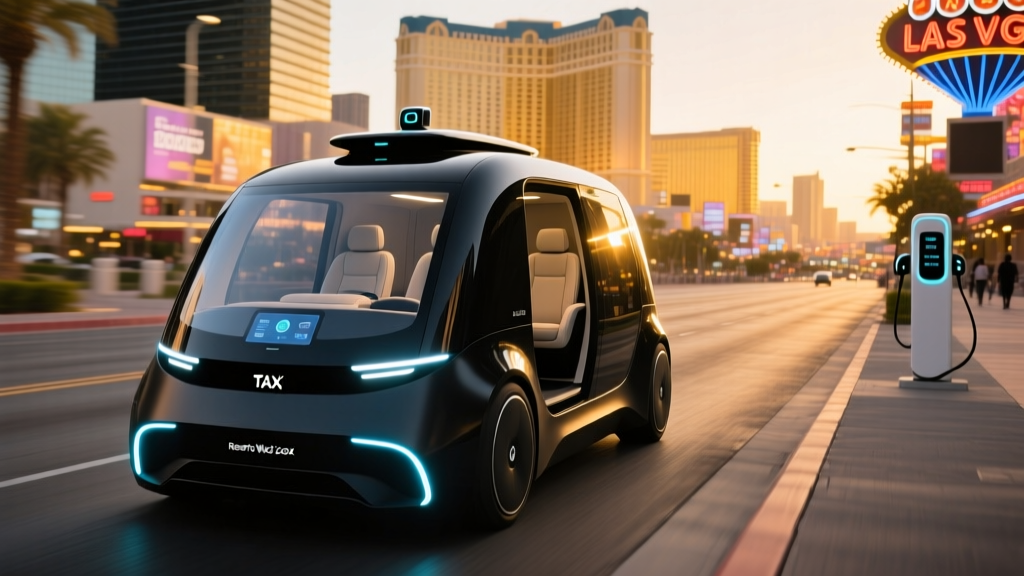
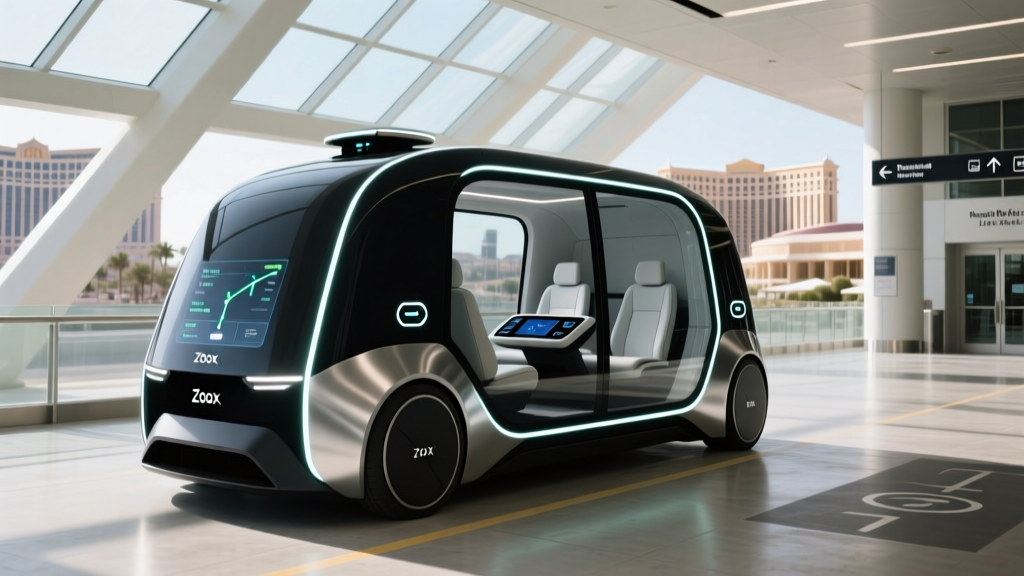
Zoox, the autonomous vehicle company acquired by Amazon in 2020 for approximately $1.3 billion, developed a bidirectional, carriage-style robotaxi with no steering wheel, pedals, or driver controls. The vehicle is designed from the ground up as a passenger shuttle — not a retrofitted consumer car. At Resorts World Las Vegas on the Strip, Zoox has operated a limited shuttle service that has served as both a real-world testing ground and a public demonstration of Level 4 autonomy.
SAE Automation Level: Level 4 (High Automation)
The Zoox robotaxi operates at SAE Level 4, meaning the vehicle handles all driving tasks within its defined operational design domain (ODD) without any human driver intervention. There is no driver behind the wheel — and no steering wheel at all. This is fundamentally different from Level 2 driver-assist systems like Tesla Autopilot, GM Super Cruise, or Ford BlueCruise, which require an engaged human driver at all times. Zoox's Level 4 designation applies only within its geofenced service area under approved conditions.
Where Can You Ride the Zoox Robotaxi Right Now?
As of early 2026, Zoox's publicly accessible operations remain limited and tightly geofenced. Here's what's live:
| Location | Status | Service Area | Access Type |
|---|---|---|---|
| Las Vegas (Resorts World / Strip corridor) | Operational | Geofenced zone around Resorts World and nearby Strip segments | Limited public rides; invitation/employee programs |
| Foster City, California | Testing | Selected streets near Zoox HQ | Employee and invited riders only |
| San Francisco, California | Testing | Limited urban streets | Employee and invited riders only |
| Atlanta, Georgia | Announced testing | TBD | Not yet publicly available |
| Miami, Florida | Announced testing | TBD | Not yet publicly available |
The bottom line on access: The Zoox Resorts World Las Vegas shuttle is the closest thing to a publicly bookable Zoox ride, but it is not an open, on-demand app service like Waymo One in Phoenix or San Francisco. Riders have typically accessed it through resort partnerships, Zoox employee networks, or special invitation events. Zoox has not launched a general-public ride-hail app for spontaneous bookings as of this writing.
Zoox Robotaxi Tech Stack: Lidar, Cameras, and Redundancy
Zoox's purpose-built vehicle packs a sensor suite that differs significantly from camera-only approaches (like Tesla's FSD). The robotaxi relies on a fusion of multiple sensor modalities for perception, localization, and decision-making:
Sensor and Compute Overview
- Lidar: Multiple roof-mounted and body-integrated lidar units provide 360-degree, high-resolution 3D point clouds for object detection and depth perception — critical for identifying pedestrians, cyclists, and obstacles at range.
- Cameras: A surround camera array captures visual data for lane detection, traffic sign recognition, signal state, and object classification. Multiple overlapping fields of view provide redundancy.
- Radar: Radar sensors supplement lidar and cameras, particularly useful in degraded-visibility conditions (rain, dust) where optical sensors may struggle.
- HD Maps and Localization: The vehicle operates on pre-built high-definition maps of its geofenced area, using sensor data to localize its position to centimeter-level accuracy within the map.
- Redundant Compute: Dual-redundant computing platforms ensure that if one system faults, a backup can safely bring the vehicle to a stop.
- Bidirectional Driving: The vehicle can drive equally well in either direction — no reversing required. This simplifies routing in tight urban environments and dead-end scenarios.
The reliance on lidar and radar alongside cameras gives Zoox a sensor-diverse approach that contrasts with Tesla's vision-only FSD stack. In practice, this redundancy is a significant advantage in complex urban environments like the Las Vegas Strip corridor, where pedestrians, construction zones, and erratic traffic are common.
How Much Does a Zoox Ride Cost vs. Uber and Lyft?
Because Zoox has not launched a full commercial ride-hail service with transparent per-mile pricing, direct cost comparisons require some caveats. Here's what we know:
| Service | Base Fare (est.) | Per-Mile (est.) | 3-Mile Strip Trip (est.) | Notes |
|---|---|---|---|---|
| Zoox (Resorts World shuttle) | Complimentary / promotional | N/A | $0 (invited riders) | Not commercially priced for public yet |
| UberX (Las Vegas) | $2.50–$3.50 | $1.10–$1.50/mi | $8–$14 | Varies by surge, time of day |
| Lyft (Las Vegas) | $2.00–$3.00 | $1.00–$1.40/mi | $7–$12 | Varies by surge, time of day |
| Waymo One (Phoenix/SF benchmark) | $3.00–$5.00 | $1.00–$1.80/mi | $9–$15 | Comparable robotaxi pricing |
What to expect when Zoox goes commercial: Industry analysts project that when Zoox launches a paid service, pricing will likely fall in line with or slightly below Uber/Lyft in order to build ridership — similar to Waymo's approach in Phoenix and San Francisco. The absence of a human driver reduces per-trip labor costs, though vehicle hardware (lidar arrays, redundant compute) and remote fleet operations add significant overhead. Until Zoox announces commercial pricing, any ride at Resorts World has effectively been free for invited participants.
How Safe Are Zoox Robotaxis? Real-World Data
Safety is the most critical question for any driverless service. Zoox has published some safety data, though it trails Waymo in the volume of publicly disclosed miles and disengagement reports.
Zoox Safety Record — Key Data Points
- Testing miles: Zoox has logged millions of autonomous miles across its test fleet in Las Vegas, the San Francisco Bay Area, and other locations. The company has not published a single consolidated public mileage figure as of early 2026, but California DMV disengagement reports indicate thousands of autonomous test miles annually in that state alone.
- California DMV disengagement reports: In its most recent California DMV disengagement report, Zoox reported disengagement rates (instances where a human safety operator had to take control) that have trended downward year over year — a positive indicator of system maturation. Exact rates vary by reporting period.
- No-at-fault collisions: As of early 2026, Zoox has not been involved in a widely reported at-fault collision resulting in serious injury during its driverless (no safety operator) operations. Minor contact incidents during testing phases with safety drivers have been reported to regulators as required.
- NHTSA Standing General Order: Under NHTSA's Standing General Order, all ADS-equipped vehicles involved in crashes must be reported. Zoox is subject to this requirement, and no major incident pattern has emerged in public filings.
- Vehicle design safety: The Zoox vehicle includes over 100 safety innovations not found in conventional cars, including airbag systems designed for face-to-face seating, a reinforced battery structure, and a crumple-zone architecture optimized for a symmetrical, bidirectional vehicle.
Context matters: Zoox's public driverless mileage is significantly lower than Waymo's, which has logged tens of millions of fully driverless miles across Phoenix, San Francisco, and Los Angeles. Less mileage means less statistical confidence in safety claims — a reality Zoox acknowledges by continuing to expand testing gradually. The Resorts World geofence is a relatively controlled, low-speed environment compared to dense urban cores, which reduces exposure to high-severity scenarios.
Regulatory Landscape: Who Approves Zoox Operations?
Robotaxi operations in the United States require approval from multiple regulatory bodies, and the patchwork of state-level rules means Zoox must navigate different frameworks in each market:
- Nevada: The Nevada Department of Motor Vehicles issues autonomous vehicle testing and operation permits. Nevada has been broadly supportive of AV deployment, and Las Vegas has become a key testing ground for multiple companies. Zoox holds the necessary state permits to operate its driverless vehicle on designated roads.
- California: The California DMV issues testing permits (with and without safety drivers), while the California Public Utilities Commission (CPUC) regulates commercial passenger service. Zoox holds a California DMV driverless testing permit.
- Federal (NHTSA): The National Highway Traffic Safety Administration sets vehicle safety standards (FMVSS). Zoox received a notable exemption from certain FMVSS requirements — specifically the mandate for a steering wheel and mirrors — to deploy its purpose-built vehicle, which lacks those conventional controls.
- Local jurisdictions: City and county authorities may impose additional requirements on routing, operating hours, and incident reporting.
Zoox's FMVSS exemption was a significant regulatory milestone. It marked one of the first times NHTSA granted a vehicle without traditional driving controls permission to operate on public roads, setting precedent for future purpose-built robotaxi designs.
Current Limitations: Where the Zoox Robotaxi Falls Short
Level 4 autonomy is powerful — but it comes with hard boundaries. Here are the real limitations riders and observers should understand:
Operational Design Domain (ODD) Constraints
- Geofencing: The Zoox vehicle operates only within a pre-mapped, approved zone. It cannot drive to an arbitrary destination outside this boundary. At Resorts World, this means a tight corridor — not a ride to the airport or across the entire valley.
- Weather limitations: Heavy rain, flooding, dust storms, and extreme heat (common in Las Vegas summers, where surface temperatures can exceed 140°F) can trigger operational pauses or speed reductions. Lidar performance degrades in heavy precipitation.
- Construction zones: While the system can handle some temporary lane shifts and cones, major unmapped construction reroutes may cause the vehicle to pull over and request remote assistance.
- Night and low-light operations: The sensor suite handles nighttime driving, but poorly lit areas with ambiguous lane markings or unexpected obstacles present higher uncertainty, potentially triggering conservative behavior (slower speeds, earlier stops).
- Edge cases: Unusual scenarios — a person directing traffic, an overturned vehicle, emergency vehicles with unconventional approaches — may require remote guidance from Zoox's fleet operations center.
- No highway driving: The Zoox vehicle is designed for urban and suburban speeds (typically up to ~35-45 mph in its current ODD). It does not operate on freeways or high-speed corridors.
- Limited availability: Unlike Waymo One, which operates 24/7 in Phoenix and most of San Francisco, Zoox's Resorts World service has limited hours and is not available on-demand to the general public.
How to Actually Ride the Zoox Robotaxi at Resorts World
Given that Zoox has not opened a general ride-hail app, here's how access has worked in practice:
- Resort partnerships: Guests at Resorts World Las Vegas have occasionally been offered rides as part of promotional events or VIP experiences. Check with the resort concierge for any current programs.
- Zoox employee and guest rides: Zoox employees and their invited guests have been among the most common riders in both Las Vegas and the Bay Area.
- Media and industry events: Zoox periodically hosts ride-along events for press, analysts, and policymakers.
- Future public access: Zoox has signaled its intent to launch a commercial ride-hail service, but no public timeline or pricing has been confirmed as of early 2026. Watch for announcements at zoox.com.
If you're planning a trip to Las Vegas specifically hoping to ride the Zoox robotaxi, manage expectations: without an invitation or active resort program, you may not be able to hail one spontaneously. For a reliable robotaxi experience today, Waymo One in Phoenix and San Francisco remains the most accessible Level 4 option.
Frequently Asked Questions
Is the Zoox robotaxi truly self-driving, or is there a driver?
The Zoox vehicle at Resorts World is a true SAE Level 4 driverless robotaxi. There is no steering wheel, no pedals, and no human driver on board. The vehicle navigates autonomously within its geofenced area. This is fundamentally different from Level 2 driver-assist systems like Tesla Autopilot or Ford BlueCruise, which require a human driver to remain engaged and ready to take over at all times.
Where can I use the Zoox robotaxi service right now?
The most accessible Zoox service has been at Resorts World Las Vegas and the surrounding Strip corridor. Zoox also tests in Foster City, San Francisco, and has announced plans for Atlanta and Miami — but these are testing operations, not open commercial services. The Las Vegas operation is the closest to a rider-facing experience, though access remains limited to invited participants and resort guests during promotional periods.
How much does a Zoox ride cost compared to Uber or Lyft?
Zoox has not published commercial pricing because it has not launched a paid public service. Rides at Resorts World have been complimentary for invited riders. When Zoox does commercialize, pricing is expected to compete with Uber/Lyft — likely in the $8–$15 range for a typical 3-mile Strip trip, similar to Waymo One's pricing in other markets.
How safe are Zoox robotaxis compared to human drivers?
Zoox has not published a comprehensive public safety record comparable to Waymo's multi-million-mile dataset. What is known: Zoox has logged millions of test miles, its California DMV disengagement rates have improved over time, and no at-fault serious-injury collisions have been publicly reported in driverless operations. The vehicle's sensor-redundant design (lidar + cameras + radar) and purpose-built safety features are engineered for urban environments, but the relatively low public driverless mileage means the statistical safety case is still building.
What happens if something goes wrong during a Zoox ride?
The Zoox vehicle is monitored remotely by a fleet operations team. If the vehicle encounters a scenario it cannot handle — an unmapped construction zone, a sensor fault, or an ambiguous situation — it is programmed to execute a minimal-risk condition, which typically means pulling over safely and stopping. Remote operators can then provide guidance or dispatch assistance. The vehicle's redundant compute systems ensure that a single hardware failure does not result in a loss of control.
Can the Zoox robotaxi drive on the highway or to the airport?
No. The Zoox vehicle is designed for low-to-moderate speed urban environments and operates only within its pre-mapped geofence. It cannot take highway routes, drive to Harry Reid International Airport, or travel outside its approved operational zone. Think of it as a neighborhood and corridor shuttle, not a long-distance ride.
Will Zoox expand beyond Las Vegas and California?
Zoox has announced testing plans for Atlanta, Georgia, and Miami, Florida, among other locations. However, announced testing does not equal commercial service. Each new city requires regulatory approval, geofence mapping, and extensive validation before any rider-facing service can launch. Expect gradual, city-by-city expansion rather than a rapid nationwide rollout.
The Bottom Line on Zoox at Resorts World
The Zoox Resorts World Las Vegas robotaxi represents one of the most tangible examples of Level 4 autonomous driving available to riders in the United States. The purpose-built vehicle — with its bidirectional design, lidar-camera-radar sensor fusion, and zero-driver-controls architecture — is a genuine technological achievement. But it remains a limited-access demonstration in a tightly controlled environment, not a scalable commercial service you can summon on demand.
For EV and autonomous-vehicle enthusiasts visiting Las Vegas, the Zoox shuttle at Resorts World is worth inquiring about — but should not be counted on as a guaranteed experience. For reliable robotaxi rides today, Waymo One in Phoenix and San Francisco offers a more mature, publicly accessible Level 4 service with millions of commercial miles behind it. Zoox's trajectory is promising, and Amazon's deep-pocketed backing gives it staying power, but the gap between testing and commercial scale remains the central challenge for the company heading into the second half of the decade.