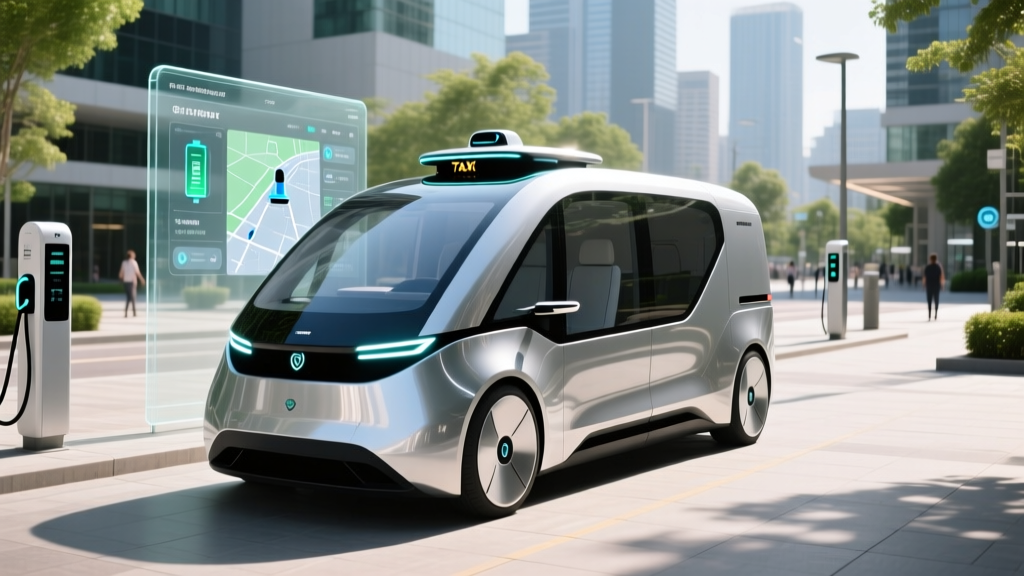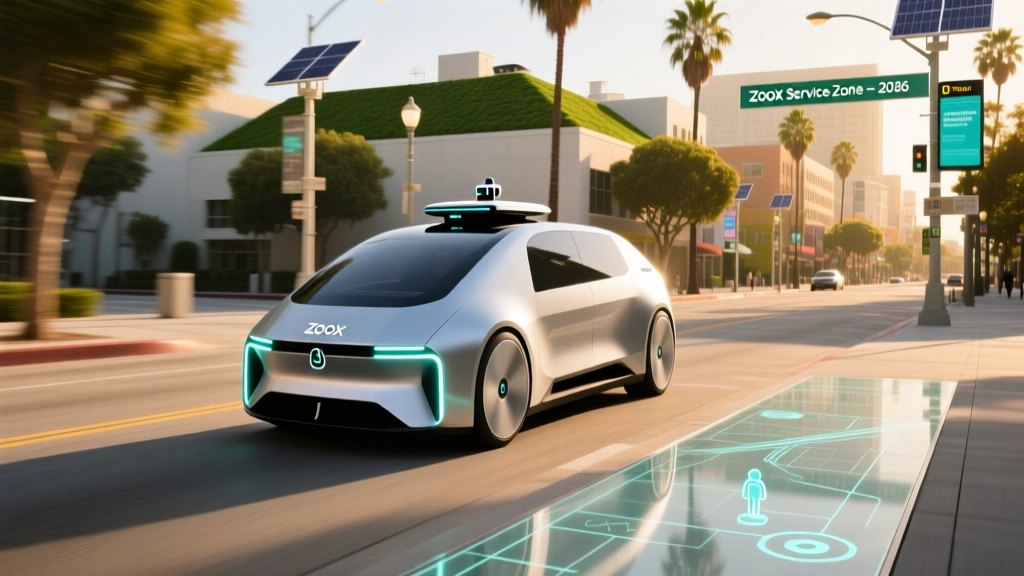
Zoox, the Amazon-backed autonomous vehicle company, has been steadily expanding its purpose-built robotaxi fleet across select U.S. cities. For Los Angeles residents and visitors, the question is no longer whether driverless taxis exist — it's whether Zoox operates in your neighborhood, how the service actually works, and what the real safety data shows. This guide covers the Zoox Los Angeles footprint as of early 2026, the vehicle's technology, regulatory status, and how the experience compares to conventional rideshare.
Where Can I Use Zoox in Los Angeles Right Now?
Zoox launched limited commercial robotaxi service in Los Angeles following its California Public Utilities Commission (CPUC) driverless deployment permit. However, "Los Angeles" is a massive metro area, and Zoox operates within a tightly defined geofence — not citywide.
| City | Status | Operational Zones | Hours |
|---|---|---|---|
| San Francisco | Commercial service (open to public) | Select neighborhoods (SoMa, Mission Bay, downtown corridor) | Extended hours, not 24/7 |
| Las Vegas | Commercial service (open to public) | Las Vegas Strip corridor and surrounding areas | Extended hours |
| Los Angeles | Testing / limited commercial deployment | Geofenced zones within central LA | Limited hours |
| Foster City, CA | Testing operations | Headquarters area; not a public commercial zone | N/A |
In Los Angeles, Zoox's operational footprint remains narrower than its San Francisco or Las Vegas services. The company has held a CPUC Autonomous Vehicle Program permit allowing driverless testing and, subsequently, limited commercial passenger service. However, full public availability in LA — the kind of open-access service where any resident can hail a ride on demand — is still ramping up as of 2026. Expect availability to be concentrated in specific corridors where Zoox has completed extensive mapping and validation miles.
If you're in Los Angeles and want to check whether a Zoox ride is available from your location, the Zoox app (available on iOS and Android) will show your eligibility and the current service boundary. Pickup and drop-off points must fall within the geofenced zone.
Is Zoox Truly Self-Driving? SAE Automation Level Explained
This is the most important distinction in autonomous vehicles, and Zoox sits at the top of the consumer-accessible spectrum.
| SAE Level | Description | Example | Driver Required? |
|---|---|---|---|
| Level 0 | No automation | Basic cruise control | Yes |
| Level 1 | Driver assistance (single function) | Adaptive cruise OR lane-keep | Yes |
| Level 2 | Partial automation (combined functions) | Tesla Autopilot, GM Super Cruise, Ford BlueCruise | Yes — hands on or eyes on at all times |
| Level 3 | Conditional automation (system drives, human on standby) | Mercedes Drive Pilot (limited conditions) | Conditional — must take over when requested |
| Level 4 | High automation (no driver needed within ODD) | Zoox, Waymo, Cruise (pre-suspension) | No — no steering wheel, no pedals |
| Level 5 | Full automation (any condition, any location) | Does not exist commercially | No |
Zoox operates at SAE Level 4. The Zoox vehicle has no steering wheel, no brake pedal, and no accelerator pedal. There is no human driver in the vehicle, and no expectation that a passenger will intervene. This is fundamentally different from Tesla's Full Self-Driving (Supervised), which remains SAE Level 2 and requires continuous driver attention.
The Level 4 designation does come with a critical qualifier: the vehicle operates within a defined Operational Design Domain (ODD). This means specific geofenced areas, mapped roads, and certain weather/speed conditions. Outside that ODD, the vehicle will not operate — it doesn't degrade to Level 2; it simply won't start the trip or will pull over safely.
Technology Stack: How the Zoox Vehicle Sees the Road
Zoox uses a purpose-built, symmetric vehicle — sometimes called the "carriage" design — with bidirectional driving capability (it can travel equally well in either direction, eliminating the need for three-point turns). The sensor suite is redundant and multi-modal:
Sensor Architecture
- LiDAR: Multiple roof-mounted and bumper-level LiDAR units providing 360-degree, high-resolution 3D point clouds. LiDAR operates independently of ambient light, giving Zoox strong night and low-visibility performance compared to camera-only systems.
- Cameras: A surround-camera array covering overlapping fields of view for object classification, traffic-light recognition, lane-marking detection, and sign reading.
- Radar: Millimeter-wave radar units for velocity detection of moving objects (other vehicles, cyclists, pedestrians) and performance in rain or fog where cameras and LiDAR face attenuation.
- Microphones: External acoustic sensors to detect emergency vehicle sirens, enabling the vehicle to pull over for approaching ambulances or fire trucks.
Compute and Redundancy
The vehicle carries dual independent compute stacks. If the primary system encounters a fault, the secondary can bring the vehicle to a safe stop. Power, braking, and steering systems are also redundant — a single-point failure will not leave passengers stranded in traffic.
Geofencing and HD Maps
Zoox relies on high-definition maps of its operational areas, updated regularly. The vehicle localizes itself within these maps using LiDAR and camera data. This geofenced approach is a deliberate trade-off: it limits where the vehicle can go but dramatically increases reliability within those boundaries.
This sensor-fusion approach stands in contrast to Tesla's camera-only ("Tesla Vision") philosophy. Zoox, like Waymo, has concluded that LiDAR redundancy is essential for Level 4 safety — a position supported by most robotics engineers outside of Tesla.
Safety Record: What the Data Actually Shows
Safety is the most scrutinized aspect of robotaxi operations, and for good reason. Here's what we know about Zoox specifically and the robotaxi sector broadly.
Zoox Safety Data Points
- Testing miles: Zoox has accumulated millions of autonomous miles across its test fleet in San Francisco, Las Vegas, and the Bay Area. Exact cumulative mileage figures are reported to the California DMV and NHTSA as required.
- Disengagement reports: California requires AV testers to file annual disengagement reports detailing how often a safety driver (during testing phases) had to take control. Zoox's disengagement rate has decreased over successive reporting periods, though direct comparison across companies is unreliable because each firm defines "disengagement" differently.
- No steering wheel: Because the production Zoox vehicle has no manual controls, there is no "disengagement" in the traditional sense during commercial service. If the system encounters an unresolvable scenario, it executes a Minimal Risk Condition (MRC) maneuver — typically pulling to the curb and stopping.
- NHTSA Standing General Order: Under NHTSA's Standing General Order, all Level 2–5 ADS-equipped vehicles must report crashes within one day. Zoox is subject to this requirement, and reported incidents are publicly searchable in NHTSA's database.
For context, Waymo — the largest U.S. robotaxi operator — published data in 2024 covering over 7 million autonomous miles, showing a significant reduction in injury-causing crash rates compared to human benchmarks in the same geographies. Zoox operates at a smaller scale, so its statistical sample is smaller, but the underlying safety architecture (redundant sensors, no human driver fatigue or distraction, 360-degree perception) follows the same principles.
It would be dishonest to claim robotaxis are crash-free. Incidents have occurred across the industry — vehicles making contact with cones, minor low-speed collisions, and interactions with construction zones that require remote assistance. The relevant question is the rate per million miles compared to human drivers, and the trend line for the sector is improving.
Pricing: Zoox vs. Uber and Lyft in Los Angeles
During its initial commercial deployment phases, Zoox has offered rides at no cost to riders — effectively a free service as the company builds operational experience and rider trust. This is a common industry pattern: Waymo's early rider programs in Phoenix and San Francisco also started free or heavily discounted before transitioning to standard pricing.
| Service | Base Fare | Per-Mile Rate | Per-Minute Rate | Typical 5-Mile Trip |
|---|---|---|---|---|
| Zoox (current) | $0 (promotional/free) | $0 | $0 | $0 |
| UberX (LA) | ~$2.50 | ~$1.10 | ~$0.35 | $10–$18 |
| Lyft Standard (LA) | ~$2.25 | ~$1.05 | ~$0.32 | $9–$16 |
| Waymo One (where available) | ~$3.00 | ~$1.20 | ~$0.38 | $12–$20 |
Once Zoox transitions to paid commercial service, expect pricing in the same ballpark as UberX or Lyft Standard — potentially with introductory discounts. The long-term economic thesis for robotaxis is that removing the driver (who typically earns 60–75% of the fare) allows per-mile costs to drop significantly. However, this depends on fleet utilization rates, vehicle cost amortization, and remote-assistance overhead, so dramatic undercutting of rideshare prices is not guaranteed in the near term.
How to ride: Download the Zoox app, create an account, enter your pickup and drop-off locations (both must be within the geofenced zone), and confirm. The vehicle arrives, unlocks its doors automatically, and the ride begins. Interior screens display the route and a visualization of what the vehicle's sensors are detecting in real time.
Regulatory Landscape: Who Approves Zoox Operations?
Robotaxi deployment in the United States involves a layered regulatory framework:
- Federal (NHTSA): The National Highway Traffic Safety Administration sets vehicle safety standards. Zoox received an NHTSA exemption to deploy its purpose-built vehicle, which doesn't meet certain Federal Motor Vehicle Safety Standards (FMVSS) designed for human-driven cars — such as the requirement for a steering wheel, mirrors, and a windshield. The exemption permits up to 2,500 vehicles per year.
- State — California (DMV + CPUC): The California DMV issues testing permits and requires disengagement reports. The CPUC regulates commercial passenger service through its Autonomous Vehicle Program, which has multiple tiers: drivered testing, driverless testing, and commercial deployment. Zoox holds permits progressing through these tiers.
- State — Nevada: Nevada's regulatory framework allowed Zoox to begin commercial service in Las Vegas, with the Nevada DMV overseeing AV testing and deployment permits.
- Local municipalities: City and county authorities may impose additional operating agreements, particularly regarding curb access, pickup/drop-off zones, and coordination with emergency services.
The regulatory environment remains actively evolving. After Cruise's October 2023 incident in San Francisco (where a pedestrian was dragged under a robotaxi), California regulators temporarily suspended Cruise's deployment permit, prompting industry-wide scrutiny. Zoox was not involved in that incident but operates under the same regulatory umbrella, meaning any future regulatory tightening affects all operators.
Current Limitations: What Zoox Cannot Do
Level 4 autonomy is impressive, but it is not omniscience. The Zoox vehicle has real, documented limitations that riders should understand:
- Geofence boundaries: The vehicle will not travel outside its mapped operational zone. If your destination is two blocks beyond the geofence, the ride cannot be completed. Expansion happens incrementally as new areas are mapped and validated.
- Weather restrictions: Heavy rain, flooding, and dense fog can degrade LiDAR and camera performance. Zoox may suspend service or restrict operations during severe weather events. Light rain is generally manageable; a Los Angeles atmospheric river likely is not.
- Construction zones: Unmapped lane closures, temporary barriers, and flaggers directing traffic represent some of the hardest edge cases for autonomous systems. Zoox vehicles may stop and request remote guidance or reroute, adding time to your trip.
- Complex unprompted interactions: Scenarios like a police officer directing traffic with hand signals (not cones or signs), a school crossing guard, or an accident scene with emergency vehicles blocking the road may cause the vehicle to stop and wait rather than navigate through.
- No highway operation (currently): Most Level 4 robotaxi services, including Zoox, operate on surface streets at moderate speeds. Highway merging at 65+ mph introduces complexity and risk profiles that are not yet part of the commercial ODD.
- Accessibility: The Zoox vehicle is designed with wheelchair accessibility in mind, but real-world curb conditions, uneven sidewalks, and non-standard pickup locations can create friction. ADA compliance is an ongoing focus area for the industry.
- Limited cargo: The vehicle interior is designed for passengers, not large items. Don't expect to use Zoox for an IKEA run or airport trips with four large suitcases.
Los Angeles–Specific Considerations for Potential Riders
LA presents unique challenges for robotaxi operations that don't exist to the same degree in San Francisco or Las Vegas:
- Scale: The LA metro area spans roughly 4,700 square miles. Even an aggressive geofence covers a fraction of this. For most Angelenos, a Zoox ride will not replace a car — it may serve specific corridors (downtown, mid-city, entertainment districts) as a supplement.
- Traffic density: LA's congestion is notoriously unpredictable. Zoox's sensor suite handles dense traffic well (360-degree LiDAR doesn't get "surprised" by a lane-splitting motorcyclist the way a human might), but aggressive human drivers and frequent lane changes increase the frequency of conservative driving behaviors — the robotaxi will yield more often than a human driver would.
- Parking elimination: One genuine advantage: the Zoox vehicle drops you off and leaves. No circling for parking, no meter feeding, no $45 valet charge. In downtown LA or the Westside, this alone can justify the service when it becomes widely available.
Frequently Asked Questions
Can anyone in Los Angeles hail a Zoox ride right now?
Not yet universally. Zoox's LA operations are in earlier stages compared to San Francisco and Las Vegas. Access may be limited to waitlisted users, specific neighborhoods, or promotional ride programs. Check the Zoox app for your current eligibility and the active service boundary.
How much does a Zoox ride cost compared to Uber?
During its initial deployment phase, Zoox has offered free rides. Once commercial pricing is implemented, expect fares comparable to UberX or Lyft Standard (~$10–$20 for a typical 5-mile urban trip), with possible introductory discounts. Long-term, the removal of driver costs could push prices lower, but this depends on fleet utilization and operational costs.
Is Zoox safer than a human driver?
The robotaxi industry's published data (primarily from Waymo, which has the largest sample size) suggests lower rates of injury-causing crashes per million miles compared to human benchmarks in the same geographies. Zoox's smaller fleet means less aggregate data, but the vehicle's redundant sensor suite, absence of driver distraction or impairment, and conservative driving behavior are structural safety advantages. That said, robotaxis are not crash-free — minor incidents and edge-case failures have been documented across the industry.
What happens if the Zoox vehicle encounters a problem mid-trip?
The vehicle is designed to execute a Minimal Risk Condition (MRC) maneuver — typically pulling to the side of the road and stopping safely. Zoox operates a remote-assistance team that can monitor the vehicle's status and provide guidance. There are no manual controls for passengers to use.
Does Zoox operate on freeways in Los Angeles?
No. Current Zoox commercial operations are limited to surface streets within the geofenced zone. Highway operation at speeds above ~45 mph is not part of the current Operational Design Domain.
Can I bring luggage, a pet, or a child seat?
Zoox's vehicle interior is configured for seated passengers. Large luggage, pets (service animals excepted), and personal child safety seats are generally not accommodated in the current vehicle design. Check the app for specific rider policies before booking.
How is Zoox different from Waymo?
Both are SAE Level 4 robotaxi services with no human driver. The key differences: Zoox uses a purpose-built, symmetric vehicle (no steering wheel, bidirectional driving) while Waymo retrofits existing vehicles (Jaguar I-PACE, Zeekr). Zoox is owned by Amazon; Waymo is owned by Alphabet. Waymo has significantly more commercial miles and a broader operational footprint as of 2026. Zoox's vehicle design offers a unique passenger experience with forward or rearward-facing seating and no driver's compartment.