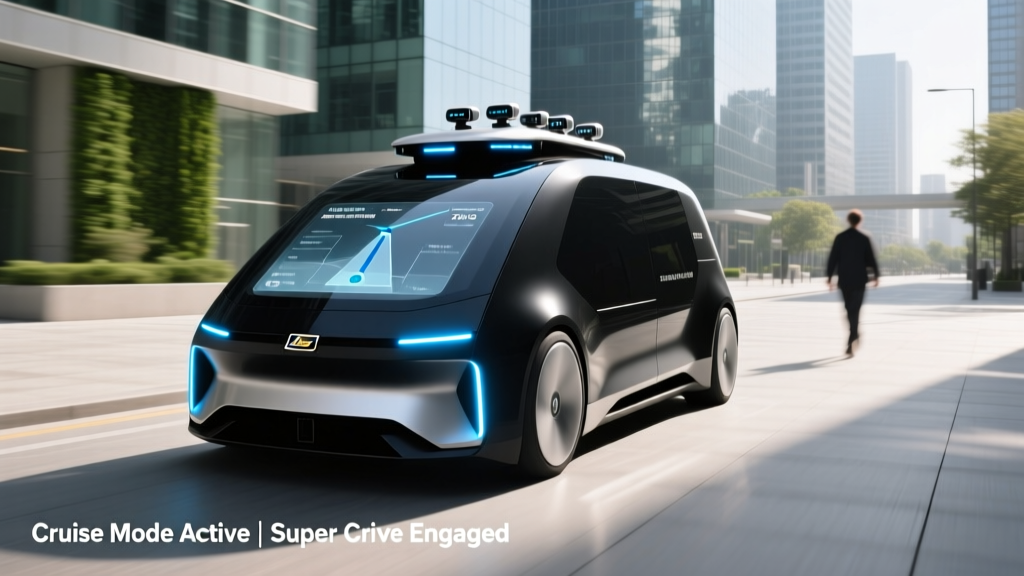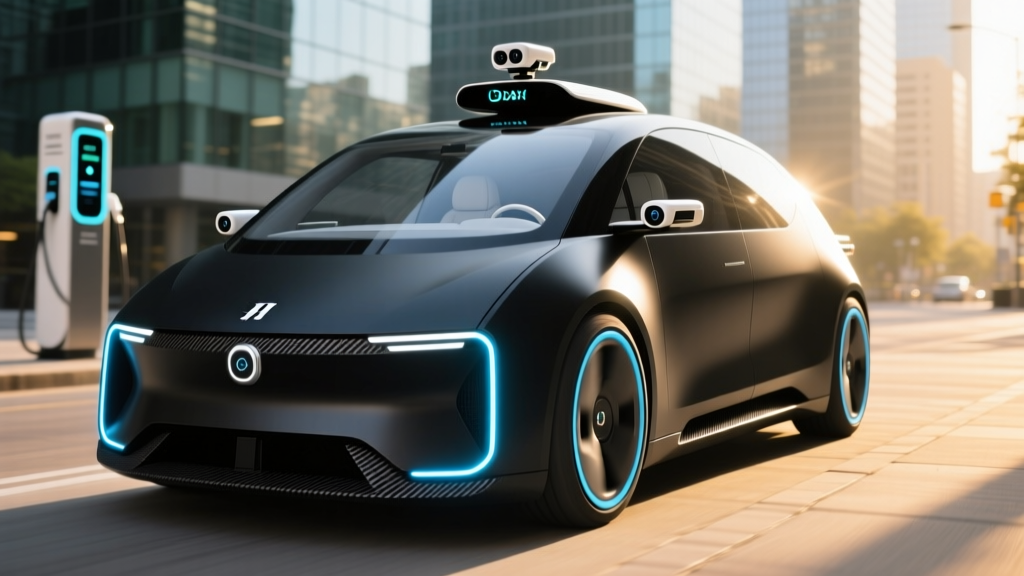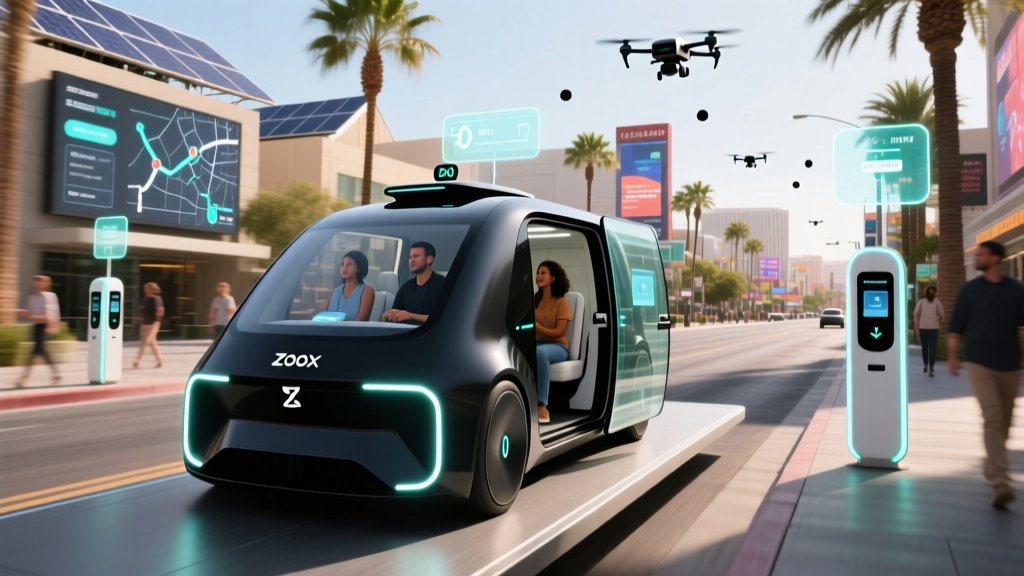
If you have searched "where does Zoox go in Las Vegas" and come up short on specifics, you are not alone. Amazon's autonomous vehicle subsidiary operates one of the most distinctive robotaxi fleets in the United States, but its Las Vegas footprint is tightly defined — and the vehicle itself looks nothing like a conventional rideshare car. This guide maps the current operational zone, breaks down how the service works, and puts Zoox's safety and technology claims under a data-driven microscope.
Where Zoox Operates in Las Vegas Right Now
Zoox launched its purpose-built robotaxi — a compact, carriage-style vehicle with no steering wheel or pedals — on public roads in Las Vegas in mid-2023, initially restricting rides to employees. The company expanded to a limited public preview program in 2024 and has incrementally widened its geofenced service area since. As of early 2026, Zoox operates on a defined corridor on the west side of the Las Vegas Valley.
| Boundary | Approximate Limit | Notes |
|---|---|---|
| North | Flamingo Road | Does not reach the central Strip corridor |
| South | Warm Springs Road / I-215 | Includes parts of southwest enterprise zones |
| East | Las Vegas Boulevard / I-15 | Stops short of most major resort properties |
| West | Durango Drive / Rainbow Blvd area | Covers residential and commercial mixed-use areas |
What this means in practice: Zoox does not currently serve the high-traffic Las Vegas Strip hotel corridor, Harry Reid International Airport, or downtown Fremont Street. The service area is concentrated in the southwest Las Vegas suburbs and commercial strips near the company's local operations hub. If you are staying at a major resort on the Strip, you will likely need to travel to the edge of the geofence to hail a ride — or use a different service.
Zoox has also been testing and operating in Foster City and San Francisco, California, and has conducted testing in Phoenix, Arizona, and Austin, Texas. However, Las Vegas remains the primary city where the purpose-built Zoox vehicle (as opposed to retrofitted Toyota Highlanders used for mapping and testing) carries public riders.
SAE Automation Level: This Is Level 4, Not Driver-Assist
The Zoox robotaxi operates at SAE Level 4 within its approved operational design domain (ODD). This means the vehicle handles all driving tasks — steering, braking, navigation, obstacle avoidance — without any human driver inside the vehicle and without any expectation that a passenger will intervene. There is no steering wheel, no brake pedal, and no driver's seat.
This is fundamentally different from SAE Level 2 consumer driver-assist systems like Tesla Autopilot, Ford BlueCruise, or GM Super Cruise, which require an attentive human driver behind the wheel at all times. Zoox's Level 4 classification applies only within its geofenced service area under approved conditions — it is not "full self-driving" everywhere.
| Level | Name | Who Drives? | Example |
|---|---|---|---|
| Level 2 | Partial Automation | Human (always) | Tesla Autopilot, BlueCruise, Super Cruise |
| Level 3 | Conditional Automation | System in narrow conditions; human on standby | Mercedes Drive Pilot (limited markets, ≤40 mph) |
| Level 4 | High Automation | System fully (within geofence/ODD) | Waymo One, Zoox robotaxi, Cruise (pre-suspension) |
| Level 5 | Full Automation | System everywhere, all conditions | Does not exist commercially as of 2026 |
How to Ride Zoox in Las Vegas
Accessing Zoox in Las Vegas is not yet as simple as opening an app and requesting a ride anywhere in the city. Here is how the process works as of 2026:
- Download the Zoox app (iOS/Android) and create an account.
- Check service availability. The app shows whether your pickup and drop-off locations fall within the active geofence. Zoox has been gradually expanding its public rider pool in Las Vegas through a waitlist and invitation system.
- Request a ride. If you are within the service area, the app will match you with a nearby Zoox vehicle. Pickup and drop-off points may be limited to specific approved locations (curbside spots the system has pre-mapped), rather than any arbitrary address.
- Board the vehicle. The Zoox carriage seats up to four passengers facing each other. There is no driver. Doors open via the app or an external button.
- Ride and monitor. An in-vehicle screen displays the route, speed, and detected objects. Passengers can contact remote support at any time via an intercom button.
Availability caveat: Zoox has not yet opened its Las Vegas service to the general public on an unrestricted, on-demand basis the way Waymo operates in Phoenix and San Francisco. Access may still require being part of an early rider program or having received an invitation. Check the Zoox ride page for the latest access status.
Zoox Pricing vs. Uber and Lyft in Las Vegas
During its early rider and preview phases, Zoox has offered rides at no cost to passengers or at heavily subsidized promotional rates. This is a common strategy for robotaxi companies building rider data and public familiarity before transitioning to commercial pricing.
Once Zoox moves to full commercial operations, the pricing model is expected to be competitive with conventional rideshare. Here is a projected comparison based on current Las Vegas rideshare averages and industry robotaxi pricing trends:
| Service | Base Fare | Per-Mile Rate | Estimated 5-Mi Trip | Surge Pricing? |
|---|---|---|---|---|
| UberX | ~$2.50 | ~$1.10/mi | $12–$16 | Yes (can 2–3x) |
| Lyft Standard | ~$2.50 | ~$1.05/mi | $11–$15 | Yes |
| Waymo One (where available) | ~$2.00 | ~$1.00/mi | $10–$14 | Limited surge model |
| Zoox (projected commercial) | TBD | TBD | $9–$14 (est.) | Expected minimal/no surge |
Key difference: Robotaxi services eliminate the driver's share of the fare (typically 55–70% of what you pay on Uber/Lyft goes to the driver). This structural cost advantage means robotaxis can theoretically undercut rideshare on price while still achieving profitability at scale — though Zoox has not published official per-mile rates as of this writing.
The Zoox Vehicle: Technology Stack Explained
The Zoox robotaxi is a ground-up, purpose-built electric vehicle — not a retrofitted production car. This is a significant distinction from early Waymo vehicles (modified Chrysler Pacifica minivans) and Cruise vehicles (modified Chevrolet Bolts). The Zoox carriage is designed from the ground up for autonomous, bidirectional operation.
Vehicle Specifications
- Form factor: Compact carriage, ~4 passengers, bidirectional (drives equally well forward and backward)
- Battery: ~75 kWh lithium-ion pack (estimated based on observed operational range and charging patterns)
- Range: Up to ~16 hours of continuous operation on a single charge (per Zoox), approximately 80–100 miles depending on stop-and-go urban driving
- Top speed: 75 mph (electronically limited; typical urban operation at 25–45 mph)
- Powertrain: Dual-motor all-wheel drive, fully electric
Sensor Suite (Full Redundancy)
Zoox uses a multi-modal sensor approach, not a camera-only system like Tesla's:
- LiDAR: Multiple solid-state and spinning LiDAR units providing 360° 3D point-cloud mapping out to ~150+ meters
- Cameras: High-resolution camera array covering all directions, used for lane detection, traffic-light recognition, and object classification
- Radar: Multiple radar units for velocity detection and operation in reduced-visibility conditions
- Microphones: External audio sensors to detect sirens from emergency vehicles
Computing and Connectivity
- Onboard compute: Custom high-performance computing stack running Zoox's proprietary perception, prediction, and planning software
- Remote assistance: Vehicles maintain continuous cellular connectivity to a remote operations center. Remote guides do not "drive" the vehicle in real time — they provide high-level guidance when the system encounters an ambiguous scenario (e.g., an unusual construction zone configuration)
- HD mapping: Zoox pre-maps every inch of its geofenced service area at centimeter-level precision, and the vehicle localizes against this map in real time
Why the multi-sensor approach matters: Camera-only systems (like Tesla's vision-based FSD) must infer depth and velocity from 2D images, which introduces uncertainty in edge cases. LiDAR provides direct, real-time 3D distance measurements regardless of lighting conditions. Radar adds reliable velocity data and penetrates fog and rain better than either LiDAR or cameras. The combination gives Zoox redundant perception layers — a critical safety architecture for a vehicle with no human driver to fall back on.
Safety Record: What the Data Shows
Evaluating robotaxi safety requires looking at concrete incident data, not marketing claims. Zoox has published less public safety data than Waymo (which has logged tens of millions of driverless miles and publishes regular safety reports), but here is what is known:
Zoox Safety Data Points (through early 2026)
- Testing and operations miles: Zoox has accumulated millions of autonomous miles across its test fleet (retrofitted Toyota Highlanders) and purpose-built vehicles in Las Vegas, the San Francisco Bay Area, and other test locations. Exact cumulative driverless-mile figures have not been publicly broken out by city.
- NHTSA Standing General Order: Under NHTSA's Standing General Order, all companies operating Level 2+ and Level 4 automated driving systems must report crashes involving their vehicles. Zoox crash reports are filed through this system. As of the most recent public data, Zoox has reported a small number of minor incidents, none involving serious injuries to passengers or pedestrians.
- California DMV disengagement reports: Zoox files annual disengagement reports with the California DMV for its testing operations. These reports document instances where a safety driver (in test vehicles) took manual control. The purpose-built driverless vehicles do not have safety drivers, so disengagement metrics apply to the testing fleet only.
- No reported at-fault serious injury or fatality in Zoox's driverless operations as of early 2026.
Context and caveats: Zoox's driverless fleet is significantly smaller than Waymo's, and its operational area is more constrained. Fewer miles driven means less statistical data to evaluate. The company's cautious, incremental rollout strategy — starting with low-speed, low-complexity suburban corridors — reduces exposure to high-risk scenarios but also means the system has not yet been stress-tested in the densest urban environments at scale.
For comparison, NHTSA data shows that human drivers in the U.S. experience approximately 1.35 fatalities per 100 million vehicle miles traveled. Robotaxi companies aim to demonstrate safety records significantly better than this baseline, but proving statistical superiority requires tens of billions of miles of data — a threshold no single robotaxi operator has reached yet.
Regulatory Landscape: Who Approves Zoox Operations?
Robotaxi operations in the United States sit at the intersection of state and federal regulation, and the framework varies significantly by jurisdiction.
Nevada Regulatory Framework
Nevada was one of the first states to pass legislation enabling autonomous vehicle testing and deployment. Key elements:
- Nevada Revised Statutes (NRS) Chapter 482A establishes the legal framework for autonomous vehicles on public roads.
- Nevada DMV issues testing and deployment permits. Companies must demonstrate minimum insurance coverage, submit safety plans, and maintain incident reporting.
- No statewide ban on driverless vehicles: Unlike some jurisdictions that still require a safety driver, Nevada permits fully driverless (no human in the vehicle) operations under its deployment rules.
Federal Oversight
- NHTSA retains authority over vehicle safety standards (FMVSS). Zoox received a notable exemption from certain FMVSS requirements — such as those mandating a steering wheel and mirrors — specifically for its purpose-built vehicle, allowing it to operate without traditional manual controls.
- Crash reporting: As noted, NHTSA's Standing General Order requires incident reporting from all ADS-equipped vehicles.
The regulatory environment in Nevada has been comparatively favorable for robotaxi deployment, which is one reason Zoox chose Las Vegas as its primary public-facing launch city. However, local municipalities retain authority over specific road restrictions and permitting details.
Current Limitations: Where Zoox Cannot Go (and Why)
Operational Limitations of Zoox in Las Vegas
- Tight geofence: The service area covers a fraction of the Las Vegas metropolitan area. The vehicle will not operate outside its pre-mapped zone — you cannot hail a Zoox to Summerlin, Henderson, the Strip hotel corridor, or the airport.
- Weather constraints: Las Vegas's dry climate is actually an advantage for robotaxi operations, but heavy rain, flash-flood conditions, or rare dust storms would trigger operational restrictions. The ODD (operational design domain) defines specific weather thresholds beyond which the vehicle will pull over safely and wait or reroute.
- Construction zones: Major, unmapped road construction can confuse HD-map-dependent systems. Zoox vehicles will slow down, request remote guidance, or decline to route through significantly altered road segments.
- No highway operation: The Zoox carriage is designed for urban and suburban streets. It does not operate on freeways or high-speed highways, limiting its utility for longer cross-city trips.
- Pickup/drop-off precision: Rides may only be available between pre-approved virtual stops rather than any exact address, similar to early Waymo operations.
- Limited availability hours: Service may not operate 24/7 during the current preview phase. Check the app for active hours.
- Accessibility: The Zoox vehicle is designed with a low floor and wide opening, but specific wheelchair-accessibility compliance and ADA accommodation details should be confirmed with Zoox directly before relying on the service.
The honest assessment: Zoox in Las Vegas is currently a technology demonstration and early commercial pilot, not a full replacement for Uber or Lyft. If you are visiting Las Vegas and staying on the Strip, Zoox will not serve your primary transportation needs. If you live or work within the southwest Las Vegas geofence, you may be able to participate in the rider program and experience what a purpose-built, Level 4 robotaxi feels like — with the understanding that the service area and availability are still limited.
Frequently Asked Questions
Can I hail a Zoox on the Las Vegas Strip?
No. As of early 2026, Zoox's Las Vegas geofence does not include the main Strip hotel corridor (Las Vegas Boulevard south of Flamingo). The service area is concentrated in the southwest valley, roughly between Flamingo Road, Warm Springs Road, the I-15, and Durango Drive. Major resorts like the Bellagio, Caesars Palace, and MGM Grand are outside the operational zone.
Is Zoox really self-driving, or is there a remote human controlling it?
Zoox operates at SAE Level 4 — the vehicle drives itself entirely, with no human driver inside and no remote "joystick" control. Remote operations staff can provide high-level guidance (e.g., confirming it is safe to proceed past an unusual obstacle), but they do not steer, brake, or accelerate the vehicle in real time. All driving decisions are made by the onboard AI system.
How much does a Zoox ride cost?
During its early rider and preview phases, Zoox has offered free or heavily subsidized rides. Commercial pricing has not been publicly announced as of early 2026. Based on industry patterns and the economics of removing a human driver from the equation, commercial Zoox rides are expected to be priced competitively with or slightly below UberX and Lyft — likely in the $9–$14 range for a typical 5-mile urban trip.
How safe are Zoox robotaxis compared to human drivers?
Zoox has reported no at-fault serious injuries or fatalities in its driverless operations through early 2026. However, the company's driverless fleet has logged far fewer miles than Waymo (which has surpassed 30 million driverless miles) or the U.S. driving population at large. Drawing definitive statistical safety comparisons requires significantly more operational data. All Zoox incidents are reported to NHTSA under the Standing General Order.
What happens if the Zoox vehicle encounters a situation it cannot handle?
The vehicle is designed to detect its own uncertainty. When it encounters a scenario outside its confidence threshold — such as an unusual construction configuration, a police officer directing traffic with hand signals, or a completely blocked road — it will slow down or stop safely, contact the remote operations center for guidance, and either proceed with updated context or safely pull over and end the trip. Passengers can contact support at any time via the in-vehicle intercom.
Will Zoox expand to more Las Vegas areas or other cities?
Zoox has stated its intention to expand its service areas in Las Vegas and to launch commercial operations in additional cities. The company has tested in San Francisco, Foster City, Phoenix, and Austin. However, expansion timelines depend on regulatory approvals, mapping requirements, and operational readiness in each new area. No firm dates for major Las Vegas geofence expansion (e.g., to the Strip or airport) have been announced as of early 2026. Check zoox.com for the latest announcements.
How does Zoox compare to Waymo?
Waymo (owned by Alphabet/Google) is the most mature robotaxi operator in the U.S., with commercial services running in Phoenix, San Francisco, Los Angeles, and Austin using modified Jaguar I-PACE and Hyundai vehicles. Waymo has logged significantly more driverless miles and has a more extensive public safety dataset. Zoox differentiates with its purpose-built vehicle (no steering wheel, bidirectional, designed specifically for autonomous operation) and its backing by Amazon. Both operate at SAE Level 4 within geofenced areas. For Las Vegas specifically, Zoox is the primary robotaxi presence; Waymo does not currently operate a public service in the city.