What the Zoox Las Vegas Route Actually Covers
If you've searched for "zoox las vegas route" hoping to hail a driverless ride from McCarran to the Strip, here's the current reality. As of early 2026, Zoox — the Amazon-owned autonomous vehicle company — operates a limited, invitation-only employee and tester shuttle program in Las Vegas. This is not yet a public, on-demand robotaxi service comparable to Waymo One in Phoenix or San Francisco.
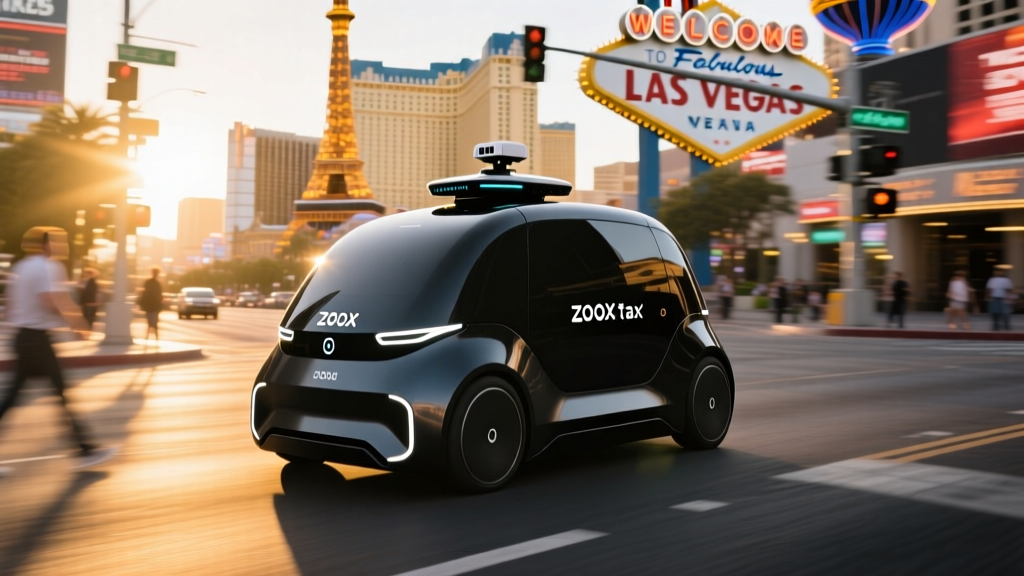
Zoox's Las Vegas presence centers on a defined test corridor rather than a sprawling commercial network. The company began testing its purpose-built bidirectional robotaxi vehicle on public roads in the Las Vegas area in 2023, expanding operations incrementally. The test routes primarily cover areas near the Las Vegas Strip corridor, parts of downtown, and connecting arterials — but access remains restricted to authorized riders.
Zoox's robotaxi is designed as an SAE Level 4 vehicle — meaning it operates without a human driver, steering wheel, or pedals within its defined operational design domain (ODD). This is fundamentally different from Level 2 driver-assist systems like Tesla Autopilot or GM Super Cruise, which require an engaged human driver at all times. Zoox vehicles have no driver's seat.
Service Availability: Where Can You Ride Right Now?
| City | Status | Public Access | Notes |
|---|---|---|---|
| Las Vegas, NV | Testing / Limited Operations | Invite-only | Strip corridor & downtown test routes; no public app-based hailing |
| San Francisco, CA | Testing / Employee Shuttle | Invite-only | SoMa and broader SF corridors; employee commuter routes |
| Foster City, CA | Testing | Invite-only | Near Zoox HQ; early development routes |
| Austin, TX | Announced / Early Testing | Not available | Expansion market; timeline TBD |
| Atlanta, GA | Announced / Early Testing | Not available | Expansion market; timeline TBD |
The key distinction: Zoox is not yet operating a commercial, fare-charging robotaxi service open to the general public in any city. This sets it apart from Waymo One, which serves paying riders across metro Phoenix, San Francisco, and Los Angeles. Zoox has indicated a commercial launch is forthcoming, but as of 2026, no public launch date or fare structure has been officially confirmed.
Zoox's Purpose-Built Vehicle: Tech Stack Explained
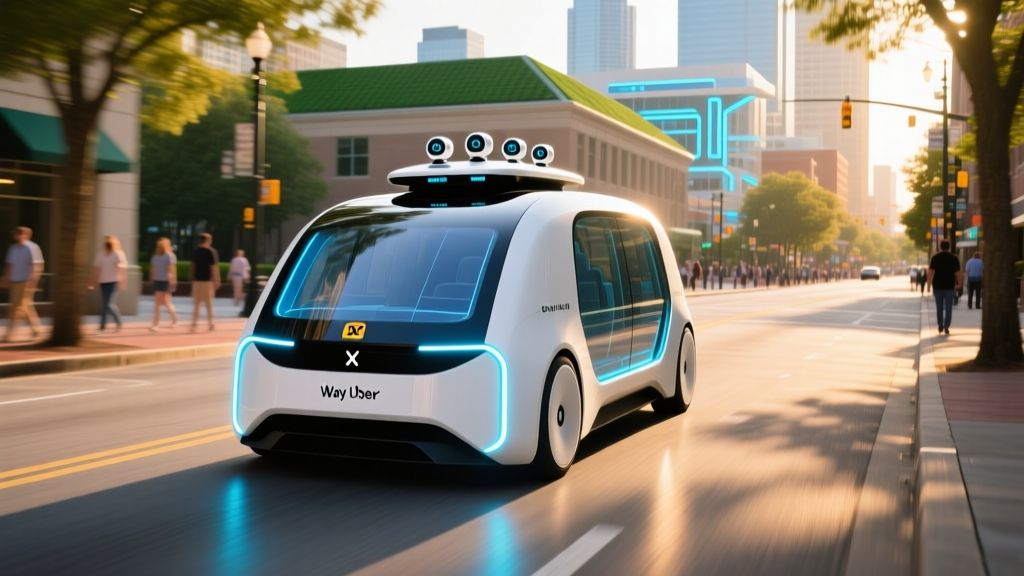
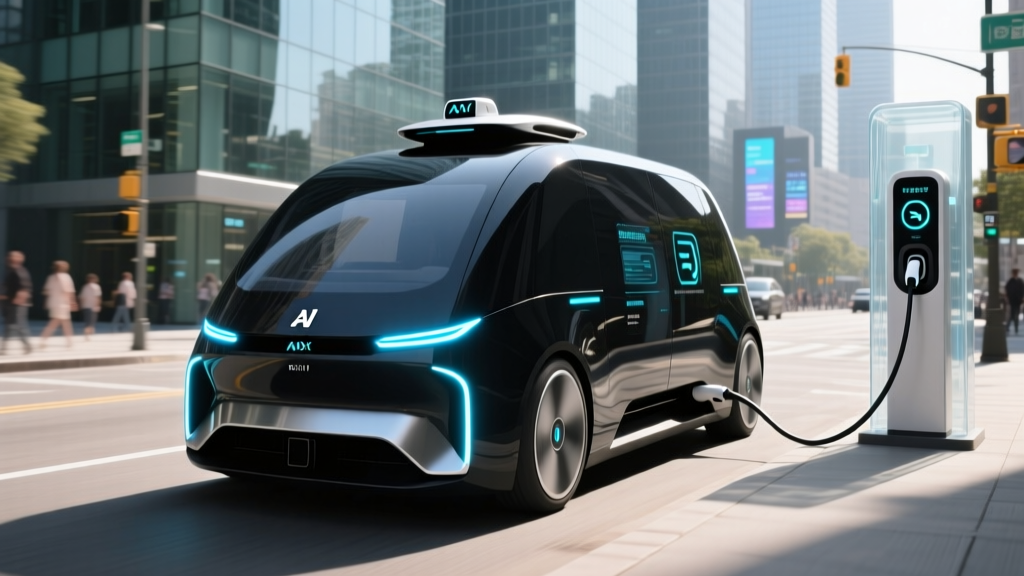
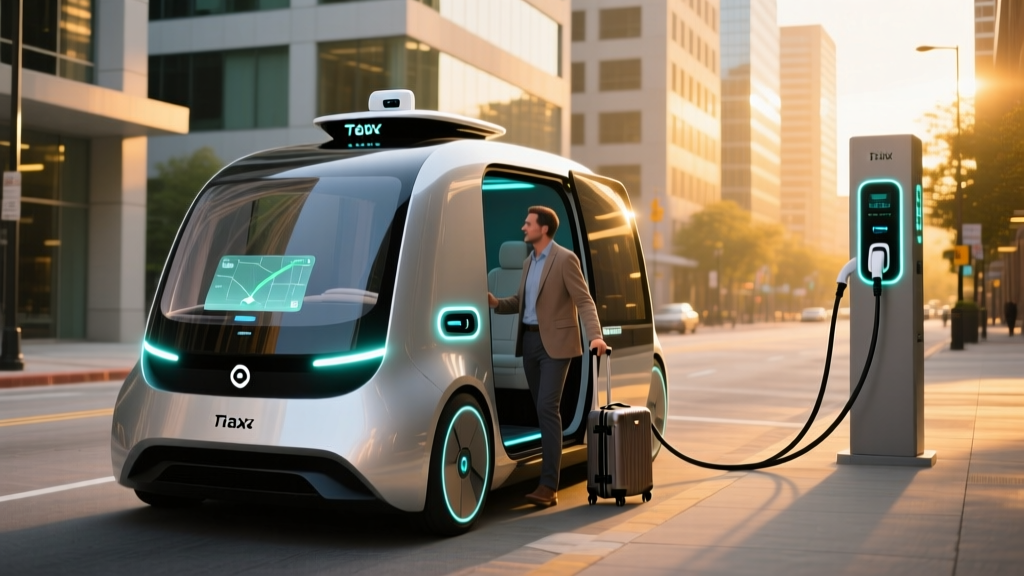
Zoox took a fundamentally different approach from competitors who retrofit existing production vehicles. The Zoox robotaxi is a ground-up, symmetrical, bidirectional vehicle with no steering wheel, no pedals, and no designated "front" or "back." It can travel in either direction, which simplifies maneuvers like three-point turns and wrong-way recovery.
Zoox Sensor & Compute Architecture
- LiDAR: Multiple solid-state and spinning LiDAR units providing 360° 3D point-cloud mapping — Zoox does not rely on camera-only perception (unlike Tesla's vision-only FSD approach)
- Cameras: High-resolution camera array covering all directions for object classification, traffic-light reading, and sign recognition
- Radar: Long-range and short-range radar for velocity detection and adverse-weather redundancy
- Compute: Custom onboard AI compute platform running Zoox's full-stack perception, prediction, and planning software
- Connectivity: Continuous cellular connection to Zoox's remote operations center for edge-case teleassistance
- Geofencing: Operation limited to pre-mapped ODD (Operational Design Domain) — the vehicle will not operate outside its approved zone
The redundancy philosophy is deliberate. Where a camera-only system (Tesla FSD) must infer depth from 2D imagery, Zoox's LiDAR provides direct distance measurement. Where a retrofitted vehicle (Waymo's Jaguar I-PACE or Zeekr RT) has a driver's seat that goes unused, Zoox eliminates it entirely, reclaiming interior space for four passengers in a face-to-face seating arrangement.
Pricing: How Would Zoox Compare to Uber and Lyft?
Because Zoox has not yet launched a commercial fare-charging service, there is no published per-mile or per-minute rate. However, industry analysts and Zoox leadership have signaled that pricing will be competitive with existing rideshare — not a premium product.
| Service | Base Fare | Per-Mile Rate | Per-Minute Rate | Estimated 5-Mile Trip |
|---|---|---|---|---|
| UberX (Las Vegas) | ~$2.50 | ~$1.25 | ~$0.30 | $12–$18 |
| Lyft Standard (Las Vegas) | ~$2.00 | ~$1.15 | ~$0.28 | $11–$16 |
| Waymo One (Phoenix/SF) | ~$2.00 | ~$1.50 | ~$0.35 | $13–$19 |
| Zoox (Projected) | TBD | TBD | TBD | Estimated $10–$18* |
*Projected based on industry positioning; no official Zoox fares published as of 2026. Waymo pricing varies by market and demand.
Zoox's economic thesis hinges on eliminating the driver — the single largest cost in rideshare. Uber and Lyft drivers typically keep 60–75% of each fare. Remove that, and the platform can theoretically undercut human-driven rideshare while maintaining margins. Amazon's backing provides the capital to subsidize early operations, similar to how Waymo (Alphabet) has absorbed years of pre-revenue operations.
Safety Record: What the Data Shows
Zoox Safety Data (as of 2026)
- Testing miles: Zoox has accumulated hundreds of thousands of autonomous miles across its test fleet in multiple cities, though it publishes less granular mileage data than Waymo
- Disengagement reports: California DMV requires annual disengagement reports for companies testing in the state. Zoox's reported disengagement rates have improved year-over-year, though direct comparison with Waymo/Cruise is complicated by differing ODD complexity
- Public incidents: As of early 2026, Zoox has not been involved in a widely reported serious collision during autonomous operations. The company has reported minor low-speed contact incidents to NHTSA as required under Standing General Order 2021-01
- Regulatory standing: Zoox holds testing permits in California and Nevada; it received a manufacturer exemption from NHTSA for its steering-wheel-free vehicle design
Context matters enormously when evaluating robotaxi safety. Waymo, with over 30 million autonomous miles driven as of 2025, has published peer-reviewed data showing its vehicles are involved in fewer injury-causing crashes per million miles than human benchmarks. Zoox, with fewer public miles and no commercial fare-charging operations yet, simply has less data to evaluate.
The NHTSA Standing General Order requires all companies testing or deploying automated driving systems to report crashes within one day. This applies to Zoox, Waymo, Cruise, and all others. Reviewing these reports on NHTSA's database provides the most objective incident picture available.
Regulatory Landscape: Who Approves Robotaxi Operations?
Robotaxi deployment in the United States involves a layered regulatory framework:
- Federal (NHTSA): Sets vehicle safety standards (FMVSS). Zoox required an NHTSA exemption to deploy a vehicle without a steering wheel, mirrors, or pedals. NHTSA also issues the Standing General Order requiring crash reporting.
- State DMV/Regulators: Each state controls testing and deployment permits. In Nevada, the Nevada DMV and the Nevada Legislature's autonomous vehicle framework govern operations. Nevada was an early adopter, passing AV legislation in 2011.
- State Public Utilities Commissions: In California, the CPUC regulates commercial passenger service (robotaxi fares). Companies need both DMV testing permits and CPUC deployment permits to charge riders.
- Local/Municipal: Cities can impose operational restrictions, geofence requirements, or fleet caps. San Francisco's Board of Supervisors notably voted to restrict robotaxi expansion in 2023 before state regulators overruled portions of those restrictions.
For Las Vegas specifically, Nevada law permits autonomous vehicle testing and operation without a human driver, provided the vehicle meets state registration and insurance requirements. Zoox's testing operations in Las Vegas comply with these state-level rules. However, transitioning from testing to commercial fare-charging service would require additional regulatory approvals and likely coordination with Clark County and the city of Las Vegas.
Current Limitations: Where Robotaxis Cannot Go
Operational Limitations (Zoox & Industry-Wide L4)
- Geofencing: Zoox vehicles operate only within pre-mapped corridors. They will not travel to unmapped areas, even if physically capable of reaching them.
- Weather constraints: Heavy rain, fog, dust storms (relevant in Las Vegas), and snow degrade sensor performance. Zoox has tested in rain, but severe weather may trigger operational pauses or reduced service areas.
- Construction zones: Temporary lane shifts, missing lane markings, and flagger-directed traffic remain challenging edge cases for all L4 systems.
- No highway operation: Current Zoox testing focuses on surface streets at or below 45 mph. Highway-speed autonomous operation is not part of the current Las Vegas test profile.
- Pickup/dropoff precision: The vehicle may not pull up to your exact front door. Designated stops or nearby safe-pull-over locations are used instead.
- Accessibility: Zoox's vehicle design includes features for wheelchair accessibility, but real-world deployment at scale requires validated ADA compliance across all scenarios.
- No inter-city travel: You cannot take a Zoox from Las Vegas to Los Angeles or even to Henderson outside the geofenced zone.
These limitations aren't unique to Zoox — they apply broadly to all current Level 4 robotaxi deployments, including Waymo. The difference is one of degree: Waymo's geofenced areas in Phoenix cover over 200 square miles, while Zoox's Las Vegas footprint is considerably smaller and still in testing mode.
Is This Truly Self-Driving or Driver-Assist?
This is where consumer confusion runs deepest, and the distinction is non-negotiable:
Zoox is Level 4 — truly driverless within its ODD. There is no human behind the wheel because there is no wheel. The vehicle handles all driving tasks, monitors the environment, and manages fallback scenarios (pulling over safely if systems degrade) without human intervention. If the vehicle encounters a scenario it cannot handle, it contacts a remote operations center for guidance or executes a minimal-risk maneuver (safe stop).
Tesla FSD (Supervised), GM Super Cruise, Ford BlueCruise, and similar systems are Level 2 — driver-assist. A licensed human driver must remain attentive, hands on or near the wheel, and ready to take over instantly. The system assists with steering, acceleration, and braking, but the human is legally and operationally responsible. Calling these "self-driving" is inaccurate and dangerous.
The SAE J3016 standard defines six levels of driving automation. The critical threshold is Level 3, where the system can handle all driving in certain conditions and the human can disengage — but must be ready to resume when prompted. Level 4 removes the human entirely within its domain. No consumer vehicle sold today operates at Level 4 for general use; only purpose-built robotaxis like Zoox and Waymo's fleet achieve this in geofenced commercial or testing contexts.
Frequently Asked Questions
Can I hail a Zoox robotaxi in Las Vegas right now?
No. As of 2026, Zoox operates in Las Vegas in a testing and limited-shuttle capacity. There is no public app, no fare structure, and no on-demand hailing available to the general public. Zoox's Las Vegas operations are restricted to authorized employees, contractors, and invited testers.
How does the Zoox Las Vegas route compare to Waymo in other cities?
Waymo One operates commercially in Phoenix (200+ sq mi geofence), San Francisco, and Los Angeles, serving paying riders through the Waymo app. Zoox's Las Vegas presence is a testing corridor, not a commercial service. The two companies also differ technologically: Waymo retrofits existing vehicles (Jaguar I-PACE, Zeekr RT), while Zoox built a ground-up, bidirectional, steering-wheel-free vehicle.
When will Zoox launch a public robotaxi service in Las Vegas?
Zoox has not announced a specific public launch date for any city. The company has signaled that commercial operations are a near-term priority, and industry observers expect a phased rollout beginning with employee and partner programs before broader public access. Any timeline should be treated as preliminary until officially confirmed.
What happens if a Zoox vehicle encounters an emergency?
Zoox vehicles are designed to execute a "minimal risk condition" — typically a controlled stop in a safe location — if the system detects a fault it cannot resolve. The vehicle is also connected to a remote operations center where human specialists can provide guidance (though they do not "drive" the vehicle remotely in real time). Emergency responders can interact with the vehicle using external interfaces designed for first-responder access.
Is riding in a Zoox robotaxi free during testing?
Zoox's current invite-only rides do not charge fares, as they are classified as testing operations rather than commercial passenger service. When (and if) Zoox transitions to a commercial model, fares will be established. Amazon's ownership suggests potential integration with Prime or other Amazon ecosystem benefits, but this is speculative.
Does Zoox use Tesla's camera-only approach?
No. Zoox employs a multi-modal sensor suite including LiDAR, cameras, and radar. This is a fundamentally different approach from Tesla's vision-only FSD system. Zoox's position — shared by Waymo, Cruise, and most L4 operators — is that LiDAR provides essential depth perception and redundancy that cameras alone cannot reliably deliver in all lighting and weather conditions.